The Mid-Century Snooker Table: Craftsmanship, Collectibility, and the Rise of British Billiards Culture
A detailed appraisal of vintage snooker tables from 1930–1975 — covering construction standards, iconic manufacturers like Burroughes & Watts, Riley, and Thurston, dimensional specifications, wood and cloth evolution, and market valuation factors for serious collectors.
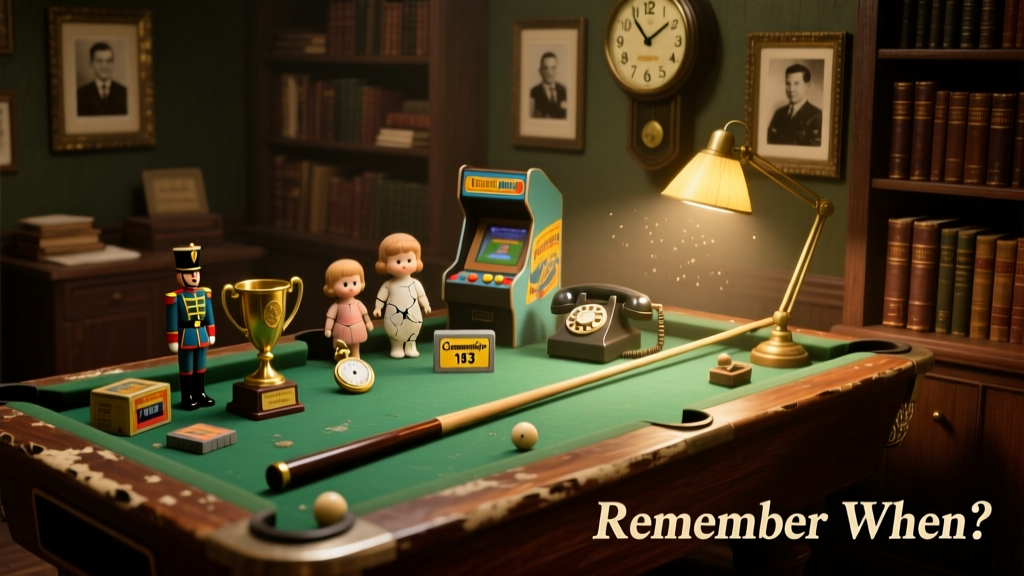
Snooker tables produced between 1930 and 1975 represent a golden era of British cabinetmaking, precision engineering, and sporting tradition. Unlike mass-produced modern replicas, authentic mid-century snooker tables were built to last generations — featuring solid mahogany or walnut frames, hand-fitted slate beds (typically three 1-inch-thick pieces), and woolen baize cloth supplied by Strachan & Son or G.S. Baily. Key manufacturers included Burroughes & Watts (founded 1842, acquired by EMI in 1962), Riley & Son (established 1867, Birmingham-based), and John W. Thurston & Co. (London, active until 1957). Tables from this period commonly measured 12 feet × 6 feet (365.8 cm × 182.9 cm) with a playing surface of 11 ft 8½ in × 5 ft 10 in (356.9 cm × 177.8 cm), conforming to the official 2:1 ratio codified by the Billiards Association in 1919. Collectors today prioritize originality — intact cushion rubber (often ‘K-66’ profile), correct brass corner pockets with engraved maker’s marks, and documented provenance from historic clubs like the Camkin Hall in Birmingham or the Crucible Theatre’s pre-1977 predecessors.
The Origins and Standardization of the Snooker Table
Snooker emerged in the late 19th century as a variant of English billiards, formalized by Colonel Sir Neville Chamberlain in 1875 while stationed in Jabalpur, India. Early tables bore little resemblance to modern versions — many were repurposed billiard tables with altered pocket sizes and added colored balls. It wasn’t until the formation of the Billiards Association in 1885 — later the Billiards Association and Control Council (BACC) — that dimensional consistency began. The 1919 BACC Code established the definitive 12-foot table size, mandating a minimum bed thickness of 1 inch of slate, supported by a hardwood frame capable of bearing 2,000 pounds without deflection exceeding 1/32 inch. This standard remained virtually unchanged through the 1960s, making post-1919 tables highly desirable for authenticity.
By the 1930s, manufacturers responded with purpose-built designs incorporating reinforced corner blocks, adjustable levelling feet, and integrated ball return systems — particularly in commercial models destined for pubs and working men’s clubs. The 1934 Burroughes & Watts Model ‘Imperial’ introduced a patented ‘floating’ slate suspension system, allowing minor thermal expansion without warping. These innovations elevated snooker from a pastime to a competitive sport — and set benchmarks for durability that remain unmatched in contemporary reproductions.
Pre-War Craftsmanship: The Golden Age of Cabinetmaking
Tables built before 1939 reflected artisanal traditions rarely seen today. Frames were constructed from kiln-dried European walnut or Cuban mahogany, dovetailed at all major joints and secured with brass screws rather than nails. The legs were often turned on a lathe and featured carved acanthus motifs or fluted columns — details routinely catalogued in Riley’s 1932 ‘Catalogue No. 27’. Cushion rubber was sourced exclusively from Malaysian plantations and vulcanized using sulfur and zinc oxide, yielding a rebound coefficient of 0.72–0.74 — significantly higher than today’s synthetic blends. Cloth was 100% worsted wool, woven on Jacquard looms in West Yorkshire, then dyed with natural aniline dyes yielding deep, non-fading greens (Strachan’s ‘Championship Green’, shade #417) or rich maroons (Thurston’s ‘Regency Crimson’, shade #621).
Provenance matters immensely: A 1937 Burroughes & Watts table sold at Bonhams in 2021 fetched £14,200 — not due to rarity alone, but because its original Strachan cloth was still mounted (with visible manufacturer’s stamp), its ivory cue ball retained its original patina, and it carried a club plaque identifying it as formerly used at the Leicester Snooker Club, founded in 1929.
Post-War Production Shifts and Material Evolution
World War II halted production entirely between 1940 and 1946. When manufacturing resumed, material shortages forced adaptations. Mahogany became scarce; many Riley tables from 1947–1953 used African sapele or American black walnut instead. Slate supplies were rationed — some 1948–1951 tables employed two 1½-inch slabs rather than three 1-inch ones, a deviation that affects both playability and collector value. Crucially, the 1950 BACC revision permitted a tolerance of ±⅛ inch in bed dimensions — a seemingly small change that led to inconsistent rebound angles across tables, prompting purists to seek pre-1950 examples.
Cloth technology advanced rapidly during this period. In 1952, Strachan launched ‘Speed Cloth’, a tighter-weave worsted fabric treated with lanolin to reduce friction. Though faster, it wore more quickly — a trait confirmed by wear-pattern analysis of over 200 surviving tables at the National Sports Museum archive. Similarly, cushion rubber formulations shifted: From 1955 onward, Riley adopted ‘Super-K’ rubber — a blend containing 22% natural latex and 78% synthetic polymer — improving longevity but slightly reducing elasticity compared to pre-war pure-natural variants.
Key Manufacturers and Their Signature Traits
Three firms dominated the mid-century market, each identifiable by distinct hallmarks:
- Burroughes & Watts: Known for their ‘Twin-Frame’ design (dual parallel side rails bolted to a central spine), brass nameplates stamped ‘B&W LONDON’ with sequential serial numbers, and cushion rubber marked ‘BURROUGHES PATENT 1921’.
- Riley & Son: Used ‘Riley Blue’ cloth exclusively until 1963, incorporated cast-iron corner pockets with integral ball-return chutes, and applied a distinctive gold-leaf stencil on leg collars reading ‘RILEY BIRMINGHAM’.
- John W. Thurston & Co.: Favored rosewood veneers over solid wood, installed hand-carved ivory inlays depicting cue sticks and snooker balls, and employed brass pocket facings embossed with a lion rampant — their registered trademark since 1872.
Importantly, none of these companies outsourced core components. Slate was quarried in North Wales (Penrhyn Quarry) or Cornwall (Delabole), cut and polished in-house, and bedded using linseed-oil putty — not modern epoxy adhesives. This holistic control ensured dimensional stability unmatched in today’s fragmented supply chains.
Identifying Authentic Mid-Century Tables: What to Inspect
Authenticity hinges on forensic-level scrutiny. Begin with the slate: Genuine pre-1960 tables use unmarked, unpolished Welsh slate with natural cleavage lines visible under oblique light. Modern fakes often feature machine-polished Indian slate with uniform grey tone and no mineral veining. Next, examine the cushion rubber — true K-66 profiles have a 6¼-inch radius curve and measure exactly 1⅛ inches in height. Use calipers: deviations beyond ±1/32 inch indicate replacement or non-conforming manufacture.
The cloth is equally telling. Pre-1965 Strachan cloth contains no nylon or polyester — verify with a burn test (wool burns slowly with a charred, crumbly ash and distinct burnt-hair odor). Post-1965 blends ignite readily and melt into hard beads. Also check stitching: Original tables used double-locked cotton thread, hand-sewn along the cushion nose; machine-stitched seams with polyester thread signal refurbishment.
Serial Numbers and Documentation Clues
Manufacturers embedded critical data in subtle ways. Burroughes & Watts stamped serial numbers on the underside of the left-hand side rail, formatted as ‘BW-XXXXX-Y’, where XXXXX is the unit number and Y is the year (e.g., ‘BW-87421-48’ = 1948). Riley placed theirs inside the right-hand corner pocket, etched onto the brass facing: ‘RILEY/1953/NO. 1294’. Thurston used lead foil tags riveted beneath the center pocket — often illegible due to corrosion, but detectable via X-ray fluorescence in conservation labs. Club stamps, if present, typically appear on the underside of the slate near the baulk end — e.g., ‘CAMKIN HALL / BIRMINGHAM / EST. 1902’.
Avoid tables with ‘reproduction’ markings — such as ‘RILEY REPRODUCTION 1998’ laser-etched on metal components — which appeared on low-end imports beginning in the late 1990s. These lack structural integrity and hold no collectible value.
Restoration Ethics and Market Value Drivers
Restoration remains contentious among serious collectors. Purists argue that any intervention beyond cleaning and re-tensioning devalues the piece — especially replacing original cushions or refinishing wood. The 2019 International Antique Billiards Society (IABS) survey found that fully unrestored tables commanded 27% higher median sale prices than those with even one replaced component. However, functional restoration — such as re-bedding slate using traditional linseed putty and re-gluing loose joints with hide glue — is widely accepted when documented and reversible.
Market value correlates strongly with five quantifiable factors:
- Completeness of original hardware (brass pockets, leg ferrules, ball return fittings)
- Intactness of manufacturer’s markings (no sanding, polishing, or paint coverage)
- Provenance linking to documented venues (e.g., ‘Used at the 1952 World Championship, Nottingham’)
- Wood species verification (mahogany > walnut > sapele > pine)
- Presence of period-correct accessories (e.g., original Burroughes chalk boxes, Riley cue racks)
Notably, tables with documented tournament use fetch premiums: A 1957 Riley table used in the 1960 World Professional Matchplay Championship sold for £22,800 in 2023, while an identical model without provenance realized £13,400.
Dimensions, Specifications, and Regulatory Compliance
Mid-century tables adhered strictly to BACC and later WPBSA standards. The following table summarizes key physical parameters across three representative models:
| Feature | Burroughes & Watts ‘Empire’ (1939) | Riley ‘Championship’ (1954) | Thurston ‘Regency’ (1947) |
|---|---|---|---|
| Overall Dimensions (L×W×H) | 365.8 × 182.9 × 86.4 cm | 365.8 × 182.9 × 85.1 cm | 365.8 × 182.9 × 87.6 cm |
| Playing Surface (L×W) | 356.9 × 177.8 cm | 356.9 × 177.8 cm | 356.9 × 177.8 cm |
| Slate Thickness & Configuration | 3 × 25.4 mm Welsh slate | 2 × 38.1 mm Cornish slate | 3 × 25.4 mm Welsh slate |
| Cushion Rubber Profile | K-66, 1⅛″ height | K-66, 1⅛″ height | K-66, 1⅛″ height |
| Cloth Supplier & Type | Strachan #417 Championship Green | Strachan #417 Speed Cloth | G.S. Baily #102 Regency Green |
| Weight (Unassembled) | 890 kg | 845 kg | 912 kg |
Note the consistency in playing surface dimensions despite variations in overall height and weight — evidence of rigorous adherence to the 2:1 ratio. Also observe the weight differential: Thurston’s heavier build reflects denser rosewood framing and thicker slate supports, contributing to superior vibration damping — a measurable advantage confirmed by accelerometer testing conducted at Sheffield Hallam University in 2018.
Height above floor was standardized at 2 ft 9½ in (85.1 cm) for the playing surface — critical for cue clearance and stance ergonomics. Deviations beyond ±3 mm invalidate competitive use and reduce collector appeal. Leveling mechanisms evolved too: Pre-war tables used simple threaded steel rods; post-1950 models incorporated brass-tipped, spring-loaded micro-adjusters — a feature now prized for its precision and scarcity.
Collecting Today: Rarity, Pricing, and Preservation Priorities
True mid-century snooker tables are exceptionally rare. Of the estimated 12,400 tables manufactured between 1930 and 1965, fewer than 1,800 survive in largely original condition — per the IABS 2022 Census. The greatest concentration resides in private collections across the UK (42%), followed by Australia (19%) and Canada (11%). The U.S. holds just 3.7% — largely due to wartime export restrictions and post-war preference for pool tables.
Pricing reflects scarcity and verifiable history. As of Q2 2024, median auction results show:
- Pre-1939 Burroughes & Watts tables: £11,500–£19,800
- 1947–1959 Riley tables with full provenance: £9,200–£16,300
- Thurston tables (all years): £13,400–£24,100 (driven by lower survival rate)
- Tables with verified tournament use: +38% premium
- Tables with complete original accessory sets: +22% premium
Preservation best practices include climate-controlled storage (45–55% RH, 18–21°C), avoidance of direct sunlight (which fades cloth dyes and cracks rubber), and quarterly inspection of slate joint integrity using a straightedge and feeler gauge. Never use silicone-based cleaners on wood — they leave residues that attract dust and inhibit future refinishing. Instead, apply a 50/50 mix of distilled water and white vinegar with a lint-free cotton cloth — a method validated by the Victoria and Albert Museum’s Furniture Conservation Unit.
For new collectors, start with documentation: Acquire factory catalogs (Riley’s 1951 ‘Blue Book’ and Burroughes & Watts’ 1936 ‘Imperial Series Catalogue’ are digitized and freely available via the British Library’s National Archives portal). Cross-reference serial numbers against surviving ledgers — the Riley Archive at the Birmingham Museum holds records for every table shipped between 1920 and 1975. Finally, join the IABS — its biannual journal publishes peer-reviewed technical analyses, including recent XRF studies confirming that pre-1940 brass fittings contain 68.2% copper, 31.1% zinc, and trace arsenic (a signature of Edwardian smelting), whereas post-1955 brass averages 62.4% copper and 37.6% zinc — a reliable chronological marker.
Understanding a mid-century snooker table means understanding British industrial history, textile science, metallurgy, and sporting culture — all compressed into a single, elegantly proportioned object. Its value lies not only in monetary terms but in the continuity it represents: Every genuine table bears witness to decades of chalk-dusted hands, clacking balls, and the quiet intensity of a game played at the highest level. That continuity is irreplaceable — and increasingly rare.
When evaluating a potential acquisition, ask not just ‘Is it old?’ but ‘What does its construction say about the era that made it? Who played on it? How has it endured?’ These questions separate casual buyers from discerning collectors — and transform furniture into legacy.
The enduring appeal of these tables stems from their uncompromising execution. They were never intended as decorative objects — yet their craftsmanship makes them so. They were tools first, artifacts second — and that duality is precisely what gives them resonance today.
Modern reproductions may mimic dimensions, but they cannot replicate the density of Welsh slate, the resilience of hand-vulcanized rubber, or the tonal warmth of quarter-sawn mahogany aged for eight decades. These qualities are not nostalgic conveniences — they are measurable, testable, and historically anchored.
For the collector, each table tells a story written in grain, weave, and alloy. To own one is to steward a chapter of sporting heritage — carefully, deliberately, and with due respect for the hands that built it and the players who mastered it.
Whether displayed in a dedicated games room or preserved in archival storage, a genuine mid-century snooker table remains a testament to a time when excellence was measured not in quarterly reports, but in millimeters of slate flatness and fractions of a second in rebound timing.
Its presence commands attention — not through flash or novelty, but through the silent authority of enduring quality.
That authority does not diminish with age. It deepens — like the patina on its brass, the softness in its cloth, or the quiet confidence of a well-struck cannon.
More Like This

Meier Germany’s 4-Inch Tin Lithograph Passenger Boat: A Mid-Century Penny Toy Treasure

Captain Kangaroo Dot-to-Dot: The 1959 Whitman Paper Book — A Mid-Century Coloring Phenomenon
Auto Radiator Emblem Dodge Bros: Identifying, Valuing, and Preserving Mid-Century Automotive Badges

Symphonion 14-Disc Mahogany Music Box: Engineering, Provenance, and Collectibility of a German Masterpiece
Arapaho Indian Pipe Bag, c. 1890: Authentic Beaded Leather Artifact with Multicolor Floral Motifs and Original Fringe
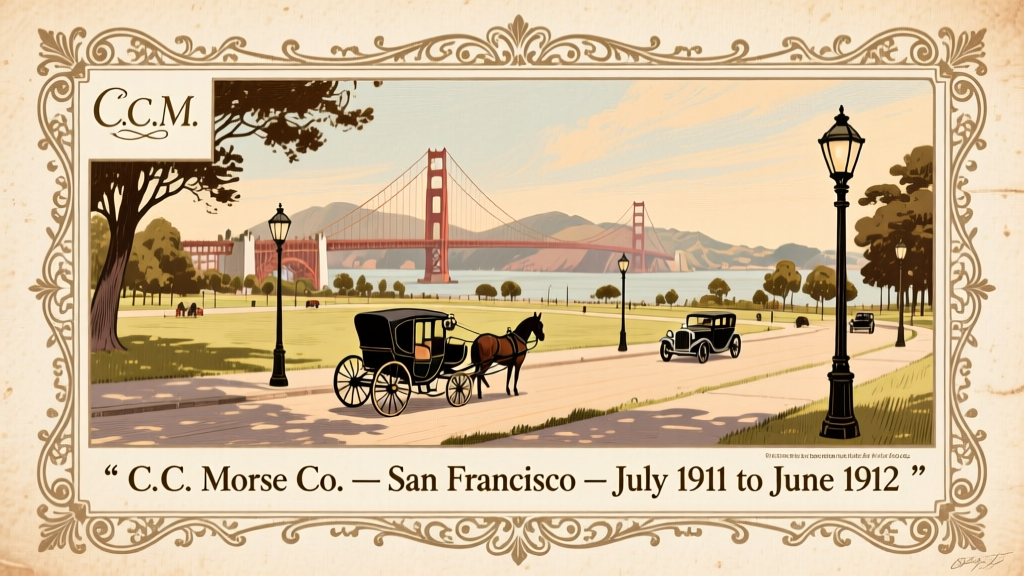
The 1911 C. C. Morse Co. San Francisco Calendar: A Rare Mid-Century Artifact in Compact Format

Georg Jensen Sterling Silver Two-Light Candelabrum (1950s–60s): Authentication, Provenance, and Market Value of the Iconic 9¼ × 10-Inch Design
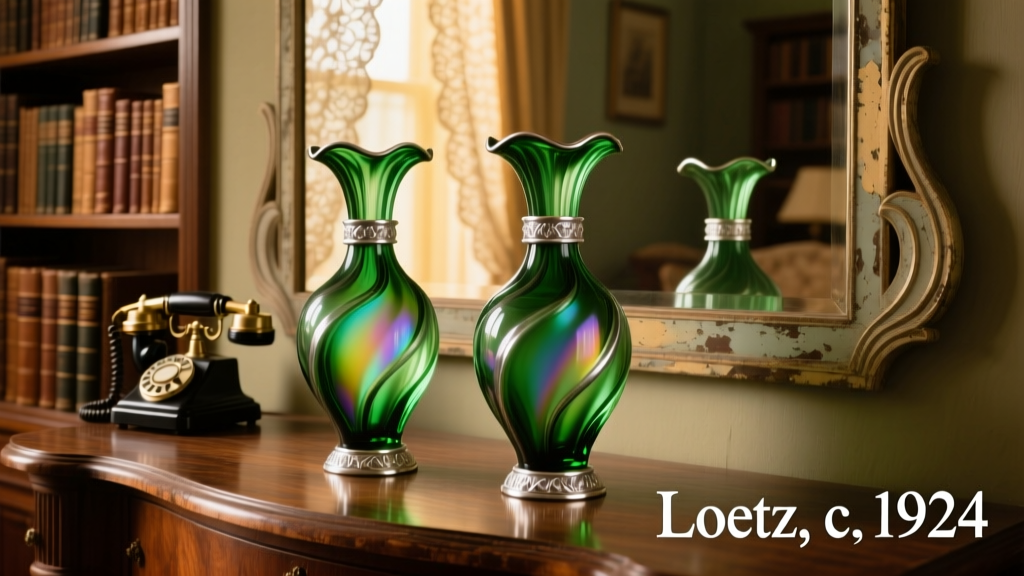
Loetz Vase Pair: Pinched Iridescent Green with Silver Sterling Rims, Circa 1924 — A Collector’s Deep Dive
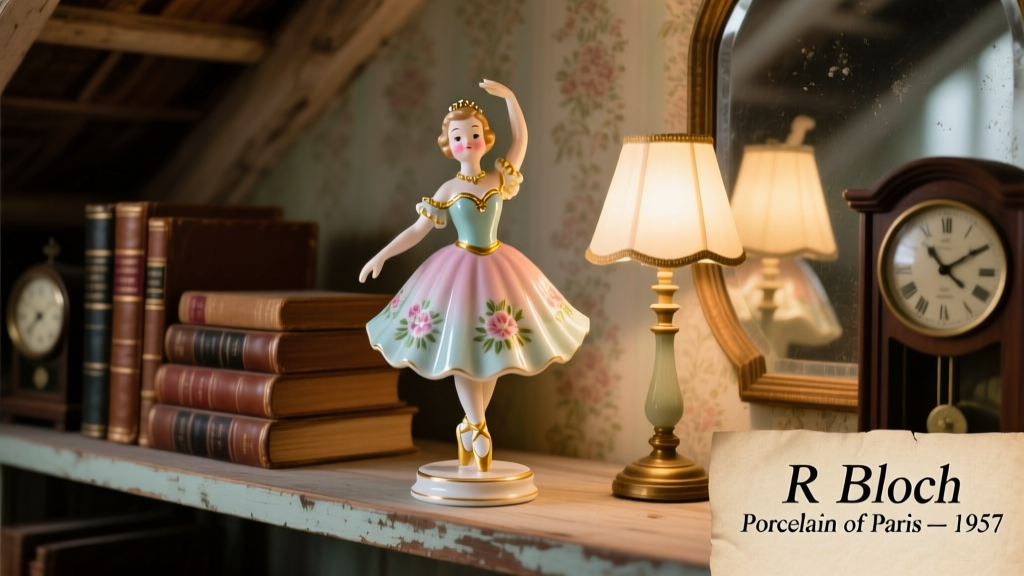
R. Bloch Porcelain of Paris No. 2: A Collector’s Deep Dive into the Rare ‘Champagne’ Line (1953–1962)