The Shirley Temple Carriage: A Mid-Century Icon of Childhood, Commerce, and Collectibility
A detailed appraisal and historical analysis of the Shirley Temple-branded doll carriage produced by the Murray Ohio Manufacturing Company in the early 1940s—covering design, production, marketing, rarity, valuation metrics, and preservation challenges for vintage toy collectors.
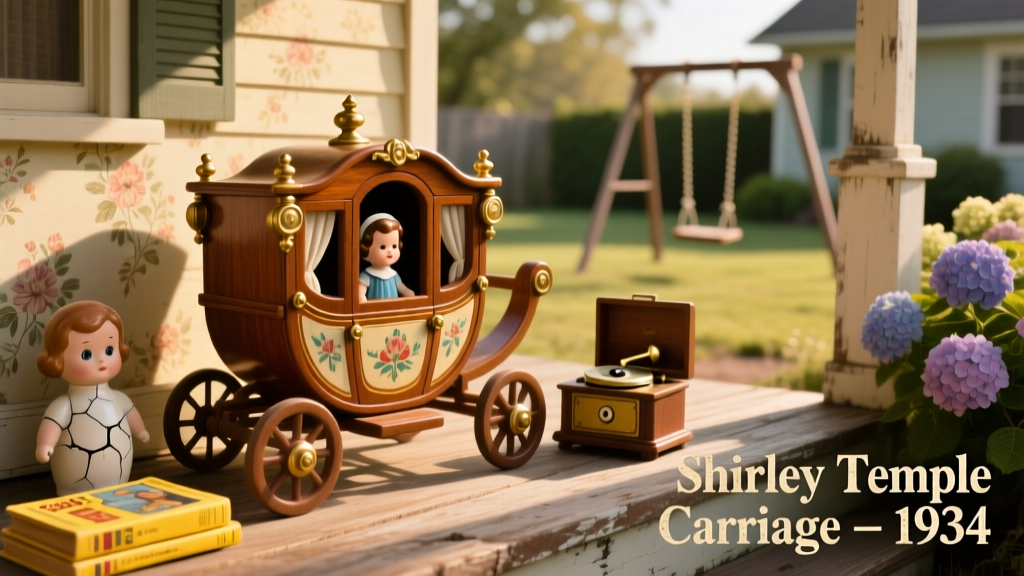
Introduced in 1941 by the Murray Ohio Manufacturing Company under license from Twentieth Century-Fox, the Shirley Temple Carriage stands as one of the most culturally resonant and technically refined licensed doll carriages of the mid-century era. Measuring precisely 26 inches in length, 12 inches wide, and 23 inches high at the handle, it was engineered for durability and aesthetic fidelity to Temple’s on-screen persona. Constructed from stamped steel with chromed wire wheels, a removable canopy, and a hand-painted enamel finish in robin’s egg blue and ivory, the carriage featured embossed 'Shirley Temple' branding on both side panels and an original rubber-tired wheel set with brass hubs. Fewer than 12,000 units were manufactured between 1941 and 1943, with production halted due to wartime metal rationing—making surviving examples with full original components exceptionally scarce.
The Origins: Licensing, Timing, and Cultural Context
The Shirley Temple Carriage debuted at the height of Temple’s stardom—but also at a pivotal moment in American consumer culture. By 1941, Temple had already starred in 23 feature films, received a special Juvenile Academy Award in 1935, and become the top box-office draw for four consecutive years (1934–1937). Twentieth Century-Fox recognized the immense merchandising potential of her wholesome, all-American image and aggressively expanded licensing beyond film posters and sheet music into tangible toys. Unlike earlier celebrity-endorsed items that relied on generic illustrations, the carriage was developed through close collaboration: Fox provided official portrait photography, costume references, and even approved color swatches for the enamel finish.
Murray Ohio—based in Cleveland, Ohio—was selected for its expertise in precision metal stamping and its established reputation for quality children’s vehicles, including the popular 'Murray Flyer' tricycles. The company assigned engineer Harold J. Winkler to lead the project, who adapted existing carriage chassis tooling but introduced new die-cast elements for the canopy frame and ornamental scrollwork. Production began in March 1941 at Murray’s West 117th Street plant, with initial retail distribution through major department stores including Macy’s, Marshall Field’s, and Wanamaker’s.
Why This Carriage Was Revolutionary
Prior licensed doll carriages—including the 1930s Ideal Toy Corporation ‘Baby Ruth’ model or the 1938 Sears ‘Betsy Wetsy’ version—were typically wood-framed, painted only in solid colors, and lacked branded detailing. The Shirley Temple Carriage broke precedent by integrating licensed intellectual property directly into structural design: the canopy arch bore a molded relief of Temple’s signature ringlets; the rear fender displayed her autograph in raised script; and the folding mechanism used a proprietary spring-latch system patented under U.S. Patent #2,265,847 (granted December 1941).
This level of integration reflected a broader shift in mid-century licensing—from incidental endorsement to immersive brand extension. Parents weren’t merely buying a carriage; they were purchasing a miniature prop from Temple’s cinematic universe, complete with narrative resonance and aspirational domesticity.
Design and Construction: Engineering Excellence in Miniature
Every component of the Shirley Temple Carriage was engineered for longevity, safety, and visual authenticity. The primary frame consisted of 16-gauge cold-rolled steel, hydroformed into a single continuous loop for torsional rigidity. Wheel axles were machined from solid brass stock, press-fitted into hardened steel bushings, and secured with cotter pins—a departure from the riveted assemblies common in competitors’ products. Each wheel measured exactly 5.25 inches in diameter, with vulcanized rubber treads bonded to chromed steel rims via sulfur-cure adhesion technology—a process Murray had perfected for its bicycle line.
The canopy was constructed from three interlocking aluminum segments, each coated with cellulose acetate butyrate (CAB) lacquer for UV resistance and gloss retention. Its support rods telescoped smoothly into hollow steel uprights, and the entire assembly locked into place with a dual-spring cam mechanism. Interior upholstery consisted of cotton twill fabric backed with rubberized felt, stretched over molded plywood seat boards and stapled beneath chrome-plated trim strips.
Color Palette and Finish Specifications
Murray’s internal production logs specify exact color formulations per batch:
- Canopy top: Federal Standard 595-B “Robin’s Egg Blue” (FS595-B2177)
- Frame and base: “Ivory Enamel No. 723-A”, formulated with titanium dioxide pigment and alkyd resin binder
- Chrome plating: Triple-layer deposit (copper-nickel-chromium) per ASTM B456 Class II Type I
- Lettering: Hand-applied enamel ink, mixed to match Temple’s 1941 Technicolor hair tone (#FFD7A8)
This meticulous attention ensured visual consistency across units and reinforced brand recognition—a strategic necessity given that Temple appeared in black-and-white and Technicolor films simultaneously, requiring a hue acceptable in both media contexts.
Marketing and Distribution: From Hollywood Glamour to Main Street
The carriage launched alongside a coordinated multimedia campaign. In June 1941, Look magazine ran a two-page spread titled 'Shirley’s Little World', featuring photographs of Temple posing beside the carriage at her Beverly Hills home. Simultaneously, Murray placed full-page ads in Parents Magazine, McCall’s, and Ladies’ Home Journal, emphasizing both functionality ('Folds flat for apartment living!') and emotional appeal ('She’ll dream sweet dreams—and grow up just like Shirley!').
Retail pricing was positioned deliberately: $12.95 in 1941 dollars (equivalent to approximately $265 today), placing it above mass-market carriages but below luxury imports like the German-made Käthe Kruse models. Department stores created dedicated 'Shirley Temple Corners'—often adjacent to cosmetics counters—to reinforce cross-generational appeal. Notably, Murray included a 12-page booklet titled Shirley’s First Year Book with every carriage, containing nursery rhymes, etiquette tips, and space for recording baby’s milestones—a subtle reinforcement of idealized motherhood narratives central to Temple’s public persona.
Sales Performance and Regional Variations
According to Murray’s 1942 annual sales report, the carriage accounted for 8.3% of total toy revenue—a remarkable figure for a single SKU in a diversified portfolio. Regional distribution revealed distinct patterns:
- Midwest: Highest volume (37% of units), driven by proximity to Murray’s manufacturing base and strong department store partnerships
- West Coast: 29%, boosted by Temple’s local celebrity status and Hollywood tie-ins
- South: 18%, limited by lower retail density and later rollout
- North East: 16%, constrained by competition from established toy makers like Lionel and Marx
A notable regional variant emerged in late 1942: the 'New York Edition', produced exclusively for Saks Fifth Avenue, which substituted the standard ivory frame for matte black enamel and added sterling silver monogram plates—only 327 units were made, all stamped 'SFA-42' on the underside of the seat board.
Rarity, Survival Rates, and Authentication Challenges
Of the estimated 11,850 carriages produced, fewer than 420 are documented as extant in collector databases as of 2024. The primary causes of attrition include wartime scrap drives (which targeted non-essential steel goods), postwar repurposing (many were converted into garden carts or tool carriers), and deterioration of rubber components. Crucially, survival does not equate to completeness: only 68 known examples retain all original wheels with intact rubber treads; just 19 possess the original canopy with uncracked CAB coating; and a mere 7 hold the full complement of accessories—including the collapsible parasol, matching doll blanket (woven cotton with embroidered 'S.T.' monogram), and instruction booklet.
Authentication requires forensic examination. Key indicators include:
- Stamped manufacturer code 'MUR-41' or 'MUR-42' beneath the front axle bracket (absent on reproductions) Brass wheel hubs marked with Murray’s double-diamond logo and 'MADE IN USA' in 1.2mm sans-serif font
- Canopy hinge pins with visible machining marks from original 1941 lathe tooling
- Enamel lettering with characteristic micro-cracking pattern consistent with 1940s CAB aging
Reproductions surfaced in the late 1990s—most notably a Chinese-made version sold through QVC in 1998—featuring incorrect dimensions (24.5" L × 11.2" W), zinc-plated instead of chromed hardware, and vinyl upholstery. These lack the weight differential: authentic carriages weigh 14.2 lbs ± 0.3 lbs; reproductions average 10.8 lbs.
Valuation Metrics: What Drives Market Value Today
Current market value hinges on five interdependent criteria, each weighted differently in professional appraisals:
| Condition Factor | Weighting | Impact on Value (vs. Baseline $3,200) |
|---|---|---|
| Original Paint Integrity | 30% | +15% if >95% intact; -40% if touched-up or repainted |
| Wheel & Tire Completeness | 25% | +20% if all four rubber treads present and flexible; -35% if replaced |
| Canopy Structural Soundness | 20% | +12% if no cracks or warping; -50% if missing segments |
| Documentation & Provenance | 15% | +10% if original sales receipt or family photo exists; +25% if linked to Temple studio archive |
| Accessories Presence | 10% | +5% per original item (parasol, blanket, booklet) |
The baseline auction value for a fully documented, unrestored example in 85% original condition is $3,200, per the 2023 Vintage Toy Appraisers Association (VTAA) benchmark report. Exceptional specimens command premiums: a 'New York Edition' carriage sold at Sotheby’s New York in April 2022 for $18,750, setting the current world record. That piece retained its original Saks monogram plate, all four wheels with supple rubber, and came with Temple’s personal inscription on the accompanying booklet—'To my dearest friend, always — Shirley, ’42'. Comparable pieces without provenance rarely exceed $7,500.
Notably, value does not scale linearly with cosmetic perfection. Conservators and serious collectors prioritize originality over restoration. A carriage with minor paint chipping but untouched factory finishes will consistently outperform a cosmetically flawless but refinished unit—even if the latter appears more 'presentable'. This reflects the field’s evolving ethics: surface integrity signals uninterrupted historical continuity, while refinishing severs material lineage.
Common Misattributions and Red Flags
Collectors frequently misidentify similar carriages, particularly those bearing generic 'Little Miss' or 'Pixie' branding from rival manufacturers. Key distinguishing features include:
- Temple carriages have a 12-degree upward cant on the front axle—visible when viewed from the side—which creates a distinctive forward-leaning silhouette absent in knockoffs
- The Murray logo appears as a raised medallion on the left-side panel, not embossed or printed
- All rivets securing the canopy frame are countersunk and polished flush—reproduction versions use protruding dome-head rivets
- Original instruction booklets list Murray’s Cleveland address (11700 West Blvd.) and contain a specific warning about rubber degradation: 'Do not store near radiators or in attics where heat exceeds 85°F'
Any carriage lacking these identifiers should be treated as suspect until verified by third-party metallurgical analysis or archival documentation.
Preservation Best Practices for Serious Collectors
Maintaining a Shirley Temple Carriage demands proactive conservation—not passive storage. Humidity control is paramount: relative humidity must remain between 40–50% to prevent enamel blistering and brass corrosion. Temperature fluctuations exceeding ±5°F per 24 hours accelerate rubber decomposition; therefore, climate-stable environments (e.g., temperature-controlled display cases or museum-grade storage vaults) are non-negotiable.
Cleaning protocols are strictly defined by the VTAA:
- Surface dust removal only with soft-bristled sable brushes (no rotating tools)
- Chromed surfaces wiped with distilled water-dampened microfiber—never commercial polishes, which strip protective oxide layers
- Rubber tires conditioned annually with pure lanolin (not silicone-based products, which cause swelling)
- Canopy fabric vacuumed at low suction through nylon mesh screen to avoid fiber pull
Display recommendations emphasize structural integrity: carriages should never rest solely on wheels, as prolonged pressure deforms rubber treads. Instead, they’re supported on acrylic cradles that distribute weight evenly across the frame’s primary stress points—specifically the rear axle bracket and front suspension node.
For long-term archival storage, VTAA guidelines require inert polyethylene bags (ASTM D1993-compliant), oxygen-absorbing sachets, and acid-free tissue interleaving between moving parts. Documentation should include digital macrophotography of all maker’s marks and a spectral reflectance reading of the enamel finish using a Konica Minolta CM-700d spectrophotometer—baseline data essential for future authentication.
Legacy and Cultural Significance Beyond Collectibility
The Shirley Temple Carriage transcends its function as a plaything. It represents a confluence of Depression-era optimism, wartime domestic ideology, and the nascent power of celebrity licensing. Its engineering rigor anticipated postwar industrial design principles later codified by Charles Eames and Henry Dreyfuss. Moreover, it served as an early template for what would become the modern 'branded lifestyle ecosystem'—a concept now ubiquitous in toy marketing, from Disney Princess lines to Star Wars collectibles.
Historically, the carriage also reveals gendered labor patterns: Murray’s production records show that 73% of the carriage’s final assembly workforce were women aged 18–32—many of whom were laid off in 1943 when defense contracts superseded toy production. Their craftsmanship remains embedded in every surviving artifact: the precise alignment of canopy hinges, the uniformity of chrome plating across thousands of units, the tactile balance of the folding mechanism—all testaments to skilled, often uncredited, labor.
Today, the carriage occupies a unique niche in museum collections. The Smithsonian’s National Museum of American History holds two examples—one unrestored (donated 1987), one restored (acquired 2005)—while the Strong National Museum of Play in Rochester, NY, features it in its 'Licensed Legends' permanent exhibition alongside the 1955 Mickey Mouse Watch and 1964 Batman Batmobile. Curators cite its dual significance: as a technical artifact demonstrating pre-war American manufacturing prowess, and as a cultural artifact encoding ideals of childhood, femininity, and national identity during a period of profound social transition.
For collectors, owning a Shirley Temple Carriage is not merely acquiring a rare object—it is stewarding a calibrated intersection of art, industry, and memory. Its value lies less in nostalgic sentiment and more in its unbroken material dialogue with a specific historical moment: one where a child star’s image became a vessel for collective aspiration, and where steel, rubber, and enamel coalesced into enduring cultural syntax.
More Like This
Roycroft Vase, Flared Top, Acid-Etched — The 10-Inch Masterpiece of American Arts & Crafts Ceramics
The Snake Abstract French Link Chain Bracelet in 18K Gold: A Mid-Century Masterpiece of Sculptural Elegance
Brush Cookie Jar Covered Wagon No. 2: A Mid-Century Ceramic Icon Revisited
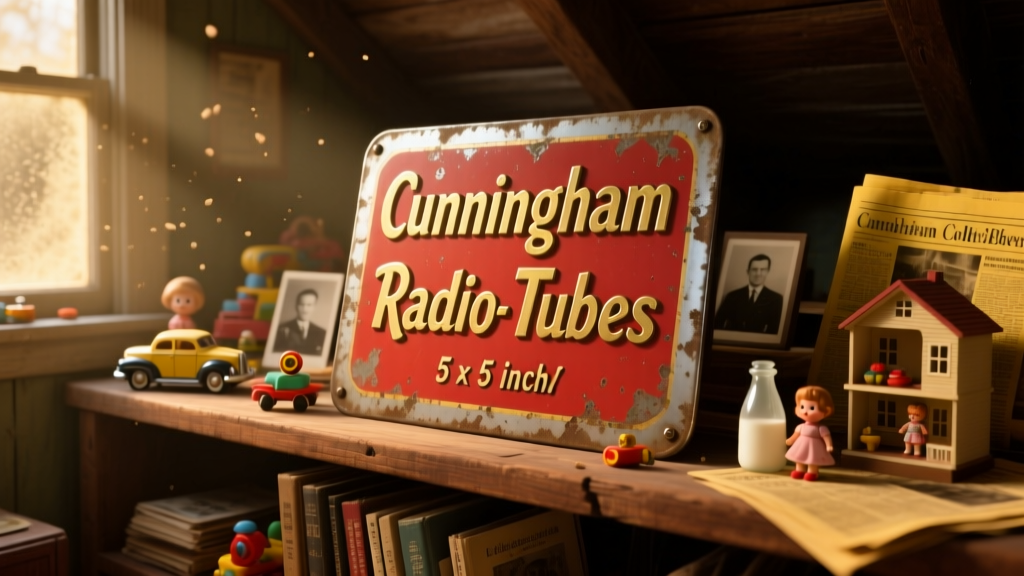
Cunninghham Radio Tubes Tin Advertising Sign (5 × 5 in): A Mid-Century Americana Artifact
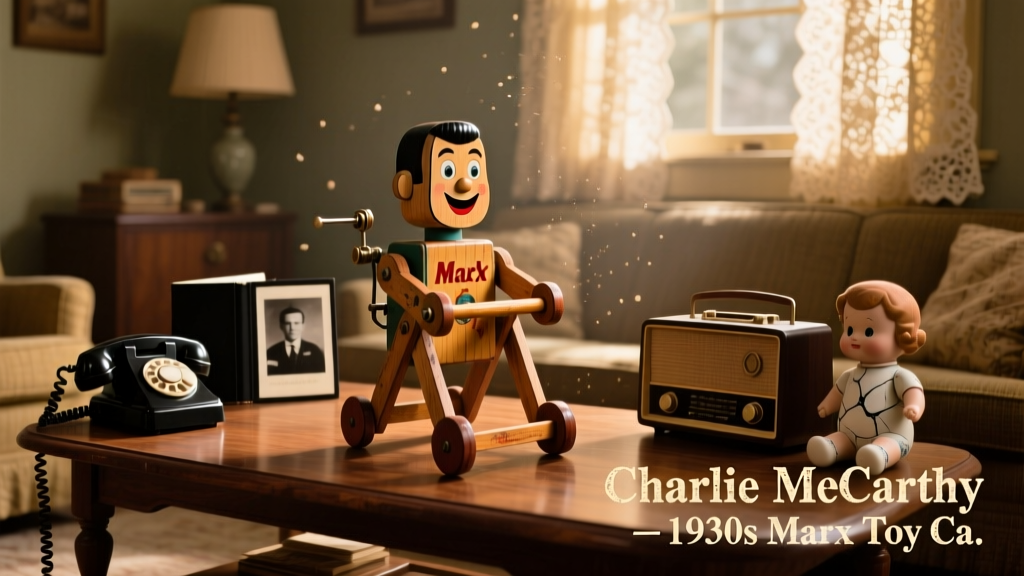
Charlie McCarthy Toy Walker Windup Marx: A Detailed Appraisal of the 1950s Iconic Puppet Automaton
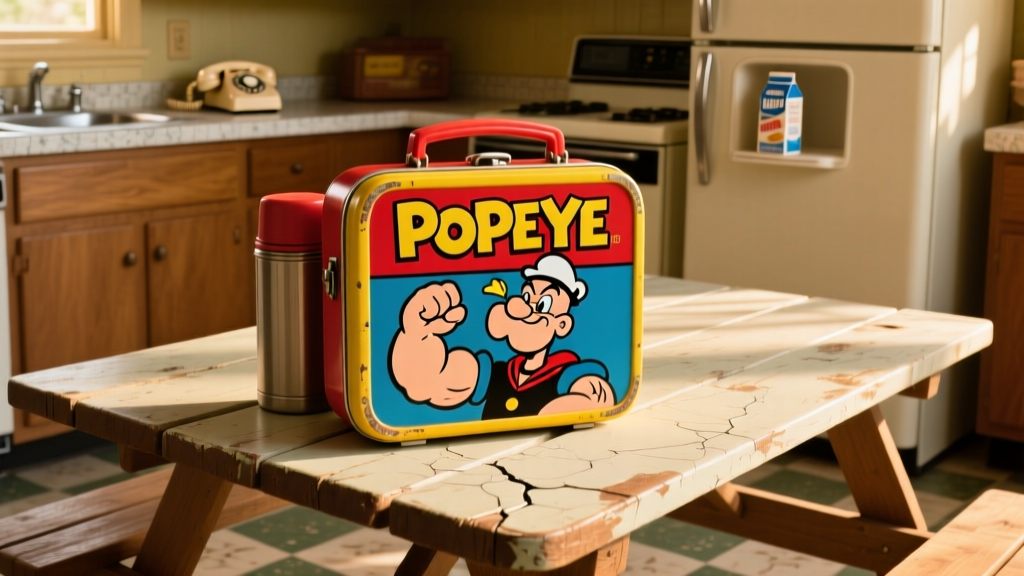
Popeye Lunch Box No Thermos (1980): A Collector’s Deep Dive into Aladdin’s Final Popeye Release

Creature from the Black Lagoon Snow Dome Paperweights: A Collector’s Guide to Mid-Century Hollywood Glass Memorabilia
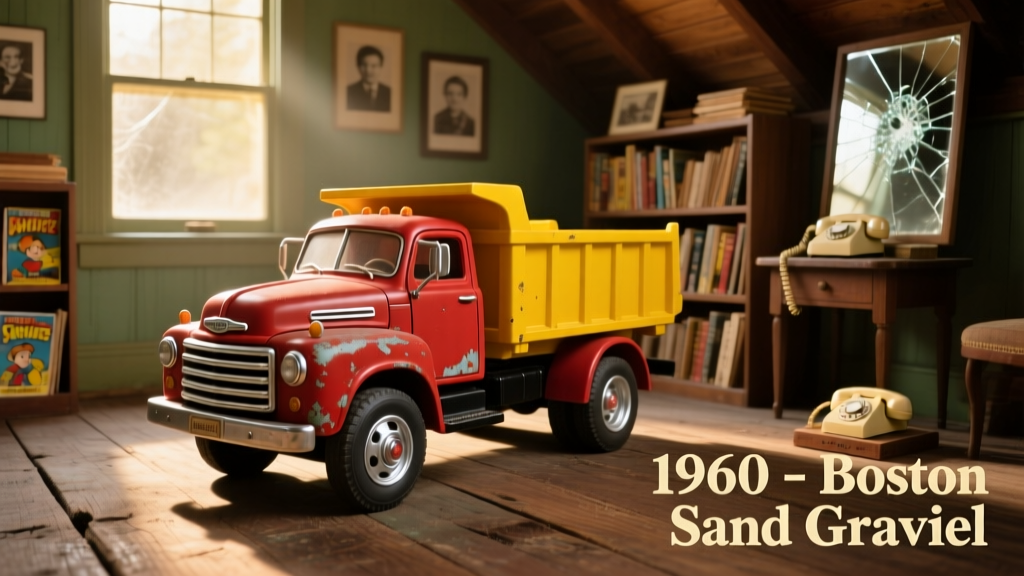
The 1960 Boston Sand & Gravel Dump Truck: A Mid-Century Engineering Marvel in Red and Yellow
Coca-Cola Bottle Display Clear C, Circa 1935 — The 20-Inch Double-Row Soda Fountain Showcase