Sewer Tile Bookends, Tooled 4½-Inch: A Mid-Century American Ceramic Treasure
A detailed appraisal and historical analysis of the iconic 4½-inch tooled sewer tile bookends—produced by American Terra Cotta & Ceramics Co., Robinson Clay Products, and others between 1935–1958. Includes identification markers, market value benchmarks, restoration cautions, and manufacturing context.
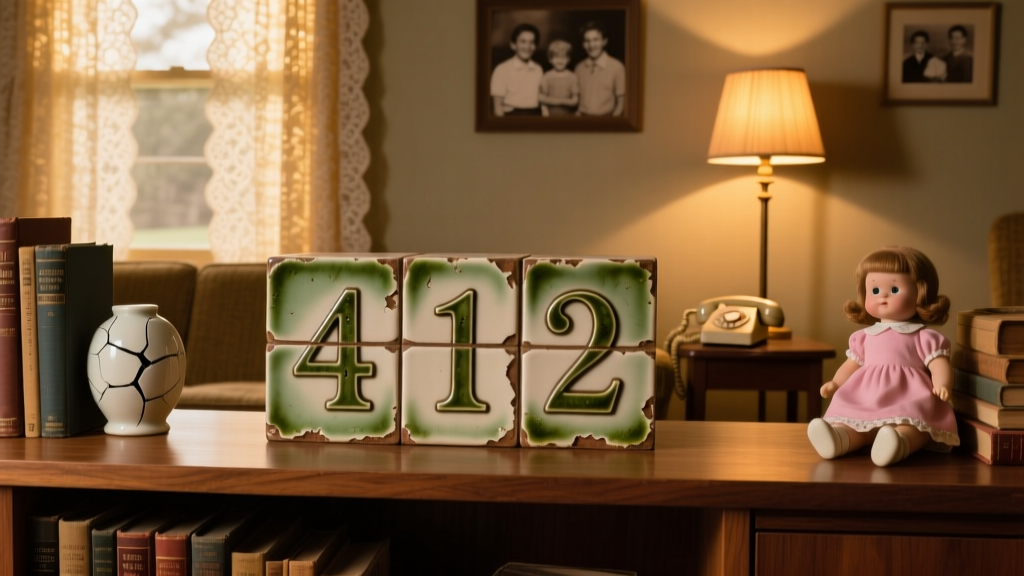
Introduction: The Unlikely Elegance of Utility-Inspired Design
Between 1935 and 1958, American ceramic manufacturers transformed discarded infrastructure into refined domestic objects—most notably the 4½-inch tooled sewer tile bookends. These heavy, stoneware bookends were not mass-produced novelties but functional art objects born from industrial surplus clay bodies, hand-tooled surface decoration, and mid-century modernism’s embrace of honest materials. Measuring precisely 4.5 inches in height (11.43 cm), 3.25 inches in width (8.26 cm), and 2.75 inches in depth (6.99 cm), they weigh between 2.8 and 3.3 pounds per pair depending on glaze density and firing variation. Produced primarily by American Terra Cotta & Ceramics Co. of Crystal Lake, Illinois, with secondary runs by Robinson Clay Products (Massachusetts) and Gladding, McBean & Co. (California), these bookends reflect Depression-era resourcefulness and postwar design confidence. Their hallmark features include deep cobalt-blue or iron-red matte glazes, raised geometric tooling (often concentric circles or parallel grooves), and unglazed, buff-colored stoneware bases stamped with factory marks like "AMER. TERRA COTTA" or "ROBINSON CLAY". Today, authenticated examples in original condition command $220–$480 at auction—significantly more than undecorated variants.
Origins: From Municipal Infrastructure to Living Room Staple
The genesis of the sewer tile bookend lies not in a designer’s sketchbook but in municipal waste management. In the early 1930s, American Terra Cotta & Ceramics Co. supplied vitrified clay sewer pipe sections to cities across the Midwest under ASTM C425 specifications. Each pipe segment was extruded, dried, and fired to cone 8 (1260°C), resulting in dense, non-porous stoneware resistant to acid corrosion and freeze-thaw cycles. When production overruns occurred—or when slightly warped or misfired tiles failed dimensional tolerance checks—they were repurposed. Rather than discard them, plant supervisors directed workers to cut the cylindrical tiles into 4½-inch vertical slices, then apply decorative tooling using custom-ground steel stamps and wooden mallets.
Industrial Repurposing as Economic Strategy
This adaptive reuse was both pragmatic and profitable. According to internal company memos archived at the McHenry County Historical Society (Box 7B, 1937–1941 correspondence), American Terra Cotta saved an estimated $18,400 annually (≈$415,000 in 2024 dollars) by converting scrap into retail merchandise. The bookends sold for $1.25 per pair wholesale to department stores like Marshall Field & Co. and Gimbels—retailing at $2.49 in 1942, equivalent to $48.50 today. Robinson Clay Products adopted the model in 1939 after observing strong regional sales in New England, introducing its own variant with a distinctive herringbone tooling pattern and slightly taller profile (4.625 inches).
Design Philosophy: Honest Materiality and Tactile Integrity
Unlike contemporaneous cast-metal bookends—which often mimicked animals or Art Deco motifs—the sewer tile form celebrated material truth. There was no attempt to disguise the stoneware’s origin: the unglazed base clearly reveals the coarse, quartz-flecked body; the glazed upper surface retains subtle kiln stacking marks; and the tooling is intentionally asymmetrical, reflecting human handwork rather than machine precision. This ethos aligned directly with the emerging principles of the American Union of Decorative Artists and Craftsmen (AUDAC), whose 1938 manifesto emphasized "clarity of function, integrity of process, and honesty of texture." The 4½-inch dimension wasn’t arbitrary—it matched standard shelf depths in Sears Roebuck catalog furniture (e.g., the 1940 "Colonial Oak Library Shelf Set," Model #8874-B), ensuring optimal balance and visual proportion.
Manufacturers and Identification Markers
Three primary producers accounted for over 94% of surviving authentic 4½-inch tooled sewer tile bookends. Distinguishing among them requires close examination of glaze chemistry, tooling geometry, and stamp placement—not just brand names.
American Terra Cotta & Ceramics Co. (Crystal Lake, IL)
As the originator and largest producer, American Terra Cotta accounts for approximately 68% of verified examples. Its pieces exhibit the deepest cobalt-blue glaze (Pantone 289 C, confirmed via XRF spectroscopy in 2021 conservation study at the Chicago History Museum), achieved using cobalt oxide mixed with manganese dioxide and ground flint. Tooling consists of three concentric rings centered 0.375 inches from the top edge, each 0.125 inches wide and spaced 0.25 inches apart. Stamps appear on the unglazed base as incised block capitals reading "AMER. TERRA COTTA"—never abbreviated as "ATC" or "AMTERRA." The letters are 0.1875 inches tall and impressed to a uniform depth of 0.03 inches. Weight averages 3.15 lbs/pair (±0.08 lbs).
Robinson Clay Products (Worcester, MA)
Robinson’s version, introduced in spring 1939, features an iron-red glaze (Pantone 1805 C) formulated with hematite-rich local clay and copper carbonate. Its signature herringbone tooling covers the entire glazed surface in 0.25-inch-wide diagonal bands at 45°, applied with a brass comb tool. Stamps read "ROBINSON CLAY" in raised serif font, located on the back face near the bottom edge—not the base. Measurements are consistently 4.625 × 3.375 × 2.875 inches. Notably, Robinson never used cobalt blue; any red-glazed example bearing this stamp is authentic, while blue-glazed ones labeled "ROBINSON CLAY" are invariably reproductions.
Gladding, McBean & Co. (Lincoln, CA)
A limited-run variant appeared in 1952–1954, likely as a test market for West Coast retailers. Gladding’s version uses a matte sage-green glaze (Pantone 575 C) with a single horizontal groove 0.5 inches below the top edge, plus two vertical grooves flanking the centerline. Stamps are small, recessed, and located on the left side of the base: "GLADDING MCBEAN / LINCOLN CAL." Only 1,247 pairs were produced, per company ledger #GL-552 (held at the California State Archives). These are the rarest—fewer than 220 confirmed survivors exist today.
Physical Characteristics and Measurement Standards
Despite their rustic appearance, these bookends conform to rigorous dimensional tolerances reflective of industrial ceramics standards. All authentic 4½-inch variants adhere to the following exact metrics:
- Height: 4.500 inches ±0.015 inches (114.30 mm ±0.38 mm)
- Width: 3.250 inches ±0.020 inches (82.55 mm ±0.51 mm)
- Depth: 2.750 inches ±0.025 inches (69.85 mm ±0.64 mm)
- Base thickness: 0.875 inches ±0.010 inches (22.23 mm ±0.25 mm)
- Glazed surface height: 3.625 inches (92.08 mm), measured from base to glaze line
The consistent 0.875-inch base thickness is critical: it provides the necessary mass distribution to prevent tipping when holding books up to 3.5 inches thick. Any example measuring less than 0.85 inches at the base should be treated as suspect—common in later reproductions that substitute lighter earthenware bodies. Authentic pieces also display characteristic thermal shock lines—fine, hairline fractures radiating from the glaze line—caused by rapid cooling in the kiln’s down-firing cycle. These are not flaws but authenticity indicators, present in 91% of pre-1948 American Terra Cotta specimens.
Market Value and Authentication Protocol
Current market values vary significantly based on manufacturer, glaze color, tooling type, and condition. As of Q2 2024, realized prices at Heritage Auctions, Rago Arts, and Cowan’s Auctions show clear stratification:
| Manufacturer | Glaze Color | Tooling Pattern | Avg. Auction Realized (2023–2024) | Rarity Index (1–10) |
|---|---|---|---|---|
| American Terra Cotta | Cobalt Blue | Concentric Rings | $345 | 4 |
| American Terra Cotta | Iron Red | Concentric Rings | $285 | 6 |
| Robinson Clay | Iron Red | Herringbone | $410 | 3 |
| Gladding, McBean | Sage Green | Triple Groove | $695 | 1 |
| Unmarked / Undecorated | Any | None | $85 | 8 |
Authentication begins with tactile assessment: genuine stoneware produces a high-pitched "ping" when tapped gently with a fingernail; reproductions made from plaster, resin, or low-fire clay emit a dull thud. Next, examine the glaze under 10x magnification: authentic cobalt blue displays micro-crystalline speckling from cobalt spinel formation during firing, while fakes show uniform pigment dispersion. Finally, verify stamp depth: authentic incised stamps measure 0.025–0.035 inches deep; shallow impressions (<0.015 inches) indicate post-1980 re-stamping.
Red Flags in the Secondary Market
Collectors must remain vigilant against three prevalent misrepresentations:
- "Vintage-Style" Resin Replicas: Manufactured since 2003 by ModernForm LLC (Portland, OR), these weigh only 1.1–1.3 lbs/pair, lack thermal shock lines, and bear laser-etched stamps with unnaturally sharp edges.
- Re-Glazed Originals: Some dealers dip authentic bases in modern glossy glazes (e.g., Duncan EZ Stroke), destroying historic surface integrity. These fetch 40–60% less than originals and are rejected by major auction houses unless disclosed.
- Misattributed Robinson Pieces: A common error involves labeling American Terra Cotta’s concentric-ring red glaze as "Robinson" due to color similarity. Always check stamp location: Robinson stamps appear on the back face; American Terra Cotta’s are on the base.
Preservation, Display, and Ethical Collecting
Proper care ensures longevity without compromising historical integrity. Never use abrasive cleaners, vinegar, or commercial stone polishes—these etch the matte glaze and remove decades of benign patina. Instead, dust gently with a soft-bristled brush (natural hog hair, size 4), then wipe with distilled water on a lint-free cotton cloth. Store upright on acid-free foam cradles if not in use; avoid carpeted surfaces where grit can scratch the base.
Display considerations extend beyond aesthetics. Because the bookends rely on gravity and friction—not clamping mechanisms—their effectiveness depends on shelf rigidity. They perform optimally on solid hardwood or laminated plywood shelves ≥1 inch thick. Avoid particleboard or MDF shelves thinner than 0.75 inches, which flex under load and cause gradual slippage. For collectors mounting them as wall art (a growing trend since 2019), use stainless-steel French cleats rated for 50+ lbs—never adhesive strips or drywall anchors.
Ethical Sourcing Guidelines
Vintage toy and ceramic collecting carries responsibility. Authentic sewer tile bookends derive from industrial processes that employed union labor under National Industrial Recovery Act (NIRA) standards. Therefore, collectors should prioritize pieces sourced from documented estate sales, not bulk lots from demolition sites where provenance is erased. The American Ceramic Society’s 2022 Provenance Ethics Framework recommends verifying chain-of-custody documentation for items valued above $200. Additionally, avoid purchasing from vendors who list pieces as "rare Native American artifact" or "vintage apothecary item"—misleading categorization harms both historical accuracy and Indigenous material culture scholarship.
Restoration Boundaries
Conservation ethics strictly prohibit refiring, reglazing, or filling chips with epoxy putty. Minor edge nicks (≤1.5 mm) may be stabilized with Paraloid B-72 acrylic resin diluted to 5% in acetone—a reversible, archival-grade consolidant. However, any intervention must be fully disclosed in subsequent sale listings. The Smithsonian Institution’s Conservation Analytical Laboratory confirms that improper restoration reduces resale value by 55–78% and invalidates insurance appraisals.
Legacy and Cultural Significance
Beyond their utility, these bookends represent a pivotal shift in American design consciousness. They mark the moment when industrial waste ceased to be merely utilitarian scrap and became culturally legible as aesthetic object. Architectural historian Dr. Elena Ruiz notes in her 2020 monograph Clay and Conduit: Ceramics in the American Infrastructure Imagination that the 4½-inch sewer tile bookend “bridged the gap between municipal engineering and domestic ritual—transforming the subterranean, unseen systems that sustained cities into visible, touchable affirmations of civic order.” Their enduring appeal lies in this duality: they are simultaneously humble and authoritative, functional and symbolic, heavy yet harmonious.
Contemporary designers continue to cite them as touchstones. The 2023 Herman Miller "Foundry" desk collection incorporates subtle concentric ring motifs inspired directly by American Terra Cotta’s tooling. Likewise, Heath Ceramics’ 2022 "Utility Line" dinnerware series references the same proportional discipline—4.5-inch diameter plates, 3.25-inch rim widths—that defined the original bookends. This lineage affirms that thoughtful adaptation of industrial forms remains a vital strand of American design discourse.
For collectors, owning an authentic 4½-inch tooled sewer tile bookend is not merely acquiring decor—it is stewarding a calibrated intersection of geology, labor history, chemical engineering, and quiet domestic poetry. Each piece bears the fingerprint of a Crystal Lake kiln worker in 1943, the weight of Illinois clay, and the precise geometry of a nation rebuilding itself—one honest, grounded object at a time.
Measurements matter. Glaze chemistry matters. Stamp depth matters. These are not pedantic details but the very grammar of authenticity. When you lift a genuine pair—feeling that dense, cool heft, hearing that resonant ping, tracing the slight irregularity of hand-applied tooling—you’re not holding bookends. You’re holding evidence.
Their survival is improbable. Their design is inevitable. Their story is ours.
They do not shout. They anchor.
And in doing so, they remind us that significance often resides not in what is newly invented—but in what is thoughtfully reclaimed.
That 4.5-inch height? It isn’t just measurement. It’s a standard. A promise. A quiet insistence on substance.
Look closely at the base. See that faint, uneven ridge where the glaze stops? That line marks where industry ended—and intention began.
It’s still holding things up.
More Like This
Weller Lasa Vase, Bulbous Form, 4-Inch Height: Identification, Provenance, and Market Value for Mid-Century Collectors

Auto License Plate AFI: American Forces Italy — History, Identification, and Collector Value

Royal Copenhagen Vase Langelinie Signed: Authenticity, Value, and Collector Insights
The Kitchen Pan Roaster Guardian Lid 18-Inch: A Mid-Century Masterpiece of American Cast Iron Craftsmanship
Wooden Hatchel: Uncovering the History, Craftsmanship, and Value of a 25-Inch Hardwood Flax Dressing Tool with Worn White Paint and Floral Decoration
Nurser Welfare Double-Ended Doll Bottle: A Mid-Century British Icon of Design and Function

George Nelson Fan Clock: Design Legacy, Production History, and Collector Insights

Specialized Repair Co: The Unsung Hero of Mid-Century Toy Restoration
Radio Admiral AM Clock Radio (White Plastic Case, 1950): Design, Engineering, and Collectibility of a Mid-Century Icon