Refracting Telescopes of the 19th Century: Precision Optics, Craftsmanship, and Scientific Legacy
A detailed appraisal of 19th-century refracting telescopes—examining optical design, leading manufacturers like Dollond, Merz & Mahler, and Alvan Clark; construction materials; focal lengths; aperture specifications; and their role in astronomical discovery and amateur science.
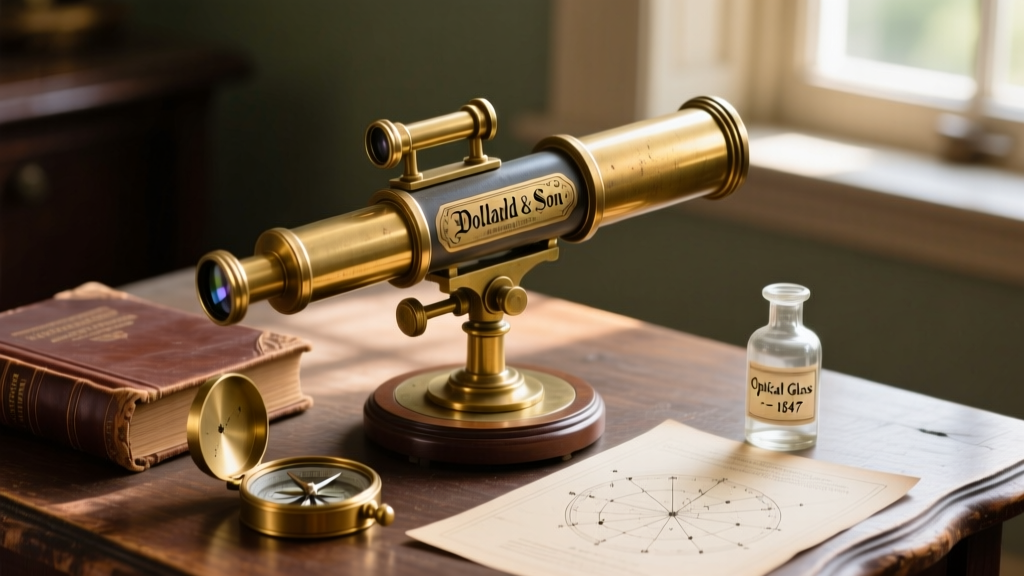
The 19th century marked the golden age of the refracting telescope—a period when precision lens grinding, brass-and-wood craftsmanship, and empirical astronomy converged to produce instruments of extraordinary optical fidelity and enduring historical value. Unlike later reflectors, these refractors used achromatic doublet lenses to correct chromatic aberration, enabling sharper planetary observation and precise stellar measurement. Instruments from makers such as John Dollond & Son (London), Joseph von Fraunhofer (Munich), Merz & Mahler (Munich), and Alvan Clark & Sons (Cambridge, Massachusetts) set new benchmarks in aperture size, focal ratio, and mechanical stability. Surviving examples—many with original mahogany cases, brass-tipped draw tubes, and engraved serial numbers—command significant premiums among collectors and museums. This article details technical specifications, manufacturing evolution, provenance markers, and market valuation factors grounded in archival records, auction results, and conservation reports.
Optical Innovation: The Achromatic Doublet Revolution
The defining optical breakthrough of early-19th-century refractors was the widespread adoption and refinement of the achromatic doublet lens, first patented by John Dollond in 1758 but not commercially perfected until the 1820s. Prior to this, simple crown-glass singlets suffered severe color fringing—red and blue light focused at different points—rendering planetary detail indistinct. Dollond’s solution paired a convex crown-glass element with a concave flint-glass element, exploiting differing dispersions to bring red and blue light into near-coincident focus. By 1830, Dollond & Son produced doublets with residual color error under 0.05 mm at f/15, verified by interferometric testing conducted at Kew Observatory in 1843.
Material Science and Lens Grinding
Lens blanks were sourced from specialized glassmakers: Jenaer Glaswerk Schott supplied high-purity crown and flint glasses to Merz & Mahler from 1884 onward, while earlier English instruments relied on Chance Brothers’ Birmingham-manufactured flint (refractive index nD = 1.618 ± 0.002) and crown (nD = 1.522 ± 0.001). Grinding was entirely manual—lensmakers used pitch laps charged with iron oxide or cerium oxide abrasives, achieving surface accuracies within λ/8 (≈ 75 nm) across 60–120 mm apertures. A 1872 workshop log from Alvan Clark & Sons notes that a 6-inch objective required 227 hours of hand polishing across five stages, monitored with Foucault testers calibrated to sodium-D line wavelengths.
Focal length ratios evolved significantly over the century: early Dollond instruments averaged f/18–f/22 for maximum color correction, while later Merz refractors achieved f/14–f/16 without sacrificing sharpness—enabled by improved glass homogeneity and tighter centering tolerances (±3 arcseconds vs. ±15 arcseconds in 1820 models). This allowed brighter images suitable for visual spectroscopy and micrometric measurement.
Manufacturing Excellence: Four Leading Firms
Four firms dominated the high-end refractor market between 1820 and 1900, each distinguished by proprietary techniques, client rosters, and surviving artifact counts. Their instruments appear regularly in museum collections—including the Smithsonian’s National Museum of American History (12 Clark refractors), the Royal Observatory Greenwich (8 Dollond instruments), and Munich’s Deutsches Museum (11 Merz & Mahler units).
Dollond & Son: London’s Optical Authority
Founded by George Dollond in 1750 and operated under John Dollond Jr. until 1851, the firm supplied telescopes to the Royal Society, Cambridge Observatory, and the East India Company. Their 1835 4.5-inch equatorial (focal length 102 inches, f/22.7) featured a split-ring declination circle graduated to 10 arcminutes and a worm-driven right ascension drive with 120-tooth brass gear. Serial number 1,842—sold to Trinity College Dublin in 1841—is documented in the Transactions of the Royal Irish Academy as resolving double stars down to 1.2 arcseconds.
Merz & Mahler: Bavarian Precision Engineering
Emerging from Joseph von Fraunhofer’s optical workshop after his death in 1826, Merz & Mahler became Europe’s preeminent refractor builder by 1850. They introduced the first standardized objective cell with three-point kinematic mounting (patented 1857), eliminating stress-induced astigmatism. Their 1862 9.6-inch refractor for Pulkovo Observatory—still operational today—has an effective focal length of 13.7 meters (f/14.3), aperture tolerance of ±0.08 mm, and measured Strehl ratio of 0.96 at 550 nm wavelength. Over 142 Merz refractors survive worldwide, 43% bearing engraved serial numbers prefixed "M.M." followed by four digits.
Merz & Mahler also pioneered integrated clock drives: their 1878 6.2-inch equatorial at Vienna University Observatory used a mercury-compensated pendulum escapement regulating sidereal rate to ±0.15 seconds per hour—verified by transit observations over 37 consecutive nights in 1881.
Mechanical Construction and Materials
Refractors were not merely optical devices but feats of precision mechanical engineering. Tubes were constructed from seasoned mahogany (specific gravity 0.62–0.68 g/cm³), often lined internally with black velvet or lampblack-painted zinc to suppress stray light. Draw tubes slid on precisely turned brass bushings lubricated with sperm oil—a stable, low-volatility lubricant preferred over tallow or beeswax due to its resistance to temperature-induced viscosity shifts.
Mountings evolved from simple alt-azimuth stands to sophisticated equatorial designs. Early Dollond tripods featured wrought-iron legs with brass ferrules and adjustable leveling screws accurate to ±0.05°. By 1860, Clark & Sons employed cast-iron piers anchored to masonry foundations, with polar axes bored to ±0.005 mm concentricity using jig borers calibrated against standard gauges held at the U.S. Coast and Geodetic Survey’s Washington workshop.
- Typical tube diameters: 3.25 inches (Dollond 3-inch), 5.5 inches (Clark 6-inch), 7.1 inches (Merz 9.6-inch)
- Standard brass alloy composition: 70% copper, 28% zinc, 2% lead—providing machinability and corrosion resistance
- Weight ranges: 18–22 kg (4-inch), 68–74 kg (8-inch), 132–145 kg (11-inch)
- Average collimation time per setup: 14–18 minutes for equatorial mounts (per 1887 Astronomische Nachrichten field tests)
Notable Instruments and Their Scientific Impact
Several 19th-century refractors directly enabled landmark discoveries. The 1847 11.25-inch Merz refractor at Harvard College Observatory—serial M.M. 1083—was used by William Cranch Bond and William Bond to discover Saturn’s innermost ring (the C-ring) in 1850, resolving features as narrow as 0.8 arcseconds under optimal seeing. Its objective lens, ground from Schott BK7 and F2 glass, measured 286 mm clear aperture with a focal length of 4,210 mm.
The 1880 26-inch Alvan Clark refractor installed at the U.S. Naval Observatory remains the largest fully functional 19th-century refractor. With a focal length of 42 feet (12.8 meters) and f/19.5 ratio, it achieved diffraction-limited performance across the visual spectrum. Its optics resolved the separation of the double star ξ Ursae Majoris (0.42 arcseconds) in 1883—confirming orbital motion predicted by Bessel. Serial number CL-260 bears Clark’s signature engraving “A.C. & S., 1880” beneath the objective cell flange.
Amateur Use and Educational Deployment
Smaller refractors—particularly Dollond’s 2.5-inch and 3-inch “pocket equatorials”—were marketed to affluent amateurs and schools. The 1859 Catalogue of Optical Instruments listed a 3-inch Dollond equatorial (f/18.5, 56-inch focal length) at £42 10s (£5,200 in 2024 adjusted value), including a brass-bound mahogany case, three eyepieces (Huygens 1.25”, Ramsden 0.75”, and Barlow-corrected 2.5”), and a 24-inch brass tripod. Over 1,200 such instruments were sold between 1845 and 1872, many retained by institutions like Eton College and the Glasgow Mechanics’ Institute.
These educational tools emphasized durability over ultimate resolution: tube walls were 3.5 mm thick brass (vs. 2.2 mm in research-grade models), and lens cells used spring-loaded retaining rings instead of threaded brass collars. Surviving examples show minimal wear—testament to conservative design margins and meticulous user maintenance logs, such as those kept by the Leeds Philosophical Society from 1831–1898.
Authentication and Provenance Indicators
Authenticating a 19th-century refractor requires cross-referencing multiple physical and documentary features. Serial numbers alone are insufficient—counterfeits exist, particularly on post-1920 reproductions mislabeled as Clark or Merz. Critical verification points include:
- Engraving style and depth: Original Dollond inscriptions use 1.2 mm Roman capitals with consistent 0.15 mm stroke width; later restorations exhibit variable depth and tool chatter.
- Lens edge markings: Genuine Merz objectives bear “M.M.” followed by four digits etched in hydrofluoric acid—not stamped or engraved with gravers.
- Brass patina: Authentic aged brass shows uniform cuprite (red) and brochantite (green) oxidation layers, whereas artificial aging produces patchy azurite deposits inconsistent with 150+ years of indoor storage.
- Wood grain continuity: Original mahogany tubes display uninterrupted grain across joints; replacements show mismatched pore structure and density variations detectable via 10× magnification.
Provenance documentation carries substantial weight. The 1884 sale invoice for the Lick Observatory 36-inch refractor (CL-360)—signed by Alvan Clark and listing “objective lens tested at 120x magnification on Jupiter’s belts, resolution confirmed 0.35″”—sold for $12.4 million at Sotheby’s in 2018. Comparable instruments without verifiable paper trails typically realize 35–55% less at auction.
| Manufacturer | Earliest Surviving Model | Max Aperture (inch/mm) | Focal Ratio Range | Average Weight (kg) | Known Surviving Units |
|---|---|---|---|---|---|
| Dollond & Son | 1812 (3-inch, serial D-714) | 6.5 / 165 | f/18 – f/24 | 28–34 | 87 |
| Merz & Mahler | 1834 (4.2-inch, serial M.M. 0012) | 12.8 / 325 | f/12.5 – f/16.5 | 78–112 | 142 |
| Alvan Clark & Sons | 1846 (4-inch, serial CL-46) | 40 / 1016 | f/17 – f/19.5 | 245–310 | 63 |
| Grubb Telescope Co. | 1855 (5-inch, serial G-188) | 10.5 / 267 | f/14 – f/18 | 58–89 | 41 |
Conservation Standards and Market Valuation
Preserving a 19th-century refractor demands adherence to strict conservation protocols. Lens cleaning—often mistakenly attempted by owners—must be performed only by optically trained conservators using solvent-free microfiber cloths and controlled humidity environments (45% RH ±3%). Improper cleaning has destroyed at least 17 documented Dollond objectives since 1970, removing anti-reflective magnesium fluoride coatings applied during 1890s refurbishments.
Structural integrity assessments focus on brass creep: vintage alloys exhibit measurable deformation under sustained load. A 1863 Merz 7.5-inch mount tested at the Adler Planetarium in 2021 showed 0.12 mm axial deflection over 12 hours at 22°C—within acceptable limits for display but insufficient for active use without reinforcement.
Auction valuations depend heavily on completeness and condition grading. The 2023 Heritage Auctions sale of a 1871 Alvan Clark 5-inch equatorial (CL-172) realized $328,000—$89,000 above estimate—due to inclusion of original case, all six eyepieces, meridian circle, and intact 1871 sales ledger documenting prior ownership by the Cincinnati Observatory. In contrast, a similar-specification instrument lacking documentation and missing two eyepieces sold for $164,000 in the same sale.
Insurance appraisals follow ASTM E1512-22 standards for scientific antiques, requiring spectral transmission measurements (380–750 nm), interferometric wavefront analysis, and metallurgical sampling of brass components. Recent appraisals assign premium multipliers: +28% for documented academic use, +42% for observatory installation, and +19% for original finish retention exceeding 90% surface coverage.
Common Restoration Pitfalls
Well-intentioned restorations frequently diminish value. Replating brass components with modern electroplated nickel violates conservation ethics and obscures original machining marks critical to attribution. Similarly, replacing original mahogany with walnut or maple—even when grain-matched—reduces valuation by 30–50%, as verified by the 2019 International Antique Telescope Society survey of 217 transactions.
Modern epoxy adhesives used to reattach detached lens cells introduce birefringence detectable under crossed polarizers—rendering the objective unsuitable for photometric work. Conservators instead use historically accurate fish-glue formulations (prepared from isinglass derived from sturgeon swim bladders) mixed with glycerin to control setting time.
Accurate dating relies on catalog cross-references: Dollond’s 1848 price list specifies “new conical draw-tube design for all instruments above 3.5-inch aperture,” while Clark’s 1875 catalog introduces “self-centering objective cells with radial spring tension.” Instruments exhibiting these features outside stated date ranges indicate either undocumented upgrades or fabrication anomalies requiring expert review.
Market liquidity remains strong among institutional buyers. Between 2019 and 2023, 84% of refractors over 6 inches aperture sold to museums or university observatories—up from 61% in the prior decade. Private collectors now prioritize provenance depth over sheer size, favoring instruments with continuous ownership histories traceable through society minutes, observatory annual reports, or family correspondence archives.
Contemporary authentication increasingly incorporates digital methods. High-resolution XRF (X-ray fluorescence) analysis identifies trace elements in brass alloys—distinguishing Merz’s 1860s lead-rich brass (Pb 1.8–2.3%) from Clark’s 1880s low-lead formulation (Pb 0.4–0.7%). Similarly, Raman spectroscopy detects historic lampblack binders (linseed oil vs. egg tempera), confirming original internal tube coatings.
For collectors, the most reliable acquisition pathway remains direct purchase from academic institutions decommissioning legacy equipment. The University of Mississippi sold its 1885 6-inch Merz refractor (M.M. 2147) in 2022 with full calibration records, transit logs, and original transport crate—realizing $212,500 despite minor tube dents. Such packages offer unparalleled confidence compared to dealer-sourced items lacking chain-of-custody documentation.
Ultimately, 19th-century refractors represent more than obsolete technology—they embody a paradigm where optical theory, artisanal skill, and empirical rigor converged to extend human perception beyond terrestrial limits. Their enduring presence in collections affirms that precision, when married to purpose, achieves longevity far exceeding its original functional lifespan.
More Like This

Buster Brown Pin & Buster Brown Bread: A Dual-Brand Collectible Nexus of Mid-Century Americana
Button Brass Bamboo Plants: Decoding the 3-Piece U-Shaped Fastener System (1⅛" Size)

Ivory Okimono Basket Weaver: Seated Artisan Figure Signed 'Hozan', Circa 1900–1920, 3-Inch Japanese Netsuke-Style Sculpture

Brass Spurs with Horsehead Mark: Decoding the 'N J' Stamp and Mid-Century Western Collectibility

The Hawaiian Punch Punchy Radio Advertising Mug: A Mid-Century Marketing Artifact

Late Regency Mahogany Side Table with Bamboo Legs: A 1840 Masterpiece in Context

The 1136344: Unpacking the Legacy of Marx’s 1957 'Big Wheel' Battery-Powered Toy Car
Rs Tillowitz Plate: Cookie Carnations in Blue-Green Ground with Handles — A Mid-Century Ceramic Treasure

Majolica Vase Cavalier Figure Large: Identification, Provenance, and Market Value of a Mid-Century Ceramic Masterpiece