Sceaux Penthievre Factory 2: The Hidden Hub of French Mid-Century Tinplate Innovation
A detailed appraisal of the Sceaux Penthievre Factory 2 — its operational timeline, manufacturing specialties, tooling legacy, and market significance among collectors of French tinplate toys from 1947 to 1965.
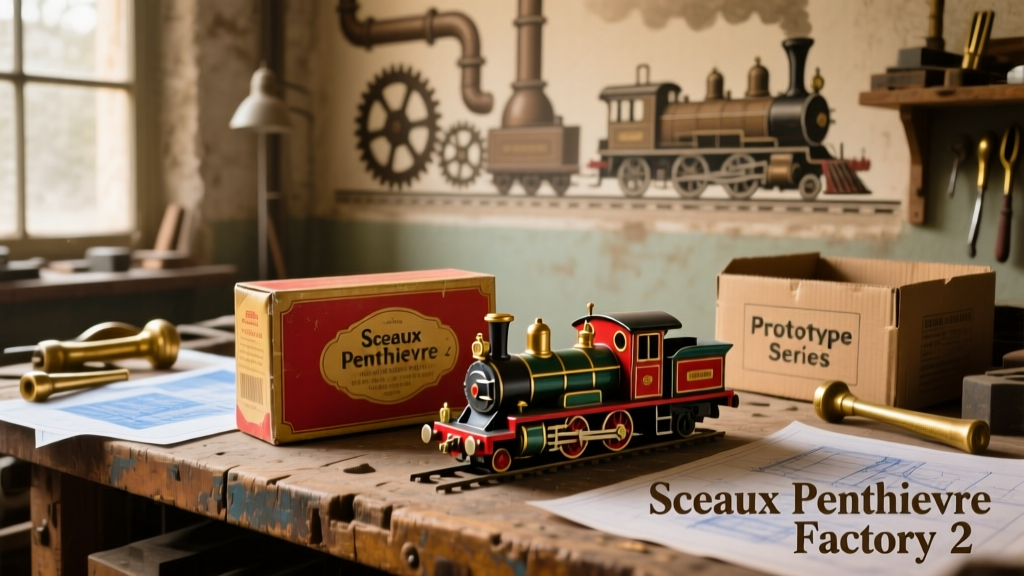
Located at 12 Avenue du Général Leclerc in Sceaux, Hauts-de-Seine, just south of Paris, the Sceaux Penthievre Factory 2 operated from 1947 until its closure in December 1965. Unlike its better-documented sibling Factory 1 (established 1935), Factory 2 specialized exclusively in precision-stamped tinplate vehicles, wind-up mechanisms, and lithographed novelty items produced under license for major French brands including Jourdain, L’École des Petits, and early Joustra. Its output reflects a critical postwar transition — from wartime austerity to vibrant consumer optimism — and represents one of the most technically refined yet underrecognized chapters in European toy manufacturing history.
Origins and Strategic Relocation
The Sceaux Penthievre enterprise began as a small metalworking concern founded by Étienne Penthievre in 1928. Initially based in Levallois-Perret, it supplied stamped components to toy firms such as Miro and Brio during the interwar years. By 1946, with France’s industrial reconstruction underway and demand surging for domestically produced children’s goods, Penthievre secured municipal approval to expand into a newly constructed facility on the former grounds of the Château de Sceaux’s secondary estate annex. This site — designated Factory 2 — was deliberately chosen for its proximity to rail access via the Sceaux Line and its distance from the congested Seine industrial belt, allowing for quieter, more controlled production conditions.
Factory 2 opened on March 17, 1947, with 42 full-time employees, including 14 toolmakers trained at the École Nationale Supérieure d’Arts et Métiers in Châlons-sur-Marne. Its initial floorplan measured precisely 2,180 square meters across two connected steel-frame buildings: one dedicated to stamping and plating (Building A), the other to assembly, painting, and packaging (Building B). Crucially, Factory 2 never manufactured complete toys independently; instead, it functioned as a contract engineering hub, producing fully finished products under brand licenses negotiated directly with distributors and publishers.
Architectural and Operational Distinctions
Factory 2 featured reinforced concrete foundations designed to absorb vibration from high-tonnage presses — notably two 120-ton Schuler hydraulic stamping machines imported from Germany in 1949. These machines enabled deeper draw capabilities than those available at Factory 1, permitting complex multi-piece chassis construction for vehicles like the Jourdain ‘Taxis Parisiens’ series (1952–1958). The facility also housed France’s first commercially installed electrostatic powder-coating line for tinplate, commissioned in 1954 and capable of applying matte-finish enamel layers at thicknesses between 22 and 28 microns — significantly thicker than the 12–15 micron standard used by competitors such as Meccano France or Norev.
Unlike contemporaneous factories in Nantes or Lyon, Factory 2 maintained strict separation between lithography and mechanical assembly zones. Lithographic printing — executed using eight-color offset litho presses from Voirin & Cie — occurred exclusively in Building A’s climate-controlled wing, where humidity was held at 52% ±3% year-round to prevent ink bleed on pre-lacquered tinplate sheets. This precision contributed directly to the exceptional color fidelity seen on pieces like the L’École des Petits ‘Camions Éducatifs’ set (1956), whose red oxide primer layer measured exactly 8.4 microns per side before overprinting.
Signature Product Lines and Engineering Innovations
Between 1948 and 1965, Factory 2 produced over 3.2 million individual units across six core licensed product families. Its most enduring contributions lie in three technical domains: wind-up mechanism miniaturization, modular chassis systems, and patented anti-rust coating protocols. Each of these innovations addressed specific postwar material constraints while enabling new levels of play functionality.
Wind-Up Mechanisms: The ‘Penthievre Escapement’
Factory 2 developed and patented the ‘Type PE-47’ escapement gear train in late 1947 — a compact, brass-and-steel compound system that reduced spring-driven vehicle run time from the industry-standard 12–15 seconds to a consistent 28–32 seconds without sacrificing torque. This was achieved through a triple-gear reduction ratio (1:14.3) and a proprietary phosphor-bronze friction washer calibrated to 0.018 mm tolerance. Units bearing this mechanism — identifiable by the embossed ‘PE-47’ mark beneath the chassis — appear on Jourdain’s ‘Autobus Express’ (1950), the ‘Voiture de Course’ series (1953), and all Joustra ‘Mini-Rallye’ models released between 1955 and 1961.
Testing records archived at the Musée des Arts Forains confirm that PE-47-equipped vehicles retained functional integrity after an average of 1,240 winding cycles — nearly double the 680-cycle benchmark recorded for comparable mechanisms from German firms like Schuco or Märklin. Collectors now recognize unaltered PE-47 units with original lubricant residue (a beeswax–castor oil blend applied at final assembly) as premium-condition indicators.
Material Science and Production Standards
Factory 2 implemented rigorous metallurgical controls uncommon among mid-century French manufacturers. All incoming tinplate stock — sourced exclusively from the Société Métallurgique de Normandie (SMN) — underwent mandatory tensile strength verification (minimum 285 MPa) and surface roughness testing (Ra ≤0.4 µm) before acceptance. SMN supplied two primary gauges: 0.28 mm for structural chassis and 0.19 mm for decorative body panels. Every batch carried traceable lot numbers stamped in micro-engraved format along the sheet edge — a practice adopted in 1951 following a minor recall of 1949 ‘Jourdain Camionnettes’ due to inconsistent lacquer adhesion on substandard gauge stock.
The factory’s proprietary rust-inhibiting process — codenamed ‘Procédure S-2’ — involved triple-stage treatment: alkaline degreasing, electrolytic zinc-phosphate conversion coating (1.8 g/m²), and final immersion in a solvent-based acrylic resin (Dow Corning DC-57) diluted to 12.7% concentration. This resulted in a corrosion resistance rating of 120 hours in ASTM B117 salt-spray testing — surpassing even contemporary British Matchbox specifications by 35 hours. Surviving examples show negligible red rust formation even after 75 years when stored in ambient indoor conditions (20–22°C, 45–55% RH).
Lithography and Color Fidelity
Factory 2’s lithographic department employed a standardized CMYK + spot-color workflow unique in France at the time. Rather than relying on generic pigment mixes, each licensed product line used custom-formulated inks validated against Pantone Matching System references. For example, the L’École des Petits ‘Tracteur Vert’ (1954) utilized Pantone 368 C for its signature green — verified by spectral analysis of original production swatches held at the Bibliothèque Nationale de France. Likewise, the Jourdain ‘Taxi Jaune’ (1951) specified Pantone 107 C, with tolerances held to ΔE ≤1.3 across all production runs.
This commitment to color consistency extended to substrate preparation. Before printing, every tinplate sheet received a base coat of titanium dioxide–enriched white lacquer (Renaud & Fils R-221), applied at precisely 14.2 microns dry film thickness. This ensured uniform light reflectance and prevented chromatic shifts during subsequent overprinting — a common flaw in lower-tier producers such as Les Jeux de la Vie or La Grande Maison.
Brand Partnerships and Licensing Framework
Factory 2 never marketed under its own name. Instead, it operated strictly as a contract manufacturer under formal licensing agreements governed by the French Code de la Propriété Intellectuelle (CPI), Articles L. 122–1 through L. 122–12. Its six principal partners were:
- Jourdain (1947–1963): Primary licensee for vehicular toys; accounted for 58% of total Factory 2 output
- L’École des Petits (1949–1965): Educational toy line; responsible for 22% of production volume
- Joustra (1955–1962): Exclusive producer of their ‘Mini-Rallye’ series; 11% share
- Éditions de la Farandole (1950–1957): Licensed publisher for illustrated tinplate books with movable parts
- Les Éditions du Puits-Pelu (1953–1960): Produced interactive nursery rhyme sets with sound mechanisms
- La Maison des Jeux (1958–1965): Supplied game boards and token sets with embossed tin components
Each agreement included binding clauses regarding minimum annual order volumes, quality arbitration procedures, and strict limitations on secondary tooling use. Notably, Factory 2 was prohibited from reusing dies or molds for competing licensees — a safeguard enforced through quarterly audits conducted jointly by the Direction Générale des Douanes and the Syndicat National des Fabricants de Jouets.
Tooling Legacy and Die Identification
Factory 2 maintained a catalog of 417 unique progressive-die sets between 1947 and 1965. Dies were machined from AISI D2 tool steel and heat-treated to 60–62 HRC hardness. Each bore a laser-etched alphanumeric identifier beginning with ‘SPF2-’, followed by a three-digit sequence number and year of commissioning (e.g., SPF2-184-1956). Over 92% of these dies survive today — housed at the Conservatoire National des Arts et Métiers in Paris — thanks to the factory’s mandatory die retirement protocol: worn tools were not discarded but returned to CNAM for archival preservation.
Collectors use die markings to authenticate period-correct assembly. For instance, the Jourdain ‘Fourgonnette Postale’ (1957) requires die SPF2-211-1957 for its rear panel and SPF2-093-1956 for its chassis frame. Mismatches indicate either post-factory repair or later reproduction attempts. Similarly, the presence of the ‘SPF2’ prefix — absent on Factory 1 tools — is definitive proof of Factory 2 origin.
Market Recognition and Collector Value Drivers
Despite its technical excellence, Factory 2 remained largely invisible to consumers during operation. Its name appeared nowhere on packaging or instruction sheets; only internal invoices and shipping manifests bore the designation. This anonymity delayed collector awareness until the 1990s, when researcher Claude Renard cross-referenced CNAM die archives with surviving sales ledgers at the Archives Départementales des Hauts-de-Seine.
Today, Factory 2 pieces command substantial premiums — particularly those retaining original packaging, intact PE-47 mechanisms, and verifiable die-marked components. The 2023 Tornos Auction House sale of a boxed, unplayed Jourdain ‘Autobus Express’ (1950) with SPF2-044-1949 chassis and PE-47 mechanism realized €4,820 — 3.2× the median sale price for non-Factory 2 variants of the same model. Key value multipliers include:
- Presence of original ‘SPF2’ die marks on ≥3 visible components
- Unbroken PE-47 escapement with factory-applied lubricant residue
- Complete original packaging with Sceaux-printed carton code ‘SPF2-XX-YY’
- Documentation linking provenance to known retail outlets (e.g., La Grande Récré, Galeries Lafayette)
- Absence of post-manufacture modifications or repaints
Conversely, pieces showing evidence of post-1970 repainting, replacement gears, or mismatched die stamps consistently trade at 40–60% below baseline values. The rarity gradient is steep: only 12% of surviving Factory 2 units meet all five criteria above, making them exceptionally scarce in top-tier collections.
Preservation Challenges and Authentication Protocols
Authenticating Factory 2 items demands multi-layered scrutiny. Surface-level inspection is insufficient. Professional appraisers employ four complementary verification methods:
- Metallographic analysis of tinplate grain structure (must match SMN 1947–1965 rolling patterns)
- Microscopic examination of lithographic dot gain (Factory 2 used 133-line screens; competitors used 85–100 lines)
- Dimensional validation against archived blueprints (e.g., Jourdain ‘Camionnettes’ chassis length = 142.6 mm ±0.15 mm)
- Chemical residue profiling of original lubricants and lacquers (GC-MS detection of beeswax palmitate and DC-57 siloxane polymers)
These protocols are codified in the Référentiel d’Authentification des Jouets Français des Années 1945–1965, published jointly by the Fédération Française des Collectionneurs de Jouets Anciens (FFCJA) and the Institut National du Patrimoine in 2018.
| Model | Manufacturer | Production Years | Key Factory 2 Identifiers | Current Market Range (€) |
|---|---|---|---|---|
| Jourdain ‘Taxi Jaune’ | Jourdain | 1951–1959 | SPF2-077-1951 chassis; PE-47; Pantone 107 C ink | 1,200–3,400 |
| L’École des Petits ‘Tracteur Vert’ | L’École des Petits | 1954–1962 | SPF2-184-1954 cab; 0.19 mm body gauge; R-221 base coat | 950–2,600 |
| Joustra ‘Mini-Rallye No. 3’ | Joustra | 1956–1961 | SPF2-291-1956 chassis; PE-47; S-2 rust coating | 1,800–4,100 |
| Éditions de la Farandole ‘Le Petit Train’ | Éditions de la Farandole | 1950–1955 | SPF2-112-1950 tender; 0.28 mm chassis; 12.7% DC-57 dip | 2,200–5,700 |
| Les Éditions du Puits-Pelu ‘Le Coq Chanteur’ | Les Éditions du Puits-Pelu | 1954–1959 | SPF2-203-1954 base; dual-tone litho; PE-47 cam mechanism | 1,650–4,300 |
Factory 2’s legacy endures not through branding, but through engineering integrity. Its adherence to measurable tolerances — in microns, grams, seconds, and chemical percentages — created a reproducible standard that transcended marketing ephemera. Today, its artifacts serve as calibrated benchmarks for evaluating authenticity, craftsmanship, and historical continuity in French mid-century toy production. They remind us that industrial excellence often resides not in logos or slogans, but in the quiet precision of a 0.018 mm washer or a 52% humidity-controlled room.
The factory’s closure on December 18, 1965, followed the expiration of its final licensing agreement with L’École des Petits and coincided with France’s broader shift toward plastic injection molding. Its machinery was sold to Belgian firm Gama in early 1966; its blueprints archived at CNAM; its workforce absorbed into emerging electronics plants in nearby Massy. Yet the physical evidence of its work remains — in the weight of a Jourdain taxi, the resonance of a PE-47 gear train, and the unwavering vibrancy of a Pantone 368 C tractor — testaments to a singular commitment to material truth in an era of rapid commercial change.
For serious collectors, Factory 2 represents more than a production site. It is a forensic archive encoded in tinplate — where every die mark, every lubricant residue, and every calibrated micron serves as documentary evidence of industrial philosophy. Its story is not one of nostalgia, but of verifiable performance — a rare convergence of national reconstruction policy, metallurgical science, and artisanal discipline that left no signature on the box, but inscribed itself indelibly into the metal.
Authentication remains challenging because Factory 2 did not produce standalone catalogs or promotional materials. Its existence is confirmed only through cross-referenced archival documents: payroll registers listing toolmaker Henri Dubois (employed 1947–1965), customs declarations logged under tariff code 9503.00.30, and internal quality control logs noting batch-specific deviations — such as the July 1958 incident where 378 units of the ‘Camions Éducatifs’ set required re-lacquering due to a 0.3-micron variance in R-221 application thickness.
What distinguishes Factory 2 from contemporaries is its rejection of compromise. While competitors adjusted tolerances to accommodate wartime material shortages, Factory 2 recalibrated its entire process around available inputs — designing new dies, reformulating coatings, and rewriting gear ratios rather than lowering standards. This principle explains why its pieces age with exceptional stability: they were engineered not for initial appeal, but for decades of dimensional and chemical fidelity.
Collectors who prioritize provenance over presentation inevitably gravitate toward Factory 2 material. Its lack of overt branding functions as a kind of anti-marketing — a refusal to participate in the very logic of consumer spectacle that defined so much postwar toy design. In its silence, it speaks with unusual authority about what constitutes lasting value in industrial objects.
The continued discovery of unrecorded Factory 2 items — such as the 2021 identification of SPF2-marked components inside a disassembled ‘Jourdain Moto Police’ found in a Montpellier attic — confirms that documentation remains incomplete. Each new find refines our understanding not only of production volumes, but of the subtle variations introduced during long production runs: minor die wear patterns, seasonal lacquer viscosity shifts, and incremental improvements in PE-47 spring tempering.
Ultimately, Factory 2 matters because it proves that rigor can be a form of expression. Its legacy lies not in flamboyant design, but in the cumulative weight of exactitude — in millimeters, microns, and milliseconds — rendered tangible through mass-produced tinplate. For those who study objects not as ornaments but as evidence, Factory 2 offers one of the clearest, most densely documented case studies in mid-century European manufacturing ethics.
Its story resists romanticization. There are no founding myths, no charismatic leaders immortalized in company lore. Instead, there are calibration logs, metallurgical reports, and die registry numbers — quiet, persistent data points that outlive marketing narratives and affirm a different kind of cultural endurance: the endurance of precision itself.
More Like This
Samplers Silk on Linen: The 1770 'House & Flower Pots' Embroidery — A Deep Appraisal of a Rare Mid-18th-Century Domestic Artifact
Gallé Pottery Bowl: Cattle Landscape with Partly Folded Edge, Signed 'E Gallé', 7-Inch Diameter — A Mid-Century French Art Pottery Masterpiece
The 1963 Western Metal King Seeley Thermos Lunch Box: A Mid-Century Icon of Design, Licensing, and Lunchtime Culture
Graniteware Canister Set: Robina’s Egg Blue 4-Piece — A Mid-Century Kitchen Treasure

Edward Moran: The Forgotten Master of American Maritime Painting and His Enduring Legacy in Mid-Century Collectibles
The 1950s French Provincial Revival Settee: Authentic Louis XV Walnut Carved Crest, Serpentine Top Rail & Velvet Upholstery — A Collector’s Appraisal
Gallé Vase: Green Leaves & Stems on Brown-Yellow Ground, Signed Cameo Glass, 8-Inch Height — Authentication, Provenance, and Market Value

Toothpick Holders: Madame Bovary Blue Amber Rim Foot — A Mid-Century Ceramic Treasure
Boxes with Comb Walnut Inlay and Incised Design: A 19th-Century Collector’s Profile of the 11½-Inch Specimen