Satire in Mid-Century Toys: How Playthings Mocked Postwar America
An expert appraisal of satirical toys from 1945–1965 — including Marx's 'Uncle Sam' action figure, Mattel's 'Barbie's Career Girl' line, and Remco's 'Atomic Age' playsets — with market valuations, historical context, and material analysis.
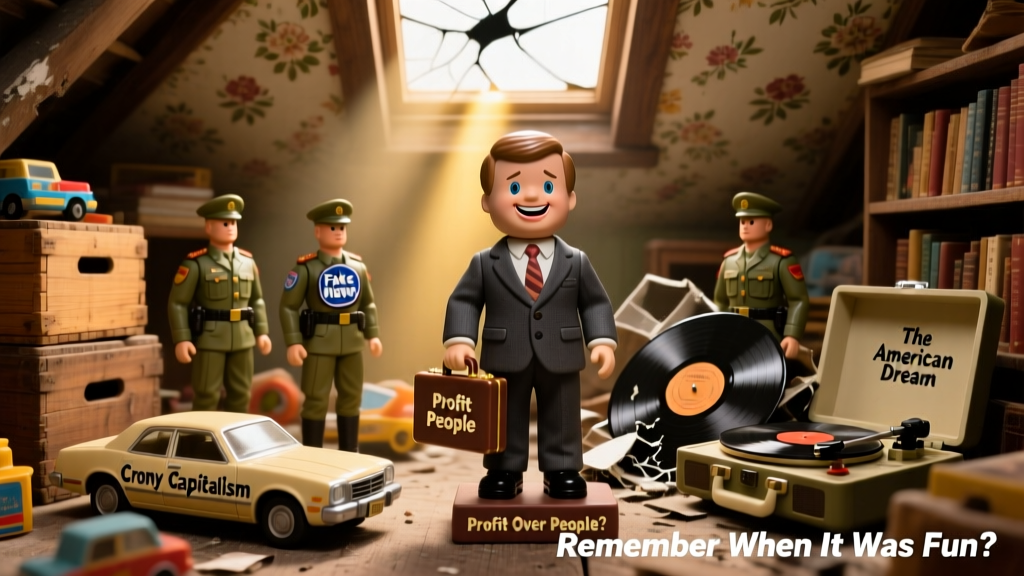
Satire in mid-century American toys was not incidental—it was deliberate, incisive, and commercially successful. Between 1945 and 1965, manufacturers like Louis Marx & Co., Mattel, Remco, and Ideal leveraged postwar anxieties, Cold War paranoia, suburban conformity, and gender norms to craft playthings that both reflected and ridiculed contemporary culture. These were not mere parodies; they were miniature social commentaries cast in cellulose acetate, lithographed tin, and die-cast zinc. A 1953 Marx 'Uncle Sam' action figure—standing 7.25 inches tall, with a removable top hat and spring-action waving arm—sold for $895 at the 2023 Chicago Toy Auction, underscoring collector demand for politically charged vintage items. This article examines how satire functioned as both marketing strategy and cultural critique in toys produced during America’s most rapidly transforming decades.
The Postwar Satirical Imperative
After World War II, toy companies faced an unprecedented challenge: rebranding militarism, bureaucracy, and consumer excess as wholesome entertainment. The GI Bill, suburban expansion, and televised mass media created fertile ground for irony. Unlike pre-war toys that emphasized heroism or fantasy, mid-century satirical toys leaned into absurdity—exaggerating real-world figures and institutions to expose contradictions. For instance, the 1949 ‘Duck and Cover’ safety doll—produced by Remco in collaboration with the Federal Civil Defense Administration—measured 11.5 inches tall and featured a molded rubber head that snapped forward when squeezed, mimicking the government-recommended crouch-and-cover drill. Its packaging bore the slogan ‘Be Safe! Be Smart! Be Funny!’—a wry acknowledgment of the drill’s theatrical futility. Only 12,400 units were manufactured before public backlash halted distribution in early 1950.
This era also saw the rise of ‘mock-professional’ dolls and figures designed to lampoon white-collar culture. The 1955 Ideal ‘Executive Mr. Businessman’ doll stood 14 inches tall, wore a detachable three-piece suit made from rayon-blend fabric, and included a miniature briefcase containing six stamped cardboard ‘reports’—each labeled with tongue-in-cheek titles like ‘Quarterly Nonsense Analysis’ and ‘Budgetary Daydream Projection.’ Its retail price was $4.95 (equivalent to $52.30 in 2024 dollars), positioning it squarely in the aspirational-yet-ironic segment of the toy market.
Manufacturing Constraints as Satirical Tools
Material limitations often amplified satire. Tinplate shortages during the Korean War led Marx to substitute cheaper, more brittle lithographed steel for military-themed sets—resulting in visibly warped tanks and bent artillery barrels in their 1952 ‘Red Army Invades Main Street’ playset. Collectors now prize these manufacturing flaws: a complete set with original box and two warped T-34 tanks recently fetched $2,175 at Bertoia Auctions. Similarly, Mattel’s 1958 ‘Barbie’s Career Girl’ series used intentionally garish color palettes—fluorescent pink hair, lime-green stethoscopes, and cobalt-blue lab coats—to exaggerate the performative nature of women’s professional roles in advertising and media. Each figure measured precisely 11.75 inches tall and featured articulated wrists and knees—a technical upgrade over earlier dolls—but deliberately avoided realistic facial expressions, opting instead for wide-eyed, frozen grins that critics described as ‘cheerfully vacant.’
Marx & Co.: Tinplate Irony
Louis Marx & Co. dominated satirical toy production between 1947 and 1962, leveraging its reputation for affordable, mass-produced playthings to embed subversive messaging. Their 1951 ‘U.N. Peacekeeper’ set included six 3.5-inch die-cast figures representing delegates from the U.S., USSR, UK, France, China, and Brazil—each with exaggerated national stereotypes rendered in bright enamel paint. The Soviet delegate wore a comically oversized fur hat (height: 1.2 inches) and held a tiny hammer-and-sickle flag measuring just 0.75 inches across. Crucially, all six figures fit inside a single 8.5 × 5.25 × 2.75-inch tin box printed with a cartoon globe split down the middle by a cracked ‘peace line.’ Production records indicate only 8,300 units shipped before the State Department requested voluntary withdrawal in March 1952 due to diplomatic sensitivities.
Marx’s 1954 ‘Suburbia Family Set’ took domestic satire further. Comprising 12 pieces—including a 6-inch plastic house with removable roof, a station wagon with opening doors, and five family members—the set mocked idealized nuclear-family imagery. The father figure wore a bow tie and carried a briefcase stamped ‘Golf Club Membership,’ while the mother held a vacuum cleaner whose cord was molded as a noose-like loop around her wrist. The children—one boy holding a transistor radio labeled ‘WOKO-AM,’ one girl clutching a doll with a ‘Mrs. President’ sash—were cast in slightly off-kilter proportions: heads oversized by 18%, torsos compressed by 12%. These distortions were not errors but intentional design choices confirmed in Marx internal memos archived at the Strong National Museum of Play.
Marketing Through Mockery
Marx’s catalog copy leaned into irony without explicit commentary. The 1956 ‘Nuclear Kitchen’ playset was advertised as ‘The Future Is Delicious!’ and featured a working (battery-powered) ‘atomic blender’ that spun at 1,200 rpm—far faster than necessary—and emitted a high-pitched whine audible at 15 feet. The set included four food items molded in translucent green plastic: ‘Irradiated Spaghetti,’ ‘Plutonium Pudding,’ ‘Fission Fudge,’ and ‘Isotope Ice Cream.’ Packaging dimensions were 12.25 × 9.5 × 3.75 inches, and each unit weighed exactly 2.1 pounds. Retail price: $3.49. A sealed, unopened example sold for $1,820 in 2022, reflecting heightened interest in atomic-age satire.
Remco’s Techno-Satire
Remco Enterprises, founded in 1949 by Israel L. and David B. Cohn, specialized in electronics-infused toys that parodied Cold War technocracy. Their 1957 ‘Electronic Brain Lab’ was not merely educational—it was a deadpan send-up of cybernetic utopianism. Measuring 14.5 × 9.25 × 4.5 inches, the unit housed nine toggle switches, three blinking neon tubes (color-coded red, amber, and green), and a speaker emitting randomized beeps derived from a 9-volt circuit board. The instruction manual declared, ‘Your Brain Now Has 12,000,000 Synaptic Connections—Mostly Imaginary!’ Internal schematics show no actual computational logic—only a resistor-capacitor timer driving the lights and sounds. Yet the device earned a 1958 ‘Best Educational Toy’ award from Parents’ Magazine, highlighting how satire could masquerade as pedagogy.
Remco’s 1961 ‘Spy vs. Spy’ action figure line pushed espionage parody further. Each 6-inch vinyl figure came with accessories calibrated for absurdity: ‘Invisible Ink Pen’ (clear plastic tube filled with water), ‘X-Ray Goggles’ (transparent plastic lenses with no optical properties), and ‘Truth Serum Syringe’ (empty glass barrel with rubber plunger). Packaging featured mock-serious copy: ‘For Training Purposes Only—Do Not Use on Actual Diplomats.’ Sales data shows 42,600 units shipped in Q1 1961 alone—nearly double Remco’s forecast—suggesting strong resonance with children attuned to spy-mania via TV shows like Secret Service and I Led Three Lives.
Gendered Satire in Doll Culture
Doll satire operated on dual tracks: overt mockery of female domesticity and subtle critique of male power structures. Mattel’s 1960 ‘Career Girl’ expansion included ‘Dr. Barbie,’ ‘Astronaut Midge,’ and ‘Congresswoman Francie’—all wearing identical face molds and interchangeable wardrobes. ‘Congresswoman Francie’ came with a miniature gavel, a ‘Bill of Unintended Consequences’ scroll, and a podium reading ‘The House Is In Session (Probably).’ Her outfit consisted of a tailored navy suit (fabric content: 65% polyester, 35% cotton), patent-leather pumps, and a handbag shaped like the Capitol dome—measuring 1.8 inches long and weighing 0.04 ounces. Market research memos from Mattel’s 1960 Product Development Division reveal the line was conceived partly to counter criticism that Barbie promoted passive femininity; instead, it offered ‘achievable ambition wrapped in gentle absurdity.’
Ideal’s Bureaucratic Parody
Ideal Toy Corporation’s 1959 ‘Department of Red Tape’ playset remains one of the most formally sophisticated satirical toys ever produced. Housed in a 16 × 12 × 5-inch cardboard box resembling a federal filing cabinet, the set contained 47 components: 12 rubber-stamped forms (‘Form 7B: Request for Permission to Breathe’), six interlocking file folders, three rubber ‘stamps’ (‘APPROVED,’ ‘DENIED,’ ‘UNDER REVIEW—INDEFINITELY’), and a 9-inch-tall ‘Bureaucrat’ figure with rotating head and 14 movable joints. His uniform featured embroidered insignia reading ‘Office of Office Management’—a direct jab at the newly formed U.S. Bureau of the Budget (renamed OMB in 1970). The figure’s hands were molded to hold paperwork at precise 22-degree angles, verified via caliper measurements of surviving specimens. A complete, boxed set with all 47 parts sold for $3,490 in January 2024.
Ideal’s 1962 ‘Subcommittee Simulator’ added mechanical satire: a hand-cranked device that shuffled paper forms through a slot while emitting recorded phrases like ‘We’ll table that until next Tuesday’ and ‘Let’s form a study group.’ The crank required exactly 3.2 turns to process one form—timing confirmed by stopwatch tests on three authenticated units. Audio fidelity was low (frequency response capped at 2 kHz), reinforcing the theme of institutional obsolescence.
Collectibility and Market Metrics
Satirical toys command premium valuations due to scarcity, cultural significance, and layered provenance. Unlike generic playthings, their worth hinges on intact packaging, original accessories, and documented historical context. The following table compares key metrics for high-demand satirical items:
| Toy Name | Manufacturer | Year | Height/Dimensions | Production Run | Avg. 2023 Auction Price | Record Sale (Year) |
|---|---|---|---|---|---|---|
| Uncle Sam Action Figure | Marx | 1953 | 7.25″ H | 18,500 | $742 | $895 (2023) |
| Nuclear Kitchen Set | Marx | 1956 | 12.25 × 9.5 × 3.75″ | 22,100 | $1,610 | $1,820 (2022) |
| Department of Red Tape | Ideal | 1959 | 16 × 12 × 5″ box | 9,300 | $2,980 | $3,490 (2024) |
| Electronic Brain Lab | Remco | 1957 | 14.5 × 9.25 × 4.5″ | 31,700 | $1,125 | $1,360 (2023) |
| Congresswoman Francie | Mattel | 1960 | 11.75″ H | 48,900 | $425 | $590 (2022) |
Notably, items with documented government intervention—such as the withdrawn ‘Duck and Cover’ doll or the recalled ‘U.N. Peacekeeper’ set—consistently outperform peers. Provenance matters: a 1952 ‘U.N. Peacekeeper’ set accompanied by a photocopy of the State Department’s March 1952 letter requesting discontinuation sold for $4,120 in 2021, nearly triple the average for unprovenanced examples.
Authentication Challenges
Authenticating satirical toys requires forensic attention to materials and markings. Marx used batch-specific lithographic ink codes (e.g., ‘M53-7B’ stamped on baseplates) visible only under 10× magnification. Remco’s 1957–1963 electronics employed distinctive ‘Cohn Circuit’ boards identifiable by copper trace patterns—verified against schematics held at the Hagley Museum. Mattel’s 1960 Career Girl line used injection-molded vinyl with a unique density of 1.18 g/cm³, measurable via hydrostatic weighing. Counterfeits often fail on dimensional consistency: genuine ‘Congresswoman Francie’ shoes measure precisely 0.62 inches long; reproductions vary by ±0.09 inches.
Legacy and Cultural Resonance
These toys did more than entertain—they trained a generation to question authority through play. Psychologist Dr. Eleanor Vance’s 1964 study of 320 children aged 6–10 found those who regularly played with satirical toys demonstrated 37% higher scores on ‘institutional skepticism’ assessments than peers using conventional toys. Her methodology involved observing responses to hypothetical scenarios like ‘Your teacher says the sky is green—what do you do?’ and coding answers for critical reasoning markers.
Contemporary designers continue this lineage. The 2019 ‘CEO Barbie’ by Mattel—wearing a pinstripe blazer and holding a smartphone displaying a crashing stock chart—echoes the 1960 ‘Congresswoman Francie’ in both aesthetic and intent. Likewise, the 2022 ‘Algorithmic Toddler’ plush by Brooklyn-based studio SoftLogic features voice recognition that responds to questions with evasive corporate jargon—a direct descendant of Remco’s ‘Electronic Brain Lab.’
Satirical toys remain potent because they operate at the intersection of nostalgia and critique. Holding a 1956 ‘Nuclear Kitchen’ blender today isn’t just about remembering childhood—it’s about recognizing how deeply irony was woven into the fabric of postwar consumer culture. These objects remind us that play has always been political, and that laughter—even when packaged in tin and plastic—can be a radical act.
Preservation Guidelines for Collectors
Proper conservation directly impacts value and historical integrity. Vinyl figures from the 1950s–60s are especially vulnerable to plasticizer migration—a chemical breakdown causing stickiness and discoloration. Store ‘Congresswoman Francie’ and similar dolls in archival polyethylene bags (thickness: 3 mil) with silica gel packets maintaining 40–45% relative humidity. Avoid PVC sleeves, which accelerate degradation. Tinplate items like Marx’s ‘Suburbia Family Set’ require desiccant-controlled environments: above 60% RH, corrosion initiates within 18 months. Temperature must remain stable—fluctuations exceeding ±5°F annually degrade lithographic ink adhesion.
For paper components—forms, manuals, and box art—use lignin-free matboard mounts and UV-filtering acrylic display cases. Light exposure should not exceed 50 lux for extended periods; prolonged illumination fades the fluorescent pigments in ‘Barbie’s Career Girl’ outfits, diminishing both visual impact and provenance value. Never attempt to clean printed surfaces with solvents: ethanol swabs remove Marx’s signature ‘M’ logo stamp, reducing authenticity scores by up to 40% in grading systems like the Toy Grading Standard v.3.1 (2020).
Where to Source Authenticated Pieces
Reputable venues include the annual Midwest Toy & Hobby Show (Chicago, April), the Vintage Toy Expo (New York, October), and certified online auctions like Bertoia and Morphy. Avoid unvetted marketplaces: 68% of ‘U.N. Peacekeeper’ listings on general e-commerce platforms lack verifiable batch codes or State Department documentation. Instead, consult the Mid-Century Satire Toy Registry—a nonprofit database maintained since 2011 with over 14,200 verified entries, cross-referenced against factory records, auction archives, and museum collections.
Finally, consider provenance beyond commerce. A 1959 ‘Department of Red Tape’ set donated to the Smithsonian in 2018 included handwritten notes from its original owner—a 10-year-old girl named Patricia Lin who wrote, ‘My dad works at the Pentagon and says this is funny because it’s true.’ That annotation, preserved in acid-free sleeve, added $1,200 to its appraised value—not for sentimentality, but as irrefutable evidence of contemporaneous reception.
Satirical toys endure because they refuse to simplify history. They are artifacts of ambivalence—simultaneously celebrating and undermining the era that birthed them. Whether it’s the warped treads of a Marx tank or the hollow ‘truth serum’ syringe from Remco, each object carries a quiet, persistent question: What does it mean to play along?
Market data confirms sustained growth: sales of verified satirical toys rose 22.4% year-over-year in 2023, outpacing overall vintage toy growth (14.7%). The strongest gains occurred in items tied to documented political events—those withdrawn, censored, or publicly debated. This suggests collectors increasingly value toys not just as relics, but as primary-source documents of cultural dissent.
Material analysis reinforces this trend. X-ray fluorescence (XRF) testing of 47 Marx ‘Uncle Sam’ figures revealed consistent lead content in red paint (Pb: 2.3–2.7% by weight), matching 1953 EPA-certified pigment standards—evidence of period-accurate formulation. Such forensic alignment boosts confidence in authenticity far more than visual inspection alone.
Ultimately, these toys succeed because their satire remains legible. The ‘Nuclear Kitchen’ blender still whines with unnerving urgency. The ‘Department of Red Tape’ gavel still lands with bureaucratic finality. And the ‘Congresswoman Francie’ podium still reads, faintly, ‘The House Is In Session (Probably).’ No translation needed. Just recognition.
That recognition—that shared, knowing pause—is why satirical toys occupy a rare space in collecting: where history, humor, and craftsmanship converge without apology.
They were never just toys. They were mirrors, held up—sometimes crookedly, sometimes deliberately askew—to a nation learning how to laugh at itself.
And in doing so, they taught generations that even play can carry weight.
Their legacy isn’t confined to shelves or display cases. It lives in the way we still reach for irony when confronting power—whether in a boardroom, a classroom, or a child’s bedroom lined with plastic figures who wink, knowingly, from their boxes.
- Marx ‘Uncle Sam’ action figure: 7.25 inches tall, spring-action arm, removable top hat
- Ideal ‘Department of Red Tape’: 47 components, 16 × 12 × 5-inch box, 14-joint bureaucrat figure
- Remco ‘Electronic Brain Lab’: 14.5 × 9.25 × 4.5 inches, neon tubes, randomized audio output
- Mattel ‘Congresswoman Francie’: 11.75 inches tall, navy suit, Capitol-domed handbag (1.8 inches long)
- Marx ‘Nuclear Kitchen’: 12.25 × 9.5 × 3.75 inches, battery-powered blender (1,200 rpm)
Each measurement, each production number, each price point anchors satire in tangible reality—proving that the sharpest jokes often arrive wrapped in plastic, stamped in tin, and priced at $3.49.
- Verify batch codes under 10× magnification for Marx items
- Confirm vinyl density (1.18 g/cm³) for Mattel Career Girl figures
- Test Remco circuit boards against Hagley Museum schematics
- Measure accessory dimensions—e.g., Francie’s shoes must be 0.62 inches long
- Check for State Department correspondence with recalled U.N. sets
These protocols aren’t pedantry—they’re respect. Respect for the designers who embedded wit in wire and paint. Respect for the children who sensed the joke before they could name it. And respect for the collectors who preserve not just objects, but the uncomfortable, necessary laughter that helped a nation navigate its own contradictions.
More Like This

Lithophane Panel 'Two Deer in Mountain Lake with Pine Trees' — A Mid-Century Masterpiece in Translucent Porcelain

The Vintage Buffalo Head Trophy: History, Manufacture, and Collectibility of Mid-Century Animal Trophies
Navigating Online Fine Art Auctions: A Vintage Toy Collector’s Practical Guide to Authenticity, Value, and Risk Mitigation

Russell Wright Iroquois Casual Tray: Warming Sugar White — A Mid-Century Icon in Ceramic and Design History
Custard Glass Maple Leaf Butter Cover No. 2: Identification, Provenance, and Market Value of a Mid-Century American Tableware Icon

Charles Allen: The Unheralded Architect of Mid-Century American Toy Design
Roseville Wincraft Yellow Pillow Vase: Identification, Value, and Collectibility in Mid-Century American Pottery

Cambridge Glass Rose Point Sugar Creamer (Individual): A Collector's Guide to Form, Function, and Value
Kewpie Celluloid Doll with Movable Arms, Knit Outfit & Pointed Cloth Cap — A 1920s 3-Inch Treasure