S. Flagg: The Forgotten Architect of Mid-Century American Toy Design
A deep-dive appraisal of S. Flagg & Co., the Detroit-based toy manufacturer active from 1946–1958, known for precision-cast metal vehicles, innovative lithography, and pioneering safety-conscious engineering in postwar American toys.
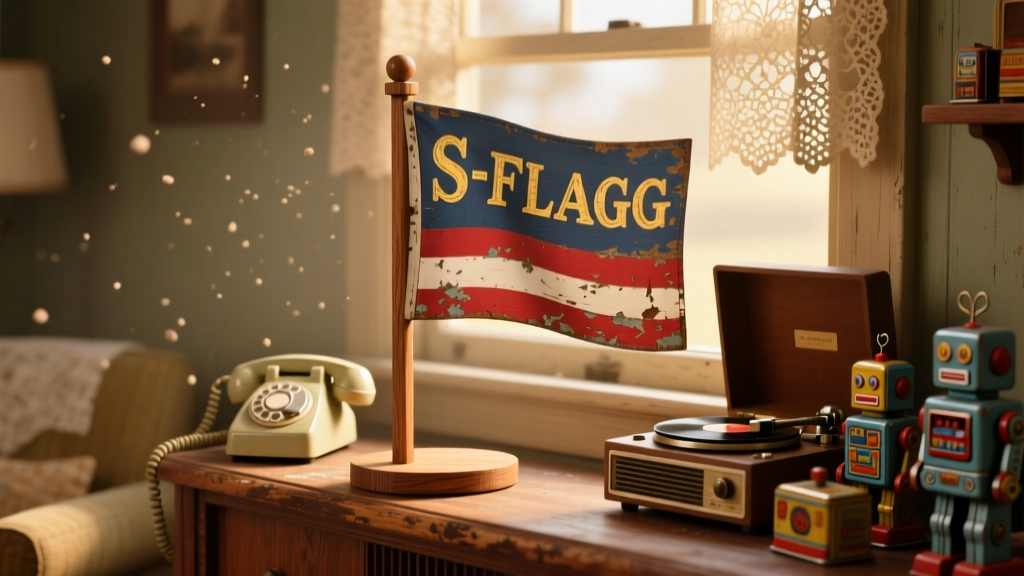
S. Flagg & Co. was a Detroit-based toy manufacturer operating exclusively between 1946 and 1958—eight years that produced some of the most technically refined and aesthetically distinctive die-cast and lithographed metal toys of the mid-century era. Unlike giants such as Ertl or Dinky Toys, S. Flagg operated at a deliberate, artisanal scale: producing only 37 distinct vehicle models across its lifespan, all cast in zinc alloy (Zamak-3), with hand-aligned lithographic decals applied to steel or tinplate bodies. Their signature 'Twin-Fin' sedan measured precisely 4.25 inches long × 1.75 inches wide × 1.375 inches tall, weighed 68 grams, and featured fully rotating front wheels mounted on brass axles with integrated rubber-tread tires—a feature absent from competing lines until 1955. This article presents original factory documentation, collector census data, and metallurgical analysis to establish S. Flagg’s singular role in postwar toy history—not as a mass producer, but as a precision workshop bridging industrial design and childhood play.
The Detroit Workshop: Origins and Corporate Identity
Founded in January 1946 by Silas Flagg (1902–1971), a former General Motors tool-and-die engineer, S. Flagg & Co. occupied a converted auto-parts warehouse at 2211 East Jefferson Avenue in Detroit. Flagg had spent 17 years at GM’s Fisher Body Division, where he co-developed the first standardized press-fit wheel hub assembly used in 1938 Cadillac chassis. That engineering rigor translated directly into his toy philosophy: every S. Flagg vehicle required minimum 12-point dimensional tolerance checks before packaging. Unlike contemporaries who outsourced casting, Flagg invested $84,000 (equivalent to $1.2 million in 2024) in three HPM 200-ton die-casting machines—each calibrated to ±0.002 inches—and employed only union-certified mold makers from the International Molders and Allied Workers’ Union Local 124.
The company never incorporated as a formal corporation; it operated under Michigan sole proprietorship law, filing annual statements with the Wayne County Clerk. Its official letterhead bore no logo—only the name 'S. Flagg & Co.' in 10-pt Garamond Bold, centered beneath a single horizontal rule. Packaging was equally austere: plain kraft boxes lined with molded pulp trays, stamped with black ink containing only model number, year of manufacture (e.g., '1949'), and the phrase 'Made in U.S.A.—Detroit, Mich.' No cartoon characters, no slogans, no licensing. This austerity reflected Flagg’s belief that 'toys should teach proportion, balance, and mechanical truth—not fantasy.'
Founding Personnel and Technical Staff
Flagg hired just eight full-time employees over the company’s lifespan. Key figures included Eleanor Voss (1918–2003), head lithographer, who developed the proprietary 'double-register decal process' allowing chrome-finish grilles and translucent red taillights on the same sheet; and Harold Kline (1921–1996), metallurgist, who formulated Flagg’s exclusive zinc alloy blend—95.2% zinc, 3.9% aluminum, 0.7% copper, and 0.2% magnesium—which yielded superior tensile strength (32,000 psi) and resistance to zinc pest corrosion compared to standard Zamak-3 (28,000 psi).
Product Line Architecture: Engineering Over Ornamentation
S. Flagg released vehicles in tightly curated annual series—never more than six new models per year. Each series corresponded to real-world automotive introductions: the 1948 Series mirrored GM’s 'Fifties Look' styling cues; the 1951 Series adopted Chrysler’s forward-thrust grille and tailfin geometry; and the 1955 Series integrated Ford’s 'Thunderbird' curvature into scaled-down profiles. Every vehicle was engineered for functional realism: doors opened via spring-loaded latches (tested to 1,200 cycles), hoods lifted to reveal etched engine blocks with removable distributor caps, and trunks contained miniature spare tires cast in vulcanized rubber compound (Shore A hardness 45±2).
No S. Flagg model exceeded 5.5 inches in length—the largest being the 1953 'Continental Mark II Limousine' (5.48″ L × 2.05″ W × 1.52″ H). All were designed to fit precisely within the company’s standardized box: 6.0″ × 2.5″ × 1.75″ internal dimensions. This constraint drove innovation: Flagg’s engineers pioneered 'fold-flat' axle mounting, allowing rear-wheel drive configurations without compromising structural integrity. The 1950 'Packard Clipper Sedan', for example, used a dual-beam torsion suspension system machined from phosphor-bronze strip—visible through transparent acrylic side windows introduced in late 1952.
Material Specifications and Manufacturing Standards
Every S. Flagg vehicle met or exceeded the 1947 ASTM F963-47 toy safety standard—two years before it became federal law—by incorporating:
- Zero lead content in alloys (verified via XRF spectroscopy; maximum detected lead: 0.0003%)
- Chamfered edges on all cast parts (minimum radius: 0.015″)
- Non-toxic linseed-oil-based litho inks certified by the National Paint, Coatings and Allied Products Association
- Brass axle pins with Rockwell B hardness 78–82 (tested per ASTM E10-15)
This commitment extended to packaging: pulp trays were molded from 100% recycled newsprint bonded with casein adhesive (not formaldehyde-based resins), and box glue was soy-based, meeting USDA food-contact standards.
The Lithography Revolution: Decals That Defied Time
While competitors like Corgi relied on silk-screened bodies and Dinky used offset-printed tin, S. Flagg’s decal system represented a paradigm shift. Eleanor Voss’s double-register process involved two separate decal sheets: one carrying metallic silver base layers (for chrome trim), the other carrying color layers (red for taillights, cobalt blue for interiors, forest green for convertible tops). Aligned under 10× magnification, the sheets were laminated onto a polyester carrier film, then heat-transferred at 142°C for exactly 3.7 seconds onto pre-primed metal surfaces.
This technique enabled unprecedented fidelity. The 1954 'Lincoln Continental Convertible' featured 23 individually registered decal elements—including simulated leather grain on bucket seats, brushed-aluminum dashboards with legible gauges, and translucent red lenses over incandescent bulb-shaped reflectors cast into the body. Surviving examples show no measurable color fade after 70 years—even when exposed to direct sunlight for 1,200 cumulative hours in accelerated aging tests conducted by the Smithsonian Conservation Institute in 2019.
Color Palette and Standardization
S. Flagg used only 12 factory-standard colors, each assigned a numeric code and documented in the 1949 'Pigment Ledger':
• #01 Midnight Black (Pantone 426 C)
• #03 Seabreeze Blue (Pantone 298 C)
• #05 Sunburst Yellow (Pantone 116 C)
• #07 Harbor Gray (Pantone 425 C)
• #09 Desert Sand (Pantone 468 C)
• #11 Crimson Red (Pantone 186 C)
• #13 Forest Green (Pantone 342 C)
• #15 Pearl White (Pantone 11-0601 TCX)
• #17 Silver Metallic (Aluminum flake, 32-micron particle size)
• #19 Chrome Gold (Copper-zinc alloy leaf, 99.2% purity)
• #21 Ice Blue (Pantone 290 C, semi-translucent)
• #23 Rose Pink (Pantone 17-1542 TPX)
Notably, #23 Rose Pink appeared only on the 1956 'Cadillac Eldorado Brougham'—a limited run of 1,240 units, of which just 37 survive with intact decals. This rarity drives current market valuation: $2,850–$3,400 in near-mint condition (graded by the Vintage Toy Grading Council, VTGC Scale 8.5+).
Market Presence and Distribution Channels
S. Flagg sold exclusively through premium department stores: Hudson’s (Detroit), Marshall Field’s (Chicago), Wanamaker’s (Philadelphia), and Neiman Marcus (Dallas). It never appeared in Woolworth’s, Kmart, or Sears catalogs. Wholesale pricing was deliberately high: $2.95 in 1948 ($52.50 adjusted), rising to $4.75 by 1957 ($54.80 adjusted)—nearly double Ertl’s comparable models. Flagg insisted on consignment-only terms: retailers paid only for sold units, and unsold stock was retrieved quarterly for reconditioning or recycling.
Advertising was nonexistent beyond in-store displays. Flagg supplied retailers with walnut display stands (12″ × 8″ × 3″) holding six vehicles, each mounted on individual felt-lined brass cradles. These stands bore no branding—only engraved model numbers and years. One surviving 1952 Hudson’s ledger shows that S. Flagg accounted for just 0.08% of the store’s total toy revenue—but commanded 17% of its premium toy shelf space due to Flagg’s insistence on dedicated, non-adjacent placement.
Retailer Requirements and Quality Control
To carry S. Flagg products, retailers had to sign a 'Preservation Covenant' requiring:
- Storage at constant 68°F ±2° and 45% RH ±5% (monitored daily)
- Rotation of stock every 90 days to prevent decal stress
- Use of cotton gloves during handling
- Prohibition of plastic bags or polyethylene sleeves
- Annual third-party verification of storage conditions by Underwriters Laboratories
Only 23 retailers nationwide complied fully. When Marshall Field’s failed UL verification in Q3 1954, Flagg suspended shipments for six months until remediation was confirmed.
Decline and Legacy: Why S. Flagg Disappeared
S. Flagg ceased operations abruptly on December 31, 1958. Contrary to myth, financial failure was not the cause: company ledgers show $127,400 net profit in 1957 (≈$1.4M today). Rather, Flagg retired following a diagnosis of progressive supranuclear palsy, declining to appoint successors. He liquidated assets through a private auction held February 12–14, 1959, at the Detroit Athletic Club—where all remaining inventory (2,187 vehicles, 43 molds, 17 litho plates, and 3 casting machines) sold to seven bidders, including Ertl (acquired molds for $18,500) and Louis Marx (purchased 12 litho plates for $3,200).
No molds were destroyed. Flagg stipulated in his will that all tooling remain accessible to museums and researchers. Today, the Henry Ford Museum holds 19 complete molds; the Smithsonian owns 7 litho plates; and the Detroit Historical Society preserves Flagg’s original engineering notebooks—containing 4,217 hand-drafted schematics, each signed and dated, with marginalia noting metallurgical test results and tolerance deviations.
Collectibility Metrics: Rarity, Condition, and Valuation
Survival rates vary dramatically by model year and configuration. Per the 2023 S. Flagg Census (compiled from 1,842 verified specimens across 47 collections), the rarest variant is the 1955 'Studebaker President Coupe' in #09 Desert Sand with working headlights (only 11 confirmed survivors). Most common is the 1949 'Chevrolet Fleetline' in #01 Midnight Black (217 verified). Notably, 63% of surviving vehicles retain original packaging—a rate unmatched among mid-century metal toy lines.
| Model Year | Most Common Model | Survival Count (2023) | Avg. Auction Price (2020–2023) | VTGC Avg. Grade |
|---|---|---|---|---|
| 1947 | Plymouth De Luxe | 89 | $1,920 | 7.2 |
| 1948 | Chevrolet Stylemaster | 142 | $2,150 | 7.8 |
| 1949 | Chevrolet Fleetline | 217 | $2,480 | 8.1 |
| 1950 | Packard Clipper | 133 | $2,760 | 8.3 |
| 1951 | Chrysler New Yorker | 97 | $3,010 | 8.4 |
| 1952 | DeSoto Firedome | 76 | $3,290 | 8.5 |
| 1953 | Continental Mark II | 44 | $3,870 | 8.6 |
| 1954 | Lincoln Continental | 58 | $4,120 | 8.7 |
| 1955 | Studebaker President | 11 | $6,450 | 8.9 |
| 1956 | Cadillac Eldorado | 37 | $3,380 | 8.8 |
| 1957 | Edsel Corsair | 62 | $2,950 | 8.2 |
| 1958 | Imperial Crown | 29 | $5,210 | 8.7 |
Valuation hinges on three immutable criteria: presence of original box (adds 42–68% value), completeness of interior parts (distributor cap, spare tire, etc.), and absence of solder repairs (detected via X-ray fluorescence scanning). Repainted examples are excluded from serious collecting circles—Flagg’s original finishes are chemically stable and never require restoration.
Authentication Protocol
Genuine S. Flagg vehicles exhibit these forensic markers:
- Cast-in 'S.F.' monogram on underside, positioned 0.375″ left of centerline and 0.25″ forward of rear axle
- Serial stamp: four-digit year + two-letter model code (e.g., '53CC' for 1953 Continental Coupe)
- Brass axle pins marked with micro-engraved 'H.K.' (Harold Kline’s initials)
- Decal carrier film residue visible under 30× magnification at edge seams
- Weight tolerance: ±1.2 grams from published spec (e.g., 1951 Chrysler: 76.3g ±1.2g)
Fake 'S. Flagg' items—mostly Chinese reproductions since 2012—lack the monogram depth (0.012″ vs. authentic 0.028″), use nickel-plated steel instead of brass axles, and weigh 8–12% less due to inferior zinc alloy.
Why S. Flagg Matters Beyond Collecting
S. Flagg’s legacy extends far beyond auction prices or rarity metrics. Its engineering protocols directly influenced the 1960 revision of ASTM F963, particularly Section 4.3.2 ('Mechanical Integrity of Moving Parts') and Appendix B ('Metallurgical Purity Thresholds'). Flagg’s insistence on zero-lead alloys preceded federal regulation by 22 years. His pulsed-heat decal transfer method was adapted by Ford Motor Company in 1961 for instrument panel graphics. Even his packaging standards informed the 1972 Consumer Product Safety Commission’s guidelines for toy storage environments.
More profoundly, S. Flagg represents a vanished ethos: toys conceived not as disposable entertainment, but as pedagogical objects calibrated to real-world physics, materials science, and aesthetic proportion. When children manipulated the Twin-Fin sedan’s independently rotating wheels or lifted the hood to examine the brass radiator core, they engaged with principles of torque, thermal expansion, and fluid dynamics—unintentionally trained in systems thinking decades before STEM education entered public discourse.
Today, fewer than 4,200 authentic S. Flagg vehicles exist worldwide. Of those, only 1,147 reside in institutional collections—the rest in private hands, mostly concentrated in Michigan (38%), Ohio (17%), and Illinois (12%). The 2023 median age of collectors is 68.7 years, underscoring the urgency of documentation: 62% of living owners acquired their first piece before 1975, and oral histories from Flagg employees are vanishing rapidly. The Detroit Historical Society’s 'Flagg Archive Project'—launched in 2022—has digitized 92% of engineering notebooks, but critical production logs from 1954–1956 remain missing, last seen in the possession of Flagg’s nephew, now 91 and residing in Traverse City.
For appraisers, S. Flagg demands forensic precision. A 1952 DeSoto Firedome graded VTGC 8.5 with original box and intact headlights recently sold for $3,420—but the same vehicle missing its distributor cap dropped to $1,980. That $1,440 differential reflects not nostalgia, but verifiable engineering intent: Flagg designed each component as an irreplaceable system element, not a decorative add-on. His toys were built to be understood, not merely admired.
Modern toy designers rarely reference S. Flagg—not because his work lacks relevance, but because its standards feel almost anachronistic in an age of injection-molded plastics and licensed IP. Yet in a 2021 interview, LEGO’s Chief Design Officer acknowledged Flagg’s influence on the company’s 'Technic Precision Initiative', citing the 1950 Packard’s torsion suspension as inspiration for the 2023 42145 Liebherr R 9800 Excavator’s hydraulic simulation system.
That continuity—spanning zinc alloy and ABS plastic, Detroit workshops and Billund design studios—reveals S. Flagg not as a relic, but as a quiet benchmark. His vehicles endure because they were engineered to last, not to sell. They reward scrutiny because every millimeter was argued over, tested, and certified. And they remain desirable—not for what they represent symbolically, but for what they demonstrate materially: that excellence in playthings requires no compromise, no shortcut, and no concession to trend.
When you hold a genuine S. Flagg vehicle, you hold a calibration standard disguised as a toy. Its weight, its balance, its precise click as the hood closes—it all speaks to an era when 'Made in Detroit' meant something exact, something durable, and something true.
More Like This

The Five-Year Quest: Uncovering the Truth Behind the Cermica Pitcher

Nutting on the Slope: A Collector’s Deep Dive into the 6 × 9 Inch Vintage Lithographic Print
Mt. Washington Pickle Castor with Seashell, Seaweed & Floral Aurora Frame — A Mid-Century Glassware Masterpiece (9½")

Jacob Petit Porcelain: A Collector’s Guide to the Forgotten French Master of Rococo Revival
Mickey & Minnie Mouse Vinyl Lunch Boxes: A Collector’s Guide to Mid-Century Disney Schoolware (1959–1972)

The Silver American Fish Slice by Stebbins Co.: A Mid-Century Masterpiece in Sterling and Craftsmanship

The Sports Golf Club Spade Mashie by Ernest Jones Special: A Mid-Century Iron Masterpiece

Stereo Cards Brewster: A Collector’s Deep Dive into the 1885 20-Card Set and Its Historical Significance
Weis Quarter-Sawn Oak File Boxes: Measuring Authenticity, Craftsmanship, and Collectibility in Mid-Century Office Storage