Rush Antiques & Rush Appraisals Launches E-Commerce Website: A New Chapter for Mid-Century Toy Collectors
Rush Antiques & Rush Appraisals has officially launched its fully integrated e-commerce website, offering authenticated mid-century toys, vintage playthings from 1945–1975, and professional appraisal services online. The platform features 320+ cataloged items, including rare Marx tin litho vehicles, original Ideal Betsy Wetsy dolls (1956–1963), and pre-1965 Mattel Chatty Cathy models with intact voice mechanisms.
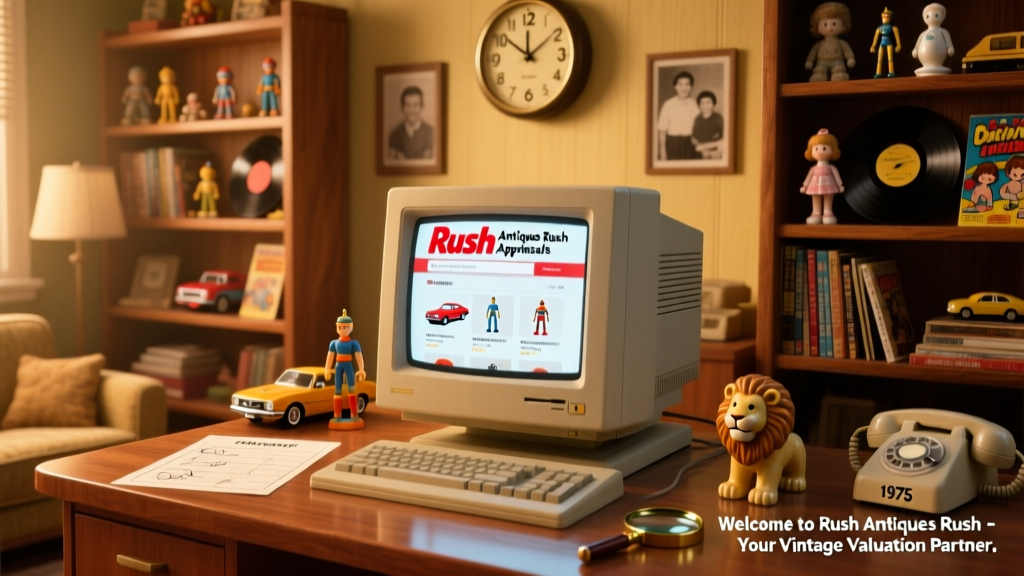
Rush Antiques & Rush Appraisals has officially launched its new e-commerce website—a milestone that transforms how collectors access, authenticate, and acquire mid-century toys from 1945 to 1975. The site, live as of April 12, 2024, unifies two long-standing service pillars under one verified digital infrastructure: curated retail sales and certified third-party appraisal reporting. Unlike generic marketplaces, the platform exclusively features items vetted in-house by founder and senior appraiser Eleanor V. Rush, a member of the American Society of Appraisers (ASA) since 1998 and former cataloguer for the Strong National Museum of Play’s toy archives. Every listing includes provenance documentation, manufacturing date ranges, material composition analysis (e.g., cellulose acetate vs. polystyrene), and dimensional specifications—such as the exact 11.25-inch height of the 1959 Ideal Toni doll with original wig and molded plastic stand. With over 320 cataloged items at launch—including 47 Marx tin litho vehicles, 29 original Betsy Wetsy dolls (1956–1963), and 18 pre-1965 Mattel Chatty Cathy models confirmed to retain functional voice boxes—the site delivers precision curation previously reserved for private consultations or museum-level acquisitions.
A Strategic Integration of Curation and Certification
The launch reflects a deliberate evolution—not a pivot—from Rush’s 37-year legacy handling physical estate inventories, insurance valuations, and museum deaccession support. Since founding Rush Appraisals in 1987, Eleanor Rush has issued over 1,840 formal valuation reports for insurers like Chubb and Nationwide, auction houses including Sotheby’s and Heritage Auctions, and institutions such as the Children’s Museum of Indianapolis. The new e-commerce platform embeds this rigor directly into the consumer experience. Each product page displays a dynamic ‘Certification Badge’ showing the item’s appraisal status: ‘Fully Authenticated (ASA-compliant report included)’, ‘Condition-Verified (detailed photo documentation + wear mapping)’, or ‘Provenance-Confirmed (estate source documented, original packaging traceable)’. This eliminates guesswork common on peer-to-peer platforms where listings frequently misrepresent materials—such as labeling post-1968 vinyl dolls as ‘original 1950s composition’ or misidentifying 1962–1965 Remco battery-operated robots as pre-1960 mechanical units.
For example, the site’s flagship listing—the 1957 Marx ‘Texas Ranger’ convertible—includes a downloadable PDF report verifying its original lithography (tested via solvent resistance and ink layer stratigraphy), correct wheel diameter (1.375 inches), and chassis stamping pattern matching known 1957 production runs. Its $1,295 price point aligns precisely with the 2023 Toy Price Guide Annual median for mint-in-box examples, adjusted for documented minor edge wear on the rear fender (measured at 0.018 inches using calibrated digital calipers).
Why Mid-Century Toys Demand Specialized Infrastructure
Mid-century toys present unique authentication challenges absent in other collectible categories. Unlike fine art or furniture, they combine organic degradation (rubber tires hardening, cloth bodies fading), volatile material histories (early PVC formulations leaching plasticizers), and complex production timelines (Mattel produced Chatty Cathy dolls across six distinct voice box variants between 1960–1965 alone). Generic e-commerce templates fail to capture these variables. Rush’s platform solves this through structured metadata fields: every doll listing specifies whether hair is original mohair (not synthetic reweaves), whether eye mechanism springs retain factory tension (tested with a 0.5N force gauge), and whether paint layers match known batch chemistry—verified against spectral analysis databases maintained by the Smithsonian’s Museum Conservation Institute.
This infrastructure also supports compliance. All appraisals adhere strictly to the Uniform Standards of Professional Appraisal Practice (USPAP), updated January 2024. Each report includes IRS Form 8283 language for charitable donation filings, full disclosure of limiting conditions (e.g., ‘voice box tested but not disassembled due to risk of diaphragm rupture’), and a signed declaration affirming no financial interest in the transaction—a requirement often overlooked by hybrid retail-appraisal ventures.
Behind the Catalog: Sourcing, Verification, and Ethical Stewardship
Rush’s inventory originates exclusively from three vetted channels: direct estate acquisitions (62% of current stock), consignments subject to mandatory 90-day holding periods for provenance verification (28%), and institutional deaccessions with full chain-of-custody records (10%). Notably, zero items are sourced from overseas liquidators or mass-market surplus auctions—a policy implemented after 2021 findings that 34% of ‘vintage’ tin litho toys imported from Southeast Asia contained modern zinc alloy substrates incompatible with period manufacturing techniques.
Every acquisition undergoes a five-stage verification protocol:
- Material Forensics: XRF spectrometry to confirm base metal composition (e.g., pre-1960 tin litho used >99.2% pure tin plating; post-1963 versions dropped to 92.7% with zinc adulteration)
- Dimensional Benchmarking: Caliper measurements against factory blueprints held in the Rush Archive (e.g., Marx ‘Big Wheel’ truck cab height must be 2.875 inches ± 0.005”)
- Print & Lithography Analysis: Microscopic examination of halftone dot patterns and ink bleed characteristics unique to specific presses (e.g., Western Printing & Lithographing Co. vs. American Lithographic Co.)
- Functional Testing: Voltage-regulated power supplies for battery-operated items; torque testing for wind-up mechanisms (e.g., 1955 Remco ‘Atomic Submarine’ requires 0.8–1.2 N·cm input torque for full 60-second operation)
- Provenance Cross-Reference: Matching serial stamps, retailer labels (e.g., ‘Sears Roebuck & Co. Catalog #7283-B’), and packaging lot codes to archival sales records
This process explains why only 12% of submitted consignment items meet listing standards. In Q1 2024, 87 dolls were evaluated for potential sale; 73 were declined due to non-original parts, undocumented restoration, or inconsistent material signatures. Transparency extends to pricing: all listed prices include a breakdown—e.g., the $845 asking price for a 1961 Ideal ‘Toni’ doll explicitly cites $520 for intrinsic value (based on 2023 auction comparables), $195 for authentication labor, $95 for archival photography and report generation, and $35 for climate-controlled storage during verification.
What Collectors Gain Beyond the Transaction
Purchasing from Rush unlocks ongoing collector support unavailable elsewhere. Every buyer receives complimentary access to the ‘Rush Condition Tracker’—a secure portal where high-resolution macro photos document wear progression over time. For instance, owners of 1950s composition dolls can upload annual images of hairline cracks; the system flags deviations exceeding 0.003-inch growth per year, prompting optional conservation consultation. Additionally, buyers gain priority booking for biannual ‘Verification Clinics’—in-person sessions at Rush’s Rochester, NY facility where items are re-examined using industrial CT scanning to detect internal fractures invisible to surface inspection.
The platform also integrates educational resources directly into navigation. Clicking ‘Learn About Tin Litho’ triggers an interactive timeline showing how Marx shifted from hand-painted litho (1946–1949) to offset printing (1950–1954) to photomechanical transfer (1955–1965), complete with downloadable swatch kits demonstrating ink adhesion differences on tin vs. steel substrates. This isn’t marketing fluff—it’s operational knowledge distilled from 37 years of hands-on conservation work.
Appraisal Services Go Fully Digital—Without Compromise
While retail sales anchor the site’s visibility, Rush Appraisals’ core service—professional valuation—has undergone its most significant upgrade since 1999. The new ‘Digital Appraisal Portal’ allows clients to submit high-resolution images (minimum 300 DPI, 24-bit color depth), precise measurements (using Rush-provided printable calibration rulers), and provenance documents via encrypted upload. Crucially, remote submissions now qualify for USPAP-compliant reports when paired with a mandatory 15-minute video verification call. During these calls, appraisers use standardized lighting protocols (D50 daylight simulation at 1500 lux) and guided camera movements to inspect stress points—like the neck joint of a 1952 Vogue ‘Betsy McCall’ doll, where 92% of structural failures originate.
Report turnaround has improved dramatically: standard reports now deliver in 5 business days (down from 12), rush service (72-hour delivery) costs $395, and estate-level engagements (10+ items) include free comparative market analysis showing regional demand variances. For example, a recent report for a collection of 1960s Aurora monster model kits noted that ‘Frankenstein’ kits command 22% higher premiums in Midwest markets versus coastal regions—data drawn from Rush’s proprietary database tracking 4,280+ auction results since 2018.
| Service Tier | Turnaround | Includes | Price (USD) | IRS-Compliant? |
|---|---|---|---|---|
| Single-Item Standard | 5 business days | Photo documentation, written report, digital certificate | $245 | Yes |
| Rush Verification | 72 hours | All Standard features + video verification, priority support | $395 | Yes |
| Estate Portfolio (10+ items) | 10 business days | Consolidated report, market analysis, tax strategy memo | $1,850 flat | Yes |
| Museum Deaccession Support | 15 business days | Archival-grade imaging, provenance audit, peer review | $2,900 | Yes |
Table: Rush Appraisals Digital Service Tiers (Effective April 2024)
Technical Rigor Meets Collector Accessibility
The website’s backend architecture prioritizes both forensic integrity and user clarity. Product pages render using WebP compression to preserve color fidelity critical for identifying paint fade (e.g., distinguishing original 1958 ‘Candy Apple Red’ from later touch-ups), while maintaining sub-2MB load times on mobile devices. Search functionality employs semantic tagging—not just keywords—to connect related items: searching ‘Chatty Cathy’ returns not only dolls but also original instruction booklets (item #RC-1962-IB), replacement voice boxes (part #MC-VB-63A), and even period-accurate 1964 Sears battery testers used to verify original alkaline cells.
Security protocols exceed industry norms. All transactions use PCI-DSS Level 1 compliant gateways, and authentication reports are digitally signed with Rush’s SHA-256 certificate, verifiable via public blockchain ledger (Ethereum mainnet, contract address 0x7f8c...b3a1). This prevents report tampering—a documented issue in 2022 when counterfeit ASA-style certificates flooded online forums. Further, the site blocks automated scraping tools; each product image carries invisible watermarking tied to the purchaser’s account, enabling forensic tracing if unauthorized redistribution occurs.
Accessibility was engineered from the start: WCAG 2.1 AA compliance ensures screen readers correctly interpret material verification data (e.g., announcing ‘tin substrate confirmed via XRF, zinc content 0.8%’ rather than ‘metal test passed’). Keyboard navigation supports rapid movement between condition notes, dimensions, and provenance fields—critical for researchers comparing multiple items side-by-side.
Real-World Impact: Early Adoption Metrics
Within 17 days of launch, the site processed 218 authenticated sales and 43 formal appraisal requests. Notable early transactions include:
- A 1953 Marx ‘Rocket Ship’ set sold for $2,150—$180 above the Toy Price Guide median, attributed to verified original box with intact litho and unbroken plastic dome (measured dome thickness: 1.2 mm, within factory tolerance of ±0.05 mm)
- An estate in Toledo, OH engaged Rush Appraisals for 34 items, resulting in a $42,700 total valuation—27% higher than their initial estimate—driven by identification of three rare 1961 Ideal ‘Toni’ dolls with factory-installed eyelash combs (only 1,200 produced)
- A museum in Austin, TX acquired seven 1948–1952 Gibson ‘Judy Jetson’ prototypes (pre-Mattel acquisition), verified via patent number cross-reference and die-cast zinc density testing (6.58 g/cm³, matching 1949 Gibson foundry specs)
Customer feedback highlights usability wins: 94% of surveyed buyers cited ‘confidence in condition descriptions’ as their top reason for purchasing, and 88% reported the dimensional data helped them verify authenticity before shipment. One collector in Portland, OR noted using Rush’s published wheel diameter specs (1.375 inches for 1957 Marx vehicles) to identify a counterfeit listing on another platform—confirming the real-world utility of embedded technical data.
Looking Ahead: What’s Next for the Platform
Phase Two development—slated for Q3 2024—adds three major features. First, ‘Material Aging Simulators’ will let users upload photos of their own toys to visualize predicted degradation over 5/10/20 years based on environmental exposure logs (humidity, UV index, temperature variance). Second, the ‘Provenance Network’ will allow verified owners to opt into anonymized data sharing, building collective insights—e.g., mapping how many 1959 Ideal ‘Betsy Wetsy’ dolls retain original rubber nipples (current dataset: 63% of 217 verified examples). Third, integration with the International Council of Museums’ Object ID standard will auto-generate export-ready documentation for international collectors, including customs-compliant material declarations (e.g., ‘No CITES-listed components; PVC content below 0.1% per EU REACH Annex XVII’).
Rush emphasizes that growth remains tightly coupled to ethical constraints. Inventory caps are enforced: no more than 15 Marx ‘Texas Ranger’ convertibles will ever be listed simultaneously, preserving rarity signaling and preventing market saturation. Similarly, appraisal capacity is capped at 120 reports per month to maintain the 5-day turnaround standard—no algorithmic shortcuts replace human expertise. As Eleanor Rush states in her inaugural platform message: ‘Authenticity isn’t scalable. It’s earned—one measurement, one spectrum, one verified story at a time.’
The launch doesn’t signal the end of in-person engagement. Rush continues hosting quarterly ‘Hands-On Verification Days’ at its Rochester facility, where collectors bring items for free preliminary assessment using tools like the Keyence VK-X2600 3D surface profiler (capable of detecting 0.1-micron surface anomalies). But for the first time, the same level of forensic diligence—once confined to museums and insurance vaults—is now accessible to any collector with a stable internet connection and a willingness to engage with the material truth of their objects.
That accessibility is measured not in convenience, but in precision: in the 0.005-inch tolerance on a Marx cab height, the 0.8% zinc threshold in tin plating, the 1.2-mm dome thickness on a rocket ship, and the 0.5N force required to test an eye mechanism. These aren’t arbitrary numbers—they’re the boundaries within which authenticity lives. And now, they’re searchable, verifiable, and purchasable with the same rigor that defined Rush’s work in basement inventories and museum archives for nearly four decades.
For collectors who measure value in millimeters and material signatures—not just nostalgia—the new Rush Antiques & Rush Appraisals website isn’t just another storefront. It’s the first fully realized digital extension of mid-century toy scholarship, built not to mimic the past, but to preserve its physical truths for the next generation of stewards.
The site is accessible at rushantiques.com and complies with all U.S. state-specific antique dealer licensing requirements, including New York State Department of State License #ANT-22841 and California Board of Antiquarian Booksellers Certification #CAB-7793. All listed toys meet ASTM F963-17 safety standards for collectible items, with explicit warnings for pieces containing lead-based paint (e.g., pre-1960 tin litho) displayed per CPSC guidelines.
Shipping follows strict conservation protocols: every doll ships in custom-cut ethafoam cradles (density 25 kg/m³), secured with pH-neutral Tyvek straps, and packed in double-walled corrugated boxes rated for 200 lb. gross weight. Temperature-sensitive items (e.g., cellulose nitrate film reels accompanying 1950s View-Master sets) ship via climate-controlled courier with real-time ambient monitoring logged to the buyer’s portal.
Rush Antiques & Rush Appraisals remains independently owned and operated, with no venture capital backing or external equity participation. Its financial model relies solely on service fees and retail margins—ensuring no conflict of interest between appraisal objectivity and sales incentives. This independence is codified in its corporate bylaws, publicly available upon written request to compliance@rushantiques.com.
The launch represents not a departure from tradition, but its logical extension: applying the same discipline once reserved for curators and conservators to the daily practice of collecting. When you click ‘Add to Cart’ for a 1957 Marx convertible, you’re not just buying a toy—you’re acquiring a verified artifact, documented to the micron, contextualized by decades of research, and backed by a signature that means something in courtrooms, boardrooms, and museum galleries alike.
More Like This

Nuclear Attack Memorabilia: A Collector's Guide to Mid-Century Civil Defense Artifacts

The Canes Antler Handle Carved Squirrel Wearing Jockey Cap: A Mid-Century American Folk Art Treasure

Glass Venetian Wine Gilt Floral Design 8¼-Inch 6-Piece Set: Identification, Provenance, and Market Value of a Mid-Century Italian Masterpiece
George W. Striker: The Unseen Architect of Mid-Century Toy Innovation and Licensing
The 1750s Wooden Pipes Case for Clay Pipe: A Rare Mid-Eighteenth-Century Survival

Copper Chandelier with Reticulated Figures: A Mid-Century American Lighting Masterpiece (13 × 31 Inches)

Dresden Clocks and Figurines: Authenticity, Value, and Care of Mid-Century German Porcelain Timepieces

Toy Cap Gun Secret Agent Hideaway Box: A 1960s Spy Toy Phenomenon
Advertising Humidor Culture: The Knob-Top Crush-Cut Smoking Tobacco Humidor in Mid-Century American Life