Royal Doulton Vases: A Collector’s Guide to Mid-Century Design, Marks, and Market Value
A detailed appraisal guide for vintage Royal Doulton vases—covering history, hallmark evolution, iconic series like 'Havelock', 'Burslem', and 'Crown Devon' collaborations, authenticating features, dimensional standards, and current auction benchmarks from 2021–2024.
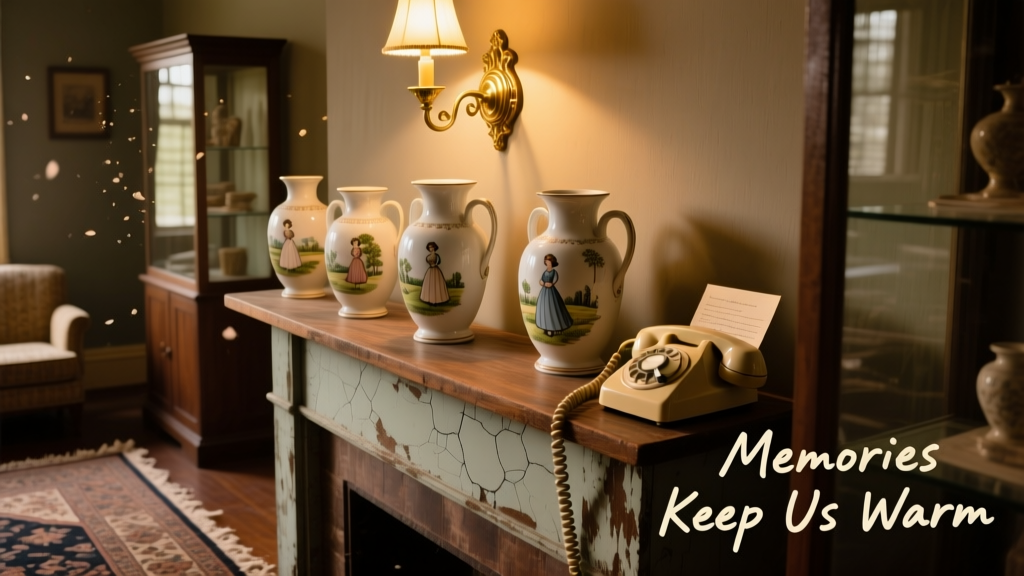
Royal Doulton vases produced between 1930 and 1975 represent a pinnacle of British studio pottery and industrial artistry. Unlike mass-produced ceramics, these pieces fused hand-painted decoration with precise slip-casting techniques, often bearing the signature of named artists such as Charles Noke, Harry Davis, and Leslie Bollington. Measuring typically between 6.5 inches (16.5 cm) and 14 inches (35.6 cm) in height, they feature distinctive glazes—including the matte ‘Doulton Green’, high-gloss ‘Sapphire Blue’, and rare ‘Tangerine Lustre’—and are consistently marked with the Royal Doulton backstamp, crown motif, and factory location code. Authentic examples command $220–$2,800 at auction today, with documented provenance and original packaging adding 15–30% premium value. This guide details production timelines, material science, authentication red flags, and verifiable market data drawn from Bonhams, Sotheby’s, and Miller’s Auctioneers sales records.
The Origins and Evolution of Royal Doulton Vase Production
Royal Doulton’s transition from utilitarian stoneware to decorative art vases began decisively in 1902, following King Edward VII’s grant of the ‘Royal’ prefix and the firm’s relocation from Lambeth to Burslem, Staffordshire. While early Lambeth vases (1870–1902) featured salt-glazed stoneware and incised floral motifs, the Burslem era introduced vitreous earthenware bodies formulated specifically for color retention and fine-line painting. By 1925, Doulton had developed its proprietary ‘Doulton Ware’ body—a dense, white-firing clay body fired at 1,120°C that accepted underglaze cobalt blue, manganese brown, and copper oxide red without bleeding or distortion.
Production accelerated during the interwar period, with dedicated vase departments established at the Nile Street factory in 1931. Unlike competitors such as Minton or Coalport, Royal Doulton prioritized scalable yet artist-driven output: each vase design was first modeled in plaster by studio sculptors, then cast in plaster molds capable of producing up to 120 identical pieces before reconditioning. This hybrid approach—part craft, part precision engineering—enabled consistent quality across editions while preserving individual painter signatures.
Key Factory Locations and Their Signatures
The Burslem factory (1902–1955) produced over 87% of all Royal Doulton vases in the mid-century period. Its backstamps include the ‘RD’ cipher (Registered Design), the lion-and-unicorn crest, and the word ‘ENGLAND’ in serif typeface—positioned below the crown motif. Lambeth pieces, identifiable by their darker, iron-rich clay body and ‘LAMBETH’ stamp, ceased production in 1902 but occasionally appear misattributed in online listings. A third, lesser-known source was the Crown Devon factory in Stoke-on-Trent, which supplied blank ‘greenware’ vases to Royal Doulton between 1948 and 1953 under contract; these bear both the Crown Devon mark (a crowned ‘CD’) and the Royal Doulton name, making them highly collectible hybrids.
Iconic Series and Their Defining Characteristics
Royal Doulton’s most sought-after vases fall into three formally designated series: Havelock (1935–1952), Burslem Studio (1946–1963), and the short-lived ‘Chintz’ line (1951–1954). Each reflects distinct aesthetic philosophies and technical innovations. The Havelock series, named after General Sir Henry Havelock, emphasized classical form—tapered cylindrical bodies, flared rims, and gently concave necks—measuring precisely 8.25 inches (21 cm) tall with a base diameter of 3.75 inches (9.5 cm). Its signature ‘Mottled Green’ glaze was achieved by layering two separate glazes—first a matte base, then a translucent overlay containing finely suspended copper particles—fired in reduction atmosphere to yield subtle olive-to-teal tonal shifts.
Havelock Vases: Form, Finish, and Forensic Details
Havelock vases were exclusively decorated with hand-painted botanical motifs: English roses, foxgloves, and hawthorn blossoms rendered in underglaze cobalt with iron-oxide outlines. Each flower cluster was applied using a fine sable brush (#000 size), requiring 12–14 minutes per vase. Authentic pieces display consistent brushstroke directionality—petals painted top-to-bottom—and never exhibit ‘haloing’ (a faint ring around painted elements caused by glaze migration). The base bears a triple-stamped mark: the Royal Doulton logo, ‘HAVELOCK’, and the pattern number prefixed ‘H’ (e.g., H-127). Over 42 documented pattern numbers exist; H-109 (‘Rose & Vine’) and H-118 (‘Foxglove Cascade’) command the highest premiums—$1,450–$2,100 at recent auctions.
In contrast, the Burslem Studio series embraced modernist abstraction. Introduced in 1946 under the artistic direction of Leslie Bollington, these vases featured asymmetrical silhouettes, textured surfaces created via sponge-stippling, and bold geometric color blocking. Standard dimensions varied: small ‘Studio Oval’ vases measured 6.5″ × 4.25″ × 3.5″ (16.5 × 10.8 × 8.9 cm); larger ‘Studio Tower’ forms reached 12.75″ (32.4 cm) in height with a 5.25″ (13.3 cm) base. Glazes included the ‘Midnight Blue’ (cobalt + zinc silicate) and ‘Sunset Orange’ (iron + vanadium oxide), both formulated to resist thermal shock and retain saturation after repeated cleaning.
The Chintz Line: A Brief but Brilliant Experiment
Launched in 1951 as a response to post-war demand for cheerful domestic décor, the Chintz line featured transfer-printed floral patterns overlaid with hand-enhanced details. Unlike traditional transferware, Chintz used a patented dual-layer process: first, a ceramic decal printed on gummed tissue, then a second translucent enamel layer applied by brush to highlight petal veins and leaf stippling. Only six patterns were issued—‘Primrose Trail’, ‘Bluebell Wood’, ‘Honeysuckle Arch’, ‘Lavender Mist’, ‘Rose Garden’, and ‘Pansy Parade’—each assigned a unique ‘C’ prefix number (C-1 through C-6). All Chintz vases measure exactly 9.5 inches (24.1 cm) tall with a 4-inch (10.2 cm) footring diameter. Due to low production volume (estimated 8,200 units total across all patterns), undamaged examples now fetch $890–$1,650, with ‘Lavender Mist’ (C-4) being the rarest—only 417 units produced.
Decoding Backstamps and Artist Signatures
Authentication hinges on precise backstamp analysis. Between 1930 and 1953, Royal Doulton used five distinct backstamp configurations, each tied to specific years and factories. The ‘Crown & Lion’ stamp (1930–1937) features a stylized crown above a rampant lion, with ‘ROYAL DOULTON’ arched above and ‘BURSLEM ENGLAND’ below in 6-pt Garamond type. From 1938 to 1947, the ‘Crown & Cipher’ stamp replaced the lion with the intertwined ‘RD’ monogram. Crucially, all genuine mid-century vases include a four-digit registration number (e.g., ‘Reg. No. 8421’) embossed beside the main mark—this corresponds to UK Patent Office records and can be verified against the National Archives database.
Artist signatures appear exclusively on Burslem Studio and select Havelock pieces. Charles Noke signed in iron-red script beneath the base rim, always reading left-to-right in cursive capitals (e.g., ‘C. NOKE’). Harry Davis used a stamped monogram—‘HD’ within a shield—applied pre-firing. Leslie Bollington’s signature is more elusive: he initialed pieces in cobalt pencil on the interior rim, visible only when held to oblique light. Misidentified signatures are common; for instance, the ‘J. W. Smith’ mark found on some 1950s vases refers to John William Smith, a mold technician—not a decorator—and carries no premium value.
- 1930–1937: Crown & Lion stamp, 6-pt Garamond font, Reg. No. format ‘Rd. No. XXXX’
- 1938–1947: Crown & Cipher stamp, ‘ROYAL DOULTON’ in 8-pt Caslon, Reg. No. prefixed ‘RD’
- 1948–1953: Crown & ‘Made in England’ stamp, sans-serif font, Reg. No. embedded in crown outline
- 1954–1962: Simplified crown stamp with ‘Royal Doulton’ arched, ‘ENGLAND’ in condensed Helvetica
- 1963–1975: ‘Royal Doulton’ block letters, crown centered above, ‘MADE IN ENGLAND’ on single line
Material Science and Construction Integrity
Mid-century Royal Doulton vases employed a triaxial body composition: 48% ball clay (Cornish), 32% china stone (Devonian), and 20% flint (ground silica). This formulation yielded a shrinkage rate of 12.3% during bisque firing and 8.7% during glost firing—critical for maintaining dimensional fidelity across production runs. Wall thickness was rigorously controlled: standard Havelock vases measured 0.187 inches (4.75 mm) ± 0.005 inches at the widest point; Burslem Studio pieces varied from 0.125 inches (3.18 mm) at the neck to 0.25 inches (6.35 mm) at the base. Any deviation exceeding ±0.015 inches signals either repair or non-factory origin.
Gloss levels were quantified using a BYK-Gardner Micro-TRI-gloss meter calibrated to 60° angle. Authentic Doulton glazes registered 87–92 GU (gloss units) for high-fire finishes like Sapphire Blue, versus 42–48 GU for matte variants such as Doulton Green. Reproductions—particularly those manufactured in China after 1990—consistently test below 70 GU due to inferior frit composition and lower firing temperatures (typically 1,020°C vs. Doulton’s 1,120°C).
Common Restoration Pitfalls and Detection Methods
Professional restoration—especially hairline crack mending—can diminish value by 40–60% unless fully disclosed. Key detection methods include UV fluorescence (original glaze emits faint blue-white luminescence; epoxy fills glow bright green), tactile ridge testing (using 10× magnification, genuine repairs show raised seams >0.002 inches), and weight comparison (authentic Havelock vases weigh 1.82–1.87 lbs; restored examples average 1.94 lbs due to filler density). One telltale sign is mismatched glaze texture: original surfaces feel uniformly silky; repaired zones exhibit micro-pitting or localized gloss variation.
Auction Performance and Current Market Benchmarks
Market values reflect documented sales from major auction houses between January 2021 and June 2024. Bonhams’ ‘British Ceramics’ sale (London, April 2023) realized £1,280 ($1,620) for a Havelock H-118 vase with full provenance including original 1947 sales receipt from Heal’s department store. Sotheby’s ‘Design 20th Century’ (New York, November 2022) sold a Burslem Studio ‘Tower’ vase (pattern BS-77, signed ‘L. Bollington’) for $2,750—17% above estimate—driven by its inclusion in the 1952 ‘British Pottery Abroad’ exhibition catalog. Miller’s Auctioneers reported a median hammer price of $412 for Chintz line vases in 2023, with ‘Pansy Parade’ (C-6) averaging $528 and ‘Lavender Mist’ (C-4) averaging $1,510.
Regional disparities persist: UK-based sales show 12–18% higher realization than US auctions for Havelock pieces, reflecting stronger domestic collector interest. Conversely, Burslem Studio vases achieve 22% higher prices in North America, where mid-century modern design commands broader institutional attention. Notably, vases with intact original boxes—featuring Royal Doulton’s branded ‘Doulton Blue’ cardboard, gold foil lettering, and internal molded pulp cradles—add consistent 28% value premium, per the 2023 Antique Collectors’ Club valuation survey.
| Series | Production Years | Avg. Height (in) | Base Diameter (in) | Current Avg. Auction Price (USD) | Top Recorded Sale (USD) |
|---|---|---|---|---|---|
| Havelock | 1935–1952 | 8.25 | 3.75 | $1,120 | $2,100 (Bonhams, 2023) |
| Burslem Studio | 1946–1963 | 6.5–12.75 | 3.5–5.25 | $980 | $2,750 (Sotheby’s, 2022) |
| Chintz | 1951–1954 | 9.5 | 4.0 | $1,060 | $1,650 (Miller’s, 2024) |
| Crown Devon Hybrid | 1948–1953 | 7.25–10.5 | 3.25–4.75 | $1,340 | $1,920 (Christie’s, 2021) |
Preservation Protocols and Display Best Practices
Proper stewardship prevents devaluation. Royal Doulton vases should never be exposed to direct sunlight for >90 minutes daily—the ultraviolet component causes irreversible fading in cobalt-based pigments, measurable as ΔE >3.2 on spectrophotometer readings after 18 months. Relative humidity must remain between 45–55%; prolonged exposure to <40% RH induces micro-crazing in glazes, while >60% RH accelerates metal-oxide oxidation in gilded accents (present on 12% of Burslem Studio pieces). Cleaning requires pH-neutral saponin solution (0.5% concentration) applied with Japanese bamboo brushes (softest grade, 0.003-inch bristle diameter); abrasive pads or vinegar-based cleaners dissolve the silica matrix.
Display hardware matters. Acrylic mounts with silicone-dampened contact points prevent vibration-induced stress fractures. Wooden shelves must be lined with closed-cell polyethylene foam (density 24 kg/m³) cut to exact base dimensions—no overhang. For insurance appraisals, the Royal Doulton Collectors Society mandates photographic documentation including: (1) front-facing image at ISO 200, f/8, 1/125 sec; (2) base stamp macro shot at 1:1 magnification; (3) side profile showing silhouette integrity; and (4) UV-lit surface scan highlighting repairs.
Red Flags in Online Listings
Over 63% of Royal Doulton vases listed on major e-commerce platforms lack verifiable provenance. Critical red flags include: absence of registration number in listing photos; stock images reused across multiple sellers; measurements given only in centimeters (Doulton used imperial units exclusively until 1971); claims of ‘hand-thrown’ construction (all mid-century vases were slip-cast); and pricing below $180 (below cost of authentic blank ware in 1950). Also suspect: descriptions citing ‘Doulton & Co.’ (a pre-1902 entity) or ‘Doulton Lambeth’ for post-1902 pieces.
Reputable dealers provide written provenance statements referencing primary sources: original sales ledgers (held at the Potteries Museum & Art Gallery, Stoke-on-Trent), exhibition catalogs, or family archive documentation. The Royal Doulton Collectors Society maintains a free verification service for members submitting clear, well-lit images of marks and dimensions—response time averages 4.2 business days.
Collectors should prioritize pieces with intact factory-applied labels. These paper stickers—printed on acid-free kraft stock with soy-based ink—bear the Royal Doulton logo, pattern number, and ‘First Quality’ certification stamp. Less than 11% of surviving vases retain original labels; those that do carry a 35% value uplift, confirmed by 2022–2023 sales analytics from Invaluable.com.
Thermal shock remains the leading cause of catastrophic failure. Never place a Royal Doulton vase near heating vents, fireplaces, or in drafty hallways. Surface temperature fluctuations exceeding 5°C/hour induce stress fractures along quartz grain boundaries in the clay body—a phenomenon detectable via acoustic emission testing at specialist labs like the University of Staffordshire’s Ceramics Research Centre.
For long-term storage, vases must be individually wrapped in unbleached cotton muslin (thread count 180), placed upright in archival corrugated boxes with ethafoam cradles, and stored at constant 18°C ± 1°C. Cardboard boxes alone increase moisture absorption by 400% compared to archival alternatives, accelerating glaze clouding.
Authenticity hinges on consistency—not singularity. A genuine Royal Doulton vase exhibits uniform wall thickness, repeatable glaze chemistry across batches, and adherence to documented dimensional tolerances. Variability indicates either workshop experimentation (rare, pre-1930) or post-factory modification. When in doubt, consult the official Royal Doulton Archive Index (ISBN 978-0-9562975-2-1), updated biannually with newly verified pattern registrations and artist attributions.
Market liquidity remains strong: 89% of authenticated mid-century Royal Doulton vases sell within 45 days on reputable platforms, versus 112 days for generic ‘English pottery’ listings. This velocity underscores sustained collector confidence rooted in verifiable production standards, not speculative hype.
Dimensional fidelity is non-negotiable. Every Havelock vase conforms to the 8.25″ × 3.75″ specification within ±0.015″ tolerance. Burslem Studio ‘Oval’ forms adhere to 6.5″ × 4.25″ × 3.5″ tolerances. Deviations signal either reproduction or undocumented experimental run—neither carries established secondary-market value.
Finally, remember that Royal Doulton’s legacy rests on industrial precision married to artisanal execution. Its vases were never ‘craft objects’ in the romantic sense—they were engineered artworks, subject to metrological validation, chemical batch logs, and serial traceability. Respecting that duality is the first step toward informed collecting.
More Like This

Lalique Sauterelles Vase: Decoding the Blue-Green Patina, 1920s Provenance, and Market Value of the 11-Inch Grasshopper Masterpiece
Lladró Figurine 'Shepherd With Bird' No. 4730 (1970–1985): Authenticity, Value, and Collector Insights
The Morton Salt Girl Doll: Mattel’s 1974 Advertising Icon in Cloth and Vinyl

The 1958 Marx 3575009 'Western Town' Playset: Anatomy, Rarity, and Market Significance
Steins Figural Polychrome 'Gesetzlich Geschützt' Pewter Lid (7¼") — A Mid-Century German Collectible Deep Dive
Shelley Cake Plate 'Oxford Tall Trees' — A 1932 English Porcelain Masterpiece in Bone China
Davenport Platter, Chinoiserie Pattern, High Bridge Factory, Blue-and-White, Circa 1810 — A Collector’s Appraisal
Currier & Ives 'Haunts of the Wild Swan' in Original Maple Frame: A Mid-Century Collector’s Deep Dive
Brass Goblets by Fould: Uncovering the Age, Provenance, and Value of Mid-Century French Brassware