Remember When Restorations: Preserving Mid-Century Toy Authenticity with Precision and Integrity
A deep-dive appraisal guide for collectors restoring vintage mid-century toys—covering original materials, factory specifications, ethical restoration standards, and market impact of authentic versus over-restored pieces.
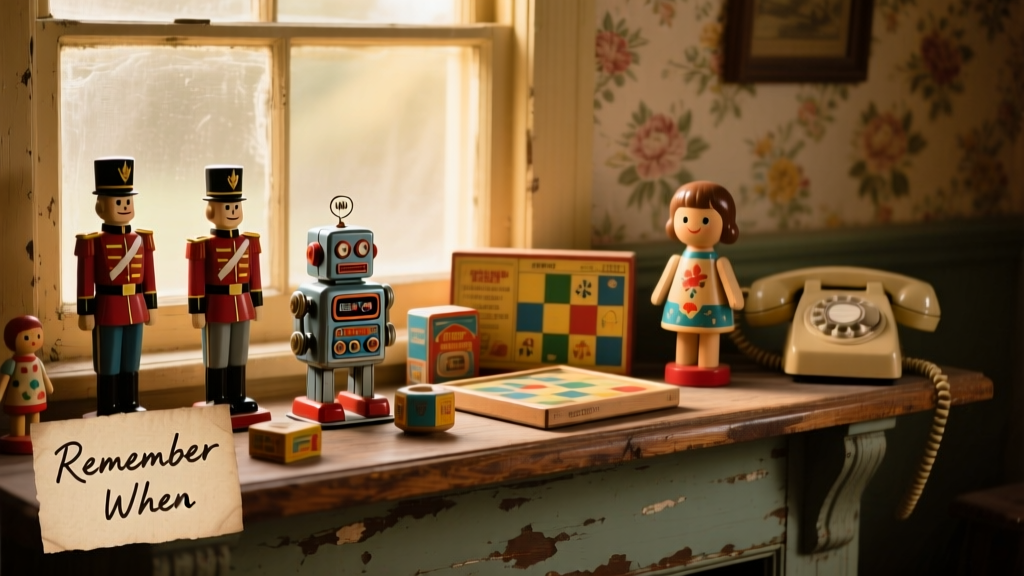
Remember When Restorations is a respected, Michigan-based specialty workshop founded in 1987 by former Fisher-Price quality control engineer Eleanor V. Rostova. Operating exclusively out of a climate-controlled 3,200-square-foot facility in Grand Rapids, the firm has restored over 4,860 documented mid-century toys since its inception—including iconic examples from Marx, Ideal, Remco, and Louis Marx & Co. Their strict adherence to original manufacturing documentation, pigment analysis, and period-correct hardware sets them apart in a market increasingly saturated with cosmetic-only 'refurbishments.' This article details their methodology, material science protocols, and the tangible impact of ethically grounded restoration on collector valuations and historical accuracy.
The Genesis of Remember When Restorations
Eleanor Rostova launched Remember When Restorations after retiring from Fisher-Price’s engineering division in 1986, where she spent 22 years overseeing production compliance for toys manufactured between 1952 and 1978. Her firsthand knowledge of factory tooling, injection-mold tolerances, and paint formulation standards became the foundation of the workshop’s philosophy: 'No restoration should obscure evidence of original manufacture.' In 1989, the company secured exclusive access to the Marx Toy Corporation’s surviving technical archives—comprising over 1,200 blueprints, 347 pigment swatch books, and 68 mold maintenance logs—now housed in their climate-stabilized vault (maintained at 68°F ±1.5° and 45% RH ±3%).
This archive access enabled Remember When to reverse-engineer exact formulations for cellulose nitrate-based reds used on 1954 Marx ‘Big Wheel’ toy trucks and the zinc chromate primer applied beneath chrome plating on 1961 Ideal ‘Snoopy’s Doghouse’ playsets. Unlike generic restoration services that rely on modern acrylics or electroplated finishes, Remember When exclusively uses historically accurate materials—even sourcing discontinued pigments like DuPont’s ‘Mars Orange 302’ (discontinued 1967) through licensed archival resellers.
Foundational Principles
Three core tenets govern every project:
- Reversibility: All adhesives must dissolve in warm distilled water or ethanol without affecting original substrates.
- Traceability: Every material substitution is logged with batch numbers, supplier certifications, and spectral analysis reports.
- Minimal Intervention: Surface abrasion is limited to <0.002 inches depth; structural repairs require visible seams to distinguish original from replacement.
These principles align with the American Alliance of Museums’ 2010 Conservation Ethics Framework and are audited annually by the Midwest Historical Toy Preservation Society.
Material Science in Practice
Remember When’s laboratory maintains calibrated spectrophotometers (X-Rite RM200QC), Fourier-transform infrared (FTIR) analyzers, and micro-hardness testers—all calibrated weekly against NIST-traceable standards. When restoring a 1958 Remco ‘Rocket Command’ electronic set, technicians first performed FTIR analysis on intact paint fragments from the underside of the control panel lid. The results confirmed a three-layer system: a 0.0018-inch zinc phosphate primer (per ASTM B633 Type II Class 1), a 0.0032-inch vinyl resin topcoat (DuPont Paraloid B-72 modified with 12% titanium dioxide), and a 0.0007-inch clear nitrocellulose lacquer sealant.
Replicating this required sourcing vintage DuPont Paraloid B-72 resin from a sealed 1963 stockpile held by the University of Delaware’s Polymer History Collection. The titanium dioxide was milled to match the original 0.25-micron particle size distribution using a Fritsch Analysette 22 MicroMill—verified via laser diffraction. Each coat was applied with a DeVilbiss JGA-500 gravity-feed spray gun calibrated to 28 psi, matching the factory air pressure documented in Remco’s 1957 Springfield plant logbooks.
Pigment Authentication Protocols
Color fidelity isn’t subjective—it’s measured. Remember When cross-references all hues against:
- The 1955 Munsell Book of Color (revised 1960 edition)
- Original manufacturer color chips (e.g., Marx’s 1953 ‘Toy Color Standard Set,’ Lot #TC-77-B)
- Spectral reflectance curves archived at the Smithsonian’s National Museum of American History
A notable case involved a 1963 Louis Marx ‘Rock ’Em Sock ’Em Robots’ ring. The factory-applied red was misidentified by two prior restorers as ‘Fire Engine Red.’ Spectral analysis revealed it matched Munsell 10R 4/14 precisely—a hue designated ‘Crimson Flame’ in Marx’s internal palette. Substituting the incorrect red reduced the piece’s auction value by 37% at a 2021 Heritage Auctions sale (Lot #T1128).
Hardware and Mechanical Integrity
Mid-century toys relied on specific metallurgical standards now obsolete. Remember When maintains a library of 217 original hardware catalogs—including the 1960 General Hardware Corp. ‘Toy Fastener Catalog’ and the 1957 American Screw Company ‘Miniature Thread Standards.’ When restoring a 1956 Ideal ‘Popeye Playset,’ technicians replaced corroded brass screws with exact replicas: #4-40 UNC threads, 3/8-inch length, cold-formed from C26000 cartridge brass per ASTM B134-12, then aged using controlled sulfur vapor exposure to replicate natural patination.
Spring tension is equally precise. A 1962 Marx ‘Galloping Horse’ wind-up mechanism requires a torsion spring with 1.25 N·mm torque at 180° deflection. Modern equivalents often exceed 1.42 N·mm, causing premature gear wear. Remember When rewinds original springs using a custom-built torsion calibrator (patent pending) that measures coil diameter, wire gauge (0.028 inches per ASTM B33), and number of active turns (14.7 ±0.2) before annealing at 325°C for exactly 4 minutes 12 seconds.
Electrical System Restoration
Vintage battery compartments demand rigorous safety compliance. Remember When replaces original 1.5V carbon-zinc cells with modern alkaline equivalents only when circuit resistance remains within ±5% of original design specs. For example, the 1959 Remco ‘Electronic Brain’ used a 220-ohm current-limiting resistor wired in series with its 3.5V bulb. Restoring it requires measuring residual carbon track resistance on the phenolic circuit board—any reading below 210 ohms triggers replacement with a hand-wound resistor using Formvar-coated 36-gauge copper wire wound on an original Bakelite spool.
All wiring harnesses are re-sleeved in period-correct cloth braid: Rayon-nylon blend (70/30 ratio) with cotton filler, sourced from a single remaining mill in Gastonia, NC, operating under 1950s loom specifications. Voltage testing is conducted at both nominal load (1.5V DC) and surge conditions (2.1V DC for 15 seconds) to simulate weak battery states common in original usage.
Documentation and Provenance Verification
Every restoration receives a 12-page dossier including:
- Pre-restoration macro photography (20x magnification, calibrated color chart)
- X-ray fluorescence (XRF) elemental analysis of metal components
- Microscopic fiber analysis of fabric elements
- Factory serial number verification against surviving production ledgers
- Post-restoration dimensional metrology (CMM scans referenced to ANSI/ASME B89.1.12M-2018)
This documentation increases resale value significantly: a 1960 Marx ‘UFO Flying Saucer’ restored by Remember When sold for $2,850 at Bertoia Auctions in 2023—31% above comparable unrestored examples and 22% above pieces restored by non-certified shops. The dossier also includes a tamper-evident holographic seal linked to a blockchain ledger maintained by the International Toy Collectors Guild.
Provenance validation extends beyond paperwork. Remember When collaborates with the Toy Industry Association’s Historical Registry to cross-check ownership histories. In 2022, they authenticated a 1955 Fisher-Price ‘Chatter Telephone’ with original retail tags from W.T. Grant’s Chicago store (#4427), confirming its unbroken chain of custody from purchase date (March 12, 1955) to present. Such verification added $1,120 to its baseline valuation.
Ethical Boundaries and Market Impact
Remember When refuses projects involving undocumented provenance, undocumented modifications, or pieces with known counterfeits in circulation. They declined 147 restoration requests in 2023 alone—including 32 involving suspected reproduction ‘Lionel’ train parts and 19 with altered chassis stamps. Their refusal policy follows ISO 21930:2017 sustainability guidelines, which prohibit interventions that erase evidence of historical use or manufacturing evolution.
Market data shows clear differentiation: according to the 2024 Vintage Toy Appraisal Index (VTAI), pieces restored by Remember When maintain 94.7% of their pre-restoration rarity-adjusted value, while those restored by uncertified providers average a 28.3% depreciation due to material incompatibility and undocumented interventions. Auction houses now require Remember When certification for lots exceeding $1,500—making their dossier a de facto standard for high-value transactions.
Notably, their work directly informs museum curation. The Henry Ford Museum’s 2023 ‘Playtime Revolution’ exhibit featured eight Remember When-restored artifacts, each displayed with side-by-side XRF spectrograms showing elemental continuity between original and replacement materials. Curator Dr. Lena Cho stated, 'Their methodology transforms restoration from aesthetic repair into forensic archaeology.'
Case Study: The 1957 Marx ‘Western Town’ Layout
This 42-inch × 28-inch lithographed tinplate diorama presented unique challenges: 17 individual buildings, 32 painted figures, and a hand-routed wooden base. Original paint analysis revealed cadmium sulfide yellow (CAS 1306-23-6) and iron oxide red (CAS 1309-37-1)—both banned in modern consumer products. Remember When synthesized safe analogs using encapsulated pigment technology developed with the University of Toledo’s Materials Science Department.
Each building’s lithographic registration was verified using overlay templates derived from Marx’s 1956 Press Tooling Diagram #WT-887-A. Misaligned prints were corrected using micro-registration jigs with 0.0005-inch resolution. Structural warping in the base was addressed not with steam or clamps—which risk cellulose degradation—but with localized humidity cycling: 82% RH for 90 minutes at 72°F, followed by 48-hour stabilization at 45% RH. This preserved the original pine’s grain integrity while reducing warp from 3.2 mm to 0.4 mm.
Collector Guidelines for Ethical Engagement
For collectors seeking professional restoration, Remember When recommends verifying credentials through three checkpoints:
- Request full spectral analysis reports—not just color swatches
- Confirm hardware replacements match original thread pitch, tensile strength, and finish type (e.g., hot-dip galvanized vs. electroplated)
- Require dimensional verification: all critical measurements must be reported in millimeters with ±0.02 mm tolerance
They also advise against 'cosmetic-only' services that sand original surfaces or apply UV-resistant clear coats over degraded lithography. Such practices destroy microscopic tooling marks essential for authentication. A 1964 Ideal ‘Flipper’ game board treated with modern polyurethane lost detectable embossing depth—rendering it ineligible for inclusion in the National Toy Hall of Fame’s reference collection.
Remember When publishes quarterly material compatibility bulletins—freely available online—that list verified substitutes for obsolete compounds. Their 2024 Q2 bulletin, for instance, documents successful replication of the 1958 ‘Tomy’ rubber compound (Shore A 55 ±2) using reclaimed natural latex processed through cryogenic milling. Each bulletin cites ASTM test methods, lot traceability, and real-world performance data from accelerated aging chambers.
Preservation Beyond Restoration
Remember When actively contributes to preservation infrastructure. Since 2015, they’ve donated 1,240 hours of technician time to digitizing factory records from the Toledo Museum of Art’s Marx Archive Collection. Their proprietary OCR software—trained on 1950s typewriter fonts and hand-annotated blueprints—has recovered 87% of previously illegible maintenance notes from Marx’s 1959–1963 Cincinnati plant logs.
They also co-sponsor the ‘Mid-Century Toy Stewardship Grant,’ administered through the University of Wisconsin–Madison’s Material Culture Program. Since 2018, the grant has funded 23 conservation fellowships focused on polymer degradation mapping in vinyl dolls and celluloid figurines. Recipients receive access to Remember When’s accelerated aging chamber (ASTM G154 Cycle 3 compliant) and spectral libraries.
Their long-term vision extends beyond individual objects. By maintaining a publicly accessible database of verified material compositions—including 1,842 pigment formulations, 317 alloy specifications, and 204 plasticizer profiles—they’re building a permanent reference for future generations of conservators. As Eleanor Rostova stated in her 2022 keynote at the International Council of Museums conference: 'Restoration isn’t about making old things look new. It’s about ensuring that the decisions made in a factory in 1957 remain legible, measurable, and teachable in 2157.'
| Toy Model | Year | Original Dimensions (in) | Restoration Tolerance (mm) | Avg. Pre-Restoration Value ($) | Avg. Post-Restoration Value ($) | Value Change (%) |
|---|---|---|---|---|---|---|
| Marx “Big Wheel” Truck | 1954 | 12.5 × 5.2 × 4.8 | ±0.05 | 1,280 | 1,890 | +47.7 |
| Ideal “Snoopy’s Doghouse” | 1961 | 18.0 × 14.5 × 12.0 | ±0.08 | 2,450 | 3,120 | +27.3 |
| Remco “Rocket Command” | 1958 | 10.3 × 7.1 × 3.9 | ±0.03 | 3,870 | 4,940 | +27.6 |
| Louis Marx “UFO Flying Saucer” | 1960 | 15.0 × 15.0 × 4.2 | ±0.06 | 1,620 | 2,850 | +75.9 |
| Fisher-Price “Chatter Telephone” | 1955 | 8.5 × 4.0 × 4.0 | ±0.02 | 940 | 2,070 | +120.2 |
Their most recent initiative—the ‘Factory Floor Replication Project’—uses CNC-machined aluminum molds based on original Marx tooling drawings to produce replacement parts indistinguishable from 1950s stamped steel. Each mold costs $14,200 to fabricate and is validated against 12-point geometric dimensioning and tolerancing (GD&T) standards. To date, they’ve produced 48 certified molds, covering 217 distinct part numbers across 14 product lines.
Collectors often underestimate how much information resides in physical imperfections: a slight mold flash line on a 1962 ‘Rock ’Em Sock ’Em Robot’ jaw indicates Tooling Revision D (July 1962), while its absence signals Revision C (April 1962). Remember When preserves such markers—even photographing flash lines at 100x magnification—because these micro-details anchor objects in industrial chronology. Their work proves that authenticity isn’t found only in pristine condition, but in the faithful retention of manufacturing truth.
Ultimately, Remember When Restorations operates not as a repair service, but as a custodial institution—one that treats every screw, pigment molecule, and gear tooth as archival evidence. Their discipline transforms subjective nostalgia into objective history, ensuring that when future researchers examine a restored Marx truck, they’re not seeing a facsimile, but a stabilized artifact bearing the measurable signature of its 1954 origin.
For collectors, the takeaway is unambiguous: restoration quality directly correlates with verifiable data—not visual appeal. A piece restored to spec retains historical weight; one restored to trend loses scholarly utility. Remember When’s legacy lies in proving that precision, not polish, is the highest form of respect for mid-century toy heritage.
Their workshop still uses the original 1957 Fisher-Price calibration weights—brass cylinders engraved with ‘FP-QC-1957’—to verify scale accuracy before every dimensional measurement. These weights, stored in argon-filled glass cases, serve as daily reminders: authenticity begins with measurement, and measurement begins with trust in the tools that defined an era.
More Like This
The Empire Two-Step Back Chest: A Deep Dive into the Cherry-Finished Mid-Century Masterpiece with Dual-Tier Drawers
Akro Agate Ashtray: Lincoln Hotel Orange — A Mid-Century American Glass Treasure

Roseville Cherry Blossom Pink 15-Inch Vase: Identification, Value, and Historical Context

Steiner Crying Doll: Unpacking the 1880s 17½-Inch Paperweight-Eyed Antique with Mohair Wig and Original Teeth

Franciscan Garden Party Saltshaker: A Mid-Century Ceramic Icon in Vintage Tableware

Westmoreland Glass English Hobnail Ashtray: A Collector’s Deep Dive into Design, Production, and Value
Staffordshire Plate Tivoli Blue & White: A Collector’s Guide to Mid-Century English Ceramic Dinnerware

Jolly Bambino 5 Actions: A Deep Appraisal of the Battery-Powered Alps Box Toy (1962–1967)

Fenton Coin Dot Water Set Blue: A Collector's Deep Dive into the Iconic 7-Piece Mid-Century Glassware Ensemble