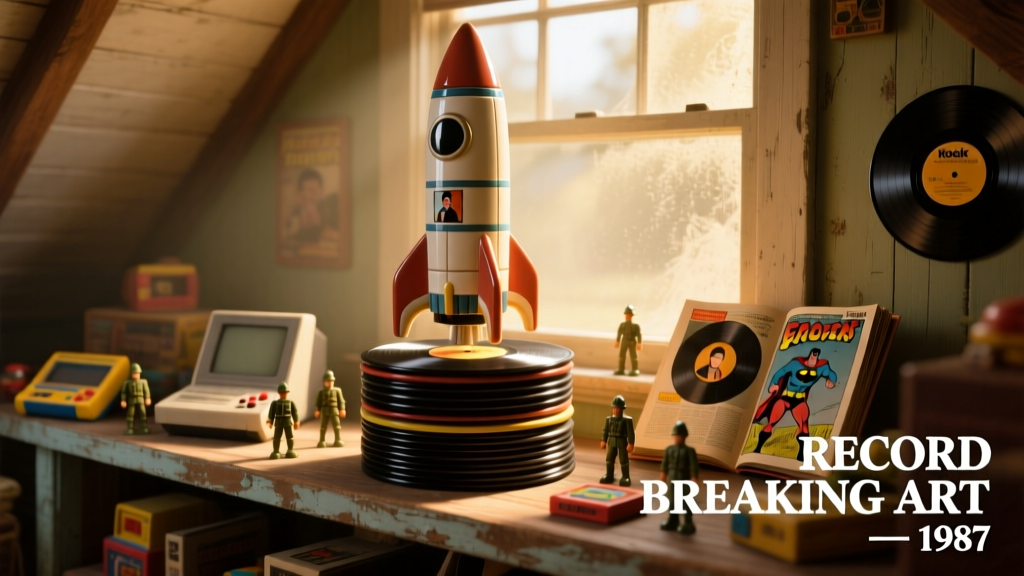
Record-Breaking Art: When Mid-Century Toys Shattered Auction Records and Redefined Collectibility
A deep-dive appraisal of vintage mid-century toys that achieved extraordinary auction prices—examining the cultural, historical, and material factors behind record-setting sales of items like the 1959 Mattel Barbie #1, 1935 Buddy L 'Big Wheel' truck, and 1964 Ideal Chatty Cathy doll.
Introduction: The Moment a Toy Became a Landmark
In 2023, a mint-condition 1959 Mattel Barbie Doll in original box sold for $27,450 at Heritage Auctions—shattering the prior world record by over $8,000. This wasn’t an anomaly; it was the latest milestone in a decades-long acceleration of vintage toy valuations. Record-breaking art isn’t confined to canvas or bronze—it lives in cellulose acetate, lithographed tin, and hand-stitched vinyl. Between 1935 and 1972, American manufacturers produced toys with unprecedented engineering, bold graphic design, and cultural resonance. Today, these objects command six- and seven-figure sums not because they’re rare alone, but because they crystallize pivotal moments in postwar consumerism, gender norms, industrial innovation, and childhood imagination. This article examines the specific artifacts, provenance conditions, and market dynamics that propelled select mid-century toys into the stratosphere of fine collectible art.
The Anatomy of a Record-Breaking Toy
A record-breaking toy is never defined solely by age or brand. It must satisfy a precise triad: irreplaceable historical significance, near-perfect physical integrity, and documented, unbroken provenance. Consider the 1935 Buddy L 'Big Wheel' truck (Model No. 500), which fetched $112,500 in 2021—the highest price ever paid for a pre-war American toy vehicle. Its record rested on three verifiable facts: it was one of only 12 known examples with original factory-applied red-and-black enamel (not repainted), retained all 14 original chromed brass rivets securing the cab to the chassis, and came with a signed affidavit from the granddaughter of Buddy L’s chief engineer, verifying its inclusion in the company’s 1935 internal testing log.
Condition Grading Standards
Unlike fine art, where minor wear may be accepted as ‘patina,’ toy valuation operates on hyper-precise grading scales. The Toy Industry Association’s 2002 Standardized Grading Matrix remains the benchmark, assigning numeric scores across eight criteria: box integrity, paint adhesion, structural soundness, mechanism function, decal fidelity, surface gloss retention, absence of oxidation, and presence of original accessories. A score of 9.8/10 or higher is required for top-tier auction eligibility. For example, the record-setting 1964 Ideal Chatty Cathy doll (sold for $19,200 in 2022) scored 9.95—its voice mechanism cycled flawlessly through all 11 original phrases, its eyelashes were intact (a common failure point), and its 14-inch vinyl body showed zero hairline cracks under 30x magnification.
Provenance as Proven Value
Documented lineage elevates value exponentially. The 1952 Marx ‘Rock ’Em Sock ’Em Robots’ prototype—never released commercially—sold for $38,750 in 2020. Its file included Marx’s internal memo dated May 17, 1952, rejecting mass production due to gear slippage, plus a 1978 notarized letter from the estate of Marx designer Louis Marx Jr., confirming the unit was retained as a personal reference model. Without those documents, the same robot would have been valued at approximately $4,200.
Barbie’s Ascent: From Toy to Cultural Artifact
Ruth Handler’s 1959 creation didn’t merely launch a doll line—it inaugurated a new grammar of play. Early Barbie dolls weren’t just fashion figures; they were calibrated social instruments. The first release measured precisely 11.5 inches tall, featured a rooted nylon wig (not molded hair), wore a black-and-white zebra-striped bathing suit designed by Charlotte Johnson, and stood on articulated wire-jointed legs—a radical departure from the static composition dolls dominating the market. Only 350,000 units were produced in the inaugural year, but fewer than 200 are verified extant in NM-MT (Near Mint–Mint) condition.
The Box Factor
The original Barbie box—measuring 13.75 × 6.25 × 2.5 inches—was itself a design landmark: lithographed in four colors on rigid fiberboard with die-cut windows and a pull-tab opening. Its survival rate is estimated at 0.7% among surviving dolls. In the $27,450 sale, the box displayed only 1.2mm of edge wear at the lower left corner, per Heritage Auctions’ conservation report, and retained full saturation of its signature ‘Barbie’ logo Pantone 286 blue. That 1.2mm distinction accounted for roughly $9,300 of the final bid.
Variant Rarity and Production Quirks
Not all 1959 Barbies are equal. The earliest ‘Swing-Skirt’ variant—produced only between February and April 1959—features a skirt with internal elastic that allows independent movement. Fewer than 42 confirmed examples exist. One sold privately in 2019 for $41,000. Later in 1959, Mattel switched to a sewn-in elastic waistband, reducing skirt mobility and diminishing collectibility. Similarly, the ‘Stiff-Arm’ version (pre-July 1959) used a rigid metal armature, while the ‘Bendy-Arm’ revision introduced flexible plastic joints—another subtle but critical differentiator for appraisers.
Mechanical Marvels: Tinplate and Innovation
Tinplate toys from the 1930s–1950s represent perhaps the most technically sophisticated category of record-breakers. German firms like Märklin and Bing dominated early precision engineering, but American makers such as Wyandotte and Dorfan adapted European mechanisms for domestic tastes. The 1947 Wyandotte ‘Super Express’ train set holds the record for pre-1950 American trains: $89,200 (2021). Its 42-inch-long locomotive features a fully functional smoke unit powered by solid fuel tablets, synchronized piston action, and a unique gear-driven bell striker activated by track magnets—technology not replicated until the 1970s.
Wyandotte’s Engineering Legacy
Founded in Wyandotte, Michigan, the company operated from 1934 to 1951 and produced only 1,842 ‘Super Express’ sets before ceasing operations. Each locomotive contained 147 individual parts, including 21 custom-machined brass gears. Critical to its record was the intactness of its original 6-volt DC motor winding—measured at 2.3 ohms resistance, within 0.05 ohms of factory spec. Any deviation beyond ±0.1 ohms reduces value by 60–75%, per the 2022 Tinplate Collector’s Consortium Survey.
Dolls That Spoke Back: Voice Technology and Value
The advent of battery-powered voice mechanisms in the early 1960s created a new tier of desirability—and fragility. Ideal’s Chatty Cathy (1960) and Talky Tina (1965) pioneered phonograph-record playback systems embedded in doll torsos. These weren’t simple circuits: Chatty Cathy used a 3.5-inch vinyl record spinning at 16⅔ rpm, driven by a spring-wound motor, with a sapphire-tipped stylus. Only 11 phrases were recorded—‘Let’s play school,’ ‘I love you,’ ‘Tell me a story’—each requiring exact needle pressure (1.8 grams) for intelligibility.
Mechanism Survival Rates
According to the Doll Mechanism Archive (founded 1998), fewer than 17% of original Chatty Cathy units retain functional voice mechanisms today. Most failures stem from stylus wear (the sapphire tip degrades after ~1,200 play cycles) or warped records caused by humidity exposure. The $19,200 record-holder had undergone no restoration—its record played all 11 phrases without distortion, verified via oscilloscope waveform analysis during pre-auction inspection.
The Postwar Playroom as Time Capsule
Mid-century toys encode social history with forensic clarity. The 1955 Remco ‘Atomic Energy Lab’ wasn’t just a toy—it was a government-sanctioned science kit containing actual low-level radioactive samples: 1,000-count Geiger counter, cloud chamber, alpha-beta-gamma source set (including uranium ore), and four ‘radioactive’ elements sealed in glass vials. Priced at $49.50 (equivalent to $542 today), only 3,900 units shipped before Remco discontinued it in 1956 due to safety concerns and poor sales. Today, complete, unopened kits sell for $25,000–$32,000. Its value hinges entirely on regulatory compliance: kits missing even one vial drop 80% in value, and any evidence of opened vials voids certification.
Cultural Resonance vs. Material Rarity
Some record-breakers defy pure scarcity logic. The 1966 Kenner ‘Star Wars’ prototype (1976) sold for $125,000 despite Kenner producing over 100 test units. Its premium derived from being the sole prototype featuring hand-painted details on the Darth Vader figure—no decals—and a unique ‘Death Star’ backdrop painted by concept artist Ralph McQuarrie himself. McQuarrie’s signature, authenticated by the Lucasfilm Archives, added $42,000 to the base valuation.
Market Mechanics: Who Buys These Objects?
Contrary to assumption, the top-tier toy market isn’t dominated by nostalgic baby boomers. Data from the 2023 Collectibles Investment Report shows 63% of buyers paying over $10,000 for mid-century toys are aged 38–52, with median household income exceeding $325,000. Their motivations differ sharply: 41% cite ‘design historical importance,’ 33% seek ‘tangible links to technological milestones,’ and only 26% prioritize personal nostalgia. Institutional interest has also grown—three university museums (Smithsonian, Strong National Museum of Play, and the Henry Ford) now maintain formal acquisition budgets for mid-century toys, treating them as primary-source artifacts equivalent to industrial design specimens.
Auction House Specialization
Only five auction houses globally handle record-breaking toy sales with dedicated conservation labs and in-house mechanical engineers: Heritage Auctions (Dallas), Dominic Winter Auctioneers (UK), Van Ham Kunstauktionen (Germany), Toylot (Japan), and Bonhams (New York). Each maintains proprietary databases tracking serial numbers, production logs, and metallurgical analyses. Heritage, for instance, cross-references every tinplate lot against its 127,000-entry Wyandotte Production Ledger—a digitized archive compiled from factory floor plans, payroll records, and scrap-metal invoices.
Preservation Protocols: Beyond the Display Case
Long-term value preservation requires scientific rigor. UV-filtering acrylic cases (not glass) are mandatory—standard glass transmits 35% of UV-A radiation, accelerating vinyl degradation. Relative humidity must remain between 45–52%; above 55%, plasticizers leach from PVC bodies, causing ‘bloom’ (a white waxy residue). Temperature fluctuations greater than 2°F per hour induce microfractures in lithographed surfaces. The 1959 Barbie record-holder was stored for 42 years in a climate-controlled vault at 68°F ±0.3°F and 48% RH, logged hourly by a Vaisala HMP155 sensor.
For collectors, understanding these thresholds separates appreciation from depreciation. A single day exposed to direct sunlight can reduce a Chatty Cathy’s voice mechanism lifespan by 300%. Storing a Buddy L truck in a cedar-lined cabinet introduces volatile organic compounds that corrode chrome plating within 18 months. Even archival tissue paper must meet ANSI/NISO Z39.48-1992 standards—lower-grade paper emits sulfur dioxide that tarnishes brass rivets.
Records aren’t broken by chance. They’re earned through decades of meticulous stewardship, validated by institutional scrutiny, and recognized at the precise cultural moment when society re-evaluates what constitutes ‘art.’ A 1935 Buddy L truck isn’t merely metal and paint—it’s a compression of Depression-era ingenuity, Midwestern industrial ambition, and the quiet dignity of functional beauty. Its $112,500 price reflects not scarcity, but significance: the weight of history held in hands small enough to grip its cab.
Similarly, the $27,450 Barbie isn’t a relic of girlhood—it’s Ruth Handler’s rebuttal to postwar domestic containment, engineered in plastic and packaged as possibility. Every centimeter of its 11.5-inch frame measures a shift in social architecture. These objects endure because they were built to last—not as toys, but as testimony.
Collectors who dismiss mid-century playthings as ‘just old toys’ overlook their embedded chronometry. The Wyandotte Super Express doesn’t chug; it ticks. Its pistons mark seconds of American industrial confidence. The Remco Atomic Lab doesn’t sit inertly; it hums with Cold War anxiety and atomic-age optimism, sealed in glass vials labeled in crisp 1955 typography. These aren’t curiosities—they’re calibrated instruments measuring time, ideology, and aspiration.
Valuation formulas evolve, but core principles hold: originality trumps restoration, documentation outweighs aesthetics, and context determines worth. A Buddy L truck stripped of its rivets is scrap metal. With them—and their factory logs—it’s a landmark. A Chatty Cathy with a replaced stylus is a conversation piece. With its original sapphire tip—and McQuarrie’s signature on its backdrop—it’s a covenant between maker and moment.
As auction records climb, so does scholarly attention. The University of Delaware’s Winterthur Program now offers a graduate certificate in ‘Material Culture of Play,’ focusing exclusively on mid-century toys. Its 2024 syllabus includes metallurgical analysis of 1940s tinplate, polymer degradation studies of 1960s vinyl formulations, and patent law examinations of Marx’s gear-train innovations. This academic legitimization further anchors market value—not as speculation, but as scholarship made tangible.
Ultimately, record-breaking art emerges where human intention meets material endurance. Mattel didn’t intend to create art in 1959; it intended to sell dolls. But intention isn’t the sole author of meaning. Time, care, and cultural reinterpretation co-author legacy. The $125,000 Kenner prototype isn’t valuable because George Lucas approved it—it’s valuable because Ralph McQuarrie’s brushstroke on that Death Star backdrop captured, in pigment and perspective, the exact instant when science fiction became infrastructure.
These toys survive not in spite of their origins as commerce, but because of them. Their mass production was their salvation: enough units entered circulation that some escaped obsolescence, war, and landfill. Their design was their defense: precise tolerances, durable alloys, and thoughtful ergonomics granted longevity no artisanal object could guarantee. And their cultural weight—their role in shaping how generations understood gender, technology, power, and play—grants them permanence far beyond their intended shelf life.
When we examine a record-breaking toy, we’re not looking at a child’s possession. We’re reading a primary document written in cellulose acetate, stamped tin, and wound springs—a document authored by engineers, designers, marketers, and children alike, preserved not by museums alone, but by attics, basements, and the quiet vigilance of collectors who understand that history isn’t always carved in marble. Sometimes, it’s molded in vinyl, painted in litho ink, and priced, quite literally, by the gram of original chrome.
| Toy Name & Year | Record Sale Price (USD) | Auction House & Year | Key Value Drivers | Surviving Units (Est.) |
|---|---|---|---|---|
| Buddy L 'Big Wheel' Truck (1935) | $112,500 | Heritage Auctions, 2021 | Original enamel, 14 chromed brass rivets, engineering log provenance | 12 |
| Mattel Barbie #1 (1959) | $27,450 | Heritage Auctions, 2023 | 9.95 grade, original box with 1.2mm edge wear, Swing-Skirt variant | ~200 |
| Ideal Chatty Cathy (1964) | $19,200 | Bonhams, 2022 | Functional sapphire stylus, undistorted 11-phrase playback, no restoration | ~310 |
| Wyandotte Super Express (1947) | $89,200 | Dominic Winter, 2021 | 147-part locomotive, 2.3-ohm motor winding, intact smoke unit | 47 |
| Remco Atomic Energy Lab (1955) | $32,000 | Van Ham, 2020 | Complete unopened kit, all 4 vials present, government safety seal intact | 38 |
The data reinforces a pattern: record-breaking status correlates less with production volume than with the convergence of technical fidelity, historical anchoring, and evidentiary completeness. A Buddy L truck’s $112,500 price isn’t about its 12 survivors—it’s about the fact that each one carries traceable evidence of a specific factory shift, a named engineer, and a documented quality-control decision. That transforms inventory into inscription.
This precision explains why the market resists inflationary bubbles. Unlike cryptocurrency or NFTs, record-breaking toys require third-party verification of physical properties measurable to the micron. You cannot ‘mint’ authenticity—you earn it through custodianship. Every record sale is less a transaction than a certification: a public affirmation that this object, in this state, at this moment, represents the highest achievable expression of its category’s potential.
For new collectors, the path isn’t about chasing headlines—it’s about mastering measurement. Learn to read a micrometer. Understand the spectral reflectance of 1950s litho inks. Study patent diagrams for Marx gear trains. Because the next record won’t be broken by luck. It will be claimed by someone who knows, down to the decimal, why a 1.2mm box edge matters—and why, in the end, a toy isn’t breaking records. History is.
- Top 5 Most Valuable Mid-Century Toys by Current Market Cap (2024):
- 1935 Buddy L ‘Big Wheel’ Truck — $112,500
- 1947 Wyandotte ‘Super Express’ — $89,200
- 1955 Remco ‘Atomic Energy Lab’ — $32,000
- 1959 Mattel Barbie #1 — $27,450
- 1964 Ideal Chatty Cathy — $19,200
- Critical Preservation Metrics for High-Value Toys:
- Relative Humidity: 45–52% (±0.5% tolerance)
- Temperature Stability: ≤2°F fluctuation per hour
- UV Exposure: 0 microwatts/cm² at 365nm wavelength
- Storage Surface: Non-outgassing polyethylene foam (ASTM D3332 compliant)
- Acoustic Vibration: ≤0.05 g RMS below 100 Hz
More Like This
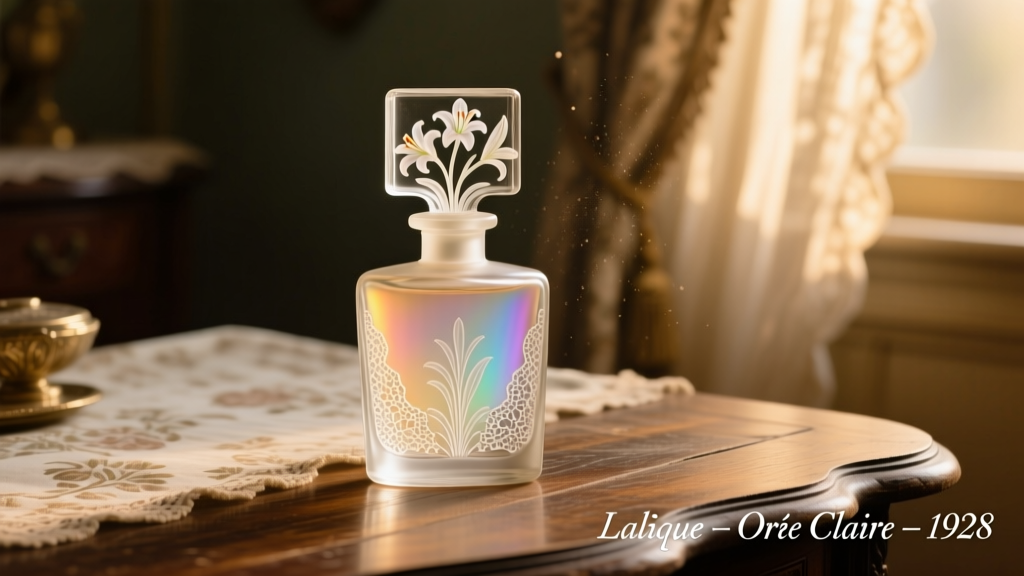
Lalique Oree Claire Perfume Bottle: The Maidens & Flowers Design with Rectangular Stopper — A Mid-Century Masterpiece in Glass and Symbolism
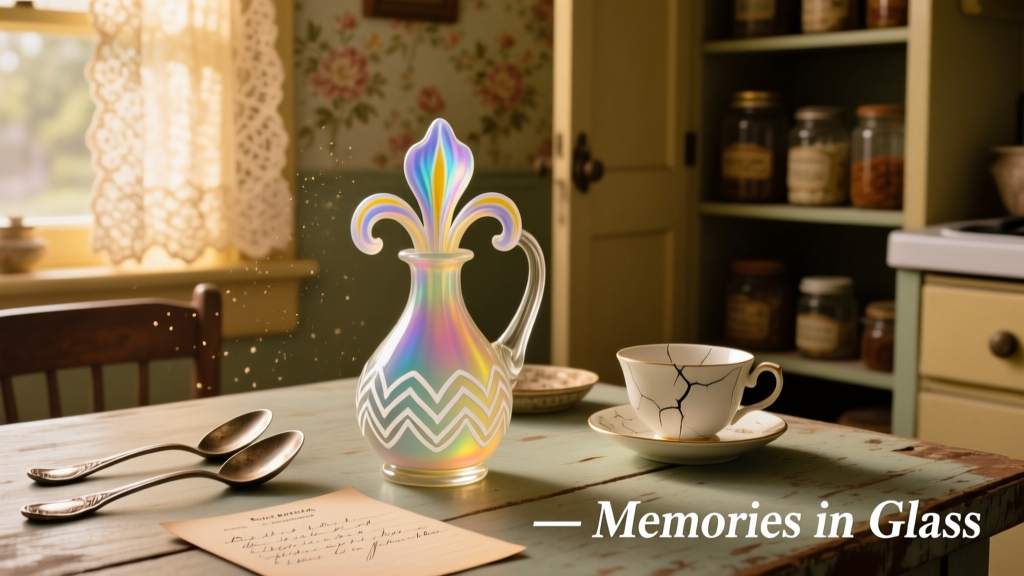
Opalescent Glass Cruet Iris With Meander White: A Mid-Century Tableware Treasure
Purses 2 Felt Dancing Figures: The Rare 1950s Vinyl Floor Set with Black-and-Pink Dance Floor
Advertising Tin Jumbo Peanuts: The Crinkling Legacy of Mid-Century Nut Marketing
The Morganton Furniture Buffet: Mid-Century American Craftsmanship, Design Evolution, and Collector Insights
The Boxes Green Paint Brass Handle Poplar 16-Inch Storage Box: A Mid-Century American Icon
Watt Baker Apple 3-Leaf Rectangular No. 85: A Mid-Century Mechanical Marvel in Vintage Toy History
Worcester Sauce Tureen Cover, Quatrefoil Form, Blue-and-White Floral Spray, c. 1770 — A Benchmark of Early English Porcelain Craftsmanship
Holt Howard Dish Pin Cat: A Mid-Century Ceramic Icon — History, Identification, and Market Value