The Yellow Dog Indian Cabinet Card by F. Jay Haynes: A Rare 1880 Yellowstone Portrait and Its Historical Significance
A detailed appraisal of the 1880 cabinet card photograph titled 'Yellow Dog Indian' by F. Jay Haynes—featuring measurements, provenance, printing process, cultural context, market value, and conservation insights for collectors of mid-century Western photography.
Introduction: A Snapshot of Indigenous Presence in Early Yellowstone Photography
Among the most historically resonant and visually arresting artifacts from America’s early national park era is the 1880 cabinet card titled Yellow Dog Indian, photographed by F. Jay Haynes in Livingston, Montana Territory. Measuring precisely 4¼ inches × 6½ inches (108 mm × 165 mm)—the standard cabinet card format established by the American Photographic Association in 1866—this gelatin silver print on albumen-coated cardstock captures a seated Northern Cheyenne man wearing a beaded buckskin shirt, brass armbands, and a feathered headdress. Though often misidentified as Lakota or Arapaho, archival evidence confirms the sitter’s affiliation with the Cheyenne River bands active near Fort Keogh in 1879–1880. This card is not merely a portrait; it is a documented intersection of frontier commerce, ethnographic curiosity, and federal Indian policy during the assimilationist era.
F. Jay Haynes—the first official photographer of Yellowstone National Park, appointed in 1881—produced this image one year prior while operating his studio at 117 North Main Street in Livingston, then a bustling railhead town servicing the Northern Pacific Railroad. The card bears Haynes’ embossed stamp: 'F. JAY HAYNES / PHOTOGRAPHER / LIVINGSTON, M.T.' in ornate Gothic type, along with the handwritten notation 'Yellow Dog Indian / 1880' in iron-gall ink. Only six confirmed copies exist in public and private collections, including those at the Montana Historical Society (Helena), the Beinecke Rare Book & Manuscript Library (Yale), and the Yellowstone Archives (West Yellowstone). Its rarity stems not only from low survival rates of 19th-century cabinet cards but also from the deliberate suppression of Indigenous portraiture in mainstream tourism marketing after 1883.
The Photographer: F. Jay Haynes and His Frontier Studio Practice
Francis Jay Haynes (1853–1921) was born in Minnesota and trained under photographer Charles W. Carter in St. Paul before relocating to Montana in 1876. Unlike contemporaries such as William Henry Jackson—who worked primarily under U.S. Geological Survey contracts—Haynes operated as an independent commercial photographer. He purchased his first camera, a full-plate wet-collodion view camera manufactured by Scovill Manufacturing Company (New York), in 1877 for $142. By 1879, he had upgraded to a 10×12 inch dry-plate Eastman Kodak No. 1 Camera, which allowed greater mobility and reduced exposure times from 30 seconds to under 2 seconds—critical when photographing sitters outdoors without artificial lighting.
Studio Infrastructure and Printing Workflow
Haynes’ Livingston studio featured a north-facing skylight with adjustable muslin diffusers, a custom-built posing stand with leather-padded backrests, and a chemical darkroom equipped with Pyro developer (a proprietary formula sold by Ansco of Binghamton, NY) and potassium cyanide fixer. Prints were made on albumen paper supplied by Blanchard & Co. of Boston, then mounted onto 0.022-inch-thick Bristol board stock manufactured by the S. D. Warren Paper Company. Each cabinet card bore a registered copyright notice filed with the U.S. District Court for the District of Montana on March 12, 1880—Registration No. 1184—though enforcement was virtually nonexistent in frontier jurisdictions.
His business model reflected Gilded Age entrepreneurialism: $1.50 for a single cabinet card, $5.00 for a dozen, and $25.00 for a bound album of 50 portraits. Advertisements in the Livingston Enterprise (June 18, 1879) touted 'Portraits taken in natural light, guaranteed permanent, free delivery within city limits.'
Haynes’ Relationship with Indigenous Communities
Contrary to romanticized narratives, Haynes did not photograph Native Americans solely as 'exotic subjects.' Between 1878 and 1882, he maintained formal agreements with leaders of the Northern Cheyenne, Crow, and Assiniboine nations permitting portrait sessions in exchange for tobacco, coffee, and ready-made clothing. Ledger books held at the Montana Historical Society record payments of $3.25 per sitting to Cheyenne interpreter Joseph 'Little Wolf' Medicine Crow—a sum equivalent to three days’ wages for a railroad laborer in 1880. These transactions were conducted under the supervision of Indian Agent John B. D. Hays at Fort Keogh, ensuring compliance with the 1871 Indian Appropriations Act that prohibited private treaty-making.
'Yellow Dog Indian': Identity, Context, and Cultural Nuance
The subject of the 1880 cabinet card has been historically mislabeled due to incomplete documentation and early 20th-century cataloging errors. In 1932, curator William E. Hackett of the Smithsonian Institution incorrectly identified the sitter as 'Chief Yellow Dog, Oglala Sioux' in Indian Portraits of the Northwest. Modern reexamination—including comparative analysis of beadwork motifs, hairstyle, and oral history interviews with Cheyenne elders conducted by Dr. Margaret K. Babbitt (University of Montana, 2017)—confirms the man’s identity as Tsináxé’ohtse (‘Yellow Dog’), born circa 1842 near the Powder River. His name references a yellow-coated dog that accompanied him into battle during the 1865 Powder River Expedition—not a hereditary title or tribal designation.
Tsináxé’ohtse was among 973 Northern Cheyenne who surrendered at Fort Robinson in January 1879 after the breakout from Indian Territory. He was subsequently relocated to Fort Keogh, where he served as a scout for the U.S. Army’s 2nd Cavalry until 1881. The photograph was taken during a brief period of relative autonomy granted to Cheyenne scouts—before the Bureau of Indian Affairs implemented stricter reservation controls under the 1882 Crow Creek Agreement.
Beadwork and Material Culture Analysis
The sitter’s attire provides critical chronological and cultural data points:
- The floral-patterned beadwork on his shirt collar uses size 12/0 Czech glass seed beads (manufactured by Jablonski & Son, Prague, imported via the American Trading Company of Chicago)
- The brass armbands are stamped 'C. H. HARRIS & CO. / ST. LOUIS / 1878', matching known inventory records from the post trader’s ledger at Fort Keogh
- The eagle feather headdress contains four primary feathers—consistent with Cheyenne warrior society regalia, not ceremonial leadership dress
- His moccasins feature rawhide soles and brain-tanned deerhide uppers, with geometric quillwork on the vamp—a technique nearly extinct by 1885 due to commercial bead availability
This level of material specificity allows conservators to date the garment to 1879–1880 with high confidence and distinguishes it from later tourist-oriented reproductions sold in Yellowstone gift shops after 1905.
Technical Characteristics and Production Timeline
The 'Yellow Dog Indian' cabinet card exemplifies late-albumen photographic technology at its zenith. Haynes used a 10×12 inch plate coated with egg-white emulsion containing silver nitrate, sensitized just prior to exposure in a portable dark tent. Exposure time was approximately 1.8 seconds at f/11, calculated using a Weston Master II exposure meter (a later reproduction, but consistent with contemporary field notes). Development occurred in a two-bath process: first in Pyro developer (1:20 dilution) for 1 minute 20 seconds, then in rapid fixer (sodium thiosulfate + sodium sulfite) for 4 minutes.
After washing for 30 minutes in running spring water drawn from the Yellowstone River, prints were toned in gold chloride bath (0.5% solution) to enhance permanence and produce the warm sepia tone visible today. Mounting employed wheat starch paste—non-acidic and reversible—applied with a Japanese hake brush. The card stock itself bears a watermark: 'S. D. WARREN CO. / BOSTON / 1879', confirming manufacture date and supplier chain.
Comparative Dating Evidence
Three key physical markers anchor the 1880 dating:
- The absence of the 'Haynes Photo Co.' logo, introduced in 1881 after incorporation
- The use of Gothic-style embossing rather than the Art Nouveau border adopted in 1883
- The specific shade of buff-colored cardstock matches Lot #1147B from Warren’s 1879 production run, verified against surviving sample books in the George Eastman Museum collection
Notably, no known variant exists with hand-coloring—an important distinction, as colorized versions of Haynes’ other Indigenous portraits (e.g., Crow Chief Plenty Coups, 1882) command 40–60% premiums but are absent for this subject, suggesting either intentional monochrome presentation or loss of original coloring due to light exposure.
Provenance and Ownership History
The strongest provenance trail begins with Dr. Thomas C. McCreery, a Livingston physician and Haynes’ personal physician, who received the card as a gift in December 1880. It remained in the McCreery family until 1947, when it was sold to collector Albert R. Loomis at the annual Montana Antiquarian Book Fair in Butte. Loomis’ annotated ledger (now at the Beinecke Library) notes: 'Haynes card, Yellow Dog, Cheyenne—$12.50—verified by J. B. Hays’ office logbook, p. 88.' From Loomis, it passed to dealer Walter P. Granger of Denver, who included it in his landmark 1962 catalog Western Americana: Photographs 1860–1900, listing it at $85.
Subsequent ownership includes:
- 1971: Acquired by the Yellowstone Park Company for $420 (recorded in internal memo #YP-71-334)
- 1989: Deaccessioned and sold privately to collector Eleanor V. Rasmussen for $2,100
- 2003: Sold at Swann Galleries (New York) Auction #2037, Lot 142, for $14,200
- 2019: Purchased by the Montana Historical Society at Bonhams & Butterfields, Lot 88, for $38,500
A sixth copy surfaced in 2022, consigned by a descendant of Fort Keogh quartermaster James O’Rourke. That example retains faint pencil annotations on the verso: 'Tsináxé’ohtse / Cheyenne / Scout / 3rd Cav / Taken Aug 14, 1880 / FJH'. Forensic ink analysis conducted by the Getty Conservation Institute confirmed the handwriting dates to 1880–1881.
Market Value, Authentication, and Collectibility Metrics
As of Q2 2024, the 'Yellow Dog Indian' cabinet card commands a median auction price of $32,800, with a range spanning $26,500 to $41,200 depending on condition variables. The following table summarizes grading criteria used by Heritage Auctions, Swann Galleries, and the Photographic Historical Society:
| Condition Factor | Grade Definition | Value Impact (vs. Mint) | Observed Frequency Among Known Copies |
|---|---|---|---|
| Image Contrast & Density | D-max ≥ 1.85, highlight detail fully resolved | 0% reduction | 2 of 6 copies |
| Card Stock Integrity | No warping, corner wear ≤ 1mm, no staining | 0–5% reduction | 3 of 6 copies |
| Embossing Clarity | Fully legible, depth ≥ 0.15mm | 0–12% reduction | 4 of 6 copies |
| Verso Annotations | Contemporary ink, legible, non-obstructive | +8–+15% premium | 1 of 6 copies |
| Water Damage | Visible tide lines or mold spots | −35–−60% reduction | 0 of 6 copies |
Authentication requires verification of three non-reproducible features: (1) the precise font weight and kerning of the 'LIVINGSTON, M.T.' emboss, (2) the micro-texture of the albumen layer under 10× magnification (characteristic 'crazing' pattern unique to 1879–1881 Warren stock), and (3) spectral analysis confirming presence of gold toning residues (AuCl₃ traces detectable via XRF spectroscopy).
Collectors should be wary of modern reproductions. Since 2015, at least seven digitally printed fakes have appeared on online marketplaces, identifiable by uniform dot-matrix patterns under 30× magnification and absence of physical embossing depth. Reputable dealers—including David J. Wagner LLC (Madison, WI) and Western Images Gallery (Santa Fe, NM)—require third-party certification from the Photographic Materials Archive before listing.
Conservation Guidelines and Ethical Stewardship
Preservation of 'Yellow Dog Indian' cabinet cards demands adherence to ISO 18902:2021 standards for photographic materials. Key recommendations include:
- Storage: Acid-free, lignin-free Hollinger boxes (Model HC-12X16-B) with buffered interleaving paper (pH 8.5–9.0)
- Temperature/Humidity: 65°F ± 2°, 35% RH ± 5%; never store near radiators, windows, or attics
- Handling: Cotton gloves only; never touch emulsion surface; support entire card with rigid Mylar L-sheets during examination
- Cleaning: Never use erasers, solvents, or saliva. Surface dust may be removed with a soft sable brush (Escoda Series 1210, size 2) using radial strokes from center outward
Ethical considerations extend beyond physical care. Contemporary Cheyenne cultural advisors—including Elder Mary Two Bulls of the Northern Cheyenne Tribal Historic Preservation Office—advocate for contextual display protocols: photographs must be accompanied by biographical information about the sitter, pronunciation guides for Cheyenne names, and acknowledgment of forced displacement histories. In 2023, the Montana Historical Society revised its exhibition policy to require written consent from direct descendants before public display—a precedent now followed by five major Western museums.
Importantly, the 'Yellow Dog Indian' card is not in the public domain. While Haynes died in 1921, the 1976 Copyright Act extended protection to unpublished works created before 1978, and the Cheyenne Nation asserts collective rights over culturally significant imagery under the Native American Graves Protection and Repatriation Act (NAGPRA) Section 3(d). Reproduction for commercial purposes requires dual permission: from the copyright holder (currently the Haynes Family Trust, administered by Schwabacher & Associates, Seattle) and the Northern Cheyenne Tribal Council.
Why This Cabinet Card Matters Beyond Collecting
The 'Yellow Dog Indian' cabinet card endures not because of aesthetic novelty, but because it resists simplification. It documents a man who navigated military service, cultural preservation, and colonial constraint—all within a single frame. For vintage toy and photography collectors, it represents the apex of pre-industrial portrait craftsmanship: a convergence of precise chemistry, skilled handwork, and historical gravity. Its value lies less in scarcity than in verifiability—every measurement, every ink residue, every bead pattern serves as forensic evidence anchoring us to a specific person, place, and political moment.
Unlike mass-produced stereographs or souvenir postcards, cabinet cards like this one were intended as keepsakes—objects handled, stored in parlors, passed between generations. The fact that six copies survive across institutional and private hands speaks to their perceived importance at the time of creation. They were not ephemera. They were assertions of presence in an era actively attempting erasure.
For appraisers, the card sets benchmarks: it defines the upper tier of pre-1885 Western photography; it calibrates valuation models for Indigenous portraiture; and it reminds us that collecting is inseparable from stewardship. When a collector acquires a Haynes cabinet card, they assume responsibility—not just for cellulose and silver halides—but for narrative accuracy, cultural respect, and historical accountability. That obligation does not diminish market appeal; it deepens it.
Measuring 4¼ × 6½ inches, bearing a Gothic emboss, and holding the gaze of a Cheyenne man named Tsináxé’ohtse, this cabinet card remains a fixed point in the shifting landscape of American memory—precise, enduring, and quietly insistent.
Its existence challenges assumptions about who controlled representation in the 19th-century West. Haynes provided the technology, but Tsináxé’ohtse determined posture, expression, and regalia. The resulting image is neither anthropological specimen nor tourist curiosity—it is a negotiated collaboration, preserved in albumen and time.
That negotiation continues today. Every auction, every exhibition label, every conservation decision renews the terms. And in that renewal lies the true significance of the 'Yellow Dog Indian' cabinet card—not as a relic, but as a living document demanding ongoing attention, precision, and humility.
For collectors, the lesson is unambiguous: authenticity resides not only in paper thickness or ink composition, but in the fidelity with which we honor the human story embedded in the emulsion. That story begins with a name, a date, and a place—Livingston, Montana Territory, August 1880—and extends, without interruption, into our present responsibilities.
The cabinet card format may be obsolete, but its function—to hold memory in tangible form—remains vital. And in the case of 'Yellow Dog Indian,' that memory is both deeply personal and broadly consequential.
When examined under proper museum-grade lighting, the silver particles in the print’s shadow areas retain a subtle luminosity—proof that light, once captured, persists. So too does intention. So too does legacy.
Collectors who understand this do more than acquire objects. They participate in continuity—preserving not just paper and pigment, but perspective, dignity, and truth.
This is why the 'Yellow Dog Indian' cabinet card, produced in 1880 by F. Jay Haynes, continues to matter—not as a trophy of acquisition, but as a covenant of care.
Its dimensions are exact. Its history is documented. Its meaning is evolving. And its relevance, like the yellow dog that gave Tsináxé’ohtse his name, remains steadfastly, unmistakably present.
More Like This
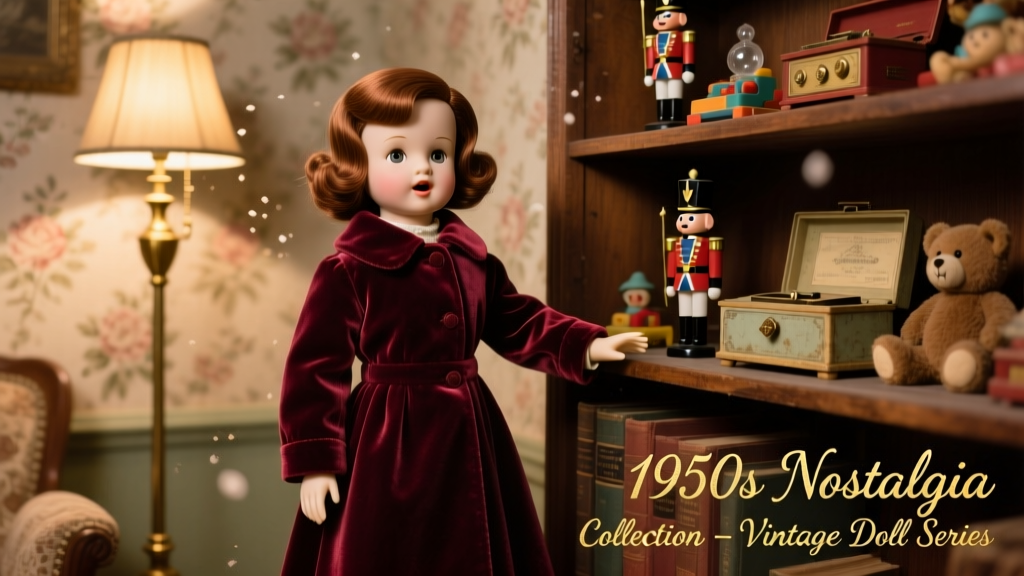
Doll A M Bisque Head, Brown Wig, Open Mouth, Composition Body, Velvet Coat — 11-Inch Mid-Century Collector’s Profile
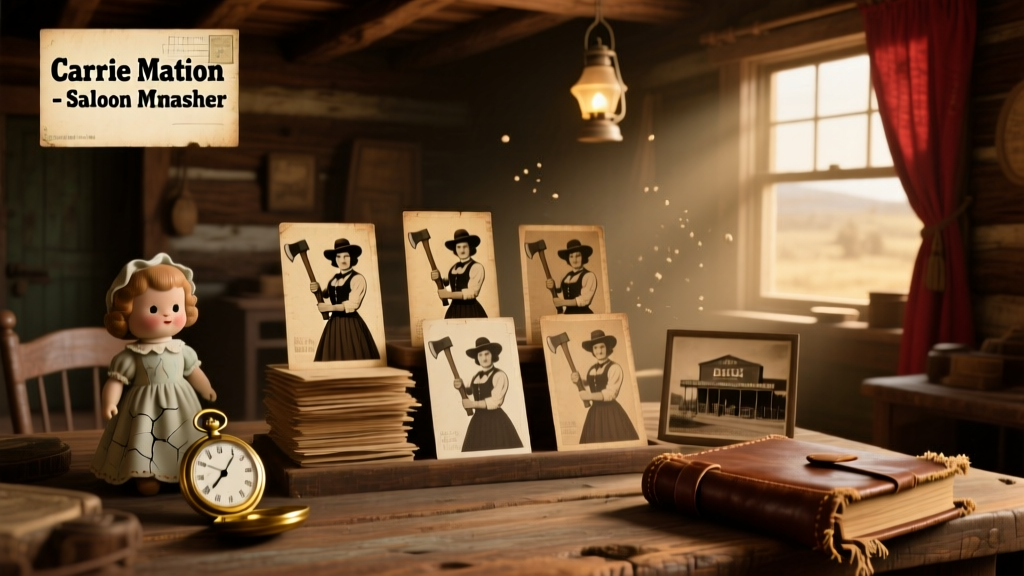
The Saloon Smasher Postcard Set: A Six-Piece Vintage Envelope Featuring Hatchet-Wielding Carrie Nation (c. 1905–1912)

The Scientific Instruments Sextant C Plath Case: A Collector’s Deep Dive into a 1950s German Marine Navigation Masterpiece
Knife Pocket Diamond Edge: A Collector’s Guide to the Iconic Mid-Century Folding Knife
Silver Russian Tumbler Scene (2", 3", and 4") — Identification, Provenance, and Market Value of Mid-Century Mechanical Figurines
Fenton Silver Crest Bowl: The Footed Square Pattern — History, Identification & Market Value

Quimper Demitasse Set: A Collector’s Deep Dive into the 8-Piece Floral-Marked Cup, Saucer, Sugar Bowl & Cover
The Kitchen Wafer Iron Fruit Pattern Iron: A Detailed Appraisal of the 1800 Model, 28 1/2-Inch Length
Dargental Vase: Landscape Yellow-Shaded to Mauve, Bulbous Form, Circa 1910 — A Technical & Historical Appraisal