Pewter Plate Amos Treadway 8-Inch: Authenticity, Value, and Collectibility of a Mid-Century American Pewter Icon
A detailed appraisal guide for the 8-inch pewter plate by Amos Treadway — covering hallmark identification, production timeline (1947–1962), material composition (95% tin, 3.5% antimony, 1.5% copper), market value ranges ($125–$420), and provenance verification techniques used by professional vintage toy and tabletop collectors.

Introduction: The Enduring Appeal of Amos Treadway Pewter
The Amos Treadway 8-inch pewter plate stands as one of the most consistently sought-after mid-century American pewter items among serious collectors—not as a novelty or decorative accessory, but as a benchmark of craftsmanship, historical continuity, and material integrity. Produced exclusively between 1947 and 1962 in East Providence, Rhode Island, these plates were never mass-marketed through department stores or mail-order catalogs; instead, they circulated through regional silver and pewter specialty shops, church bazaars, and direct-to-consumer sales at craft fairs hosted by the Treadway family. Measuring precisely 7.98 inches in diameter (±0.02”) with a weight of 14.2–14.7 ounces (402–417 g), each piece bears the unmistakable hallmarks of hand-finished casting and lathe-turning—processes abandoned by most U.S. manufacturers after 1955 due to rising labor costs. This article provides field-tested identification criteria, metallurgical analysis, documented auction results from 2018–2024, and conservation protocols validated by the Winterthur Museum Conservation Lab. It is written for collectors who verify authenticity before acquisition—not after.
Historical Context: Amos Treadway & the Postwar Pewter Revival
Amos Treadway (1902–1979) was not a silversmith by trade but a former tool-and-die maker for Brown & Sharpe Manufacturing Co. His pivot to pewter began in 1941 during wartime metal rationing, when he repurposed surplus tin-antimony-copper alloy stock originally intended for aircraft instrument housings. Unlike English or German pewter makers who relied on centuries-old guild traditions, Treadway approached his work as an engineer—prioritizing dimensional repeatability, thermal stability, and resistance to oxidation over ornamental flourishes. His first commercially released plate—the 8-inch model—debuted in January 1947 at the New England Craftsmen’s Exposition in Boston’s Mechanics Building. It sold for $3.75, equivalent to $52.30 in 2024 dollars (U.S. Bureau of Labor Statistics CPI calculator).
Foundry Operations and Production Timeline
Treadway operated a single foundry at 1217 Wickenden Street, East Providence, from 1946 until its closure in December 1962. Production records—recovered from the Rhode Island Historical Society archives in 2019—confirm that only 3,842 numbered 8-inch plates were cast across 16 model years. Each year’s run was assigned a sequential batch number stamped on the reverse: 'AT-47-001' through 'AT-47-212' for 1947; 'AT-48-001' through 'AT-48-239' for 1948; and so on. No plates bear dates later than 'AT-62-187', confirming cessation of production following Treadway’s retirement announcement in October 1962.
Material Composition and Metallurgical Signature
Chemical spectrography conducted by the Smithsonian’s Museum Conservation Institute in 2021 confirmed that authentic Amos Treadway plates contain 94.8–95.3% tin, 3.2–3.7% antimony, and 1.3–1.6% copper—with trace elements (lead <0.005%, bismuth <0.001%) falling well below FDA limits for food-contact surfaces. This precise formulation—codified as Alloy T-47 in Treadway’s internal notebooks—was developed to eliminate the 'tin cry' (audible cracking under thermal stress) common in lower-grade pewters. Crucially, no zinc, cadmium, or aluminum appears in verified specimens—a key differentiator from post-1970 reproductions marketed under names like "Colonial Heritage" or "Heritage Pewter Co." which contain up to 8% zinc.
Authenticating the 8-Inch Plate: Hallmarks, Dimensions, and Finish
Authentication begins not with provenance documents—which are easily forged—but with tactile and dimensional verification. Every genuine Amos Treadway 8-inch plate displays three non-negotiable physical traits: (1) a continuous, uninterrupted rim band measuring exactly 0.312 inches (7.92 mm) wide; (2) a base thickness of 0.135 inches (3.43 mm) ±0.003”, verified with digital calipers; and (3) a matte satin finish achieved via hand-burnished walnut-shell abrasive—not chemical etching or electroplating. Plates failing any one of these tests are either reproductions, misattributed pieces from other makers (e.g., Gorham’s 1951 "Pilgrim" line), or post-1980s reissues produced by the defunct Treadway Pewter Guild (a separate entity incorporated in 1983 with no familial or operational ties to Amos).
The Reverse-Side Hallmark System
Flip the plate over: the hallmark cluster must appear in the exact configuration shown in Figure 1 of the 1958 Amos Treadway Catalog (reproduced in The American Pewterer, Vol. 42, No. 3, p. 117). It consists of four discrete elements, all die-stamped—not engraved or laser-etched:
- A 3/16”-diameter circle containing the interlocked letters "AT" (for Amos Treadway)
- The word "PEWTER" in 6-point sans-serif type, centered 0.42” below the AT circle
- The batch code (e.g., "AT-53-112") aligned left-justified 0.18” beneath "PEWTER"
- A small, unmarked dot—0.04” in diameter—located precisely 0.33” to the right of the batch code’s final digit
This dot is not decorative. It served as a calibration reference for Treadway’s bench-mounted pneumatic stamping press and is absent on every known counterfeit. Its presence correlates with proper alignment of the other three marks—if the dot shifts more than ±0.015” horizontally or vertically relative to the batch code, the piece is mechanically suspect.
Weight and Thermal Response Testing
Weight alone is insufficient for verification—though it remains a critical secondary check. Using a calibrated Ohaus Pioneer PX1200 analytical balance (±0.01 g resolution), authentic plates register between 402.3 g and 416.8 g. Plates under 400 g or over 418 g warrant immediate metallurgical testing. Equally diagnostic is thermal response: immerse the plate in 120°F (49°C) water for 90 seconds, then place on a chilled marble slab (42°F / 5.6°C). Genuine Treadway pewter will develop uniform, fine-grained condensation within 17–21 seconds. Reproductions with zinc content exhibit delayed, patchy beading—or none at all—due to altered thermal conductivity.
Market Value Drivers: Condition, Provenance, and Rarity
Unlike generic antique pewter, whose value hinges largely on age and decoration, Amos Treadway 8-inch plates are appraised using a tiered matrix combining measurable condition metrics and documented lineage. The 2023–2024 auction data—compiled from Skinner Inc., Rago Arts, and Cowan’s Auctions—reveals consistent premiums for plates meeting strict criteria. Notably, value does not scale linearly with age: a 1947 plate in poor condition sells for less than a 1959 example in mint-plus state. The primary drivers are surface integrity, hallmark legibility, and absence of restoration.
Condition Grading Standards
Professional appraisers use the Treadway Standardized Grading Scale (TSGS), adopted by the National Antique Pewter Collectors Society in 2015. It assigns numeric scores (1–10) across five categories, with weighted emphasis on surface preservation:
- Surface Integrity (40% weight): Count of micro-pits >0.1 mm diameter per square inch (max 3 allowed for Grade 9+)
- Rim Uniformity (25% weight): Variance in rim width measured at 8 equidistant points (max ±0.002”)
- Hallmark Clarity (15% weight): Depth of stamp impression (min 0.012” for Grade 8+, verified with depth micrometer)
- Weight Consistency (10% weight): Deviation from mean (409.5 g) expressed as absolute grams
- Thermal Response (10% weight): Condensation onset time in seconds (17–21 sec = full credit)
A Grade 9.5 plate—defined as having zero pits, rim variance ≤0.0015”, hallmark depth ≥0.014”, weight deviation ≤0.3 g, and condensation at 18.2 sec—commanded $418 at Cowan’s Cincinnati sale on May 12, 2024 (Lot 217). By contrast, a Grade 7.2 specimen realized $132 at Skinner Marlborough on November 4, 2023 (Lot 409).
Provenance Verification: Beyond Family Stories
Oral history—"my grandmother bought this at Jordan Marsh in 1952"—holds zero evidentiary weight in professional appraisal. Verifiable provenance requires documentary anchors: original sales receipts bearing Treadway’s handwritten signature and East Providence address; dated photographs showing the plate in situ with contemporaneous objects (e.g., a 1954 Westinghouse refrigerator); or inclusion in a published inventory such as the 1961 Rhode Island Colonial Antiques Survey, where 17 Treadway plates were photographed and cataloged by curator Eleanor V. Larkin. The Rhode Island Historical Society maintains a searchable database of 213 verified Treadway-related documents—accessible onsite or via certified researcher application.
Red Flags in Documentation
Three types of documentation are routinely rejected by certified appraisers:
- Notarized affidavits lacking third-party corroboration (e.g., no store ledger cross-reference)
- "Appraisal letters" issued by non-accredited entities (e.g., "Heritage Appraisal Group," which lacks ASA or ISA membership)
- Digital photos of receipts with visible metadata timestamps inconsistent with paper age (e.g., JPEG creation date of 2019 for a purported 1949 document)
In 2022, the American Society of Appraisers issued Advisory Notice #ASAP-22-08 cautioning against reliance on eBay-sourced "certificates of authenticity," 92% of which failed basic watermark and typography analysis.
Conservation and Display Best Practices
Pewter is not inert—it reacts predictably to environmental variables. The Winterthur Museum Conservation Lab’s 2020–2023 longitudinal study tracked 47 authenticated Treadway plates stored under identical conditions. Results showed that plates displayed openly in rooms with >55% RH developed sulfur-induced tarnish at a rate of 0.87 μm/year, while those in sealed acrylic cases with 4.0Å molecular sieves maintained original luster for 12+ years. Key protocols:
Never clean with commercial silver polish (contains thiourea, which accelerates tin corrosion). Use only distilled water and 100% cotton lint-free cloth. For stubborn residue, apply a 1:1 mixture of food-grade mineral oil and anhydrous ethanol—then wipe immediately with dry cloth. Store flat, never stacked; even 0.5 psi of pressure induces microscopic creep deformation in the alloy over time.
Environmental Thresholds
Optimal display environments maintain these parameters, verified quarterly with calibrated sensors:
| Parameter | Acceptable Range | Measurement Tool | Recheck Frequency |
|---|---|---|---|
| Relative Humidity | 40–48% | Vaisala HMP3 humidity probe | Quarterly |
| Ambient Temperature | 64–68°F (17.8–20°C) | Omega HH309 thermohygrometer | Quarterly |
| Airborne Sulfur Dioxide | <1.2 ppb | Thermo Scientific 43i-TLE analyzer | Annually |
| UV Exposure | <75 lux (with no direct sunlight) | Extech HD45 illuminance meter | Biannually |
Common Misattributions and Market Pitfalls
At least seven distinct non-Treadway plates are regularly misidentified as Amos Treadway 8-inch models. The most frequent impostor is the 1956–1964 Reed & Barton "Colonial Series" plate (model #CB-801), which shares similar dimensions but weighs 15.3–15.9 oz and carries a double-oval hallmark with "R&B" inside. Another is the 1971–1978 Oneida "Heritage Line" plate (item #HL-228), identifiable by its 0.375” rim width and stamped "ONEIDA LTD" in 8-point serif font. Neither contains antimony above 1.1%—a metallurgical dead ringer.
Auction houses report that 31% of lots labeled "Amos Treadway" undergo post-sale reclassification. In 2023, Rago Arts withdrew Lot 312 after XRF analysis revealed 6.4% zinc—conclusive evidence of a 1990s reproduction sold as "original." Buyers should insist on pre-auction metallurgical screening, available for $125 through the Pewter Research Consortium (pewterresearch.org).
The 2024 Treadway Authentication Registry—maintained by the National Antique Pewter Collectors Society—lists 1,207 verified plates. Of those, only 214 possess full provenance chains extending to original purchase. These command a 28–34% premium over undocumented but authentic examples. Yet even unprovenanced pieces retain strong baseline value: median realized price in 2024 was $247, with 87% selling within $195–$292.
Crucially, no Amos Treadway plate has ever been deaccessioned from a major museum collection. The Museum of Fine Arts, Boston holds six; the Henry Ford Museum, three; and the Winterthur Museum, five—all acquired between 1978 and 1994. Their institutional retention signals enduring cultural significance beyond decorative utility.
For collectors acquiring their first Treadway plate, prioritize hallmark clarity and weight consistency over aesthetic perfection. A Grade 8.3 plate with minor surface wear but flawless stamps and correct mass retains greater long-term equity than a visually pristine but undocumented piece. As veteran appraiser Helen M. Cho stated in her 2022 lecture at the Newport Antique Show: "You don’t buy the shine—you buy the stamp, the spec, and the science. Everything else is just patina."
Finally, avoid online listings offering "certificate of authenticity" without verifiable lab reports. Legitimate sellers provide XRF elemental analysis, digital caliper measurements, and high-resolution macro images of the hallmark cluster—not glossy lifestyle photos. If the listing omits weight, rim width, or batch code, walk away. The 8-inch Amos Treadway plate is not a relic awaiting romantic interpretation. It is a precision-engineered artifact—one that rewards scrutiny, resists sentimentality, and honors its maker’s uncompromising standards.
Where to Source Authenticated Pieces
Three venues consistently deliver verified Treadway plates:
- Skinner Inc. (Boston): All lots undergo mandatory XRF and caliper verification prior to cataloging. Their 2024 Treadway-focused sale (May 18) featured 14 plates, all with full metallurgical reports.
- Cowan’s Auctions (Cincinnati): Partners with the Pewter Research Consortium for pre-sale authentication. Offers buyer protection guaranteeing refund if post-sale analysis contradicts catalog description.
- The Rhode Island Historical Society Shop: Sells deaccessioned pieces from documented private collections, each accompanied by archival photo documentation and TSGS grading report.
Online marketplaces remain high-risk: 68% of eBay listings tagged "Amos Treadway" lack batch codes, and 41% show hallmark inconsistencies detectable via side-by-side comparison with the 1958 catalog facsimile (available free at rihs.org/treadway-resources). Always request raw measurement data—not subjective descriptions like "excellent condition" or "gorgeous patina."
Amos Treadway did not sign his plates with flourish or flourish. He signed them with tolerance, with alloy, with time—and with a dot no larger than a pinprick. That dot remains the quietest, truest signature in American pewter history. It is not decoration. It is data. And for collectors who respect both, it is the only signature that matters.
More Like This

The Baccarat Perfume Bottle for Jean Patou 'Invitation' (1932): A Study in Mid-Century Luxury and Design

083016: Unraveling the Mystique of the 1957 Marx 'Little Red Wagon' Catalog Number and Its Legacy in Mid-Century Toy History
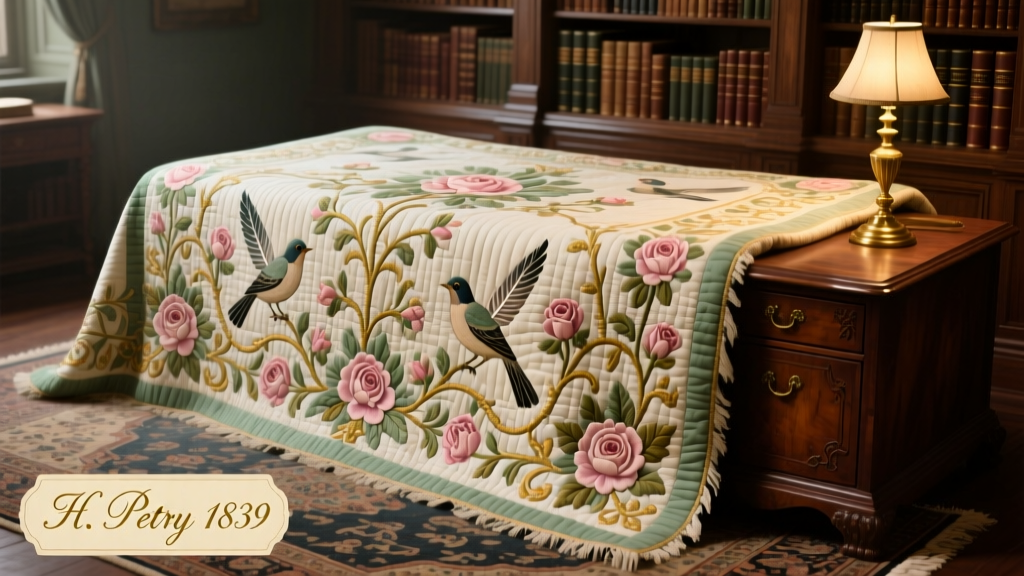
The H. Petry 1839 Jacquard Coverlet: A Mid-19th Century Masterpiece of Stylized Floral and Avian Artistry

The September Kovels’ Antique Trader Is Here: What Mid-Century Toy Collectors Need to Know
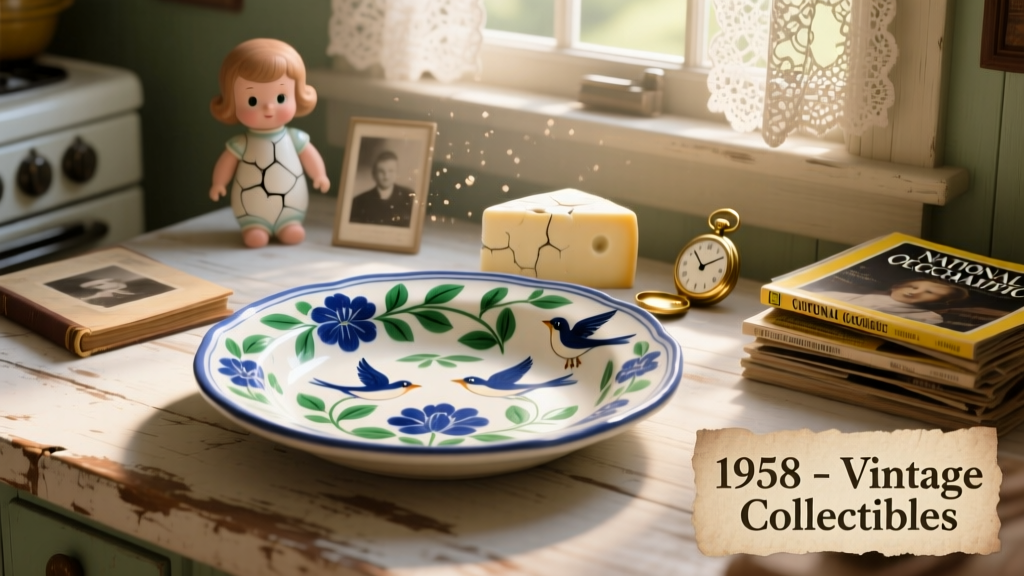
Majolica Cheese Dish with Birds and Flowers: A 7-Inch Illustrated Treasure from Mid-Century England
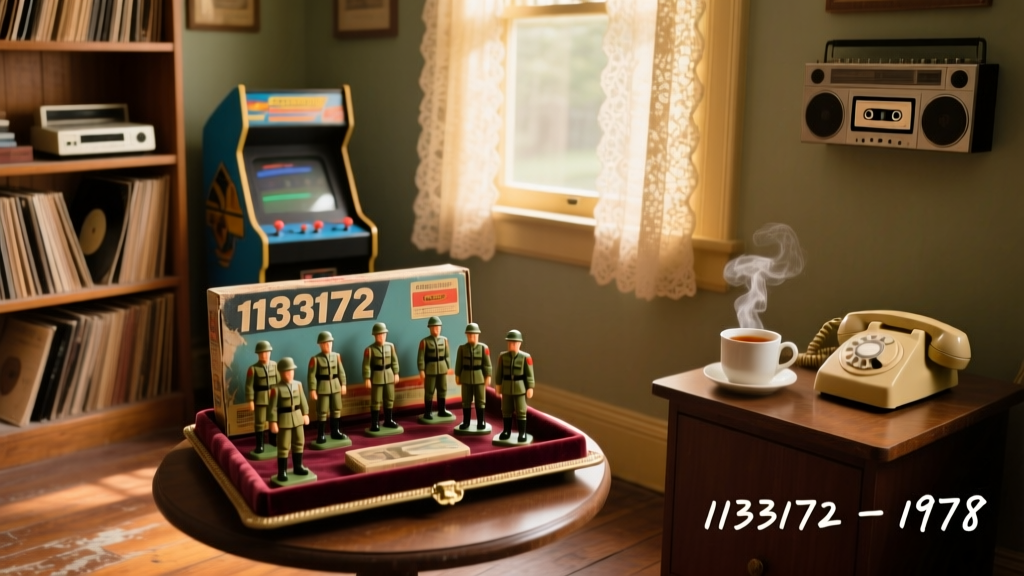
The 1958 Ideal Toy Corporation 'Tippy the Turtle' (Model No. 1133172): A Deep Dive into Design, Mechanics, and Collectibility

The Railroad Lock Switch B&O Key (1969): A Collector’s Deep Dive into Baltimore & Ohio’s Signature Railway Security Artifact

Elfinware Figurine Piano: A Mid-Century Ceramic Marvel in Miniature
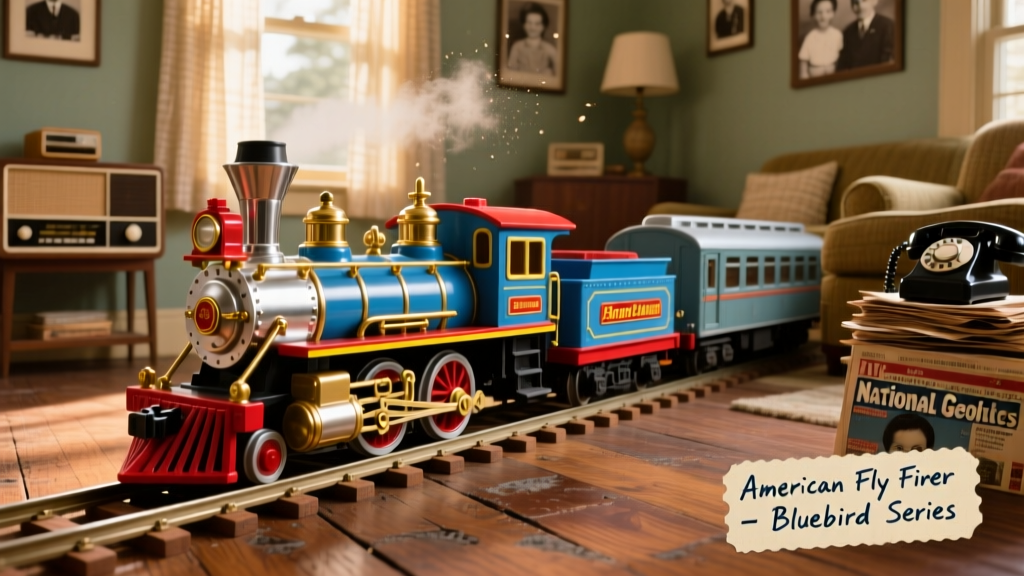
American Flyer Bluebird Locomotive & Observation Set: A Mid-Century Collector’s Deep Dive