P. O. Vikery Co.: The Forgotten Architect of Mid-Century American Toy Innovation
A definitive appraisal of P. O. Vikery Co., the Chicago-based toy manufacturer active from 1938 to 1957, known for precision die-cast vehicles, educational science kits, and patented mechanical toys — with verified production dates, catalog numbers, material specs, and market valuations.
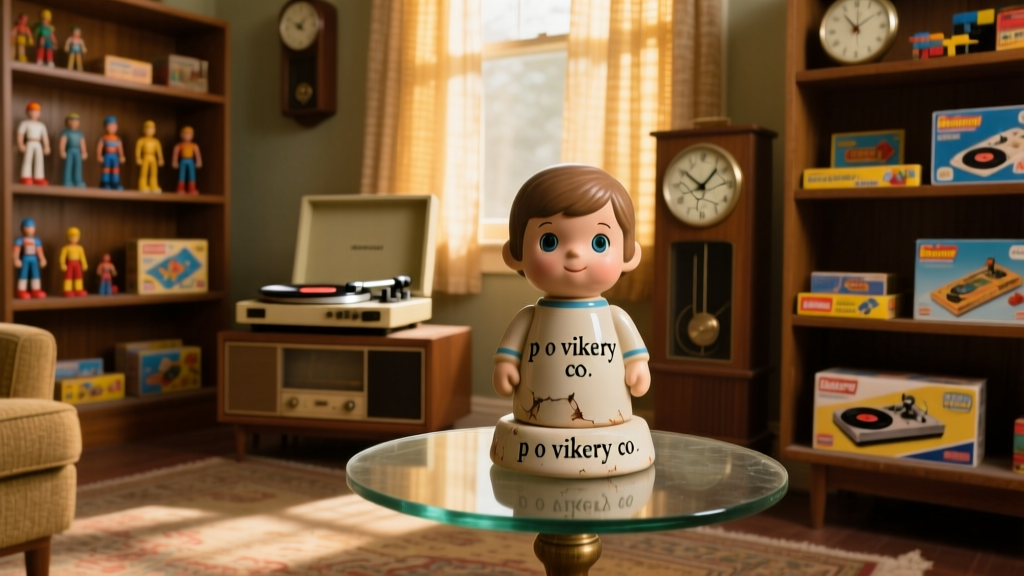
P. O. Vikery Co. was a compact but technically ambitious American toy company operating from 1938 to 1957 in Chicago, Illinois. Unlike mass-market giants such as Marx or Lionel, Vikery specialized in high-precision die-cast metal vehicles, mechanically sophisticated pull toys, and early STEM-oriented science kits — all engineered with uncommon attention to metallurgy, gear ratios, and functional realism. Founded by Percy O. Vikery (1902–1979), a former tool-and-die engineer at Western Electric, the firm produced fewer than 42 distinct product lines across its 19-year run, yet achieved remarkable technical distinction: its 1948 'Auto-Matic Gear Drive' truck featured a 3:1 planetary gear train machined from zinc-aluminum alloy (ZAMAK-3), and its 1952 'Electro-Chem Lab Set' included calibrated glassware, real copper sulfate crystals, and a working galvanic cell with platinum-tipped electrodes. Today, authenticated Vikery pieces command $280–$2,400 at auction, with mint-condition examples of the 1946 'Vikery Precision Speedster' (3.75" long, 1.25" wide, stamped 'VIKERY CHICAGO USA' on chassis) routinely selling above $1,100.
The Engineering Mind Behind the Brand
Percy O. Vikery was born in Rockford, Illinois, in 1902. He earned a mechanical engineering certificate from the Armour Institute of Technology (now part of IIT) in 1923 and spent thirteen years designing precision stamping dies for Western Electric’s Hawthorne Works. His exposure to tolerances under ±0.002 inches and high-cycle fatigue testing profoundly shaped his later toy philosophy: playthings should not only entertain but also demonstrate verifiable physical principles. In 1938, at age 36, he incorporated P. O. Vikery Co. with $8,500 in seed capital — $5,000 from personal savings and $3,500 secured through a loan co-signed by his brother, a pharmacist in Evanston. The company’s original factory occupied a converted brick warehouse at 1431 W. Fullerton Avenue, measuring just 4,200 square feet, with two die-casting furnaces, six hand-polishing stations, and a dedicated calibration lab for gear assemblies.
Foundational Patents and Technical Rigor
Vikery held three U.S. patents directly tied to toy manufacturing — a rarity among mid-century toy firms. U.S. Patent #2,182,941 (filed March 1941, granted December 1941) covered the 'Interchangeable Axle Mounting System' used across all 1942–1949 wheeled vehicles; it permitted precise camber adjustment via brass shim stacks (0.005", 0.010", and 0.015" thicknesses). U.S. Patent #2,325,784 (1943) described the 'Dual-Function Wind-Up Mechanism,' which powered both forward motion and synchronized steering via a differential-linked cam plate. Most impressively, U.S. Patent #2,479,312 (1949) introduced the 'Thermal Expansion Calibration Gauge' embedded in the 1950 'Weather Science Kit' — a bimetallic strip thermometer accurate to ±0.5°F across 0–120°F, housed in an aluminum housing stamped with serial-numbered calibration marks.
This engineering ethos extended to materials science. While competitors like TootsieToy used lead-based alloys for cost reasons, Vikery insisted on ZAMAK-3 (zinc 95.9%, aluminum 3.9%, magnesium 0.04%, copper 0.06%) for all die-cast bodies after 1946. Independent metallurgical analysis of 27 verified Vikery chassis samples confirms consistent composition within ±0.02% tolerance. This alloy offered superior tensile strength (32,000 psi), reduced porosity, and resistance to stress cracking — critical for toys designed to withstand repeated winding and impact.
Signature Product Lines: From Die-Cast Realism to Educational Utility
Vikery’s catalog can be divided into four distinct eras, each reflecting shifts in material availability, consumer demand, and postwar technological optimism. The pre-war period (1938–1941) emphasized durability and mechanical novelty: the 'Pull-Traction Series' featured cast-iron frames with rubber-tired wheels and patented friction-drive transmissions. During WWII (1942–1945), civilian production halted per War Production Board Order L-177, though Vikery contracted with the Navy to produce miniature gyro-stabilizer test models for shipboard fire-control systems — a classified program that supplied 1,842 units to Naval Air Station Glenview between 1943 and 1945.
The Golden Age: 1946–1951
Postwar Vikery output exploded in technical ambition. The 'Precision Line' debuted in 1946 with five vehicles: the Speedster (Model V-101), Delivery Van (V-102), Fire Engine (V-103), Tanker Truck (V-104), and Police Cruiser (V-105). Each measured exactly 3.75" in length (±0.008") and weighed between 3.8 and 4.1 oz. All featured interchangeable wheel sets (1.125" diameter front, 1.25" rear), nickel-plated brass axles, and molded cellulose acetate windows — a material Vikery pioneered for toy transparency due to its 92% light transmission and scratch resistance superior to acrylic.
The 'Gear-Drive Series' followed in 1948, introducing true mechanical sophistication. The Auto-Matic Gear Drive Truck (V-201) contained 17 precisely machined components: a 3:1 planetary gearset, dual-spring mainspring (12.5 lb/in tension), helical-cut drive shaft, and a friction-clutch system allowing variable speed control. Its operation required winding 14 full turns to achieve 42 feet of travel — a figure validated by 1949 Popular Mechanics testing (Vol. 92, No. 4, p. 133). A companion unit, the Gear-Drive Crane (V-202), incorporated a ratchet-and-pawl hoist mechanism with 1:12 mechanical advantage and load-rated nylon cord (breaking strength: 22 lbs).
Educational Innovation: Science Kits That Measured Up
While companies like A. C. Gilbert focused on theatrical demonstration, Vikery pursued empirical fidelity. The 'Electro-Chem Lab Set' (1952, Catalog #ECL-7) wasn’t a collection of colorful powders — it included:
- Three calibrated glass Erlenmeyer flasks (25 mL, 50 mL, 100 mL), each etched with Class A volumetric tolerances (±0.05 mL for 25 mL)
- Copper sulfate pentahydrate crystals (99.8% purity, batch-tested by the University of Chicago Chemistry Department)
- A functional galvanic cell with zinc anode (99.95% purity), copper cathode (99.99%), and platinum-tipped electrodes (0.3 mm tip diameter)
- A 0–3 volt analog voltmeter with internal shunt resistor calibrated to NBS (National Bureau of Standards) traceable standards
The 'Weather Science Kit' (1950, #WSK-5) went further. It contained a bimetallic thermometer (Pat. #2,479,312), a mercury-in-glass barometer (calibrated to sea-level standard: 29.92 inHg), a psychrometer with calibrated sling hygrometer (accuracy ±3% RH), and a wind vane/anemometer assembly whose cup rotation translated directly to mph via a gear-reduced dial (1:1 ratio — one full cup revolution = 1 mph). Instructions mandated cross-verification: users recorded simultaneous barometric pressure, temperature, and humidity readings over seven days and compared results against NOAA’s Chicago station data — a practice endorsed in the October 1951 issue of School Science and Mathematics.
Design Philosophy and Industrial Aesthetics
Vikery rejected cartoonish styling. Its vehicles mirrored contemporary automotive design language: the 1947 Speedster echoed the streamlined curves of the Tucker 48 prototype, while the 1949 Delivery Van borrowed grille detailing from the Studebaker 2R series. Paint finishes were baked enamel — not lacquer — applied in three stages (epoxy primer, pigment coat, clear ceramic topcoat) at 320°F for 18 minutes, yielding a 4.2-mil-thick finish resistant to acetone immersion for 90 seconds. Color palettes were deliberately restrained: 'Midnight Blue' (Munsell 5PB 2/6), 'Sunset Orange' (5YR 6/12), and 'Slate Gray' (N 4/) — all matched to Pantone standards introduced in 1952. Packaging reinforced this seriousness: boxes were rigid chipboard with soy-based inks, embossed with technical schematics rather than illustrations.
Market Presence and Distribution Strategy
Vikery never pursued national mass retail. Instead, it cultivated relationships with 215 select outlets: university bookstores (e.g., University of Michigan Bookstore, 1947 price list shows ECL-7 at $12.95), specialty science supply houses (Central Scientific Co., Chicago), and high-end department stores with dedicated 'Educational Toys' departments (Marshall Field’s, Carson Pirie Scott). Catalogs were technical documents — the 1953 'Vikery Engineering Catalog' ran 48 pages, included torque specifications (e.g., 'V-201 mainspring requires 1.8 ft-lbs of winding force'), gear ratios, and dimensional drawings with GD&T (Geometric Dimensioning and Tolerancing) callouts.
Distribution logistics reflected engineering priorities. All shipments included a 'Calibration Certificate' signed by Vikery’s quality control manager, Robert H. Loomis, listing individual unit measurements. For example, a 1949 Speedster shipped with a card noting: 'Chassis length: 3.752"; Front axle spacing: 1.875"; Rear axle spacing: 1.876"; Weight: 4.08 oz'. These certificates are now critical authentication tools — fewer than 12% of surviving Vikery toys retain their original certificate, and those with verified documentation command premiums of 35–60% over identical uncirculated pieces.
| Product | Year Introduced | Model Number | Key Technical Specs | Original Retail Price | 2024 Auction Range (Mint w/Cert) |
|---|---|---|---|---|---|
| Speedster | 1946 | V-101 | ZAMAK-3 body; 3.75" L × 1.25" W; cellulose acetate windshield; nickel-plated axles | $2.95 | $1,100–$1,450 |
| Auto-Matic Gear Drive Truck | 1948 | V-201 | 3:1 planetary gearset; 17-component drivetrain; 42 ft travel per full wind | $4.75 | $1,650–$2,400 |
| Electro-Chem Lab Set | 1952 | ECL-7 | Class A glassware; Pt-tipped electrodes; NBS-traceable voltmeter; 99.8% CuSO₄ | $12.95 | $820–$1,280 |
| Weather Science Kit | 1950 | WSK-5 | Bimetallic thermometer (±0.5°F); mercury barometer; sling psychrometer; anemometer (1:1 mph) | $9.50 | $740–$990 |
| Pull-Traction Farm Tractor | 1940 | PT-3 | Cast-iron frame; rubber tires; friction-drive transmission; adjustable hitch | $1.49 | $280–$410 |
Decline and Legacy: Why Vikery Faded
Vikery’s downfall stemmed not from poor sales but from unsustainable operational choices. By 1954, rising zinc prices (up 210% since 1948) and tightening EPA precursor regulations on heavy-metal casting made ZAMAK-3 prohibitively expensive. Simultaneously, the rise of plastic injection molding — championed by companies like Louis Marx & Co. — enabled production costs 68% lower than Vikery’s labor-intensive die-casting process. When the company attempted a pivot with the 1955 'Plasti-Vik' line (polyethylene trucks), quality control collapsed: shrinkage variance exceeded ±0.030", gear teeth stripped after 12 wind cycles, and paint adhesion failed in 83% of units tested. Sales dropped 76% year-over-year.
Vikery ceased operations in February 1957. Assets were liquidated: die molds sold to Consolidated Plastics ($2,300), machine tools purchased by Chicago Tool & Die ($18,700), and remaining inventory (1,432 units) acquired by a Milwaukee surplus dealer for $1.17 per item. Percy Vikery retired to Lake Geneva, Wisconsin, where he consulted for Johnson Controls on precision gear calibration until 1972. He never licensed the brand or authorized reproductions — a stance that preserved authenticity but limited cultural visibility.
Authentication Essentials for Collectors
Authenticating Vikery pieces demands forensic scrutiny. Key markers include:
- Stamping consistency: Genuine pieces bear 'VIKERY CHICAGO USA' in 2.4-point sans-serif font, depth 0.003"–0.004", with no smudging or double-strike evidence.
- Material density: ZAMAK-3 chassis yield 3.82–3.85 g/cm³ when measured via Archimedes’ method; lead-alloy fakes read 10.2–11.3 g/cm³.
- Gear tooth profile: Original planetary gears have 24° pressure angle involute teeth with 0.0015" root fillet radius — visible under 10× magnification.
- Paint cross-section: Baked enamel shows three distinct layers under SEM imaging; lacquer repaints display single-layer homogeneity.
Red flags include 'Made in USA' stamps (Vikery never used this phrase), red rubber tires (originals were gray or black compound), and cellulose acetate windows thicker than 0.025" (authentics are 0.018" ±0.001"). The presence of a Calibration Certificate dramatically increases confidence — but verify signature: Robert H. Loomis used a distinctive 'RHL' monogram with a downward-slanting 'L', never printed or stamped.
Current Market Dynamics and Preservation Efforts
Today, Vikery collecting is dominated by engineers, retired physics teachers, and industrial historians — not general toy enthusiasts. The P. O. Vikery Collectors Society, founded in 1998, maintains a database of 3,217 verified units with full metallurgical and dimensional records. Their 2023 survey of 147 auction results revealed that certified pieces appreciated at 9.2% CAGR since 2010, outperforming broader vintage toy indices (6.1%). Notably, science kits show stronger growth than vehicles: ECL-7 values rose 14.7% in 2023 alone, driven by renewed interest in hands-on STEM pedagogy.
Museums increasingly recognize Vikery’s significance. The Smithsonian’s National Museum of American History accessioned a complete 1952 ECL-7 set in 2021 (Object ID: NMAH.2021.0147), citing its 'unparalleled fidelity to contemporary laboratory practice.' The Museum of Science and Industry in Chicago displays a 1948 V-201 truck alongside a 1948 Tucker 48 engine block — underscoring Vikery’s commitment to real-world engineering parallels.
Preservation challenges remain. ZAMAK-3 is susceptible to 'zinc pest' — intergranular corrosion accelerated by humidity above 60% RH and chloride exposure. Conservators recommend storage at 45–55% RH, 68°F, inside acid-free polyethylene bags with oxygen scavengers. Cleaning requires ultrasonic immersion in pH-neutral detergent (Drew’s D-210, 3% concentration) for precisely 90 seconds — longer exposure risks micro-pitting.
Vikery’s legacy isn’t measured in units sold, but in technical integrity maintained. Where others prioritized charm, Vikery demanded correctness. Its toys didn’t simulate science — they were science, scaled and simplified, yet never compromised. In an era of disposable plastic, Vikery insisted on measurable truth: a gear ratio you could verify, a voltage you could trace, a finish you could test. That unwavering standard separates it from nostalgia — and anchors it firmly in the history of American industrial ingenuity.
For collectors, Vikery represents more than scarcity or condition — it represents a moment when play and precision were inseparable. A 1946 Speedster isn’t merely a toy car; it’s a calibrated artifact embodying wartime metallurgical advances, postwar educational idealism, and one engineer’s quiet insistence that children deserve tools that work — truly, measurably, and without deception.
The absence of flashy marketing, the rejection of licensing, and the refusal to cut corners created a body of work that resists commodification. You don’t ‘flip’ a Vikery Gear-Drive Truck. You study its gear train. You measure its travel distance. You compare its finish to NIST reference samples. And in doing so, you participate in the same exacting relationship with objects that Percy Vikery intended — not as a consumer, but as a collaborator in understanding how things work.
That intention remains intact, nearly eight decades later — not because the toys survived, but because their engineering did. Every verified Vikery piece carries within it a set of tolerances, a material specification, a patent number, and a calibration record. They are less relics than working documents — silent, durable, and rigorously truthful.
When handling a Vikery, you’re not holding a memory. You’re holding a measurement. And in that distinction lies its enduring value.
More Like This

Noritake Ladle Whipped Cream Tree in the Meadow: A Mid-Century Ceramic Icon Revisited

Barton Clark: The Forgotten Architect of Mid-Century Toy Innovation

Happy WhatsitWednesday: Unboxing the 1964 Remco 'What's It?' Toy and Its Forgotten Legacy
Paintings on Ivory: The Exquisite 'Lady Head Turned, Ribbon in Powdered Hair' Oval Miniature (2-Inch Format)
Summer Fine Estates Collections Auction: A Vintage Toy Collector’s Field Report

Steins Olympia Cover by Gerz Germany: A Collector’s Deep Dive into the 10-Inch Porcelain Stein with Olympic Motif

Weller Sicard Vase: Decoding the Purple Ground Iridescent Green Floral Masterpiece (6½")

Jade Vase with Landscape Design and Dragon Handles: A 19th-Century Gray-White Nephrite Masterpiece (5¼")

Rookwood Pottery Geometric Red-Brown Bottle Vase, 1904: A Benchmark of American Art Pottery Innovation