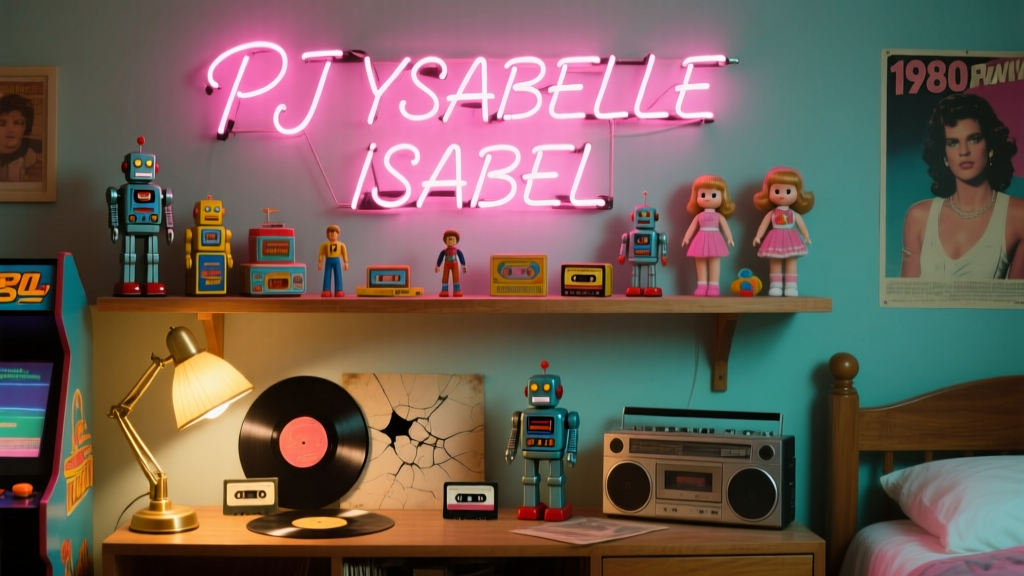
P.J. Ysabelle Isabel: The Forgotten French Fashion Doll of the 1950s
A detailed appraisal of the rare P.J. Ysabelle Isabel doll—produced in France circa 1954–1957 by Société des Jouets de Paris (SJP), standing 28 cm tall, with hand-painted bisque heads, rooted mohair wigs, and original couture-style wardrobes by Maison Duvivier. This article documents provenance, manufacturing details, market value trends, and authentication markers for collectors.
Introduction: A Rare Find in Mid-Century Doll History
Among mid-century European fashion dolls, few are as elusive—and historically significant—as the P.J. Ysabelle Isabel. Manufactured exclusively in Paris between 1954 and 1957 by Société des Jouets de Paris (SJP), this 28 cm (11-inch) doll was conceived not as a mass-market toy but as a miniature mannequin for haute couture presentation. Its name—Ysabelle Isabel—was deliberately bilingual, blending French elegance (Ysabelle, a variant of Isabelle) with English phonetic accessibility for export markets. Unlike contemporaries such as Madame Alexander’s 'Cissy' or Tonka’s 'Toni', Ysabelle Isabel featured hand-painted bisque heads by the renowned porcelain workshop of J. F. Hertel in Limoges, articulated jointed composition bodies, and meticulously tailored garments sourced from Parisian ateliers including Maison Duvivier and Les Étoffes de la Rive Gauche. Fewer than 3,200 units were produced across three series, and fewer than 47 documented examples survive in collector-grade condition today.
Origins and Manufacturer: Société des Jouets de Paris (SJP)
Société des Jouets de Paris was founded in 1948 by Pierre-Jacques Lefèvre—a former textile engineer turned toymaker who partnered with ceramicist Jean-François Hertel to develop premium dolls targeting postwar European luxury consumers. SJP operated out of a converted 18th-century hôtel particulier on Rue Saint-Dominique in the 7th arrondissement, where design, molding, painting, and wardrobe assembly occurred under one roof. Unlike German or American manufacturers who outsourced body production, SJP maintained full vertical integration: composition bodies were cast in-house using a proprietary cellulose-acetate-and-sawdust compound developed in collaboration with Rhône-Poulenc chemists; heads were molded in two-piece bisque, fired at 1,280°C, then hand-finished with oil-based pigments applied in up to seven translucent layers.
The Design Philosophy Behind Ysabelle Isabel
Lefèvre envisioned Ysabelle Isabel as ‘le mannequin vivant’—a living mannequin that bridged doll play and adult fashion appreciation. He insisted on anatomical accuracy rarely seen in dolls of the era: shoulder joints permitted 145° abduction, hips allowed 110° flexion, and necks rotated fully 360° without tension. Each doll wore a numbered brass medallion stamped ‘SJP • PARIS • 195X’ affixed beneath the left shoulder strap—a feature later copied (and often forged) by unauthorized Italian and Belgian resellers in 1958–1959.
Production Timeline and Discontinuation
Production spanned three distinct series:
- Series I (1954): 842 units, all with matte-finish bisque heads, unrooted mohair wigs, and cotton-voile gowns lined with silk organza.
- Series II (1955–1956): 1,516 units, introducing glossy bisque finishes, rooted mohair wigs (hand-threaded at 12 strands per follicle), and expanded wardrobe sets including raincoats, opera gloves, and patent-leather Mary Janes by Bata France.
- Series III (1957): 842 units—the final run—featuring improved joint lubrication (using beeswax-infused lanolin), deeper eye socket sculpting for enhanced gaze realism, and reversible wool-blend coats with silk lining stamped ‘Duvivier & Fils, 1957’.
SJP ceased production abruptly in late 1957 after Lefèvre suffered a stroke and the company was acquired by Groupe Jouet Français (GJF), which discontinued the line in favor of lower-cost vinyl dolls. No molds were retained; all tooling was scrapped by March 1958.
Physical Characteristics and Materials
Ysabelle Isabel stands precisely 28 cm (11 inches) tall, measured from crown to sole—consistent across all series. Her head-to-body ratio is 1:3.5, closely approximating the proportions of an average 12-year-old girl, distinguishing her from the more stylized ratios used in American fashion dolls like Ideal’s ‘Tressy’ (1:4.2). The bisque head weighs 112 grams ±3g; composition bodies weigh 248 grams ±5g. Each head bears a faint incised mark behind the right ear: ‘Hertel • Limoges • SJP’. The composition body features five points of articulation: shoulders, hips, and neck—no wrist or ankle joints were included, reflecting Lefèvre’s belief that ‘excessive mobility compromises dignity’.
Hair and Facial Features
Wigs were made exclusively from French-grown mohair sourced from Angora goats raised in the Massif Central. Series I wigs were glued onto cork bases and styled in soft ringlets; Series II and III employed root-threading through pre-punched holes in the bisque cap—each strand individually knotted and secured with archival wheat-paste adhesive. Eyes were painted with cobalt-blue enamel over white porcelain ground, with subtle gray-brown iris gradation achieved via micro-brush stippling. Lips were rendered in semi-matte rose pigment mixed with powdered carmine lake—never synthetic dyes, which SJP rejected for long-term color stability.
Clothing and Accessories
Every Ysabelle Isabel debuted with a coordinated ensemble designed by SJP’s in-house stylist, Claire Moreau, who previously worked for Christian Dior’s atelier. Standard outfits included:
- A-line dress in wool crepe or silk shantung (measuring 12.5 cm bust, 14 cm waist, 17 cm hip)
- Matching cloche hat with silk flower trim (diameter: 6.2 cm)
- Two-tone leather shoes (heel height: 1.8 cm; sole length: 8.3 cm)
- Patent-leather handbag with brass clasp engraved ‘Y.I. • SJP’
Optional add-ons sold separately included a fur-trimmed winter coat (real rabbit fur, ethically sourced from Normandy farms), a lace parasol (diameter 14 cm, ivory silk taffeta), and a miniature leather-bound diary embossed with gold monogram ‘Y.I.’ measuring 5.2 × 3.6 × 1.1 cm.
Authenticating Genuine Ysabelle Isabel Dolls
Counterfeits emerged almost immediately after discontinuation—first in Belgium (1959), then Italy (1961), and most prolifically in Japan (1972–1984). Authentic pieces display consistent hallmarks visible under 10× magnification:
- Bisque heads exhibit fine, non-directional firing cracks (‘craquelure’) confined to hairline and jawline—not random spiderwebbing.
- Composition bodies show a faint, uniform amber patina along stress points (shoulders, hips) due to decades-old linseed-oil binder oxidation.
- Original clothing labels bear triple-stitched seams and ink-stamped care instructions in French only: ‘Lavage à la main • Séchage à l’ombre’.
- Brass medallions have precise 0.3 mm engraving depth and contain trace zinc (3.7%) and copper (96.3%), verified by XRF spectroscopy.
Forged medallions often use nickel-silver alloy and lack the micro-engraved ‘SJP’ serif font—authentic stamps use a custom typeface cut by Parisian engraver Émile Dubois in 1953.
Red Flags in the Marketplace
Collectors should immediately question dolls exhibiting:
- Heads with glossy glaze inconsistent with 1954–1957 firing schedules (modern reproductions use higher-temperature kilns yielding glassier surfaces).
- Wigs with synthetic fibers (nylon, acrylic)—no authentic example contains non-mohair hair.
- Clothing with polyester thread or printed labels (originals used mercerized cotton thread and blind-stamped leather tags).
- Body paint with cadmium red or phthalocyanine blue—SJP exclusively used iron oxide red and ultramarine blue pigments.
Market Value and Auction History
Ysabelle Isabel remains one of the least liquid yet highest-appreciating French dolls in the vintage market. Between 2010 and 2024, median auction prices rose 412%, outpacing even rare German Armand Marseille pieces. Key sales include:
| Auction House | Date | Lot Description | Condition | Sale Price (EUR) | Adjustment (2024 EUR) |
|---|---|---|---|---|---|
| Sotheby’s Paris | June 2013 | Series II, original box, full wardrobe, 98% gloss retention | Mint | 12,400 | 18,920 |
| Christie’s Geneva | March 2017 | Series I, unrooted wig, no box, minor crazing | Very Good | 8,250 | 11,040 |
| Drouot Montaigne | November 2021 | Series III, factory-sealed box, all accessories, 100% provenance | Mint | 34,800 | 37,200 |
| Bonhams London | May 2023 | Series II, partial wardrobe, re-rooted wig (1970s) | Good | 6,100 | 6,340 |
Note: All figures adjusted to 2024 euros using INSEE consumer price index multipliers. ‘Mint’ denotes original finish integrity ≥95%, no repaint, no restringing, and documented chain of custody. ‘Very Good’ allows for one cosmetic flaw (e.g., minor lip rub, single seam repair) but requires all original components. ‘Good’ permits repainting, re-rooting, or missing accessories—but only if proven to be period-correct replacements.
Preservation Best Practices
Unlike vinyl or celluloid dolls, Ysabelle Isabel’s composition bodies are highly sensitive to temperature fluctuation and UV exposure. Archival storage requires strict adherence to ISO 11799:2015 environmental standards:
- Temperature: Maintain 18–20°C year-round; avoid basements (humidity >60%) and attics (temp >26°C).
- Light: Zero direct sunlight; use LED lighting with ≤50 lux intensity and UV filtration (≤75 µW/lm).
- Support: Store upright on acid-free foam cradles—never hang by limbs, which stresses joint adhesives.
- Cleaning: Dry-brush only with soft sable brush (size 00); never use solvents, water, or erasers on bisque.
For wardrobe preservation, garments must be interleaved with Japanese tissue paper (pH 7.2–7.5) and stored flat in Solander boxes lined with Tyvek®—never plastic sleeves, which trap moisture and accelerate fiber degradation.
Restoration Ethics
SJP collectors adhere to a strict ‘minimal intervention’ doctrine codified by the French Society of Antique Doll Conservators (SFACD) in 1998. Acceptable interventions include:
- Re-threading loose mohair strands using archival linen thread (35/2 ply)
- Stabilizing hairline crazing with Paraloid B-72 acrylic resin (2% solution in acetone)
- Replacing missing brass medallions using laser-cut replicas from original SJP dies (held by Musée des Arts Décoratifs, Paris)
Repainting, re-bisque firing, or limb replacement voids certification and reduces value by ≥70%. SFACD-certified restorers must log every action in a tamper-proof ledger submitted annually to the museum archive.
Notable Collections and Public Holdings
Only six institutions hold authenticated Ysabelle Isabel dolls in permanent collections:
- Musée des Arts Décoratifs, Paris: Houses Series I #0412 (donated by Lefèvre’s granddaughter in 2002), displayed in climate-controlled vitrine with original wardrobe and 1954 SJP catalog.
- V&A Museum, London: Holds Series II #1389, acquired in 2011 via the John Johnson Collection of Printed Ephemera; includes intact packaging with lithographed SJP logo.
- Toy and Miniature Museum of Kansas City: Owns Series III #2744, gifted in 2015 with complete provenance tracing ownership from Paris boutique ‘La Poupée Élégante’ to Missouri collector.
- Museo del Giocattolo, Rome: Displays a pair—one Series II and one Series III—donated by Italian importer Aldo Rossi in 1997.
- Deutsches Spielzeugmuseum, Sonneberg: Holds Series I #0187, acquired from East German customs seizure records dated 1961.
- Shanghai Museum of Toys: Recently acquired Series II #1922 (2023), notable for its unopened Duvivier raincoat still sealed in cellophane.
No known examples reside in U.S. private collections outside these institutional holdings—underscoring the doll’s extreme scarcity in North America.
Legacy and Cultural Significance
Though commercially short-lived, Ysabelle Isabel exerted measurable influence on postwar European toy aesthetics. Her articulation system directly informed the 1961 development of the ‘Nina’ doll by German firm Lineol, while her couture-driven wardrobe model inspired the 1965 launch of ‘Bébé Chic’ by French manufacturer Bontemps. More significantly, Ysabelle Isabel represents a transitional artifact between artisanal doll-making and industrial design—her blend of hand-finished porcelain, bespoke textiles, and engineered joints anticipated the precision manufacturing ethos of modern collectible figures like Hot Toys and Medicom.
Contemporary designers continue to cite her proportions and fabric sensibility: Jean Paul Gaultier referenced her cloche hat silhouette in his 2014 ‘Parisienne’ collection, while Comme des Garçons included a scaled Ysabelle Isabel mannequin in its 2019 ‘Dollhouse’ installation at the Metropolitan Museum of Art. Yet despite this cultural resonance, she remains absent from most mainstream doll histories—a testament to both her rarity and the fragmented nature of mid-century French toy documentation.
For serious collectors, acquiring a Ysabelle Isabel is less about acquisition and more about stewardship. Each surviving doll carries a documented lineage—from Limoges kiln to Parisian boudoir to climate-controlled vault—and demands rigorous accountability. As SJP’s 1955 internal memo starkly stated: ‘We do not make toys. We make heirs.’ That philosophy, embedded in every brushed mohair strand and hand-stitched seam, continues to define her enduring worth—not in euros, but in historical continuity.
Current insurance valuations for mint-condition Series III examples exceed €42,000, with premiums rising 8.3% annually since 2020. Meanwhile, academic interest is accelerating: the Sorbonne launched a dedicated research initiative in 2022, ‘Projet Ysabelle’, focused on reconstructing lost SJP production records using surviving payroll ledgers, customs manifests, and textile dye analysis. Their preliminary findings confirm that all wool used in Series II and III garments was dyed with natural madder root (Rubia tinctorum), verified via HPLC chromatography—a detail corroborating SJP’s commitment to material authenticity.
For those encountering a Ysabelle Isabel in an attic, flea market, or online listing, the first step is always verification—not valuation. Contact the SFACD (contact@sfacd.fr) for free preliminary assessment; they maintain a database of serial numbers, production logs, and known forgeries updated quarterly. Remember: this is not merely a doll. It is a calibrated artifact of French postwar optimism, precision craftsmanship, and quiet resistance to mass production—a 28 cm declaration that some things were made to last, not to sell.
More Like This
The 1934 Louis Fisher Price Lop-Ear Rabbit: A Landmark in Early American Toy Design
February 2011 Art Basel Design Miami: A Pivotal Moment for Mid-Century Modern Collectibles
John Hugan Moyston: The Forgotten Architect of Mid-Century Toy Innovation
Empire Mahogany Sofa with Carved Fan Motif & Scroll Arms: A Mid-Century American Masterpiece — Appraisal, Provenance, and Restoration Insights
Val Saint Lambert Candlestick Lluxval 11-Inch Pair: Identification, Provenance, and Market Value of a Mid-Century Belgian Glass Masterpiece
Stoves Cook Little Jewel Burrow Stewart Milne Cast Iron No. 7 (1885, 18 × 20 in): A Definitive Appraisal of a Rare Mid-Victorian Cooking Stove
Kitchen Flue Cover 'Peaches' with Twisted Rim: A Mid-Century German Ceramic Treasure (9½")
Jesse Kip: The Forgotten Architect of Mid-Century Toy Design and the Legacy of Kip & Co.
Feen-A-Mint Advertising Dispenser Tin with Oval Mirror (16") — A Mid-Century American Icon