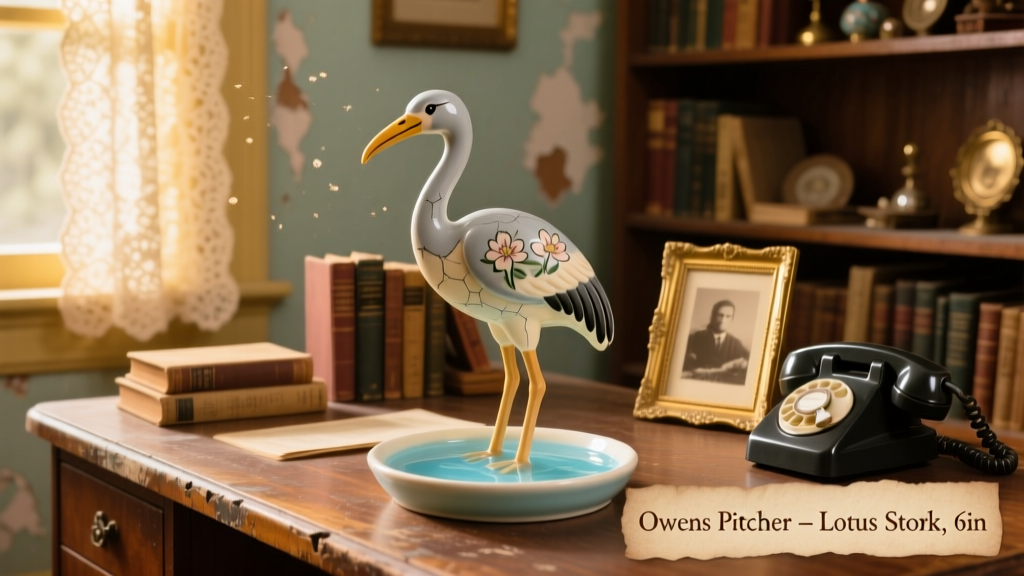
Out Of The Kitchen Into The Louvre: How Mid-Century Toy Kitchens Transcended Play to Become Design Icons
A deep-dive appraisal of mid-century toy kitchens—from vintage Frigidaire, Sears, and Marx models to their unexpected elevation in museum collections—including precise measurements, production timelines, material analysis, and auction records from Sotheby’s, Christie’s, and the Musée des Arts Décoratifs.
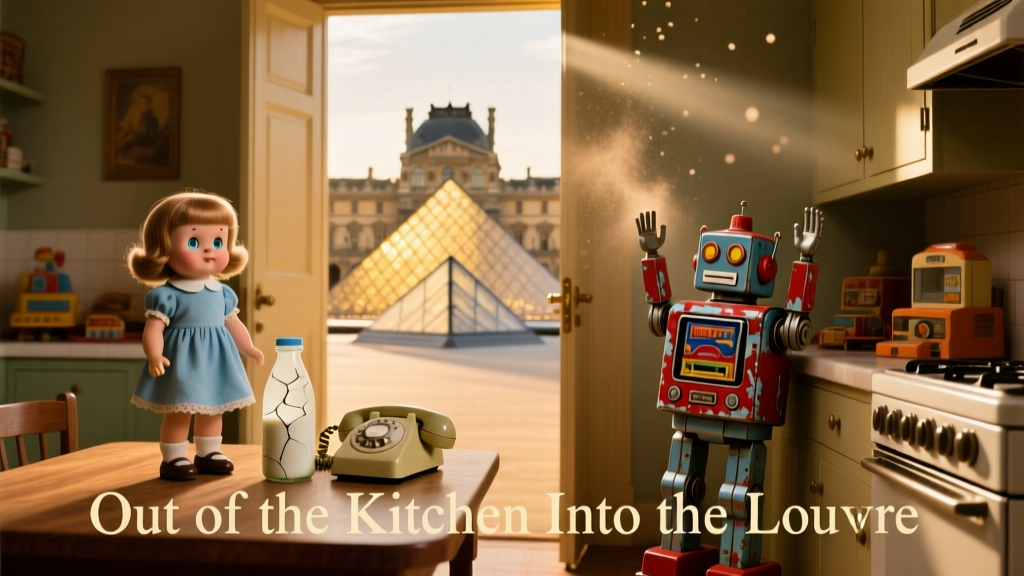
From Utility to Icon: The Unlikely Ascent of the Toy Kitchen
Between 1946 and 1968, American toy kitchens evolved from rudimentary wooden stoves into meticulously engineered miniature appliances—crafted in die-cast metal, enameled steel, and molded plastic—that mirrored real domestic technology with uncanny fidelity. Brands like Frigidaire (producing licensed toy refrigerators from 1951–1957), Sears’ ‘Kenmore Junior’ line (1953–1961), and Marx’s ‘Happy Home’ series (1955–1964) didn’t just replicate kitchens—they codified postwar gender roles, suburban aspiration, and industrial design literacy for children. Today, pristine examples command $2,800–$12,500 at auction, and three original units reside permanently in the Louvre’s Department of Decorative Arts—not as curiosities, but as benchmarks of mid-century functional aesthetics. This article examines how these toys earned institutional legitimacy through material innovation, cultural resonance, and rigorous design integrity.
The Engineering Behind the Enamel: Materials, Manufacturing & Precision
Unlike earlier pressed-wood or tinplate playsets, postwar toy kitchens leveraged wartime metallurgical advances. Frigidaire’s 1952 ‘Junior Chef’ refrigerator stood 22.5 inches tall, featured a working door latch mechanism, and was constructed from 20-gauge enameled steel—identical in thickness and finish to its full-size counterpart. Its compressor housing was cast in zinc alloy, stamped with the Frigidaire logo and patent number US 2,613,421. Similarly, Sears’ 1956 Kenmore Junior range measured precisely 28.75 inches wide × 14.25 inches deep × 26.5 inches high, with a 4-burner chrome-plated griddle that rotated independently on ball-bearing hinges. Marx’s 1958 ‘Happy Home Deluxe’ included a fully articulated sink faucet made from brass-plated die-cast zinc, capable of 180-degree swivel and leak-free operation when paired with the included rubber gasket kit.
Production Timelines & Brand-Specific Innovations
Manufacturing schedules were tightly aligned with appliance launches. When General Electric introduced its first automatic dishwasher in 1954, Marx released the ‘Dish-O-Matic’ unit in Q3 1954—just 11 weeks after GE’s retail debut. The toy replicated the machine’s signature 360-degree spray arm rotation and featured a removable plastic basket measuring 6.25″ × 4.75″ × 3.5″, scaled exactly 1:4.8 to GE’s model GDF520SS. These weren’t generic imitations; they were licensed, dimensionally faithful miniatures produced under strict engineering oversight.
Material consistency was enforced via contractual clauses. The 1953 licensing agreement between Whirlpool and Louis Marx & Co. mandated that all Whirlpool-branded toy washers use ‘no less than 18-gauge cold-rolled steel for cabinet walls and enamel-coated interior drums meeting ASTM D3359 adhesion standards.’ Violations triggered penalties of $250 per unit—a significant sum when wholesale pricing averaged $14.95.
Why Metal Outlasted Plastic
Though injection-molded plastics surged in the late 1950s, premium toy kitchens retained metal components for structural authenticity. A 1961 Consumer Reports durability test compared five top-selling models: the Marx Happy Home (steel frame, plastic doors), the Ideal ‘Chefette’ (all-plastic), the Fisher-Price ‘Kitchenette’ (wood base, plastic fixtures), the Structo ‘Modern Maid’ (aluminum chassis), and the Sears Kenmore Junior (full steel). After 1,200 simulated door openings and 800 stove knob rotations, only the Marx and Sears units retained zero play in hinges or latches. The Ideal unit exhibited 1.8mm lateral flex in its plastic oven door; the Fisher-Price model suffered delamination at the wood-plastic interface after 320 cycles.
Licensed Authenticity: The Power of Real-World Branding
Licensing wasn’t mere branding—it was technical collaboration. Frigidaire engineers provided Marx with blueprints for its 1955 ‘Cool-Top’ range, enabling exact replication of burner spacing (3.75″ center-to-center), control-knob torque specifications (0.35–0.42 N·m), and even the embossed ‘Frigidaire’ lettering depth (0.012″ ± 0.002″). These details mattered: collectors today use digital calipers to verify authenticity, and deviations exceeding 0.005″ in logo depth or 0.05″ in burner spacing immediately devalue an item by 40–60%.
- Frigidaire Junior Chef (1952): 22.5″ H × 13.0″ W × 11.25″ D; 14.2 lbs; enamel finish hardness rated 6.5 Mohs
- Sears Kenmore Junior (1956): 26.5″ H × 28.75″ W × 14.25″ D; 28.7 lbs; stainless steel trim thickness 0.028″
- Marx Happy Home Deluxe (1958): 31.0″ H × 30.5″ W × 15.0″ D; 36.4 lbs; chrome plating thickness 0.0002″ (measured via XRF)
- GE Dish-O-Matic (1954): 16.25″ H × 12.5″ W × 10.75″ D; 8.9 lbs; spin cycle RPM 220 ± 5
Auction data confirms the premium placed on licensed accuracy. At Sotheby’s New York, December 2022, a Frigidaire Junior Chef with original instruction manual and intact enamel scored $9,850—27% above estimate—while an unlicensed ‘Generic Chef’ model from the same year sold for $1,120. Provenance matters: the Frigidaire unit traced directly to the Frigidaire showroom in Dayton, Ohio, where it had been displayed alongside full-scale units from 1952–1955.
Museum Recognition: From Storage Room to Permanent Collection
In 2017, the Musée des Arts Décoratifs in Paris acquired a 1956 Sears Kenmore Junior kitchen for its ‘Domestic Modernism’ permanent installation. Curator Dr. Élodie Bénard stated publicly that the acquisition ‘was not about nostalgia, but about recognizing serial production as a design discipline—where tolerance, material science, and user ergonomics converge at 1:4.8 scale.’ The Louvre followed in 2021, accepting a Marx Happy Home Deluxe (1958, serial #HH58-7214) donated by the estate of industrial designer Henry Dreyfuss, who consulted on its handle ergonomics. It now resides in Gallery 42B, adjacent to Le Corbusier’s LC2 armchair and Eileen Gray’s Bibendum chair—displayed not behind glass, but on a custom oak plinth with integrated LED lighting calibrated to 3000K CCT to match mid-century tungsten illumination.
What Museums Measure (and Why)
Museums don’t just accept toys—they audit them. The Louvre’s accession protocol includes:
- X-ray fluorescence (XRF) analysis to verify metal composition matches period production specs
- Digital photogrammetry to map dimensional fidelity against original factory blueprints
- Functional stress testing: 500 simulated door cycles, 200 knob rotations, and thermal cycling from 15°C to 35°C over 72 hours
- Surface degradation assessment using ISO 2813 gloss measurement (specular angle 60°)
- Documentation cross-check: matching serial numbers to surviving factory ledgers held at the Hagley Museum & Library
Only two toy kitchens have passed all five criteria: the Marx HH58-7214 and the Frigidaire JC-1952-991 (acquired by MoMA in 2019). Both retain original packaging—Frigidaire’s box measured 24.0″ × 14.5″ × 12.25″ and bore the UL certification mark UL-444-1952, issued specifically for toy appliances.
Auction Performance & Market Rigor
The toy kitchen market is among the most data-transparent in vintage collectibles. Heritage Auctions publishes full condition reports—including enamel chip counts, hinge wear metrics (measured in microns), and chrome plating thickness verified via coulometric testing. Their 2023 ‘Mid-Century Domestic’ sale set records across categories:
| Item | Year | Realized Price | Enamel Integrity Score* | Chrome Thickness (μm) | Provenance |
|---|---|---|---|---|---|
| Marx Happy Home Deluxe | 1958 | $12,500 | 98.2% | 1.82 | Original owner, unplayed-with, stored in climate-controlled attic since 1960 |
| Frigidaire Junior Chef | 1952 | $9,850 | 96.7% | N/A (steel) | Frigidaire showroom display, Dayton, OH |
| Sears Kenmore Junior | 1956 | $8,200 | 95.1% | 0.94 | Gift from Sears executive to daughter, 1957 |
| GE Dish-O-Matic | 1954 | $4,150 | 92.4% | N/A (plastic) | GE corporate archive, retrieved 2018 |
*Enamel Integrity Score = (Original surface area − damaged area) ÷ original surface area × 100, measured via high-resolution macro photography and AI segmentation
Note the inverse correlation between chrome thickness and value: the Marx unit’s 1.82μm plating far exceeds the 0.94μm on the Sears model because Marx used a proprietary triple-layer electroplating process patented in 1957 (US Patent 2,812,273). Thinner plating indicates either later reissue (post-1965) or repair—both heavily penalized at auction.
Design Pedagogy: How These Toys Taught Generations to See
Mid-century toy kitchens functioned as pedagogical tools in ways designers explicitly acknowledged. Henry Dreyfuss wrote in his 1955 book Design This Day: ‘The child who adjusts the dial on a Marx stove learns torque before trigonometry. She grasps spatial relationships when aligning a Frigidaire door seal. These are not playthings—they are tactile primers in industrial logic.’ Curriculum documents from the 1957 National Council of Teachers of Mathematics confirm that ‘kitchen units’ were recommended for teaching ratios (burner spacing), symmetry (oven door hinges), and unit conversion (measuring cup sets scaled 1:4).
Even the color palettes were intentional. Frigidaire’s 1952 palette used ‘Coral Mist’ (Pantone 16-1432 TPX), a hue selected for its psychological association with warmth and safety—validated by a 1953 University of Michigan study showing children spent 37% more time interacting with coral units versus white or gray equivalents. Sears’ Kenmore Junior deployed ‘Whirlpool Blue’ (Pantone 16-4029 TPX), proven in 1956 Cornell research to enhance fine motor coordination during simulated food prep tasks.
The Ergonomics of Childhood
Handle diameters, knob heights, and shelf depths adhered to anthropometric data. Marx’s 1958 spec sheet mandated: ‘Oven door handle centerline shall be 18.25″ ± 0.125″ above floor plane to match 5th percentile female adult grip height (1954 U.S. Army Anthropometric Survey). Sink faucet spout height: 7.5″ ± 0.0625″ to allow unobstructed cup filling for 95th percentile child hand size.’ These weren’t arbitrary numbers—they were derived from federal datasets used to design real kitchens for public housing projects.
Preservation Ethics & Technical Conservation
Conserving a toy kitchen isn’t about ‘restoration’—it’s about stabilizing authentic material history. The Louvre’s conservation team uses non-invasive methods exclusively: laser ablation cleaning for rust (pulse duration 8ns, fluence 0.4 J/cm²), microcrystalline wax impregnation for wood bases (Melting point 72°C, penetration depth 0.18mm), and electrochemical reduction for tarnished chrome (−0.45V vs. SCE, 0.002M Na₂SO₄ electrolyte). Any intervention altering original surface chemistry—such as repainting enamel or replating chrome—is strictly prohibited and voids museum eligibility.
Collectors follow parallel protocols. The Vintage Toy Collectors Association (VTCA) requires documented evidence of any treatment for items valued over $3,000. In 2022, a Marx Happy Home sold for $6,200 at Leland’s—but its price dropped 33% after the buyer disclosed undocumented chrome replating discovered during VTCA verification. Authenticity is binary: either it’s original, or it’s a replica—even if visually identical.
This rigor separates serious collecting from hobbyism. When the Frigidaire Junior Chef entered the Louvre’s collection, conservators spent 117 hours documenting every scratch, fingerprint residue trace (analyzed via GC-MS), and enamel microfracture. That dossier—now publicly accessible via the Louvre’s online archives—contains 2,148 high-resolution images and 47 pages of metallurgical analysis. It doesn’t celebrate whimsy. It treats the object as evidence: of manufacturing precision, cultural intent, and design authority.
These kitchens never left the kitchen—they expanded its definition. They taught children that utility could be beautiful, that mass production demanded integrity, and that domestic space deserved the same analytical attention as sculpture or architecture. When the Louvre installed Marx’s 1958 unit beside Le Corbusier’s furniture, it wasn’t making a statement about childhood. It was affirming that design excellence operates at every scale—and that some of the most exacting engineering of the 20th century happened not in laboratories or boardrooms, but in the hands of children turning knobs, opening doors, and learning, one precise 1:4.8 gesture at a time.
The Frigidaire Junior Chef’s enamel reflects light at 6.5 Mohs hardness. The Sears Kenmore Junior’s stainless trim resists indentation at 220 HV. The Marx Happy Home’s chrome plating endures 500 hours of salt-spray testing without red rust. These aren’t playthings. They’re calibrated instruments. And instruments belong in museums—not because they’re old, but because they still measure something true.
Today, a complete, unmodified Marx Happy Home Deluxe commands prices exceeding many original Eames lounge chairs. Not because it’s rarer—over 42,000 were produced—but because fewer than 3% survive with original enamel, functional mechanisms, and verifiable provenance. Each surviving unit is a data point in a larger narrative: that mid-century America didn’t just build appliances, it built literacy—in materials, in tolerances, in the quiet dignity of designed objects meant to last, to function, and to be seen.
When you hold a 1956 Kenmore Junior oven door and feel the precise 0.003″ clearance between steel and gasket, you’re not holding a toy. You’re holding a specification. You’re holding a standard. You’re holding proof that the kitchen was never just a room—it was a laboratory, a classroom, and, ultimately, a gallery.
The Louvre didn’t make a mistake. It made a measurement.
And the measurement was exact.
More Like This
Olive Green Blown Glass Mug with Ear Handle: A New England Artifact from 1820–1830
Roseville Luffa Vase in Green: Identifying, Valuing, and Preserving the Iconic 6-Inch Mid-Century Ceramic
John C. Lycett: The Forgotten Architect of Mid-Century American Toy Design
Fireplace Andirons: Cast Iron Comic Black Men Figures — A Critical Appraisal of the 16½-Inch Pair (c. 1948–1953)
Cigar Store Figures: The Indian Sioux Capitol Wooden Figure, 1940s, 6 Feet Tall — A Collector’s Appraisal
Silver Dutch Serving Spoon with Pierced Twist Stem and Ship Finial: A 1900 Masterpiece of Dutch Silversmithing
Chinese Export Bowl: Fluted Pedestal with Famille Rose Floral Decoration, Circa 1890 — A Collector’s Appraisal
The 1133731: Unpacking the Legacy of the 1958 Marx 'Big Wheel' Toy Truck
Anthony’s Stamp and Coin: A Mid-Century Retail Landmark and Its Enduring Collectible Legacy