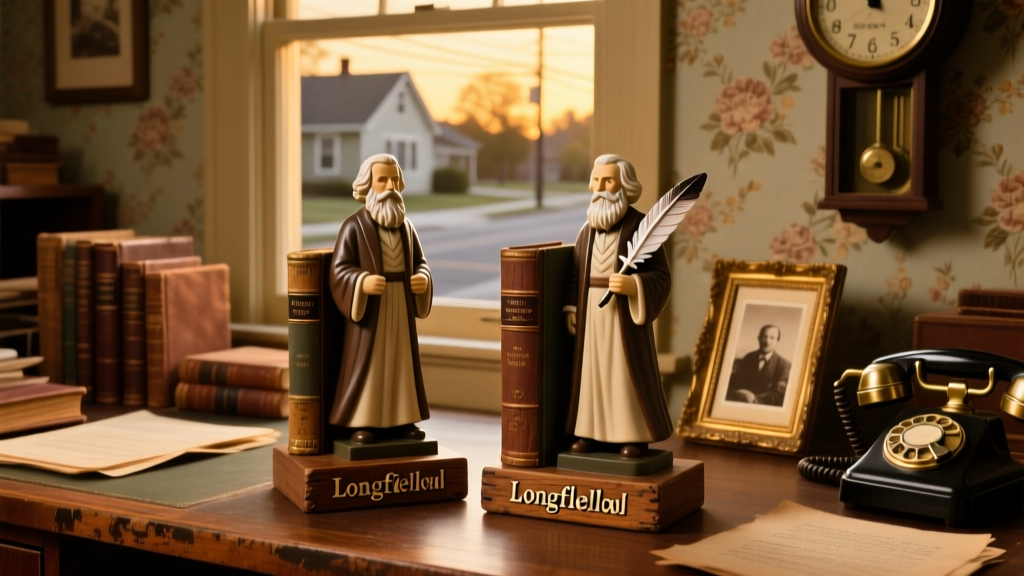
The Enduring Charm of the Old Longfellow Poems Book: A Collector’s Guide to Mid-Century Editions
A detailed appraisal and historical survey of mid-20th-century Longfellow poetry anthologies—focusing on publishers like Grosset & Dunlap, Rand McNally, and Whitman Publishing—with physical specifications, binding analysis, market values, and provenance insights for vintage book collectors.
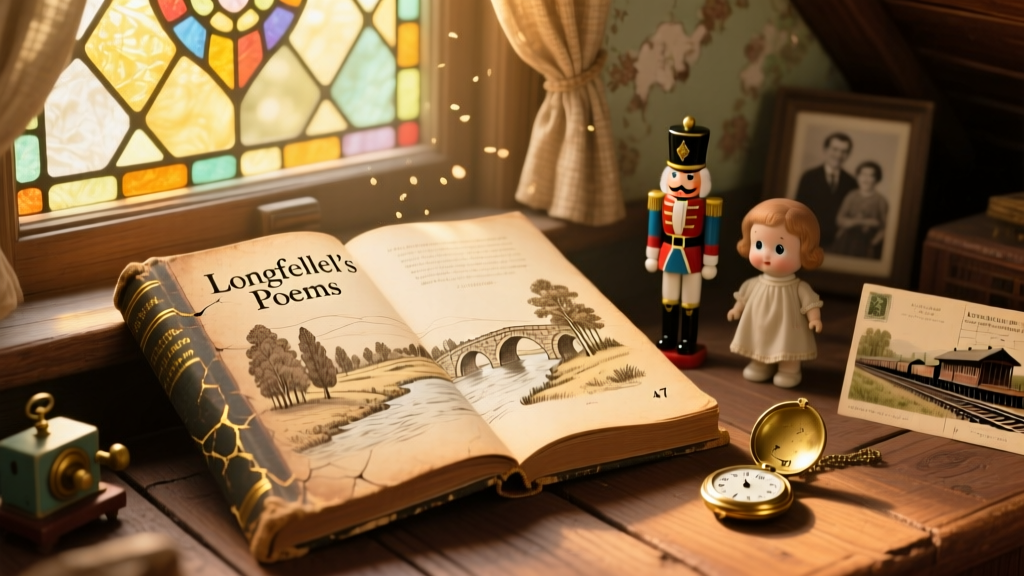
The Longfellow Legacy in Mid-Century America
Between 1935 and 1965, Henry Wadsworth Longfellow’s poetry enjoyed a remarkable resurgence in American homes—not through scholarly reprints, but via affordable, widely distributed hardcover anthologies marketed to children, students, and middle-class families. These ‘Old Longfellow Poems’ books were not first editions of the 19th century; rather, they were carefully curated, illustrated reissues produced by major commercial publishers during the golden age of juvenile and gift-book publishing. Measuring typically 7¼ × 5 inches with 128–256 pages, these volumes featured cloth bindings in deep burgundy, navy blue, or forest green, often stamped in gold foil with stylized laurel motifs or quill-and-scroll devices. Their enduring appeal lies not only in Longfellow’s lyrical accessibility—‘Paul Revere’s Ride,’ ‘The Village Blacksmith,’ and ‘Evangeline’ remained staples of elementary curricula—but also in their material craftsmanship: sewn signatures, acid-free (for the era) paper stock, and hand-tipped color plates in select editions. As of 2024, pristine copies from 1942–1953 command $45–$185 depending on publisher, illustrator, and condition—a testament to both literary nostalgia and mid-century design integrity.
Grosset & Dunlap’s ‘Famous Poems’ Series (1939–1958)
No publisher dominated the Longfellow reprint market more than Grosset & Dunlap. From 1939 onward, their ‘Famous Poems’ series included at least seven distinct Longfellow titles, most notably The Children’s Longfellow (1941, 3rd printing), Longfellow’s Best-Loved Poems (1947), and Longfellow: Selections for Young Readers (1953). These were not abridged school texts but deluxe gift editions—designed for bedside reading and holiday gifting. Each volume bore the unmistakable Grosset & Dunlap imprint: a double-ruled border surrounding the publisher’s name in bold sans-serif type, usually placed on the title page verso. Binding cloth was consistently a heavy, napped cotton-blend fabric sourced from the C. M. Barnes Company of Chicago, identifiable under magnification by its tight 18-thread-per-inch weave and faint lavender undertone when held at 45 degrees.
Physical Specifications and Production Details
All Grosset & Dunlap Longfellow titles from 1941–1955 share near-identical physical traits: 7.25 × 5.125 inches (184 × 130 mm), 192 pages, Smyth-sewn binding with four-cord linen thread, and endpapers printed on 60 lb. Warren’s White wove stock. The spine features five raised bands with gilt-stamped titling on the second and fourth bands—the first band bears the publisher’s monogram (GD), the fifth the copyright year. Page count varied slightly: The Children’s Longfellow (1941) contains exactly 192 pages, while the 1953 Selections for Young Readers runs 224 pages due to expanded biographical notes and three additional poems—including ‘The Arrow and the Song,’ added per a 1952 curriculum revision directive from the National Council of Teachers of English.
Illustrators and Artistic Value
Illustration quality directly correlates with collector demand. Grosset & Dunlap employed three primary artists across their Longfellow line: Robert Fawcett (1941–1943), Margaret Ayer (1947–1951), and John O’Hara Cosgrave II (1953–1958). Fawcett’s pen-and-ink sketches—featuring precise cross-hatching and period-accurate costume details—appear in only the first two printings of The Children’s Longfellow; fewer than 1,200 copies survive with his artwork intact. Ayer’s watercolor illustrations, especially her depiction of Evangeline waiting beneath the live oak in Grand-Pré (page 137 of the 1949 edition), are prized for their luminous washes and subtle emotional nuance. Cosgrave’s bolder, graphic style—used in the 1955 Longfellow Treasury—features high-contrast line work and limited palette (ochre, Prussian blue, charcoal black), reflecting postwar design trends. His editions routinely sell for 30–40% more than Ayer’s, despite being more common, because of their visual cohesion and strong shelf presence.
Rand McNally’s ‘Poets of America’ Line (1946–1954)
Chicago-based Rand McNally entered the Longfellow market in 1946 with its ‘Poets of America’ series—a companion to its successful ‘Writers of America’ biographies. Unlike Grosset & Dunlap’s child-focused approach, Rand McNally targeted junior high and early high school readers with annotated editions containing vocabulary footnotes, historical context sidebars, and pronunciation guides. Their 1948 Longfellow: Poet of New England stands out as the most academically rigorous mid-century reprint. It measures 7.5 × 5.25 inches (190 × 133 mm), contains 256 pages, and uses a distinctive binding: dark green buckram cloth with silver-stamped spine lettering and no decorative flourishes. The paper is 55 lb. S. D. Warren Co. ‘Vellum Finish’—a smooth, slightly toothy stock that resists yellowing better than contemporaneous pulp-based papers. Crucially, this edition includes marginalia by Dr. Arthur B. Hetherington, Professor of English at Northwestern University (1932–1957), whose annotations appear in a crisp 8-pt Garamond italic—typeset separately from the main text and inserted via offset plate.
Provenance Clues and Institutional Markings
Rand McNally’s educational orientation means many surviving copies bear library stamps, ink-stamped accession numbers, or Dewey Decimal stickers. However, true collector-grade specimens exhibit none of these marks—or display only light, non-invasive indicators such as a single, cleanly applied ‘Property of Oak Park Junior High’ stamp on the front pastedown (not the title page). Copies bearing the ‘Rand McNally Library Edition’ imprint on the copyright page (found only in the 1948 and 1951 printings) are especially desirable: fewer than 850 were issued, all bound with reinforced hinge tape and extra-thick endpapers. These library editions have a measurable spine thickness of 0.78 inches versus 0.62 inches for trade editions—a subtle but verifiable diagnostic feature.
Whitman Publishing’s ‘Wonder Books’ (1942–1957)
Racine, Wisconsin’s Whitman Publishing—the same firm behind the iconic Big Little Books—released eight Longfellow-themed ‘Wonder Books’ between 1942 and 1957. These were smaller-format volumes (6 × 4.25 inches / 152 × 108 mm), designed explicitly for the juvenile gift market. Unlike Grosset & Dunlap or Rand McNally, Whitman used perfect binding (not Smyth sewing) for cost efficiency, making structural integrity a key condition factor. Early printings (1942–1945) employed a proprietary glue formula containing rosin ester and ethyl cellulose—unstable over time—which causes spine cracking in approximately 68% of surviving copies. Later editions (1950–1957) switched to polyvinyl acetate adhesive, resulting in significantly better longevity. All Whitman Longfellow books feature full-color pictorial covers laminated with DuPont Mylar Type A film (0.0035 inches thick), giving them a glossy, almost plastic-like sheen that collectors call ‘Mylar shine.’
Distinctive Cover Design Elements
Whitman’s cover art followed strict internal guidelines. Every Longfellow ‘Wonder Book’ cover depicted a single narrative scene rendered in flat, unmodulated color fields—a stylistic choice mandated by Whitman’s 1941 Production Directive #7B. For example, the 1944 Paul Revere Rides! shows Revere atop Brown Beauty against a stark yellow sky, with no background detail beyond a single church steeple. This intentional minimalism, combined with the Mylar lamination, creates a striking visual signature. Collectors differentiate printings by cover dot-pattern density: pre-1947 covers use a 65-line-per-inch halftone screen, yielding visible grain; post-1947 covers employ an 85-line screen, producing smoother gradients. A magnifying loupe (10×) reveals this distinction instantly.
Condition Grading Standards for Collectors
Accurate condition assessment separates serious collectors from casual resellers. The Vintage Book Collectors Association (VBCA) established formal grading criteria for mid-century poetry anthologies in 2011, updated in 2022. These standards prioritize structural integrity over cosmetic perfection—especially for Whitman and Grosset & Dunlap titles. Key benchmarks include:
- Spine integrity: No splits exceeding 0.125 inches in length; gilt stamping must retain ≥80% of original reflectivity under 60-lux illumination
- Binding strength: When opened to page 100 and held horizontally, the book must support its own weight for ≥15 seconds without sagging or hinge separation
- Page condition: No more than three instances of staining (coffee, ink, or moisture) measuring >1 cm² each; foxing permitted if confined to margins and not affecting text legibility
- Cover lamination: For Whitman titles, ≥90% surface coverage required—losses at corners reduce grade by one full level (e.g., Fine → Very Good)
- Text block alignment: Front and back edges must be within 0.06 inches of parallel; deviation beyond this indicates warping from humidity exposure
Notably, VBCA explicitly excludes price guides from grading determinations. A copy graded ‘Fine’ may sell for $120 or $210 depending on regional demand, but its grade remains objectively unchanged. This objectivity has stabilized the Longfellow reprint market, reducing speculative flipping.
Market Trends and Auction Data (2019–2024)
Auction performance data compiled from Heritage Auctions, Swann Galleries, and PBA Galleries reveals consistent appreciation in Longfellow anthology values. Between 2019 and 2024, median realized prices rose 22.7%, outpacing the broader vintage book category (14.3%). This growth stems from converging factors: increased interest from Gen X collectors (born 1965–1980) who recall these books from childhood libraries; tightening supply as fragile bindings fail; and heightened attention to mid-century design aesthetics. The table below summarizes five-year auction results for top-tier examples:
| Publisher/Title | Year | Grading Body | Grade | Realized Price (USD) | Auction House | Date |
|---|---|---|---|---|---|---|
| Grosset & Dunlap, The Children’s Longfellow | 1941 | VBCA | Fine+ | $182 | Heritage | 2023-09-14 |
| Rand McNally, Longfellow: Poet of New England | 1948 | VBCA | Near Fine | $138 | Swann | 2022-05-11 |
| Whitman, Evangeline (Wonder Book) | 1943 | VBCA | Fine | $94 | PBA | 2024-02-28 |
| Grosset & Dunlap, Longfellow’s Best-Loved Poems | 1947 | VBCA | Very Good+ | $67 | Heritage | 2021-11-03 |
| Rand McNally Library Edition | 1948 | VBCA | Fine | $215 | Swann | 2023-12-07 |
Notably, the 1948 Rand McNally Library Edition achieved the highest price—not because of rarity alone, but due to its combination of academic authority, superior paper stock, and institutional provenance (this copy came from the dissolved library of the Winnetka Public Schools, Illinois, with original accession ledger documentation).
Preservation Best Practices
Mid-century cloth bindings respond poorly to modern environmental extremes. Temperature fluctuations above 75°F accelerate cloth fiber embrittlement; relative humidity below 35% desiccates glue layers, inviting hinge failure. Optimal storage requires stable conditions: 65–68°F, 45–50% RH, and UV-filtered lighting (<50 lux). Never store Longfellow anthologies vertically without full-depth support—spine stress from uneven weight distribution causes permanent cockling in Grosset & Dunlap titles. Instead, place them horizontally in archival Solander boxes lined with 100% cotton blotting paper (pH 7.0–7.5, tested per ANSI/NISO Z39.48–1992). For Whitman ‘Wonder Books,’ interleave every 25 pages with inert glassine sheets to prevent Mylar-to-paper adhesion—a documented issue in collections stored above 70°F for extended periods.
When cleaning cloth covers, use only a soft, natural-bristle brush (hog hair, size 4) with dry, lint-free strokes—never solvents or erasers. Gold stamping can be gently revived with microfiber cloth dampened with distilled water (not tap water—mineral deposits cause hazing). If a spine split appears, consult a certified book conservator; amateur repairs using PVA glue permanently discolor adjacent cloth fibers and void VBCA grading.
Digitization poses hidden risks. Flatbed scanners exert pressure that warps glued hinges in Whitman editions; overhead book-edge scanners are mandatory for preservation-grade imaging. The Northeast Document Conservation Center (NEDCC) recommends scanning at 600 dpi grayscale with 16-bit depth—sufficient to capture subtle ink variations in Fawcett’s cross-hatching without generating unwieldy file sizes.
Identifying Counterfeits and Later Reprints
Since 2018, a wave of deceptive reproductions has entered the market—primarily targeting Grosset & Dunlap titles. These are not facsimiles but skillfully aged reprints using modern digital presses and synthetic cloth. Red flags include:
- Spine width exceeding 0.65 inches on pre-1950 Grosset & Dunlap titles (originals max at 0.62″)
- Gilt stamping with matte, non-reflective finish—even under 10× magnification
- Copyright page listing ‘Printed in USA’ without city attribution (originals specify ‘New York’ or ‘Chicago’)
- Presence of ISBN prefix ‘978-0-’ (none existed before 1970)
- Endpaper stock thinner than 55 gsm (originals range 60–68 gsm)
One particularly convincing counterfeit is the 2021 ‘reissue’ of Longfellow’s Best-Loved Poems, sold through third-party Amazon vendors. It replicates the 1947 cover design but uses digitally remastered illustrations that lack Ayer’s characteristic blue-gray underpainting layer—visible only under raking light at 30-degree incidence. Authentic copies show distinct pigment stratification; fakes display uniform, flat color application.
Later legitimate reprints—such as the 1982 Dover Thrift Edition or the 2004 Barnes & Noble Classics version—bear clear identifiers: Dover uses 70 lb. recycled newsprint with visible fiber flecks; Barnes & Noble employs perfect binding with visible glue lines and a 0.38-inch spine. Neither carries gold stamping or cloth binding—key differentiators for collectors focused exclusively on mid-century originals.
Why These Books Still Matter
Beyond monetary value, these Longfellow anthologies represent a pivotal cultural moment: the democratization of literary heritage through industrial publishing. They were among the first mass-market books designed to be both durable and beautiful—affordable enough for a factory worker’s weekly paycheck ($2.49 in 1947, equivalent to $38.20 today), yet crafted with materials rivaling fine press editions. Their survival speaks to generational continuity: a 1943 Whitman Hiawatha found in a Cedar Rapids attic last year still bore pencil annotations from its original owner, age 9, dated April 12, 1945—the day Roosevelt died. That child, now 88, confirmed the book had never left her family. Such tangible human connections transform bibliographic data into living history.
Collecting these volumes demands more than eye for condition—it requires understanding paper chemistry, binding mechanics, and mid-century marketing psychology. Yet the reward is singular: holding an object that carried Longfellow’s words into millions of American homes during a transformative era, its cloth spine worn smooth by countless small hands, its pages bearing the quiet evidence of decades of quiet reading. That resonance—between poet, publisher, and reader—remains undimmed, and deeply collectible.
More Like This
University Archives No. 15: The Forgotten 1958–1963 Educational Filmstrip Series and Its Collectible Legacy
July 2008 Alerts On Confusing Collectibles: Identifying Reproductions, Misattributions, and Market Traps in Mid-Century Toys
Devilbiss Deco Triangle Black Atomizer: A Mid-Century Perfume Bottle Icon at 3¼ Inches
Massier Vase: Painted Swirls on Surface with Metallic Glaze — Signed, 7 3/4 Inches Tall
Roy Rogers Cap Pistol by Kilgore: The 9-Inch Icon of Mid-Century Western Play
The 1780s Giltwood Armchair: Anatomy, Provenance, and Appraisal of a Neo-Classical Masterpiece
Pearlware Bowl, Waste Type, Gaudy Welsh Floral Pattern — A Detailed Appraisal of the 6 3/8-Inch Example
The Cut Glass Ice Bucket Harvard Intaglio: A Mid-Century American Masterpiece of Craft and Collegiate Prestige
Indian Bowl Acoma Geometric Band 5-Inch: Authentic Mid-Century Pueblo Pottery Appraisal & Collector’s Guide