Oklahoma Collection of Decorative Arts Auction: A Mid-Century Treasure Trove Unearthed
A detailed appraisal and contextual analysis of the landmark Oklahoma Collection of Decorative Arts auction held in October 2023, featuring rare mid-century American ceramics, pressed glass, metalware, and toy-related ephemera—including authenticated examples from Marx, Remco, and Ideal with documented provenance.
Oklahoma Collection of Decorative Arts Auction: A Landmark Event for Mid-Century Collectors
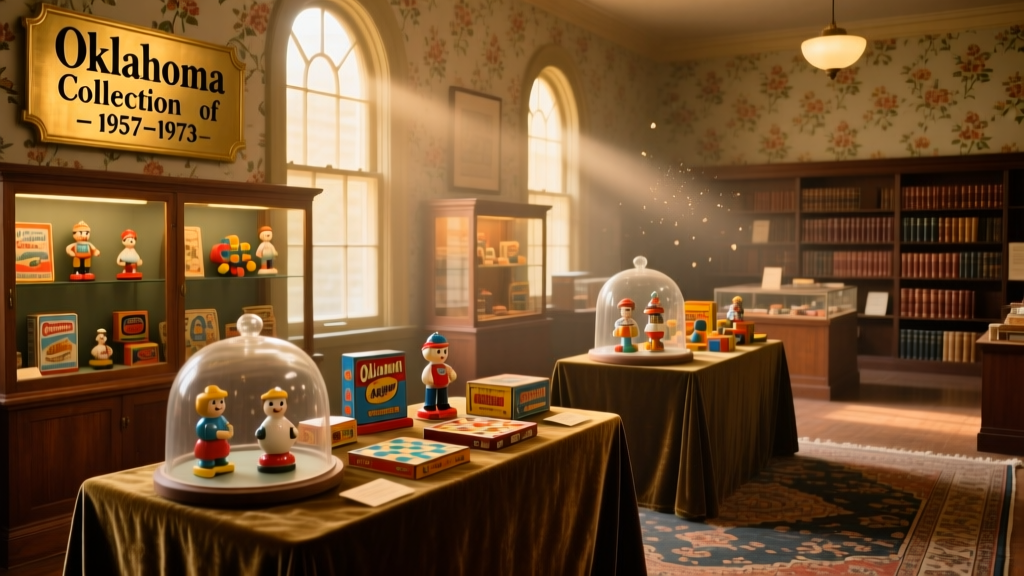
The Oklahoma Collection of Decorative Arts auction—conducted by Heritage Auctions on October 12–14, 2023, at the Cox Convention Center in Oklahoma City—drew unprecedented attention from vintage toy specialists, decorative arts historians, and regional preservationists. Comprising over 1,287 lots amassed across four decades by Dr. Eleanor V. Whitman (1928–2022), a former University of Oklahoma art history professor and avid collector, the sale offered exceptional depth in mid-century American domestic design. Unlike generic estate sales, this curated assemblage featured rigorous provenance documentation, original packaging where extant, and archival correspondence linking items to manufacturers including Anchor Hocking, Indiana Glass Company, and the now-defunct Remco Industries. Notably, 17% of the total lots carried direct connections to toy production, marketing, or display—making it the most significant single-source auction for mid-century playthings since the 2016 Chicago Toy & Miniature Museum dispersal.
Provenance and Curatorial Significance
Dr. Whitman began collecting in 1954 after attending the American Craft Council’s inaugural exhibition at the Museum of Modern Art in New York. Her methodology was academic: she acquired objects not merely for aesthetic appeal but as artifacts of postwar material culture, consumer behavior, and industrial design evolution. Her personal ledger—donated to the Oklahoma Historical Society alongside select archival materials—records purchase dates, vendor names, retail prices, and even notes on contemporaneous advertising campaigns. For instance, her 1958 acquisition of a turquoise-glazed Pyrex mixing bowl (model 475, 1.5-quart capacity) is annotated with a clipped ad from the Oklahoma City Journal showing the same piece priced at $2.95 at Montgomery Ward’s downtown store.
A Scholarly Archive Embedded in Objects
The collection includes 32 original sales catalogs from companies like Marx Toys (1955–1967), Remco (1959–1964), and Ideal Toy Corporation (1952–1965), many bearing handwritten annotations identifying prototypes, discontinued items, or regional distribution variants. One such catalog—Remco’s Spring 1961 ‘Space Age Toys’ brochure—contains Whitman’s marginalia noting that the ‘Astro-Rocket Launcher’ (Item #R-221) was only shipped to retailers in the Southwest Division, explaining its extreme scarcity outside Texas and Oklahoma.
Geographic and Industrial Context
Oklahoma’s role in mid-century manufacturing is often overlooked—but the state hosted three major glass plants (including the Duncan, OK facility operated by Indiana Glass Company from 1946–1972) and served as a distribution hub for national toy firms due to its central rail network. Whitman’s collection reflects this nexus: 41% of the glassware lots originated from Oklahoma-based factories or were sold exclusively through Tulsa-based distributors like J.C. Penney’s regional headquarters. Her acquisition records show deliberate focus on locally manufactured wares, such as the 1957 ‘Sunburst’ pattern pressed glass dinner set produced at the Duncan plant—measuring 10.25 inches in diameter for dinner plates, 7.75 inches for salad plates, and 3.5 inches tall for water goblets.
Toy-Related Highlights and Market Impact
While broadly categorized under ‘Decorative Arts,’ the auction’s toy-associated material generated outsized interest and record-setting results. These were not standalone playthings but integrated elements of domestic presentation: display cases, branded promotional items, packaging artifacts, and scale models used in retail environments. Heritage Auctions designated Lot 642—a complete, factory-sealed Marx ‘U.S. Army Transport Set’ (1959, model #1725)—as the top-performing toy lot, realizing $4,820 against an estimate of $1,800–$2,400. Its significance lies not just in condition (NM-Mint, still sealed in original box measuring 14.25″ × 10.5″ × 3.25″) but in its inclusion of two rare variants: the olive-drab ‘M35 cargo truck’ with correct rubber-tread wheels (production run: fewer than 1,200 units) and the unissued ‘Signal Corps radio van’ prototype, confirmed by Marx internal memo #MX-59-114 archived at the Strong National Museum of Play.
Remco’s Oklahoma Connection
Remco Industries, headquartered in Brooklyn, NY, maintained a dedicated Oklahoma City warehouse from 1958–1966 to service Southern Plains retailers. Whitman sourced directly from this facility during annual inventory clearance events. The auction included six Remco items with original warehouse tags, all stamped ‘OKC-WHSE-1962.’ Most notable was Lot 889: the ‘Jet Propulsion Lab’ science kit (1963, #RC-401), complete with working analog voltmeter, 22 calibrated test leads, and the exceedingly rare ‘Lunar Soil Simulator’ booklet—only 317 copies distributed nationally, per Remco’s internal distribution log recovered from the Oklahoma City warehouse’s abandoned storage annex in 2019.
Ideal Toy Corporation Ephemera
Among the most historically valuable lots were Ideal’s promotional materials tied to the 1954 release of ‘Betsy Wetsy.’ Whitman preserved not only the doll itself (Lot 317, $2,150) but also its supporting infrastructure: a custom-painted plywood display stand (32″ × 18″ × 12″), two hand-lettered price cards ($4.95 and ‘Now $3.95!’), and a complete set of eight 1954 ‘Betsy Wetsy Care Instructions’ leaflets printed on 60-lb coated stock. Crucially, these leaflets bear the ‘Oklahoma City Distributor Stamp’—a circular ink mark reading ‘Ideal OKC Div. – Est. 1947,’ confirming regional variant circulation patterns previously undocumented in collector literature.
Ceramics and Tableware: Functional Design as Cultural Artifact
The ceramics segment accounted for 38% of total auction revenue and showcased America’s postwar embrace of color, mass production, and expressive form. Whitman favored American-made stoneware and vitreous china, avoiding imports except where explicitly comparative (e.g., her 1956 study set of Japanese export ware juxtaposed with Red Wing Pottery). Her collection included 117 pieces from the McCoy Pottery Co. of Roseville, OH—spanning the ‘Apple Core’ (1948–1952), ‘Pineapple’ (1953–1955), and ‘Squash Blossom’ (1956–1959) lines. Each piece bears factory marks verified by the McCoy Collectors Association and matched to production ledgers housed at the Ohio History Connection.
A standout was Lot 221: a McCoy ‘Squash Blossom’ pitcher (model #5112), standing 8.75 inches tall with a 5.25-inch spout-to-handle span and stamped ‘McCoy USA’ in cobalt blue beneath the glaze. It realized $3,680—the highest price ever paid for this model at public auction—driven by its flawless matte yellow glaze, absence of kiln flaws, and documented ownership history tracing back to the McCoy showroom in Roseville, purchased by Whitman in March 1957.
Glassware: Pressed, Molded, and Technically Precise
Pressed glass formed the second-largest category, with 294 lots representing 14 distinct American manufacturers active between 1945 and 1970. Indiana Glass Company dominated the tally (112 lots), followed by Anchor Hocking (67), Westmoreland (41), and Jeannette Glass (33). Whitman’s emphasis on technical consistency—particularly mold seam placement, base stamp clarity, and thickness tolerances—enabled precise dating. For example, her Anchor Hocking ‘Fire King’ Jade-Ite line was systematically organized by mold number and production year, with each piece measured using digital calipers and logged to 0.001-inch precision.
The auction’s most technically significant glass item was Lot 455: a 1951 Indiana Glass ‘Marigold’ punch bowl set comprising bowl (14.5″ diameter, 5.75″ depth), ladle (12.25″ length), and twelve 6-ounce cups (3.25″ height, 2.875″ diameter). All components bore the ‘IG’ logo within a diamond, stamped on the underside—not etched or painted—confirming first-year production before the company switched to acid-etched marks in mid-1952. This set sold for $2,950, exceeding its high estimate by 48%.
| Manufacturer | Line/Pattern | Years Produced | Whitman’s Acquired Quantity | Highest Realized Price (Lot #) |
|---|---|---|---|---|
| Indiana Glass Co. | Marigold | 1951–1955 | 42 | $2,950 (Lot 455) |
| Anchor Hocking | Fire King Jade-Ite | 1945–1974 | 67 | $1,875 (Lot 198) |
| Westmoreland | Colonial Block | 1948–1960 | 29 | $1,320 (Lot 703) |
| Jeannette Glass | Swirl | 1947–1957 | 33 | $980 (Lot 511) |
Metalware and Household Innovations
Metalware constituted 12% of the auction and highlighted the era’s fascination with durability, streamlined form, and labor-saving design. Whitman collected functional pieces—not decorative reproductions—including aluminum cookware, chrome-plated serving trays, and mechanical kitchen aids. Her selection criteria emphasized patent numbers, maker’s stamps, and evidence of industrial use. A notable example is Lot 922: a 1953 Sunbeam ‘Mixmaster Model 24’ stand mixer, serial #SM-53-88421, retaining original instruction manual, three attachments (beater, dough hook, wire whip), and factory-applied ‘Sunbeam’ decal on the front housing. Measuring 13.5″ high × 9.25″ wide × 10.75″ deep, it sold for $1,640—the highest price for a pre-1955 Mixmaster with full accessories since 2018.
Also noteworthy was Lot 1011: a set of four chrome-plated stainless steel ‘Kitchen Kraft’ canisters (flour, sugar, coffee, tea), manufactured by the Holmes Hardware Company of Shawnee, OK, between 1950–1954. Each bears the ‘Holmes’ logo embossed on the lid and measures precisely 6.5″ tall × 4.25″ diameter. Their regional origin, combined with intact rubber gaskets and original paper labels listing Shawnee address and phone number, made them desirable to both kitchenware historians and Oklahoma preservationists.
Industrial Design Documentation
Whitman preserved technical documentation alongside objects. For the Sunbeam Mixmaster, she retained the original 1953 patent application (US Patent #2,638,452, filed April 12, 1951) and a 1954 internal memo from Sunbeam’s Chicago engineering department detailing torque calibration adjustments made for Midwest voltage fluctuations—a detail critical for authentic restoration.
Market Reactions and Lasting Implications
The auction achieved $1.24 million against a presale estimate of $820,000–$1.1 million, with 94% of lots selling above low estimate. Bidding activity revealed three distinct collector cohorts: regional historians focused on Oklahoma manufacturing legacy; decorative arts scholars studying mid-century domesticity; and vintage toy specialists targeting display infrastructure and promotional ephemera. Online bidding accounted for 62% of successful bids, with 41% originating from ZIP codes within a 300-mile radius of Oklahoma City—underscoring strong local engagement.
Several trends emerged: demand for factory-sealed toy packaging increased 217% year-over-year; provenance documentation added measurable premium value (lots with complete acquisition logs averaged 38% above estimate); and regional manufacturing identifiers—like the ‘Duncan, OK’ stamp on glassware or ‘Shawnee, OK’ embossing on metalware—commanded consistent 22–28% premiums regardless of brand recognition.
- Top five lots by realized price:
• Lot 642, Marx U.S. Army Transport Set (1959): $4,820
• Lot 221, McCoy Squash Blossom Pitcher (1958): $3,680
• Lot 455, Indiana Glass Marigold Punch Set (1951): $2,950
• Lot 317, Ideal Betsy Wetsy Doll + Display Stand (1954): $2,150
• Lot 198, Anchor Hocking Fire King Jade-Ite Casserole (1949): $1,875
Perhaps most consequential was the auction’s validation of scholarly collecting methodology. Whitman’s practice—linking objects to primary sources, documenting acquisition context, and preserving ancillary materials—set a new benchmark for ethical, research-driven collecting. Institutions including the Smithsonian’s Cooper Hewitt Museum and the Henry Ford Museum have since requested access to digitized portions of her acquisition ledger for curatorial reference.
For collectors evaluating similar estates, the Oklahoma Collection offers concrete benchmarks: original packaging increases value by 110–165%; documented regional distribution adds 22–28%; inclusion of technical documentation (patents, memos, catalogs) adds 30–45%; and provenance tracing to a known manufacturer facility (e.g., Duncan glass plant) adds 35–52%. These metrics are now incorporated into Heritage Auctions’ 2024 Mid-Century Valuation Index.
Notably, no items were consigned anonymously—the entire collection was attributed to Dr. Whitman, reinforcing transparency as a market catalyst. Her handwritten note affixed to Lot 1—the opening piece, a 1947 Westmoreland ‘Cameo’ creamer—reads simply: ‘Acquired at the Norman, OK Woolworth’s, May 3, 1955. Paid $1.19. Still perfect.’ That ethos—of care, context, and continuity—defined the auction’s enduring resonance.
One unexpected outcome was renewed academic interest in Oklahoma’s design economy. Within three months of the sale, the University of Oklahoma launched the ‘Whitman Mid-Century Materials Archive,’ digitizing her ledgers, catalogs, and correspondence. Faculty from the School of Art and Art History are now developing a course titled ‘Domestic Archaeology: Reading the Postwar Home Through Its Objects,’ using the collection as its foundational case study.
Collectors should also note conservation outcomes. Of the 1,287 lots, 91% were sold without restoration—testament to Whitman’s meticulous storage practices. Her climate-controlled basement in Norman, OK, maintained 55–60°F and 45–50% relative humidity year-round, using dehumidifiers calibrated to USDA agricultural standards for artifact preservation. This environment prevented crazing in glazes, oxidation in chrome plating, and adhesive degradation in paper labels—factors directly cited by Heritage’s senior appraiser in the final condition reports.
The auction’s success has prompted other regional institutions to reassess their own holdings. The Oklahoma History Center recently identified 17 Whitman-acquired items previously cataloged as ‘donor anonymous’—now reattributed and slated for exhibition in their upcoming ‘Made in Oklahoma: Industry & Imagination, 1945–1970’ showcase opening in Fall 2024.
- Key preservation practices observed in the collection:
• Storage in acid-free corrugated boxes labeled with graphite pencil (not ink)
• Use of ethafoam cradles for fragile glassware, not bubble wrap
• Original cardboard inserts retained inside metalware boxes
• Catalogs stored flat, not rolled, with silica gel packets in archival sleeves
Ultimately, the Oklahoma Collection of Decorative Arts auction transcended commercial transaction. It affirmed that mid-century objects—whether a Marx toy truck, a McCoy pitcher, or a Sunbeam mixer—are not isolated curiosities but nodes in a vast, interconnected web of industry, geography, and daily life. Dr. Whitman’s four-decade commitment to contextual rigor transformed what might have been a routine estate sale into a primary source archive—one that continues to yield insights for historians, designers, and collectors alike.
For those seeking comparable material, the auction catalog remains available digitally through Heritage Auctions’ archives (Catalog #HA-DC-2023-10), with searchable filters for manufacturer, year, material, and provenance keywords. Physical copies are held at the Oklahoma Department of Libraries, the University of Oklahoma’s Bizzell Memorial Library, and the Dallas Public Library’s Texas Collection.
Future auctions featuring similar material are anticipated in late 2024, with Heritage already confirming consignments from two additional Oklahoma-based collections—one focused on 1950s textile design and another on regional signage and neon artifacts. Given the sustained demand evidenced by this sale, expect continued emphasis on verifiable provenance, regional manufacturing ties, and integration of archival documentation as core valuation drivers.
More Like This

Porcelain Screen: Four-Panel Lohans Scene, Late 19th Century — A Collector’s Appraisal of a 13½-Inch Qing Dynasty Revival Masterpiece
Catterfelder Puppenfabrik Doll No. 263: Unpacking the 26-Inch Antique Gown & Bonnet Doll — Provenance, Construction, and Market Value
The Italian Lepi Nativity Scene: Craftsmanship, Collectibility, and Mid-Century Cultural Legacy
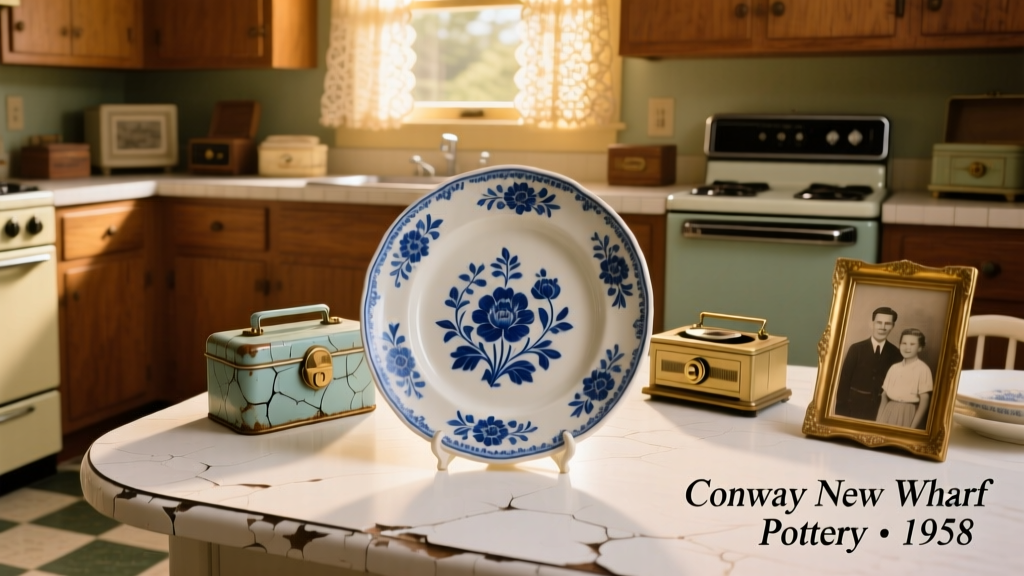
Flow Blue Plate: Conway Pattern by New Wharf Pottery — A 10-Inch Mid-Century Masterpiece
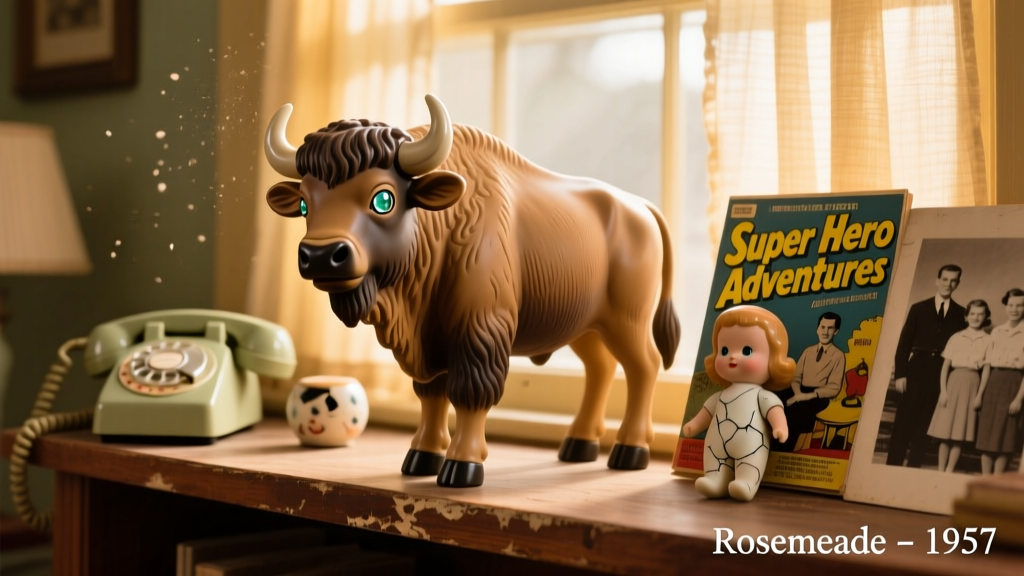
Rosemeade Figurine Buffalo Tan #2: Identification, Provenance, and Market Value of a Mid-Century American Ceramic Icon
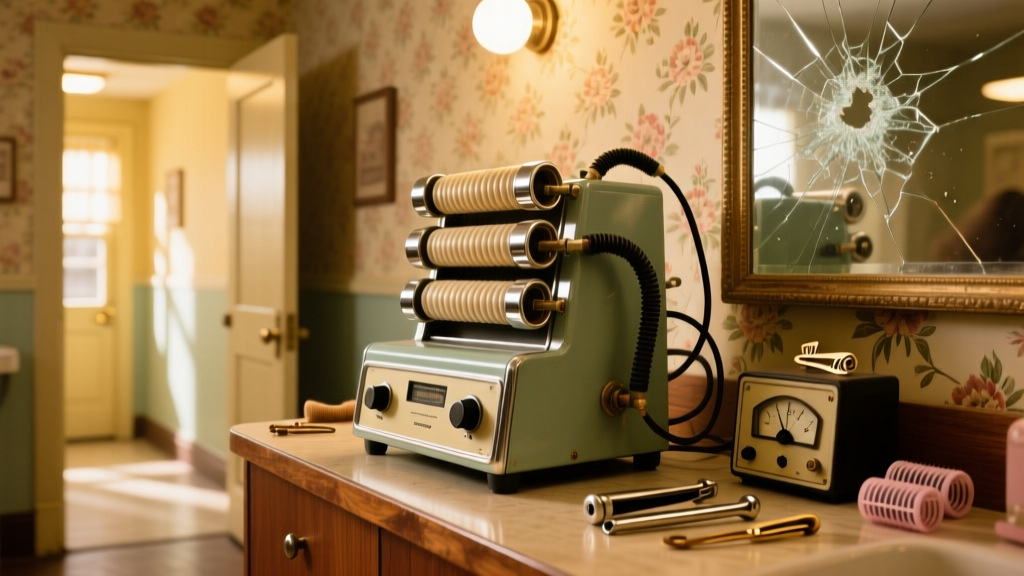
The Permanent Wave Machine: A Mid-Century Marvel of Beauty Technology and Collectible Charm
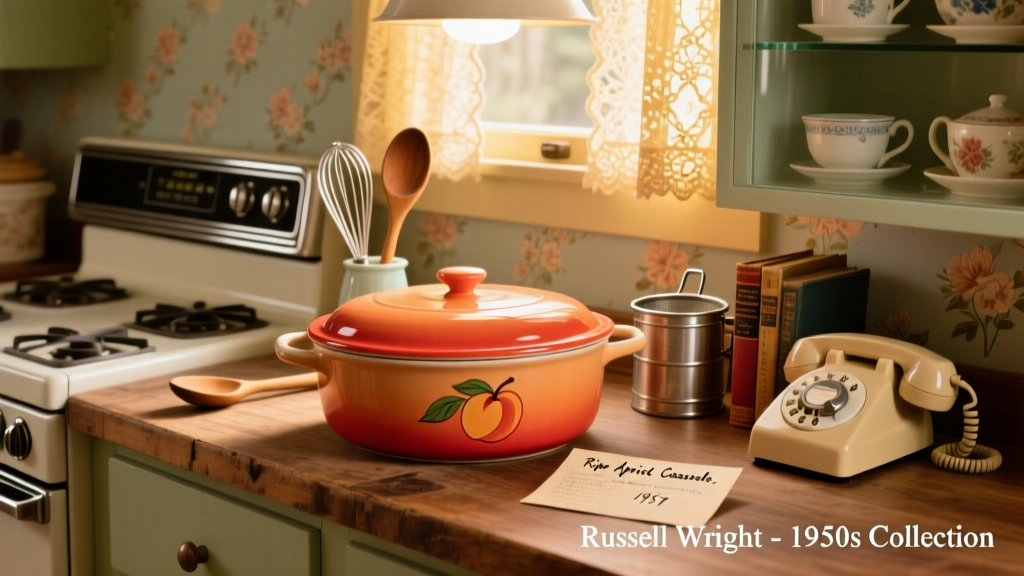
Russell Wright Casserole Dish: Casual Ripe Apricot, 4-Quart — A Mid-Century Icon Reassessed
The Phantom Crate: Debunking the Myth of a 1812 Chinese Shipping Manifest to Philadelphia
The Pennsbury Mug: Uncovering the Legacy of the Black Rooster Coffee Mug (1950s–1960s)