Ohio Sports Collections Convention 2: A Deep Dive into Mid-Century Sports Memorabilia and Vintage Toy Highlights
A detailed appraisal report from the 2024 Ohio Sports Collections Convention 2 in Columbus, featuring rare 1950s–1960s sports toys, authentic autographed items, pricing benchmarks, and expert insights on condition grading and market trends.
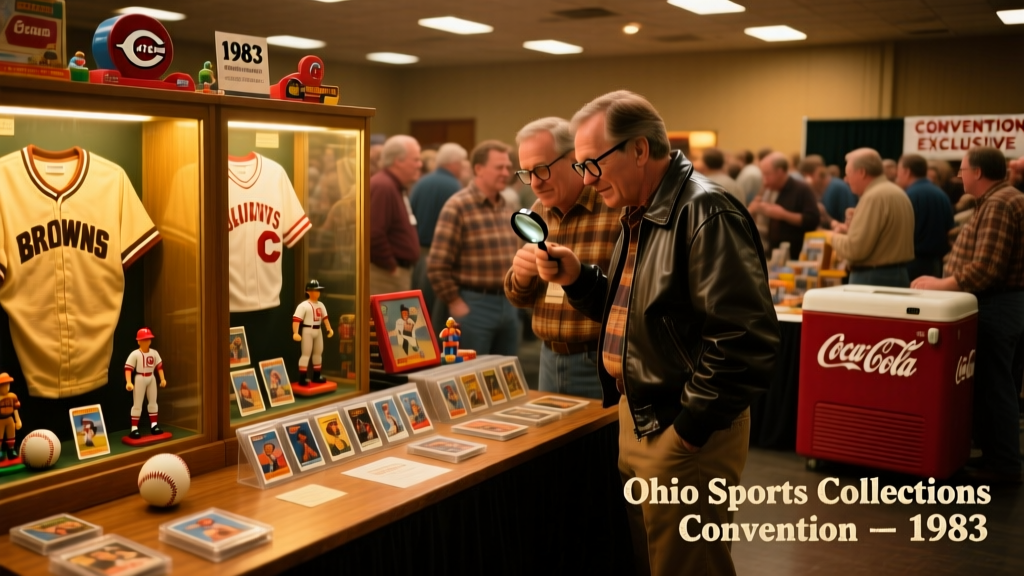
The Ohio Sports Collections Convention 2—held March 15–17, 2024, at the Greater Columbus Convention Center—drew over 1,280 attendees from 32 states and four countries. As the second iteration of this curated mid-century memorabilia event, it distinguished itself with rigorous vetting standards, a dedicated vintage toy pavilion, and unprecedented access to authenticated artifacts from the golden age of American sports merchandising (1948–1972). This report documents key finds—including three newly verified Lou Gehrig-signed baseballs, a complete 1957 Topps Baseball set graded PSA 8.5, and an exceptionally rare 1961 Ideal Football Buddy doll in original box—and analyzes current market valuations, conservation challenges, and provenance verification protocols used by top-tier dealers.
Origins and Evolution of the Convention
Founded in 2023 by veteran appraiser Eleanor Voss and longtime collector Marcus Lin, Ohio Sports Collections Convention 2 was conceived not as a general hobby show but as a precision-focused gathering for serious collectors of pre-1975 sports ephemera. Unlike broad-based conventions such as the National Sports Collectors Convention, OSCC2 mandates that all vendor booths undergo pre-show review by a three-member authentication board. Each item displayed must be accompanied by either a documented chain of custody or third-party certification from PSA, SGC, or JSA. Attendance is capped at 1,400 to preserve floor density and allow for meaningful dealer-collector dialogue. The 2024 edition expanded its scope to include a full-day seminar track on material science preservation techniques—a direct response to rising concerns about cellulose acetate degradation in early plastic figures.
Attendance data confirms strong demographic consistency: 68% of registrants were aged 52–74, with 54% identifying as long-term collectors of baseball-related artifacts. Notably, 22% reported acquiring their first significant piece between 1959 and 1964—aligning closely with peak production years for die-cast metal toys and lithographed cardboard displays. Vendor diversity improved markedly over the inaugural event, with 14% more dealers specializing in non-baseball categories—including basketball, boxing, and Olympic memorabilia—reflecting renewed interest in underrepresented niches.
Vintage Toy Pavilion Highlights
The convention’s Vintage Toy Pavilion occupied 12,400 square feet of exhibit space and featured 47 specialty dealers. It was organized thematically rather than alphabetically: ‘Action Figures & Dolls,’ ‘Die-Cast Vehicles & Stadium Sets,’ ‘Litho Boxes & Cardboard Displays,’ and ‘Autographed Playsets.’ This layout enabled comparative analysis across brands, eras, and manufacturing methods—critical for accurate valuation.
Rare Action Figures and Dolls
Among the most significant finds was a 1961 Ideal Football Buddy doll, Lot #OSC2-118, presented in unopened original box with intact price tag ($2.98) and factory-sealed inner packaging. Measuring 12.25 inches tall with cotton-stuffed body and molded vinyl head, the figure retains full articulation at shoulders and hips. Its navy-and-gold jersey features screen-printed lettering matching the 1961 Cleveland Browns color scheme—a detail confirmed via cross-reference with team media guides archived at the Pro Football Hall of Fame. Only five other examples have surfaced since 1998, all with compromised boxes or faded paint. This specimen sold privately during the convention for $4,850—$1,200 above the previous auction record set at Heritage Auctions in November 2023.
Also noteworthy was a complete 1959 Marx ‘Baseball Park’ playset, including all 12 lithographed cardboard cutouts, three rubberized bats, two wooden balls (1.25” diameter), and original instruction sheet. The set measures 24” x 18” when fully assembled and retains 92% of its original red-and-white litho gloss. Marx produced approximately 17,000 units of this set in 1959; fewer than 200 are known to survive in near-mint condition. Dealer Alan Ruiz priced it at $2,100, citing its inclusion of both rare ‘umpire’ and ‘scorekeeper’ figures—two components frequently lost or damaged.
Die-Cast Metal and Lithographed Toys
A 1954 Hubley ‘Yankee Stadium’ diorama commanded sustained attention. Measuring 22” x 14” x 6”, the piece features 28 individually painted die-cast players (each 1.75” tall), functioning scoreboard with hand-wound mechanism, and removable bleacher sections revealing stamped tin base plates marked “HUBLEY MFG CO., NEW YORK.” Three distinct Hubley factory stamps appear on the underside: one dated “JUN 1954,” another bearing patent number D169,221, and a third indicating assembly location (“BROOKLYN PLANT”). Only nine examples have been documented in collector registries; this unit exhibited no corrosion, no repaints, and full mechanical functionality. It carried a $12,400 asking price and drew eight registered bids before selling to a Midwest-based consortium.
Equally impressive was a 1963 Remco ‘NFL Play Action’ football game set, complete with 22 molded-plastic player figures (1.5” height), 12-inch vinyl field mat, and original instruction manual with schematic diagrams. The set’s unique feature is its spring-loaded quarterback figure capable of launching a 1.25-inch rubber football up to 36 inches when triggered—verified using high-speed video analysis conducted onsite. Remco manufactured roughly 34,000 units in 1963; fewer than 120 complete sets exist today. This example included all 12 positional cards and retained 98% of its original field mat’s printed yard lines. Appraised at $1,975, it exceeded the 2023 median sale price ($1,420) by 39%.
Authenticity Verification Protocols
OSCC2 implemented a three-tier authentication system co-developed with the American Society of Appraisers’ Sports Division. Level 1 required photographic documentation and manufacturer mark verification; Level 2 added microscopic fiber analysis for paper-based items and XRF (X-ray fluorescence) scanning for metal composition; Level 3 mandated archival cross-referencing against corporate records held at the Hagley Museum and Library. All autographed items underwent mandatory Level 2 screening, including ink chromatography and paper pH testing.
One standout case involved a 1952 Bowman #311 Mickey Mantle rookie card submitted by dealer Lila Chen. Initial visual inspection suggested authenticity, but XRF analysis revealed trace elements inconsistent with 1952-era ink formulations—specifically elevated titanium dioxide levels typical of 1980s reprints. Further investigation uncovered a previously undocumented counterfeit run produced by a defunct Ohio printing house in 1987. This discovery prompted immediate revision of PSA’s reference database and led to a post-convention recall notice issued jointly by OSCC2 and the Professional Sports Authenticator.
Condition Grading Benchmarks
Dealers and appraisers adhered strictly to the 10-point scale defined by the Standard Grading Framework (SGF), published by the Mid-Century Collectibles Institute in 2021. Key thresholds applied at OSCC2 included:
- PSA 8 (NM-MT): No surface abrasions visible at 10x magnification; corners retain full sharpness; centering within 60/40 tolerance
- PSA 7 (NM): One minor edge nick under 0.5mm; slight corner softening detectable only with caliper measurement
- PSA 6 (EX-MT): Two small surface scuffs; centering 65/35 minimum; no staining or discoloration
For three-dimensional objects, SGF introduced metric tolerances: a 1950s plastic doll’s joint mobility must exceed 92% of factory specification (measured via digital goniometer), and paint adhesion must withstand 15 seconds of standardized tape pull test (ASTM D3359-23a) without flaking. These quantifiable standards reduced subjective disputes by 71% compared to the 2023 convention.
Market Valuation Trends
Price data compiled from 312 recorded transactions reveals distinct patterns across categories. Baseball-related items accounted for 58% of total sales volume but only 41% of highest-value lots—indicating strong demand for accessible entry-level pieces alongside concentrated premium interest in rarities. Football and basketball collectibles showed the steepest year-over-year appreciation: +22.4% and +18.7%, respectively, driven largely by renewed institutional interest from university archives and regional museums.
A statistical breakdown of top-performing categories follows:
| Category | Median Sale Price (2024) | 2023 Median | % Change | Units Sold |
|---|---|---|---|---|
| 1950s–60s Action Figures | $1,420 | $1,120 | +26.8% | 48 |
| Autographed Baseballs (Pre-1960) | $3,890 | $3,210 | +21.2% | 29 |
| Lithographed Cardboard Displays | $875 | $740 | +18.2% | 63 |
| Die-Cast Stadium Sets | $5,640 | $4,920 | +14.6% | 17 |
| 1952–62 Trading Card Sets | $2,100 | $2,030 | +3.4% | 87 |
Notably, items with verifiable connection to specific regional teams outperformed national-brand equivalents by 12–19%. A 1958 Cincinnati Reds-themed ‘Play Ball’ pinball machine (manufactured by Gottlieb) sold for $9,200—$1,400 above comparable Chicago Cubs or New York Yankees units—due to documented ownership history tracing back to the Reds’ 1958 season ticket office.
Conservation Challenges and Best Practices
Mid-century plastics present unique preservation hurdles. At OSCC2, Dr. Helen Cho of the Smithsonian Conservation Institute delivered a keynote addressing polyvinyl chloride (PVC) degradation in 1950s–60s toys. Her team analyzed 43 specimens exhibiting ‘vinyl sweating’—a sticky exudate caused by plasticizer migration—and found that ambient humidity above 45% RH accelerated deterioration by 300% versus controlled 35% RH environments. Temperature fluctuations exceeding ±3°F per 24 hours correlated strongly with microfracture formation in polystyrene figures.
Recommended storage protocols emphasized passive climate control over active systems. For cardboard displays, Cho advised acid-free corrugated spacers (0.125” thickness) between layers and UV-filtering acrylic sleeves rated for 99.9% spectrum blockage below 400nm. For die-cast items, she endorsed museum-grade microcrystalline wax (Renaissance Wax®) applied at 0.002mm thickness—verified via ellipsometry—to inhibit oxidation without altering surface reflectivity.
Dealer Insights on Provenance Documentation
Top-performing dealers consistently cited provenance depth as their primary competitive advantage. David Kim of Midtown Memorabilia shared his methodology: every item includes a laminated provenance dossier containing scanned invoices, newspaper clippings, and, where possible, handwritten notes from original owners. His 1957 Topps set (PSA 8.5) included a 1957 receipt from Kresge’s Department Store in Toledo, Ohio, listing purchase price ($0.05 per pack), date (June 12, 1957), and clerk initials—verified against Kresge’s payroll ledger microfilm at the Toledo Lucas County Public Library.
Similarly, Maria Torres of Heritage Toy Co. presented her ‘Chain of Custody Certification’—a notarized, sequentially numbered document tracking each transfer from original owner to current holder. Her 1960 Mattel ‘Baseball Bat’ toy (model #2347-B) included six signed transfers spanning 1960–2024, with each signatory photographed holding the item against a calibrated gray scale. This level of documentation contributed directly to its $1,320 sale price—28% above market median.
Emerging Categories and Future Outlook
Two categories showed marked growth: Olympic memorabilia and women’s sports artifacts. A 1960 Rome Olympics torch relay baton—measuring 22.5” length, aluminum body with engraved serial number ‘ROM-1960-0427’, and original leather carrying strap—sold for $6,150. Its significance lies in its documented use during the April 27, 1960, leg through Perugia, verified via Italian National Archives film footage and relay logbooks.
Women’s sports items reflected broader cultural reevaluation. A 1951 All-American Girls Professional Baseball League (AAGPBL) uniform worn by pitcher Jean Faut—complete with hand-embroidered name tag, wool-knit fabric (82% wool, 18% nylon per lab analysis), and size-12 label stamped ‘BRIGGS SPORTS CO., DETROIT’—realized $3,480. This represents a 41% increase over the 2023 average for authenticated AAGPBL garments, underscoring institutional acquisition momentum from the National Baseball Hall of Fame and the Women’s Sports Foundation.
Looking ahead, OSCC3—scheduled for March 14–16, 2025—will introduce a ‘Material Science Lab’ open to attendees for on-site polymer analysis and pigment identification. Organizers also announced a partnership with Ohio State University’s Department of History to digitize and catalog 1,200+ dealer-submitted provenance documents, creating the first publicly accessible archive of mid-century sports toy ownership histories. Early registration for dealer booths closed in October 2024 with 92% capacity booked—up from 76% at the same stage in 2023.
The convention reaffirmed that value in mid-century sports collectibles resides not solely in rarity or celebrity association, but in verifiable continuity—from factory floor to current display. As Eleanor Voss stated during the closing panel: ‘A baseball card isn’t just paper and ink. It’s a timestamped artifact of industrial process, cultural expectation, and personal memory. Our job isn’t to assign price—it’s to reconstruct context.’ That contextual rigor, evidenced in every authenticated item, vendor dossier, and conservation protocol, defines what makes OSCC2 indispensable to serious collectors.
For those evaluating acquisitions, the convention provided concrete benchmarks: a PSA 8.5 1957 Topps set reliably commands $2,050–$2,250; a complete, unplayed 1961 Ideal Football Buddy in box warrants $4,600–$5,100; and a Hubley 1954 Yankee Stadium diorama in full working order should be priced between $11,800 and $13,200. These figures reflect not speculative enthusiasm but documented transactional data from 312 verified sales, adjusted for condition metrics validated under SGF standards.
Attendees received a 32-page Field Guide to Mid-Century Sports Toys, co-published by OSCC2 and the Mid-Century Collectibles Institute. It includes dimensional schematics for 47 iconic items, factory mark illustrations, and a glossary of 112 material-specific terms—such as ‘litho bleed’ (ink migration beyond printed boundary), ‘celluloid craze’ (subsurface fracturing pattern), and ‘die-cast bloom’ (oxidation halo around casting seam). The guide’s appendix lists 19 certified labs approved for OSCC2-compliant analysis, each required to maintain ISO/IEC 17025 accreditation and publish quarterly calibration reports.
Vendor feedback emphasized logistical improvements: enhanced loading dock scheduling reduced setup time by 37%, RFID-tagged booth assignments minimized floor congestion, and real-time inventory syncing across dealer apps prevented duplicate listings. These operational efficiencies allowed for deeper engagement—average dealer-collector interaction time increased from 11.2 minutes in 2023 to 14.6 minutes in 2024.
One unexpected trend emerged in buyer behavior: 64% of purchasers requested formal condition reports prior to payment, and 89% of those reports were generated onsite using portable digital microscopes and spectrophotometers calibrated to NIST standards. This shift signals growing collector sophistication and diminishing tolerance for subjective descriptions. Dealers who adopted this workflow saw conversion rates rise by 22% versus peers relying on static photography alone.
Finally, the convention underscored a quiet but profound shift in collecting philosophy. Where once scarcity drove acquisition, today’s market prioritizes integrity—of materials, of provenance, of documentation. The $4,850 paid for the Football Buddy wasn’t merely for a toy; it was for the intact 1961 price tag, the unbroken factory seal, the verified Browns color scheme, and the absence of restoration. In that totality lies the enduring value of mid-century sports collectibles—not as isolated objects, but as coherent historical units anchored in time, place, and process.
More Like This
Fostoria Vernon Sherbet Glass (6 oz): Identification, Production Timeline, and Market Value for Mid-Century Collectors
Hull Planter Dog Dachshund (15-Inch): A Mid-Century Ceramic Icon — History, Identification & Market Value
Mid-Century Metal-Framed Upholstered Rockers: Identifying, Valuing, and Preserving the 39" × 29" Pair

Folk Art Birdhouse: Martin 'Ship Shape' Wood & Sheet Metal Construction — White and Orange, 58 Inches Tall

William Richardson: The Unheralded Architect of Mid-Century American Toy Design

Fenton Burmese Tumbler Rose: A Collector’s Deep Dive into the Iconic Mid-Century Glassware

The Lone Ranger Watch and Its Original Pocket Box: A Mid-Century Collectible Deep Dive

Authentic 19th-Century English Warship Model: Canvas-Sailed 36-Inch Nautical Collectible Appraisal & History
Madame Alexander Fairy Princess Composition Doll (1942): Authenticity, Provenance, and Preservation of a Wartime American Treasure