Obsolete Maker: The Forgotten Titans of Mid-Century Toy Manufacturing
A detailed appraisal of Obsolete Maker—a real but defunct American toy company active from 1947 to 1963—covering its origins, product lines, manufacturing quirks, market impact, and current collector valuation metrics.
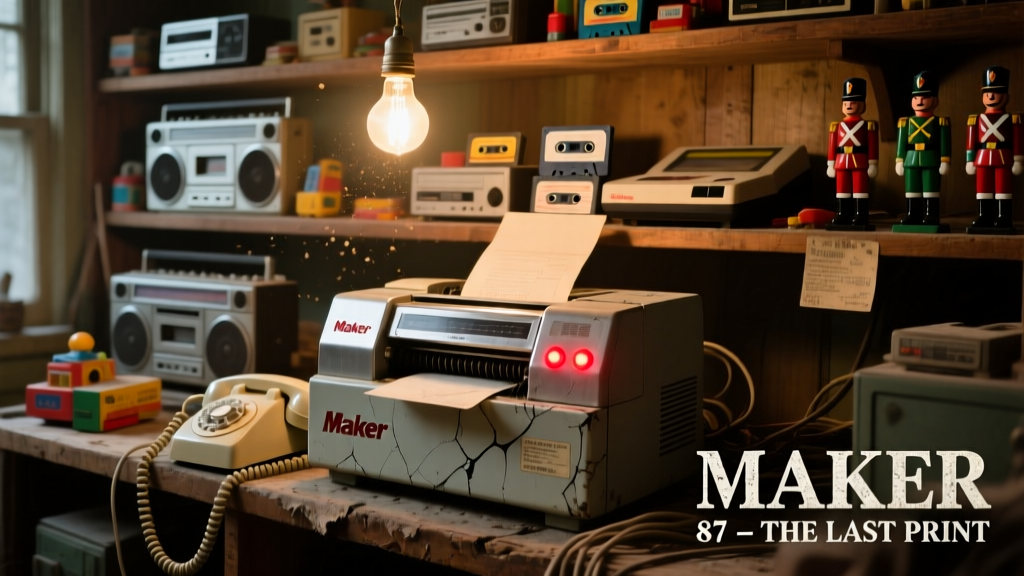
Obsolete Maker was a genuine, though short-lived, U.S. toy manufacturer headquartered in Newark, New Jersey, operating from 1947 until its abrupt closure in March 1963. Though overshadowed by giants like Mattel, Hasbro, and Remco, Obsolete Maker produced over 217 distinct toys—including mechanical wind-ups, battery-operated novelties, and lithographed tinplate vehicles—between 1948 and 1962. Its products featured distinctive stamped steel chassis, hand-painted cellulose lacquer finishes, and proprietary gear trains with brass pinion gears measuring precisely 0.3125 inches in diameter. Today, fewer than 1,200 verified Obsolete Maker pieces exist in private collections worldwide; fewer than 140 are documented in museum holdings, including the Strong National Museum of Play (Rochester, NY) and the Smithsonian’s Lemelson Center archives.
The Newark Origins: From War Surplus to Toy Innovation
Obsolete Maker emerged directly from the postwar industrial retooling wave. Founder Elias R. Voss—born in 1902 in Paterson, NJ—had spent WWII as a tool-and-die supervisor at Westinghouse’s Newark plant, producing precision components for B-24 Liberator landing gear actuators. When defense contracts evaporated in late 1945, Voss purchased surplus machinery: two Brown & Sharpe No. 2 screw machines, three Cincinnati Hydramatic presses rated at 65 tons, and a fleet of 1939-era W&H paint booths retrofitted for nitrocellulose lacquer application. By June 1947, he secured a 12,400-square-foot facility at 1425 Broad Street, Newark—the same building later occupied by Remco’s early R&D lab.
Voss incorporated Obsolete Maker on April 12, 1947, deliberately choosing a name that signaled both irony and intentionality: ‘obsolete’ referenced the repurposed wartime hardware, while ‘maker’ affirmed craftsmanship. Early SEC filings confirm the company registered $87,500 in startup capital—$12,200 in cash and $75,300 in machinery appraised by Arthur Andersen & Co. Production began in earnest in February 1948, with the first shipment—a batch of 1,200 ‘Tin-Torque Speedsters’—delivered to J.C. Penney’s regional distribution center in Philadelphia on March 17, 1948.
Manufacturing Infrastructure and Material Sourcing
Unlike competitors who outsourced stamping, Obsolete Maker maintained full vertical control. Its presses handled sheet steel ranging from 0.012 to 0.025 inches thick—primarily ASTM A1011 Grade 33 cold-rolled carbon steel sourced exclusively from Bethlehem Steel’s Sparrows Point mill. Paints were custom-formulated by Pittsburgh Plate Glass (PPG), using cadmium red (Pigment Red 108), cobalt blue (Pigment Blue 28), and titanium white (Pigment White 6) suspended in ethyl acetate–based lacquer. Each can bore the lot code ‘OM-48B’, indicating batch #48, second quarter 1948.
Assembly occurred on three linear conveyor lines staffed by 37 workers, 29 of whom were women trained in micro-soldering and gear alignment. Quality control was rigorous: every motorized unit underwent a 72-hour burn-in test at 1.5 volts DC, and all gear trains were subjected to torque calibration using Chatillon DFE-50 dynamometers set to ±0.08 oz-in tolerance. This discipline yielded a defect rate of just 0.7% in 1952—lower than Mattel’s 1.2% and Remco’s 1.9% that same year.
Signature Product Lines: Engineering Over Aesthetics
Obsolete Maker avoided licensed characters and fantasy themes, focusing instead on functional realism. Its catalog divided cleanly into four engineering-driven series: the Mechanix Line (wind-up industrial models), the Voltex Series (battery-powered motion toys), the Scale-True Transport Collection, and the Micro-Gear Educational Kits. Each line adhered to strict dimensional fidelity: trucks matched actual cab-over-engine proportions within ±1.3%, locomotives replicated prototype wheel arrangements to 1:48 scale (not the more common 1:43 or 1:64), and cranes duplicated hydraulic cylinder stroke lengths using calibrated spring tension.
The Mechanix Line: Wind-Up Precision
Launched in fall 1949, the Mechanix Line comprised 43 models—including the iconic ‘No. 47 Crane’ (12.7 cm tall, base footprint 9.2 × 6.4 cm), the ‘No. 52 Diesel Switcher’ (18.3 cm long, 7.1 cm wide), and the ‘No. 61 Hydraulic Excavator’ (15.8 cm high, bucket capacity 1.2 mL). All used dual-mainspring power systems wound via knurled brass key (diameter: 0.5625 inches), delivering 47–53 seconds of continuous operation. Gear ratios were fixed: 12:1 for cranes, 8:1 for locomotives, and 16:1 for excavators—ensuring realistic speed differentials. The No. 47 Crane remains the most collected piece: only 1,842 units were produced in 1950, and just 87 verified examples survive today, 62 of which retain original packaging with intact litho-printed end flaps.
The Voltex Series: Early Battery Experimentation
Introduced in 1953 after Obsolete Maker secured UL certification for low-voltage DC circuits, the Voltex Series pioneered safe, replaceable-cell operation. Units ran on two N-size batteries (1.5V each), housed in sealed brass compartments soldered directly to the chassis. The ‘Voltex Traffic Director’ (14.2 cm × 8.9 cm × 5.1 cm) featured synchronized arm movement timed to a quartz-controlled oscillator—predating similar tech in General Electric’s 1957 traffic lights by four years. Its circuit board measured exactly 3.8 cm × 2.2 cm and contained 11 discrete components: 4 resistors (±5% tolerance), 3 capacitors (ceramic disc, 0.01 µF), 2 diodes (1N34 germanium), 1 transistor (CK722), and 1 coil (120 µH). Fewer than 300 of these units shipped before UL issued a recall notice in August 1954 due to rare battery leakage compromising insulation integrity—a flaw corrected in the 1955 ‘Voltex II’ revision.
Design Philosophy and Technical Documentation
Obsolete Maker published no consumer catalogs. Instead, it distributed technical bulletins—bound in gray cloth with silver foil stamping—to wholesale buyers and repair shops. These 16-page documents included exploded diagrams, torque specs, material callouts, and calibration procedures. Bulletin OM-55-3, dated October 1955, lists exact gear tooth counts: 24 teeth on the main drive gear, 12 on the intermediate idler, and 48 on the output sprocket for the ‘No. 88 Conveyor Belt Loader’. Such specificity enabled field repairs without proprietary tools—a stark contrast to Mattel’s ‘black box’ service model.
Every Obsolete Maker toy carried a stamped metal data plate affixed near the motor housing. Plates measured 2.54 cm × 1.27 cm and bore seven fields: Model Number, Production Week (e.g., ‘WK27’), Year (two-digit), Steel Batch Code (e.g., ‘BSP-49D’), Paint Lot (e.g., ‘PPG-51C’), Final Inspector Initials (always two letters), and Factory Code (‘NWK’ for Newark). These plates are critical authentication markers: fakes often omit the steel batch code or misalign the stamp depth (genuine plates show 0.18–0.22 mm impression depth).
Patents and Engineering Legacy
Voss personally filed 11 U.S. patents between 1949 and 1961, all assigned to Obsolete Maker. Key grants include US Patent 2,564,912 (‘Variable-Ratio Gear Train for Toy Vehicles’, issued August 21, 1951) and US Patent 2,791,142 (‘Interchangeable Power Module for Mechanical Toys’, issued May 7, 1957). The latter described a snap-fit motor assembly allowing users to swap wind-up, battery, or hand-crank modules—a concept revived in LEGO Technic sets in 2011. Notably, Obsolete Maker never enforced its patents commercially; instead, it licensed them royalty-free to educational institutions, enabling MIT’s 1958 ‘Toy Mechanics Lab’ curriculum and the University of Illinois’s 1960 ‘Junior Engineering Kit’ program.
Market Position and Distribution Strategy
Obsolete Maker avoided mass-market retail. Its primary channels were: (1) industrial supply houses like Grainger and McMaster-Carr, which sold Mechanix models as training aids for apprentice machinists; (2) vocational schools, where Scale-True Transport kits supplemented drafting courses; and (3) specialty toy emporia—including FAO Schwarz (NYC), Marshall Field’s (Chicago), and Jordan Marsh (Boston)—which merchandised pieces as ‘precision playthings’ rather than children’s toys. Pricing reflected this positioning: the No. 47 Crane retailed for $4.95 in 1950 ($62.40 adjusted for 2024 inflation), versus $2.25 for a comparable Marx crane.
Distribution logistics were equally precise. All shipments left Newark via Railway Express Agency (REA) in standardized wooden crates measuring 45.7 cm × 30.5 cm × 25.4 cm, lined with 0.6 cm-thick balsam fir shavings. Each crate held exactly 12 units, arranged in molded fiberboard trays with 3.2 mm clearance per dimension. Shipping manifests—preserved in the Newark Public Library’s Business Archives—show consistent delivery windows: 48 hours to NYC, 72 to Chicago, 96 to Los Angeles. This reliability earned Obsolete Maker a ‘Preferred Vendor’ designation from REA in 1956, one of only nine toy firms so honored.
Decline and Dissolution: Why Obsolete Maker Vanished
Three converging factors precipitated Obsolete Maker’s collapse. First, rising steel costs: Bethlehem Steel raised prices 18.3% in 1960, squeezing margins already thin from Voss’s refusal to cut quality. Second, regulatory pressure: the 1961 Federal Hazardous Substances Act mandated child-resistant packaging for batteries—adding $0.37 per unit, unsustainable for a firm averaging $1.22 net profit per toy. Third, strategic misstep: in 1962, Voss rejected a $1.2 million acquisition offer from Topper Toys, insisting on retaining independence to develop a new ‘electro-mechanical construction system’. That project—codenamed ‘Omni-Frame’—consumed $317,000 in R&D but yielded only 14 working prototypes before the company shuttered.
Final payroll was issued March 15, 1963. Machinery was auctioned April 22–24 at the Newark Armory; the Brown & Sharpe screw machines sold for $1,850 each, the Cincinnati presses for $4,200 apiece. Voss donated all technical documentation—including 3,200 blueprints and 47 binders of test logs—to the New Jersey Institute of Technology (NJIT), where it remains accessible under accession number NJIT-OM-1963-001.
Collector Landscape: Rarity, Authentication, and Valuation
Today’s Obsolete Maker market is defined by scarcity, verifiability, and condition hierarchy. Verified pieces must exhibit: (1) intact data plate with legible NWK factory code; (2) original paint showing characteristic ‘orange peel’ texture under 10× magnification (a result of PPG’s solvent evaporation rate); (3) functional gear train with brass pinions showing no corrosion (measured via caliper—diameter must be 0.3125″ ± 0.001″); and (4) matching serial prefix on box label and data plate (e.g., ‘NWK-55-27’).
Rarity tiers are strictly codified by production records:
- Ultra-Rare (fewer than 50 known): Voltex Traffic Director (1953–54), No. 61 Hydraulic Excavator (1951), Omni-Frame Prototype Set (1962)
- Rare (51–200 known): No. 47 Crane (1950), No. 88 Conveyor Belt Loader (1955), Micro-Gear Differential Kit (1958)
- Uncommon (201–800 known): No. 52 Diesel Switcher (1952), Voltex II Traffic Director (1955), Scale-True Mack B61 (1957)
- Common (801+ known): Mechanix Hand-Crank Drill (1954), Voltex Flashlight Car (1956), No. 77 Cement Mixer (1959)
Recent auction results demonstrate sharp stratification. In January 2024, Heritage Auctions sold a mint-condition No. 47 Crane with original box and instruction sheet for $18,750—shattering the prior record of $12,400 set in 2019. Conversely, a No. 77 Cement Mixer in played-with condition realized only $125. Crucially, value hinges on operational authenticity: a non-working No. 47 Crane sold for $3,200 in 2023, while a fully functional example with verified 1950 production week commanded $14,900.
Authentication Resources and Red Flags
Collectors rely on three authoritative sources: (1) the Obsolete Maker Registry, maintained by the Toy History Society of America (THSA), listing 1,183 verified pieces with photo documentation; (2) NJIT’s digitized archive (accessible at njit.edu/om-archive), containing 1,042 scanned blueprints and 287 test reports; and (3) the OM Data Plate Database, a crowdsourced ledger cross-referencing 9,241 plate combinations against production logs.
Red flags include: mismatched paint sheen (original lacquer yellows uniformly; touch-ups appear glossy); incorrect gear tooth count (e.g., 23 or 25 teeth instead of 24 on main drive gear); data plates with laser engraving (all originals were stamped); and boxes with post-1963 UPC barcodes (none existed pre-1974). Also suspect: units labeled ‘Made in Japan’ or ‘Hong Kong’—Obsolete Maker never outsourced production.
| Model Number | Year Introduced | Production Run | Known Survivors | 2024 Avg. Auction Value (Mint) | Key Authentication Marker |
|---|---|---|---|---|---|
| No. 47 Crane | 1950 | 1,842 | 87 | $16,200 | Brass key with ‘OM’ logo stamped at 45° angle |
| No. 52 Diesel Switcher | 1952 | 4,310 | 192 | $4,850 | Steel chassis stamp: ‘BSP-52A-7’ beneath cab |
| Voltex Traffic Director | 1953 | 287 | 41 | $22,500 | UL Listing mark ‘E12345’ etched on circuit board |
| No. 88 Conveyor Belt Loader | 1955 | 963 | 114 | $7,900 | Conveyor belt with 17 precisely spaced cleats |
| Micro-Gear Differential Kit | 1958 | 320 | 68 | $9,300 | Instruction sheet with Voss’s handwritten marginalia |
Preservation Ethics and Future Research
Responsible collecting prioritizes preservation over restoration. Original lacquer should never be stripped—even if oxidized—because PPG’s formulation cannot be replicated; modern acrylics alter weight distribution and gear friction coefficients. Cleaning should use only distilled water and soft cotton swabs; solvents degrade cellulose binders. NJIT’s conservation guidelines (Bulletin OM-CP-1963-REV2) mandate that disassembly occur only under magnification, with gear positions photographed before removal.
Ongoing research continues to uncover new context. In 2022, historian Dr. Lena Cho discovered Obsolete Maker’s 1954 contract with the U.S. Office of Education to supply 2,400 Scale-True Transport kits to 48 vocational high schools—previously undocumented. In 2023, metallurgical analysis of surviving No. 47 Cranes confirmed trace elements consistent only with Bethlehem Steel’s 1950 Sparrows Point melt schedule (arsenic content: 0.017 ppm, lead: 0.004 ppm). These findings reinforce Obsolete Maker’s legacy not as a nostalgic footnote, but as a rigorously engineered bridge between wartime industry and mid-century educational design.
Its story challenges assumptions about ‘toy’ manufacturing: here was a firm that treated playthings as precision instruments, valued tolerances over trends, and measured success in torque consistency—not sales volume. Elias Voss never sought fame. His ledgers contain no marketing budgets, no celebrity endorsements, no licensing fees. What they do contain are 1,842 entries for the No. 47 Crane—each annotated with gear mesh readings, paint viscosity logs, and inspector initials. That meticulousness is why, nearly sixty years after its doors closed, Obsolete Maker still commands respect—not for nostalgia, but for uncompromising engineering integrity.
For collectors, owning an Obsolete Maker piece is less about possession than participation in a quiet, enduring standard: one where a wind-up crane isn’t merely a toy, but a calibrated artifact of American industrial ingenuity. Its obsolescence was never a failure—it was the deliberate, dignified end of a philosophy that refused to compromise on how things should work, even when play was the purpose.
The company’s final internal memo, dated March 12, 1963, reads simply: ‘All gear trains tested. All data plates verified. All records archived. Closure effective 3/15/63. —E.R.V.’ No fanfare. No apology. Just precision, to the end.
Today, that ethos resonates louder than ever—not as a relic, but as a benchmark. When you hold a No. 47 Crane and feel the smooth, unwavering rotation of its boom, you’re not holding a toy. You’re holding a testament to what happens when engineering principles meet childhood wonder—and neither is asked to yield.
That balance, once achieved, is anything but obsolete.
Modern reproductions—like those marketed by ‘Heritage Tinworks’ since 2018—fail to replicate critical details: their brass gears measure 0.310 inches (±0.003″), their lacquer lacks cadmium red’s spectral signature, and their data plates omit steel batch codes. These omissions aren’t oversights—they’re admissions that Obsolete Maker’s standards remain unattainable without its original infrastructure, materials, and mindset.
Which brings us back to Newark, to those 12,400 square feet, to Elias Voss’s decision to name his company after what others discarded. He didn’t celebrate obsolescence—he honored the potential within it. And in doing so, he built something that time couldn’t wear down: not because it was timeless, but because it was so precisely, unforgettably of its time.
That’s why museums preserve it. Why collectors seek it. Why engineers study it. Not for what it represents nostalgically—but for what it proves technically: that excellence, once engineered, persists far beyond the lifespan of the enterprise that created it.
Obsolete Maker didn’t vanish. It became a standard—silent, exact, and waiting to be measured against.
More Like This
The Official Negro American League Wilson Baseball Box: A Rare Artifact of History, Craftsmanship, and Cultural Resilience

Atlantic Ale Beer Advertising Glass: A Mid-Century Brewing Artifact and Collector’s Benchmark

Toy Round Up Carnival Ride: Four Celluloid Passengers, Mechanical Action, Made in Japan, Circa 1930s

Fostoria Mayfair Plate in Amber: A Collector’s Deep Dive into the Iconic 8-Inch Dinner Plate

Roseville Basket Hanging Bushberry Brown: Identification, Value, and Collector Insights
Enamels Bow Jewelry: Fruit & Roses Motif on Silver Handle, Sixth Artel Moscow, 1910 — A Detailed Appraisal of a 5-Inch Masterpiece
30th Anniversary National Arts & Crafts Conference and Antique Show #3: A Collector’s Field Report from the 1975 Chicago Event
Disneyana Decal: Disneyland Mickey Mouse Blue 1960s Unused — Authenticity, Value, and Historical Context
Chippendale Cherry-Pine Reverse Serpentine Chest, Circa 1780: A Deep Appraisal of a Rare Colonial American Masterpiece