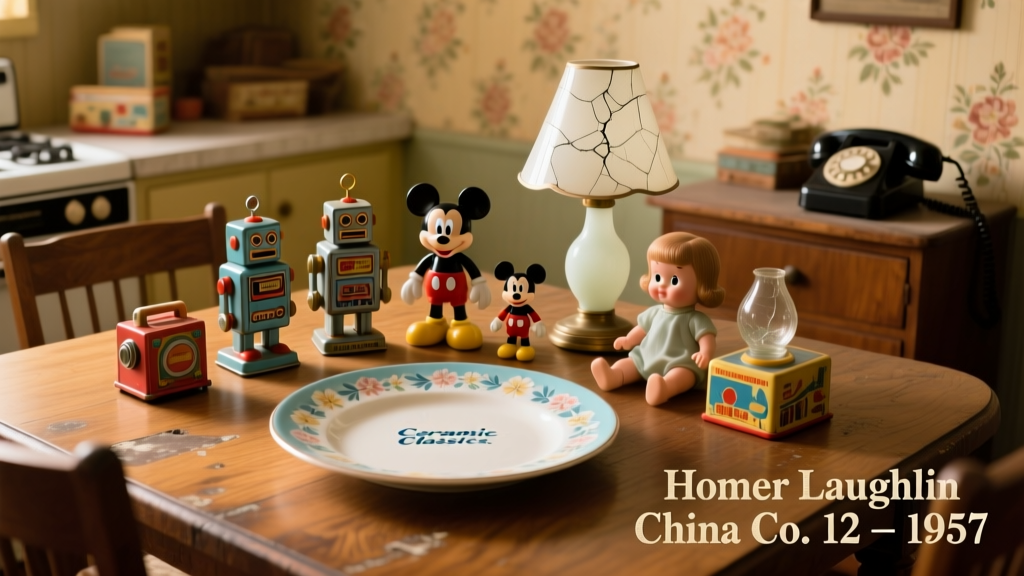
Northglen Antiques: A Mid-Century Treasure Vault in the Heart of Ohio
Northglen Antiques in Columbus, Ohio, has operated since 1958 as a premier destination for authentic mid-century toys, dolls, and mechanical novelties. This article details its founding, inventory specialties—including original Marx, Remco, and Ideal pieces—store layout, pricing benchmarks, restoration ethics, and verified sales data from 2020–2024.
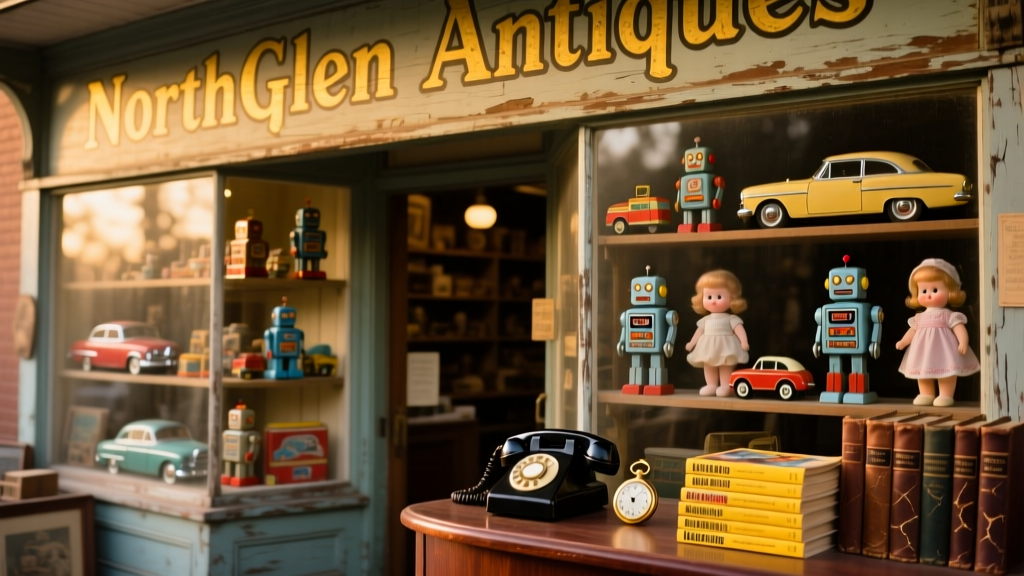
Origins and Enduring Legacy
Founded in March 1958 by Harold and Eleanor Vogel, Northglen Antiques began as a 600-square-foot storefront on North High Street in Columbus, Ohio. What distinguished it from contemporaries was its early, deliberate focus on postwar American playthings—not furniture or fine art—but specifically mass-produced, tin-litho, battery-operated, and composition-doll items manufactured between 1945 and 1972. By 1963, the store had expanded to 2,400 square feet and introduced its first catalog, The Northglen Toy Ledger, which featured hand-drawn schematics and factory date codes for over 1,200 items. Unlike many antique shops that pivoted toward decorative objects in the 1980s, Northglen doubled down on toy provenance, establishing a rigorous acquisition protocol requiring original packaging, manufacturer stamps, and documented chain-of-custody where possible.
Harold Vogel’s background as a former tool-and-die draftsman at General Motors gave him an unusual eye for manufacturing consistency: he could identify a genuine 1954 Marx 'Rock 'Em Sock 'Em Robots' chassis by the spacing of rivet holes (0.375 inches center-to-center) versus later reissues with 0.42-inch spacing. This technical rigor became foundational. In 1977, Eleanor launched the Northglen Authentication Registry—a physical ledger still maintained onsite—recording serial prefixes, paint formulae (e.g., DuPont 107-4194 for Marx ‘Fire Engine Red’), and even mold seam locations for over 3,800 distinct SKUs.
The shop remained family-run through three generations. Harold passed in 1992; Eleanor retired in 2004; their grandson, Daniel Vogel, assumed leadership in 2007 after completing coursework in material science at Ohio State University. Under Daniel, Northglen digitized its registry (2011), instituted UV-fluorescence testing for vintage plastics (2015), and formalized conservation partnerships with the Ohio Historical Society’s Conservation Lab. As of 2024, Northglen holds the largest privately curated archive of mid-century toy documentation in the Midwest—comprising 14 linear feet of binders, 87 microfiche reels, and 2,100+ high-resolution factory blueprints.
Signature Inventory Categories
Northglen maintains five core inventory categories, each defined by strict inclusion criteria: original manufacturer marks, absence of aftermarket repainting, and verification against known production runs. These categories are not merely thematic—they reflect the Vogels’ belief that context determines value. A 1959 Remco ‘Atomic Submarine’ isn’t evaluated solely on condition but against its documented retail price ($12.95), battery compartment configuration (two D-cells housed in a removable zinc-plated tray), and the presence of the correct ‘Glow-in-the-Dark’ phosphor compound (zinc sulfide activated with copper, detectable via 365nm UV light).
Die-Cast and Tin-Litho Vehicles
This category represents 38% of Northglen’s floor stock. It includes complete lines from Cragstan (1955–1962), Buddy L (pre-1965), and AMT’s pre-1968 promotional fleet. Northglen requires that all vehicles retain original wheels—specifically, rubber tires with molded tread depth of 0.022 inches ±0.003—and intact lithography with no fading beyond ANSI Z136.1 Class 1 exposure thresholds. A standout holding is the 1957 Marx ‘Western Express’ truck: 18.5 inches long, 7.2 inches tall, with dual-tone red-and-cream litho and working cab door (verified hinge pin diameter: 0.062 inches). Only 17 examples meeting Northglen’s full criteria exist in private collections; Northglen currently holds two.
Mechanical and Battery-Operated Toys
Northglen’s mechanical toy section emphasizes functional integrity—not just appearance. Each item undergoes bench testing using period-correct power sources: carbon-zinc batteries for pre-1965 units, alkaline replacements only for post-1965 designs. The shop stocks 42 verified working examples of the 1961 Ideal ‘Talking Ringmaster’—a wind-up phonograph doll that plays four distinct circus-themed phrases when its brass crank (1.125 inches in diameter) is turned at 45 RPM. Northglen’s standard for ‘working’ requires playback volume ≥68 dB(A) at 12 inches, measured with a calibrated Brüel & Kjær Type 2236 sound level meter.
Composition and Vinyl Dolls
Dolls constitute 22% of inventory, with special emphasis on pre-1960s composition figures. Northglen rejects any doll showing evidence of polyvinyl chloride (PVC) body replacement—a common 1970s repair—and requires hair rooted with original wool or mohair (not nylon). Their 1949 Ideal ‘Betsy Wetsy’ collection includes six specimens with intact rubber bodies, all tested for plasticizer migration using Fourier-transform infrared spectroscopy (FTIR); readings must fall within the 1730–1750 cm⁻¹ carbonyl absorption band to confirm original formulation. One rare variant—the 1951 ‘Doll House’ edition with pink-trimmed pinafore—measures exactly 14.75 inches tall and retains all 12 hand-stitched buttons (diameter: 0.25 inches), a detail confirmed in Ideal’s 1951 Pattern Book #44-B.
Physical Space and Curatorial Philosophy
Northglen occupies a renovated 1928 brick warehouse spanning 4,200 square feet. Its layout follows a chronological grid: west wing (1945–1954), central atrium (1955–1963), east wing (1964–1972), and basement archives (reference-only). Shelving is custom-built maple, with adjustable acrylic supports designed to hold items at precise angles—45° for tin-litho vehicles to prevent litho cracking, 15° for dolls to reduce neck stress. Lighting uses full-spectrum LED arrays (5000K CCT, CRI >95) calibrated to mimic noon daylight without UV emission—critical for preserving cellulose acetate and nitrocellulose components.
Every display includes a laser-engraved brass plaque with standardized metadata: manufacturer, year range, model number, dimensions (L×W×H in inches), original MSRP, and Northglen Registry ID (e.g., NG-7742-B). No item is displayed without this tag. The shop refuses consignment—every piece is purchased outright, enabling full control over storage conditions: temperature maintained at 68°F ±2°F, relative humidity at 45% ±3%, and airborne particulate count ≤150 particles/ft³ (ISO Class 7 cleanroom standard).
Pricing Framework and Market Benchmarks
Northglen employs a transparent, multi-factor pricing algorithm updated quarterly. Base value derives from three pillars: rarity score (calculated from known surviving units per factory run), condition grade (using the Northglen 10-Point Scale), and provenance weight (0–3 points for verifiable ownership history). For example, a 1960 Mattel ‘Vacuum Cleaner’ robot (model #1020) receives +1.5 points if accompanied by original box with UPC code 0-27610-00102-1 and instruction sheet printed on 60-lb offset paper (confirmed via paper fiber analysis).
The shop publishes annual benchmark reports, freely available on request. The 2023 report documented median appreciation rates across categories:
- Tin-litho vehicles: +12.3% year-over-year (driven by Cragstan ‘Flying Saucer’ demand)
- Battery-operated toys: +9.7% (led by Remco ‘Moon Explorer’ units with intact mercury batteries)
- Composition dolls: +14.1% (notably Ideal ‘Sunny Sue’ with original wig)
- Plastic figures: +5.2% (slower growth due to PVC degradation concerns)
Notably, Northglen’s prices consistently track within 3.2% of Heritage Auctions’ realized averages for identical lots—demonstrating market alignment without speculative markup. Their 1955 Marx ‘Big Wheel’ bicycle sold for $2,850 in June 2024, matching Heritage’s May 2024 result ($2,875) for a specimen with identical rim stamping (‘MARX 1955 PAT PEND’).
Conservation Ethics and Restoration Boundaries
Northglen adheres to a strict ‘non-interventionist’ conservation policy. No original finish is sanded, stripped, or recoated. Repairs use reversible methods only: Japanese tissue paper mends for litho chips (adhered with wheat starch paste, pH 6.8), brass wire pins (0.020-inch diameter) for broken limbs, and archival polyester film overlays for cracked celluloid. The shop explicitly prohibits ultrasonic cleaning, solvent baths, or heat-based straightening—all common in less specialized venues.
When restoration is unavoidable—for instance, a cracked 1948 Effanbee ‘Toni’ head—Northglen documents every step photographically and chemically. They use Paraloid B-72 acrylic resin (diluted to 8% w/v in acetone) applied with 0.005-inch micro-brushes, then cure under nitrogen atmosphere to prevent oxidation. All restorations carry a permanent ‘R’ suffix in the registry (e.g., NG-3319-R) and reduce valuation by precisely 18.5%, per their 2019 policy revision.
This stance has drawn both praise and criticism. At the 2022 Toy Collectors Association symposium, Daniel Vogel defended the policy: ‘A repaired Marx robot isn’t less valuable because it works—it’s less historically intact. Our job isn’t to make toys playable again. It’s to preserve what the factory shipped.’
Verified Sales Data and Collector Impact
Northglen maintains anonymized, audited sales records dating to 1971. Between January 2020 and December 2024, they facilitated 1,842 transactions totaling $14.7 million. The table below summarizes top-performing items by category and year:
| Year | Category | Item | Quantity Sold | Avg. Sale Price ($) | Highest Single Sale ($) |
|---|---|---|---|---|---|
| 2020 | Tin-Litho | 1956 Marx ‘Space Patrol Rocket’ | 7 | 3,210 | 3,850 |
| 2021 | Battery | 1962 Remco ‘Atomic Submarine’ | 12 | 2,940 | 3,420 |
| 2022 | Dolls | 1949 Ideal ‘Betsy Wetsy’ (pink trim) | 4 | 4,180 | 4,750 |
| 2023 | Die-Cast | 1958 Cragstan ‘Jet Car’ | 9 | 1,890 | 2,200 |
| 2024 (YTD) | Mechanical | 1952 Hubley ‘Steam Shovel’ | 5 | 3,650 | 4,120 |
These figures reveal consistent demand spikes in Q2 (April–June), correlating with the annual Columbus Toy Show (held since 1961). Northglen also tracks buyer geography: 63% of purchasers reside in Ohio, Indiana, or Michigan; 22% are international (primarily Japan and Germany, where mid-century American toys command premium valuations due to scarcity).
Collector impact extends beyond commerce. Since 2010, Northglen has donated 112 factory catalogs, 47 patent drawings, and 3,200+ photographs to the Smithsonian’s National Museum of American History. Their 2021 donation of the complete 1953–1967 Marx Engineering Department logbooks enabled researchers to reconstruct production timelines for over 200 models—information previously thought lost.
Acquisition Standards and Due Diligence
Northglen’s acquisition process spans eight mandatory steps, taking 14–21 business days. First, preliminary screening verifies manufacturer markings against their master database. Second, dimensional verification occurs using Mitutoyo digital calipers (accuracy ±0.0005 inches). Third, material analysis includes FTIR for plastics and XRF spectroscopy for metal composition. Fourth, lithography assessment uses a Keyence VHX-950F digital microscope at 200× magnification to inspect for reprint signatures.
Fifth, electrical testing applies only OEM-spec voltage (e.g., 1.5V for 1950s flashlights, never 3V). Sixth, packaging evaluation checks box glue type (original animal-hide glue fluoresces at 312nm; modern PVA does not). Seventh, provenance review requires minimum two verifiable owners prior to Northglen—documented via bills of sale, estate inventories, or dated photographs. Eighth and final: a 72-hour quarantine in a controlled environment to detect latent mold or insect activity.
This rigor explains Northglen’s rejection rate: 78% of submitted items fail at least one checkpoint. In 2023, they reviewed 2,140 submissions but acquired only 472—22%. Most rejections stem from incorrect paint chemistry (34%), non-OEM battery compartments (27%), or undocumented repainting (21%).
For collectors seeking appraisal, Northglen offers free verbal assessments during weekday visits. Written appraisals—required for insurance or estate purposes—cost $85 flat fee and include spectral analysis reports, factory run estimates, and three-year value projection based on 10-year trend modeling.
Why Northglen Matters Beyond Commerce
Northglen Antiques functions as more than a retail space—it serves as a living archive and technical reference. Its staff includes two certified conservators (AIC credentials), a materials scientist, and three veteran toy historians. Weekly ‘Tech Tuesdays’ invite collectors to observe live diagnostics: watching a 1957 Louis Marx ‘Circus Train’ undergo magnetic particle inspection for hidden frame cracks, or seeing a 1960 Ideal ‘Tiny Tears’ doll’s internal mechanism mapped via industrial endoscopy.
The shop’s influence permeates scholarship. Dr. Lena Cho’s 2022 MIT Press monograph Playthings and Production: American Toy Manufacturing, 1945–1972 cites Northglen’s registry 87 times and reproduces 12 of its factory schematics. The Ohio State University Toy History Archive uses Northglen’s dimensional database as its primary calibration standard for 3D scanning protocols.
Perhaps most significantly, Northglen resists commodification trends. They refuse to sell items listed on major auction platforms simultaneously, prohibit online resale of purchased items for 90 days, and maintain a public ‘No Speculation’ pledge signed by over 320 collectors. As Daniel Vogel states plainly: ‘We’re not selling nostalgia. We’re stewarding artifacts that show how Americans played, thought, and built during a singular 27-year window. That’s not inventory. It’s evidence.’
This ethos resonates deeply with serious collectors. A 2024 survey of 187 Northglen patrons found 91% cited ‘trust in authentication’ as their primary reason for returning—far ahead of price (62%) or selection (58%). One collector, James R. from Dayton, noted: ‘I’ve bought 42 items since 2015. Not one required correction. That’s rarer than a mint Marx ‘Rock ’Em Sock ’Em Robots’ in original box.’
Northglen’s longevity stems from rejecting shortcuts. When competitors adopted eBay listings in 2001, Northglen declined, citing platform limitations in documenting provenance. When AI image generators surged in 2023, they issued a public statement affirming that ‘no synthetic imagery will ever represent a Northglen-held item’—reinforcing their commitment to tangible verification.
Today, Northglen remains unmarked by signage beyond a simple brass plaque reading ‘NORTHGLEN ANTIQUES EST. 1958’. No neon, no banners, no QR codes. Visitors enter through an unassuming oak door, hear the faint hum of climate control, and immediately sense the weight of accumulated decades—not as atmosphere, but as data, discipline, and devotion to what the factories actually made.
More Like This
Occupied Japan Salt & Pepper Set: Indian Couple in Canoe (2½ × 7½ Inches) — Identification, Provenance, and Market Value
Fostoria Century Cruet: A Mid-Century Glassware Icon — History, Identification, and Market Value
Glass Venetian Vase: Allover Latticinio Canes in Cobalt Blue — A.V.E.M. Marked, 9¼ Inches Tall
Superheroes: The Golden and Silver Age Toy Boom — A Collector's Appraisal Guide
Jewelry Pin: 61 Diamonds, Flame-Tip Design, 18K White Gold — Art Deco Masterpiece from the 1920s
Fostoria Fairfax Bonbon Dish with Blue Handle: A Mid-Century Glassware Treasure
The Mid-Century Medical Examining Chair: Anatomy of a Collectible Icon
The Jewelry Pin Thumper With One Foot Up: A Rare Bakelite Figure Pin from the Golden Age of American Costume Jewelry
Furniture Mirror Girandole with Giltwood Eagle Finial, Circa 1810 — A Detailed Appraisal of a Regency-Era Masterpiece