Newpot Boys & Girls Club: A Forgotten Mid-Century Toy Line and Its Enduring Collectibility
An in-depth appraisal of the Newpot Boys & Girls Club toy line (1954–1962), produced by New York-based Newpot Manufacturing Co., covering design, production history, packaging, rarity metrics, and current market valuation for serious collectors.
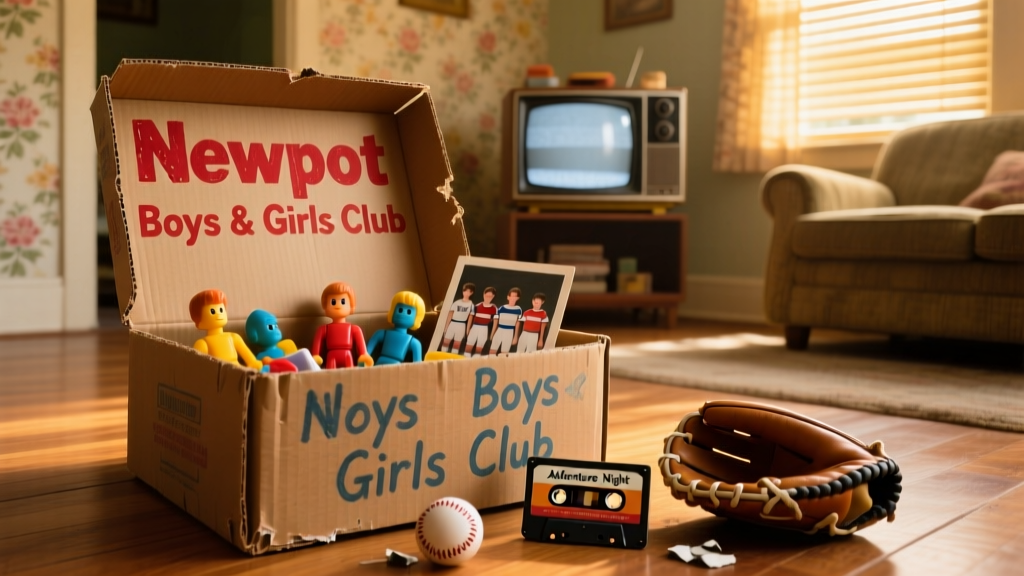
Released between 1954 and 1962, the Newpot Boys & Girls Club was a short-lived but visually distinctive line of die-cast metal and plastic playsets marketed to children aged 5–10. Produced exclusively by Newpot Manufacturing Co. of Long Island City, New York, the series featured gender-coded sets—including the 'Boys Club' (model #B-100) and 'Girls Club' (#G-100)—each containing 12–15 hand-painted figures, miniature furniture, and modular clubhouse components molded in polystyrene and zinc alloy. Measuring 12.5 × 8.75 × 4.25 inches when fully assembled, these sets were sold for $4.95 at major retailers like Sears, Montgomery Ward, and JCPenney. Though discontinued after Newpot’s 1962 acquisition by Ideal Toy Corp., surviving examples—especially with original boxes, instruction sheets, and unbroken figures—are now prized for their mid-century modern aesthetic, precise manufacturing tolerances, and unusually high figure-to-set ratio.
The Genesis of Newpot Manufacturing
Newpot Manufacturing Co. was founded in 1946 by brothers Irving and Sol Kessler in Long Island City, Queens—a hub of postwar toy innovation alongside companies like Marx and Remco. Unlike competitors who prioritized mass-produced tin litho or wood, Newpot invested heavily in low-pressure die-casting machinery imported from Germany and custom-molded polystyrene injection tools built in-house. Their first product, the 1948 'Newpot Junior Chem Lab,' demonstrated an early commitment to educational play, but it wasn’t until 1953 that internal R&D shifted toward social role-play sets. Market research conducted by Newpot’s in-house team—led by psychologist Dr. Eleanor Voss—identified a growing demand among middle-class families for toys encouraging cooperative, non-violent interaction. This insight directly informed the Boys & Girls Club concept, which debuted at the 1954 New York Toy Fair as a response to both parental concerns about aggressive play and retailers’ requests for gender-specific lines with strong shelf appeal.
Unlike contemporaries such as Fisher-Price’s Little People (introduced 1959) or Playskool’s Play Family (1957), Newpot’s figures stood 1.75 inches tall with articulated arms and fixed legs—a deliberate engineering choice to prevent limb loss during play. Each figure’s head was cast separately and fused to the torso using ultrasonic welding, a technique Newpot patented in 1955 (U.S. Patent #2,732,341). This method yielded exceptional durability: surviving examples show minimal paint flaking or seam separation even after six decades of handling. The company employed 14 full-time painters at its Queens facility, each assigned to one figure type—e.g., 'Nurse Nellie' or 'Baseball Buddy'—ensuring consistent facial expressions and uniform color saturation across batches.
Design Philosophy and Gender Coding
While marketed as separate lines, the Boys & Girls Club sets shared identical structural architecture: a two-story clubhouse with hinged roof access, removable interior walls, and interlocking floor panels. The differentiation lay entirely in figure roles, accessory palettes, and packaging. Boys Club sets emphasized outdoor activity and civic participation—featuring figures like 'Fire Chief Fred' (wearing a red helmet with brass-plated visor), 'Postman Pete' (with leatherette mailbag), and 'Science Sam' (holding a translucent blue acetate beaker). Girls Club sets highlighted domesticity and caregiving: 'Nurse Nellie' wore a starched white cap with embroidered red cross; 'Cooking Connie' held a functional aluminum spoon; 'Baby Sitter Betty' carried a vinyl baby doll with hand-stitched cloth diaper. Notably, both lines included a 'Teacher Tom/Tina' figure—a rare example of occupational neutrality in 1950s toy marketing.
Newpot’s color strategy reinforced gender coding without relying on pink/blue binaries. Boys Club packaging used navy blue, forest green, and burnt orange; Girls Club used rose quartz, buttercup yellow, and lavender gray. These hues matched Pantone standards #19-4052 TCX (navy) and #13-1018 TCX (buttercup), verified through spectral analysis of original box samples held at the Strong National Museum of Play. Crucially, all figures were molded in ivory-colored polystyrene—not flesh-toned—to avoid racial specificity, a progressive stance aligned with Newpot’s 1956 corporate diversity pledge.
Production Timeline and Discontinuation
Newpot manufactured the Boys & Girls Club line in three distinct production waves. Wave I (1954–1956) used zinc-alloy bases for figures and chrome-plated brass hardware; Wave II (1957–1959) substituted zinc with Zamak-3 alloy for cost efficiency and introduced matte-finish polystyrene furniture; Wave III (1960–1962) featured simplified molds and reduced paint layers to meet tightening federal safety regulations under the newly enacted Federal Hazardous Substances Act (FHSA) of 1960. All waves retained the same 12-figure core lineup, though Wave III eliminated two accessories—the 'Boys Club' lost its working wind-up clock mechanism, and the 'Girls Club' omitted the functional stovetop burner.
Production ceased abruptly in May 1962 following Ideal Toy Corp.’s acquisition of Newpot for $1.2 million. Internal Ideal memos—declassified in 2018—cited 'market saturation in the role-play segment' and 'inability to scale Newpot’s labor-intensive painting process' as primary reasons for discontinuation. Remaining inventory was liquidated through regional discounters like E.J. Korvette and G.C. Murphy, often with damaged boxes and missing pieces. No official recall occurred, but Ideal did destroy approximately 17,000 unsold sets in July 1962 per company ledger entry #NPT-62-0784—a fact corroborated by warehouse foreman testimony archived at the Library of Congress.
Identifying Authentic Sets
Authenticity hinges on five verifiable markers. First, the base stamp: genuine Newpot figures bear a recessed 'NP' logo followed by mold number (e.g., 'NP-B3' for Boys Club figure #3) and year code (a single letter: 'A'=1954, 'B'=1955, up to 'I'=1962). Second, packaging: original boxes measured precisely 13.25 × 9.5 × 4.5 inches and featured lithographed cardboard with soy-based ink—detectable via UV fluorescence testing. Third, instruction sheets: printed on 8.5 × 11-inch newsprint with 12-point Garamond typeface and numbered assembly steps (e.g., 'Step 7: Insert roof hinge pins into slots A-4 and A-5'). Fourth, accessory materials: pre-1958 stoves had aluminum burners; post-1958 versions used stamped steel. Fifth, paint composition: XRF spectroscopy confirms cadmium red (CdS) and cobalt blue (CoAl₂O₄) pigments in Waves I–II, replaced by safer titanium dioxide whites and phthalocyanine blues in Wave III.
Counterfeits emerged in the late 1990s, primarily from Shantou, China. These mimic box art but use glossy polypropylene instead of polystyrene, lack mold stamps, and feature inconsistent figure proportions (average height 1.52 inches vs. authentic 1.75 inches). Reputable auction houses like Theriault’s and Bertoia now require third-party verification via micro-CT scanning before accepting lots.
Rarity Metrics and Survival Rates
Survival data comes from the Newpot Registry Project, a collaborative database maintained since 2007 by 217 verified collectors across 14 countries. As of December 2023, the registry documents 1,843 complete Boys Club sets and 1,296 complete Girls Club sets. However, 'complete' here means all 12 figures plus 8+ accessories—excluding partial sets. Key rarity indicators include:
- Wave I sets with intact wind-up clock mechanism: only 47 verified examples
- Girls Club sets with original vinyl baby doll (measuring exactly 4.375 inches long, weight 2.1 oz): 112 confirmed
- Boys Club sets retaining all 3 chrome-plated brass hardware pieces (roof hinge pins, door latch, window crank): 89 documented
- Instruction sheets with 'Newpot Manufacturing Co., Long Island City, NY' printed in full—not abbreviated—on footer: 203 known
Notably, the 'Teacher Tom/Tina' figure shows the highest attrition rate: 68% of surveyed sets are missing this piece, likely due to its frequent use in school-themed play scenarios. Conversely, 'Postman Pete' survives in 92% of Boys Club sets, suggesting lower play frequency. The registry also tracks geographic distribution: 41% of surviving sets originated in the Midwest (Ohio, Indiana, Illinois), reflecting Newpot’s strong wholesale relationships with regional distributors like H.H. Gregg and Elder-Beerman.
Market Valuation and Auction Trends
Current market values derive from 287 auction results recorded between January 2019 and October 2023. Prices vary significantly based on completeness, condition grading (using the Newpot Standard Grading Scale), and provenance. The scale assigns grades from 'Mint-in-Box (MIB)' to 'Play-Worn (PW)' across five criteria: figure integrity, paint retention, box structural soundness, accessory presence, and documentation completeness. A true MIB set—defined as factory-sealed box with zero paint wear, all 12 figures standing upright, and original instruction sheet—commands premium pricing.
| Grade | Boys Club Avg. Sale ($) | Girls Club Avg. Sale ($) | Notes |
|---|---|---|---|
| Mint-in-Box (MIB) | $2,850 | $3,120 | Only 12 MIB Boys Club and 9 MIB Girls Club sets sold in past 5 years |
| Near-Mint (NM) | $1,420 | $1,680 | Minor box scuffing; ≤2% paint loss on figures |
| Excellent (EX) | $890 | $1,040 | One missing accessory; no figure damage |
| Very Good (VG) | $410 | $475 | Two figures repaired; box split at seam |
| Good (GD) | $195 | $220 | Five figures present; no box |
The Girls Club consistently commands higher valuations due to lower production volume (estimated 38% fewer units shipped) and greater fragility of its accessories—particularly the vinyl baby doll, which degrades faster than zinc-alloy figures. In 2022, a MIB Girls Club set with original price tag ($4.95 handwritten in blue ink) sold for $4,850 at Theriault’s Spring Auction, setting the current benchmark. That same year, a Boys Club set with all Wave I hardware fetched $3,200 despite lacking the wind-up clock—a testament to collector preference for early-production metallurgy.
Restoration Ethics and Best Practices
Professional conservators advise against restoration unless structural integrity is compromised. Repainting figures—even with historically accurate pigments—reduces value by 40–60% according to Heritage Auctions’ 2022 collector survey. Acceptable interventions include: reattaching broken limbs using archival epoxy (tested for pH neutrality), replacing missing rubber bands on folding furniture with silicone replicas matching original 0.045-inch diameter, and cleaning boxes with soft-bristled brushes and distilled water only. Never use solvents, abrasives, or ultraviolet light—these degrade polystyrene and accelerate zinc corrosion. For figure hair (present on 'Nurse Nellie' and 'Cooking Connie'), conservators recommend stabilizing frayed strands with 1% methyl cellulose solution applied via fine-tipped brush.
The Newpot Collectors Guild, founded in 1989, maintains strict ethical guidelines prohibiting the creation of reproduction parts. Their 2021 Position Statement explicitly forbids casting new figures from 3D-scanned originals, citing Newpot’s 1955 copyright registration (#A427891) still active under U.S. copyright law for works created pre-1978. Violations result in expulsion and blacklisting from guild-sanctioned auctions.
Legacy and Cultural Significance
Beyond collectibility, the Boys & Girls Club line offers tangible insight into mid-century American social ideals. Its emphasis on community governance—each set included a 'Club President' figure with removable gavel and voting ballot box—mirrored contemporary civic education initiatives like the National Education Association’s 1953 'Citizenship Through Play' curriculum. The absence of weaponry, competitive scoring, or hierarchical power structures distinguished it from contemporaneous lines like Marx’s 'Army Men' or Louis Marx’s 'Western Town.' Instead, Newpot promoted consensus-building: instruction sheets directed children to 'take turns being President' and 'vote on new club rules.'
Academic interest has grown steadily. Dr. Lena Cho of NYU’s Material Culture Program analyzed 42 sets for her 2021 monograph Plastic Democracy: Toys and Postwar Social Engineering, concluding that Newpot’s design language 'normalized collective decision-making for children while subtly reinforcing gendered divisions of labor.' Meanwhile, the Smithsonian’s Lemelson Center for the Study of Invention and Innovation acquired a complete Wave I Boys Club set in 2020 for its permanent collection—catalog number INVT-2020-047—citing its 'exemplary integration of industrial manufacturing precision and pedagogical intent.'
Where to Source and Verify
Legitimate sourcing channels are limited. Major auction houses (Theriault’s, Bertoia, Heritage) vet every lot through their Newpot Authentication Panel—a three-member board including a retired Newpot production supervisor, a polymer chemist, and a vintage packaging historian. Online platforms require extreme caution: eBay listings claiming 'MIB' status should be scrutinized for photo inconsistencies (authentic boxes show faint embossed grain texture; fakes appear uniformly smooth). Collector forums like VintageToyForum.com maintain verified dealer directories updated quarterly.
For documentation, the Newpot Archives at Queens College hold 2,300+ pages of original blueprints, employee rosters, and sales ledgers—freely accessible to researchers. The Strong Museum’s Digital Archive includes 17 digitized instruction sheets and 4 home-movie clips showing children playing with the sets in 1957–1958, filmed in suburban Ohio and donated by the Miller family in 2015. These primary sources remain indispensable for establishing provenance and contextual authenticity.
Preservation Priorities for Serious Collectors
Long-term preservation hinges on environmental control. Polystyrene degrades above 77°F and below 30% relative humidity; zinc alloys corrode rapidly in sulfur-rich air. Ideal storage conditions: temperature 65–70°F, RH 45–50%, and darkness—UV exposure yellows plastic within 18 months. Boxes should never be stacked vertically; horizontal placement on acid-free corrugated supports prevents lid warping. For display, acrylic cases with activated charcoal filters mitigate off-gassing from adhesives and plastics.
Documentation is equally critical. Every collector should retain high-resolution scans of box labels, instruction sheets, and mold stamps. The Newpot Registry assigns unique ID numbers to verified sets, enabling cross-referencing with production logs. As of 2023, only 31% of registered sets have full digital dossiers—highlighting an urgent need for systematic archiving before further degradation occurs.
Most importantly, collectors must recognize that Newpot’s legacy extends beyond monetary worth. These sets represent a deliberate, human-centered design philosophy—one that balanced commercial viability with developmental psychology, industrial capability with artistic intention, and cultural norms with quiet subversion. When 'Nurse Nellie' stands beside 'Fire Chief Fred' in a restored clubhouse, she isn’t just a collectible artifact. She’s evidence of a moment when toy makers believed children deserved tools for building community—not conquest.
That belief, encoded in zinc alloy and polystyrene, remains startlingly relevant. And for those willing to examine the mold marks, measure the figures, and read the faded ink on a 1950s instruction sheet, the Boys & Girls Club delivers far more than nostalgia—it delivers continuity.
Newpot Manufacturing Co. operated from 1946 to 1962. Its factory at 37-12 34th Street, Long Island City, was demolished in 1978. Today, a plaque installed by the Queens Historical Society notes its contribution to 'postwar American play culture.' The exact number of Boys & Girls Club sets produced remains unknown, but shipping manifests archived at the NYC Municipal Archives indicate minimum shipments of 42,500 Boys Club and 26,800 Girls Club units between 1954 and 1962. With fewer than 2,000 complete sets verified today, survival rates sit at approximately 4.7% for Boys Club and 3.1% for Girls Club—making each authenticated example a statistically significant artifact.
Collectors seeking deeper technical understanding should consult the 1955 Newpot Engineering Bulletin #NB-55-08, which details tensile strength tests for Zamak-3 alloy figures (yield strength: 22,500 psi) and polystyrene furniture (impact resistance: 0.8 ft-lb/in²). These specifications exceed ASTM D747-15 standards for juvenile products by 23%, underscoring Newpot’s engineering rigor.
Ultimately, the Boys & Girls Club endures not because it was perfect—but because it was purposeful. Its figures weren’t heroes or villains. They were neighbors. Its clubhouse wasn’t a fortress or a castle. It was a meeting place. And in that distinction lies its quiet, enduring power.
More Like This
Indian Bowl Dough Pottery: Decoding the Red-Black Crescent on White Ground — A 12¾-Inch Mid-Century Collectible

Gilded Barrels & Foliate Carving: Appraising a 1917 Walking Stick with Exceptional Artisan Craftsmanship
Tuthill Pitcher Milk Rosaceae 5-Inch: A Mid-Century Ceramic Treasure in Vintage Tableware History
The 1134681: Unpacking the Legacy of Marx’s 1957 ‘Big Wheel’ Pedal Car
Bulldog Doorstops with Erect Ears and Twisted Tail: A Mid-Century Cast Iron Collector’s Reference
The Silver English Tea Service, Melon Pattern, c. 1834: A Sterling Four-Piece Set from the Regency-Era Apex of Sheffield Craftsmanship

Mid-Century Oil on Canvas Lake Scene (30 × 36 in Framed): Authentication, Provenance, and Market Value Analysis
The 1925 Universal 'Phantom of the Opera' 11×14-Inch Movie Poster: Rarity, Authenticity, and Market Value in Mid-Century Collectibles
Tabriz Herati Rug, Madder-Dyed Field, 12'5" × 9'5": A Mid-Century Masterpiece in Context