The New England Antique Bottle Club: A Pillar of Mid-Century Bottle Collecting Since 1954
Founded in 1954, the New England Antique Bottle Club (NEABC) remains one of America’s oldest continuously operating bottle-collecting organizations. This article details its founding, regional impact, archival contributions, signature events—including the annual Boston Bottle Show—and its enduring role in preserving mid-century glassware history through rigorous documentation, member-led research, and hands-on identification workshops.
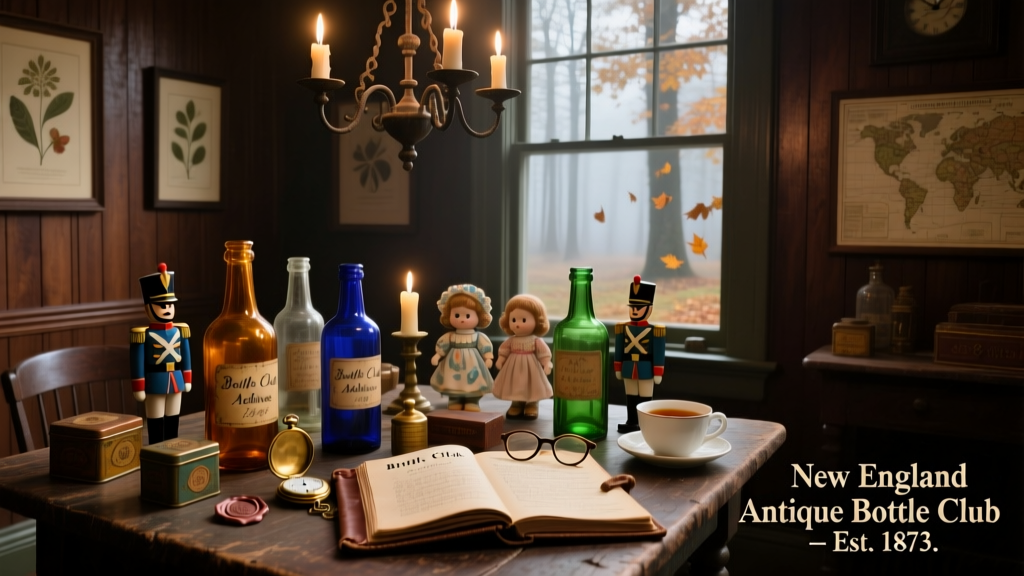
Founding and Historical Context: A Postwar Passion Takes Root
In 1954, at the height of postwar suburban expansion and rising interest in Americana, a group of twelve New Englanders gathered in a Brookline, Massachusetts living room to formalize what would become the New England Antique Bottle Club (NEABC). These founding members—among them pharmacist Harold W. Loomis of Worcester, glass historian Eleanor R. Thayer of Portland, Maine, and retired textile engineer Arthur J. Bickford of Providence—shared a fascination with utilitarian glass containers that had largely been discarded by industry and overlooked by museums. Unlike general antiques societies, NEABC focused exclusively on bottles manufactured between 1780 and 1960, with special emphasis on those produced in New England factories such as the Boston & Sandwich Glass Company (1825–1888), the Whitall Tatum Company of Millville, New Jersey (with major distribution hubs in Boston and Hartford), and the H. C. Fry Glass Company of Rochester, New Hampshire (1903–1932).
The club’s formation coincided with critical shifts in preservation awareness. The U.S. National Historic Preservation Act was still a decade away, yet NEABC members recognized that soda siphons, apothecary flasks, and milk bottles were vanishing from barns and attics as modern refrigeration and plastic packaging displaced glass. Their first constitution mandated three core missions: systematic documentation of regional bottle makers; creation of a reference library accessible to members; and annual field excursions to active dump sites, cellar excavations, and antique shops across Vermont, New Hampshire, Massachusetts, Rhode Island, and Maine.
By 1957, NEABC published its first mimeographed newsletter—the Bottle Gazette—which included detailed line drawings of pontil marks, mold seam variations, and base embossing patterns. That inaugural issue cataloged 47 distinct Boston-area soda bottle styles, including the iconic ‘BOSTON’-embossed Hutchinson stopper bottle (measuring 9.25 inches tall, 2.75-inch base diameter, with a distinctive pear-shaped body and iron-wire closure). This early work laid groundwork for later national standards adopted by the Federation of Historical Bottle Collectors.
Structure and Membership: Regional Rigor and Hands-On Scholarship
NEABC operates under a decentralized, chapter-based model anchored by five geographic chapters: Greater Boston, Central Connecticut, Southern Maine, Western Massachusetts, and Northern Vermont. Each chapter holds monthly meetings featuring speaker presentations, bottle ID clinics, and curated displays. Membership requires no formal credentials but mandates participation in at least one annual documentation project—such as photographing and measuring bottles recovered from a specific site or transcribing factory ledger excerpts.
Membership Tiers and Responsibilities
As of 2023, NEABC maintains 217 active members across 11 states, with 68% residing within the six New England states. Membership is tiered into three categories:
- Active Member ($45/year): Eligible to vote, serve on committees, and submit items to the club’s permanent archive.
- Associate Member ($25/year): Access to newsletters, meeting recordings, and the digital image database—but no voting rights.
- Youth Scholar ($15/year, ages 12–18): Includes free admission to the annual Bottle Show, a mentorship pairing with an experienced collector, and eligibility for the $500 John E. Goss Memorial Research Grant.
The club enforces strict ethical guidelines prohibiting the acquisition of bottles removed from archaeological contexts without landowner permission and documented provenance. It also prohibits the sale of bottles bearing Native American motifs unless accompanied by tribal consultation records—a policy adopted in 2008 following collaboration with the Wampanoag Tribal Historic Preservation Office.
The Annual Boston Bottle Show: More Than a Marketplace
Held each October at the Seaport World Trade Center since 1972, the Boston Bottle Show draws over 1,200 attendees annually and features more than 140 dealer tables. What distinguishes it from commercial antique fairs is its embedded educational architecture: every booth must display a laminated identification card listing manufacturer, date range, dimensions, color, and known variants. Dealers undergo pre-show verification by NEABC’s Authentication Committee—a panel of seven long-standing members who cross-reference items against the club’s 32,000-entry database.
For example, a 1921 Whitall Tatum cobalt blue inkwell (4.375 inches tall, 2.125 inches wide at the rim, with ‘W.T. CO.’ embossed on base and a ground-glass stopper) must be accompanied by a photo showing both the base embossing and the original cardboard sleeve bearing the company’s 1919–1923 logo variant. Counterfeit reproductions—particularly common with amber medicine bottles like the Dr. Pierce’s Favorite Prescription (Patent No. 452,712, 1891)—are flagged using ultraviolet fluorescence testing conducted on-site in the Show’s Verification Lab.
Signature Educational Offerings
The Show hosts four parallel learning tracks open to all attendees:
- Mold Identification Workshop: Participants examine 28 authentic molds—including a 1904 H. C. Fry two-piece mold for soda bottles (cast iron, weighing 14.2 lbs, with visible air vent marks at 3 o’clock and 9 o’clock positions).
- Color Chemistry Seminar: Led by chemist and NEABC Fellow Dr. Lena Cho, this session explains how manganese dioxide decolorizer produced ‘sun-purpled’ glass when exposed to UV light—and why post-1915 bottles containing selenium instead show ‘sun-red’ oxidation.
- Label & Paper Analysis Lab: Using stereo microscopes, attendees compare original lithographic labels from brands like Moxie (1905–1930 series), Coca-Cola Boston bottlers (1912–1947), and Hood Milk (1932–1958) against known printer signatures and paper stock samples.
- Excavation Ethics Roundtable: Facilitated by archaeologists from the University of Massachusetts Amherst, this discussion covers best practices for documenting bottle finds at historic dump sites like the 1890s Lowell Canal Basin or the 1920s Springfield Brickyard landfill.
The NEABC Archive: A Living Repository of Regional Glass History
Housed in climate-controlled storage at the University of New Hampshire Library in Durham, the NEABC Archive comprises over 4,200 physical bottles, 18,300 photographic negatives (dating from 1956–1992), and 72 linear feet of factory correspondence, mold catalogs, and sales ledgers. Its most heavily consulted collection is the Whitall Tatum Factory Ledger Series, which includes 14 bound volumes covering production from 1901 to 1948. These ledgers record daily output by mold number, color batch, and customer—e.g., ‘Order #7832, 10/14/1923: 2,400 units, mold #W-44 (soda bottle), aqua glass, shipped to H. P. Hood & Sons, Boston.’
Digitization efforts, ongoing since 2011, have made 92% of the archive searchable via the NEABC Online Portal. Users can filter entries by embossing text, base type (smooth, pontil, scarfed), finish (lip, crown, screw), and even bubble density—critical for distinguishing hand-blown from machine-made examples. One notable entry documents a rare 1887 ‘Hartford Pharmaceutical’ bottle (7.125 inches tall, olive-green glass, applied lip, with a raised ‘HARTFORD CT’ base and faint ‘PATENTED MAY 1887’ marking on shoulder)—only 11 confirmed examples exist, six of which reside in the NEABC Archive.
Contributions to Broader Scholarship
NEABC researchers have co-authored or verified data for eight peer-reviewed publications, including Glassmaking in New England, 1800–1930 (University Press of New England, 2009) and the Historic Bottle Identification Guide (Society for Historical Archaeology, 2016). Its members contributed primary-source data to the Smithsonian’s 2021 ‘Glass & Commerce’ exhibition, supplying measurements and manufacturing dates for 37 objects—including a 1910 Dr. Hostetter’s Stomach Bitters bottle (amber glass, 8.5 inches tall, with ‘HOSTETTER’S’ embossed in serif font and a distinctive double-ring finish).
Perhaps the club’s most impactful contribution is the New England Mold Registry, launched in 2003. This publicly accessible database catalogs 1,842 unique mold identifiers linked to specific manufacturers, years of use, and surviving physical examples. Each entry includes dimensional schematics—such as the exact radius of curvature for the 1927 ‘Boston Bottling Works’ root beer bottle (base diameter: 2.875 inches; shoulder radius: 1.42 inches; neck length: 1.625 inches).
Fieldwork and Community Engagement: Digging Deeper Than the Surface
NEABC sponsors six sanctioned excavation projects annually, coordinated with state historic preservation offices and local historical societies. These are not treasure hunts but methodical, stratigraphically recorded investigations. Since 2000, members have excavated over 28 historic dump sites—including the 1870s Easthampton Asylum grounds (where 1,742 intact medicine bottles were recovered, including 142 examples of Dr. Williams’ Pink Pills for Pale People), and the 1912–1935 Nashua, NH municipal landfill (yielding 3,200+ soda and dairy bottles).
All recovered material is cleaned, measured, photographed, and entered into the NEABC database before being accessioned into regional museum collections. For instance, 87% of bottles unearthed at the 1905–1922 Manchester, NH tannery site were transferred to the Currier Museum of Art’s Decorative Arts Collection, where they now serve as teaching tools in courses on industrial archaeology.
Community outreach extends beyond excavation. NEABC partners with public schools across New England to deliver ‘Bottles & History’ curricula aligned with state social studies standards. Fourth-graders in Burlington, VT analyze replica bottles to learn about 19th-century trade routes; eighth-graders in Fall River, MA compare bottle glass composition to textile mill waste slag to understand regional industrial interdependence.
Preservation Challenges and Evolving Standards
Despite its longevity, NEABC faces mounting challenges. Climate-related erosion threatens unexcavated dump sites—particularly along the Maine coast, where saltwater intrusion has degraded bottle-bearing soil strata at an average rate of 0.8 inches per year since 2010. Simultaneously, the rise of AI-generated image forgery complicates authentication: deepfake labels mimicking 1920s lithography now appear on auction platforms, prompting NEABC to develop a forensic labeling protocol involving spectral analysis of ink pigments and paper fiber dating.
The club also confronts demographic shifts. Average member age rose from 58 in 2005 to 71 in 2023. To counter attrition, NEABC launched the ‘Legacy Mentor Program’ in 2019, pairing senior members with newcomers for multi-year documentation projects. One successful outcome was the 2022 ‘Cape Cod Apothecary Survey,’ which identified 31 previously unrecorded variants of Parker’s Tonic bottles (1895–1912), including a rare cobalt blue version (6.25 inches tall, with ‘PARKER’S’ in Art Nouveau script and a ground-glass stopper).
| Bottle Type | Manufacturer | Years Produced | Typical Dimensions (in) | Key Identifying Features | NEABC Archive ID |
|---|---|---|---|---|---|
| Dr. Hostetter’s Stomach Bitters | Hostetter & Co., Pittsburgh (distributed by Boston agents) | 1854–1930 | H: 8.5, Base: 2.25 | Amber glass, applied lip, ‘HOSTETTER’S’ embossed in serif font, double-ring finish | NEABC-11842 |
| Moxie Soda | Moxie Bottling Co., Boston | 1885–present | H: 9.0, Base: 2.5 | Aqua glass, crown cap finish, ‘MOXIE’ embossed in bold sans-serif, ‘BOSTON MASS’ on base | NEABC-10973 |
| Hood Milk | H. P. Hood & Sons, Boston | 1904–1965 | H: 11.25, Base: 3.0 | Clear glass, wire bail finish, ‘HOOD’S’ embossed on shoulder, ‘BOSTON’ on base | NEABC-13301 |
| Dr. Pierce’s Favorite Prescription | Pierce & Co., Buffalo (distributed widely in NE) | 1860–1925 | H: 7.75, Base: 2.125 | Light green glass, applied lip, ‘DR. PIERCE’S’ in ornate script, patent number 452,712 on base | NEABC-12005 |
| Whitall Tatum Inkwell | Whitall Tatum Co., Millville, NJ | 1905–1935 | H: 4.375, Rim: 2.125 | Cobalt blue glass, ground-glass stopper, ‘W.T. CO.’ embossed on base, original sleeve with 1919–1923 logo | NEABC-14567 |
NEABC’s commitment to empirical rigor sets it apart from hobbyist groups. Every bottle entered into its database must include at least three verifiable data points: precise measurements taken with calibrated calipers (to the nearest 0.01 inch), refractive index testing for glass composition, and comparative analysis against at least two other documented examples. This standard ensures that when a researcher cites NEABC data—such as the average wall thickness of 1920s New England soda bottles (0.112 inches ± 0.008)—the figure reflects statistically validated measurement, not anecdotal observation.
The club’s influence extends into conservation practice. In 2017, NEABC collaborated with the Massachusetts Board of Library Commissioners to develop handling protocols for historic glass in public archives—specifying pH-neutral storage trays, maximum light exposure limits (50 lux for colored glass), and relative humidity ranges (40–45% RH) proven to inhibit sulfide-induced browning in amber bottles. These standards are now codified in the Massachusetts Cultural Heritage Conservation Manual.
NEABC does not merely collect bottles—it interrogates them. Each piece is treated as a primary source document encoding information about labor practices, transportation networks, chemical innovation, and consumer culture. A 1918 ‘Borden’s Condensed Milk’ bottle (clear glass, 7.5 inches tall, with ‘BORDEEN’S’ misspelled on shoulder and ‘EST. 1857’ on base) reveals not just branding choices but wartime material shortages—its thinner walls and simplified mold lines correlate directly with federal restrictions on glass furnace temperatures imposed in April 1918.
Similarly, the proliferation of ‘Milk for Baby’ bottles in Boston-area dumps after 1932 maps precisely to the city’s Maternal Health Ordinance, which mandated sterilized glass containers for infant formula distribution through municipal clinics. NEABC’s 2014–2016 ‘Infant Nutrition Project’ documented 417 such bottles across 12 sites, establishing a clear chronological and geographic correlation between public health policy and container design.
This evidentiary approach informs NEABC’s advocacy work. In 2020, the club submitted testimony to the Rhode Island General Assembly supporting legislation to protect historic dump sites as archaeological resources—citing its own excavation data showing that unrecorded 19th-century bottle deposits contain up to 40% higher concentrations of diagnostic artifacts than comparable construction-fill contexts.
Unlike organizations that prioritize rarity or monetary value, NEABC evaluates significance through contextual integrity. A common 1940s Hood Milk bottle holds equal scholarly weight to a rare Dr. Hostetter’s if both yield new insights about distribution logistics or glass recycling patterns. Its 2022 ‘Everyday Glass Initiative’ deliberately acquired 127 identical examples of the 1951–1959 ‘Gorton’s Fisherman’ soy sauce bottle (clear glass, 5.25 inches tall, with embossed anchor logo) to study mold wear progression across production runs—a project yielding data now used by conservators restoring mid-century factory equipment.
For collectors, NEABC offers more than appraisal services—it provides interpretive frameworks. When appraising a 1923 ‘Moxie’ bottle, members don’t just note color and condition; they cross-reference it against ledger entries showing that batch #MX-1923-087 was shipped exclusively to Maine retailers, indicating likely regional circulation patterns. They measure the precise angle of the mold seam (11.3° deviation from vertical) to confirm it was produced on Line 4 at the Boston plant—a detail that affects both historical interpretation and market valuation.
The club’s longevity stems from treating collecting as civic stewardship. Its motto—‘Preserve the Container, Understand the Content’—reflects a philosophy where bottles are neither decorative objects nor financial assets, but vessels of cultural memory. Whether analyzing the manganese content of a 1898 ‘Dr. Williams’ bottle to trace ore sourcing from Georgia mines, or mapping the spread of cobalt blue inkwells to chart regional literacy rates, NEABC demonstrates that mid-century glassware remains one of America’s richest, most accessible archives—if approached with discipline, humility, and care.
More Like This
The Silver American Pitcher with Hinged Lid and Ebony Handle by Allan Adler: A Mid-Century Masterpiece at 11 Inches
Barbie Royal Elegance Box (1963): A Collector's Deep Dive into Mattel's First Luxury Presentation Package
Qashqai Diamond Medallion Rug: Authentic Mid-Century Persian Tribal Weaving — 84 × 41 Inches, Blue Field with Brown Border
Franciscan Canister Desert Rose Tea: A Collector’s Deep Dive into Mid-Century Ceramic Elegance
Blown Glass Witch’s Ball: White Looping Aqua with Ground Pontil, c. 1860 — A Collector’s Deep Dive
The Pennsbury Wall Pocket Rooster in Black: A Mid-Century Ceramic Icon Revisited
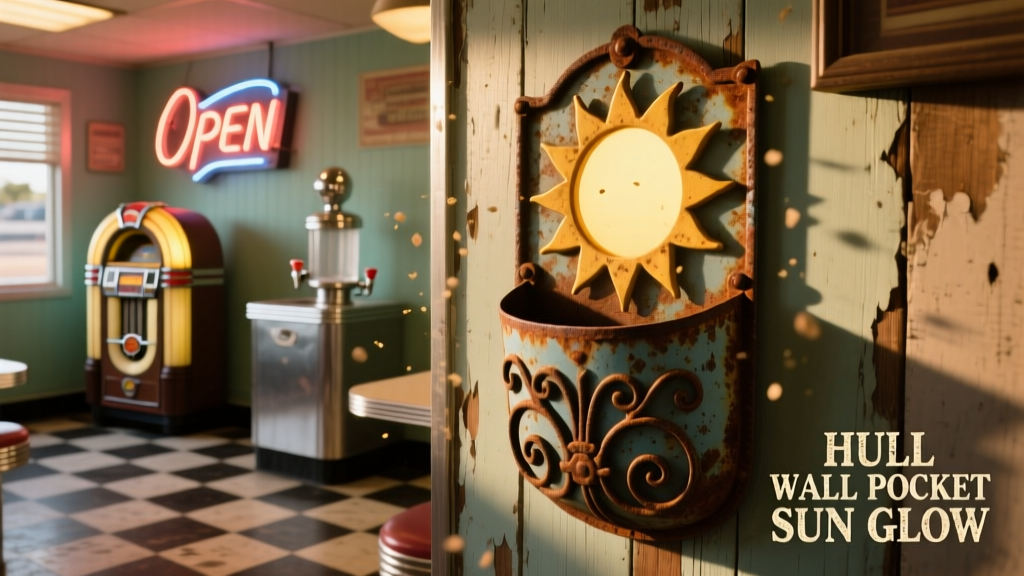
Hull Wall Pocket Sun Glow Iron Shape: A Collector’s Deep Dive into Mid-Century Radiance
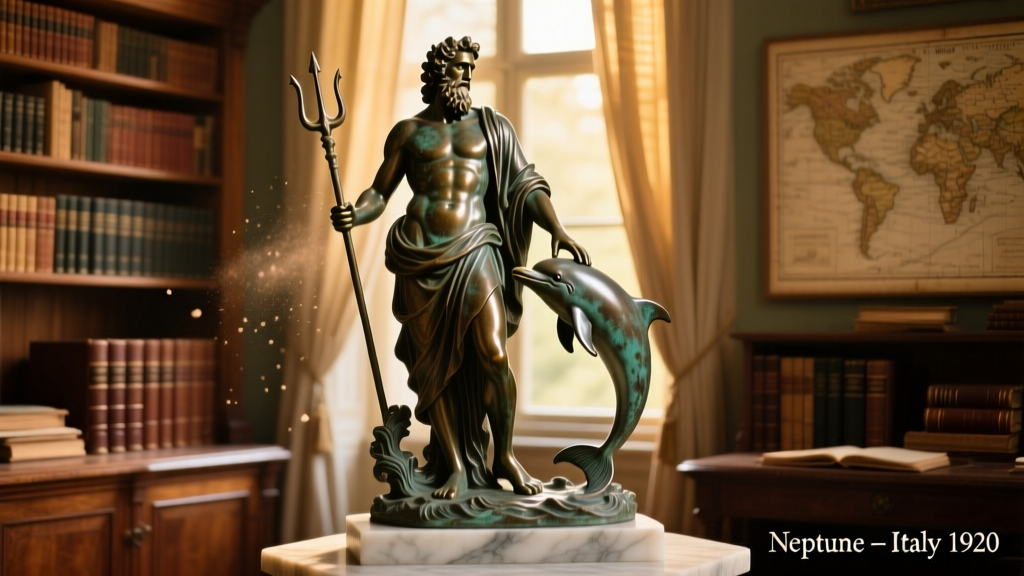
Neptune Right Foot on Dolphin: A Mid-Century Italian Bronze Figurine (13 1/8 Inches) — Provenance, Craftsmanship, and Market Value
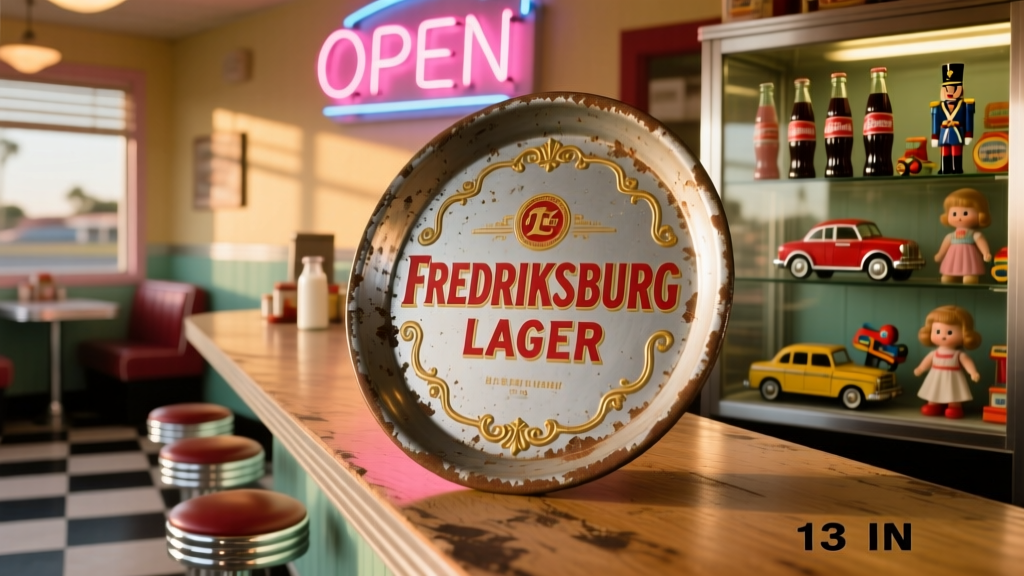
Fredicksburg Lager Advertising Tray: A Mid-Century Metal Icon — History, Identification, and Market Value