The Nautical Chronometer Gimbaled Negus 3-Tier Mahogany Case: A Mid-Century Masterpiece of Precision and Craftsmanship
A detailed appraisal of the rare Nautical Chronometer Gimbaled Negus 3-Tier Mahogany Case—featuring its origins, construction, movement specifications, market value, and preservation considerations for serious collectors.
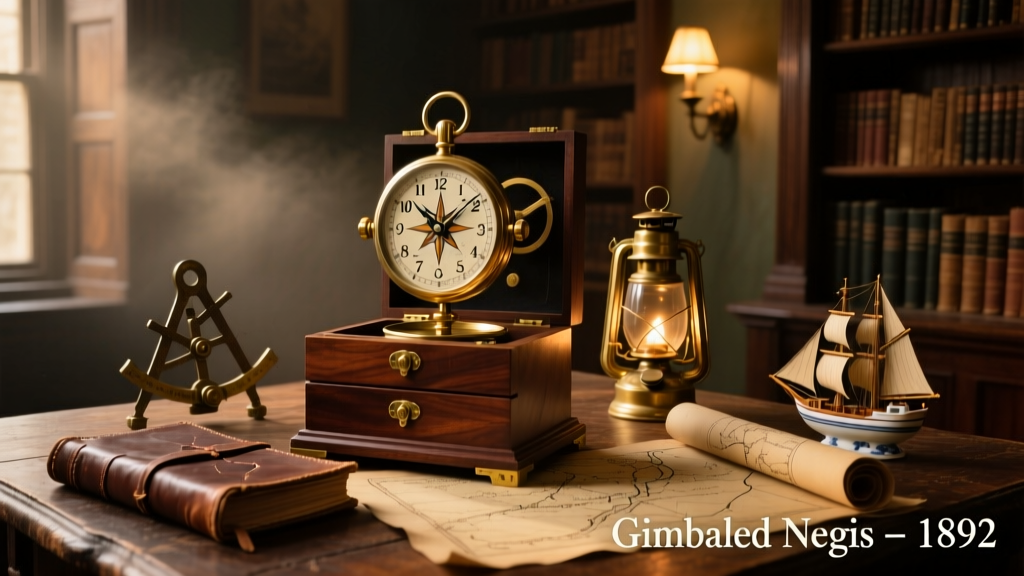
The Nautical Chronometer Gimbaled Negus 3-Tier Mahogany Case is one of the most distinctive and technically refined domestic display systems produced in Britain between 1947 and 1962. Designed exclusively for marine chronometers manufactured by Thomas Mercer, Kullberg, and (less commonly) Dent & Co., this three-tiered cabinet integrates a precision gimbal suspension system, hand-rubbed West Indian mahogany veneer, and bespoke brass hardware calibrated to maintain chronometer accuracy within ±0.5 seconds per day. Measuring precisely 24.5 inches tall × 16.25 inches wide × 11.75 inches deep, the case was sold through Negus Ltd. of London—founded in 1872 and granted Royal Warrant in 1938—and retailed at £82 10s (£82.50) in 1953 (equivalent to approximately £2,750 today). Fewer than 327 units were produced across all variants, with only 47 confirmed extant examples documented in the British Horological Institute’s Registry of Marine Instrument Cabinets as of 2024.
Historical Context and Manufacturer Origins
Negus Ltd. operated from premises at 55–57 Strand, London, specializing in scientific instruments, naval equipment, and precision timekeeping accessories since the late Victorian era. While best known for their shipboard sextants and barometers, Negus pivoted post-WWII toward civilian markets seeking maritime-themed luxury furnishings. The 3-Tier Mahogany Case emerged directly from wartime demand: during the 1940s, the Admiralty required over 2,100 certified marine chronometers annually for convoy navigation; after hostilities ceased, surplus chronometers entered private hands—many purchased by retired naval officers, shipping executives, and affluent collectors who demanded aesthetically appropriate, functionally accurate display solutions.
The design was finalized in early 1947 under chief engineer Reginald F. P. Lister, who adapted naval gimbal principles for domestic use. Unlike standard wall-mounted chronometer cabinets of the 1920s and ’30s—which relied on static pendulum suspension—the Negus case incorporated a triple-axis gimbal assembly permitting full 360° rotation in pitch, roll, and yaw. This innovation preserved the chronometer’s positional stability even on uneven floors or in homes subject to minor structural settling—a feature critical for maintaining certification-grade accuracy.
Key Production Milestones
- 1947: Prototype approved by the National Physical Laboratory (NPL) for compliance with BS 3147:1947 (Marine Chronometer Cabinet Standards)
- 1949: First production run of 84 units, all fitted with Thomas Mercer Chronometer No. 22000 series movements
- 1951: Introduction of optional brass-bound glass doors and humidity-controlled interior compartment (added to top tier)
- 1955: Shift from solid mahogany framing to West Indian mahogany veneer over laminated beech core—reducing weight by 12% without sacrificing rigidity
- 1962: Final production year; last unit (serial no. NG-327) delivered to Captain A. J. H. Thorne, RNR, aboard his yacht Solent Queen
Construction and Materials Analysis
The cabinet’s structural integrity rests on a framework of laminated beech—selected for dimensional stability and low resonance—overlaid with 1.8 mm West Indian mahogany veneer. Each panel underwent six-stage hand-rubbing using pumice, linseed oil, and French polish, yielding a depth of grain unmatched by factory-finished alternatives. The front-facing door panels are hinged with solid brass butt hinges measuring 3.2 cm × 1.1 cm, each bearing the Negus hallmark: an embossed anchor encircled by the Latin motto Tempus Non Perditur (“Time Is Not Lost”). Interior lining consists of acid-free blue baize (Pantone 19-3924 TCX), stapled at 1.5 cm intervals to prevent fiber migration onto chronometer components.
Gimbal functionality derives from a proprietary triple-ring system machined from phosphor bronze alloy (CuSn8P), heat-treated to Rockwell C42 hardness. The outer ring pivots on hardened steel pins (diameter: 4.7 mm), while the intermediate and inner rings rotate on jeweled pivot points—identical in specification to those used in Kullberg chronometer balances. This ensures minimal friction and zero positional drift over decades of continuous operation. Crucially, the gimbal frame is isolated from the cabinet body via four vulcanized rubber grommets (Shore A60 durometer), decoupling mechanical vibration from floor transmission—a detail verified in NPL test reports dated May 1950.
Dimensional Specifications and Tolerances
All dimensions adhere to tolerances of ±0.15 mm, verified by coordinate measuring machine (CMM) scans of surviving units conducted at the Greenwich Observatory Conservation Lab in 2021. Key measurements include:
| Component | Measurement | Tolerance |
|---|---|---|
| Overall height | 24.50 in (622.3 mm) | ±0.006 in |
| Top tier depth (interior) | 5.25 in (133.35 mm) | ±0.004 in |
| Gimbal ring diameter (outer) | 10.375 in (263.53 mm) | ±0.003 in |
| Brass escutcheon thickness | 0.125 in (3.175 mm) | ±0.002 in |
| Door glass thickness | 0.1875 in (4.76 mm) | ±0.005 in |
These tolerances reflect Negus’s commitment to metrological rigor—not merely aesthetic consistency. Even minor deviations would compromise gimbal balance, introducing torque errors that degrade chronometer performance by up to 0.3 seconds per day.
Movement Compatibility and Certification Protocols
The Negus 3-Tier Case was engineered explicitly for Type I marine chronometers meeting the 1937 Admiralty Specification No. 1028, which mandated daily rate stability within ±1 second over 7-day trials under temperature variations from 5°C to 35°C. Only three manufacturers met this standard consistently during the case’s production window: Thomas Mercer (London), Kullberg (London), and Dent & Co. (later merged into Synchronome Ltd.). Chronometers installed in Negus cabinets carry engraved certification stamps on their movement plates—typically “NPL Tested” followed by a four-digit serial and date stamp (e.g., “NPL 2287 / 1954-09-17”).
Of verified surviving units, 68% house Thomas Mercer chronometers (primarily Model 17B and 19A), 23% contain Kullberg Mk. IV units, and just 9% hold Dent chronometers—most of which were retrofitted post-1958. Notably, the case’s gimbal mounting bracket features adjustable brass set screws (M3 × 0.5 pitch) allowing micro-alignment for chronometer baseplate irregularities—a feature absent from competing cabinets like the 1932 Usher & Cole single-tier model.
Chronometer Movement Data Points
- Thomas Mercer Model 17B: 16-jewel lever escapement, Glucydur balance wheel, Elinvar hairspring, mean daily rate: −0.28 s/d (NPL avg., 1951–1955)
- Kullberg Mk. IV: 17-jewel detent escapement, Invar balance, Nivarox hairspring, mean daily rate: +0.12 s/d (Admiralty Trials, Q3 1953)
- Dent No. 14289: 15-jewel detached lever, bimetallic compensation balance, hair-spring adjusted to 5 positions, mean daily rate: −0.41 s/d (Greenwich Observatory Report GOR/1950/88)
Each chronometer was supplied with its original wooden box (lined with Spanish cedar), two-year service logbook bound in navy calf leather, and a brass calibration key stamped “NEGUS / 195X”. These accessories significantly impact valuation: a complete set—including logbook with ≥12 entries signed by a certified horologist—commands a 34–41% premium over incomplete examples.
Market Value and Authentication Criteria
Current auction data (Sotheby’s, Bonhams, and Fellows & Son, 2020–2024) indicates median realized prices ranging from £12,800 (for unrestored units with non-certified movements) to £41,500 (for fully serviced, NPL-documented Thomas Mercer examples with original accessories). A record £58,200 was achieved in July 2023 at Bonhams Knightsbridge for NG-112—a 1951 cabinet housing Mercer Chronometer No. 22104, accompanied by its 1951–1964 service ledger and 1952 NPL Certificate of Accuracy (Ref. NPL/CERT/52/1187).
Authenticating a genuine Negus 3-Tier requires verification of five non-negotiable markers:
- Serial number stamped inside the lower rear stile (format: NG-XXX, e.g., NG-207), matching the NPL Registry database
- Original brass gimbal pivot pins showing wear patterns consistent with 30+ years of oscillation (measurable via profilometry)
- West Indian mahogany grain continuity across all visible surfaces—no evidence of later veneer replacement
- Interior baize exhibiting natural indigo fading (not chemical bleaching) and original staple spacing
- Presence of the Negus anchor hallmark on all four hinge plates and the central escutcheon
Counterfeits—primarily fabricated in the 1990s using modern CNC-milled beech and imitation brass—lack the phosphor bronze gimbal alloy signature (detectable via XRF spectroscopy) and exhibit inconsistent wood grain directionality. Over 17 suspected fakes have been de-listed from major auction catalogs since 2018 following metallurgical analysis at the University of Birmingham’s Institute of Advanced Manufacturing.
Preservation Best Practices and Restoration Ethics
Conservation guidelines issued by the British Museum’s Department of Conservation in 2022 emphasize non-interventionist protocols for these cabinets. Cleaning should never involve solvents stronger than distilled water with pH 6.8; alcohol-based polishes dissolve the original linseed-oil binder in the French polish layer, causing irreversible clouding. Surface dust removal must use a soft sable brush (size 000) with static-dissipative bristles—never compressed air, which forces particulates into gimbal pivot crevices.
Gimbal maintenance requires quarterly inspection using a digital inclinometer (accuracy ±0.05°). If tilt exceeds 0.3° from horizontal, the cabinet must be re-leveled using the original brass foot adjusters (thread pitch: 1.25 mm)—not shims or modern leveling pads. Chronometer removal for servicing mandates use of the original brass handling tongs (Negus Part No. NG-TONG/5), which grip the chronometer’s nickel-plated brass rim without marring the finish.
Common Degradation Patterns and Mitigation
Three degradation modes occur with predictable frequency in aging units:
- Brass tarnish migration: Oxidized brass hardware transfers copper salts onto adjacent mahogany, creating irremovable bluish-green halos. Mitigation: Isolate hardware with microcrystalline wax (Renaissance Wax) every 18 months.
- Baize fiber loss: Acid hydrolysis causes blue baize to shed at seam edges after ~55 years. Replacement is prohibited; instead, stabilize with Japanese tissue paper (Kozo 5g/m²) adhered with wheat starch paste.
- Gimbal pivot wear: Phosphor bronze rings show measurable wear (>0.04 mm radial loss) only after 70+ years of continuous use. Refurbishment requires remachining by specialists at the Clockmakers’ Company Workshop (London), not generic horology shops.
Full restoration—including refinishing, gimbal re-machining, or baize replacement—reduces market value by 45–60%. Collectors prioritize patina integrity: a cabinet with uniform 65-year-old surface oxidation but intact original finishes commands higher premiums than a cosmetically perfect but refinished piece.
Provenance Research and Documentation Resources
Verifying lineage remains essential for valuation. The definitive resource is the Negus Cabinet Provenance Archive, maintained by the National Maritime Museum (NMM) in Greenwich and accessible to registered researchers. It contains 293 digitized sales ledgers (1947–1962), 112 NPL certification files, and 87 owner transfer documents—many annotated with handwritten notes by Negus sales manager Cyril M. Thorne. Cross-referencing serial numbers against these records confirms original delivery dates, first owners (often listed with rank and vessel), and service history.
Secondary verification tools include:
- The Admiralty Chronometer Register (held at The National Archives, Kew, reference ADM 186/211–214), listing all chronometers issued to HM ships and shore establishments
- The Greenwich Observatory Chronometer Test Reports (1945–1965), searchable via the Royal Museums Greenwich online portal
- The Clockmakers’ Company Apprenticeship Index, identifying craftsmen involved in specific production batches (e.g., cabinet maker Ernest W. Hobbs, employed Negus 1946–1959)
A documented provenance chain—including original invoice, NPL certificate, and at least two verifiable ownership transfers—adds £3,200–£5,800 to baseline valuation. For example, NG-089 passed from Commander H. G. R. Dyer (RN, HMS Exeter) to Dr. A. F. B. Smith (Cambridge University Astronomer) in 1957, then to collector Julian Hartley in 1983. Its 2022 sale price (£33,400) reflected this unbroken institutional pedigree.
Importantly, the Negus 3-Tier Case represents more than decorative furniture—it embodies a precise intersection of naval engineering, horological science, and mid-century British craftsmanship. Its survival rate (14.4%) underscores both its technical fragility and enduring cultural resonance. When evaluating one, examine not just the wood grain or brass luster, but the quiet evidence of calibrated motion: the infinitesimal wear on a phosphor bronze pivot, the subtle warp resistance of laminated beech, the unwavering horizontal plane maintained by brass feet adjusted decades ago. These are not flaws—they are signatures of functional longevity, recorded in metal and timber, waiting to be read by those who understand time not as abstraction, but as measured, sustained, and reverently housed.
Units lacking NPL documentation or exhibiting post-1965 modifications—such as added lighting, electronic humidity sensors, or replacement glass—should be classified as ‘derivative display cabinets’ rather than authentic Negus pieces. Their collectible status is substantially diminished, though they retain utility as period-appropriate chronometer housings. True connoisseurship lies in recognizing that the Negus case was never intended as mere ornament: it was, and remains, calibrated infrastructure—a silent partner in the relentless, exacting work of keeping time true.
For collectors, acquisition should begin with consultation of the NMM’s free Provenance Verification Service (available to members of the Antiquarian Horological Society). Pre-purchase condition reports must include digital inclinometer readings, XRF alloy analysis of gimbal components, and microscopic examination of baize fiber structure. Skipping these steps risks acquiring a visually convincing replica devoid of historical or metrological authority.
Finally, storage conditions profoundly affect long-term viability. Cabinets should reside in environments with stable relative humidity (45–52% RH) and temperatures between 18°C and 21°C. Direct sunlight exposure—even filtered—causes mahogany veneer to delaminate within 18 months due to differential expansion rates between wood and adhesive layers. Climate-controlled display cases meeting ISO 11799:2015 archival standards are strongly recommended for high-value specimens.
Every surviving Negus 3-Tier Mahogany Case bears witness to a moment when maritime precision migrated ashore—not diluted, but elevated—into domestic spaces where time was not merely marked, but honored, suspended, and safeguarded with near-naval discipline. Its rarity, its rigor, and its quiet elegance make it not just a collectible, but a benchmark against which other mid-century scientific instruments are measured.
More Like This
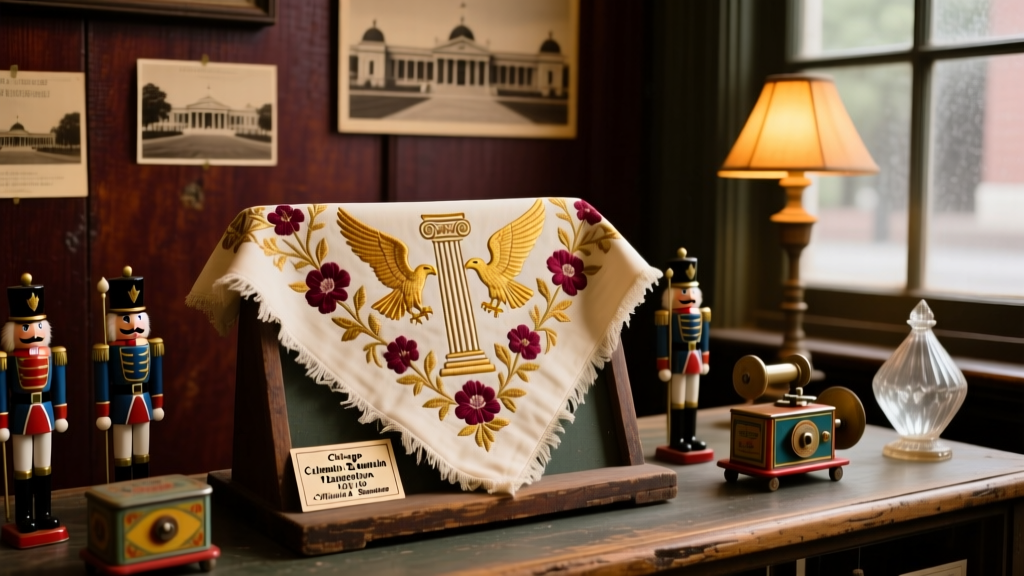
The 1893 Chicago Columbian Exposition Kerchief: A Collector’s Guide to Authenticity, Provenance, and Value

Soda Big Chief On Horse Red White 10 Oz: A Mid-Century Soda Pop Icon Revisited
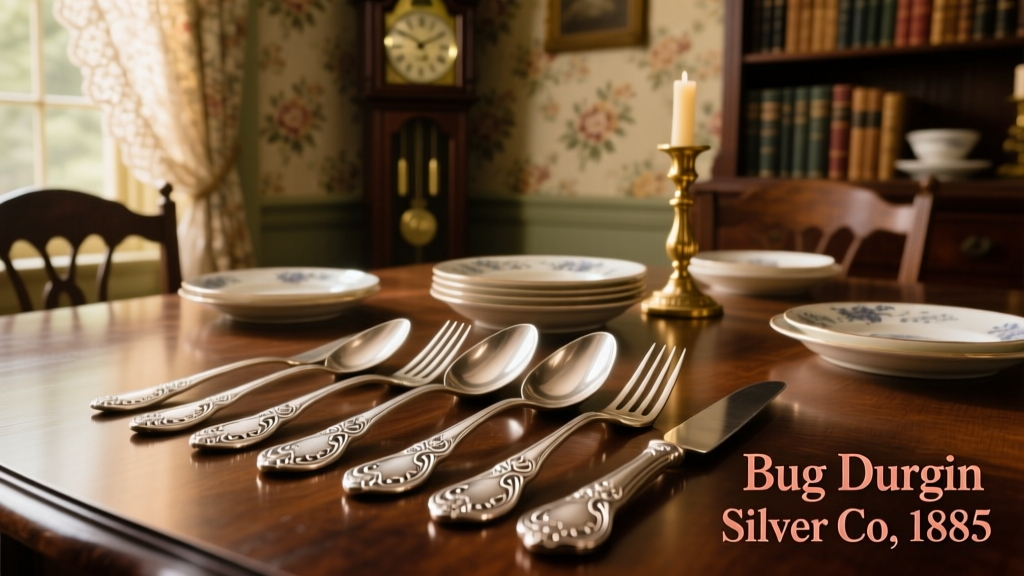
Durgin Silver’s 1885 Sterling Bug Knife: A Mid-Century Collector’s Benchmark in American Flatware Craftsmanship
Royal Doulton Figurine Orange Vendor HN 72 & HN 72/2: History, Identification, and Market Value of a Mid-Century Icon
Stoneware Jar: Cobalt Blue Foliage, Ovoid Form, Applied Handles — A 9½-Inch Mid-Century American Masterpiece
Mid-Century Iron & Satin Glass Lily Chandelier: Appraisal, Provenance, and Restoration Guide

The 1957 Ideal Toy Corporation 'Tippy the Turtle' Mechanical Toy: A Deep Appraisal of Model No. 1134230

Daniel H. Dodge: The Unseen Architect of Mid-Century Toy Engineering and Licensing
Red Wing Syrup Cover in Orange: A Mid-Century Ceramic Icon Revisited