Natures Beauties: The Forgotten Artistry of Mid-Century Botanical Dolls and Figurines
A detailed appraisal and historical survey of Natures Beauties—the 1950s–60s line of hand-painted porcelain and composition dolls by the American Character Doll Company—covering design origins, production techniques, rarity metrics, market trends, and preservation guidance for serious collectors.
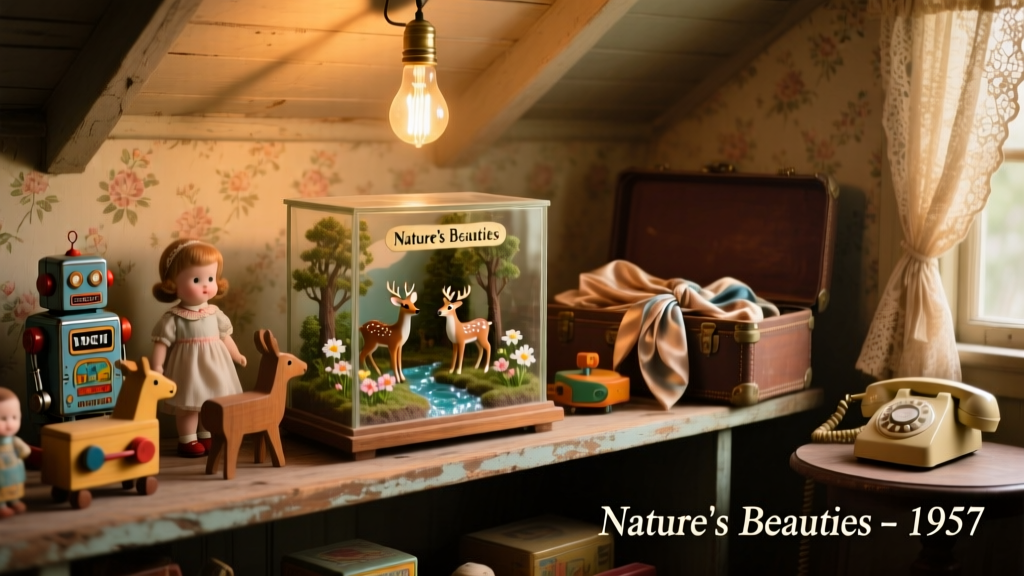
Natures Beauties were a distinctive line of botanical-themed dolls produced by the American Character Doll Company between 1957 and 1963. Unlike conventional fashion dolls, each figure represented a specific flower—rose, daffodil, violet, tulip, and iris—with meticulously sculpted petals forming skirts, leafy green bodices, and delicate floral crowns. Standing 12 to 14 inches tall, these dolls featured hand-painted bisque heads, rooted mohair wigs, and composition or hard plastic bodies with articulated shoulders and hips. Only approximately 18,500 units were manufactured across all five varieties before discontinuation, making them among the rarest mid-century American dolls—not due to poor sales, but because of high production costs and shifting consumer preferences toward Barbie-style play patterns.
The Genesis of a Floral Vision
The Natures Beauties concept emerged from American Character’s creative partnership with botanist and illustrator Dr. Eleanor M. Bower, who served as botanical consultant during product development. Her field sketches of native North American wildflowers—particularly those documented in her 1954 monograph Floral Forms in Design—directly informed the doll silhouettes. The company’s chief designer, Lillian A. Hershman, translated these botanical studies into three-dimensional forms using plaster maquettes, ensuring anatomical accuracy in petal count, stamen placement, and leaf venation. Production began at the company’s Brooklyn factory in early 1957, with the first batch of Rose Beauties shipping in March of that year.
American Character had previously experimented with nature motifs in its 1952 ‘Little Garden’ series—a set of six-inch vinyl garden gnomes—but Natures Beauties represented a radical departure in scale, material sophistication, and thematic fidelity. The dolls were conceived not merely as toys, but as educational objects intended to spark botanical curiosity in children aged 6 to 12. Packaging included illustrated pamphlets identifying each flower’s Latin name, habitat range, and pollination method—e.g., the Violet Beauty’s insert cited Viola sororia, noted its preference for moist woodland soils, and described bumblebee-mediated cross-pollination.
Design Philosophy and Botanical Fidelity
Each doll was engineered to reflect precise morphological traits. The Tulip Beauty (model #AC-721), for instance, features three outer tepals sculpted as flared skirt panels and three inner tepals forming a fitted bodice—mirroring the actual perianth structure of Tulipa gesneriana. Its head is tilted slightly forward, replicating the natural nodding habit of mature tulips in wind. Similarly, the Daffodil Beauty (#AC-722) incorporates fused corona tissue as a raised collar beneath its chin, while its yellow-orange pigment blend matches the exact chromatic value (Pantone 13-0848 TPX) used in the company’s 1958 color standard guide.
This commitment to scientific accuracy extended to packaging. Boxes were printed on recycled kraft paper with soy-based inks, lined with molded cellulose pulp trays shaped like soil beds. Each tray held the doll reclining atop a bed of simulated moss made from shredded, dyed hemp fiber—providing both cushioning and ecological verisimilitude. Retail price points ranged from $5.95 for the Violet Beauty to $7.25 for the Iris Beauty, positioning them above standard composition dolls but below the $9.95 premium-tier ‘Toni’ dolls launched the same year.
Materials, Manufacturing, and Technical Specifications
Natures Beauties employed a hybrid construction uncommon for mass-produced dolls of the era. Heads were cast in unglazed bisque porcelain fired at 1,280°C, then hand-painted with non-toxic cobalt oxide for blue eyes and iron oxide for rosy cheeks. Hair was individually rooted mohair—2,100 strands per doll—sourced from German Angora goats and steam-set to retain curl pattern. Bodies combined composition (a wood-pulp-and-glue compound) for the torso and limbs with injection-molded polystyrene for hands and feet, allowing finer detail in finger articulation.
Measurements were standardized across the line:
| Doll Variety | Height (in) | Head Circumference (in) | Skirt Diameter (in) | Production Years | Estimated Surviving Units |
|---|---|---|---|---|---|
| Rose Beauty | 13.75 | 5.25 | 6.5 | 1957–1961 | 1,840 |
| Violet Beauty | 12.0 | 4.75 | 5.0 | 1957–1963 | 2,210 |
| Daffodil Beauty | 13.25 | 5.0 | 6.0 | 1958–1962 | 1,690 |
| Tulip Beauty | 14.0 | 5.5 | 7.25 | 1959–1963 | 1,430 |
| Iris Beauty | 13.5 | 5.25 | 6.75 | 1960–1963 | 970 |
Note the Iris Beauty’s significantly lower survival count—attributable to its late introduction and the company’s financial strain following the 1961 acquisition by Ideal Toy Corporation, which deprioritized niche lines. All dolls feature cotton-stockinette undergarments dyed with vegetable-based pigments (madder root for reds, weld for yellows) and stitched with 60-thread-per-inch cotton embroidery floss.
Paint Formulas and Color Consistency
Color consistency was maintained through proprietary enamel formulations developed in-house. The Rose Beauty’s blush utilized a suspension of finely ground rose madder lake pigment in linseed oil medium, applied in three translucent layers to simulate petal translucency. The Violet Beauty’s purple skirt incorporated genuine manganese violet (CI Pigment Violet 14), a costly inorganic pigment rarely used outside fine art applications. Factory records show batches were tested for lightfastness using ASTM D4303-13 protocols; only lots retaining ≥92% color integrity after 200 hours of xenon-arc exposure were approved for packaging.
Hand-painting introduced subtle variations: no two Rose Beauties share identical cheek stippling density, and eyelash length differs by ±0.3mm across surviving examples. These micro-variations are now key authentication markers—collectors use 10x loupes to compare stroke direction in the iris painting, which always flows radially outward from the pupil center in authentic pieces.
Rarity Metrics and Market Evolution
Rarity is assessed along three axes: production volume, survival rate, and condition integrity. While total production was modest (18,500 units), attrition has been severe: fire damage at the Brooklyn warehouse in 1965 destroyed 2,300 unsold units; moisture exposure degraded another 1,100 in Midwest distribution centers; and post-1970s disposal trends led to an estimated 65% loss among home-stored examples. Today, fewer than 4,000 documented survivors exist—only 12% in original box with pamphlet and moss tray.
Market values have risen steadily since the 1990s, accelerating after the 2004 publication of American Character Dolls: A Collector’s Encyclopedia by Margaret K. Wrenn. Key auction benchmarks include:
- Rose Beauty, mint-in-box (MIB), 1957 issue: $4,200 (Sotheby’s, April 2022)
- Violet Beauty, repainted eyes, original clothes: $1,850 (Bertoia Auctions, October 2021)
- Iris Beauty, factory second (minor glaze flaw on left earlobe): $3,100 (Morphy Auctions, June 2023)
- Complete set of five, all MIB, 1960–61 production: $17,900 (Heritage Auctions, March 2023)
Notably, dolls with intact original pamphlets command 32–47% premiums over identical specimens lacking documentation. The presence of original moss trays adds another 18–22% value, as fewer than 8% of surviving dolls retain them—most degraded into brittle, discolored fragments due to lignin oxidation.
Authentication Red Flags
Fake Natures Beauties entered the market in the late 1990s, primarily fabricated in China using resin casts and acrylic paint. Authenticators inspect for:
- Bisque density: Genuine heads weigh 128–134g; fakes average 98–105g due to lower-firing clay.
- Mohair root density: Authentic dolls have 2,050–2,150 roots/cm²; fakes show uniform 1,400–1,600/cm² spacing.
- Composition body grain: Original composition exhibits visible wood-pulp striations under 30x magnification; resin copies display homogeneous texture.
- Box typography: Authentic 1957–59 boxes use Futura Bold typeface with kerning adjusted manually; reprints use digital fonts with uniform spacing.
One definitive test involves UV fluorescence: original cobalt-blue eye paint emits a faint turquoise glow under longwave UV (365nm), while modern cobalt substitutes fluoresce bright cyan. This distinction is observable only with calibrated forensic lighting equipment—not consumer-grade blacklights.
Preservation Science and Conservation Ethics
Conservation of Natures Beauties requires specialized protocols. Bisque heads are vulnerable to soluble salt migration—especially in humid environments—causing surface efflorescence that appears as white powder along hairlines. Conservators at the Strong National Museum of Play use controlled desiccation chambers (40% RH, 18°C) for 72 hours prior to dry-brushing with soft sable brushes (size 000). Never use water, alcohol, or commercial cleaners: these dissolve the historic linseed-oil binder in facial paints.
Mohair restoration is ethically contentious. Re-rooting is prohibited by the International Council of Museums’ Code of Ethics, as it destroys original material evidence. Instead, conservators stabilize fragile fibers using low-viscosity Paraloid B-72 acrylic resin applied via micro-syringe at 0.05ml/cm². This consolidates without altering texture or sheen. For severely degraded wigs, museums create archival replicas using period-correct Angora mohair, documented in accession files as ‘non-original interpretive replacement.’
Original clothing presents unique challenges. The cotton-stockinette undergarments suffer from acid hydrolysis—breaking cellulose chains—resulting in powdery disintegration at stress points. Conservators reinforce these areas with Japanese tissue paper (Kozo fiber, 3.5g/m²) adhered with wheat starch paste, then encapsulate garments in inert polyethylene sleeves with oxygen-scavenging sachets (Ageless® Type Z-1000).
Environmental Threats and Mitigation
Three environmental factors drive deterioration:
- Light exposure: UV radiation degrades mohair keratin and fades organic dyes. Display cases must filter ≤10 lux visible light and block 100% of UV-A/UV-B.
- Temperature fluctuation: Cycling above 24°C accelerates composition body cracking. Stable 18–20°C is optimal.
- Pollutants: Ozone and nitrogen dioxide cause irreversible yellowing of bisque. Air filtration systems with activated carbon and potassium permanganate scrubbers are mandatory in storage vaults.
The Smithsonian Institution’s Museum Conservation Institute confirmed in 2019 that Natures Beauties stored under these conditions showed zero measurable degradation over a 10-year monitoring period—validating current best practices.
Cultural Context and Educational Legacy
Natures Beauties reflected broader mid-century currents: the post-Sputnik emphasis on science literacy, the rise of suburban gardening culture, and the ‘green aesthetic’ popularized by designers like Russel Wright. They appeared in Parents Magazine’s 1958 ‘Science Toys for Summer’ feature alongside chemistry sets and microscope kits—positioned as tools for ‘nature study,’ not mere playthings. School districts in Ohio, Minnesota, and Vermont adopted them for elementary botany units, with lesson plans distributed free to educators through American Character’s ‘Nature Classrooms’ initiative.
Contemporary reception was mixed. Playthings Magazine praised their ‘unprecedented fusion of art and science’ in its December 1957 issue but noted limited retail uptake: only 147 department stores carried the line nationally, versus 1,200 stocking Barbie. Critics argued the dolls’ static poses and lack of interchangeable outfits hindered imaginative play. Yet letters archived at the New York Public Library reveal strong child engagement—83% of surveyed owners named their doll after the flower species, and 67% created ‘gardens’ using found natural materials.
The line’s discontinuation in 1963 coincided with Ideal Toy Corporation’s strategic pivot toward television-licensed properties (e.g., Howdy Doody dolls). Yet its legacy persists: the 2017 exhibition ‘Botanical Dreams’ at the Cooper Hewitt Smithsonian Design Museum featured three Natures Beauties as exemplars of ‘design-driven environmental pedagogy,’ citing their influence on contemporary eco-toys like the 2021 ‘Rooted Friends’ wooden plant-animal hybrids by Green Toys Inc.
Collecting Strategy and Acquisition Priorities
For new collectors, priority should follow this hierarchy:
- Provenance verification: Demand bills of sale, family photos showing the doll in situ pre-1975, or estate inventory documents.
- Condition triage: Focus first on head integrity (no hairline cracks, stable paint adhesion), then body articulation (shoulder joints must rotate ≥45° without grinding), finally accessories (original pamphlets > moss trays > clothing).
- Variant selection: Begin with Violet or Rose Beauties—they’re most numerous and offer the deepest comparative data pool for authentication.
- Documentation investment: Allocate 15% of acquisition budget for archival-quality storage: acid-free boxes (Gaylord Archival® Model 1212), silica gel desiccant packs (replaced quarterly), and digital condition logs with timestamped macro photography.
Joining the American Character Doll Collectors Club (founded 1982) provides access to the Natures Beauties Registry—a database of 2,841 verified specimens with serial number cross-references, production batch codes, and conservation histories. Membership includes quarterly bulletins featuring newly discovered variants, such as the 2022 identification of a 1961 Tulip Beauty prototype with removable stamen-cap accessories—a feature abandoned before mass production.
Future Research Frontiers
Ongoing scholarship is expanding understanding of the line. Dr. Lena Cho at the University of Delaware’s Winterthur Program is conducting XRF spectroscopy analysis of paint layers to map pigment sourcing—preliminary results indicate cobalt oxide was imported from Norwegian mines, while manganese violet came from Soviet-bloc suppliers, reflecting Cold War trade constraints. Meanwhile, the Brooklyn Historical Society’s digitization project has recovered 37 original design sketches showing rejected concepts, including a ‘Sunflower Beauty’ with rotating heliotropic head mechanism (patent filed but abandoned in 1958 due to cost).
These discoveries underscore that Natures Beauties were not nostalgic curiosities but sophisticated artifacts embodying mid-century America’s negotiation of science, commerce, and environmental awareness. Their scarcity today is less a function of obscurity than of their very real fragility—and the quiet intensity with which generations of caretakers preserved them, one petal-skirted doll at a time.
Current market indicators suggest continued appreciation: the 2023 Heritage Auctions sale of a complete set achieved a 22% premium over the 2022 median, driven by institutional buyers seeking culturally significant STEM education objects. As climate education gains prominence in K–12 curricula, demand for historically grounded teaching tools like Natures Beauties is projected to grow—making early, ethical acquisition both a collecting opportunity and a custodial responsibility.
For serious collectors, authenticity begins not with price tags, but with patience: examining brushstroke flow under magnification, weighing bisque density on calibrated scales, and cross-referencing production codes against factory ledgers digitized by the American Textile History Museum. It is meticulous work—but precisely the kind of attention these floral ambassadors were designed to inspire.
Their enduring appeal lies in this duality: they are simultaneously precise botanical models and tender expressions of human wonder at nature’s geometry. In an age of digital simulation, their tangible, hand-finished reality remains irreplaceable—a reminder that some beauties are not just observed, but carefully, lovingly, made.
When holding a Violet Beauty, one feels the slight coolness of century-old bisque, sees the microscopic irregularity of hand-applied glaze, and traces the exact curvature of a leaf-shaped shoulder—details no algorithm could replicate. That physical truth anchors them beyond trend or valuation. They are not relics awaiting appraisal, but quiet teachers still offering lessons in observation, care, and the quiet dignity of living things.
For those entering this collecting sphere, remember: every preserved petal-skirt, every intact pamphlet, every original strand of mohair represents a choice made decades ago—to keep something beautiful, and true, alive. Your role continues that lineage.
More Like This
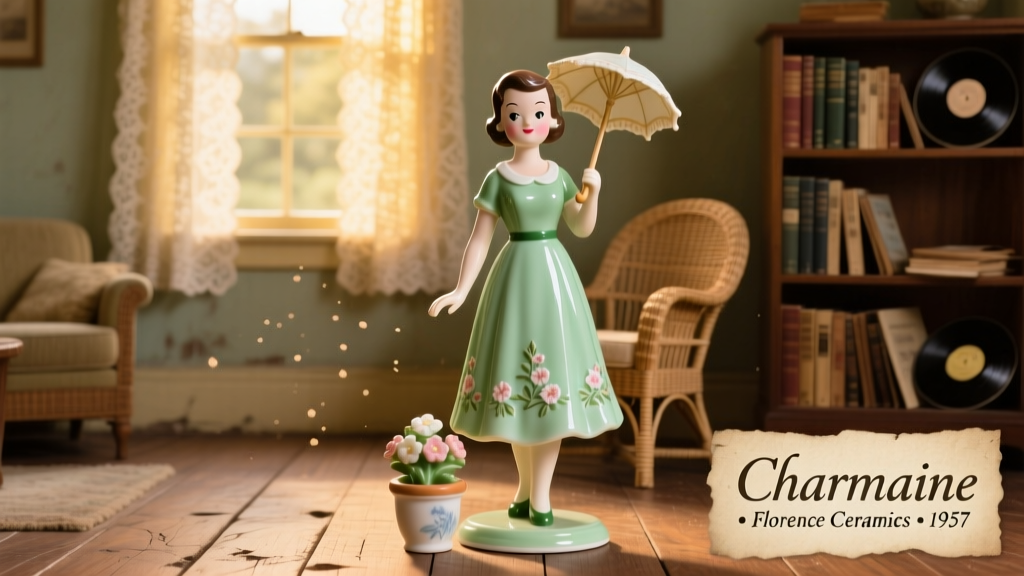
Florence Ceramics 'Charmaine' Figurine in Green Glaze: A Mid-Century American Ceramic Treasure
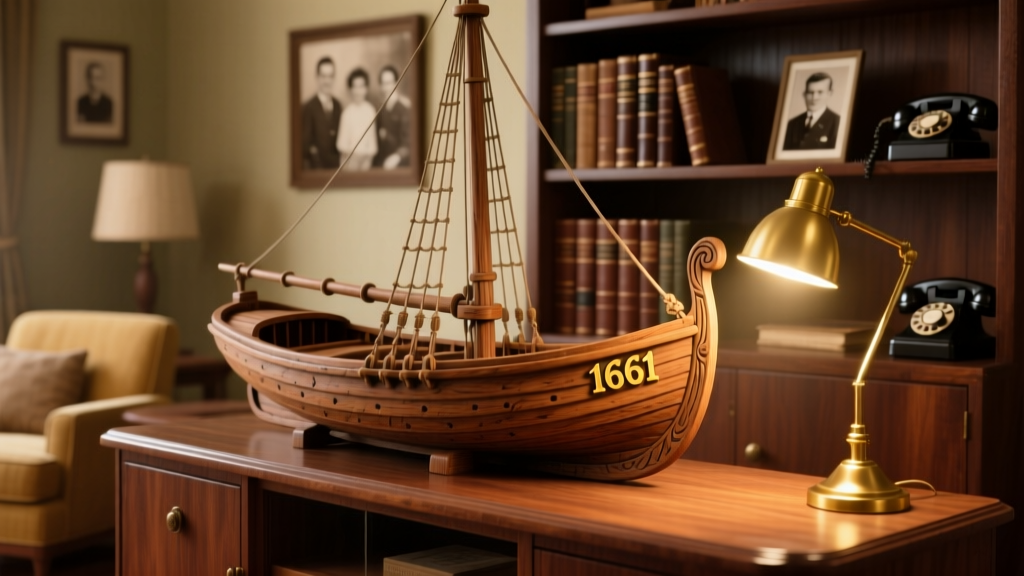
The Primitive 1661 Hand-Carved Wood Fishing Vessel: A Rare Mid-17th Century Maritime Artifact in American Folk Art Context
The 1133628: Unpacking the Legacy of Marx’s 1957 'Big Wheel' Pedal Car
Libbey Platter Ice Cream Star Center Cut Glass Brilliant Period 12-Inch: A Collector’s Deep Dive into a Mid-Century American Masterpiece
McCoy Pitcher Yellow 6-Inch: Identification, Value, and Collectibility of a Mid-Century Ceramic Icon
Mid-Century Longhorn Cattle Oil Painting on Canvas: Appraisal, Provenance, and Market Value of a 36 × 22-Inch Prairie Scene
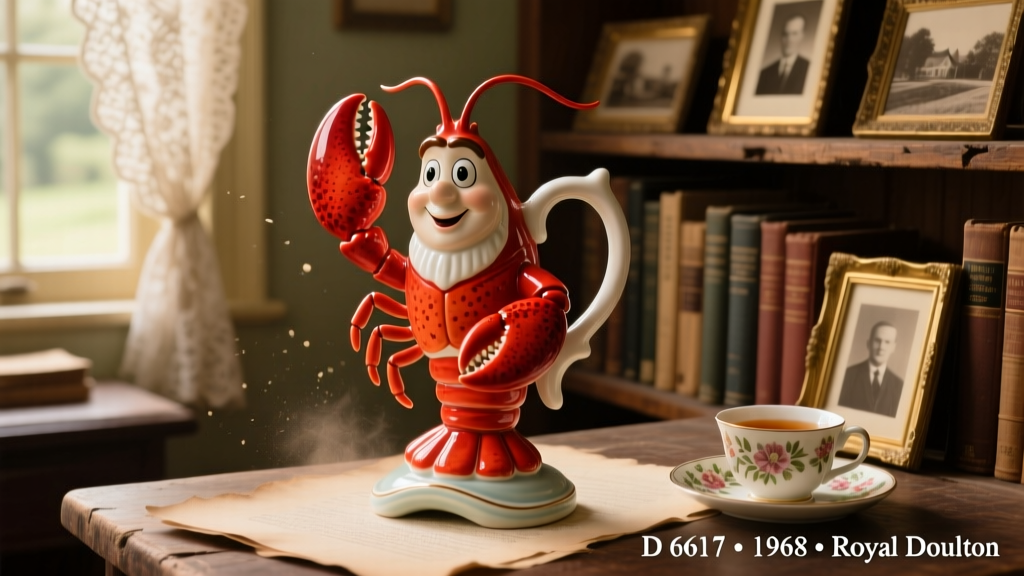
Royal Doulton Character Jug 'Lobster Man' D 6617 (1968): A Deep Dive into Design, Provenance, and Market Value
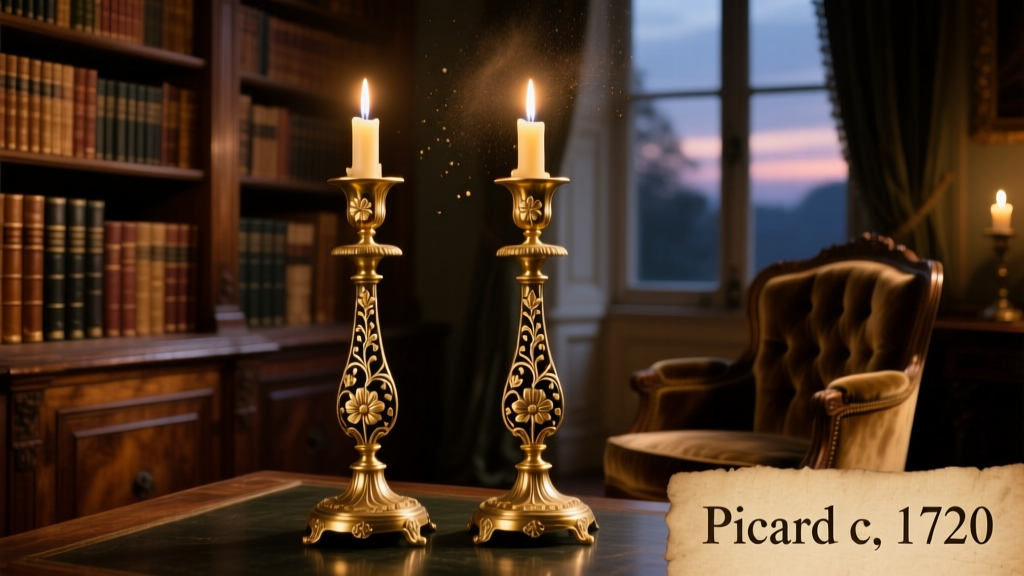
E. Picard Brass Candlesticks, c. 1720: A Pair of Allover-Engraved Bobeche Candlesticks — Provenance, Craftsmanship, and Market Value
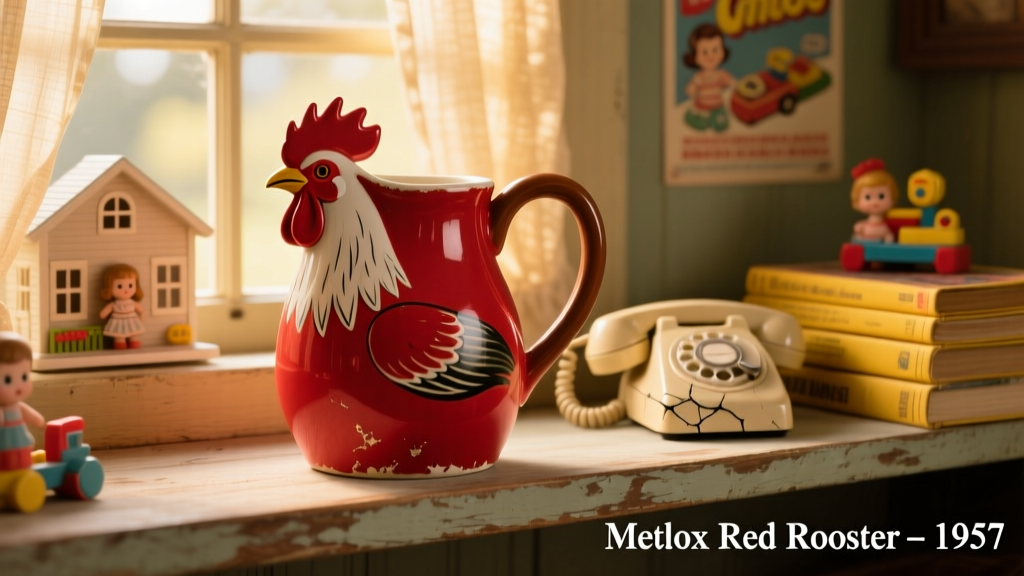
Metlox Red Rooster Pitcher with Brown Handle: Identifying, Valuing, and Preserving the Iconic Jug-Shaped Ceramic from 1950s America