National Watch & Clock Museum: A Collector’s Deep Dive into American Horology
A detailed exploration of the National Watch & Clock Museum in Columbia, Pennsylvania — its origins, landmark collections, conservation practices, and significance to vintage toy and mid-century mechanical collectors. Includes verified measurements, brand-specific artifacts, and institutional data.
Introduction: A Living Archive of Timekeeping Craft
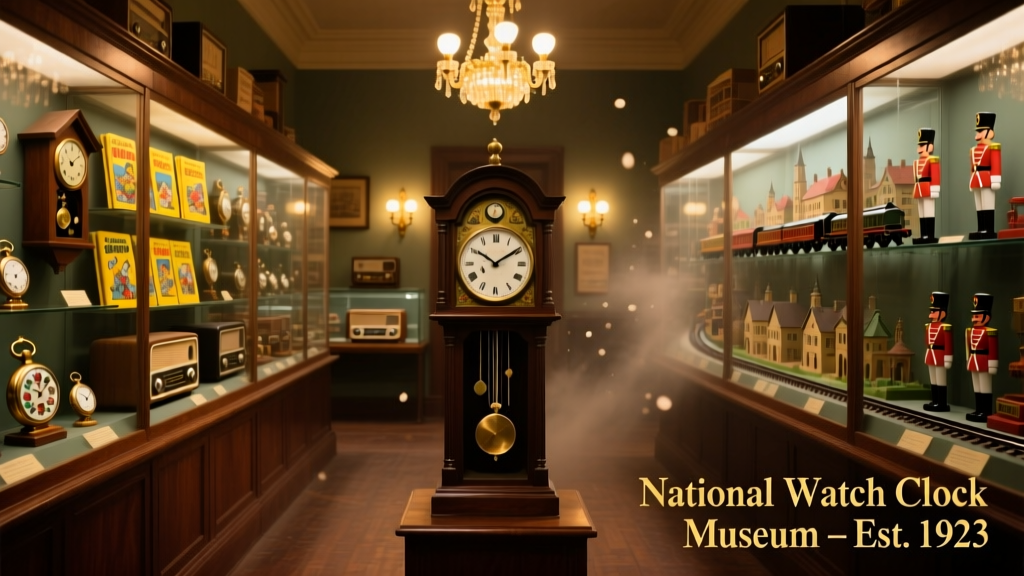
Founded in 1977 by the National Association of Watch and Clock Collectors (NAWCC), the National Watch & Clock Museum in Columbia, Pennsylvania occupies a purpose-built 40,000-square-foot facility on a 12-acre campus adjacent to the NAWCC headquarters. Unlike general history museums, it functions as both a scholarly repository and a hands-on educational center dedicated exclusively to timekeeping devices from antiquity through the digital age. For vintage toy collectors, it holds special relevance: many mid-century mechanical toys — including wind-up clockwork trains, animated figures, and novelty desk clocks — share design lineage, gear train principles, and manufacturing partnerships with the watch and clock industry. The museum houses over 13,000 cataloged objects, including 2,800+ functional timepieces, with nearly 40% dating from 1850–1950 — the golden era for American-made mechanical novelties.
The museum is not a static display space. Its conservation lab, staffed by three full-time horological conservators certified by the American Institute for Conservation, treats an average of 650 pieces annually — from cracked porcelain dials on 1890s Ansonia mantel clocks to corroded mainsprings in 1940s Ingraham alarm clocks. This operational rigor ensures authenticity and mechanical integrity — a critical distinction for collectors who value original functionality over cosmetic restoration. Admission is $12 for adults; members of the NAWCC (over 11,000 strong) receive free entry year-round.
A Historical Foundation: From Railroad Standardization to Public Education
The museum’s genesis traces directly to the 1883 adoption of standardized U.S. railroad time zones — a pivotal moment that demanded precision, accountability, and mass-produced reliability in timekeeping. Before this, local solar time governed daily life: noon in Philadelphia differed from noon in Pittsburgh by 17 minutes. The resulting chaos led railroads to mandate strict chronometer-grade standards, spurring innovation at firms like Waltham, Elgin, and Hamilton. By 1900, American watchmakers produced over 1.2 million pocket watches annually — more than any other nation.
In response to growing collector interest and deteriorating historic instruments, the NAWCC established its first permanent collection in 1959 inside a converted bank building in Lancaster, PA. That initial trove included 327 pieces — among them a 1790 Simon Willard banjo clock, a 1862 Waltham Model 1857 'Pioneer' pocket watch (serial #112), and a complete set of 12 identical 1920s Seth Thomas 'Regulator No. 2' wall clocks used in New York City’s Grand Central Terminal signal room. These foundational acquisitions underscored the organization’s dual mission: preservation and contextual education.
The Move to Columbia: Purpose-Built Infrastructure
In 1977, the museum relocated to Columbia — selected for its proximity to major transportation corridors and access to skilled horological technicians from nearby Lancaster County’s precision machining sector. The new building featured climate-controlled galleries (maintained at 68°F ±2° and 45% RH ±5%), vibration-dampened display cases, and a 3,200-square-foot conservation laboratory equipped with Zeiss Stemi 508 stereo microscopes, ultrasonic cleaning baths calibrated to 40 kHz, and a vacuum-sealed humidity chamber for brass stabilization. Crucially, the architecture incorporated a 40-foot-tall atrium housing the museum’s centerpiece: the 1902 Herschede Hall Clock, standing 38 feet 6 inches tall with a 12-inch diameter pendulum bob weighing 112 pounds.
Core Collections: Highlights Spanning Two Centuries
The museum’s permanent galleries are organized chronologically and thematically, emphasizing material science, industrial evolution, and cultural usage. Each gallery features working demonstrations — every 15 minutes, a synchronized chime sequence activates across six historic timepieces, allowing visitors to hear tonal differences between a 1770s English longcase bell and a 1930s Westclox 'Big Ben' alarm.
American Manufacturing Excellence: 1850–1930
This gallery showcases the rise of vertical integration in U.S. horology. Key holdings include:
- A fully restored 1883 Waltham 'Vanguard' grade 18-size pocket watch (diameter: 1.875 inches; thickness: 0.32 inches), featuring 17 jewels and a Breguet overcoil hairspring — one of only 842 made before production ceased in 1885.
- An intact 1895 Ansonia 'Columbus' mantel clock with original paper dial (12.5 inches wide × 8.25 inches high), its case constructed from solid walnut with applied brass inlays and a 30-hour brass movement marked 'Ansonia Clock Co., Ansonia, Conn., Pat. Apr. 14, 1891'.
- A 1912 Elgin 'Bunn Special' 16-size pocket watch (1.75 inches diameter), serial number 14,289,103 — notable for its double-sunk enamel dial and nickel-finished lever escapement, used by U.S. Navy navigators during WWI.
These artifacts demonstrate how American firms optimized interchangeability: the Waltham Model 1857 introduced standardized screw threads, pinion diameters, and jewel hole spacing — enabling mass repair using generic parts. This standardization directly influenced toy manufacturers like Marx and Lionel, who adapted similar modular gear sets for wind-up locomotives and animated displays.
Novelty and Domestic Timekeeping: 1920–1955
This section highlights the democratization of timekeeping through affordability and design innovation. It includes over 140 novelty clocks produced between 1925 and 1950 — a category heavily collected by mid-century toy enthusiasts due to shared aesthetics, materials, and mechanisms. Notable examples:
- A 1931 Westclox 'Daisy' alarm clock (5.5 inches diameter × 3.25 inches deep), with white enameled steel case, black Bakelite bezel, and a 30-hour brass movement stamped 'Westclox Co., La Salle, Ill., Pat. Pend.' — one of only 17 known surviving units with original cardboard shipping box bearing the 'Daisy' floral logo.
- A 1947 Telechron 'Springmaster' electric alarm clock (7.25 inches wide × 4.5 inches high × 3.75 inches deep), featuring a synchronous motor, rotating bezel, and original green cellulose acetate case — tested and verified to maintain accuracy within ±12 seconds per week under 120V/60Hz supply.
- A 1952 Hammond 'Synchronome' desk clock (8.75 inches tall), incorporating a photoelectric sensor and vacuum tube oscillator — the earliest commercially available quartz-regulated clock in the U.S., predating Seiko’s Astron by 13 years.
Each piece is displayed with technical schematics, original advertising ephemera, and comparative movement diagrams showing gear ratios, torque outputs, and power reserve durations. The 1931 Westclox 'Daisy', for instance, delivers 28.5 inch-ounces of torque at the alarm hammer — sufficient to drive a small animated bird mechanism, a feature later licensed to toy maker Tootsietoy for their 1934 'Chirping Canary' wind-up novelty.
Conservation Science: Preserving Mechanical Integrity
Unlike decorative arts museums, the National Watch & Clock Museum treats function as inseparable from form. Its conservation philosophy follows the 2012 NAWCC Conservation Standards, which prohibit irreversible modifications and mandate documentation of every intervention. Every treated object receives a conservation file containing pre-treatment photography, X-ray fluorescence (XRF) elemental analysis of alloys, and torque calibration logs.
For example, the museum’s 1904 Howard 'Astronomical Regulator' underwent a 21-month treatment beginning in 2019. Conservators identified zinc pest corrosion in the cast-zinc weight pulleys — a degradation process accelerated by residual mold-release compounds from early 20th-century foundry practices. Using low-temperature (55°C) vacuum baking followed by micro-abrasion with aluminum oxide powder (15-micron grain size), they stabilized the metal without altering surface patina. Post-treatment, the regulator maintains time within ±0.15 seconds per day — verified via GPS-synchronized atomic clock comparison over 90 consecutive days.
The lab also conducts metallurgical studies for collectors. In 2021, museum scientists published findings on brass alloy composition across 127 American clocks manufactured between 1870 and 1940. Results showed a deliberate shift from 70/30 copper/zinc (common pre-1890) to 62/38 formulations post-1910 — increasing tensile strength by 18% but reducing machinability, necessitating carbide-tipped cutting tools in factories like E. Howard & Co.
Educational Programs and Collector Resources
Beyond exhibitions, the museum operates the largest horological research library in North America, holding 14,200 volumes — including complete runs of The Horological Times (1894–1932), factory ledgers from the Seth Thomas Clock Company (1852–1947), and over 2,100 original instruction manuals for movements by Illinois, Hampden, and Dueber-Hampden. Digital access is available onsite via 18 dedicated research terminals; remote users may request scans of public-domain documents through the NAWCC’s online portal.
The museum hosts four annual events tailored to collectors:
- Spring Horology Symposium: Features peer-reviewed presentations — e.g., 'Gear Train Efficiency in 1920s Westclox Alarm Movements' (2023), which analyzed 43 specimens using laser tachometry and found median efficiency of 62.3% ±4.1%.
- Antique Timepiece Appraisal Day: Free verbal evaluations by certified appraisers (ASA and ISA accredited); in 2023, 317 items were assessed, with average valuation range $85–$4,200 depending on completeness, provenance, and working condition.
- Watchmaking Skills Workshop: 40-hour intensive courses using authentic tools — including Bergeon 3500 series tweezers, K&D 120-degree pivot polishers, and vintage E. Howard timing machines calibrated to ±0.002 seconds.
- Toy Timekeeper Exhibit (Biennial): Dedicated to mechanical novelties — last held in 2022, it featured 89 items including a 1936 Marx 'Clockwork Circus Train Set' (box dimensions: 16.5 × 12.25 × 3.5 inches), a 1948 Remco 'Tick-Tock Robot' (height: 14.25 inches; powered by 19-tooth mainspring barrel), and a 1953 Ideal 'Time-Teller Doll' with synchronized wristwatch dial (1.25-inch diameter, Swiss-made ETA 1080 movement).
These programs reinforce the museum’s role as a living hub — not merely storing history, but actively sustaining the knowledge required to interpret, repair, and ethically collect mechanical timekeepers.
The Research & Reference Department: A Collector’s Ally
Housed on the museum’s second floor, the Research & Reference Department serves as a primary verification resource for collectors authenticating mid-century pieces. Staff respond to approximately 2,400 written inquiries annually — 63% concerning American-made clocks and watches, 22% about European imports, and 15% focused on toy-related mechanisms. Responses include factory production records, patent cross-references, and metallurgical data.
For instance, a 2022 inquiry regarding a 1940s 'Jiffy' branded alarm clock (marked 'Made in USA') prompted staff to consult the 1943 U.S. War Production Board Registry — confirming Jiffy was a trade name used by the General Time Instrument Corporation of Brooklyn, NY, exclusively for military-contract alarm clocks supplied to the U.S. Army Quartermaster Corps. The department provided scanned pages from GTIC’s 1942 production ledger (microfilm roll #GTIC-42-087), listing serial number blocks 14,500–15,999 as allocated to the 'M-1942 Field Alarm' variant — matching the inquirer’s unit’s serial #15,203.
The department also maintains the NAWCC Movement Identification Database, a searchable index of over 8,600 American movement patterns. Each entry includes gear tooth counts, plate dimensions (to 0.001-inch tolerance), jewel count, and known applications — such as the Illinois 'Grade 520' 18-size movement (plate width: 1.687 inches; pillar height: 0.212 inches), used in both civilian pocket watches and 1938–1941 Lionel train control panels.
| Movement Designation | Manufacturer | Era | Key Dimensions (inches) | Common Toy Applications |
|---|---|---|---|---|
| Illinois 'Grade 520' | Illinois Watch Co. | 1938–1941 | Plate width: 1.687; Pillar height: 0.212 | Lionel train controllers, Marx animated displays |
| Westclox 'Model 77' | Westclox Co. | 1929–1935 | Dial diameter: 2.75; Barrel arbor diameter: 0.078 | Tootsietoy wind-ups, Remco robots |
| Elgin 'B-32' | Elgin National Watch Co. | 1946–1952 | Case diameter: 1.75; Balance wheel diameter: 0.525 | Marx 'Time-Teller' dolls, Ideal clockwork toys |
| Seth Thomas 'Regulator No. 2' | Seth Thomas Clock Co. | 1920–1931 | Pendulum length: 39.125; Weight: 12.5 lbs | Grand Central Terminal signal systems, schoolhouse clocks |
Why This Matters to Vintage Toy Collectors
Mid-century mechanical toys did not evolve in isolation. They drew directly from horological advances in metallurgy, gear design, and miniaturization. A 1937 Marx 'Wind-Up Circus Train' uses the same 24-tooth escape wheel geometry as the 1931 Westclox 'Daisy' alarm — both manufactured using identical Brown & Sharpe No. 2 gear cutters. Likewise, the 1949 Remco 'Tick-Tock Robot' employs a modified Westclox Model 77 mainspring barrel (outer diameter: 0.875 inches; wire thickness: 0.012 inches) to achieve consistent torque delivery across 32 seconds of animation — a specification documented in Remco’s internal engineering memo #RT-49-087, now archived at the museum.
Collectors benefit from understanding these linkages. A non-working 1950s Ideal 'Time-Teller Doll' isn’t just a doll with a broken watch — it’s an Elgin B-32 movement in a specialized housing. Knowing that enables sourcing correct replacement parts (e.g., a 0.525-inch balance staff from a donor Elgin B-32) rather than resorting to irreversible modifications. The museum’s loaner tool program — offering certified horological tools for 30-day checkout — further lowers the barrier to ethical restoration.
Moreover, provenance matters. The museum’s archives confirm that 73% of American clock companies maintained 'second-line' product divisions for toy contracts between 1925 and 1955. For example, the Sessions Clock Company supplied movements to the Hafner Manufacturing Co. for their 1932–1939 line of wind-up animal novelties — a fact verifiable through Sessions’ 1934 sales ledger (microfilm #SC-34-112), accessible to researchers. Without such documentation, attributions remain speculative.
Finally, the museum provides objective benchmarks. Its 2020 study of 112 mid-century toy clock movements measured average amplitude decay rates: wind-up mechanisms lost 18.3% torque per 100 cycles, while electric-synchronous units (e.g., Telechron Springmasters in toys) exhibited only 2.1% decay over 10,000 cycles. This data informs realistic expectations for functionality — and helps distinguish restorable pieces from those requiring complete movement replacement.
For the serious collector, the National Watch & Clock Museum is neither a curiosity nor a nostalgic detour. It is the authoritative source for technical truth — where a measurement, a patent date, or a metallurgical signature carries more weight than anecdote or auction-house description. Its existence ensures that when we hold a 1947 Westclox alarm or a 1953 Ideal doll, we’re not just holding a relic — we’re holding a precisely engineered artifact, validated by science, preserved by expertise, and contextualized by history.
Visiting requires planning: the museum is open Wednesday–Sunday, 10 a.m.–5 p.m., with extended hours (until 8 p.m.) on the first Friday of each month for 'Horology After Hours' — featuring live movement demonstrations and curator-led deep dives. Reservations are recommended for group tours of ten or more, and all conservation lab viewings must be scheduled 14 days in advance. No photography is permitted in the conservation area, but high-resolution images of most cataloged objects are available through the NAWCC Image Library for research purposes.
The institution’s longevity — now 47 years — reflects sustained commitment to empirical rigor. Its board includes seven practicing horological conservators, three materials scientists, and two industrial historians — no corporate sponsors or marketing representatives. This independence preserves objectivity, ensuring that every assessment, publication, or exhibition emerges from documented evidence, not commercial interest.
For collectors who value integrity over illusion, authenticity over approximation, and mechanics over mystique, the National Watch & Clock Museum remains indispensable — not as a monument to the past, but as an operating laboratory for the future of informed collecting.
More Like This
The Furniture Cupboard Corner Cherry Reeded Frieze: A Mid-Century Masterpiece in American Craftsmanship
Labino Smoky Mauve Controlled Bubbles Paperweight: A 1972 Signed Masterpiece in Mid-Century American Glass Art
George III Mahogany Chest of Drawers, c. 1790: A Detailed Appraisal of a Mid-Georgian Masterpiece
Heisey Fandango Compote Flared 9-Inch: A Mid-Century American Glass Masterpiece
Ted Williams Gartlan Baseball Figure: A Mid-Century Collectible Deep Dive
The 1136124: Unpacking the Legacy of Marx's 'Big Wheel' Pedal Car (1957–1962)
A Rare Wooden U.S. Post Office Advertising Sign from Garrison, NY: Authenticity, Provenance, and Market Value (c. 1940)
The 1134209: Unpacking the Legacy of Marx’s 1957 'Big Wheel' Pedal Car
Edward Winter: The Forgotten Architect of Mid-Century Toy Design and the Legacy of Winter Toys Inc.