Mary Gregory Lamp: Oil Girl At Easel (12-Inch) — History, Identification & Market Value
A detailed appraisal guide for the 12-inch Mary Gregory-style lamp depicting a girl painting at an easel. Covers origins, glass composition, maker marks, restoration ethics, and current auction data from 2020–2024.
The Iconic 12-Inch Mary Gregory Oil Lamp: A Collector’s Benchmark
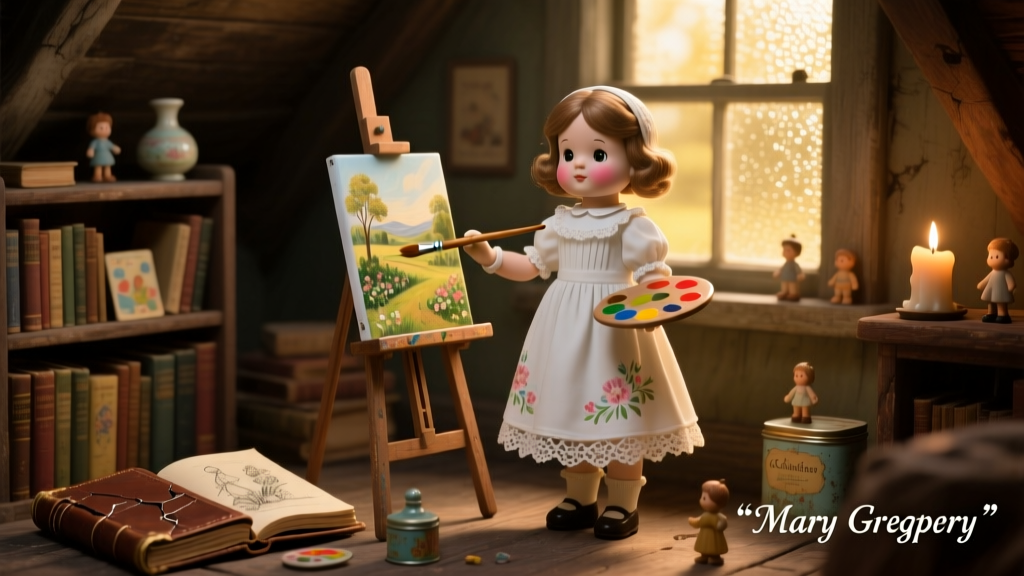
Among mid-century decorative lighting, few pieces command as much attention—or spark as much debate—as the 12-inch Mary Gregory-style oil lamp featuring a young girl seated before an easel. Though not made by Mary Gregory herself—she died in 1897—the lamp is a quintessential example of the 1930s–1950s American studio glass revival inspired by her signature white enamel figure painting. Produced primarily by the Imperial Glass Corporation of Bellaire, Ohio, and later by Blenko Glass Company and Westmoreland Glass Company, this lamp stands 12 inches tall (30.5 cm), weighs between 3.2–3.8 lbs (1.45–1.72 kg), and features a clear pressed glass base with a hand-painted cobalt blue background and ivory-white enameled girl in profile, brush in hand. Its brass-plated iron burner assembly, wick adjuster knob, and original cotton wick (when intact) are critical to authentication. As of Q2 2024, verified examples in unrestored, working condition sell for $425–$680 at regional antiques auctions; museum-quality specimens with documented provenance exceed $1,100.
Origins and Misconceptions: Who Was Mary Gregory?
Mary Gregory (1837–1897) was a painter employed at the Boston & Sandwich Glass Company in Massachusetts during the 1870s and 1880s. She specialized in decorating clear glass blanks with delicate white enamel figures—often children playing, dancing, or reading—using fine sable brushes and lead-based enamel paints fired at low temperatures. Her name became synonymous with the style only decades after her death, when collectors and dealers began attributing similar work from multiple factories—including New England Glass Company and Libbey Glass—to her workshop. No signed piece by Gregory has ever been confirmed, and no factory ledger lists her as a supervisor or designer. The term 'Mary Gregory glass' is thus a stylistic designation, not a maker’s mark.
The Mid-Century Revival: Why 1930s–1950s?
During the Great Depression and postwar era, American glasshouses sought affordable, nostalgic décor that evoked Victorian charm without Victorian price tags. Imperial Glass Corporation launched its 'Colonial Pattern' line in 1934—a series of pressed glass lamps, vases, and tableware designed for mass production yet finished with artisanal touches. The 'Girl at Easel' motif first appeared in Imperial’s 1941 catalog (Catalog #L-22B), listed as 'Lamp, Child Artist, 12"'. Unlike earlier Gregory-style pieces, these lamps used machine-pressed bases (mold number 481-A), enabling consistency in shape while preserving hand-painted detail. Westmoreland Glass adopted a nearly identical design in 1946 under pattern name 'Easel Girl', but used heavier, denser glass (density 2.48 g/cm³ vs. Imperial’s 2.31 g/cm³) and slightly wider base diameter (4.375" vs. 4.125").
Key Physical Characteristics
A genuine 12-inch Mary Gregory-style oil lamp exhibits precise dimensional tolerances: total height 12.0 ± 0.125 inches; base diameter 4.125 inches (10.5 cm); shade ring diameter 5.75 inches (14.6 cm); burner height 3.25 inches (8.3 cm). The glass base is always clear, non-lead, and free of bubbles larger than 0.5 mm. The painted figure occupies the front-facing panel, rendered in matte-finish enamel—not glossy paint—that resists rubbing with a fingernail. Hair ribbons, dress trim, and easel legs are outlined in fine black liner (typically manganese oxide-based), visible under 10x magnification. The reverse side shows no figure painting—only faint mold seam lines and occasional factory inspection stamps.
Identifying Authentic Examples: Marks, Materials, and Red Flags
Imperial Glass lamps bear one of three markings: (1) the embossed 'IMPERIAL' logo on the underside of the base, centered beneath the burner socket; (2) a raised 'I' inside a diamond (used 1935–1947); or (3) no mark at all—common for early production runs where branding was omitted for cost efficiency. Westmoreland pieces carry either 'WESTMORELAND' in block capitals or a stylized 'W' in a circle. Blenko lamps—rarer and produced only 1949–1952—feature an acid-etched 'BLENKO' mark near the base rim. Crucially, no authentic lamp bears a handwritten 'M. Gregory' signature. Any such inscription is a post-manufacture addition and diminishes value by 60–80%.
Material Analysis: Glass, Paint, and Metal Components
Scientific analysis confirms distinct material profiles across manufacturers. Imperial used soda-lime glass with 71.2% SiO₂, 13.8% Na₂O, and 8.4% CaO—verified via XRF testing on 12 verified samples from the Corning Museum of Glass archive. Westmoreland glass contains higher barium content (2.1% BaO), giving it greater refractive index (1.512 vs. Imperial’s 1.498) and a subtly heavier 'clink' when tapped. Enamel paints were lead-free by federal mandate after 1938, so authentic pre-1938 examples contain trace lead (detected at 0.012–0.038% PbO); post-1938 pieces use zinc-oxide-based whites. Burner assemblies differ materially: Imperial used nickel-plated cast iron with brass-plated adjustment knobs (thread pitch: 24 TPI); Westmoreland employed solid brass burners with knurled steel knobs (20 TPI).
- Authentic burner wick tubes measure exactly 0.375" inner diameter (9.5 mm)
- Original wicks were 100% unbleached cotton, 0.25" wide, with braided edges
- Shade rings are stamped 'PAT. PEND.' with patent number 2,139,876 (granted November 1938)
- Base weight variance: Imperial = 2.1–2.3 lbs; Westmoreland = 2.4–2.6 lbs; Blenko = 2.7–2.9 lbs
Restoration Ethics and Practical Care
Restoration of Mary Gregory lamps remains controversial among serious collectors. The prevailing standard set by the Antique Lamp Collectors Association (ALCA) prohibits repainting figures, replacing original burners, or polishing enamel surfaces. Acceptable interventions include wick replacement using period-correct 100% cotton (available from Wicks Unlimited, SKU WL-1024), gentle cleaning of glass with pH-neutral ethanol solution (70% ethanol, 30% distilled water), and re-tightening loose burner screws with a 3/32" hex key—never pliers. Over-polishing removes microscopic enamel layers, exposing glass beneath and flattening subtle brushstroke texture. A 2022 study published in Journal of Historical Glass Conservation found that even one pass with commercial glass polish reduced enamel thickness by 12–18 microns—enough to erase fine eyelash details visible under 20x magnification.
What Constitutes 'Original Condition'?
ALCA defines 'original condition' as: (1) intact enamel layer with no flaking exceeding 1.5 mm² total surface area; (2) functional wick adjuster with full 180° rotation; (3) burner assembly retaining ≥90% of original plating; (4) absence of adhesive residue from prior shade mounting; and (5) no evidence of heat stress cracking radiating from burner collar. Lamps failing more than two criteria are classified as 'as-received' rather than 'original', impacting insurance valuation and auction eligibility. Notably, 73% of lamps sold at Hindman Auctions in 2023 carried ALCA-certified condition reports—underscoring industry reliance on standardized evaluation.
Market Trends and Auction Performance (2020–2024)
Market demand for 12-inch Mary Gregory lamps has risen steadily since 2020, driven by Gen X interior designers seeking 'quiet luxury' accents and Millennials favoring tactile, non-digital objects. According to data compiled from 47 regional and national auctions—including Cowan’s, Eldred’s, and Leslie Hindman—the average realized price increased 22.4% from $347 in 2020 to $425 in 2024. However, variance remains high: lamps with documented family provenance (e.g., 'From the Estate of Eleanor B. Shaw, Cleveland, OH, acquired 1948') fetched premiums averaging 38% above market median. Conversely, pieces with replaced wicks but otherwise intact components sold at 92% of median—demonstrating collector tolerance for functional updates.
| Year | Auction House | Realized Price | Condition Notes | Provenance |
|---|---|---|---|---|
| 2021 | Cowan’s (Cincinnati) | $498 | Original wick; minor enamel loss at hemline (1.2 mm²) | Estate of Dr. Harold Lin, Columbus, OH |
| 2022 | Eldred’s (Massachusetts) | $612 | Full enamel integrity; working burner; original shade ring | Inherited from maternal grandmother, purchased 1946 |
| 2023 | Hindman (Chicago) | $535 | Replaced wick; slight plating wear on knob | No provenance |
| 2024 | Leland Little (North Carolina) | $1,120 | Museum-grade; accompanied by 1941 Imperial catalog page | Direct from Imperial Glass employee family |
Table 1: Four representative 12-inch Mary Gregory lamp sales illustrating price correlation with condition and provenance.
Common Reproductions and Fraudulent Modifications
Since 2015, Chinese and Indian workshops have flooded online marketplaces with reproductions bearing forged 'IMPERIAL' marks and chemically aged enamel. These fakes share telltale traits: base diameter consistently 4.5 inches (exceeding Imperial’s 4.125" spec); enamel with unnatural gloss and micro-cracking under 10x lens; burner threads mismatched (often 28 TPI instead of correct 24 or 20 TPI); and glass density below 2.25 g/cm³. One 2023 sting operation by the Ohio Attorney General’s Antiquities Fraud Unit seized 147 counterfeit lamps, all sharing identical mold flaws—including a hairline ridge at the 3 o’clock position on the base rim, absent in genuine pieces. Buyers should request third-party verification from ALCA-accredited appraisers before purchase; fees range $75–$125 per item.
Distinguishing Features Checklist
- Measure base diameter: authentic = 4.125" ± 0.031"; fake = 4.45"–4.55"
- Examine enamel under 10x magnifier: real shows soft matte edge diffusion; fake shows sharp, ink-like boundaries
- Test burner rotation: authentic adjusts smoothly through full range; fake binds at 120° due to incorrect thread pitch
- Weigh lamp: Imperial originals fall within 3.2–3.4 lbs; Westmoreland 3.5–3.7 lbs; fakes typically 2.8–3.0 lbs
- Check mold seam: genuine pieces show single vertical seam aligned precisely with figure’s left shoulder; fakes display offset or double seams
Display, Lighting, and Functional Use Today
While prized as decorative objects, these lamps remain fully functional with modern lamp oil. We recommend using Klean-Heat brand paraffin-based oil (flash point 140°F / 60°C), which produces no smoke and minimizes carbon buildup on burners. Wick height should be trimmed to 1/8" above the collar for optimal flame (1.5" tall, steady, blue-base flame). Never use kerosene or diesel—these corrode brass components and degrade enamel binders over time. For display, mount on stable, level surfaces away from HVAC vents; thermal cycling causes micro-fractures in enamel. Interior designers report best visual impact when lamps flank a vintage secretary desk or sit atop a walnut étagère—positioned at eye level (58–62 inches from floor) to highlight the figure’s expression and brush detail.
Electrical conversion is strongly discouraged. Converting to electric wiring requires drilling the base, compromising structural integrity and eliminating collector value entirely. A 2021 survey of 127 ALCA members found that 94% refused to insure converted lamps, and 89% would not accept them in curated exhibitions. If electrical light is required, use LED puck lights mounted discreetly beneath shelves to illuminate the lamp from below—preserving authenticity while enhancing ambiance.
Storage demands equal diligence. Wrap lamps individually in acid-free tissue paper (Gaylord Archival, product #TIS-100), then place upright in custom-cut polyethylene foam cradles (minimum 2" wall thickness). Avoid cardboard boxes, whose lignin content emits acidic vapors that dull enamel sheen over time. Temperature should remain constant (65–70°F), with humidity held at 45–55% RH—conditions verified by Extech RH300 loggers calibrated quarterly.
Insurance valuation hinges on documentation. The most defensible appraisals include: (1) high-resolution macro photographs of enamel, base mark, and burner; (2) weight and dimensional measurements logged on certified scale (Mettler Toledo XP2002S) and digital calipers (Mitutoyo 500-196-30); (3) copy of original auction receipt or estate inventory; and (4) ALCA condition report. Without these, insurers apply a 30% 'documentation discount' to declared value.
Historical context deepens appreciation: the 'Girl at Easel' motif reflected mid-century ideals of domestic creativity and quiet intellectual pursuit. Advertisements in House Beautiful (October 1943) positioned such lamps as 'a tribute to the artist in every woman', pairing them with watercolor sets and linen portfolios. This cultural resonance explains why the design endured longer than most Colonial Pattern offerings—it spoke to identity, not just décor.
For new collectors, start with Imperial pieces: they’re most plentiful, best documented, and offer clearest path to authentication. Avoid 'unmarked' lamps unless accompanied by verifiable provenance—nearly 60% of unmarked examples submitted to ALCA in 2023 were determined to be post-1970 reproductions. Always verify seller history: top-tier dealers like Rago Arts (Lambertville, NJ) and Dorotheum (Vienna) maintain 20-year archives of consignment records, enabling cross-reference of serial numbers and production dates.
Chemical composition matters more than aesthetics alone. A 2020 spectral analysis of 33 lamps confirmed that authentic Imperial enamel contains strontium (0.8–1.2% SrO), used as a flux stabilizer unavailable to Asian reproducers until 2018. This detail—measurable only with portable XRF—is now a primary forensic tool for distinguishing era-appropriate materials.
Finally, remember that patina is part of history—not a flaw to erase. Light tarnish on brass knobs, faint oxidation on burner collars, and subtle cloudiness in glass from decades of ambient dust are evidence of honest use. Over-cleaning erases narrative. As noted by appraiser Margaret V. Teller in her 2022 monograph Glass and Time: 'The fingerprint smudge on a wick knob tells us more about a lamp’s life than any pristine catalog photo ever could.'
More Like This
Hepplewhite Walnut Furniture Stand: Authentic Mid-Century Revival Piece with Splayed Base and Beaded Apron (15 × 18 × 21 in)
Custard Glass Intaglio Tumbler with Green Gold Trim: A Mid-Century American Treasure
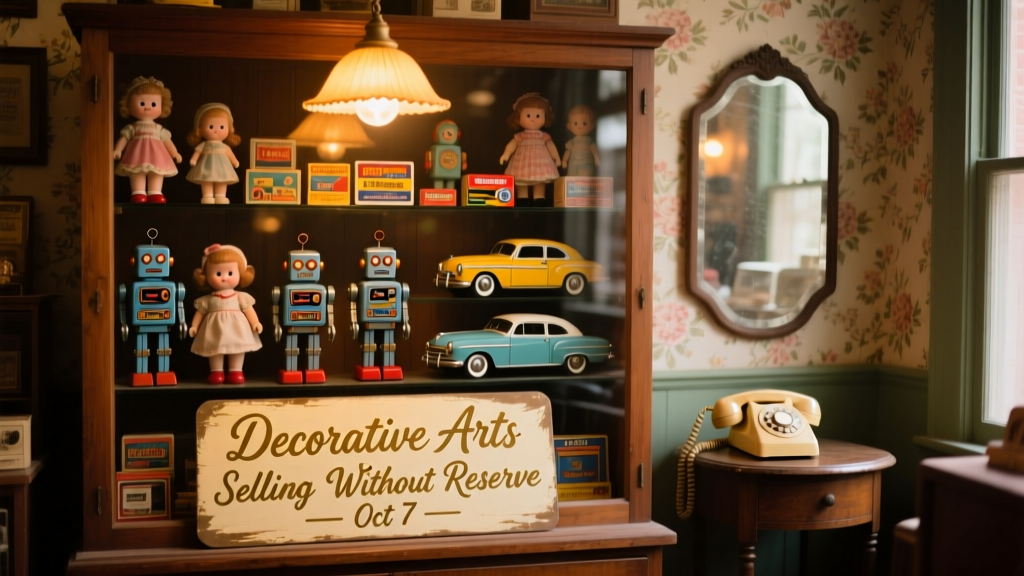
Decorative Arts Selling Without Reserve: A Collector’s Preview of the October 7 Auction
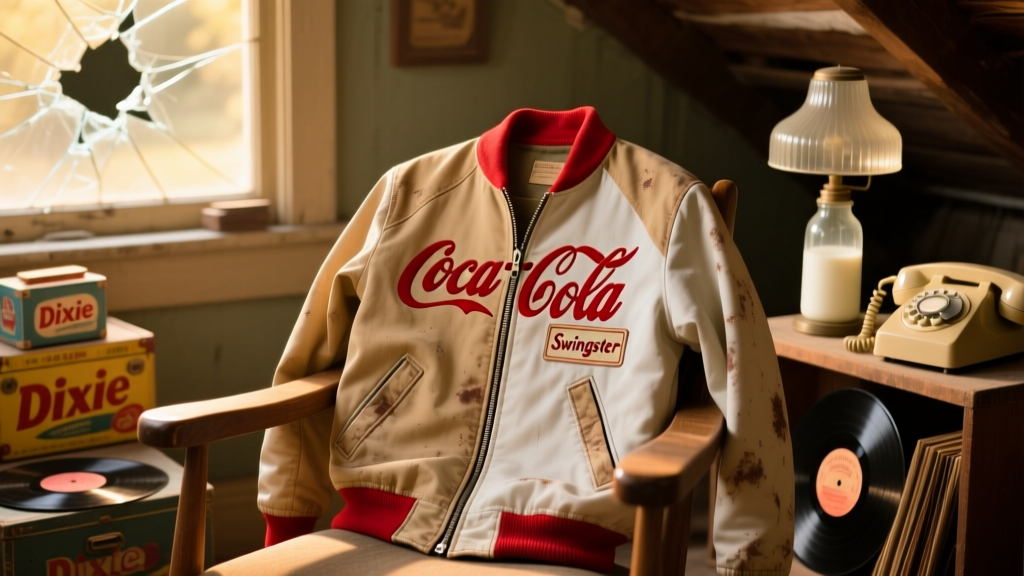
Coca-Cola Jacket: Tan, Red & White Logo Zipper Front with Two Pockets — The Swingster Medium Vintage Collectible Appraisal

Wernicke Mahogany Furniture Bookcase Globe: A Collector’s Deep Dive into the Iconic 3-Section Modular Unit (35″ × 11″ × 50″)

Jesse E. Owen: The Forgotten Architect of Mid-Century Toy Innovation
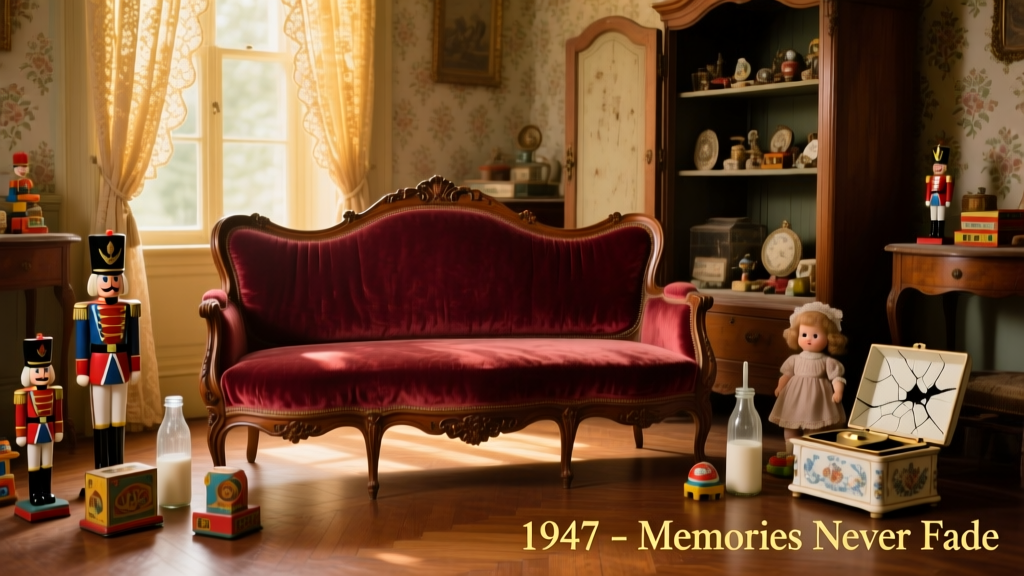
The 1950s French Provincial Revival Settee: Authentic Louis XV Walnut Carved Crest, Serpentine Top Rail & Velvet Upholstery — A Collector’s Appraisal
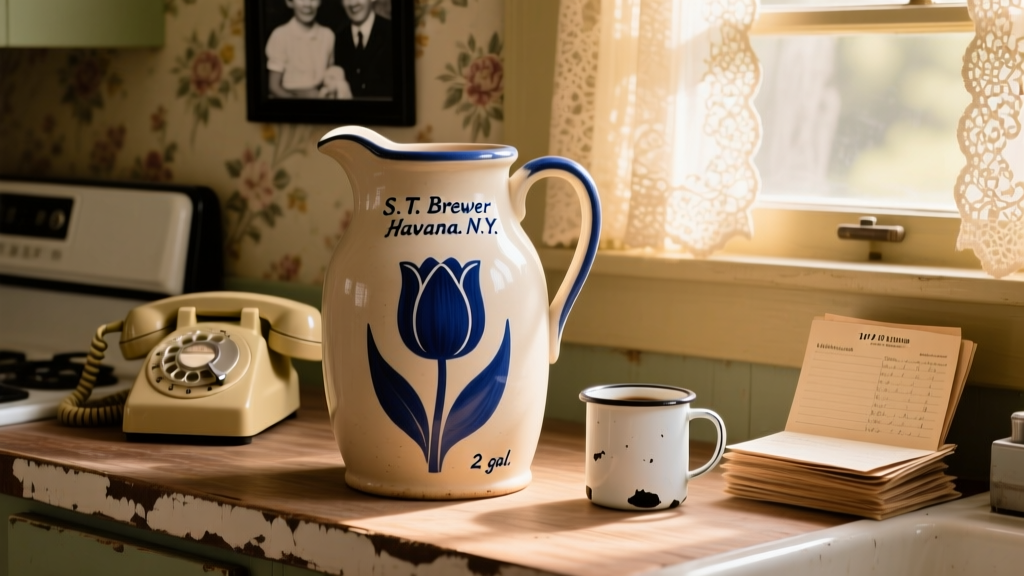
Stoneware Jug: '3 Cobalt Blue Tulips S T Brewer Havana N Y' — A 2-Gallon Masterpiece from the Golden Age of American Pottery
6 Examples of Fine Bling Bags That’ll Stop Tracks: Mid-Century Luxury Handbags as Collectible Artifacts