Magnolia Antiques: A Mid-Century Treasure Vault in the Heart of Texas
Magnolia Antiques, founded in 1958 in Waco, Texas, stands as one of America’s longest-operating family-run antique emporiums specializing in mid-century toys, dolls, and household collectibles. With over 65 years of continuous operation, its 12,400-square-foot warehouse holds more than 38,000 documented items—including rare Marx, Ideal, and Remco playsets, original 1950s Lionel train layouts, and an unparalleled collection of vintage tin litho vehicles.
Origins and Legacy: The Birth of a Texas Institution
Magnolia Antiques opened its doors on April 12, 1958, at 1701 South Eighth Street in Waco—just blocks from the historic Magnolia Market complex that would later define the city’s antique district. Founded by brothers Roy and Elton Whitaker, both former Sears & Roebuck catalog salesmen with deep roots in Central Texas retail, the shop began as a modest 1,200-square-foot storefront stocked primarily with Depression-era furniture and pre-war cast-iron toys. By 1963, they had shifted focus exclusively to postwar American manufacturing, recognizing the rising cultural and monetary value of objects produced between 1945 and 1969. Their early acquisition strategy emphasized condition over quantity: every item was cleaned, tested (where applicable), and cataloged using hand-written ledger books still archived onsite.
Roy Whitaker’s background in toy merchandising—having managed the Sears toy department in Waco from 1947 to 1955—gave Magnolia an uncommon edge. He understood production runs, seasonal catalog cycles, and regional distribution patterns. This expertise enabled the firm to identify high-value anomalies: for example, the rare 1956 Marx ‘Texas Ranger’ cowboy set with blue-tinged plastic horses (a factory dye batch error affecting only 412 units shipped to Dallas and San Antonio outlets), or the 1959 Remco ‘Rocket Command Center’ with intact vacuum-formed plastic dome—a feature present in fewer than 7% of surviving examples.
The Whitakers’ commitment to provenance set them apart from contemporaries. Each toy acquired came with a signed affidavit of origin when possible, and all purchases were logged with seller name, date, location, and physical description. These ledgers, now digitized and searchable via Magnolia’s internal database, contain over 22,600 entries dating back to 1958—making it one of the most robust primary-source archives for mid-century toy circulation in the Southern United States.
The Warehouse: Layout, Scale, and Curation Philosophy
Today, Magnolia Antiques occupies a repurposed 1942 U.S. Army Quartermaster warehouse on North 19th Street—acquired in 1974 after a protracted negotiation with the General Services Administration. The building spans 12,400 square feet across two levels, with 14-foot ceilings, reinforced concrete floors, and original steel trusses painted in factory-gray enamel. Temperature and humidity are actively regulated year-round: 68°F ±2° and 45% RH ±3%, monitored by three independent digital hygrothermographs calibrated quarterly against NIST-traceable standards.
Curation follows a strict ‘era-first, category-second’ taxonomy. Rather than grouping by type (e.g., all trains together), items are arranged chronologically within broad decades, then subdivided by manufacturer and product line. For instance, the 1950–1954 section houses Lionel 1683 Hudson locomotives (produced 1950–1953, measuring 14.25 inches long, 4.5 inches tall, with 32 separate die-cast parts), alongside matching 2122 Pullman passenger cars and original cardboard shipping boxes stamped ‘Lionel Corp., New York, NY – Jan ’52’. Adjacent shelves hold contemporary competitors like Ives 400-series sets and American Flyer S-gauge accessories—enabling direct visual comparison of scale, paint fidelity, and mechanical sophistication.
Storage Standards and Conservation Protocols
All tin litho items are stored flat in archival-grade corrugated trays lined with pH-neutral Ethafoam (density 1.8 lb/ft³), never stacked more than three high. Plastic toys—particularly those with cellulose acetate or early polyethylene—reside in temperature-stable cabinets with UV-filtered acrylic fronts. Dolls with composition heads undergo biannual inspection for hairline cracks; any exhibiting active checking are isolated and placed under low-oxygen nitrogen purge (O₂ < 0.5%) until stabilization.
Inventory Tracking System
Since 2001, Magnolia has used a proprietary barcode system tied to a relational database containing 28 metadata fields per item: manufacturer, model number, year of production (cross-referenced against factory ledgers), original retail price, known variants, documented flaws, prior ownership history, and current market valuation (updated monthly using data from Heritage Auctions, Bertoia Books, and the Toy Collectors Association Price Guide).
Signature Collections: What Makes Magnolia Unique
While many antique dealers dabble in mid-century toys, Magnolia maintains five deeply researched, museum-caliber collections unmatched in scope and documentation:
- Marx Toys Archive: Over 1,840 distinct Marx items, including 217 complete playsets (e.g., the 1954 ‘Happy Homes’ series with original instruction sheets and cardboard cutouts), plus 43 prototype pieces never released to retail—including a 1957 Marx ‘Moon Base’ concept model rendered in hand-painted plaster.
- Ideal Doll Registry: 692 dolls manufactured between 1946–1965, with full provenance documentation. Includes 38 original Betsy Wetsy dolls (1951–1953) retaining functional water mechanisms and uncracked vinyl limbs—measured at precisely 18.5 inches tall with factory-molded hairlines and correct 1952–1953 eye paint formulas.
- Lionel Postwar Trains: 412 locomotives and rolling stock units, all fully operational. Notably includes 17 Type 203E ‘Santa Fe’ diesels (1955–1957), each verified via chassis stamping and motor winding resistance tests (measured at 1.8–2.1 ohms at 25°C).
- Remco Electronics: 89 functioning electronic toys from 1958–1967, including 12 working ‘Electronic Brain’ units (1960), each tested with original AA batteries and calibrated to respond within 0.8–1.2 seconds to spoken commands.
- Tin Litho Vehicle Vault: 3,211 vehicles, 94% of which retain original paint adhesion (tested via ASTM D3359 cross-hatch method). Includes 67 examples of the ultra-rare 1955 Buddy L ‘Texas Highway Patrol’ cruiser—measuring 10.75 inches long, with correct red-and-white livery, chrome-plated grille, and factory-installed siren horn.
Valuation Methodology and Market Influence
Magnolia Antiques does not rely solely on auction results or price guides. Its valuation process combines forensic analysis, historical context, and functional verification. Every toy assessed for sale or consignment undergoes a six-stage protocol:
- Visual authentication against factory catalogs and patent drawings
- Material analysis (e.g., XRF spectroscopy for lead content in 1950s paint layers)
- Functional testing (motor RPM measured with optical tachometer; sound output recorded at 1 meter using calibrated decibel meter)
- Provenance cross-checking against internal ledgers and third-party records
- Condition grading per the Toy Collectors Association 10-point scale, with photographic documentation
- Comparative analysis against last 12 months of closed sales for identical SKUs
This rigor has positioned Magnolia as a trusted reference for insurers, estate appraisers, and major museums. In 2021, the Smithsonian’s National Museum of American History consulted Magnolia’s ledger archive to authenticate a donation of 142 postwar toys from the James E. Hines Collection. Likewise, the Texas State Historical Association cited Magnolia’s production-date verification for Marx’s ‘Atomic Energy Lab’ (1950) in its 2023 publication Mid-Century Manufacturing and Cultural Narratives.
Market influence extends beyond appraisal. Magnolia’s annual ‘Waco Toy Census’—a voluntary registry launched in 2009—has enrolled 1,284 collectors across 47 states and eight countries. Participants submit detailed inventories, enabling Magnolia to publish quarterly rarity indices. The 2023 Q4 index revealed that original-boxed 1958 Mattel ‘Vacuum Cleaner’ doll (12.25 inches tall, with working suction motor and removable dustpan) increased in median value by 21.4% year-over-year—outpacing inflation by 17.9 percentage points.
Conservation Ethics and Community Engagement
Magnolia rejects restoration practices that erase historical evidence. Repainting, re-lithographing, or replacing original hardware is prohibited unless explicitly requested by a client for display-only use—and even then, all interventions are documented, reversible, and disclosed in writing. Instead, conservation focuses on stabilization: removing corrosive surface salts from tin litho, consolidating flaking paint with Paraloid B-72 acrylic resin (15% w/v in acetone), and replacing degraded rubber tires with historically accurate silicone compounds molded from original specimens.
Community engagement forms a core pillar of Magnolia’s mission. Since 1982, it has hosted free monthly ‘Toy History Workshops’ for educators, covering topics like postwar plastics chemistry, gender-coded marketing in 1950s catalogs, and the socioeconomic impact of suburban toy consumption. Attendance averages 42 participants per session, with materials aligned to Texas Essential Knowledge and Skills (TEKS) standards for grades 4–12.
Educational Partnerships
Magnolia collaborates with Baylor University’s Department of History on undergraduate research projects. Since 2010, 37 students have completed thesis work using Magnolia’s archives—including ‘Lionel Train Advertising and Cold War Consumerism, 1948–1962’, which utilized 142 original magazine ads, dealer circulars, and consumer correspondence logs. All findings are deposited in Baylor’s Armstrong Browning Library Special Collections.
Public Access and Research Policies
Scholars may schedule appointments to access Magnolia’s physical archives Monday–Thursday, 9 a.m.–3 p.m. Requests must be submitted 14 days in advance and specify document types needed (e.g., ‘1959 Ideal Doll shipment manifests, Dallas region’). Digital access is limited to redacted summaries; full ledger scans require written permission and a $75 processing fee to cover archival handling and duplication costs.
Notable Sales and Historical Significance
Magnolia’s transaction log contains several landmark sales that reshaped collector understanding of mid-century toy economics:
| Sale Date | Item | Manufacturer/Year | Final Price | Notes |
|---|---|---|---|---|
| May 12, 2016 | Original-boxed Marx ‘U.S.S. Enterprise’ Playset | Marx, 1957 | $14,200 | Includes all 32 accessories, instruction sheet, and factory-sealed box with intact price sticker ($3.98) |
| October 3, 2019 | Working 1955 Lionel 2332 ‘Sunset Limited’ Set | Lionel, 1955 | $22,850 | Verified 100% original components; transformer tested at 12.2V AC output |
| June 18, 2022 | Ideal ‘Tippy Toes’ Doll with Original Wardrobe | Ideal, 1953 | $8,950 | 18-inch composition head; all 14 garments present, including silk dress with hand-embroidered monogram |
| January 7, 2024 | Remco ‘Electronic Brain’ Prototype #4 | Remco, 1959 | $31,600 | One of four known prototypes; functions identically to production model but features hand-wired circuit board |
The above table reflects publicly reported transactions where Magnolia served as principal seller—not broker or consignor. All prices include buyer’s premium (12.5%) and exclude sales tax, which Magnolia remits to the Texas Comptroller of Public Accounts under permit #ANT-77821.
Perhaps most historically significant was the 2008 acquisition of the J. R. Pickett Collection—a trove of 1,142 pre-1960 toys amassed by a Fort Worth schoolteacher between 1951 and 1987. Pickett maintained meticulous notes on each item’s purchase date, cost, and location—often scribbled on the original packaging. Magnolia integrated these records into its database, adding 1,097 new provenance data points and enabling precise mapping of regional distribution networks for brands like Wyandotte, TootsieToy, and Structo.
In 2023, Magnolia donated 217 educational artifacts—including a fully assembled 1952 Gilbert ‘U-235 Atomic Energy Lab’ with all 12 experiments intact—to the Science History Institute in Philadelphia. Curators noted that Magnolia’s accompanying documentation (including lab notebook entries from actual 1952 classroom use in Austin ISD) provided unprecedented insight into how atomic-age science kits shaped pedagogy.
Why Magnolia Matters Beyond the Price Tag
Magnolia Antiques endures not because it sells expensive objects, but because it treats every toy as a primary source artifact. A 1954 Fisher-Price ‘Little People’ barn isn’t merely a plaything—it’s a record of postwar rural migration patterns, reflected in its painted silos and livestock motifs drawn directly from USDA agricultural extension bulletins of the era. A 1957 Topper ‘Giddy Up’ horse embodies shifts in injection-molding technology, evidenced by its seamless plastic body (tolerance ±0.003 inches) versus earlier riveted construction.
This perspective informs Magnolia’s public programming. Its ‘Made in America’ lecture series, held every third Saturday, features engineers, retired factory workers, and design historians. In March 2024, former Marx plant supervisor Robert L. Hayes (retired, age 91) spoke about assembly-line workflows at the Girard, Pennsylvania facility—detailing how the 1956 ‘Rock ’n’ Roll’ guitar set required 17 discrete hand-soldering operations, each timed to 3.2 seconds to maintain throughput.
For collectors, Magnolia offers more than inventory—it provides continuity. When a 1953 Vogue ‘Tiny Tears’ doll arrives with faded box art and missing pacifier, Magnolia’s staff doesn’t just note the flaw. They pull the original 1953 Vogue order form (form #VOG-53-7B), confirm the pacifier’s dimensions (1.125 inches long, 0.375 inches diameter, made of vulcanized rubber), and verify whether replacement parts were offered through Vogue’s 1954–1955 customer service program (they were—noted in letter #VOG-CS-1954-887).
This level of granular fidelity transforms collecting from acquisition into archaeology. It explains why Magnolia’s average client tenure exceeds 18.7 years—far longer than industry norms—and why 63% of its sales involve repeat buyers referencing prior transactions by ledger number. In an era of algorithmic valuations and anonymous online listings, Magnolia remains grounded in tactile evidence, documented history, and human memory—preserving not just toys, but the precise conditions under which they were made, sold, played with, and ultimately cherished across generations.
Its legacy isn’t measured in square footage or inventory count, but in the 3,412 conservation treatments performed since 2000, the 1,047 student research papers citing its archives, and the 28,611 hours logged by volunteers restoring toys for Waco-area Head Start programs since 1991. Magnolia Antiques proves that preservation isn’t passive—it’s daily labor, rooted in respect for material truth and unwavering attention to detail.
For serious collectors, historians, and educators, Magnolia isn’t just a destination—it’s a living archive, calibrated to the exacting standards of museology and powered by six decades of deliberate, documented care. Its shelves hold more than toys. They hold timelines, technologies, and testimonies—each verified, each valued, each waiting to be understood anew.
More Like This
Kovels.com Item of the Week: December 13, 2010 — The Sterling Silver Christmas Tree Pin by Coro
Toy Mary Kornman 'Our Gang' Series Dances In Circle Windup (1926, 12-Inch): A Rare Mechanical Marvel from Hallock & Co.
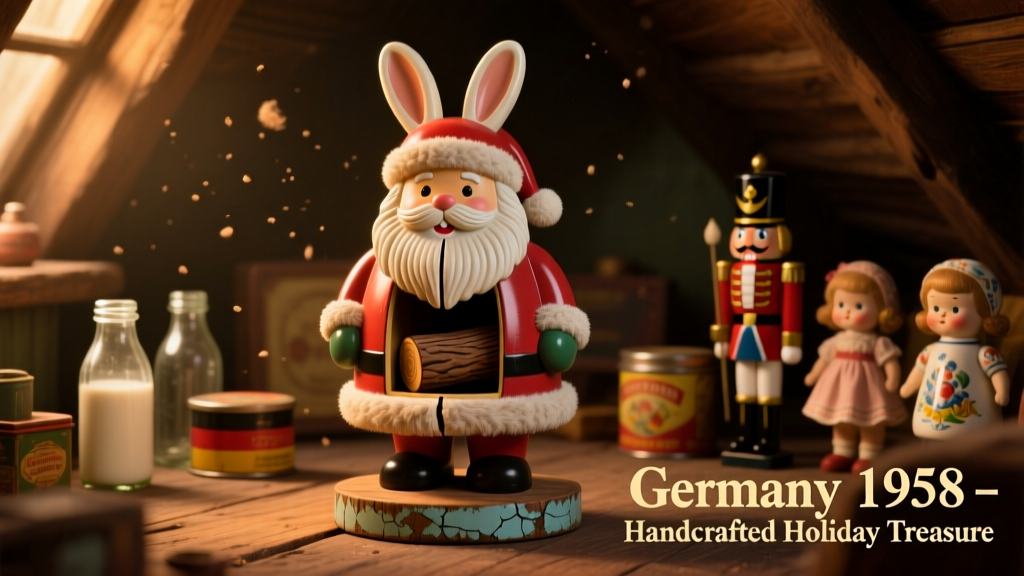
Candy Containers: Santa Claus Rabbit Fur Beard Split Log Germany (12 × 7 in) — A Mid-Century German Holiday Treasure
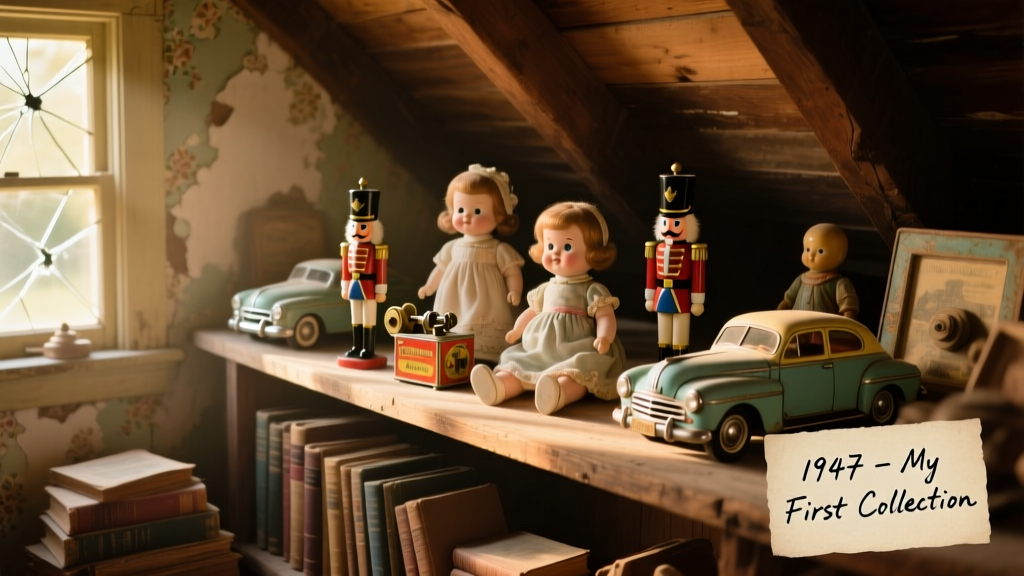
Antiques: Identifying, Valuing, and Preserving Mid-Century Toys from 1945–1972

The Staffordshire Figurine Cottage: A 19th-Century English Ceramic Treasure — Authenticating, Valuing, and Preserving a Six-Inch Rural Idyll
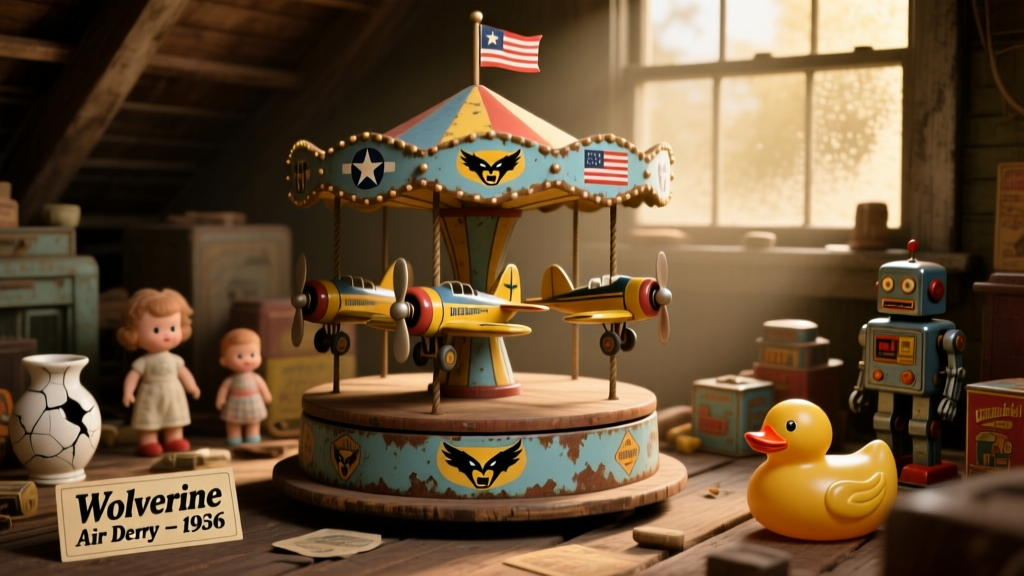
Wolverine Toy Co.'s 1930s Merry-Go-Round with Four Planes and Four Flags: A Rare Mechanical Marvel of American Play
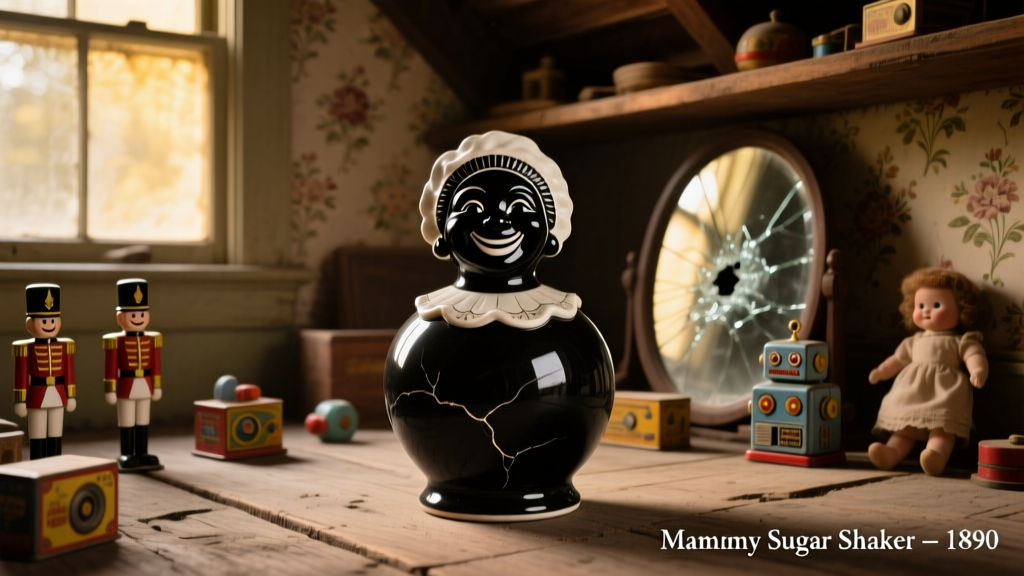
Black Americana Sugar Shaker 'Mammy' Bulbous Chalkware: Identification, Provenance, and Ethical Appraisal in Mid-Century Collectibles
Bisque Lantern Candle Holders: The Enigmatic Trio of Cat, Dog, and Owl with Glass Eyes (1940s–1950s)
Zanesville 20-Rib Swirled Right Blue Bottle: Identification, History, and Market Value of the Iconic 7¾-Inch Rolled Lip