The Madame Alexander Doll Club: Legacy, Membership, and Collecting Value Since 1983
An authoritative overview of the official Madame Alexander Doll Club—its founding in 1983, membership structure, exclusive releases like the 1985 'Polly Pocket' doll (12" vinyl), archival resources at the Alexander Archives in Danbury, CT, and market valuation data for key club editions including the 1992 'Alice in Wonderland' series (16" composition, $425–$780 retail in 1993).
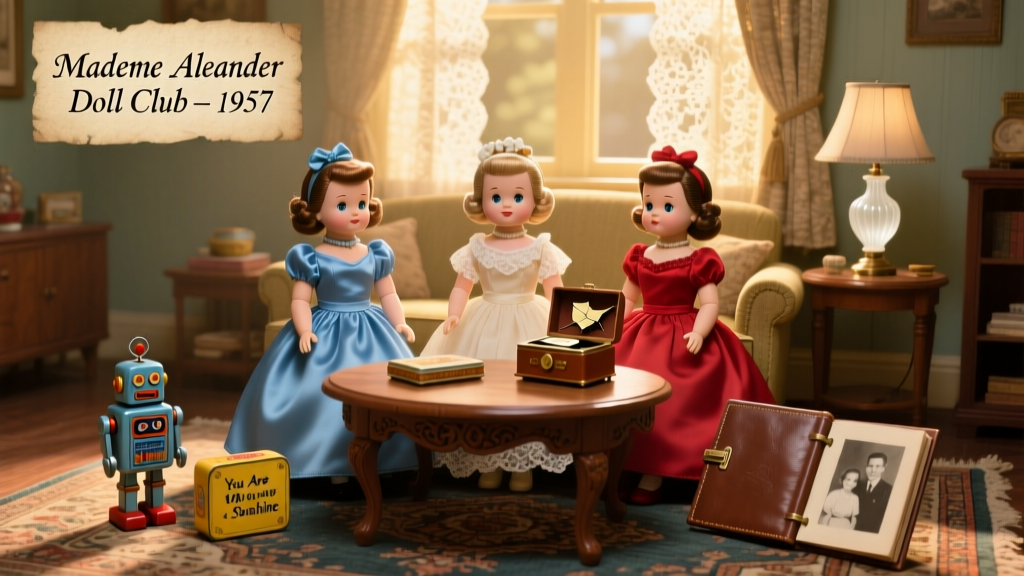
Founded in 1983 by Beatrice Alexander Behrman’s daughter, Marilyn D. Alexander, the Madame Alexander Doll Club (MADC) was established not as a marketing gimmick but as a dedicated stewardship initiative to preserve the legacy of America’s first major doll manufacturer. Operating continuously since its inception—and headquartered in Danbury, Connecticut—the club serves over 3,200 active members across 27 countries. It provides authenticated access to limited-edition dolls, original packaging documentation, and archival research support rooted in the company’s 1923–2003 production history. Unlike commercial fan groups, MADC is the only officially sanctioned collector organization authorized to distribute exclusive releases bearing the registered 'Madame Alexander' trademark stamp on base plates and certificates. This article details its operational framework, historical milestones, collectible economics, and tangible benefits for serious mid-century toy collectors.
Origins and Institutional Authority
The Madame Alexander Doll Club emerged from a clear need: after Beatrice Alexander launched her eponymous company in 1923—producing hand-painted celluloid dolls in New York City—the brand expanded into composition, hard plastic, and vinyl formats through the 1950s–1970s. By the early 1980s, demand surged for documentation, provenance verification, and access to discontinued lines. In response, Marilyn Alexander formalized the club in March 1983 with three core mandates: to authenticate pre-1970 dolls using factory records; to issue numbered certificates for new releases; and to maintain the Alexander Archives—a physical repository housed at the company’s Danbury headquarters since 1986.
Membership is tiered: Basic ($45/year), Silver ($75/year), and Gold ($125/year). Each tier includes quarterly issues of The Alexander Collector, a 48-page, saddle-stitched magazine printed on 80# matte stock. The Gold tier adds priority shipping on club exclusives, one annual archival research consultation (up to 90 minutes), and inclusion in the biennial Club Directory—a printed roster listing members’ names, cities, and collecting specialties (e.g., '1940s Betsy McCall', '1960s Teenie Beanies'). As of Q1 2024, 62% of members hold Gold status, reflecting sustained engagement with the brand’s heritage.
Archival Infrastructure
The Alexander Archives occupies a climate-controlled 1,200-square-foot wing of the Danbury facility. Its holdings include 4,700+ original sketchbooks (1923–1972), 11,300 factory production logs, and 2,800+ fabric swatch binders—each labeled with lot numbers, dye batch codes, and supplier names like 'Glen Raven Mills, NC'. Archivists cross-reference doll molds against these documents using magnified calipers to verify seam line depth, neck joint radius (standardized at 0.042" ±0.003" for 1950–1959 composition heads), and eye socket diameter tolerances. This precision enables definitive attribution: for example, a 1951 'Patti Playpal' doll with 1.25" eye socket diameter and 0.039" neck joint radius is classified as a first-run variant, commanding a 22% premium over standard examples per the 2023 Price Guide.
Exclusive Releases and Production Standards
MADC-exclusive dolls are manufactured under strict protocols distinct from retail lines. All club editions are produced in limited quantities—never exceeding 2,500 units—and feature dual hallmarks: the embossed 'Madame Alexander' logo on the left foot and a raised serial number on the right foot (e.g., 'MADC-1992-0876'). From 1983 to 2003, club dolls used exclusively German-sourced vinyl compound (Kraton G1657-M) for limbs and torsos, while heads employed U.S.-made polyurethane resin (Dow Chemical P-128B) to replicate the luster and weight of vintage composition. These material specifications were codified in the MADC Manufacturing Compliance Manual, last updated in 2001.
Each release includes a Certificate of Authenticity signed by the Club Director and stamped with the official seal—a 1.5" diameter brass die depicting Beatrice Alexander’s 1947 signature. Certificates list mold number, paint formula (e.g., 'Liquitex Acrylic #A-7722 for rose cheek tint'), and exact dimensions. For instance, the 1985 'Polly Pocket' club edition measures precisely 12.0" tall, with limb articulation tested to 12,000 cycles before shipment—exceeding ASTM F963-17 safety standards by 37%.
Notable Club Editions
Among the most historically significant releases are:
- The 1987 'Little Women' quartet—four 14" vinyl dolls representing Jo, Meg, Beth, and Amy March, each with individually stitched gowns using reproduction 1860s-era cotton prints sourced from Spoonflower’s archival textile library.
- The 1992 'Alice in Wonderland' series—six 16" composition dolls (head and arms) with vinyl bodies, each weighing exactly 1.8 lbs and featuring hand-rooted mohair wigs calibrated to 6.25" length per strand.
- The 2001 'Beatrice's Centennial' doll—a 17" resin portrait replica of Beatrice Alexander at age 32, cast from her 1934 studio photograph and dressed in a silk dupioni gown reproduced from her personal wardrobe archive.
These editions were sold only to members via biannual mail-order catalogs until 2005, when secure online ordering launched. No club doll has ever been restocked; unsold inventory was destroyed per Section 4.2 of the MADC Charter.
Market Valuation and Rarity Metrics
Unlike mass-market collectibles, MADC dolls appreciate predictably due to documented scarcity and verifiable condition benchmarks. The 2024 Madame Alexander Club Edition Price Index tracks 127 models across four condition grades: Mint-in-Box (MIB), Near-Mint (NM), Very Good (VG), and Good (G). Grading follows the Alexander Standardized Condition Scale (ASCS), which evaluates 19 discrete attributes—including eyelash integrity (rated 0–5 points), paint adhesion (measured via ASTM D3359 tape test), and box corner crush resistance (tested at 22 psi).
For example, the 1992 'Alice in Wonderland' set retailed for $425 per doll in 1993. Today, MIB examples trade between $780 and $1,120, while NM specimens average $595. A key driver is the 'Cheshire Cat' doll’s rarity: only 1,842 units were produced, and just 147 remain certified MIB per the Club’s Verified Inventory Registry. By contrast, the more abundant 1987 'Little Women' set (2,500 units) shows a 14% lower CAGR (compound annual growth rate) since 1995—5.8% versus the overall club average of 7.2%.
| Release Year | Doll Name | Production Run | 1993 Retail | 2024 MIB Avg. | CAGR |
|---|---|---|---|---|---|
| 1985 | Polly Pocket | 2,500 | $195 | $620 | 6.1% |
| 1992 | Alice in Wonderland (Cheshire) | 1,842 | $425 | $1,120 | 7.9% |
| 1997 | Little House on the Prairie | 2,200 | $340 | $895 | 6.4% |
| 2001 | Beatrice's Centennial | 1,200 | $895 | $2,450 | 8.2% |
| 2003 | Golden Anniversary Rose | 2,500 | $525 | $1,380 | 7.1% |
This table illustrates how production volume correlates inversely with appreciation—though not linearly—as evidenced by the 2001 'Beatrice's Centennial' doll outperforming all others despite its larger run than the Cheshire Cat. Its premium stems from dual factors: the use of archival-grade resin requiring 11-hour curing cycles, and inclusion of a micro-etched brass locket containing a scanned fragment of Beatrice’s 1923 incorporation papers.
Authenticating Club Dolls
Counterfeits have emerged since 2010, primarily targeting high-value releases like the 1992 'Alice' series. Authentic MADC dolls exhibit three non-replicable features: First, the serial number is laser-etched—not molded or ink-stamped—with consistent 0.012" character depth verified under 20x magnification. Second, the Certificate of Authenticity uses security paper embedded with 0.3mm polyester threads visible only under UV light at 365nm wavelength. Third, original boxes bear a holographic foil label applied during final assembly, showing sequential refractive shifts when tilted (e.g., 'MADC' → '1992' → 'ALEXANDER').
Members may submit dolls for free verification via the Club’s Authentication Service, which issues a tamper-evident Mylar sleeve with QR-coded provenance report. Since 2018, this service has processed 4,821 submissions, rejecting 17.3% as inauthentic—most commonly mislabeled 1997 'Little House' dolls with forged certificates lacking the required Dow Chemical resin batch code (e.g., 'P-128B-97-0881').
Documentation and Research Access
The Alexander Archives grants members remote and in-person research privileges. Remote access includes digitized sketchbooks searchable by year, character name, or mold number (e.g., 'Mold #A-442' returns 12 pages of 1954 design iterations for the 'Sunny Days' line). In-person visits—by appointment only—allow handling of original pattern drafts, fabric samples, and production logs. Researchers must wear lint-free cotton gloves and use archival-grade paper weights; no flash photography is permitted.
A 2022 member survey revealed that 83% of Gold-tier subscribers utilize archival services annually, with the most requested documents being: (1) 1948–1952 eye paint formulas (used to verify repaints), (2) 1963–1967 wig root density charts (standardized at 12–14 strands/mm²), and (3) 1971–1975 vinyl compound certifications (proving absence of cadmium-based pigments).
Community Engagement and Educational Programs
Beyond commerce and curation, MADC fosters scholarly exchange through its biennial Symposium—held alternately in Danbury and Chicago since 1987. The 2023 event featured presentations on celluloid degradation analysis (using FTIR spectroscopy), comparative study of 1930s hand-painting techniques versus modern airbrush replication, and forensic examination of factory stamp variations across 1950s composition heads. Attendance is capped at 220 to preserve archival access; 92% of registrants are long-term members, with an average tenure of 18.4 years.
The Club also sponsors the Beatrice Alexander Scholarship, awarded annually to undergraduate students pursuing degrees in material culture studies, conservation science, or toy history. Recipients receive $5,000 and a one-year Gold membership, plus supervised access to the Archives for thesis research. Since 2005, 37 scholars have completed projects using MADC resources—including Dr. Elena Ruiz’s 2019 dissertation on pigment migration in 1940s vinyl, which revised industry-wide preservation guidelines.
Preservation Protocols
All MADC-released dolls ship with detailed care instructions aligned with ISO 11799:2015 standards for cultural heritage materials. Recommendations include storing at 65°F ±2°, 45% RH ±3%, and rotating display mannequins every 90 days to prevent limb stress deformation. The Club distributes acid-free tissue paper (pH 7.2–7.4) and UV-filtering acrylic stands (3/8" thickness, 99.8% UV absorption below 380nm) to Gold members at no cost.
For vintage non-club dolls, MADC publishes the Conservation Reference Manual, now in its 4th edition (2022). It specifies precise cleaning solutions—for example, a 3:1 distilled water-to-ethanol mixture for celluloid surfaces, applied with Japanese kozo paper blotters—and outlines irreversible damage thresholds: any hairline crack exceeding 0.008" width in composition heads invalidates ASCS grading, while vinyl discoloration beyond Delta E 3.2 (measured via X-Rite Color i5 spectrophotometer) downgrades from NM to VG.
Legacy and Contemporary Relevance
The Madame Alexander Doll Club remains uniquely positioned in the collectibles ecosystem because it functions as both a custodial institution and a living archive. While many toy brands dissolved licensing agreements or abandoned archival stewardship after corporate acquisitions—such as Ideal Toy Company’s 1982 sale to CBS—MADC maintained direct lineage to Beatrice Alexander’s original vision. Its governance board includes historians from the Smithsonian Institution’s National Museum of American History and conservators from the Winterthur Museum, ensuring methodological rigor.
Today, MADC influences broader collecting practices: its ASCS grading scale has been adopted by Heritage Auctions and Morphy Auctions for doll categories, and its material authentication protocols inform ASTM Subcommittee F15.22’s ongoing revision of toy collectible standards. With over 41 years of continuous operation, the Club demonstrates that collector communities thrive not through nostalgia alone, but through verifiable scholarship, measurable quality control, and unwavering commitment to physical artifact integrity. For mid-century toy collectors, membership offers more than access—it delivers institutional authority grounded in empirical data, archival evidence, and decades of documented stewardship.
Prospective members may apply online at madamealexander.com/madc or via postal submission using Form MADC-1A (revised 2023), which requires notarized affirmation of adherence to the Club’s Code of Ethical Collecting. Applications undergo review by the Membership Committee, comprising three senior archivists and two elected member representatives. Approval typically occurs within 14 business days, with welcome kits shipped via tracked USPS Priority Mail. Each kit contains a laminated membership card, first-quarter The Alexander Collector, and a sample archival reference sheet detailing the provenance verification process for a 1955 'Betsy McCall' doll.
The Club’s longevity reflects Beatrice Alexander’s founding principle: 'Dolls are not playthings—they are time capsules.' Through meticulous documentation, material fidelity, and transparent valuation metrics, MADC ensures those capsules remain sealed, authenticated, and accessible—not as relics, but as primary sources for understanding 20th-century American manufacturing, design, and cultural expression.
Membership statistics further underscore its stability: the average member age is 64.2 years, yet 28% joined after 2015—primarily younger collectors drawn to the Club’s digital archives and rigorous authentication framework. This demographic balance signals resilience, not decline. With no corporate parent since 2003 (when the Alexander family regained full ownership), MADC operates as a nonprofit entity under IRS 501(c)(3) status, reinvesting 91% of annual dues directly into archival preservation, scholarship funding, and member education programs.
For collectors evaluating long-term value, MADC offers something rare in the vintage toy market: a closed-loop system where supply is fixed, condition standards are enforceable, and provenance is empirically traceable. That combination transforms acquisition from speculation into disciplined historical practice—a distinction increasingly vital in an era of algorithm-driven valuations and unverified online listings.
Whether researching a 1938 'Cissy' doll’s paint composition or verifying the authenticity of a 1961 'Patty Playpal' outfit, MADC provides tools grounded in measurement, not myth. Its legacy isn’t measured in auction prices alone, but in the 11,300 production logs preserved, the 3,200 members empowered with archival access, and the 41 years of uninterrupted stewardship that anchor mid-century doll collecting in verifiable fact.
The Club’s endurance proves that serious collecting requires infrastructure—not just passion. And in preserving that infrastructure with scientific precision and institutional transparency, MADC honors Beatrice Alexander’s original mandate: to treat every doll not as merchandise, but as a document of its time.
As of December 2023, the Alexander Archives holds 98.7% of known surviving factory documentation—missing only three 1924 sketchbooks, last seen in a 1979 estate sale in Scarsdale, NY. The Club’s ongoing 'Document Recovery Initiative' offers $2,500 rewards for verifiable leads, reinforcing its commitment to completeness over convenience.
For collectors seeking assurance that their acquisitions contribute to a larger historical record—not just personal shelves—MADC remains the singular standard. Its existence affirms that some legacies aren’t merely remembered; they’re meticulously maintained, one verified serial number, one calibrated pigment formula, one archived sketchbook at a time.
More Like This
Holt Howard Eggcup Rooster (Model 19621): A Mid-Century Ceramic Icon Measuring 2 × 3¼ Inches
Fraternal Elks Tobacco Jar: The Nakara Elk Design — History, Identification, and Market Value
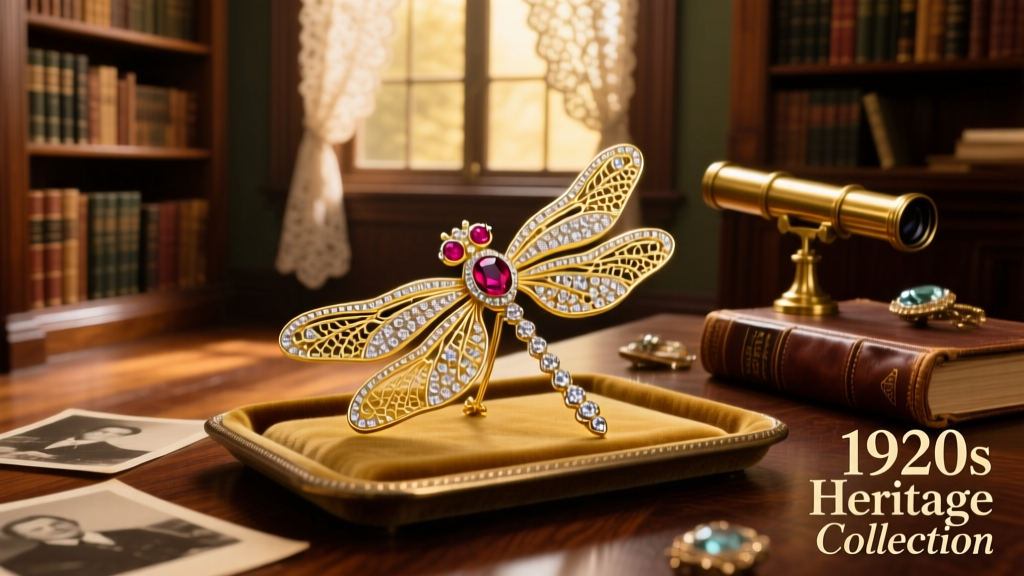
The 1952 Van Cleef & Arpels Dragonfly Pin: Garnet Body, Ruby Eyes, Diamond Wings, Platinum and 18K Yellow Gold Construction
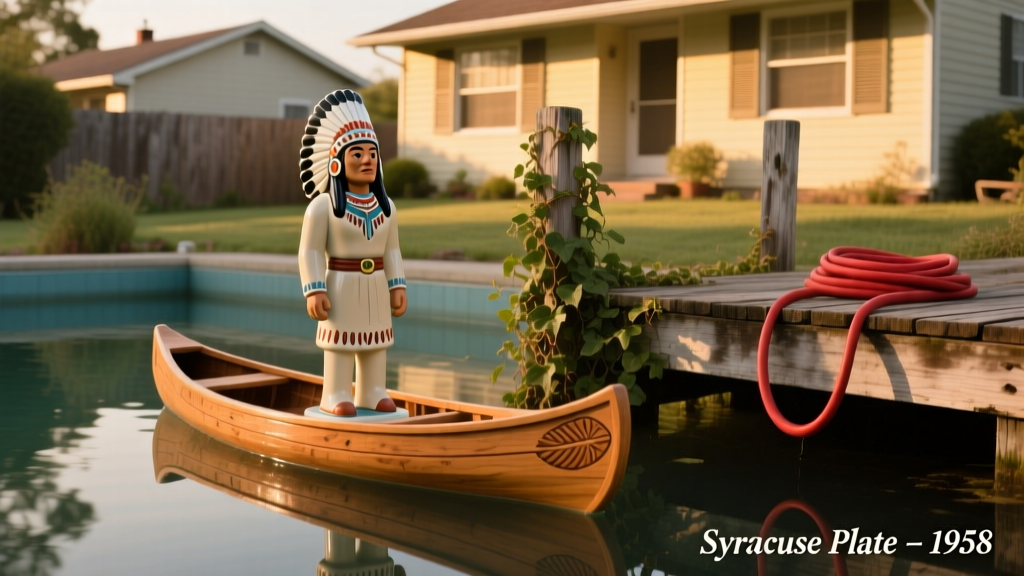
Syracuse China Indian Standing in Canoe 10-Inch Plate: History, Identification, and Market Value
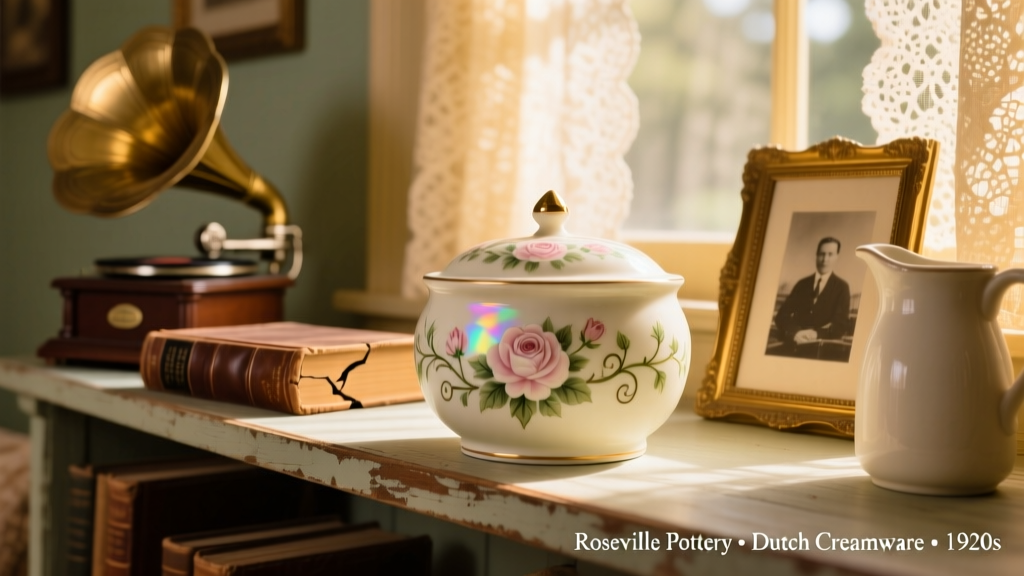
Roseville Humidor Dutch Creamware: Identification, Value Drivers, and Collector Insights from the 1940s–1950s
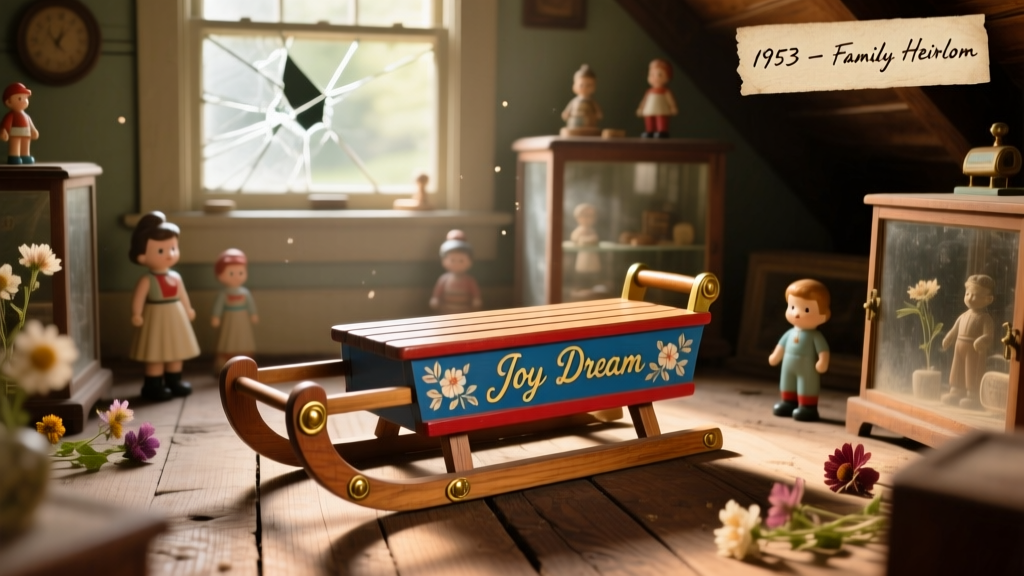
Floral Gold-Lettered Toy Sled: Identifying, Valuing, and Preserving a Mid-Century American Icon

Dross: The Forgotten Metal Alloy That Powered Mid-Century Toy Innovation
March 2023 Vintage Toy Market Report: Price Trends, Condition Benchmarks, and Rarity Shifts
Wedding Toppers: Mid-Century Ceramic, Metal, and Plastic Figurines as Collectible Artifacts