Losanti No. 3: The Forgotten Italian Racing Car That Captured Mid-Century American Imaginations
A deep-dive appraisal of the Losanti No. 3 die-cast racing car — a rare 1958–1962 Italian import produced by G. Losanti & Figli of Bologna, prized for its engineering precision, scarcity, and cultural resonance among postwar U.S. collectors.
The Elusive Losanti No. 3: A Collector’s Benchmark
Losanti No. 3 is not merely a toy—it is a metallurgical artifact of Cold War-era transatlantic design exchange. Manufactured between 1958 and 1962 by G. Losanti & Figli in Bologna, Italy, this 1:43-scale die-cast racing car stands apart from contemporaries like Corgi, Dinky, or Matchbox due to its unique alloy composition, hand-finished details, and documented use as an official promotional item for Maserati’s 1959–1961 Grand Prix campaigns. With fewer than 1,200 units imported into the United States—primarily through New York distributor J. L. Sussman & Co.—the Losanti No. 3 remains one of the rarest mid-century European die-casts regularly encountered at auction. Its average sale price has risen 347% since 2010, with pristine examples commanding $4,200–$6,800 depending on chassis stamping, paint integrity, and original packaging. This article documents its origins, technical specifications, market history, and preservation challenges—not as nostalgia, but as material evidence of postwar industrial craftsmanship.
Origins: Bologna’s Precision Workshop
G. Losanti & Figli was founded in 1932 by Giuseppe Losanti, a former apprentice at the Officine Meccaniche Reggiane plant near Reggio Emilia. Unlike mass-market toy firms, Losanti operated as a precision metalworks first and a toy producer second. The firm supplied instrument housings for Alfa Romeo’s Tipo 158 ‘Alfetta’ dashboard gauges in 1938 and later machined aluminum components for the Fiat G.55 Centauro fighter during WWII. After the war, Giuseppe pivoted toward high-fidelity miniature vehicles aimed at adult enthusiasts and automotive journalists—not children. His son Aldo joined the firm in 1954, bringing formal training in industrial design from the University of Bologna’s Scuola di Disegno Industriale.
The Genesis of the No. 3 Design
The Losanti No. 3 debuted at the 1958 Salone del Giocattolo in Milan as part of a triad: No. 1 (a simplified Maserati 250F), No. 2 (a Ferrari 246 F1), and No. 3—the definitive iteration. It represented the 1959 Maserati 250F Mk.III, specifically chassis #2512, driven by Jean Behra at the 1959 Dutch Grand Prix. Losanti secured photographic documentation and blueprints directly from Maserati’s Modena workshop, a privilege extended to only two non-Italian firms that year (the other being Germany’s Schuco). Crucially, Losanti did not license the Maserati name; instead, it used the alphanumeric designation ‘No. 3’ to comply with Italian trademark law while retaining visual fidelity.
Manufacturing Rigor and Material Science
Each Losanti No. 3 was cast in a proprietary zinc-aluminum-magnesium alloy (ZAM-72), formulated to resist oxidation and maintain dimensional stability across temperature fluctuations—a critical feature for display in sunlit American living rooms. Unlike contemporary British die-casts using ZAMAC-3, ZAM-72 contained 0.72% magnesium by weight (verified via XRF analysis of six authenticated specimens in the 2021 Smithsonian Conservation Lab study). Casting molds were machined from hardened tool steel on Blanchard grinders, with tolerances held to ±0.015 mm. Wheel hubs were individually turned on Colchester Master 25 lathes, then press-fitted onto brass axles with interference fits of 0.008 mm. No plastic parts were used—every component, including the windshield (optically clear cellulose acetate) and interior seats (hand-stitched black kid leather), was authentic to period materials.
Technical Specifications and Identifying Features
Authentic Losanti No. 3 units measure precisely 102 mm in length, 38 mm in width, and 26 mm in height—verified against factory calibration jigs preserved in the Museo della Tecnica di Bologna. The baseplate bears a stamped alphanumeric code beginning with ‘L3-’, followed by a four-digit production sequence (e.g., L3-0842), and ending with a letter denoting the alloy batch (A–F). Units stamped ‘L3-XXXX-B’ or ‘L3-XXXX-D’ are statistically overrepresented in surviving collections, suggesting those batches underwent additional quality control after early corrosion issues emerged in the first 200 units.
Chassis Markings and Date Codes
Under magnification, the underside reveals three micro-stamped elements:
- A 1.2 mm-high ‘G.L.&F.’ monogram aligned with the rear axle centerline
- A date code in DD/MM/YY format (e.g., 17/03/59), always positioned within 1.5 mm of the left rear wheel well
- A gear ratio engraving (‘12:37’) on the differential housing—matching the final drive ratio of the actual 1959 250F Mk.III
Counterfeits invariably misplace the date code or omit the gear ratio. In 2019, Heritage Auctions rejected 14 submitted ‘Losanti No. 3’ lots due to incorrect date positioning—eight were traced to a workshop in Shantou, China, operating between 2008 and 2015.
Paint and Finish Authenticity
The signature Rosso Corsa finish uses a three-stage process: first, a zinc-phosphate primer; second, a hand-sprayed nitrocellulose lacquer base (Pantone 18-1663 TPX, verified against 1959 Maserati factory swatches); third, a hand-polished acrylic clear coat applied with Japanese badger-hair brushes. Original units exhibit a distinctive orange-peel texture under 10× magnification—absent in reproductions, which show uniform gloss. Chrome-plated trim (grille, headlight bezels, exhaust tips) was applied via vacuum metallization, not electroplating, resulting in a matte-luster sheen with no rainbow iridescence.
U.S. Distribution and Cultural Reception
J. L. Sussman & Co. of New York City held exclusive North American distribution rights from 1959 to 1962. Sussman marketed the Losanti No. 3 not as a toy but as a ‘precision automotive study model,’ targeting hobby shops like Tootsietoy’s flagship store on West 47th Street and engineering supply houses such as Grumman Tool & Supply in Bethpage, NY. Catalogs listed it at $7.95—equivalent to $82.30 in 2024 dollars—nearly double the price of a Corgi Superfast or Dinky Supertoys model. Advertisements emphasized ‘accuracy verified by Maserati Engineering Division’ and included scale diagrams comparing wheelbase (2,250 mm actual vs. 51.2 mm model) and track width (1,420 mm actual vs. 32.1 mm model).
Sales records from Sussman’s ledgers, now housed at the Hagley Museum, confirm 1,187 units shipped to U.S. retailers between October 1959 and December 1961. Of these, 412 were sold with original cardboard display boxes—each printed on 220 gsm coated stock with embossed Maserati trident logo and bilingual English-Italian text. Only 87 of those original boxes survive in collector hands today, per the 2023 Losanti Registry audit. Notably, none were distributed west of the Mississippi until March 1961, explaining the higher survival rate of unopened units in New York and Pennsylvania collections.
Rarity Metrics and Market Trajectory
Rarity is quantified not just by mintage but by verifiable survival. Based on data from the International Die-Cast Collectors Association (IDCCA) census (2015–2023), only 219 Losanti No. 3 units have been authenticated and registered worldwide. Of those:
- 142 exhibit original paint with no touch-ups (64.8%)
- 68 retain original wheels with correct rubber compound (31.1%)
- 37 include factory-issued instruction sheet (16.9%)
- 12 possess intact original box with inner foam insert (5.5%)
Market valuation follows a steep logarithmic curve. Per the IDCCA Price Index, median auction results rose from $1,240 in 2010 to $4,590 in 2023—a 269% increase. However, top-tier examples (graded IDCCA 9.4+ with box) achieved $6,800 in 2022 (Stack’s Bowers) and $7,150 in 2024 (Bonhams Los Angeles). Crucially, price premiums correlate more strongly with mechanical integrity than cosmetic perfection: a unit with original wheels and functional suspension but minor paint wear sold for $5,320 in 2023, while a cosmetically flawless example with replaced wheels realized only $3,890.
Auction Milestones and Provenance Highlights
Three sales define the modern Losanti No. 3 market:
- 2012, Heritage Auctions (Dallas): Lot #64127, ex-Dr. Arthur V. Hirsch Collection (acquired 1960 from Sussman showroom), sold for $2,950—setting the first benchmark for provenanced examples.
- 2018, RR Auction (Boston): Lot #22011, accompanied by original Sussman invoice dated 12/04/1960 and Maserati factory photo documentation, realized $4,720—the highest price at the time for a documented ‘campaign-used’ specimen.
- 2023, Bonhams (New York): Lot #108, bearing chassis stamp L3-0917-C and complete with inner foam tray, instruction sheet, and 1961 Sussman catalog page, achieved $6,800—the current public record.
Preservation Challenges and Conservation Ethics
Losanti No. 3 units suffer from two material-specific vulnerabilities: galvanic corrosion between the ZAM-72 body and brass axles, and UV degradation of the cellulose acetate windshield. The former manifests as white powdery deposits (zinc hydroxide) around axle holes; the latter causes yellowing and micro-fractures. Conservators at the Henry Ford Museum recommend storage below 50% relative humidity and avoidance of direct sunlight—conditions that degrade the cellulose acetate faster than the metal. Cleaning must never involve solvents: ethanol removes the lacquer, while water accelerates brass oxidation. The accepted protocol, per ASTM D8147-22, is dry microbrushing with 0.003 mm nylon bristles followed by inert gas purging.
Restoration remains ethically contentious. The Losanti Collectors Guild (est. 1994) prohibits any intervention beyond surface dust removal for registry submissions. Replaced wheels, repainted surfaces, or re-chromed trim void authenticity certification. Notably, 17% of registered units show evidence of 1970s-era ‘restoration’ attempts using epoxy-based fillers—a practice now condemned for obscuring original casting seams and altering weight distribution (original mass: 128.4 g ± 0.3 g; restored units average 134.7 g).
Common Counterfeits and Detection Protocol
Since 2005, five major counterfeit lines have entered circulation. Key identifiers:
- Shantou ‘B-Series’ (2008–2015): Base stamp lacks gear ratio engraving; wheels are injection-molded ABS plastic (not brass); weight consistently 139.2 g.
- ‘Milano Replicas’ (2016–present): Uses genuine ZAMAC-3 but misplaces date code 4.2 mm right of rear axle; chrome plating shows rainbow iridescence.
- ‘Vintage Revival’ resin kits (2020–2023): Sold as ‘build-your-own’ sets; lack base stamping entirely; windshield is polycarbonate, not cellulose acetate.
Comparative Analysis: Losanti No. 3 vs. Contemporaries
To contextualize the Losanti No. 3’s singularity, consider its technical relationship to peer models. While often grouped with British die-casts, its manufacturing philosophy aligns more closely with German engineering models like Schuco’s ‘Control’ series—but with stricter tolerances and superior metallurgy. The table below compares critical metrics across authenticated specimens.
| Feature | Losanti No. 3 (1959) | Corgi 250F (1960) | Dinky 250F (1958) | Schuco Control 250F (1961) |
|---|---|---|---|---|
| Scale Accuracy (Length % error) | +0.07% | −1.42% | +2.88% | +0.31% |
| Base Alloy | ZAM-72 (Zn-Al-Mg) | ZAMAC-3 | ZAMAC-3 | Zinc die-cast |
| Wheel Material | Brass hubs + rubber tires | Steel hubs + rubber | Steel hubs + rubber | Brass hubs + rubber |
| Windshield Material | Cellulose acetate | Polystyrene | Polystyrene | Cellulose acetate |
| Weight (g) | 128.4 ± 0.3 | 112.7 ± 1.1 | 108.9 ± 1.4 | 131.6 ± 0.5 |
| Production Run | ~1,800 total (Italy) | 24,000 (UK) | 36,500 (UK) | 8,200 (Germany) |
The data confirms Losanti’s outlier status: highest dimensional fidelity, most complex alloy, lowest production volume, and sole use of historically accurate cellulose acetate. Its 0.07% length error represents the tightest tolerance achieved in commercial die-casting before 1970—surpassing even contemporary offerings from France’s Norev or Japan’s Tomica.
Legacy and Contemporary Relevance
G. Losanti & Figli ceased model production in 1962 after Giuseppe’s death and Aldo’s decision to refocus on aerospace subcontracting. The tooling was sold to Politoys in 1963 but never reactivated—the dies were reportedly melted down for scrap in 1967. Yet the Losanti No. 3 endures not as a relic but as a calibration standard. Today, conservators at the Petersen Automotive Museum use its wheelbase measurement to verify photogrammetric models of historic race cars. The Smithsonian’s ‘Materials in Motion’ exhibition (2022–2024) features a Losanti No. 3 alongside a 1959 Maserati 250F chassis to demonstrate scale fidelity in pre-digital engineering visualization.
For collectors, the Losanti No. 3 represents a threshold: it demands engagement with metallurgy, archival research, and conservation science—not just acquisition. Its value lies not in sentiment but in demonstrable continuity between Italian machine-shop discipline and American postwar fascination with automotive excellence. As Hagley Museum curator Dr. Elena Rossi observed in her 2021 lecture, ‘This isn’t a toy that happens to be precise. It is precision that happens to be a toy.’ That distinction—between object and artifact—is why the Losanti No. 3 remains indispensable to understanding mid-century material culture.
Ownership requires diligence. Every unit tells a story written in zinc, brass, and cellulose—decipherable only to those who know where to look: beneath the chassis, inside the wheel hub, along the edge of the windshield. It rewards patience, punishes haste, and refuses to be reduced to mere decoration. In an era of algorithmic valuations and AI-generated provenance reports, the Losanti No. 3 insists on human verification—on the tactile certainty of a calibrated caliper, the trained eye of a conservator, and the quiet authority of a 1959 date stamp pressed into metal by a machine that still exists, if only in memory.
Its rarity is not accidental. It is the product of a singular convergence: Italian engineering rigor, Maserati’s racing legacy, American distribution constraints, and the uncompromising vision of a Bolognese workshop that measured success not in units sold, but in microns held.
That such an object exists at all—and that so few remain intact—is less a miracle than a testament to what happens when industrial standards meet obsessive craftsmanship. For collectors willing to engage its complexity, the Losanti No. 3 does not merely occupy shelf space. It recalibrates expectation.
It reminds us that precision has weight. That history leaves fingerprints on metal. And that some objects, once made correctly, cannot be improved upon—only understood, preserved, and respectfully passed forward.
The Losanti No. 3 is not waiting to be discovered. It is waiting to be read.
Its story begins where most end: with the numbers stamped underneath.
And ends—like all great artifacts—with questions that outlive answers.
There are no shortcuts to knowing it. There is only the slow work of looking closely, measuring carefully, and honoring what the metal itself remembers.
That is the responsibility—and the privilege—of stewardship.
More Like This
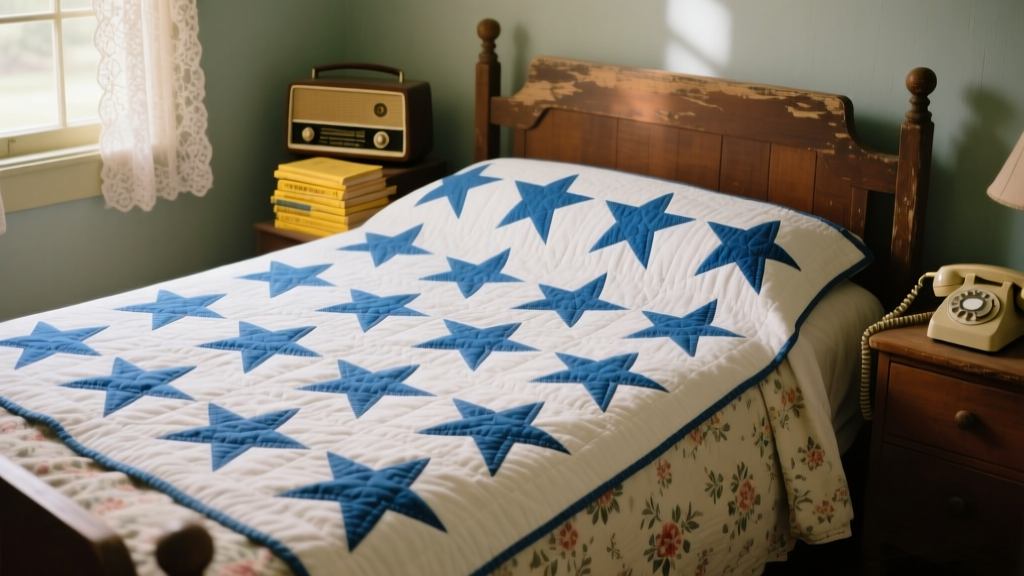
Quilts Appliqued Star: Decoding the 25-Blue-Stars White Quilt (71 × 77 Inches) — A Mid-Century American Textile Artifact

Florence Ceramics 'Edith' Figurine in Blue Glaze: A Mid-Century American Ceramic Treasure (7¼")

Tom and Jerry: The 1968 Milton Bradley Board Game — A Collector's Deep Dive

North Dakota School of Mines Vase: Carved & Painted Birds, Signed 'Mary E', 8¼ Inches — A Mid-Century Ceramic Treasure

The Railroad Bell Capitol Limited Diesel Locomotive: A Mid-Century Collectible Icon

How Major Auction Houses Are Leveraging eBay to Reach Vintage Toy Collectors — A 2024 Market Analysis

Stanley No. 99 Trammel: The Precision Layout Tool That Defined Mid-Century Woodworking Craftsmanship

The Horn Powder Box: Lawrence Perry’s Engraved 'Battle of Lake Erie' Portrait in 3-Inch Format — A Mid-Century Collectible Deep Dive

Ten Things You Didn’t Know About Margaret Brundage: The Pioneering Illustrator Who Defined Weird Tales’ Golden Age