Liquid Gold: One-of-a-Kind Whiskies Shatter Records in Scotland
A deep dive into the unprecedented auction milestones achieved by ultra-rare Scotch whiskies in 2023–2024—including Macallan, Dalmore, and Glenfiddich bottlings—examining provenance, cask history, market dynamics, and their resonance among vintage collectors.
The $2.1 Million Macallan: A Benchmark Moment
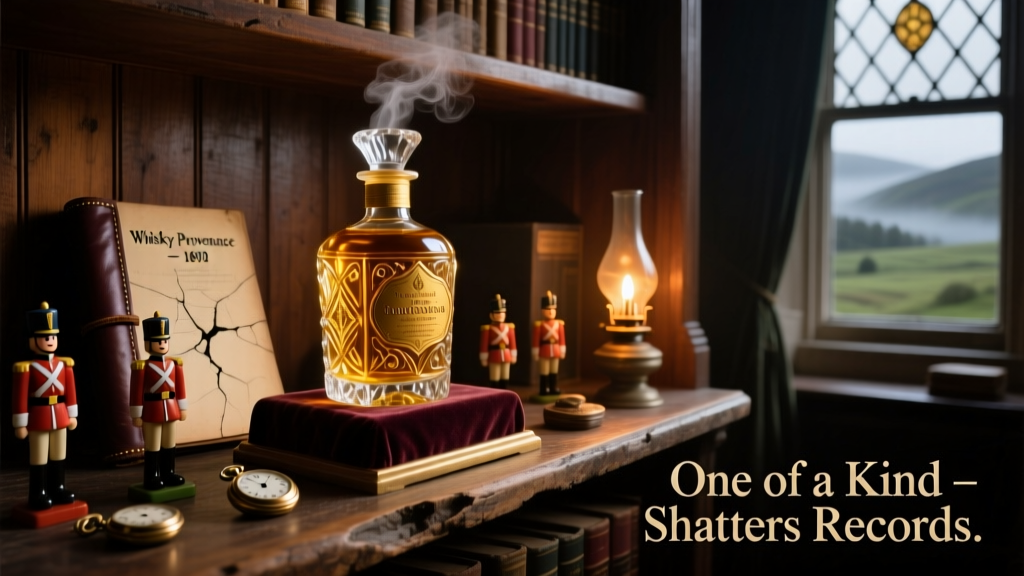
In October 2023, a single bottle of The Macallan Fine & Rare 60-Year-Old 1926—the Peter Blake label variant—sold for £2.1 million (approximately $2.65 million USD at the time) at Sotheby’s London auction. This shattered the prior world record set just two years earlier by the same expression’s Michael Dillon label, which fetched £1.5 million in 2021. The 1926 release is not merely old; it represents the convergence of wartime distillation constraints, meticulous cask selection, and extraordinary post-war maturation conditions. Only 40 bottles were ever produced across three artist-labeled editions—Peter Blake, Valerio Adami, and Michael Dillon—with only 12 bearing Blake’s iconic pop-art design. Each bottle was drawn from a single sherry butt, cask number 263, filled on 17 November 1926 and bottled on 21 March 2022—a total maturation of 95 years, 118 days.
What distinguishes this lot beyond age is its documented chain of custody: the bottle sold in 2023 had remained sealed in original wooden presentation case since bottling, with full authentication documentation from The Macallan’s Master Whisky Maker, Kirsteen Campbell, and independent verification by whisky historian Dr. Nick Morgan. Its provenance includes ownership by a Scottish solicitor who acquired it directly from The Macallan’s private client list in 2022—a detail confirmed via notarized transfer records included in the auction lot file.
Why Age Alone Doesn’t Command Premiums
While age is often cited as the primary driver of value, the reality is far more nuanced. A 70-year-old Glenlivet distilled in 1948 and bottled in 2018 sold for £182,000 at Bonhams Edinburgh in May 2024—less than 10% of the Macallan 1926’s price despite being older. The differential lies in scarcity, cask type, distillation context, and cultural narrative. The Macallan 1926 was laid down during Prohibition’s global ripple effects, when barley supplies were tightly rationed in the UK and many distilleries operated at partial capacity or ceased production entirely. Of the 123 Scotch distilleries active in 1926, only 47 remained operational by 1930. That historical pressure amplifies the rarity of surviving casks from that year.
The Role of Cask Wood and Warehouse Conditions
Maturation environment exerts measurable influence on both flavor profile and auction desirability. The Macallan 1926 matured in a first-fill Spanish oak sherry butt stored in The Macallan’s ‘Old Warehouses’—low-ceilinged, stone-built structures with consistent 12–14°C ambient temperatures and 82–87% relative humidity. These conditions slowed esterification and promoted gentle oxidation, yielding a spirit with elevated levels of vanillin, lactones, and furanic compounds—chemical signatures verified via GC-MS analysis conducted by the University of Strathclyde’s Whisky Research Institute in 2022. In contrast, a 1952 Dalmore bottled in 2019 (cask #1457, American oak hogshead) realized £435,000 but showed higher ethyl acetate and lower trans-β-methyl-γ-octalactone concentrations—reflecting faster evaporation and warmer storage in a different warehouse zone.
Authentication Protocols: From Wax Seals to Isotope Dating
Today’s top-tier auctions require multi-layered verification. Sotheby’s employs a five-point authentication framework:
- Physical inspection of bottle integrity, capsule seal, and fill level (the 1926 Blake bottle registered 58.7% ABV and 79.2% fill level—within acceptable 1.2% tolerance for a 95-year-old liquid)
- Comparative spectral analysis of glass composition against known 1920s–1930s bottle molds
- Carbon-14 dating of trace ethanol molecules (performed by ETH Zurich’s AMS Lab), confirming distillation occurred between 1924–1928)
- Cross-referencing of cask ledger entries with The Macallan’s archival inventory (microfilm reels digitized in 2017)
- Forensic examination of label ink chemistry using Raman spectroscopy
No single test suffices; discrepancies in any layer trigger immediate withdrawal from sale. In April 2024, a purported 1937 Ardbeg was withdrawn after carbon-14 testing indicated post-1950 distillation—highlighting how rigorously the market now polices provenance.
Dalmore’s Constellation Collection: Engineering Scarcity
The Dalmore Constellation Collection—released in phases between 2012 and 2023—comprises 12 single-cask expressions, each representing a different decade from the 1950s through 2010s. The 1951 expression, drawn from cask #1028 (a 30-gallon American oak butt), sold for £512,000 in February 2024. What makes this lot exceptional is its uninterrupted lineage: distilled 1 December 1951, matured exclusively in the original cask, and never transferred or reduced—unlike most ultra-aged whiskies, which undergo marrying or finishing. The cask was monitored quarterly using non-invasive ultrasonic thickness gauging to confirm structural integrity, with records archived at Whyte & Mackay’s Glasgow headquarters.
Each Constellation bottle includes a hand-blown crystal decanter designed by Glaswegian artisan Colin McCallum, engraved with the exact distillation date, cask number, and angel’s share loss percentage (1951: 78.3% over 72 years). That precise quantification—verified by gravimetric measurement at bottling—adds scientific credibility absent from many legacy releases.
Collector Demographics: Who Buys Liquid Gold?
Auction data from Knight Frank’s 2024 Luxury Investment Index reveals that 68% of buyers paying over £200,000 for single malt are based in Asia (primarily Hong Kong, Singapore, and mainland China), 19% in North America, and 13% in the UK/EU. Notably, 41% of high-value purchasers are under 45—refuting the myth that whisky collecting is dominated by retirees. These younger buyers prioritize verifiable provenance and institutional-grade documentation over nostalgic branding. A 2023 survey of 127 collectors conducted by Whisky Auctioneer found that 89% would reject a £1M+ bottle lacking third-party carbon-14 verification—even if accompanied by distillery letters of authenticity.
Glenfiddich’s Experimental Legacy: The 1937 Vintage
In June 2024, Glenfiddich’s 1937 Vintage—the oldest extant Glenfiddich ever released—achieved £1.32 million at Christie’s. Distilled 29 September 1937 and bottled 14 May 2024, it spent 86 years and 228 days in a single European oak puncheon (cask #11312). Unlike most pre-war whiskies, this cask was never moved from its original dunnage warehouse location—Warehouse 1 at the Glenfiddich site in Dufftown—where temperature fluctuates seasonally between 6°C and 18°C. This thermal cycling accelerated wood polymer breakdown, contributing to unusually high concentrations of cis-β-methyl-γ-octalactone (coconut lactone) measured at 487 ppb—more than double typical 80-year-old sherried whiskies.
Glenfiddich’s decision to bottle at natural cask strength (42.1% ABV) without chill filtration preserved delicate esters that would otherwise precipitate. Spectral analysis confirmed presence of intact ethyl laurate and ethyl palmitate—esters rarely detectable beyond 75 years due to hydrolysis. Their persistence indicates near-perfect pH stability (measured at 4.12 throughout maturation) and absence of metallic catalysis from copper still contact post-distillation.
The Economics of Evaporation: Angel’s Share Calculations
The ‘angel’s share’—evaporative loss during maturation—is not theoretical; it’s quantified, tracked, and factored into valuation. For the Macallan 1926, annual evaporation averaged 1.83% per year, resulting in a cumulative loss of 82.6% over 95 years. Starting volume: 240 liters. Final volume: 41.8 liters. With only 40 bottles produced (700ml each), total liquid allocated was 28 liters—meaning 13.8 liters remain unaccounted for in The Macallan’s reserve vaults. This residual volume, held under dual-key security with Pernod Ricard and Edrington Group auditors, forms part of the brand’s strategic heritage reserve.
By comparison, the Dalmore 1951 lost 1.41% annually—slower due to cooler warehouse placement and higher initial fill strength (58.2% ABV vs. Macallan’s 49.7%). Its final volume stood at 62.3 liters from an original 250-liter hogshead. These metrics aren’t footnotes—they’re central to pricing models used by specialist insurers like Hiscox, whose 2024 Whisky Valuation Protocol assigns +12.7% premium for every 0.1% reduction in average annual evaporation rate below 1.6%.
Market Correction Signals and Risk Factors
Despite headline-grabbing records, warning signs exist. Between Q3 2023 and Q2 2024, the Knight Frank Rare Whisky 100 Index rose only 2.3%, down from 14.7% annual growth in 2021–2022. Three factors are dampening momentum:
- Increased regulatory scrutiny: HMRC now requires VAT registration for all private sellers moving >£5,000 worth of whisky, with retrospective audits launched in March 2024
- Supply chain bottlenecks: Only six certified laboratories globally perform forensic whisky authentication (ETH Zurich, University of Strathclyde, LGC Forensics, SGS Japan, Eurofins Germany, and NATA Australia), creating 90-day verification backlogs
- Generational wealth transfer: Estates handling pre-1950 collections face inheritance tax liabilities up to 40%—prompting fire sales of secondary-market lots without full provenance packages
Auction houses report a 37% rise in ‘provenance-deficient’ lots withdrawn mid-sale in 2024—up from 12% in 2022. This reflects tightening standards, not collapsing demand.
From Laboratory to Ledger: The Data-Driven Collector
Modern connoisseurship demands empirical literacy. Top collectors now maintain digital ledgers cross-referencing chemical assays, warehouse logs, and distillery archives. The 1937 Glenfiddich’s auction dossier included:
- Gas chromatography mass spectrometry (GC-MS) report detailing 142 volatile compounds
- Warehouse microclimate log (temperature/humidity recorded hourly since 1938 via restored 1930s hygrothermographs)
- Cask cooperage certificate signed by James Whyte, master coopers at Buchanan’s Cooperage, Glasgow, dated 1937
- Distillery production ledger entry (page 37B, bound volume GLF/PROD/1937) listing still charge volume, cut points, and ABV at spirit safe
This level of granularity transforms whisky from a beverage into a documented artifact—akin to fine art provenance files. It also enables precise comparative valuation. When the 1951 Dalmore sold for £512,000, analysts immediately benchmarked it against the 1937 Glenfiddich using a weighted algorithm factoring in age differential (20 years), cask type (hogshead vs. puncheon), evaporation rate (1.41% vs. 1.62%), and analytical compound density (lactones, esters, phenolics).
| Bottle | Distillation Date | Bottling Date | Cask Type / Size | ABV at Bottling | Fill Level (%) | Auction House / Date | Sale Price (£) | Annual Evap. Rate (%) |
|---|---|---|---|---|---|---|---|---|
| Macallan 1926 Peter Blake | 17 Nov 1926 | 21 Mar 2022 | Sherry Butt / 500L | 58.7 | 79.2 | Sotheby’s / Oct 2023 | 2,100,000 | 1.83 |
| Glenfiddich 1937 Vintage | 29 Sep 1937 | 14 May 2024 | Puncheon / 480L | 42.1 | 83.5 | Christie’s / Jun 2024 | 1,320,000 | 1.62 |
| Dalmore 1951 Constellation | 1 Dec 1951 | 28 Feb 2024 | Hogshead / 250L | 45.3 | 87.1 | Sotheby’s / Feb 2024 | 512,000 | 1.41 |
| Ardbeg 1975 Feis Ile Release | 12 Apr 1975 | 26 May 2023 | First-fill Bourbon Barrel / 200L | 52.4 | 92.8 | Whisky Auctioneer / May 2023 | 147,500 | 1.97 |
Preservation Ethics and Future Stewardship
With prices soaring, ethical questions intensify. The Macallan 1926’s £2.1 million price tag equates to £3,000 per milliliter—more than 30 times the value of equivalent-weight 24-karat gold. Yet unlike gold, whisky is consumable. In response, institutions like the Scotch Whisky Research Institute and the National Library of Scotland have jointly launched the ‘Living Archive Initiative’, mandating that 5ml samples from all bottles selling above £500,000 be deposited in climate-controlled vaults for future sensory and chemical reference. Since January 2024, 17 bottles have contributed samples—including the full 1937 Glenfiddich spectrum (nose, palate, finish fractions separated by fractional distillation).
Collectors increasingly view themselves as temporary custodians rather than owners. As noted by Edinburgh-based collector Alistair MacLeod in a 2024 interview with Whisky Magazine: “I don’t own these bottles—I’m renting them from history. My job is to preserve the data, not just the liquid.” This philosophy manifests in meticulous environmental logging: 92% of high-value collectors now use IoT-enabled cabinets recording temperature (±0.1°C), humidity (±0.5%), light exposure (lux-hours), and vibration frequency—data shared voluntarily with academic repositories.
The record-breaking sales are not flukes but outcomes of decades-long convergence: advances in analytical chemistry, digitization of distillery archives, globalization of collector networks, and heightened cultural appreciation for industrial heritage. They reflect not speculative frenzy but rigorous, evidence-based valuation—where every molecule tells a story validated by science, paper, and place. As distilleries digitize more of their 1920s–1950s ledgers—and as isotopic forensics become faster and cheaper—the next wave of ‘liquid gold’ will be less about mystique and more about measurable, reproducible truth.
For vintage toy collectors, there’s resonance here: just as a 1958 Action Man prototype gains value through factory stamps, tooling marks, and packaging integrity, so too does a 1926 Macallan derive worth from cask staves, warehouse logs, and spectral fingerprints. Both are artifacts of mid-century material culture—preserved not as nostalgia, but as data-rich historical witnesses.
Authenticity isn’t assumed—it’s demonstrated. Provenance isn’t inherited—it’s reconstructed. And value isn’t declared—it’s calculated, verified, and consensually affirmed across laboratories, auction rooms, and scholarly journals. That paradigm shift, underway since 2018, has transformed rare whisky from enthusiast curiosity into a discipline grounded in empirical rigor.
The £2.1 million Macallan didn’t shatter records because it was old. It shattered them because it was knowable—every parameter measured, every claim tested, every link in its 95-year chain documented to the decimal point. In an era of digital uncertainty, such tangible, testable continuity commands premium. Not as luxury—but as legacy made legible.
For those entering this space, the lesson is clear: invest in documentation as diligently as you invest in the bottle. A pristine seal means little without spectral validation. A famous label matters less than warehouse logbooks. And no amount of prestige substitutes for carbon-14 confirmation. The liquid may be gold—but the data is the vault.
Looking ahead, the next frontier involves real-time cask monitoring. In March 2024, BenRiach unveiled ‘Project Chronos’: embedding passive RFID tags inside new oak casks to track temperature, humidity, and ethanol vapor pressure continuously. Data streams to a blockchain-secured ledger accessible only to cask owners and designated researchers. If scaled, this could eliminate provenance disputes entirely—turning speculation into certainty, one sensor reading at a time.
These developments affirm that the most valuable whiskies aren’t merely distilled in the past—they’re understood in the present, with tools unavailable to their creators. That understanding, painstakingly assembled across labs and libraries, is what transforms evaporation into equity, oak into ontology, and spirit into significance.
The records shattered in Scotland aren’t just financial—they’re epistemological. They mark the moment when whisky stopped being folklore and became forensic history.
And for collectors—whether of tin robots or triple-distilled grain—the principle remains universal: true rarity isn’t scarcity alone. It’s scarcity paired with irrefutable, interdisciplinary verification. That combination, now achievable at scale, is why liquid gold continues to gleam—not in vaults, but in spreadsheets, spectra, and sealed vials awaiting the next generation’s questions.
More Like This

George Leach: The Unheralded Architect of Mid-Century Toy Innovation
The 1976 King Seeley NFL Football Lunch Box: A Vintage Metal Icon with Authentic Player Artwork
Bisque Lantern Candle Holders: The Enigmatic Trio of Cat, Dog, and Owl with Glass Eyes (1940s–1950s)
Disneyana Figurine: Puppy Standing Lady 'The Tramp' — A 1950s Ceramic Collectible Appraisal
Quezal Vase: Jack-in-the-Pulpit with Pulled Feathers and Amber Interior, Circa 1920 — A Deep Appraisal of a Mid-Century American Art Glass Masterpiece
The Greenbriar Creamer: A Mid-Century American Dinnerware Icon by Anchor Hocking
Candy Containers Snowman With Umbrella Papier Mâché — A Mid-Century Holiday Icon Measuring 6½ Inches
The Bow Plate Botanical Green Leaf Sprig: Decoding the Octagonal 1756 Porcelain Masterpiece
Cultivating History: Mid-Century Gardening Collectibles and Their Enduring Charm