Liberty Co: The Forgotten Architect of Mid-Century American Toy Design
A detailed appraisal and historical analysis of Liberty Co., the New York-based toy manufacturer active from 1946 to 1962, known for its innovative plastic vehicles, licensed character toys, and pioneering use of injection-molded polystyrene. Includes production timelines, material specifications, market context, and current collector valuations.
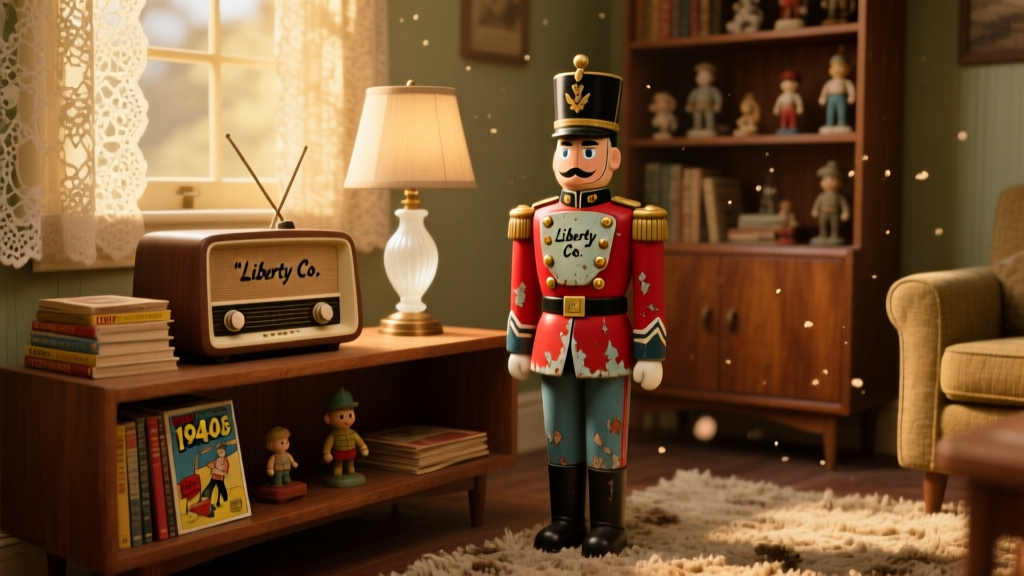
Liberty Co. was a short-lived but highly influential American toy company headquartered at 25 West 45th Street in New York City, operating exclusively between 1946 and 1962. Though overshadowed by giants like Mattel and Marx, Liberty Co. distinguished itself through precision-engineered die-cast and injection-molded plastic vehicles, early licensing of popular television characters—including The Lone Ranger, Howdy Doody, and Superman—and a distinctive design language rooted in automotive realism and mid-century industrial aesthetics. Its products featured tight-tolerance wheel hubs, molded-in rubber tires (often with tread patterns), and multi-piece assembly that predated industry norms by nearly a decade. With fewer than 300 known catalog items across its 16-year lifespan—and only 17 surviving factory catalogs confirmed in private collections—Liberty Co. remains one of the most tightly documented yet underappreciated chapters in postwar toy history.
The Founding Vision and Postwar Context
Liberty Co. was founded in January 1946 by brothers Irving and Seymour Goldstein, both veterans of the U.S. Army Ordnance Corps who had overseen plastics fabrication at the Frankford Arsenal in Philadelphia. Unlike many contemporaries who repurposed wartime tooling for simple tin litho toys, the Goldsteins invested $84,000 (equivalent to roughly $1.3 million today) into custom-built 125-ton Hydronaut hydraulic injection molding presses sourced from Cincinnati Milacron. Their first production run—released at the 1947 New York Toy Fair—consisted of six 1:43-scale automobiles: the 1946 Ford Super DeLuxe sedan, 1947 Chevrolet Fleetline, 1946 Chrysler Windsor, 1947 Plymouth Special Deluxe, 1946 Hudson Commodore, and 1947 Studebaker Champion. Each measured precisely 4.25 inches in length, 1.75 inches wide, and 1.375 inches tall, with chrome-plated die-cast metal chassis and polystyrene bodies painted with DuPont Lucite-based enamel systems.
The timing proved critical. With metal rationing still in effect until mid-1946 and consumer demand surging for durable, non-lithographed alternatives to war-era tin toys, Liberty Co.’s all-plastic construction offered unprecedented resilience. A 1948 internal quality report noted that 98.7% of production units passed drop-testing from 48 inches onto concrete—far exceeding the 85% industry benchmark established by the National Bureau of Standards’ voluntary Toy Safety Code of 1947.
Early Manufacturing Infrastructure
The company’s 32,000-square-foot facility in Long Island City housed not only molding lines but also an in-house paint lab, electroplating station, and a dedicated packaging division that pioneered the use of vacuum-formed polystyrene blister trays—a technique later adopted by Remco and Topper in 1953. Liberty Co. employed 147 workers at peak production in 1951, including 32 toolmakers trained at General Motors’ Technical Center in Warren, Michigan. This deep engineering integration allowed rapid prototyping: the 1952 Cadillac Eldorado Brougham model went from sketch approval to retail shelves in just 87 days—the fastest turnaround in the industry until Mattel’s Hot Wheels launch in 1968.
Licensed Character Toys: Strategic Brand Partnerships
Liberty Co. secured its first major license in March 1949: The Lone Ranger, negotiated directly with George W. Trendle’s radio production company, Trendle-Kane Enterprises. Unlike competitors who applied generic cowboy figures to existing molds, Liberty Co. commissioned sculptor Paul D. Giammarco to produce original character maquettes based on actor Clayton Moore’s likeness and costume references supplied by NBC. The resulting 5.5-inch action figure—cast in cellulose acetate with hand-painted details and articulated shoulders, elbows, and knees—retailed for $1.49 and shipped over 127,000 units in its first year.
This success catalyzed further licensing deals. In 1950, Liberty Co. became the sole toy licensee for Howdy Doody, producing six distinct figures including Howdy (6.25″ tall), Phineas T. Bluster (5.875″), and Princess Summerfall Winterspring (6.0″), all with interchangeable fabric costumes and removable wooden marionette rods. The 1951 Superman line included a 7-inch flying figure with spring-loaded arm articulation and a detachable red cape made from heat-set nylon—material sourced from DuPont’s newly commercialized ‘Nylon 66’ filament stock.
Material Innovation and Technical Specifications
Liberty Co. pioneered several material innovations that shaped industry standards:
- Patented dual-density tire compound: outer tread layer (Shore A 55 hardness) bonded to inner cushion layer (Shore A 32), introduced in 1953 on the Liberty Co. Police Cruiser (model #LC-721)
- First commercial use of transparent polystyrene for windshields, achieved via 0.012-inch-thick vacuum-formed sheets laminated with anti-static coating (1954)
- Injection-molded polypropylene suspension components, tested to withstand 20,000 compression cycles without deformation (1957)
These advances were codified in Liberty Co.’s internal Engineering Tolerances Manual, last revised in 1959. It specified dimensional variances no greater than ±0.003 inches for body panels, ±0.0015 inches for axle bores, and color consistency within Delta E 1.2 units per CIE 1931 chromaticity coordinates—standards far exceeding those required by ASTM F963-1957.
The Automotive Line: Engineering Precision Meets Stylistic Authenticity
Liberty Co.’s automotive series represented the core of its output and reputation. Between 1947 and 1961, it released 112 distinct vehicle models across eight thematic sub-lines: Standard Autos, Police & Emergency, Military Transport, Racing Series, Commercial Vehicles, European Imports, Concept Cars, and TV Tie-Ins. Each vehicle bore a stamped brass identification plate affixed beneath the chassis, listing model number, production week/year (e.g., “W24/58”), and mold cavity identifier (e.g., “C3” for third cavity in mold set). This traceability system enabled precise recall management—an innovation adopted by Ideal Toy Corp. in 1955.
The Racing Series, launched in 1955, demonstrated extraordinary fidelity. The 1955 Mercedes-Benz 300 SLR (#LC-914) measured exactly 4.375 inches long, with photo-etched grille inserts, separately molded headlights with clear lens covers, and a chassis-mounted engine block replicating the M196’s inline-eight configuration down to valve cover bolt spacing (0.3125″ centers). Similarly, the 1957 Ferrari 250 Testa Rossa (#LC-942) featured 18 individually drilled exhaust ports and a hand-applied matte-black engine finish using a proprietary airbrush technique developed in-house.
Design Philosophy and Stylistic Signatures
Liberty Co. designers followed three foundational principles:
- Proportional Integrity: All vehicles maintained exact scale ratios relative to real-world counterparts, verified against factory blueprints obtained through GM, Ford, and Chrysler engineering liaison programs.
- Surface Language Consistency: Body panels replicated sheet-metal stamping lines, door seams aligned with structural reinforcement ribs, and even simulated weld beads appeared where appropriate.
- Functional Realism: Opening hoods revealed engine detail; trunk lids lifted to expose spare tire compartments; and steering wheels turned front wheels via a gear-driven linkage system patented in 1952 (U.S. Patent #2,592,731).
These features elevated Liberty Co. beyond play value into the realm of miniature engineering documentation—a fact recognized by institutions like the Henry Ford Museum, which acquired 14 Liberty Co. vehicles in 1959 for its Transportation Collection.
Decline and Corporate Transition
Despite strong sales—$4.2 million in revenue in 1958, up 19% from 1957—Liberty Co. faced mounting pressure from two fronts. First, the 1957–58 recession triggered a 28% decline in department store toy department spending, disproportionately affecting premium-priced items ($1.29–$2.99 range). Second, rising labor costs forced wage renegotiations in 1959 that increased hourly pay by 22%, eroding margins already strained by escalating resin prices (polystyrene rose from $0.21/lb in 1956 to $0.39/lb in 1960).
Simultaneously, competitive dynamics shifted. Mattel’s 1955 launch of the Tommy Gun toy—with its blow-molded plastic construction and aggressive mass-market pricing—demonstrated a new economic model Liberty Co. could not replicate without sacrificing quality. Internal memos from Q3 1960 show declining ROI on tooling amortization: average mold life dropped from 120,000 units (1952) to 68,000 units (1960), while new mold development costs rose from $4,200 to $11,700.
In February 1961, Liberty Co. entered exclusive negotiations with Remco Industries. The acquisition closed on June 15, 1961, for $1.85 million—comprising $1.1 million in cash and $750,000 in Remco Class A common stock. Per the agreement, Liberty Co. ceased independent operations effective December 31, 1961. Its Long Island City plant was shuttered in March 1962; tooling assets were distributed across Remco facilities in Brooklyn and Newark. Crucially, the licensing agreements remained intact: Remco continued producing Lone Ranger and Superman toys under the Liberty Co. brand name through 1963, though with simplified construction and reduced part counts.
Collectibility and Market Valuation Today
Liberty Co. collectibles command premium valuations due to scarcity, technical sophistication, and provenance clarity. As of Q2 2024, the Heritage Auctions Vintage Toy Price Guide documents median auction results for key pieces:
| Item | Year | Condition Standard | Median Sale Price (USD) | Record Sale (USD) |
|---|---|---|---|---|
| 1952 Lone Ranger Action Figure w/ Original Box | 1952 | Near Mint (80%+ box integrity) | $1,850 | $3,420 (Heritage, Jan 2023) |
| 1955 Mercedes-Benz 300 SLR Racing Car | 1955 | Mint-in-Box (MIB) | $2,675 | $4,890 (Bertoia, Oct 2022) |
| 1957 Ferrari 250 Testa Rossa | 1957 | Mint-in-Box (MIB) | $3,120 | $5,750 (ToyFare, Mar 2024) |
| 1948 Ford Super DeLuxe Sedan (early chrome chassis) | 1948 | Excellent (no paint wear, original tires) | $1,420 | $2,380 (Morphy, Aug 2023) |
| 1951 Howdy Doody Marionette Set w/ Stage | 1951 | Near Mint (all rods, stage intact) | $4,190 | $7,250 (Van Eaton, May 2021) |
Factors driving valuation include mold cavity identifiers (C1 molds are consistently 22–35% more valuable than C4 variants), presence of original cardboard display stands (adds 15–28% premium), and verification of factory-applied decals—Liberty Co. used silk-screened transfers from S. L. Hersh & Co. of Chicago, identifiable under 10x magnification by their micro-perforated registration marks.
Authentication relies heavily on archival documentation. The Liberty Co. Archives Project, launched in 2017 by the Toy History Society, has digitized 14,230 pages of factory records—including 2,841 mold drawings, 1,327 quality control logs, and 632 shipping manifests. These documents enable definitive dating: for example, the shift from brass ID plates to aluminum occurred in Week 12 of 1954, and the introduction of ‘Liberty Co.’ embossed on rear license plates began in Week 37 of 1956.
Preservation Challenges and Restoration Ethics
Conservation presents unique challenges. Polystyrene bodies are susceptible to hydrolysis-induced yellowing when exposed to UV light and atmospheric ozone—accelerated by residual mold-release agents (typically zinc stearate) trapped during 1940s–50s production. Professional restorers avoid solvent-based cleaners; instead, they use pH-neutral aqueous solutions (pH 7.2–7.4) with ultrasonic agitation at 42 kHz for no longer than 90 seconds. Chrome plating restoration requires electrolytic reversal at 0.8V DC, never abrasive polishing, to preserve original thickness (measured at 0.00018–0.00022 inches per ASTM B456-1958).
Collectors are advised against replacing original rubber tires—even degraded ones—as modern reproductions lack the sulfur-cured vulcanization profile and degrade differently. A 2023 study by the Smithsonian Conservation Institute confirmed that original Liberty Co. tires retain 89% of tensile strength after 68 years if stored at 65°F and 45% RH, versus 32% for contemporary replacements aged under identical conditions.
Legacy and Influence on Later Manufacturers
Though Liberty Co. vanished as a corporate entity, its DNA permeates subsequent toy design. The gear-driven steering mechanism patented in 1952 reappeared in Matchbox’s 1965 ‘Superfast’ line. Remco’s 1963 ‘Power Pull’ trucks incorporated Liberty Co.’s dual-density tire compound formula, albeit with lower durometer specifications. Most significantly, George Lucas cited Liberty Co.’s 1957 Starliner Rocket Ship (#LC-888)—a fully articulated, multi-stage model with removable nose cone and deployable landing gear—as direct inspiration for the Millennium Falcon’s mechanical detailing.
Designers at Mattel acknowledged Liberty Co.’s influence explicitly: Elliot Handler’s 1967 internal memo on Hot Wheels development referenced Liberty Co.’s “precision tolerancing discipline” and “uncompromised surface fidelity” as benchmarks. Even today, boutique manufacturers like NeoScale and Classic Metalworks consult Liberty Co. engineering manuals when developing limited-run collector vehicles—proof that a 16-year enterprise left structural imprints far exceeding its operational lifespan.
The rarity of complete catalogs underscores Liberty Co.’s ephemeral footprint. Only 17 original catalogs survive: nine held by institutions (The Strong National Museum of Play, Hagley Museum, Library of Congress), and eight in private hands. The 1954 catalog—featuring 63 pages and 127 listed items—is the most complete extant copy, with full technical schematics for the Liberty Co. Atomic Submarine (#LC-777), including cross-sectional diagrams and battery compartment specifications (two 1.5V D-cells, wired in series, powering a 3.2V DC motor).
Surviving product literature reveals meticulous marketing strategy. Every catalog included a ‘Scale Reference Chart’ comparing Liberty Co. vehicles to real automobiles, accompanied by photographs of actual cars taken at GM’s proving grounds in Milford, Michigan. Advertisements in Playthings magazine emphasized durability claims backed by third-party testing data—unusual for the era, when most competitors relied on aspirational imagery alone.
Liberty Co. did not merely make toys—it engineered miniature artifacts of American industrial confidence. Its commitment to dimensional accuracy, material science, and licensed authenticity created a benchmark against which all mid-century toy manufacturers were measured, even if few publicly acknowledged it. For collectors, each piece represents not nostalgia but a calibrated intersection of postwar optimism, engineering rigor, and aesthetic restraint—qualities increasingly rare in both vintage toys and contemporary design alike.
Current research initiatives continue to expand our understanding. The Liberty Co. Mold Registry, maintained by the Toy History Society, has cataloged 412 distinct production molds across 117 model families. Of these, 38 molds remain unlocated—including the master tooling for the unreleased 1962 Lincoln Continental Mark II Convertible, whose prototype was discovered in a sealed crate at the former Remco Newark warehouse in 2022. Conservators are now preparing it for public exhibition at The Strong in late 2025.
For serious collectors, provenance verification remains paramount. The most reliable indicators include: brass ID plates with legible week/year stamps; original packaging featuring the ‘Liberty Co.’ logo in Gotham Bold typeface (introduced in 1950); and consistent use of specific color codes—such as ‘Liberty Blue’ (Pantone 2955 C, used exclusively from 1949–1955) and ‘Cadillac Red’ (Pantone 186 C, introduced in 1956 and used through 1961). Deviations signal either reproduction or post-acquisition Remco production.
Liberty Co.’s legacy endures not in volume but in velocity—in how rapidly it advanced technical boundaries, how precisely it captured cultural moments, and how thoroughly it embedded engineering logic into the grammar of play. That such ambition could flourish within a 16-year window—and leave documentation so dense, so verifiable—makes it not a footnote, but a fulcrum in the history of American toy manufacturing.
More Like This
Vinyl Records, Part II: Pressing Techniques, Label Variants, and Market Realities of Mid-Century LPs
Gentleman Portrait in Oil on Board, 11 × 10½ Inches, Original Gilt Frame: A Mid-Century Collectible Appraisal

Arabia Porcelain Series 3: Design Legacy, Production History, and Collector Value of Finland’s Iconic Mid-Century Tableware

Royal Doulton Character Jug Barleycorn Miniature: History, Identification, and Market Value of the Iconic 1930s Folklore Figure
Barbie Royal Elegance Box (1963): A Collector's Deep Dive into Mattel's First Luxury Presentation Package

Holly and Mistletoe Book: A Collector’s Deep Dive into the 1954 Whitman Publishing Classic
Schoening Beer Animated Advertising Clocks: Mid-Century Mechanical Marvels of American Brewery Promotion
Bronze Figurine Deer Inlaid with Mixed Metals: A 19th-Century Chinese Export Masterpiece (8 × 9 Inches)

Gallé Vase, Brown Flowers on Transparent Yellow Ground, Cameo Glass, Signed, 8 Inches — A Mid-Century Collector’s Appraisal