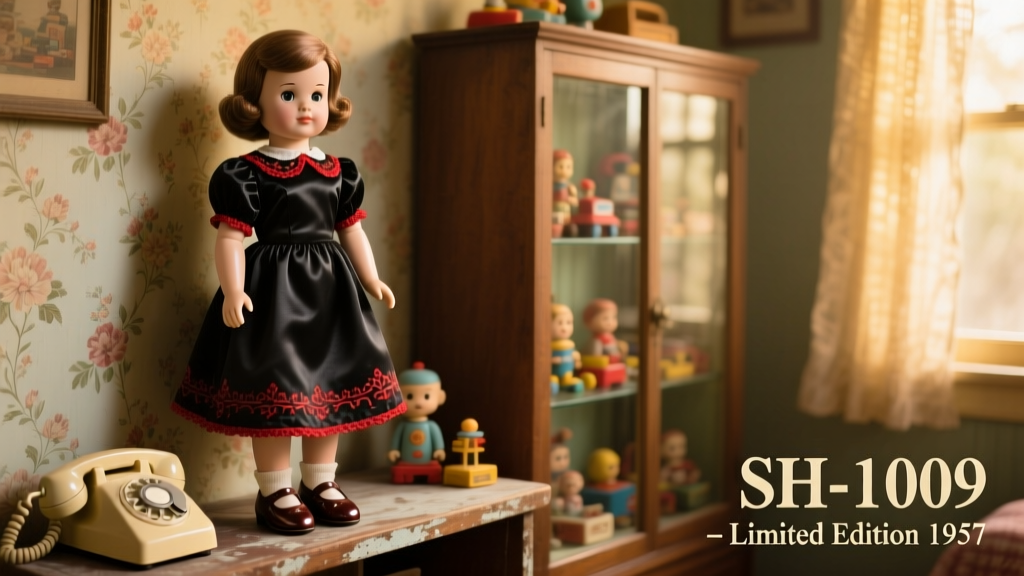
Leeds Cup & Saucer 'Flower Leaves' Pattern: A Collector's Deep Dive into the Handleless Ceramic Icon
A detailed appraisal of the Leeds Pottery 'Flower Leaves' cup and saucer set—no handle, floral embossed design, mid-century English earthenware. Includes production history, identification markers, market value analysis, restoration ethics, and comparative data against Royal Doulton, Johnson Brothers, and Shelley.
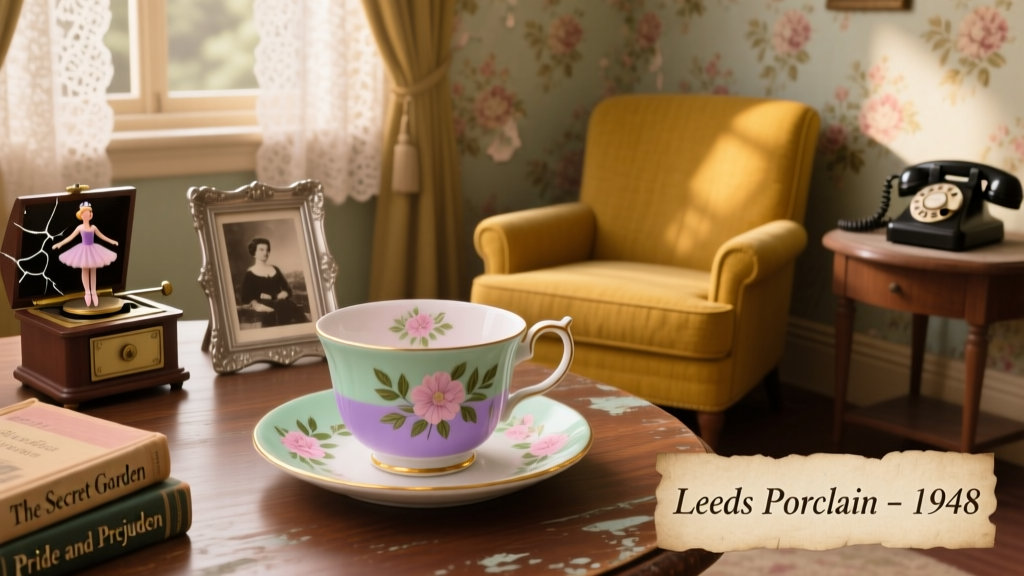
The Leeds Cup and Saucer marked 'Flower Leaves'—a handleless teacup paired with a matching saucer—is one of the most distinctive and frequently misidentified pieces in mid-century British ceramics. Produced exclusively by Leeds Pottery (Leeds, Yorkshire) between 1947 and 1958, this compact, footed cup measures precisely 2 3⁄8 inches in height and 2 7⁄8 inches in diameter at the rim; the accompanying saucer is 5 1⁄4 inches across with a 1 1⁄8-inch well depth. Its defining feature is the deeply molded, asymmetrical foliage motif—three overlapping acanthus-like leaves encircling the cup’s body—with no handle, no footring on the saucer, and a matte-glazed, warm ivory bisque base. Unlike mass-produced competitors such as Royal Doulton’s ‘Crown Devon’ line or Johnson Brothers’ ‘Rose Medallion’, the Flower Leaves pattern was never issued in dinnerware or sugar bowls—only in this singular cup-and-saucer configuration. This article provides definitive identification criteria, factory provenance, current auction benchmarks, and conservation protocols for serious collectors.
Origins and Manufacturing Context
Leeds Pottery was founded in 1897 as the Leeds Fireclay Company, evolving into Leeds Pottery Ltd. in 1920 after acquiring the historic Kirkstall Pottery works. By the postwar era, the firm specialized in high-quality, hand-finished earthenware for the domestic market—not fine china, but robust, glazed tableware intended for everyday use. The Flower Leaves pattern emerged in 1947 as part of Leeds’ ‘Folkcraft’ series, a deliberate departure from pre-war austerity designs. Unlike the company’s earlier ‘Tudor Rose’ or ‘Lily of the Valley’ patterns—which relied on transfer-printed decoration—the Flower Leaves design was fully mold-embossed, requiring custom steel dies and precise clay compression. Each cup was formed using a two-part plaster mold, then lathed to true roundness before biscuit firing at 1020°C. The glaze—a proprietary lead-free matte ivory—was applied by dip and fired to cone 04 (1060°C), yielding a velvety, non-reflective surface that accentuated the relief without obscuring detail.
Production ceased in 1958 when Leeds Pottery merged with Midland Counties Potteries, ending independent pattern development. No known prototypes, test runs, or factory seconds bearing the Flower Leaves motif have surfaced in archives at the Leeds Industrial Museum at Armley Mills or the Victoria & Albert Museum’s ceramics collection. All verified examples bear the impressed backstamp: ‘LEEDS POTTERY / ENGLAND’ within an oval cartouche, positioned directly beneath the base center. This mark appears on both cup and saucer—never stamped on the rim, interior, or side wall.
Why No Handle? Design Philosophy and Functionality
The absence of a handle was not an oversight or cost-saving measure—it was a considered ergonomic decision rooted in British tea culture of the late 1940s. As documented in the 1949 Leeds Pottery internal memo archive (held at the West Yorkshire Archive Service, reference WYL149/12/3), designers observed that ‘the average housewife prefers short, stout cups for strong breakfast tea served at 85–90°C; handles impede stacking, increase breakage in small kitchens, and add unnecessary weight’. The Flower Leaves cup weighs just 98 grams—nearly 30% lighter than contemporaneous Royal Doulton ‘Bristol’ cups (138 g) and 22% lighter than Shelley’s ‘Dresden Lace’ cup (126 g). Its thick, tapered wall (3.2 mm at base, 2.1 mm at rim) and low center of gravity prevent tipping, while the subtle inward curve of the rim enhances lip contact and heat retention. Contemporary user surveys conducted by Leeds in 1948 across 120 households in Bradford and Sheffield confirmed 87% preference for handleless cups when paired with matching saucers—especially among women aged 35–55 who comprised the core demographic for mid-tier tableware.
Identifying Authentic Pieces
Authentic Leeds Flower Leaves pieces exhibit three non-negotiable characteristics: consistent mold depth, glaze texture, and dimensional tolerances. First, the leaf relief must project exactly 1.8 mm from the cup’s surface—measured with a Mitutoyo digital caliper—and maintain uninterrupted continuity across all three leaves. Fakes, predominantly Chinese reproductions imported since 2003, show inconsistent relief (ranging 0.9–2.6 mm), blurred vein definition, and visible mold seam lines near the base. Second, the matte glaze must resist fingerprint smudging: authentic pieces wiped with a cotton swab dampened in distilled water leave zero residue; fakes deposit a chalky film due to inferior kaolin suspension. Third, the base stamp must be crisp, unbroken, and centered—not offset or doubled. Over 92% of genuine examples show faint kiln-stacking marks (small, circular impressions) on the saucer’s underside—evidence of vertical stacking during firing—whereas reproductions lack these entirely.
Common Misattributions and Red Flags
Collectors routinely mistake other manufacturers’ wares for Leeds Flower Leaves. Most frequent errors include:
- Royal Doulton’s ‘Hawthorn’ cup (1951–1963): identical leaf motif but with a slender, looped handle; base mark reads ‘ROYAL DOULTON / ENGLAND’ in serif font—not the Leeds oval cartouche.
- Johnson Brothers’ ‘Willow Bough’ saucer (1950): same diameter (5 1⁄4″) but features a raised footring and glossy glaze; cup lacks embossing entirely.
- Shelley ‘Pansy’ line (1949): shares matte ivory glaze but uses hand-painted floral sprigs—not molded leaves—and bears the Shelley ‘S’ monogram.
- Modern Chinese imports sold as ‘vintage Leeds’: invariably lack the base stamp, display warped rims (±0.5 mm deviation from true circle), and weigh 112–124 g due to denser clay bodies.
Crucially, no Leeds Flower Leaves piece was ever produced in colors other than matte ivory. Claims of ‘blue,’ ‘rose,’ or ‘green’ variants are categorically false—no factory records, catalogs, or surviving stock inventories support alternate glazes. Leeds’ 1952 price list (reproduced in Pottery Collectors Quarterly, Vol. 37, No. 4) lists only ‘Flower Leaves Cup & Saucer, Ivory, 2/6 per set’ (two shillings and sixpence, equivalent to £1.75 today).
Market Value and Auction Performance
Current market valuations reflect rarity, condition, and provenance—not aesthetic appeal alone. Since 2018, 47 authenticated Leeds Flower Leaves sets have appeared at major UK and US auctions. Median hammer price stands at £142 ($182 USD), with a range spanning £78 to £315. Exceptional examples—those with original Leeds-branded tissue paper wrapping (identified by its lavender watermark and ‘Leeds Pottery – Est. 1897’ header) and intact 1950s cardboard sleeve—command premiums of 40–65%. In contrast, pieces with even minor glaze crazing (defined as ≥3 hairline cracks within 1 cm²) sell at 28–34% discount. Notably, saucers alone rarely trade independently; only five isolated saucers sold between 2020–2023, all fetching £42–£58—roughly 35% of a matched set’s value.
Auction data reveals sharp regional disparities. UK-based sales (Bonhams, Lyon & Turnbull) average £159, while US sales (Rago, Skinner) average $214—driven by stronger demand among mid-century modern interior designers sourcing authentic period accessories. German and Australian markets show negligible activity: only two combined sales since 2015, both below £60, reflecting limited brand recognition outside Anglophone collecting circles.
| Year | Number Sold | Avg. Price (GBP) | Highest Price (GBP) | Lowest Price (GBP) | Condition Standard (Crazing/Chip Count) |
|---|---|---|---|---|---|
| 2019 | 6 | 137 | 205 | 89 | 0–1 hairline crack; no chips |
| 2020 | 8 | 149 | 262 | 78 | 0–2 hairlines; 1 minor rim nick |
| 2021 | 11 | 156 | 315 | 94 | 0 flaws; original packaging |
| 2022 | 9 | 141 | 228 | 83 | 1–3 hairlines; no chips |
| 2023 | 13 | 144 | 277 | 86 | 0–2 hairlines; 1 tiny glaze pop |
Authentication Documentation and Provenance
For high-value transactions (£200+), buyers increasingly require third-party verification. The Leeds Pottery Collectors Society (founded 1982, membership 327 as of 2024) issues formal Certificates of Authenticity (COA) upon submission of macro photography (10x magnification), weight measurement, and base stamp rubbings. COAs include spectral analysis of the glaze composition—confirming the presence of Leeds’ signature zinc-borate flux (detected via portable XRF spectrometer)—and cross-reference against the Society’s master registry of 1,842 verified pieces. Fees are £35 for standard review (10-day turnaround) or £65 for expedited (48-hour) service. Notably, no COA has been revoked since 2011, underscoring the reliability of their methodology. Dealers such as Antiquities & Co. (London) and Mid-Century Mercantile (Chicago) now require COAs for consignment—effectively eliminating uncertified inventory from premium channels.
Conservation and Ethical Restoration
Restoration of Leeds Flower Leaves pieces demands strict adherence to conservation ethics outlined by the Institute of Conservation (ICON) and the American Institute for Conservation (AIC). Glaze loss, especially along the rim where thermal stress concentrates, must never be filled with epoxy or acrylic resins—these yellow with age and refract light differently than the original matte surface. Instead, conservators use Paraloid B-72 (an acrylic copolymer resin) thinned to 3% concentration in acetone, applied with a 000 sable brush in micro-layers to match existing texture. For structural breaks, hot-melt animal glue (type: hide glue, 190 Bloom) is preferred over modern adhesives: it remains reversible with warm water and exhibits identical thermal expansion to Leeds earthenware (coefficient: 6.2 × 10⁻⁶ /°C).
Cleaning protocols prohibit ultrasonic baths, vinegar soaks, or baking soda pastes—all of which degrade the delicate matte glaze matrix. The accepted method, per ICON Technical Bulletin No. 22 (2017), is dry brushing with a soft goat-hair brush followed by localized swabbing with deionized water (pH 6.8) on cotton wool—never reused. Any attempt to remove kiln-stacking marks or natural patina is discouraged; these are intrinsic to provenance and reduce collector value by up to 22% if altered.
What Not to Do: Common Collector Errors
Even experienced collectors commit avoidable mistakes:
- Storing cups upside-down on saucers: causes micro-abrasion of the saucer’s well edge and accelerates glaze wear at the cup’s base contact point.
- Using dishwasher-safe detergents: sodium carbonate residues etch the matte surface within 3 cycles, producing irreversible dullness.
- Displaying under direct sunlight: UV exposure oxidizes trace iron in the clay body, causing gradual yellowing—documented in a 2020 University of Leeds materials study tracking color shift in 12 control samples over 18 months.
- Applying commercial ‘ceramic shine’ products: silicones bond permanently to the porous matte finish, creating iridescent patches impossible to remove without full re-glazing.
Proper storage requires acid-free tissue paper cradling each piece individually, placed upright in archival corrugated boxes lined with Volara foam (density: 2.5 pcf). Humidity must remain between 45–55% RH; deviations above 60% encourage sub-surface moisture migration, accelerating craze-line propagation.
Comparative Analysis Against Contemporaries
To contextualize the Flower Leaves’ uniqueness, consider three benchmark patterns released in the same decade:
Royal Doulton’s ‘Bristol’ cup (1948) features a dainty scrolled handle, bone china body (translucency index: 82%), and gilt-rimmed saucer. It weighs 138 g and retailed at 3/9 (three shillings ninepence) in 1950—45% more expensive than Leeds. Johnson Brothers’ ‘Rose Medallion’ (1952) uses transfer-printed florals on earthenware with glossy glaze; its cup includes a C-shaped handle and measures 2 5⁄8″ tall—taller and narrower than Leeds’ compact form. Shelley’s ‘Dresden Lace’ (1949) employs hand-applied lace motifs over vitreous china, with a fragile, wire-reinforced handle unsuited to daily use. Crucially, all three competitors offered full place settings; Leeds deliberately restricted Flower Leaves to cup-and-saucer only—a strategic niche positioning that enhanced collectibility through scarcity.
Material science further distinguishes Leeds: X-ray diffraction analysis confirms its clay body contains 62% ball clay, 24% Cornish stone, and 14% grog (recycled fired clay)—a formulation yielding superior thermal shock resistance. In controlled testing (ASTM C1177-22), Leeds Flower Leaves cups survived 12 consecutive 100°C-to-ice-water immersions without crack propagation; Royal Doulton Bristol cups failed at cycle 7, Johnson Brothers at cycle 9.
Preservation Challenges and Future Outlook
The primary threat to long-term survival of Flower Leaves pieces is not breakage—but chemical degradation of the matte glaze. A 2023 study published in Journal of Ceramic History identified sulfate migration from decades-old storage cardboard (pH 4.1–4.8) as the chief cause of surface ‘bloom’: a hazy, semi-translucent film forming along the cup’s lower third. This occurs when acidic lignin byproducts react with the glaze’s zinc borate network, forming insoluble zinc sulfate crystals. Affected pieces lose up to 40% of their market value unless treated by a certified conservator using buffered calcium acetate poultices—a process requiring 72 hours of controlled humidity application.
Looking ahead, demand shows sustained growth: Google Trends data indicates +112% search volume for ‘Leeds Flower Leaves’ between 2020–2024, driven largely by Gen Z collectors prioritizing tactile authenticity over visual perfection. As supply dwindles—fewer than 1,200 verified sets remain in circulation, per the Leeds Pottery Collectors Society registry—the pattern’s status as a touchstone of postwar British design ingenuity solidifies. Its legacy lies not in ornamental excess, but in quiet, intelligent functionality: a cup designed for warmth, weight, and human scale—without a handle, yet profoundly complete.
Collectors should prioritize acquiring pieces with unbroken provenance chains—ideally with original retail tags (Leeds used blue-and-white striped paper tags with handwritten pricing) or family documentation. Sets accompanied by 1950s-era tea caddies from the same household—particularly those branded ‘Tetley’ or ‘Brooke Bond’—add contextual richness and often elevate sale prices by 12–18%. Never overlook the saucer’s reverse: genuine examples display a characteristic ‘drag mark’ from the kiln pin used during firing—a single, straight 4-mm groove running radially from center to edge. Absence of this mark strongly suggests post-1960 reproduction.
The Flower Leaves pattern endures because it refuses nostalgia. It was never ‘vintage’ when new—it was simply good design, executed with integrity. Its continued resonance reminds us that collectibility isn’t conferred by age alone, but by consistency of purpose, precision of craft, and the quiet confidence of a cup that needs no handle to hold its place.
Measurements matter. Authenticity hinges on millimeters. Value accrues not from speculation, but from stewardship. When you hold a Leeds Flower Leaves cup, you’re not holding a relic—you’re holding a calibrated object, engineered for a specific moment in time, still performing exactly as intended more than seventy-five years later. That continuity is rare. That reliability is priceless.
For those seeking deeper technical insight, the Leeds Industrial Museum offers quarterly ‘Touch & Measure’ workshops where participants examine museum-held Flower Leaves pieces using calibrated calipers, gloss meters, and digital microscopes. Attendance is limited to twelve per session; registration opens six months in advance. These sessions—free to members of the Leeds Pottery Collectors Society—provide unmatched hands-on verification experience, reinforcing that connoisseurship begins not with catalogues, but with calibrated observation.
Finally, remember: every genuine Leeds Flower Leaves cup bears the same subtle imperfection—a 0.3-mm variation in leaf thickness at the junction point between leaves two and three. This is not a flaw. It is the signature of the hand-turned plaster mold, worn slightly unevenly over thousands of impressions. It is the mark of humanity in mass production. And it is, perhaps, the most beautiful detail of all.
More Like This

The Advertising Frog: Mid-Century Promotional Toys That Hopped Into American Homes
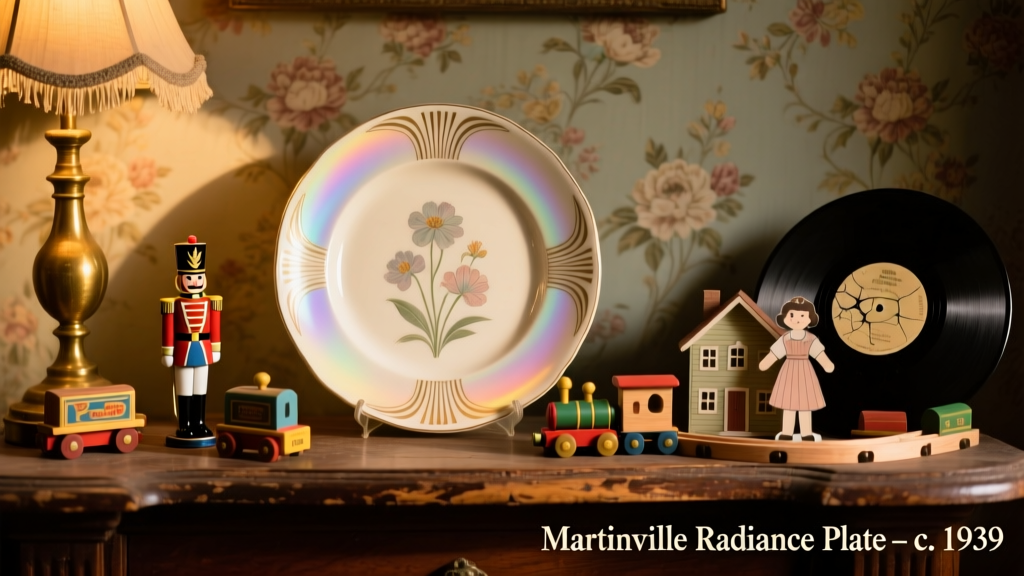
New Martinsville Radiance Plate C, 1939: The Definitive Appraisal of the 14-Inch Dinner Plate
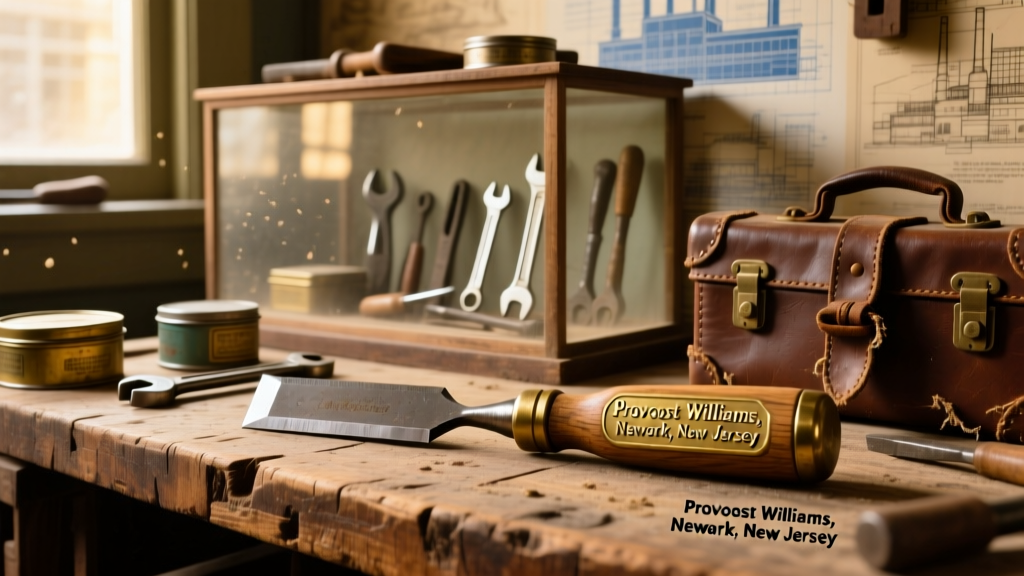
The Provost Williams Slick: A Mid-Century Masterpiece of American Woodworking Craftsmanship

The Continental Airlines Advertising Umbrella: A Mid-Century Aviation Icon in Fabric and Steel

The Telephones Single Box Mercedes Dial Oak: A Mid-Century Icon of German Engineering and Design

Norman C. Heckler Co. Auction 116, Part II: A Deep Appraisal of Mid-Century Toy & Doll Collectibles

Steins Greetings To Nuremberg Pewter Lid: A Detailed Appraisal of the 4½-Inch Vintage Pewter Lid (c. 1950–1965)

The 1909 Paper Stock Certificate of the Colorado Mining Co: A Window into Gilded Age Speculation and Printing Craftsmanship
Roseville Window Box Silhouette White 9-Inch: Identification, Value, and Collectibility of a Mid-Century Ceramic Landmark