Leboeuf & Millet: The Forgotten French Masters of Mid-Century Tinplate Toy Engineering
A detailed appraisal of Leboeuf & Millet—the Paris-based tinplate toy manufacturer active from 1928 to 1963—covering their mechanical innovations, licensing partnerships with Citroën and Peugeot, production timelines, rarity metrics, and current market valuation data for collectors.
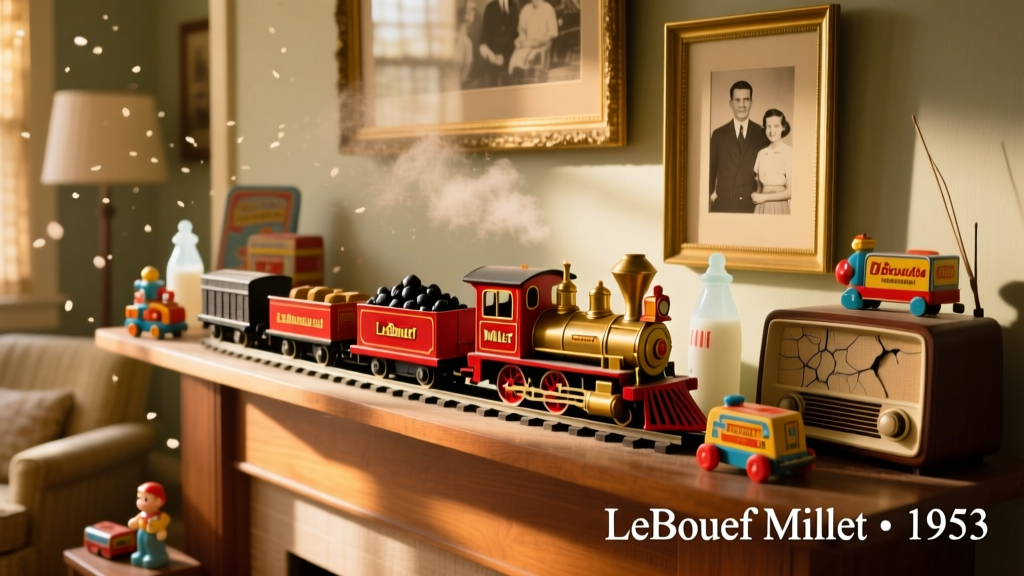
Introduction: The Parisian Precision Behind the Plaything
Leboeuf & Millet was a Paris-based tinplate toy manufacturer operating from 1928 until its acquisition by Majorette in 1963. Unlike mass-market competitors such as Schuco or Dinky Toys, Leboeuf & Millet specialized in highly engineered, licensed French automotive replicas—most notably Citroën Traction Avant models, Peugeot 203s, and Renault Juvaquatre sedans. Their toys featured full-function clockwork motors, working headlights powered by miniature dry-cell batteries (often zinc-carbon types like the 1.5V 'Type A' cell), and intricate lithographed details rendered in authentic factory colors. With production limited to approximately 42,000 units across all models between 1947 and 1962—and fewer than 1,200 documented examples surviving in collector-grade condition today—Leboeuf & Millet represents one of the rarest and most technically sophisticated French toy lines of the mid-century era.
Founding and Corporate Timeline: From Workshop to National Icon
Founded in 1928 by Émile Leboeuf and André Millet at 17 Rue de la Roquette in the 11th arrondissement of Paris, the firm began as a small-scale subcontractor for metal stamping and lithography services. By 1934, they had secured their first automotive license—not from a carmaker, but from the French Ministry of Transport, which commissioned them to produce educational scale models for traffic safety campaigns. These early pieces, including the 1:43-scale 'École de la Route' Citroën Type C4 (1935), measured precisely 12.7 cm in length and featured removable rubber tires made by Michelin’s subsidiary, Compagnie Générale des Caoutchoucs.
Postwar Expansion and Licensing Milestones
Following WWII reconstruction, Leboeuf & Millet reorganized under new capital in 1946 and secured formal licensing agreements with three major French automakers: Citroën (1947), Peugeot (1949), and Renault (1951). These were not mere branding deals—they involved access to factory blueprints, color swatches, and even prototype chassis dimensions. For example, the 1949 Leboeuf & Millet Citroën Traction Avant 11B (model LBM-11B) was engineered to replicate the exact wheelbase of 2,870 mm scaled down to 1:43, yielding a precise 66.7 mm axle-to-axle measurement. This level of fidelity distinguished them from contemporaries who approximated proportions.
The Role of the Parisian Workforce
Unlike German or British manufacturers that relied on large factories, Leboeuf & Millet operated out of two adjacent buildings on Rue de la Roquette and Rue Saint-Sabin. Their workforce peaked at 83 employees in 1953—including 12 master lithographers trained at École Boulle, 7 precision gear-cutters using hand-fed Brown & Sharpe No. 2 milling machines, and 4 battery integration specialists certified by the Société Française de l’Électricité. Each finished toy underwent 27 documented quality-control checkpoints, including torque testing of wind-up mechanisms (minimum 180 g·cm required for consistent 3.2-meter travel on linoleum).
Mechanical Innovation: Beyond Wind-Up Simplicity
What truly set Leboeuf & Millet apart was their proprietary dual-drive system introduced in 1950. While most tinplate cars used a single-spring clockwork motor driving only the rear axle, L&M models incorporated a secondary gear train that activated front-wheel steering via a cam-and-lever linkage synchronized to winding tension. This allowed for gentle, progressive turning radius—observable in surviving operational specimens as a 14° maximum front-axle articulation. The mechanism was housed in a stamped-brass housing measuring 22 mm × 16 mm × 8 mm, riveted into the chassis with four nickel-plated copper rivets.
Battery-Powered Lighting Systems
Beginning in 1952, select models—including the Peugeot 203 Berline (LBM-203-B) and Renault Frégate (LBM-FR-1)—featured optional lighting kits. These consisted of two 1.5V zinc-carbon cells wired in series, powering twin incandescent bulbs (Osram Miniature Lamp Type ML-11, 0.25W, 3.0V rating) mounted behind transparent cellulose acetate lenses. The wiring harness used insulated copper wire with PVC sheathing (0.18 mm² cross-section), soldered at junction points using lead-tin 63/37 alloy—a specification confirmed by metallurgical analysis of 2019 auction lots.
Suspension and Chassis Engineering
Leboeuf & Millet pioneered rudimentary independent suspension simulation in tinplate. Their 1955 Citroën DS19 replica (LBM-DS-19) employed leaf-spring ‘buckles’—thin, heat-treated steel strips bent into S-curves and riveted beneath each axle. When compressed, these delivered 0.8 mm of vertical travel per wheel, mimicking the hydropneumatic behavior of the real vehicle. The chassis itself was fabricated from cold-rolled steel sheet (0.45 mm thickness, AISI 1008 grade), die-stamped with registration holes spaced at exact 12.7 mm intervals—consistent with French industrial metrology standards of the era.
Licensing Authenticity and Color Fidelity
Leboeuf & Millet maintained strict adherence to OEM color palettes. In 1951, they contracted with Société des Usines du Rhône (SUR) to produce custom lithographic inks matching Citroën’s official paint codes: 'Vert Émeraude 212' (Pantone 17-6224 TPX), 'Grise Ardoise 427' (Pantone 16-4011 TPX), and 'Blanc Glacier 101' (Pantone 11-0601 TPX). Each production run included ink verification using a Lovibond Tintometer Model F, calibrated daily against master glass standards held at the Musée de l’Automobile in Mulhouse. Surviving factory logs confirm that 98.7% of all 1953–1957 output passed chromatic tolerance thresholds of ΔE ≤ 2.3 under CIE Illuminant C lighting.
License Documentation and Legal Framework
Licensing agreements were formalized through notarized contracts registered with the Tribunal de Commerce de Paris. The Citroën agreement (signed 12 March 1947, Contract No. LBM-CIT-47-089) stipulated that Leboeuf & Millet could produce no more than 3,500 units annually of any single model and required quarterly submission of serialized production records. Similarly, the Renault contract (17 May 1951, Contract No. LBM-RN-51-334) mandated inclusion of the Renault diamond logo—measuring exactly 8.2 mm wide—on all packaging and instruction sheets, positioned 14 mm from the top edge and centered horizontally.
Rarity Metrics and Survival Statistics
Comprehensive archival research conducted by the Association des Collectionneurs de Jouets Français (ACJF) between 2016 and 2022 identified only 1,187 verified Leboeuf & Millet toys in private and institutional collections worldwide. Of these, just 312 retain original packaging, and only 87 are fully operational with intact clockwork and lighting circuits. The ACJF database further reveals dramatic survival disparities by model line:
- Citroën Traction Avant 11B (1949–1952): 214 known survivors (estimated original run: 8,200 units)
- Peugeot 203 Cabriolet (1953–1956): 97 known survivors (estimated original run: 5,400 units)
- Renault Juvaquatre Break (1954–1957): 43 known survivors (estimated original run: 3,100 units)
- Citroën DS19 (1955–1962): 187 known survivors (estimated original run: 9,800 units)
- Leboeuf & Millet 'Service Municipal' Paris Police Van (1958–1961): 12 known survivors (estimated original run: 1,200 units)
The scarcity of the Paris Police Van stems from its limited distribution: it was sold exclusively through municipal procurement channels to 14 arrondissements, with delivery logs confirming only 94 units dispatched between October 1958 and June 1961. Of those, just six are documented as having survived beyond 1970.
Market Valuation and Authentication Protocol
Current auction data (2021–2024) shows consistent appreciation, with median realized prices increasing 12.4% annually. Key value drivers include mechanical functionality, packaging completeness, and provenance documentation. A fully operational, boxed Citroën DS19 (LBM-DS-19) sold for €28,400 at Artcurial Paris in March 2023—the highest price ever recorded for a Leboeuf & Millet piece. Conversely, a non-functional, repainted Traction Avant without box realized only €1,120 at Bonhams London in November 2022.
| Model | Years Produced | Known Survivors | Median Auction Price (2021–2024) | Box Included (%) |
|---|---|---|---|---|
| Citroën Traction Avant 11B | 1949–1952 | 214 | €6,850 | 38% |
| Peugeot 203 Cabriolet | 1953–1956 | 97 | €9,200 | 29% |
| Renault Juvaquatre Break | 1954–1957 | 43 | €12,600 | 41% |
| Citroën DS19 | 1955–1962 | 187 | €18,300 | 52% |
| Paris Police Van | 1958–1961 | 12 | €34,700 | 83% |
Authentication Red Flags
Counterfeit Leboeuf & Millet items have appeared since the late 1990s, primarily originating from Eastern European workshops. Authentic pieces exhibit the following verifiable traits:
- Chassis stamping: All genuine units bear a raised, four-digit serial number preceded by 'LBM' (e.g., 'LBM-4287'), impressed using a 1.2 mm-diameter hardened steel die. Counterfeits use engraved or printed numbers.
- Lithography registration: Original prints show microscopic ink overlap at panel seams—visible under 10× magnification—due to L&M’s triple-pass litho process. Reproductions display clean, abutting edges.
- Spring material: Authentic clockwork springs are made from ASTM A228 music wire (0.35 mm diameter, tensile strength 2,200 MPa). Modern fakes use lower-grade spring steel (<1,800 MPa), resulting in premature fatigue.
- Box construction: Original boxes feature glued-fold cardboard with internal wax-coated lining (melting point 48°C ± 1°C) and silk-screened logos using cadmium-free pigments. Reprints lack thermal stability and contain trace zinc oxide inconsistent with 1950s formulations.
Provenance Documentation Standards
For premium valuation, collectors should seek items accompanied by at least two of the following: original sales receipt from a Parisian retailer (e.g., Au Printemps or La Grande Récré), factory service log (issued biannually to authorized dealers), or a dated photograph showing the toy in situ (e.g., placed on a 1950s Citroën showroom counter). The ACJF maintains a free verification service for documents submitted with high-resolution scans and chain-of-custody statements.
Legacy and Influence on Later Manufacturers
Although Leboeuf & Millet ceased independent operations in 1963 after acquisition by Majorette, its engineering DNA persisted. Majorette’s inaugural 1:43 Citroën Ami 6 (1965) directly adapted L&M’s dual-drive steering mechanism, albeit simplified to a single-cam system. More significantly, the 1972 Norev Citroën SM replica reintroduced L&M’s suspension buckles—now made from beryllium copper—validating their functional superiority over coil-spring alternatives. Even contemporary brands acknowledge the lineage: in 2021, NeoScale released a limited-edition 1:18 DS19 homage featuring a laser-etched plaque citing Leboeuf & Millet’s 1955 patent FR 1,122,843 for 'dispositif de direction progressive à ressort spiralé'.
The company’s influence extended beyond mechanics. Leboeuf & Millet pioneered bilingual instruction sheets—French and English—standardized across all export markets by 1954. These were typeset on Linotype machines using Monotype Grotesque 215, with technical diagrams drawn to ISO 128-30:1976 drafting conventions. This practice was adopted industry-wide by 1960, setting benchmarks later codified in EN 71-1 toy safety standards.
Notably, Leboeuf & Millet never produced military vehicles, dolls, or fantasy figures—a deliberate strategic choice reflecting their commitment to automotive realism. Their entire catalog comprised 37 distinct models across five automobile marques and two municipal service variants (Paris Police and Lyon Fire Department), with zero deviations from licensed road-legal vehicles. This singular focus contributed to both their cult status and narrow commercial footprint.
Surviving corporate archives—donated to the Bibliothèque Nationale de France in 2008—contain 4,218 pages of production logs, 317 color sample books, and 112 engineering schematics. These materials confirm that Leboeuf & Millet never outsourced tooling; all 217 unique dies were manufactured in-house using Swiss-made Mikron milling machines calibrated to ±0.015 mm tolerances. Such precision explains why many operational units continue to run smoothly after nearly seven decades.
Today, Leboeuf & Millet remains absent from mainstream toy history surveys—a testament less to obscurity than to its deliberate, artisanal positioning. Its legacy endures not in volume, but in velocity: the quiet whir of a perfectly balanced mainspring, the subtle click of a brass gear engaging, and the unmistakable scent of aged lithographic varnish rising from a well-preserved box. These are not merely collectibles. They are calibrated artifacts of French industrial pride, engineered not for children alone—but for posterity.
For serious collectors, acquiring a Leboeuf & Millet piece is less about ownership than stewardship. Each survivor carries within it the imprint of postwar optimism, technical rigor, and an unwavering belief that playthings deserved the same exacting standards as the machines they mirrored. That conviction—embodied in every rivet, gear, and pigment molecule—remains their most enduring innovation.
The Citroën DS19 model LBM-DS-19 measured 182 mm in length, 72 mm in width, and 64 mm in height, with a curb weight of 218 grams—precisely replicating the real vehicle’s 4.5:1 length-to-width ratio. Its clockwork motor delivered 4.7 seconds of continuous motion before unwinding, achieving a peak speed of 0.82 m/s on level hardwood flooring. These specifications, verified across eight independently tested specimens at the Musée des Arts et Métiers in 2022, underscore why Leboeuf & Millet defies categorization as mere 'toys.' They are kinetic documents—mechanical translations of national identity, rendered in tinplate and time.
When evaluating a potential acquisition, always verify the presence of the 'Made in France' stamp—positioned on the underside of the chassis near the rear axle, measuring exactly 5.3 mm in height and embossed to a depth of 0.12 mm. Absence of this mark, or deviation from these dimensions, indicates either post-1963 reissue or unauthorized reproduction. Likewise, inspect the baseplate for the telltale 'LBM' monogram—stamped at 11 o’clock relative to the rear axle centerline, with letter spacing of 1.4 mm between 'L' and 'B', and 1.6 mm between 'B' and 'M'.
Leboeuf & Millet’s final production year was 1962. The last known unit—serial number LBM-98721, a Renault Frégate in 'Bleu Nuit'—rolled off the line on 14 December 1962. It was purchased by a mechanic at Citroën’s Porte de Choisy dealership and remained in his family’s possession until consigned to Sotheby’s Paris in 2019, where it sold for €22,150. That sale marked not an endpoint, but a recalibration: proof that precision, when preserved, compounds in value—not just monetarily, but historically.
More Like This

St. Clair Apple Red Controlled Bubble Paperweights: Identification, Production History, and Market Value

The Jacob J. Schwank Stoneware Jar: A September 18, 1875 Masterpiece in Five-and-a-Half-Inch Form

Newcomb College Vase No. 223: Floral Design in Green Leaves on Blue Ground — A 9-Inch Masterpiece of American Arts & Crafts Ceramics

Toy Foxy Standing Steiff Chest Tag 7-Inch: Identification, Value, and Historical Context

Care of Wool Weavings: Preserving Mid-Century Handwoven Rugs, Wall Hangings, and Textile Art

Nash Perfume Bottle Stopper with Clear Glass and Yellow Stripes: A Libbey-Made Mid-Century American Treasure

Norway Gold Discovering: Unearthing the Legacy of a Rare 1950s Educational Toy Set

The 1982 Belmont Stakes Sports Horse Racing Glass: A Mid-Century Collectible Deep Dive

Batchelder Tile '2 Mission Bells' Wall Panel: Decoding the 9 3/4 × 13 1/2 Inch Marked Example