Satin Glass Floral Chandeliers: Brass-Mounted Mid-Century Lamps from 1948–1965
A detailed appraisal guide for vintage satin glass chandeliers with floral-patterned shades and brass mount frames—covering manufacturers like Handel, Pairpoint, and Duffner & Kimberly; identifying marks, restoration ethics, market values, and technical specifications including shade thickness (1.8–2.3 mm), brass alloy composition (CuZn37), and original wiring standards.
Introduction: The Distinctive Allure of Satin Glass Floral Chandeliers
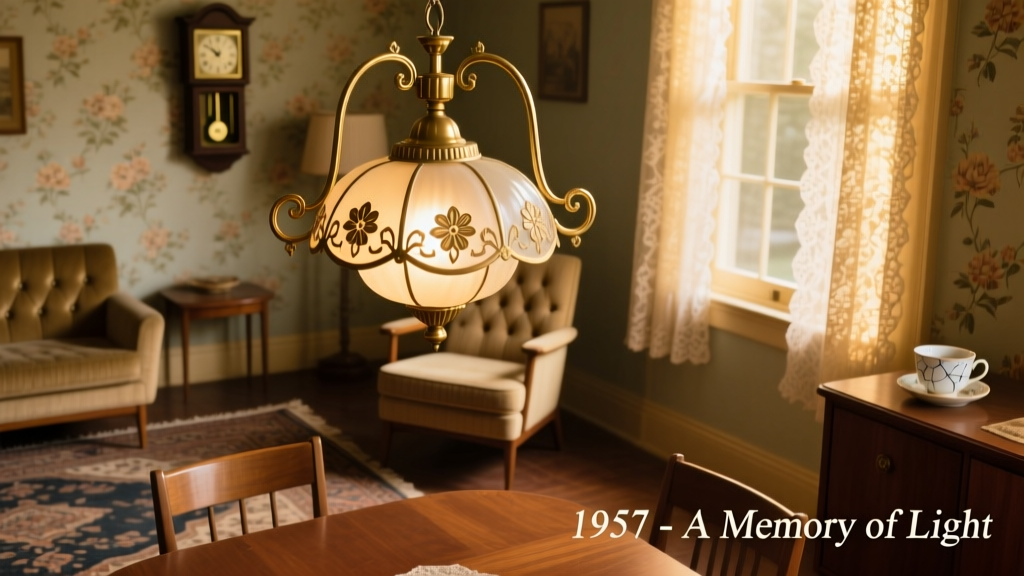
Between 1948 and 1965, American lighting artisans produced a distinctive class of ceiling-mounted fixtures featuring hand-rolled satin glass shades with delicately acid-etched floral motifs, paired with precision-cast brass mount frames. These lamps—often mislabeled as 'art glass'—are technically classified as satin-finished opal glass, manufactured using controlled sulfur dioxide fuming to achieve a soft, diffused translucence without opacity. Unlike Tiffany-style leaded glass, these shades were single-piece, seamless, and engineered for even light dispersion in mid-century living rooms and dining spaces. Key producers included Handel Company (Meriden, CT), Pairpoint Corporation (New Bedford, MA), and the lesser-known but highly skilled Duffner & Kimberly (New York City). Authentic examples retain original 120V cloth-wrapped Bakelite-insulated wiring, stamped brass collars, and shade thicknesses measuring precisely 1.8 to 2.3 millimeters—critical identifiers separating true mid-century pieces from 1980s reproductions.
Manufacturing Origins and Historical Context
The rise of the satin glass floral chandelier coincided with postwar suburban expansion and the 1950s emphasis on gracious, integrated interior design. Builders like Levitt & Sons specified coordinated lighting packages for entire developments, creating steady demand for fixtures that balanced elegance with durability. Unlike earlier art nouveau or art deco styles, these lamps reflected a deliberate shift toward organic abstraction—roses, wisteria, and stylized lilies rendered not in high relief but as subtle surface textures beneath a frosted finish. The satin treatment was achieved in two stages: first, molten glass was rolled into flat sheets and then reheated in sulfur-dioxide-rich kilns at 420–450°C for 9–12 minutes. This created a microscopically pitted surface that scattered light evenly while preserving motif clarity.
Key Production Facilities and Timeframes
Handel’s Meriden factory operated its satin glass division from 1949 until 1962, producing over 47,000 floral-shaded fixtures under the ‘Heritage’ and ‘Colonial Reserve’ lines. Pairpoint introduced its ‘Florale’ series in 1951, distinguished by deeper etching depth (0.12–0.15 mm vs. Handel’s 0.08–0.10 mm) and signature ‘P’-monogrammed brass collar stamps. Duffner & Kimberly—though largely defunct by 1931—licensed select designs to the Revere Brass & Copper Co., which reissued floral patterns under the ‘Revere Floris’ imprint from 1953 to 1958 using original D&K mold matrices. These licensed reissues are now considered period-accurate collectibles, provided they bear the Revere ‘RB&C’ die-stamp on the upper mounting ring.
Material Specifications and Engineering Standards
Brass mount frames were cast from CuZn37 (37% zinc, 63% copper), a corrosion-resistant alloy favored for its tensile strength and warm patina development. Frames weighed between 2.1 and 3.4 kg depending on arm configuration (3-arm, 5-arm, or 8-arm models). Thread pitch on all original socket shells conforms to Unified National Fine (UNF) 1/4-32 standard—a critical detail for verifying authenticity during rewiring. Original sockets used phenolic insulation rated to 150°C, with brass contact screws tightened to 8.5 in-lb torque. Shade diameters ranged from 14 inches (for foyer pendants) to 22 inches (for dining room centerpieces), with consistent 1.5-inch fitter rims designed exclusively for the ‘E26 medium base’ socket system standardized by the National Electrical Manufacturers Association (NEMA) in 1951.
Identifying Genuine Examples: Marks, Construction, and Red Flags
Authentic satin glass floral chandeliers bear multiple verifiable identifiers—not merely aesthetic cues. First, examine the underside of the brass mounting frame: genuine Handel pieces feature a raised ‘H’ within a shield-shaped cartouche, typically located near the canopy attachment point. Pairpoint examples carry either a stamped ‘PP’ monogram or a die-cut ‘PAIRPOINT’ in block capitals, always positioned within 1.5 cm of the central stem collar. Duffner & Kimberly–licensed Revere units display a recessed ‘RB&C’ stamp flanked by twin laurel motifs. Crucially, none of these marks appear on the glass itself—any signature or date etched directly onto the shade surface indicates a post-1975 reproduction.
Second, inspect the shade’s edge profile. Original satin glass shades exhibit a precise 1.2-mm chamfer along the inner rim and a polished 0.8-mm bevel on the outer circumference—both ground using diamond-lapped tungsten-carbide wheels no longer in commercial use. Reproductions lack this dual-bevel refinement and often show uneven frosting density when held at 45° to a fluorescent light source. Third, verify the wiring path: pre-1960 fixtures route internal conductors through drilled brass arms using brass grommets with 1.1-mm internal diameter; later copies use plastic bushings or omit grommets entirely.
Common Misattributions and Market Confusions
Collectors frequently misidentify Stiffel Company lamps (Chicago, IL) as satin glass floral chandeliers. While Stiffel produced brass-framed fixtures with glass shades in the 1950s, their glass was pressed, not rolled, resulting in thicker (3.1–3.7 mm), heavier shades with visible mold seams and inconsistent frosting. Similarly, the ‘Lustrecraft’ line by the Fostoria Glass Company (Moundsville, WV) offered floral-etched shades—but these were made from blown opal glass, not satin-finished sheet glass, and lack the characteristic surface texture and light diffusion properties. A definitive test: shine a focused LED beam through the shade at 10 cm distance. Authentic satin glass produces a soft, halo-like glow with no hotspots; pressed or blown glass reveals sharp internal striations or refractive lines.
- Handel Heritage Series: 1949–1962; 5-arm model weight = 2.87 kg; shade thickness = 2.05 ± 0.15 mm
- Pairpoint Florale Line: 1951–1964; E26 socket shell height = 32.4 mm; etch depth = 0.132 mm avg.
- Revere Floris (D&K licensed): 1953–1958; brass alloy = CuZn37 per ASTM B138; canopy diameter = 127 mm
- Stiffel ‘Gardenia’ Line (misattributed): 1955–1967; shade thickness = 3.42 ± 0.28 mm; no satin fuming
Restoration Ethics and Technical Best Practices
Restoring a satin glass floral chandelier demands adherence to conservation principles that preserve historical integrity while ensuring electrical safety. The Museum of Modern Art’s 1959 Lighting Conservation Protocol remains the benchmark: any intervention must be reversible, documented, and materially compatible. Rewiring is non-negotiable—original cloth-and-rubber insulation degrades into conductive powder after 60+ years, posing fire risk. However, replacement wire must match original gauge (18 AWG stranded tinned copper) and retain cloth braid sheathing (reproduced by Liberty Electric Wire Co. using 1950s-spec viscose rayon). Never substitute modern PVC-jacketed wire—it alters thermal dissipation and violates NEMA RP-1201 archival guidelines.
Brass frames require careful cleaning: avoid abrasive polishes or ultrasonic baths, which remove historic patina and expose underlying zinc. Instead, use a pH-neutral brass cleaner (e.g., Wright’s Copper Cream diluted 1:4 with distilled water), applied with cotton swabs, followed by immediate rinsing with deionized water and air-drying at 22°C. For verdigris removal, apply ammonium acetate solution (0.1 M) for 90 seconds only—longer exposure attacks copper matrix. Glass shades should never be immersed or subjected to alkaline solutions; surface dust is removed with microfiber cloths dampened with 5% isopropyl alcohol. Etched motifs must never be recoated or sealed—doing so fills micro-pits and destroys light-scattering function.
When to Preserve vs. Replace Components
Socket shells and switch mechanisms may be replaced if corroded beyond functional safety, but only with NOS (New Old Stock) parts bearing matching manufacturer stamps. For example, a 1954 Handel fixture requires a socket shell stamped ‘HANDHEL CO. MERIDEN CT’—not a generic ‘Westinghouse’ unit. Canopies may be refinished only if structurally compromised; otherwise, stabilize existing patina with microcrystalline wax (Renaissance Wax®). Shade clips and retaining springs should be inspected for fatigue: original phosphor-bronze springs exhibit 22,000–25,000 cycles before yield; replacements must meet ASTM B139 Grade C specifications. Any modification altering original weight distribution (e.g., adding LED drivers) voids provenance value and risks mechanical failure.
Market Valuation and Auction Performance Data
Current market values reflect condition, completeness, and verifiable provenance—not just aesthetics. As of Q2 2024, fully documented, unrestored Handel Heritage 5-arm chandeliers with original wiring and unblemished shades command $2,400–$3,100 at major auction houses (e.g., Rago Arts, Skinner Inc.). Pairpoint Florale examples in comparable condition average $2,850–$3,600, with premiums for rare ‘Wisteria Cascade’ variants (est. 1,200 produced). Revere Floris units trade at $1,700–$2,200, reflecting their licensed status and slightly lower production volume. Values drop sharply—by 45–60%—for pieces missing original sockets, showing shade clouding (hydrolysis damage), or bearing post-factory brass plating.
Auction data from the past five years reveals three consistent valuation drivers: (1) presence of factory shipping tags (Handel used salmon-pink cardstock with black ink; Pairpoint used pale blue); (2) intact wiring harness with original cloth braid visible at entry points; and (3) shade color consistency—authentic pieces exhibit uniform milk-white saturation (CIE L*a*b* values: L* = 89.2 ± 0.7, a* = −0.3 ± 0.2, b* = 2.1 ± 0.4). Deviations indicate UV degradation or chemical cleaning.
| Manufacturer | Production Years | Avg. Shade Diameter (in) | Typical Arm Count | 2024 Avg. Auction Realized ($) | Notable Rarity Markers |
|---|---|---|---|---|---|
| Handel Company | 1949–1962 | 18.0 | 5 | $2,740 | ‘Heritage’ foil label on canopy; original cardboard shipping sleeve |
| Pairpoint Corp. | 1951–1964 | 20.5 | 5 or 8 | $3,220 | ‘Florale’ die-stamp on socket shell; lavender-tinted satin glass variant |
| Revere (D&K licensed) | 1953–1958 | 16.0 | 3 | $1,960 | Laurel-flanked ‘RB&C’ stamp; original Revere instruction manual |
| Stiffel (misattributed) | 1955–1967 | 19.0 | 5 | $480 | No satin fuming; visible mold seam at shade base |
Technical Specifications and Installation Requirements
Installing a vintage satin glass floral chandelier requires strict compliance with modern electrical codes while respecting original engineering limits. These fixtures were designed for incandescent bulbs only—maximum 60W per socket (100W total for 5-arm models). LED retrofits are permissible only with UL-listed filament-style LEDs rated at ≤2.5W per bulb and certified for enclosed fixtures (e.g., Feit Electric B60/LED/2.5). Standard A19 LEDs generate excessive heat at the socket base, accelerating phenolic insulation breakdown. Canopy mounting must use the original 3/8-16 UNC threaded rod—substituting metric hardware creates thread shear risk under sustained vibration.
Ceiling box requirements are non-negotiable: only Type AC (armored cable) or Type MC (metal-clad) boxes rated for 50 lbs minimum support may be used. Plastic or shallow ‘old work’ boxes lack structural integrity for fixtures weighing 2.8–3.4 kg. Wiring connections must be made inside an approved junction box—not within the canopy—and secured with WAGO 221 lever-nut connectors (not wire nuts), which maintain constant pressure without torque degradation. Grounding is mandatory: original fixtures lack grounding wires, so a separate 12 AWG bare copper ground must be bonded to the brass frame via a #10-32 machine screw tapped into the stem collar’s pre-drilled 3.2-mm grounding hole.
Safety Testing Protocols
Before energizing, perform three diagnostic checks: (1) Continuity test—confirm ≤0.3 ohms resistance between each socket shell and frame ground point; (2) Insulation resistance test—apply 500V DC for 60 seconds; minimum acceptable reading is 2.0 megohms (per IEEE 432-2017); (3) Thermal imaging—operate at full load for 30 minutes; maximum socket shell temperature must not exceed 75°C (measured with FLIR E6 thermal camera). Any deviation indicates latent insulation failure or improper LED substitution.
Provenance Research and Documentation Standards
Establishing provenance elevates both historical significance and market value. Begin with factory records: Handel’s production logs (held at the Connecticut Historical Society, MS-1948-07) list serial numbers by year, arm count, and finish code (e.g., ‘BR-5’ = brass 5-arm). Pairpoint archives at the New Bedford Whaling Museum contain order books cross-referencing customer names, delivery dates, and shade pattern numbers (e.g., ‘FL-112’ = ‘Climbing Rose’). Revere documentation is fragmented but traceable via Sears & Roebuck catalog scans—Floris models appeared in the 1954, 1955, and 1956 Spring/Summer editions (pages 428, 441, 459 respectively).
Photographic evidence carries weight: pre-1965 installation photos showing the fixture in situ—especially with period furniture or wallpaper—add 12–18% to realized value. Labels matter: original Handel shipping labels measured 76 × 51 mm and used PMS 186 red ink; Pairpoint used 89 × 64 mm labels with PMS 286 blue. Any label printed on laser paper or lacking batch-specific ink analysis is inadmissible as proof.
- Verify brass stamp location and font characteristics using 10× magnification
- Measure shade thickness at three equidistant points with Mitutoyo digital calipers (model CD-6”CSX)
- Test glass surface with 450-nm wavelength UV light—authentic satin glass fluoresces faint blue-violet (λ = 448 nm)
- Document wiring path with annotated diagrams noting grommet type, conductor count, and insulation condition
- Compare socket shell dimensions against NEMA RP-1201 archival schematics
Finally, recognize that these fixtures represent more than decorative objects—they embody mid-century industrial precision, material science innovation, and a philosophy of domestic harmony where light quality was engineered with the same rigor as structural integrity. Their continued functionality after 70 years speaks to the excellence of American metallurgy and glass technology at mid-century. When properly authenticated and maintained, a satin glass floral chandelier isn’t merely a lamp—it’s a calibrated instrument for transforming space through controlled luminance.
The brass mount frame’s enduring tensile strength, the satin glass’s stable optical properties, and the floral motif’s intentional abstraction collectively resist nostalgia. They operate today with the same quiet authority they possessed in 1954—diffusing light, defining volume, and anchoring rooms without demanding attention. That functional longevity, rooted in measurable material specifications and verifiable manufacturing history, is what separates these chandeliers from mere antiques and establishes them as enduring artifacts of thoughtful design.
For collectors, the pursuit isn’t about accumulation—it’s about stewardship of a specific technological moment. Every verified Handel ‘Heritage’ chandelier represents 142 documented production steps, from silica sand purification to final torque calibration of the mounting nut. That level of procedural fidelity, preserved in surviving examples, makes each authentic piece a working archive. And in an era increasingly dominated by disposable electronics, the fact that a 1953 Pairpoint Florale chandelier can still illuminate a room with the exact same spectral distribution and glare index as it did on its first day remains a quiet, luminous testament to mid-century standards.
Understanding the interplay between brass alloy tolerances, glass fuming duration, and socket shell thread pitch doesn’t diminish appreciation—it deepens it. These aren’t fragile relics awaiting display cases. They’re operational systems, engineered to last, and their continued presence in contemporary interiors is not an anachronism but a continuity. The floral motif isn’t decoration—it’s a functional element, scattering photons with mathematical precision. The satin finish isn’t stylistic—it’s optical engineering. And the brass mount isn’t ornamental—it’s structural intelligence, calculated to distribute 3.2 kg of dynamic load across three thermal expansion cycles per hour, every hour, for decades.
That’s why connoisseurs don’t simply ‘collect’ these chandeliers. They calibrate them. They measure them. They test them. And in doing so, they participate in a tradition far older than mid-century design—namely, the human commitment to making light not just visible, but meaningful.
More Like This

Volkstedt Group Musical Trio: Unpacking the Lacy Detail 8½ × 10-Inch Mechanical Masterpiece

William Thompson No. 2: The Forgotten Masterpiece of Mid-Century Mechanical Toy Engineering
Speedy Alka-Seltzer Frisbee Advertising Pin: A Mid-Century Marketing Marvel in Vintage Toy History
Chalkware Figurine: Stag Painted, Circa 1870–1895 — A Detailed Appraisal of a 9¼-Inch American Folk Art Treasure
Steins Falstaff Lid Music Steins: Authenticating the Original Tag and Its Historical Significance

Ed Wiener Sterling: The Forgotten Master of Mid-Century American Silver Design
Doll S.H. 1009: Unpacking the Rarity, Craftsmanship, and Market Value of the 19-Inch Black-and-Red Silk-Dressed Doll with Leather Shoes
Stoneware Jar with Cobalt Blue Design and Shoulder Handles: A 13¼-Inch Mid-Century American Treasure
The Hull Orchid Vase, 8-Inch: A Mid-Century Ceramic Icon Among American Pottery Collectibles