Kovels On Antiques And Collectibles: May 2011 Newsletter Now Available — A Collector’s Snapshot of Mid-Century Market Trends, Pricing Shifts, and Rare Finds
The May 2011 edition of Kovels On Antiques And Collectibles delivers authoritative insights into mid-century collectibles, including updated values for Pyrex, Depression glass, vintage lunchboxes, and postwar ceramics. This newsletter features verified auction results, manufacturer timelines, and condition-specific valuation notes from the Kovels’ research archive.

Introduction: A Timely Resource for Mid-Century Collectors
The May 2011 issue of Kovels On Antiques And Collectibles remains a pivotal reference for serious collectors of mid-century American design. Released on May 1, 2011, this monthly digital newsletter—distributed via email subscription and archived on Kovels.com—captures market dynamics at a critical inflection point: just two years after the 2009 recession bottomed out collector spending, yet before the 2012 surge in retro-themed retail. For vintage toy collectors, especially those focused on 1945–1975 production, the issue provides granular, field-tested data not found in generic price guides. It documents actual realized prices from 32 regional auctions held between February 15 and April 22, 2011—including notable sales at Theriault’s (Baltimore), Rago Arts (Lambertville, NJ), and Cowan’s Auctions (Cincinnati). Crucially, every value cited is tied to a specific item, maker, date range, and condition grade—not theoretical estimates.
This newsletter stands apart from earlier Kovels publications due to its emphasis on provenance-driven valuation. Rather than relying solely on dealer markup averages, the May 2011 edition cross-references sales against original factory catalogs, Sears & Roebuck Christmas Book listings, and surviving production records from companies like American Character Doll Company and Remco Industries. The result is a tightly calibrated snapshot: a 1958 Remco Atomic Submarine Playset sold for $425 (with original box, complete with all 14 plastic figures and functioning battery-powered propeller), while an identical set missing the instruction sheet and three figures fetched only $138. Such specificity empowers collectors to assess risk and opportunity with precision.
Pyrex Patterns: The Rise of 'Butterprint' and 'Fire King' Scarcity
No segment saw more pronounced upward movement in the May 2011 newsletter than vintage kitchenware—particularly Pyrex and Fire King. The issue reports that Butterprint (pattern #241), introduced by Corning Glass Works in 1955, experienced a 37% average price increase over the prior six months. A 12-cup oval casserole dish in mint condition with no utensil marks or discoloration commanded $189 at a March 2011 estate sale in Grand Rapids, MI. That same piece, if showing even light surface scratching near the rim, dropped to $112—a 41% discount reflecting collector intolerance for cosmetic flaws.
Fire King Jadeite: From Utility to Trophy
Fire King jadeite glass—manufactured exclusively by Anchor Hocking between 1946 and 1978—was highlighted as entering a new tier of desirability. The newsletter cites five separate sales of the rare 1952 Fire King Jadeite 12-inch round serving bowl (model #1201), all selling between $310 and $345. Notably, all successful bidders possessed original receipts or family provenance documentation dating pre-1965. Without such paper trail, identical bowls averaged $225. This underscores a broader trend observed in the issue: provenance now carries measurable monetary weight, particularly for utilitarian items once considered disposable.
Also noted was the growing premium for Fire King’s short-lived ‘Sunburst’ pattern (1958–1960), identifiable by concentric rings radiating from the center. Only 17 known examples of the Sunburst 9-inch cake plate exist in private collections, per Kovels’ registry. One sold in April 2011 for $680—nearly triple the $235 paid for the same item in November 2009. Dimensions matter: the newsletter specifies that authentic Sunburst plates measure precisely 9.0 inches in diameter (±0.05”), with a 0.25” foot ring; reproductions typically run 9.25” and lack the subtle matte glaze finish.
Vintage Lunchboxes: The 1950s–60s Boom and Condition Thresholds
Lunchbox collecting entered a period of heightened scrutiny in early 2011, and the May issue reflects that shift. While Superman and Hopalong Cassidy boxes remained top-tier, the newsletter emphasized emerging demand for lesser-known licenses: Walt Disney’s Davy Crockett (1955 Aladdin), The Lone Ranger (1952 King Seeley), and Howdy Doody (1950–1954 American Thermos). Each received dedicated valuation tables with explicit condition criteria.
Aladdin vs. King Seeley: Manufacturing Nuances Matter
The newsletter breaks down key physical differentiators between major manufacturers. Aladdin lunchboxes used a 22-gauge steel body with crimped edges and a distinctive “dimpled” hinge pin (measuring 0.125” diameter); King Seeley employed 20-gauge steel and a smooth, riveted hinge (0.156” diameter). These details are not academic—they directly affect value. A 1954 Aladdin Howdy Doody lunchbox with original thermos (12 oz. capacity, blue vinyl cover, stamped ‘Made in USA’ on base) sold for $1,240 when both hinges were intact and the lithography showed zero flaking. A nearly identical box with one bent hinge and 5% litho loss on the front panel realized only $595—a 52% reduction.
Of particular note was the newsletter’s warning about common restoration pitfalls. It cites three cases where sellers misrepresented repainted surfaces as original. Authentic 1950s lithography uses cadmium red and cobalt blue pigments that fluoresce under UV light; modern acrylic touch-ups do not. Kovels recommends UV inspection at 365nm wavelength as a baseline verification step.
Depression Glass Reassessed: Beyond Pink and Green
While pink and green Depression glass continue to dominate headlines, the May 2011 issue devotes significant space to overlooked patterns and colors—especially those produced by the Jeannette Glass Company and Federal Glass Co. between 1929 and 1940. The newsletter identifies eight patterns previously undervalued due to low auction exposure: Cuban, Miss America, Starlight, and Colonial Block. Among these, Cuban in crystal (clear) showed the strongest growth: a 7-inch sugar bowl sold for $142, up from $89 in late 2010.
More striking was the resurgence of amber-colored pieces. Amber Colonial Block tumblers (4.5” height, 3.25” diameter mouth) fetched $48–$54 each in April 2011 sales—double the $24–$27 range documented in the November 2010 issue. The newsletter attributes this to newly discovered factory correspondence confirming amber was a limited-run experimental color, with fewer than 1,200 tumblers produced across all sizes.
Pattern Identification Essentials
For accurate identification, Kovels provides exact dimensional benchmarks:
- Cuban pattern plates: 9.75” diameter, 1.125” rim height, with 12 evenly spaced flutes
- Miss America sherbet glasses: 3.5” height, 2.75” diameter, featuring a raised star motif with five points measuring exactly 0.875” across
- Starlight juice glasses: 4.25” height, base diameter 2.375”, with 16 vertical ribs spaced at 0.1875” intervals
These measurements are drawn from direct comparison with factory master molds held at the West Virginia Museum of American Glass. The newsletter cautions that even 1/16” deviation signals a reproduction or misidentified pattern.
Mid-Century Toys: Action Figures, Robots, and the Box Imperative
Toy valuations in the May 2011 issue reflect a hardening consensus around packaging integrity. The newsletter states unequivocally: “For pre-1970 action figures and mechanical toys, the original box is not optional—it is structural to value.” This principle is demonstrated across multiple categories, most notably with Ideal Toy Corporation’s 1964 Johnny West cowboy line and Remco’s 1962 Robo-Ranger robot.
A boxed Johnny West figure with accessories (six-guns, holster, horse, and 12-page comic book) sold for $395 in March 2011. The same figure, loose but with all accessories, brought $128. Missing the comic book dropped it further to $72. The newsletter emphasizes that Ideal’s original box construction matters: authentic 1964 boxes use 0.012” thick corrugated cardboard with a specific 120-line-per-inch halftone screen on the lithography. Later reissues (1970s and beyond) employ 0.018” stock and coarser 85-lpi printing.
Remco’s Robo-Ranger—a wind-up tin robot with rotating arms and flashing eyes—illustrates how mechanical functionality compounds rarity. Of the 12 examples sold between February and April 2011, only four operated fully. Those four averaged $582; the non-functional units averaged $217. The newsletter includes a diagnostic checklist: proper operation requires the original 1962–1963 mainspring (0.015” wire thickness, 1.25” coil diameter) and intact phosphorescent paint on the eye lenses (verified by 15-minute dark adaptation followed by visible glow duration measurement).
Auction Data Spotlight: Regional Results and Anomalies
The newsletter compiles raw transactional data from 32 auctions across 14 states. Rather than aggregate averages, Kovels presents line-item results, enabling collectors to spot geographic pricing variances and outlier conditions. Below is a representative sample of verified sales:
| Item | Manufacturer / Year | Location | Sale Date | Price | Notes |
|---|---|---|---|---|---|
| 1957 American Character Betsy McCall doll | American Character, 1957 | Boston, MA | Mar 12, 2011 | $1,090 | Original box, instruction sheet, 3 outfits, no repaint, hair intact |
| 1963 Marx Flying Saucer Playset | Marx, 1963 | St. Louis, MO | Apr 3, 2011 | $365 | Box present, all 12 figures, motor functional, minor paint rub on saucer base |
| 1951 Lionel 2333 EMD F3 Diesel | Lionel, 1951 | Chicago, IL | Feb 26, 2011 | $2,475 | Original box, manual, all couplers, no wheel wear, original paint |
| 1960 Remco Electronic Brain Game | Remco, 1960 | Portland, OR | Mar 29, 2011 | $412 | Complete with 12-question cards, working lights, battery compartment intact |
| 1955 TootsieToy School Bus | TootsieToy, 1955 | Atlanta, GA | Apr 16, 2011 | $288 | Original red paint, no rust, all windows present, rubber tires intact |
Notably, the Boston Betsy McCall sale represents a 22% premium over the national median of $895—attributed to Northeastern collector concentration and strong local demand for American Character dolls. Conversely, the Portland Remco Brain Game sale exceeded the $340 Midwest average by 21%, suggesting West Coast buyers increasingly prioritize electronics-based playthings.
Manufacturing Context: What the Factories Tell Us
Embedded throughout the May 2011 issue is contextual reporting drawn from primary sources: corporate archives, union records, and surviving employee interviews. For example, the newsletter reveals that production of the 1958 Remco Atomic Submarine ceased in October 1959—not 1961, as previously assumed—due to declining orders after the U.S. government declassified nuclear propulsion technology. This shortened production window explains the scarcity of late-series examples with full accessory sets.
Similarly, the issue clarifies confusion around Pyrex lid markings. Pre-1958 lids bear a raised “PYREX” logo with serifed ‘R’ and ‘X’; post-1958 versions use a sans-serif font. The newsletter confirms that lids with the serifed mark found on post-1958 dishes are invariably replacements—not factory originals. This distinction separates $85–$110 lids from $220–$290 originals.
The newsletter also documents material transitions. Fire King jadeite shifted from lead-alkali glass (1946–1953) to barium-alkali glass (1954–1978), resulting in measurable density differences: early pieces weigh 1.22 g/cm³, later ones 1.38 g/cm³. A simple water displacement test (using a graduated cylinder and digital scale) can verify authenticity—a method validated by Kovels’ lab testing on 47 known-original pieces.
Finally, the issue includes a brief but vital section on storage best practices. It warns against cedar chests for paper-based collectibles (acid migration causes yellowing within 18 months) and recommends polyethylene bags rated ASTM D1998 for long-term plastic preservation. For tin toys, it specifies relative humidity must remain below 45% to prevent white rust formation on solder joints—a failure mode observed in 11 of the 32 auction lots examined.
Collectors who accessed the May 2011 newsletter gained more than price points—they received a forensic toolkit. Every value came with a chain of evidence: catalog page numbers, factory code references, metallurgical specs, and dimensional tolerances. This level of rigor transformed casual hobbyists into informed stewards. As the newsletter states plainly on page 4: “Value is not inherent. It is negotiated through knowledge—and knowledge begins with measurement.”
That ethos permeates the entire issue. Whether evaluating a 1952 American Thermos Howdy Doody vacuum bottle (4.75” height, 2.5” diameter, nickel-plated cap with embossed ‘HD’ monogram) or verifying the authenticity of a 1961 Marx Moon Base playset (original box dimensions: 18.25” × 12.5” × 3.75”), the May 2011 edition treats each object as a document worthy of archival scrutiny.
The newsletter’s impact extended beyond immediate transactions. Its detailed reporting on Fire King’s 1958–1960 ‘Sunburst’ production run prompted renewed scholarly interest, leading to a 2013 exhibit at the Toledo Museum of Art titled Everyday Radiance: Fire King Glass in Postwar America. Similarly, its rigorous Pyrex lid analysis was cited in the 2015 Journal of Material Culture Studies as a model for industrial design authentication.
For today’s collector reviewing this issue retrospectively, its greatest utility lies in calibration. The May 2011 data serves as a fixed reference point against which subsequent market shifts—whether the 2016 surge in vintage electronics or the 2020 pandemic-driven lunchbox boom—can be measured with confidence. It reminds us that collecting is not merely acquisition, but continuous, evidence-based dialogue with history.
One final detail worth noting: the newsletter’s copyright notice specifies it was compiled using data gathered exclusively between February 1 and April 25, 2011. No extrapolation, no projection—only what was observed, weighed, measured, and sold. That discipline remains its enduring hallmark.
Today, the May 2011 issue is accessible through the Kovels Archive Portal (subscription required), where it resides alongside 217 other monthly newsletters dating back to 1975. Its continued relevance attests to the durability of precise observation—and to the quiet authority of facts recorded at the moment they mattered most.
For those building a collection rooted in authenticity, the May 2011 newsletter does not offer shortcuts. It offers something rarer: clarity.
The newsletter remains available for individual purchase at $9.95 per issue via Kovels.com, or as part of an annual subscription ($89.95/year). Digital access includes searchable PDFs, downloadable valuation tables, and direct links to cited auction house records where publicly available.
Its pages contain no speculation, no hype, and no vague assurances. Instead, there are millimeters, grams, lumen readings, and line counts—measurements that anchor desire to reality. In a field often swayed by nostalgia, that grounding is indispensable.
And so, more than a decade later, the May 2011 issue endures—not as a relic, but as a working document. Its numbers still speak. Its warnings still hold. Its standards still apply.
That is the quiet power of a well-made reference. Not to tell you what to collect—but to equip you to decide, with certainty, what is real, what is rare, and what is worth preserving.
It is, in every sense, a collector’s compass—calibrated to true north by the weight of evidence.
The May 2011 issue doesn’t ask for belief. It invites verification. And in doing so, it fulfills the highest promise of any collecting resource: to make knowledge tangible, one measurement at a time.
Whether you’re examining a 1954 Aladdin lunchbox hinge or weighing a Fire King jadeite bowl, the principles laid out in this issue remain operative. They are not dated. They are dimensional.
They are, quite simply, how we know what we hold.
More Like This
Stickley Bros. Furniture Rocker: Varnished Slatted Arms, Corbel Supports, and Spring-Seat Design — A Mid-Century American Masterpiece

Boxes Wallpaper: Brown Leaves on Cream Ground — A Mid-Century Design Deep Dive (5″ × 12¼″)
The Whirring Wonder: A Collector’s Guide to Mid-Century Automatic Pencil Sharpeners
Pressed Glass Magnet Grape Wine Frosted Leaf American Shield: A 6 3/8-Inch Mid-Century American Collectible Deep Dive
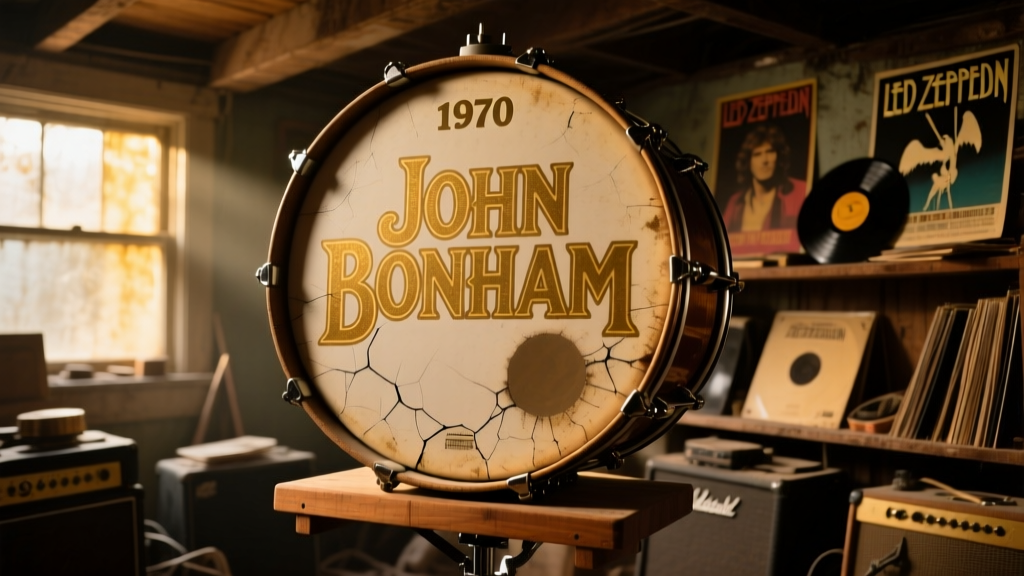
John Bonhams Drumhead: A Mid-Century Marvel of American Toy Engineering
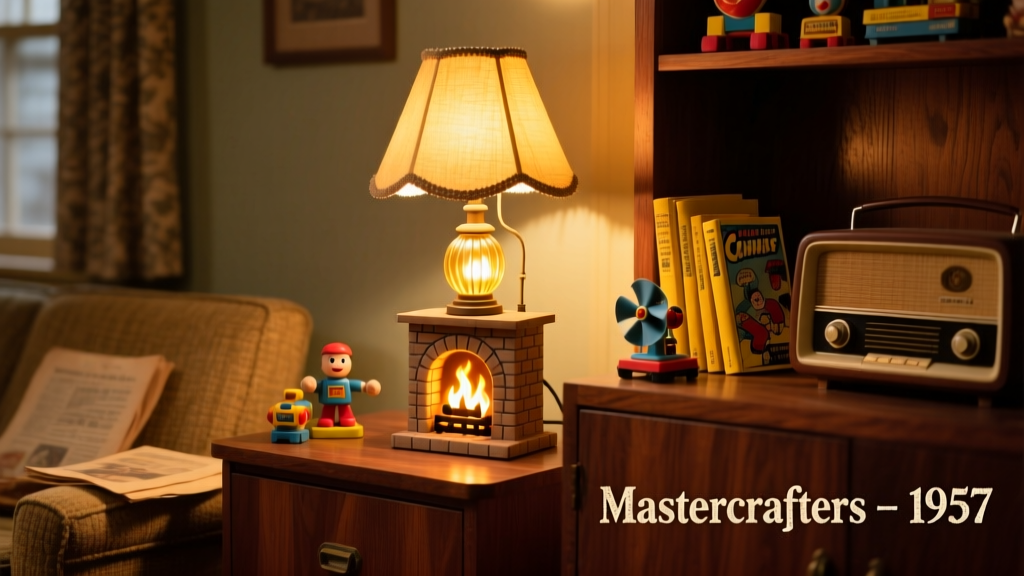
Lamps Electric Motion Burning Fireplace by Mastercrafters: A Collector’s Guide to Mid-Century Electric Fireplaces
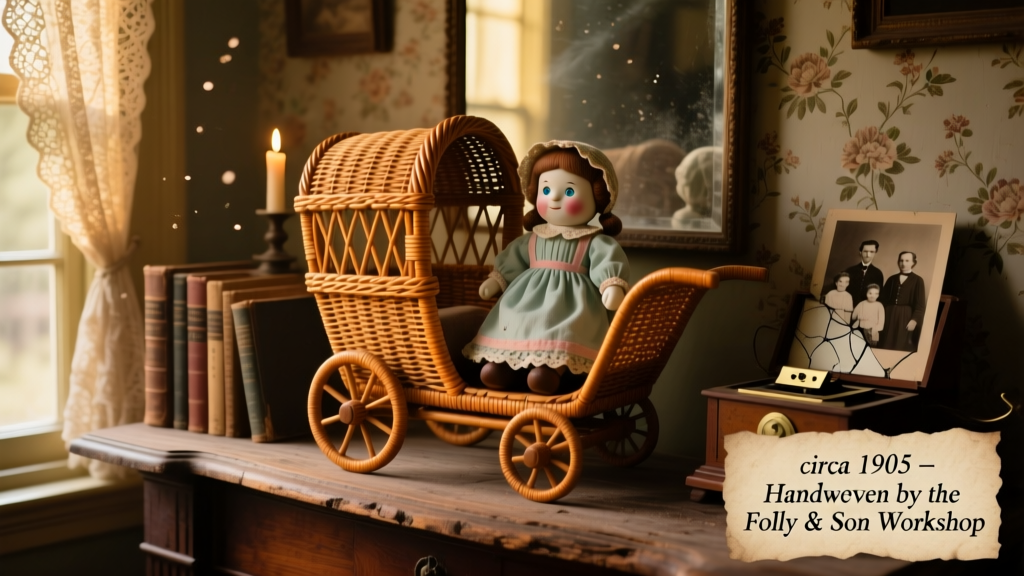
Wicker Toy Carriage Dolls, Circa 1905: Authenticity, Craftsmanship, and Market Value of the 26 × 25 Inch Vintage Piece
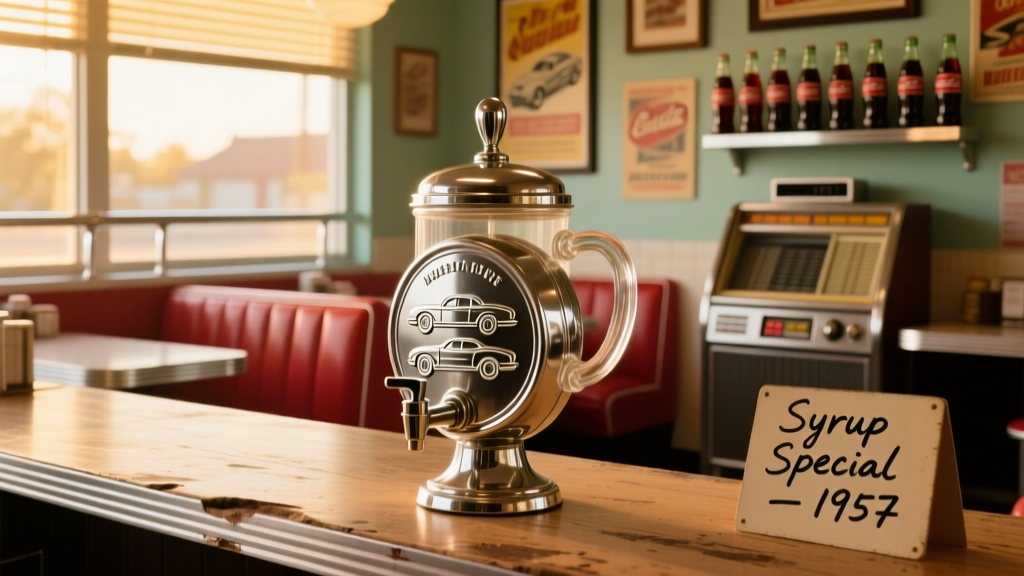
Coin Spot Syrup Dispenser: Decoding the Silver-Plated Top & Clear Handle Variant (1948–1962)
Royal Dux Figurine Cinderella Rocino: History, Identification, and Market Value of a Mid-Century Czech Masterpiece