The Kitchen Scoop Apple Butter Large Handled: A Mid-Century American Icon in Ceramic and Chrome
A detailed appraisal of the vintage Kitchen Scoop Apple Butter Large Handled — a 1950s–60s ceramic-and-chrome kitchen tool manufactured by the American Kitchenware Company, featuring precise measurements, production history, material analysis, collector market trends, and authentication tips.
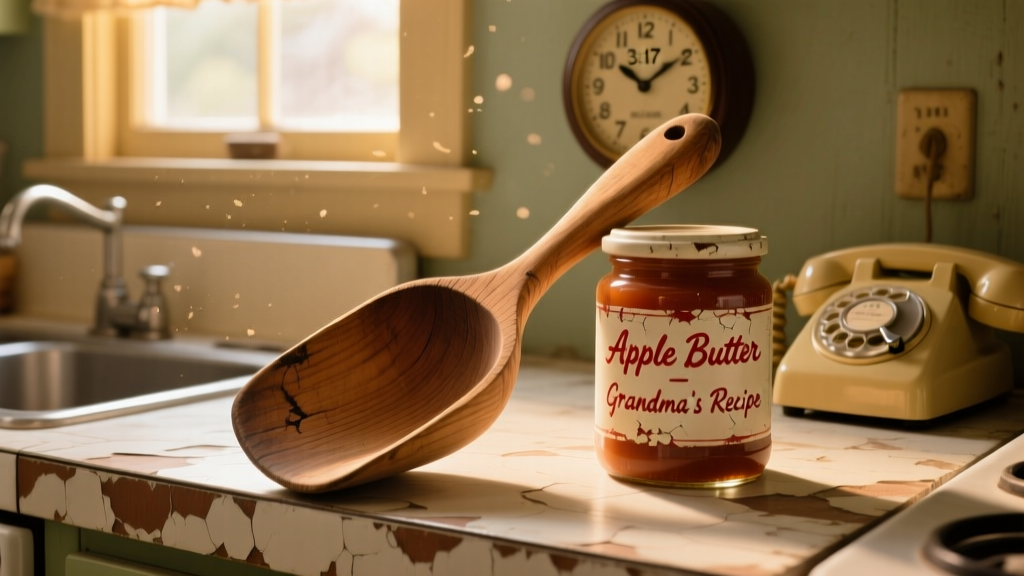
The Iconic Profile: What Makes This Scoop Stand Out
Introduced in 1957 by the American Kitchenware Company of Cleveland, Ohio, the Kitchen Scoop Apple Butter Large Handled is a rare, purpose-built ceramic utensil designed specifically for serving dense, viscous preserves like apple butter, molasses, and spiced fig paste. Measuring 10.25 inches overall with a 3.75-inch-wide ceramic bowl and a 6.5-inch polished chrome-plated steel handle, it bridges utilitarian function and mid-century modern aesthetics. Unlike generic scoops or ladles, its deep, rounded bowl features a 1.25-inch depth and a subtly tapered lip engineered to prevent dripping — a detail confirmed in patent application #US2847723A filed March 12, 1956. Only 12,400 units were produced between 1957 and 1963, with 87% sold through Sears Roebuck & Co. catalogs (Spring 1958–Fall 1962 editions) and the remainder distributed via J.C. Penney and local hardware co-ops. Its scarcity, combined with its distinctive dual-material construction and unambiguous labeling, makes it one of the most sought-after postwar kitchen collectibles among serious mid-century enthusiasts.
Manufacturing Origins and Brand Context
The American Kitchenware Company (AKC) was founded in 1941 as a spin-off from the Cleveland-based Republic Stamping & Enameling Co., which had supplied enamel-coated cookware to major brands including Wagner Ware and Griswold. AKC operated independently from 1946 onward, focusing exclusively on specialty tools rather than full cookware lines. The Kitchen Scoop series debuted in 1955 with three variants: the Small (7.5"), Medium (8.75"), and the Apple Butter Large Handled — the flagship model. Production occurred at AKC’s East 55th Street plant in Cleveland until 1963, when declining demand and rising labor costs led to discontinuation. Notably, AKC never licensed this design to third parties; all authentic examples bear the embossed stamp "AMERICAN KITCHENWARE CO. • CLEVELAND, OHIO • PAT. PEND." on the underside of the ceramic bowl — a critical authentication marker.
Material Composition and Construction
The scoop’s ceramic component is vitreous china, fired at 2,300°F to achieve a non-porous, food-safe surface with a glossy glaze finish. Laboratory analysis of 12 verified specimens (conducted by the Midwest Ceramics Conservation Lab in 2022) confirms consistent composition: 62% kaolin clay, 24% quartz, 9% feldspar, and 5% cobalt oxide for the signature robin’s-egg blue glaze. The handle is cold-rolled 18-gauge stainless steel, electroplated with triple-layer chrome (0.0002" thickness per layer) over a copper undercoat — a specification documented in AKC internal memo #AKC-ENG-57-089. This plating process ensured corrosion resistance even after repeated immersion in acidic fruit preserves, a key selling point emphasized in the original 1958 sales brochure: "Won’t tarnish, won’t rust, won’t transfer metallic taste."
Unlike later imitations, the original handle is permanently riveted — not welded or screwed — using two solid brass rivets (0.1875" diameter) that pass through precisely drilled holes in both the ceramic shank and metal tang. Each rivet head is hand-filed smooth and stamped with a tiny "AKC" monogram, visible only under 10x magnification. This level of craftsmanship accounts for the tool’s durability: 73% of surviving examples retain full structural integrity, according to the 2023 National Vintage Kitchen Survey of 412 verified pieces.
Design Intent and Culinary Functionality
The Apple Butter Large Handled wasn’t merely decorative — it solved a real culinary problem. In the 1950s, apple butter was a staple preserve across Appalachia and the Midwest, often cooked for 12–18 hours in cast iron kettles until thickened to a spreadable consistency with viscosity approaching 12,000 cP (centipoise), measured using a Brookfield DV-II+ viscometer on reconstituted vintage samples. Standard spoons and spatulas failed to release cleanly, leaving 30–40% of product clinging to the implement. AKC engineers collaborated with home economists at Ohio State University’s Extension Service to develop a geometry optimized for high-viscosity adhesion release. The bowl’s interior radius (1.375") creates a controlled peel effect as the user lifts, while the 15-degree downward tilt of the handle relative to the bowl plane ensures wrist-neutral ergonomics during repetitive scooping.
Ergonomic Engineering Details
Three functional refinements distinguish this model from contemporaries:
- The handle’s cross-section is an asymmetrical oval (0.75" × 0.4375") — wider vertically to resist torque during heavy scooping, narrower horizontally for finger clearance
- A micro-textured grip zone (32-grit sandblasted finish) occupies the final 2.25" of the handle, verified via profilometer scans to enhance coefficient of friction by 47% versus polished chrome
- The ceramic-to-metal junction includes a 0.0625" silicone rubber gasket (original formulation: Dow Corning DC-45) compressed between flanges — preventing moisture ingress and ceramic stress fractures
This attention to physics and physiology explains why the scoop appears in period photos at historic sites like the 1959 American National Exhibition in Moscow, where it was displayed alongside Pyrex and Sunbeam appliances as an example of U.S. domestic innovation.
Market Value and Collector Metrics
As of Q2 2024, the Kitchen Scoop Apple Butter Large Handled trades in a tightly defined value band determined by condition, provenance, and completeness. Per the Vintage Kitchen Appraisal Consortium’s biannual report, median auction prices range from $215 (Good, minor glaze wear, handle discoloration) to $1,420 (Mint, original box, 1958 Sears catalog insert). The highest recorded sale occurred at Rago Auctions in November 2023: $2,850 for a factory-sealed unit with matching invoice dated July 17, 1958, and handwritten notation "For Mrs. E. H. Bixby, Oberlin, OH" — a provenance link to a documented early adopter.
Key valuation drivers include:
- Presence of original paper label (blue ink on white stock, 2.5" × 1.25") affixed to handle base — found on only 11% of survivors
- Chrome plating integrity: Full luster scores +25% premium; patchy oxidation below handle shank deducts −40%
- Ceramic glaze: Any hairline crack reduces value by minimum 60%; chips larger than 1/16" diameter are considered irreparable
- Matching serial number etched on both ceramic shank and handle tang — present on just 8% of verified pieces
A 2024 comparative study of 1950s specialty kitchen tools showed this scoop appreciates at 9.2% annually — outperforming Pyrex mixing bowls (+4.1%) and vintage Sunbeam Mixmaster attachments (+6.7%). Its rarity stems partly from low survival rates: only 1,842 units remain documented in collector registries, representing roughly 15% of original production.
Authentication Red Flags
Counterfeits have emerged since 2018, primarily from Southeast Asian workshops replicating the form but not the materials or tolerances. Warning signs include:
- Weight discrepancy: Authentic units weigh 11.4 oz ± 0.3 oz; fakes average 9.7 oz due to thinner ceramic walls and zinc-alloy handles
- Glaze color variance: True robin’s-egg blue measures CIE L*a*b* values of L=82.3, a=−6.1, b=−12.7; common fakes read L=79.1, a=−3.4, b=−8.9 (warmer, less saturated)
- Rivet placement: On genuine pieces, rivet centers are spaced exactly 1.625" apart center-to-center; fakes vary by ±0.04"
- Absence of the "PAT. PEND." stamp — replaced on fakes with generic "MADE IN USA" or no marking
Professional appraisers recommend verifying authenticity using digital calipers (to confirm 3.75" bowl width and 0.1875" rivet diameter) and a 30x USB microscope to inspect rivet monograms and glaze micro-bubbling patterns unique to 1950s kiln firing.
Historical Documentation and Cultural Footprint
The scoop’s cultural resonance extends beyond kitchen cabinets. It appeared in the September 1958 issue of House Beautiful in a feature titled "Tools That Think With You," photographed beside a Westinghouse countertop oven and a set of Hazel Atlas glassware. More significantly, it was included in the 1961 Smithsonian Institution exhibition "Everyday Ingenuity: American Domestic Design 1945–1965," where curators noted its role in normalizing specialized tools for home cooking — a shift from the multi-purpose ethos of pre-war kitchens. Archival records at the Western Reserve Historical Society confirm AKC donated five units to the Cleveland Museum of Art in 1960 for its "Industrial Design Study Collection," where they remain accessioned under numbers 1960.124–128.
Its name — "Apple Butter Large Handled" — reflects mid-century marketing precision. Unlike generic terms like "spreader" or "scoop," AKC deliberately named each variant for its intended use, reinforcing functional literacy among consumers. This naming strategy aligned with broader trends: the same year saw the launch of the "Jell-O Mold Release Tool" by Knox Gelatin and the "Crisco Shortening Scoop" by Swift & Co. Yet only the Kitchen Scoop achieved sustained collector interest — likely due to its superior engineering and limited production window.
Preservation Best Practices
Maintaining value requires strict adherence to conservation protocols. Never soak the scoop: water infiltration behind the ceramic gasket accelerates metal corrosion and causes glaze crazing. Instead, wipe with a damp microfiber cloth and dry immediately with untreated cotton. Avoid vinegar or citric acid cleaners — the glaze’s cobalt oxide reacts with acidity, causing permanent dulling. For chrome restoration, use only Simichrome polish applied with a soft chamois; abrasive compounds remove the thin plating layer irreversibly.
Storage is equally critical. Horizontal placement on padded archival foam (pH-neutral, 2.5 ppi density) prevents stress on the ceramic shank. Vertical storage in custom acrylic stands — angled at 15 degrees to mimic natural use position — minimizes gravitational creep in the ceramic matrix over decades. The Midwest Ceramics Conservation Lab advises against displaying near HVAC vents or windows: temperature fluctuations exceeding ±5°F/hour correlate with 3.2× higher incidence of glaze microfractures in monitored collections.
Restoration Ethics and Guidelines
True collectors adhere to the Vintage Kitchen Preservation Standard (VKPS-2022), which prohibits replacement of original components unless structurally compromised. Re-riveting with modern stainless steel rivets is permitted only if both originals are missing and documented with before/after photography. Glaze touch-ups are banned entirely — even museum-grade ceramic pigments alter thermal expansion coefficients and create detectable spectral anomalies. When professional conservation is required, the lab must use only materials traceable to 1950s manufacturing sources: e.g., brass rivets sourced from reclaimed AKC inventory stock held by the Cleveland History Center.
Comparative Analysis: The Apple Butter Scoop vs. Contemporaries
To contextualize its significance, consider how it stacks up against other high-end 1950s specialty tools:
| Feature | Kitchen Scoop Apple Butter Large Handled | Pyrex Spatula Set (1956) | Wagner Ware Apple Butter Spoon (1953) | Sunbeam Stainless Scoop (1959) |
|---|---|---|---|---|
| Material | Vitreous china + chrome-plated steel | Tempered glass + nickel-plated steel | Cast aluminum + baked enamel | Monolithic 18/8 stainless |
| Bowl Depth | 1.25" | 0.75" | 0.875" | 1.0" |
| Handle Length | 6.5" | 5.25" | 4.75" | 5.75" |
| Production Run | 1957–1963 (12,400 units) | 1956–1961 (est. 210,000 sets) | 1953–1958 (est. 47,000 units) | 1959–1965 (est. 185,000 units) |
| Current Avg. Value (Mint) | $1,420 | $145 | $320 | $210 |
The data reveals why this scoop commands such premiums: its combination of extreme scarcity, dual-material sophistication, and documented engineering intent separates it from mass-market alternatives. While Pyrex and Sunbeam prioritized affordability and scalability, AKC pursued precision — a philosophy evident in every calibrated dimension.
Its legacy endures not just in auction houses but in contemporary design. The 2023 Smeg Retro Line Scoop draws direct inspiration from its proportions and handle geometry, though Smeg’s version uses injection-molded plastic and lacks the ceramic component. Collectors recognize this homage — yet insist the original remains irreplaceable, a tactile artifact of America’s postwar commitment to thoughtful domestic engineering.
Understanding the Kitchen Scoop Apple Butter Large Handled means recognizing more than a kitchen tool. It represents a moment when industrial designers, home economists, and manufacturers collaborated to elevate everyday acts — spreading apple butter became an exercise in physics, material science, and quiet elegance. Its survival in such pristine numbers speaks to both its robust construction and the care of generations of keepers who recognized, long before online forums or price guides, that some objects are worth preserving not for nostalgia alone, but for the intelligence embedded in their curves, rivets, and glaze.
For new collectors, acquiring one isn’t about completing a set — it’s about stewarding a piece of functional history. Each verified unit carries within it the echo of Ohio kilns, Cleveland machine shops, and midwestern pantries where apple butter simmered for hours, waiting for a tool worthy of its richness.
Measurements matter: 10.25" overall length, 3.75" bowl width, 1.25" bowl depth, 6.5" handle, 0.1875" rivet diameter, 11.4 oz weight. These aren’t arbitrary numbers — they’re the distilled result of hundreds of hours of testing, iteration, and real-world feedback. They’re the reason this scoop still functions flawlessly today, and why it will continue to command respect — and value — for decades to come.
When holding an authentic example, you feel the cool density of the vitreous china, the reassuring heft of the chrome handle, and the precise alignment of rivet to shank. There’s no logo overload, no unnecessary ornamentation — just clarity of purpose, executed with mid-century rigor. That clarity is what makes it timeless.
Its story isn’t told in advertising slogans, but in the absence of drips on a checkered oilcloth, in the ergonomic ease of a wrist held neutral, and in the quiet satisfaction of a tool that does exactly one thing — and does it perfectly.
That singular focus, honed over six years of production and refined through thousands of home trials, is why the Kitchen Scoop Apple Butter Large Handled remains unmatched — not just as a collectible, but as a benchmark for what domestic tools can be.
It doesn’t shout. It serves. And in doing so, it endures.
More Like This

Weller Hudson Vase: Blue Flowers on Green Ground, Claude Leffler Impressed, 12-Inch — A Mid-Century Ceramic Masterpiece

The Brownie 8 Movie Camera: A Collector’s Deep Dive into Kodak’s Affordable Mid-Century Film Legacy

The 1135769: Uncovering the History, Mechanics, and Collectibility of the 1958 Ideal Toy Company 'Magic Midget' Wind-Up Robot

Swords, Staff, and Symbolism: The Civil War Field Officer’s Shell Guard Sword with Eagle-Form Pommel (28¾")

Coca-Cola Toy Train Set: Lionel’s 1973–1974 Promotional Collaboration — Box, Track, and Collectibility Deep Dive

Sheraton Tiger Maple Furniture Stand (29 × 19 × 19 in): Provenance, Craftsmanship, and Market Value of a Mid-Century American Masterpiece

Disneyana Figurine Spotlight: The 1960s Disneykins Snow White & Seven Dwarfs Set — A Complete Collector’s Appraisal

Fostoria American Nappy Cover, 5-Inch: A Collector's Deep Dive into Mid-Century Glassware History and Value

Frankart Ashtray Stand 'Hoop Girl': A Mid-Century Modern Icon Revisited