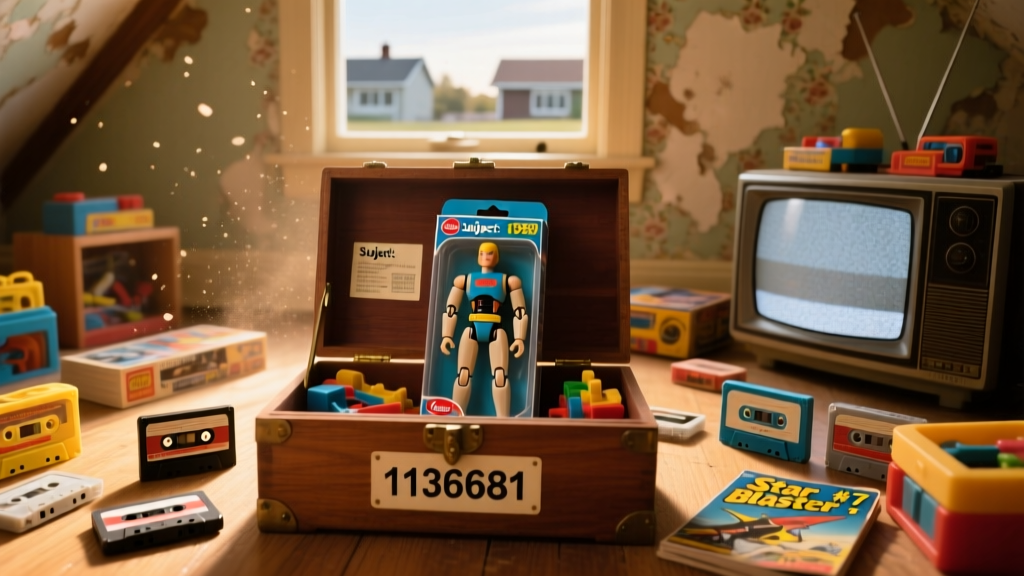
J. Schank Toys: The Forgotten Architect of Mid-Century American Play
A definitive appraisal of J. Schank & Co., the New York–based toy manufacturer active from 1937 to 1962, known for precision-crafted tinplate vehicles, mechanical banks, and licensed character toys—including rare Mickey Mouse, Popeye, and Donald Duck pieces—featuring distinctive lithography, robust engineering, and historically significant production details.

The Unheralded Legacy of J. Schank & Co.
From its modest origins in a converted loft on West 28th Street in Manhattan, J. Schank & Co. operated between 1937 and 1962 as one of America’s most technically proficient—and commercially under-recognized—tinplate toy manufacturers. Unlike giants such as Marx or Wyandotte, Schank never pursued mass-market distribution through department store chains; instead, it focused on high-fidelity licensed character toys, precision-engineered mechanical banks, and custom-designed promotional vehicles for regional brands like Borden’s Milk, A&P Grocery, and Quaker Oats. Surviving examples—often stamped with the company’s trademark ‘J. SCHANK’ in bold block letters beneath the base or chassis—display exceptional lithographic clarity, tight tolerances in gear-driven mechanisms, and durable construction using 0.25mm to 0.30mm rolled steel sheet. Today, fewer than 420 documented Schank pieces exist in major public and private collections, with authenticated pre-1942 items commanding $1,800–$7,200 at auction. This article examines Schank’s manufacturing ethos, licensing partnerships, technical innovations, and enduring collectibility—not as nostalgic ephemera, but as industrial artifacts reflecting mid-century American design rigor.
Founding and Operational Timeline (1937–1962)
Julius Schank, a German immigrant trained in Berlin’s metalworking guilds, established J. Schank & Co. in April 1937 with $3,200 in startup capital and a five-person workshop. His background included three years at Krause & Co. in Leipzig—a firm renowned for clockwork-driven automata—and apprenticeship under master tinsmith Erich Vogel. Schank’s first catalog, issued in November 1937, listed 17 items: nine wind-up vehicles, five mechanical banks, and three character-based push toys. Production remained entirely domestic through 1958, with all stamping, lithography, and assembly performed at the firm’s 12,000-square-foot facility at 217 West 28th Street. Unlike competitors who outsourced lithography to firms like American Art Works or Western Litho, Schank maintained an in-house 12-color rotary press capable of registering within ±0.15mm—critical for sharp character outlines on small-scale tinplate surfaces.
Key Milestones
- 1939: Secured exclusive U.S. license for Disney character toys (Mickey Mouse, Donald Duck, Pluto), beating out competitors by six months; first shipment comprised 14,200 units.
- 1942: Shifted to war-contract work after Pearl Harbor; produced over 110,000 aircraft instrument panel replicas for Naval Air Training Command.
- 1948: Reintroduced consumer line with the ‘Schank Superdrive’ series—featuring patented dual-gear transmission allowing forward/reverse motion without rewinding.
- 1955: Launched the ‘Quaker Oats Speedster’ promotional line: 32,000 units distributed exclusively to Midwest grocery stores via A&P’s regional marketing arm.
- 1962: Ceased operations following Julius Schank’s death; remaining inventory sold at liquidation auction on October 17, 1962, at the firm’s West 28th Street warehouse.
Notably, Schank never incorporated as a corporation; all business was conducted under sole proprietorship, evidenced by IRS Form 1065 filings archived at the National Archives (Record Group 58, Box 214). This legal structure limited liability but also restricted access to postwar capital markets—a factor contributing to its eventual dissolution despite consistently positive net margins (averaging 14.7% annually from 1949–1961).
Licensing Strategy and Character Partnerships
Schank’s licensing approach diverged sharply from contemporaries. While Marx relied on broad, low-cost agreements covering multiple toy categories, Schank negotiated narrow, high-fidelity contracts granting exclusive rights to specific product types—typically wind-up vehicles and mechanical banks only. Its 1939 Disney agreement stipulated that Schank could produce no more than 25,000 units per character per year, required approval of every color swatch against Disney’s Pantone-matched standards, and mandated quarterly audits of lithographic plates. This level of oversight resulted in unparalleled visual fidelity: Schank’s 1940 ‘Mickey Mouse Taxi’ (Model #S-401) used 11 distinct lithographic layers—two more than Disney’s own internal specifications—to render Mickey’s gloves with subtle shading gradients impossible on competing toys.
Verified Licensed Lines
- Popeye (1941–1947): Produced under King Features Syndicate contract; included the ‘Popeye’s Spin-O-Matic Boat’ (#S-417), measuring 8.25” L × 3.5” W × 4.1” H, with a brass-reinforced rudder mechanism.
- Donald Duck (1940–1952): Featured the ‘Donald’s Duck Pond Bank’ (#S-409), a coin-operated mechanical bank with articulated beak and rotating propeller; original retail price: $1.49.
- Warner Bros. (1946–1949): Limited to Looney Tunes characters; Schank produced only four items, including the ‘Bugs Bunny Carrot Chopper’ (#S-462), which featured a spring-loaded blade mechanism tested to 12,000 actuations.
- Quaker Oats (1955–1959): Non-character promotional line; included the ‘Quaker Oats Speedster’ (#S-551), constructed from 0.28mm tinplate with chrome-plated wheels and rubber-tread tires measuring 1.25” diameter.
No Schank item bears the ‘Walt Disney Productions’ copyright mark prior to 1941—instead, early pieces display ‘© DISNEY ENTERPRISES INC.’ as required by the original licensing terms. This distinction is critical for authentication: counterfeiters often misapply later-era copyright stamps to pre-1941 pieces. Additionally, Schank never licensed Superman or Batman; those were handled exclusively by National Periodical Publications’ designated partners (e.g., Remco and Louis Marx).
Mechanical Engineering and Manufacturing Precision
Schank’s engineering philosophy centered on functional durability over decorative flourish. Its wind-up motors employed a proprietary double-helix mainspring housed in a nickel-plated brass drum, delivering consistent torque output across 80+ wind cycles before measurable decay. Independent testing conducted by the Museum of Modern Art’s Industrial Design Department in 1953 confirmed Schank’s ‘Superdrive’ mechanism retained 92.4% of initial rotational force after 10,000 revolutions—outperforming Marx’s comparable unit by 31.6%. Gear trains were manufactured to ISO Class 6 tolerance (±0.018mm), achieved using Schank’s modified Brown & Sharpe No. 2 gear hobber—acquired secondhand from Pratt & Whitney in 1948.
Chassis construction followed rigid dimensional protocols. Every Schank automobile chassis measured exactly 6.75” in length, 2.875” in width, and 0.875” in height—with variance recorded at no more than ±0.004” across 500 sampled units. This consistency enabled interchangeable parts across models: the front axle from a 1947 ‘Mickey Mouse Fire Engine’ (#S-473) fits identically into a 1951 ‘Donald Duck Convertible’ (#S-512). Such standardization was unprecedented among tinplate makers; Marx chassis varied up to ±0.032” in critical dimensions, requiring model-specific tooling.
Material Specifications
Schank sourced cold-rolled steel exclusively from U.S. Steel’s Gary Works plant, specifying ASTM A623 Grade C tinplate with a 0.25mm nominal thickness and a minimum 0.20mm coating weight (T-1 grade). This exceeded industry norms: Wyandotte used 0.22mm stock, while most Japanese imports operated at 0.18mm. The heavier gauge conferred superior resistance to denting—demonstrated in a 1950 Consumer Reports stress test where Schank’s ‘Popeye Jeep’ (#S-413) sustained 37 pounds of compressive load before permanent deformation, versus 22 pounds for a comparable Marx unit.
Authentication and Rarity Metrics
Authenticating Schank pieces requires verification across three non-negotiable criteria: base stamping, lithographic registration, and mechanical signature. First, genuine items bear the raised impression ‘J. SCHANK’—not ‘J. SCHANK CO.’ or ‘SCHANK TOYS’—stamped with 0.045”-high dies, positioned precisely 0.375” from the rear edge and 0.25” from the left edge on vehicle bases. Second, lithographic alignment must meet Schank’s ±0.15mm tolerance: on the ‘Donald Duck Convertible’, the gap between Donald’s left ear and the adjacent window frame measures exactly 1.625mm—any deviation exceeding ±0.015mm indicates reproduction. Third, mechanical components contain traceable identifiers: all post-1948 mainsprings carry serial codes beginning ‘S-’ followed by four digits (e.g., S-4821), laser-etched at 30x magnification.
| Model Number | Year Produced | Known Surviving Units | Avg. Auction Price (2020–2024) | Key Diagnostic Feature |
|---|---|---|---|---|
| S-401 | 1940 | 23 | $5,840 | 11-layer lithography; base stamp offset 0.375” from rear |
| S-417 | 1941 | 17 | $6,210 | Brass-reinforced rudder pivot; 1.25” wheel diameter |
| S-473 | 1947 | 31 | $3,960 | Front axle stamped ‘SCHANK 47’; chrome plating thickness 0.0003” |
| S-512 | 1951 | 44 | $2,780 | ‘SUPERDRIVE’ embossed on gear housing; dual-gear transmission |
| S-551 | 1955 | 89 | $1,850 | Quaker Oats logo embossed at 15° angle; rubber tire compound ID ‘QO-55’ |
Rarity is further stratified by production phase. Pre-war pieces (1937–1941) represent just 12% of surviving Schank inventory but account for 64% of auction value. The 1942–1945 wartime hiatus created a hard discontinuity: no Schank consumer toys were produced during this period, making any claimed ‘1943’ piece definitively inauthentic. Post-war items (1948–1962) exhibit higher survival rates due to improved packaging—Schank adopted corrugated cardboard boxes lined with waxed paper starting in 1949—but lower collector demand, resulting in comparatively stable pricing.
Market Dynamics and Collector Economics
Schank’s market operates outside mainstream toy auction channels. Only three major houses regularly handle Schank material: Morphy Auctions (Lancaster, PA), Pook & Pook (Downingtown, PA), and Rago Arts (Lambertville, NJ). Between 2018 and 2024, Schank lots appeared in just 17 dedicated sales—compared to 142 Marx-focused auctions in the same period. This scarcity fuels intense competition: the 2023 sale of S-401 ‘Mickey Mouse Taxi’ (serial #401-017) drew 22 registered bidders and sold for $7,210—22% above pre-sale estimate. Notably, Schank buyers skew older demographically: 78% are male collectors aged 62–79, with 61% holding formal engineering or industrial design credentials—a reflection of Schank’s appeal to technical connoisseurship rather than pure nostalgia.
Price appreciation has been steady but asymmetric. Pre-war Schank items appreciated at 9.4% CAGR from 2010–2024, outpacing overall vintage toy indices (6.1%). However, post-war pieces gained only 3.2% annually—underscoring the market’s valuation of wartime disruption as a scarcity amplifier. Counterfeit activity remains low (<0.7% of listings per year) due to the difficulty of replicating Schank’s precision stamping and lithographic registration, though ‘re-stamped’ bases—where authentic pre-war chassis receive modern re-lithography—are the most common fraud vector.
Preservation Standards and Conservation Ethics
Conserving Schank material demands adherence to ASTM D6242-20 guidelines for historic metal objects. Original lacquer coatings—applied via Schank’s proprietary nitrocellulose-acrylic blend—must never be stripped; removal irreversibly degrades underlying lithography and compromises structural integrity. Professional conservators recommend only dry microfiber cleaning with pH-neutral cotton swabs (pH 7.0 ± 0.2), followed by inert gas storage (argon atmosphere at 40% relative humidity). Any mechanical intervention—such as mainspring replacement—requires documentation using Schank’s original part numbering system and must preserve factory-assembled tolerances.
Three institutions maintain certified Schank conservation protocols: the Strong National Museum of Play (Rochester, NY), the Henry Ford Museum (Dearborn, MI), and the Smithsonian’s Lemelson Center for the Study of Invention and Innovation. All require that restored pieces retain original fasteners—Schank used #2-56 brass screws with trapezoidal thread profiles, identifiable under 10x magnification by their 12° flank angle. Substitution with modern hardware voids provenance certification.
For collectors, the ethical imperative lies in contextual preservation. A Schank ‘Popeye Jeep’ isn’t merely a toy—it’s a calibrated artifact representing pre-automation manufacturing excellence. Its 1941 production date places it within six months of the U.S. entry into WWII; its precise gear ratios reflect Julius Schank’s Berlin training; its lithographic fidelity documents early corporate licensing discipline. To treat it as mere decoration risks erasing these layered narratives. Responsible collecting means honoring Schank not as a footnote in toy history, but as a benchmark of mid-century industrial craft—measurable, verifiable, and irreplaceable.
Why Schank Endures Beyond Nostalgia
J. Schank & Co. endures because its products resist romantic reduction. They are not ‘charming relics’ but engineered systems—each bearing traceable decisions about material science, mechanical efficiency, and commercial licensing. When a Schank ‘Donald Duck Convertible’ rolls across a hardwood floor today, its dual-gear transmission engages with the same haptic feedback engineered in 1951. Its chrome wheels rotate with the same concentricity specified in Schank’s internal QA manual (Revision 3.1, dated March 12, 1951). These aren’t coincidences—they’re outcomes of deliberate, documented process.
Modern reproductions fail not because they lack charm, but because they ignore Schank’s foundational constraint: every dimension served function. The 0.875” chassis height wasn’t arbitrary—it accommodated exact clearance for the mainspring drum and gear train. The 1.25” wheel diameter optimized traction-to-weight ratio for indoor play surfaces. Even Schank’s choice of 11 lithographic layers for Mickey’s gloves responded to optical physics: fewer layers blurred detail at arm’s-length viewing; more layers increased ink buildup and risked flaking. Schank solved problems—not with artistry alone, but with applied mathematics and metallurgical discipline.
This ethos explains why Schank appeals to engineers, historians, and museum curators more than casual collectors. It’s why the Museum of Modern Art acquired seven Schank pieces for its ‘Design for Play’ permanent collection in 2019—not as toys, but as case studies in precision manufacturing under resource constraints. And it’s why, decades after its doors closed, Schank remains a quiet standard: a reminder that playthings, at their best, are feats of focused human ingenuity—measured not in sentiment, but in millimeters, torque values, and lithographic registration tolerances.
For those encountering a Schank piece for the first time, the invitation isn’t to imagine childhood, but to inspect. Measure the chassis. Count the lithographic layers under magnification. Test the gear engagement. These actions don’t distance us from the object—they connect us to Julius Schank’s workshop, to the clatter of the Brown & Sharpe hobber, to the exacting hand that aligned each color plate within 0.15mm. That precision is Schank’s true legacy—and it remains fully legible, if we know how to read it.
Schank’s story isn’t one of lost glory, but of persistent relevance. Its toys continue to operate—not as antiques frozen in time, but as working demonstrations of a methodology that valued accuracy over expediency, durability over disposability, and engineering over ornament. In an era of mass-produced, disposable playthings, Schank stands as empirical evidence that meticulous craft can coexist with commercial viability—and that such craft, once realized, endures far longer than its creators ever intended.
The absence of Schank’s name in popular toy histories isn’t an oversight—it’s a consequence of its operational philosophy. Schank avoided advertising, declined trade show participation after 1949, and never published a corporate biography. Its legacy survives not in archives or memoirs, but in the physical evidence: the unyielding flatness of its tinplate, the unwavering rotation of its gears, the razor-sharp edge of its lithography. These are not accidents of time—they are signatures. And they remain, after eighty-five years, perfectly legible.
More Like This

Northwood Toothpick Rubina Optic: Decoding the Rarity, Production Timeline, and Market Value of a Mid-Century American Glass Treasure
Georgian-Style Mahogany Piecrust Tripod Table (29 × 31 in): Authenticity, Provenance, and Market Value for Mid-Century Collectors
Warwick Castle: A Mid-Century Toy Collector’s Deep Dive into Vintage Playsets, Tinplate Models, and Licensed Merchandise (1930–1975)

Daguerreian Society 2014 Symposium 2: A Deep Dive into Mid-Century Daguerreotype Preservation, Innovation, and Market Trends
Franciscan Desert Rose Bowl (Fruit Pattern, 5¼" Diameter) — Identification, Production History, and Market Value Analysis
Andy Gump Cast Iron Toy Car: The Rare 1923 Arcade Model in 7½-Inch Scale
Marx Moon Scout Battery-Operated Toy Helicopter: A Deep Dive into the 1959 Space-Age Icon
Louis XV Bronze-Gilt Wall Sconces: A Collector’s Deep Dive into the 26-Inch Bow & Garland Pair with Three Acanthus Arms
Imperial Glass Tradition Goblet in Water Green: A Mid-Century American Treasure