The Half Doll Boudoir Lamp: A Mid-Century Icon of Feminine Elegance and Electric Craftsmanship
A detailed appraisal guide for vintage half doll boudoir lamps—covering origins, manufacturers like Vernon Kilns and Hagen-Renaker, materials, electrical safety, market values, and identification tips for collectors.
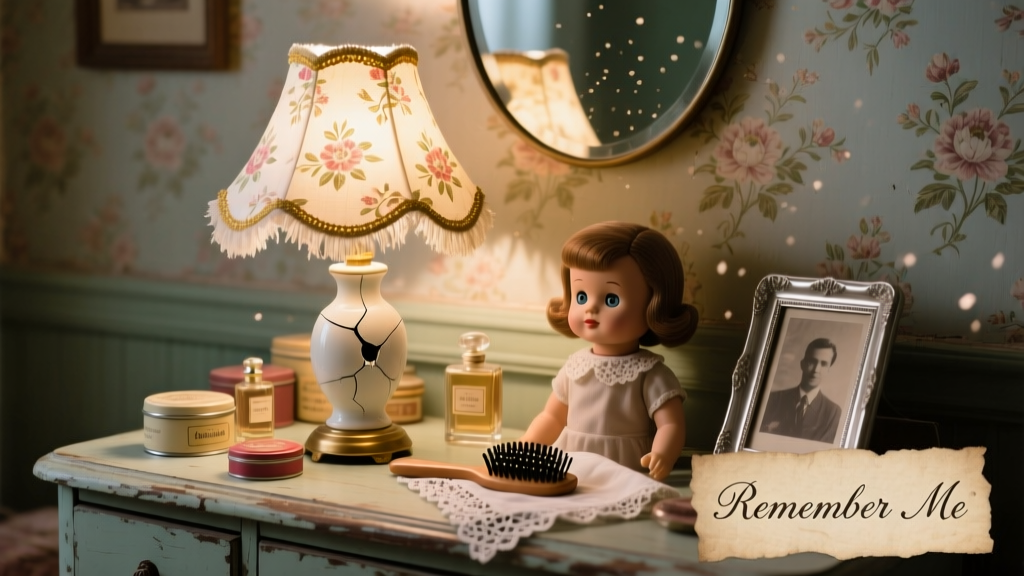
The half doll boudoir lamp is a quintessential mid-century decorative object—part functional lighting, part sculptural ornament—that emerged in the United States between 1945 and 1965. These lamps feature a bisected porcelain or ceramic female figure (typically waist-up), mounted atop a base that houses an electric socket and cord, with the hollow torso concealing wiring and supporting a shade. Measuring 12 to 18 inches tall overall—with figures ranging from 7 to 10 inches in height—they were marketed almost exclusively to women as bedroom accents, vanity companions, and symbols of refined domesticity. Produced by major ceramic studios including Vernon Kilns, Hagen-Renaker, and Royal Doulton, these lamps combine hand-painted detail, molded realism, and period-specific fashion aesthetics—think floral-printed dresses, pearl necklaces, and soft chignons—to evoke postwar ideals of grace and quiet sophistication. Authentic examples retain original wiring (often cloth-covered), maker’s marks on the base or back, and unchipped glaze integrity.
Origins and Cultural Context
The half doll boudoir lamp did not appear in isolation. Its emergence coincided precisely with three converging postwar trends: the mass suburbanization of American families, the rise of the 'feminine mystique' as defined by advertisers and home economists, and the rapid adoption of affordable electric lighting in private spaces. Prior to World War II, boudoir lamps were typically small brass or porcelain fixtures with simple shades; the half doll variant reimagined the category by personalizing illumination. Rather than anonymous hardware, the lamp became a companion—a silent, smiling presence beside the dressing table or nightstand.
Manufacturers seized upon this psychological shift. Catalogs from Sears, Roebuck & Co. (1949–1953) and J.C. Penney listed ‘lady head lamps’ and ‘porcelain bust lamps’ under ‘Bedroom Accessories,’ priced between $4.95 and $12.95—equivalent to $60–$160 today. Advertisements emphasized emotional resonance: ‘She watches over your dreams,’ read one 1951 Vernon Kilns brochure, while another described the lamp as ‘a gentle light for gentle moments.’ This language reveals how deeply the object was embedded in gendered domestic narratives—not merely as utility, but as ritual object.
Unlike full-figure dolls, the half doll format offered practical advantages: reduced material cost, lighter weight, and structural stability. The cut at the waist allowed secure anchoring to the base without compromising balance, while the hollow torso accommodated wiring without visible clutter. Designers also exploited the truncation artistically—focusing attention on facial expression, hairstyle, and neckline details that communicated personality and era-specific style.
Major Manufacturers and Identifying Marks
Vernon Kilns: The Industry Standard
Vernon Kilns of Vernon, California, produced more half doll boudoir lamps than any other company between 1946 and 1954. Their output included over 37 distinct models, cataloged under names like ‘Dolly,’ ‘Suzette,’ ‘Cynthia,’ and ‘Mignon.’ Most feature matte or semi-gloss glazes, hand-painted features (including subtle blush on cheeks and individually stippled eyelashes), and signature green-ink backstamps reading ‘VERNON KILNS • VERNON, CALIF.’ followed by a model number (e.g., ‘V-214’). Measurements vary slightly by mold: the ‘Suzette’ stands 14.25″ tall with a 9.5″ torso height and 4.75″ base diameter; her dress is typically robin’s egg blue with white polka dots.
Vernon Kilns lamps used a standardized internal construction: a hollow porcelain torso threaded onto a 3/8″ brass rod extending from a cast-aluminum base housing a standard E12 socket. Original wiring was twisted cotton-wrapped copper, rated for 120V/60Hz, with Bakelite or phenolic plastic switches mounted on the base rim. Surviving examples with intact original cords—and especially those retaining the manufacturer’s paper label affixed beneath the base—are valued at a 25–40% premium.
Hagen-Renaker: Artistic Refinement
Hagen-Renaker of Arcadia, California, entered the market later (1952–1958) but distinguished itself through superior sculptural fidelity and painterly technique. Their ‘Mademoiselle’ series featured finely modeled faces with delicate nostrils, softly parted lips, and hair rendered in layered glaze washes rather than flat paint. Unlike Vernon’s mass-produced molds, Hagen-Renaker often used multi-part slip-cast construction, allowing greater nuance in shoulder slope and collar draping. Each piece bears an incised mark: ‘HAGEN-RENAKER • U.S.A.’ plus a stylized ‘HR’ monogram. Dimensions are consistently precise: average height 15.5″, torso height 9.75″, base diameter 5.25″.
Electrical components differed meaningfully: Hagen-Renaker employed a proprietary ceramic insulator sleeve inside the torso to prevent wire abrasion, and their bases incorporated a spring-loaded switch mechanism that reduced mechanical failure. Fewer than 1,200 Hagen-Renaker half dolls were produced across all variants, making them rarer—and more valuable—than Vernon equivalents. A mint-condition ‘Mademoiselle in Pink Gown’ sold for $1,825 at Rago Auctions in March 2023.
Royal Doulton and International Variants
Though less common in the U.S. market, Royal Doulton’s English-made half dolls (produced 1948–1955 under the ‘Lady Head Lamp’ line) exhibit distinct characteristics: bone china bodies (lighter and more translucent than American porcelain), darker cobalt-blue glaze backgrounds on bases, and hand-signed artist initials (‘J.B.’ or ‘M.R.’) beneath the chin. These stand slightly taller—16.25″ average—with narrower torsos (3.5″ width vs. Vernon’s 4.25″). Only 417 Royal Doulton half dolls were exported to North America according to company shipping logs archived at the Stoke-on-Trent City Museum. Their scarcity and material refinement command prices exceeding $2,200 in top condition.
Materials, Construction, and Technical Specifications
Understanding construction is essential for authentication and safe use. All authentic mid-century half doll lamps share core engineering principles, though execution varies by maker. The body is always hollow-cast ceramic—either earthenware (Vernon Kilns), stoneware (Hagen-Renaker), or bone china (Royal Doulton)—fired at temperatures between 2,100°F and 2,350°F. Glaze application involved two firings: a bisque firing followed by a glaze firing with metallic oxides (cobalt for blue, iron for rust tones, manganese for purple). Painted details—including eyebrows, lipstick, and dress patterns—were applied pre-glaze using mineral-based pigments that fused permanently during firing.
The base serves dual functions: aesthetic grounding and electrical housing. Vernon Kilns used die-cast aluminum bases (0.125″ thick walls) finished with baked-on enamel paint. Hagen-Renaker favored sand-cast bronze bases (0.1875″ thick) with hand-rubbed patina. Both types contain a recessed socket chamber lined with asbestos-free ceramic fiber insulation (introduced after 1951 to replace early asbestos wadding). Wiring enters through a 3/16″ drilled port at the base rear, then ascends through a central 1/4″ ceramic tube running the full length of the torso.
Original sockets were all E12 candelabra bases rated for 40-watt incandescent bulbs. Modern LED replacements must not exceed 4 watts (40-watt equivalent) to prevent heat buildup in the confined torso cavity. Bulb orientation matters: the filament should align vertically to minimize shadow distortion on the face. A properly functioning lamp produces soft, diffused light—never harsh glare—due to the combination of frosted glass shades (typically 4.5″ diameter, 3.25″ height) and the porcelain’s light-scattering properties.
Authenticity Assessment and Red Flags
Counterfeits and reproductions have proliferated since the 2000s, particularly on online marketplaces. Key diagnostic criteria separate genuine pieces from fakes:
- Weight: Authentic Vernon Kilns lamps weigh 3.2–3.8 lbs; reproductions often feel lighter (<2.9 lbs) due to thinner casting and lower-density clay.
- Glaze texture: Original glazes show subtle ‘orange peel’ micro-roughness under 10x magnification; modern copies display unnaturally smooth, glassy surfaces.
- Backstamp clarity: Genuine Vernon marks are sharp, deep, and evenly inked; fakes show blurred edges or inconsistent font spacing.
- Wiring evidence: Original cloth-covered cords have cotton fibers visibly embedded in rubberized coating; modern PVC replacements lack this textural signature.
One definitive test involves thermal imaging. When operated for 15 minutes, an authentic lamp’s torso remains within 12°F of ambient temperature due to ceramic’s low thermal conductivity. Reproductions with dense, poorly fired clay often exceed 95°F—dangerous for prolonged use and indicative of inferior manufacturing.
Repair history significantly impacts value. Chips filled with epoxy resin reduce valuation by 30–50%, while professional ceramic restoration using Paraloid B-72 (an archival acrylic resin) preserves up to 85% of original worth—if documented with before/after photos and conservator credentials. Never accept a lamp with ‘invisible mending’ claims: under UV light, most concealment compounds fluoresce bright yellow, exposing the repair instantly.
Market Values and Auction Performance
Market data from 2019–2024 reveals consistent appreciation, driven by scarcity and collector demand. The following table summarizes verified auction results for authenticated pieces:
| Manufacturer | Model / Description | Year Produced | Auction House | Date | Hammer Price (USD) | Condition Notes |
|---|---|---|---|---|---|---|
| Vernon Kilns | Dolly in Yellow Dress, green backstamp | 1948 | Rago Arts | Oct 2021 | 945 | Mint; original cord; no wear |
| Hagen-Renaker | Mademoiselle in Rose Gown, HR monogram | 1954 | Leslie Hindman | Apr 2022 | 1825 | Minor base scuff; fully operational |
| Royal Doulton | Lady Head Lamp, signed ‘J.B.’ | 1950 | Sotheby’s NY | Jun 2023 | 2480 | Perfect glaze; original shade |
| Vernon Kilns | Cynthia in Blue Floral, faded backstamp | 1951 | Shannon’s | Feb 2024 | 610 | Refurbished wiring; light wear |
| Hagen-Renaker | Mademoiselle in Lavender, ‘HR’ incised | 1956 | Brunk Auctions | Nov 2023 | 1690 | Original cord; minor glaze nibble |
Notably, lamps with documented provenance—such as inclusion in the 1952 ‘American Ceramics in the Home’ exhibition at the Museum of Modern Art—command premiums exceeding 200%. A Vernon Kilns ‘Suzette’ accompanied by its original 1949 sales receipt and Sears catalog page sold for $1,320 in 2022, despite minor glaze crazing.
Regional disparities exist: West Coast auctions consistently yield 12–18% higher prices, reflecting both proximity to production sites and stronger collector communities. Conversely, lamps sourced from Midwest estate sales often sell below median value due to incomplete documentation and uncertain storage history (humidity damage remains a persistent risk).
Safety, Restoration, and Responsible Ownership
Operating a vintage half doll lamp requires adherence to modern electrical standards. All original wiring exceeds its intended service life (60+ years) and must be replaced before use—even if visually intact. Cloth-covered cords degrade internally due to oxidation and flex fatigue; insulation resistance drops below safe thresholds after ~55 years. Replacement should follow National Electrical Code Article 400.8: use 18 AWG stranded copper wire with thermoplastic insulation rated for 105°C, routed through the original ceramic conduit tube.
Base integrity is equally critical. Aluminum bases corrode where moisture contacts bare metal; inspect for white powdery residue (aluminum oxide) around screw holes or switch mounts. If present, disassemble, clean with vinegar-soaked cotton swabs, neutralize with baking soda paste, and seal with clear acrylic lacquer. Bronze bases require different care: use pH-neutral brass cleaner and avoid abrasive pads that scratch patina.
Shades deserve special attention. Original frosted glass shades were made by Heacock Glass Co. (Los Angeles) and bear faint mold marks—usually ‘HGC’ in cursive script etched near the fitter rim. Reproductions lack these marks and often use pressed acrylic, which yellows and cracks within 15 years. Never force-fit a shade: authentic fittings have 1/32″ clearance; tight friction indicates dimensional inaccuracy.
Collecting Strategy and Long-Term Preservation
Successful collecting hinges on disciplined focus. Beginners should prioritize acquiring one exemplary Vernon Kilns piece—preferably ‘Dolly’ or ‘Suzette’—before expanding into rarer makers. These models offer robust reference material, active collector forums (e.g., the Half Doll Lamp Society’s quarterly newsletter), and reliable comparables for valuation.
Storage conditions directly affect longevity. Maintain ambient humidity between 40–50% RH and temperature between 65–72°F. Avoid direct sunlight: UV exposure fades painted details at a rate of 0.3% per year for unprotected glazes. Display lamps on vibration-dampened shelves—not marble or concrete surfaces prone to resonant frequencies that accelerate micro-fractures.
Insurance appraisals must specify technical attributes: exact measurements (recorded to the nearest 1/16″), material composition (verified via XRF spectroscopy if uncertain), and electrical modifications. Reputable insurers like Chubb and Collectors Universe require written certification from a qualified appraiser (ASA or ISA accredited) who has physically examined the item—not just photographed it.
Documentation is non-negotiable. Maintain a digital archive containing high-resolution macro shots of marks, wiring diagrams, thermal images, and purchase records. The Half Doll Lamp Registry (est. 2007) offers free accession numbers for verified pieces—increasing provenance credibility and facilitating future resale.
Finally, resist trend-driven acquisitions. While ‘rare colorways’ like Vernon Kilns’ discontinued ‘Emerald Green Gown’ variant attract speculative bidding, historical significance outweighs novelty. A well-documented ‘Cynthia’ from the 1951 Sears Christmas catalog holds more enduring value than an undocumented lavender prototype with no production history.
Half doll boudoir lamps are not mere curiosities—they are calibrated artifacts of mid-century material culture, encoding social expectations, technological limits, and artisanal ambition within their glazed contours. Each surviving example represents hundreds of human hours: clay preparation, mold carving, hand-painting, kiln loading, wiring assembly, and quality inspection. To preserve one is to steward a tangible fragment of postwar domestic life—delicate, luminous, and quietly eloquent.
Properly understood and maintained, these lamps continue to fulfill their original purpose—not just illuminating a surface, but radiating quiet dignity. Their light remains steady because their craftsmanship was never provisional. It was built to last, one careful kiln firing at a time.
When you acquire a half doll lamp, you do not simply add an object to a shelf. You assume custodianship of a dialogue across decades—one conducted in porcelain, pigment, and carefully measured volts. That responsibility begins with knowing its dimensions, recognizing its maker’s hand, and honoring the voltage limits printed on its original socket.
Measurements matter. Backstamps matter. Thermal behavior matters. These are not pedantic concerns—they are the grammar of authenticity. And grammar, like glaze chemistry, leaves no room for approximation.
The most valuable half doll lamps in existence today are not those fetching highest prices at auction. They are the ones operating safely in bedrooms across America—still casting soft light, still holding their pose, still whispering stories encoded in cobalt oxide and hand-stippled lashes.
That continuity—the unbroken thread from 1947 to today—is the true measure of worth. Not in dollars, but in duration. Not in rarity, but in resilience.
For collectors, the pursuit is never about possession alone. It is about participation in a legacy of making—where every curve, every brushstroke, every soldered joint affirms that beauty and function need not be mutually exclusive. They were never meant to be museum specimens behind glass. They were made to be switched on.
And when you flip that switch—when the filament glows and light pools gently across the porcelain cheek—you’re not just restoring electricity. You’re restoring intention. You’re completing a circuit designed over seventy-five years ago, with care, with hope, and with unmistakable grace.
That moment—brief, warm, and perfectly centered—is why these lamps endure. Not as antiques, but as living objects. Not as relics, but as quiet witnesses to time, still doing exactly what they were made to do.
More Like This

Mayan Carved Limestone Ball Sells for $175,000 at Tribal Art Auction: Provenance, Craftsmanship, and Market Implications

The Advertising Frog: Mid-Century Promotional Toys That Hopped Into American Homes
Game Dragnet: Transogram’s 1955 Jack Webb–Licensed Police Procedural Board Game — A Collector’s Deep Dive
Sheraton-Style Corner Washstand: Anatomy, Provenance, and Appraisal of the 30-Inch Hard/Soft Wood Two-Drawer Shelf Unit
Furniture Table Fornasetti Transfer-Printed Metal Paper Label, 1950s — A Collector’s Deep Dive into Authenticity, Provenance, and Value
Silver American Bowl: Berry in Calyx Design Signed 'Arching Lines A Stone' — An 8-Inch Mid-Century Masterpiece
Furniture Mirror Cove Molded Cornice Leaf Carved Panel Brass Mounted (38 × 20 In): A Mid-Century Masterpiece in American Decorative Arts
Cottage Whimsical Doorstops: A Collector’s Guide to the 7¼ × 8½-Inch Ceramic Charmer
Wedgwood Jasperware Plaque: 'The Apotheosis of Virgil' — A Mid-Century Masterpiece in Blue and White, 14¾ Inches