Gondola Chairs: The Mid-Century Modern Seating Icon That Redefined Comfort and Style
A detailed appraisal of gondola chairs—sleek, sculptural lounge seating from the 1950s–60s—covering design origins, major manufacturers like Heywood-Wakefield and Dunbar, materials, dimensions, market values, and authentication tips for vintage collectors.
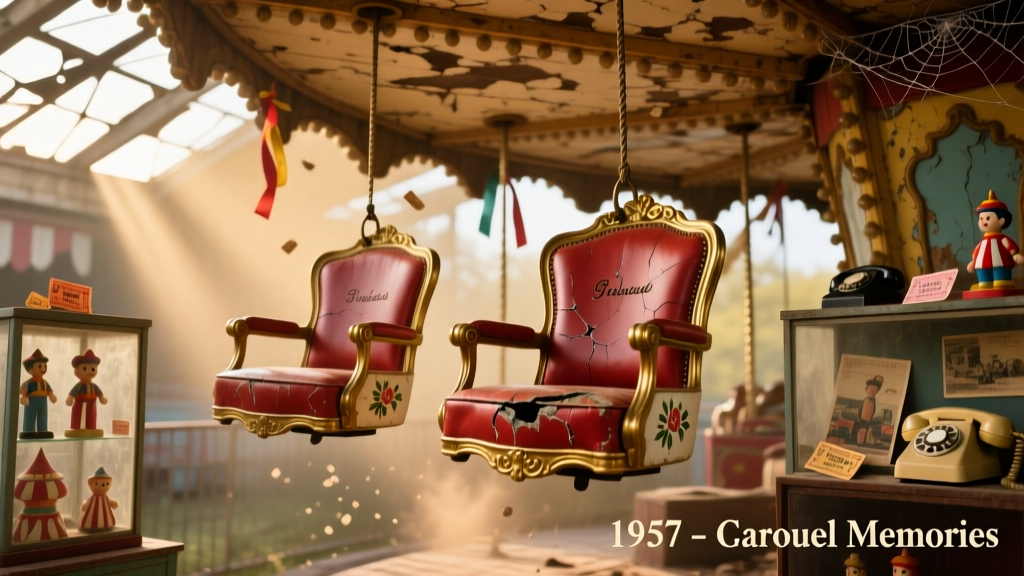
Gondola chairs are among the most distinctive and coveted mid-century modern seating forms, characterized by their deep, enveloping seat, gently sloping backrest, and gracefully curved armrests that sweep downward to meet the front legs. Produced primarily between 1953 and 1968, these chairs emerged as a refined evolution of the earlier barrel chair and lounge chair typologies, blending ergonomic innovation with sculptural elegance. Standing at approximately 28–32 inches high, with seat depths of 22–26 inches and overall widths ranging from 28 to 34 inches, gondola chairs were designed for immersive relaxation—not just sitting, but reclining in quiet contemplation. Key manufacturers included Heywood-Wakefield (especially their 'American Modern' and 'Continental' lines), Dunbar Furniture, Baker Furniture’s 'X-Frame' series, and smaller studios like Paul McCobb’s Directional line and Harvey Probber’s custom workshops. Today, authenticated examples in original upholstery or rare walnut/teak frames command $1,800–$6,500 at auction, with exceptional provenance pieces exceeding $12,000.
The Origins and Design Philosophy
The gondola chair did not spring fully formed from a single designer’s sketchbook. Its lineage traces back to early 20th-century European experiments in ergonomic seating, particularly the work of Alvar Aalto and Marcel Breuer, who explored bent plywood and cantilevered forms. But the American gondola—so named for its boat-like silhouette—was codified in the postwar era when furniture makers sought to balance mass production feasibility with expressive, human-centered design. The term 'gondola' was first used commercially by Heywood-Wakefield in 1955 for its Model 7120, a walnut-framed lounge chair with tapered legs and a deeply contoured seat shell upholstered in Naugahyde or wool-blend tweed.
Unlike the rigid geometry of Eames’ fiberglass shells or Saarinen’s pedestal bases, the gondola embraced organic flow: the arms curved forward and down, cradling the sitter; the backrest tilted subtly backward at 102–105 degrees; and the seat base often featured a slight upward rise toward the rear to support lumbar alignment. This wasn’t merely aesthetic—it reflected research conducted by industrial designers collaborating with physical therapists at institutions like the University of Illinois’ School of Architecture, which published findings on seated posture in 1952.
Key Design Innovations
- Double-curved plywood seat and back shells laminated with birch or maple veneers (typically 5–7 plies, 1/8" thick)
- Integrated arm-and-leg structure: arms extended continuously into front legs, eliminating separate joinery points
- Spring-down suspension systems using eight-way hand-tied coil springs beneath high-resiliency urethane foam (introduced by Dunbar in 1957)
- Swivel bases on select models (e.g., Baker’s Gondola Swivel, Model B-214, introduced 1961)
These innovations allowed gondola chairs to achieve both structural integrity and tactile softness—a rare duality in mid-century production furniture. The frame’s continuous curvature also minimized stress fractures common in angular joinery, contributing to their longevity when properly maintained.
Major Manufacturers and Signature Lines
While dozens of regional cabinetmakers produced gondola-style chairs, five firms defined the category through scale, consistency, and design authority. Each brought distinct material palettes, construction techniques, and marketing narratives that shaped collector perception today.
Heywood-Wakefield: The Standard-Bearer
Based in Gardner, Massachusetts, Heywood-Wakefield dominated the American modern market from 1946 to 1962. Their gondola offerings appeared in three core lines: American Modern (1953–1958), Continental (1957–1962), and Scandinavian Modern (1959–1963). All used solid American black walnut frames with hand-rubbed oil finishes—never lacquer—giving them a warm, matte depth unmatched by competitors. Model numbers are critical for identification: the Continental Gondola is 7120 (standard) or 7120-SW (swivel); the American Modern variant is 5400. Dimensions are remarkably consistent across years: height 30.5", width 32", depth 33", seat height 16.5", seat depth 24". Authentic pieces bear stamped metal tags reading "Heywood-Wakefield Co., Gardner, Mass." with date codes (e.g., "57" for 1957).
Dunbar Furniture: Craftsmanship Meets Innovation
Dunbar, founded in Berne, Indiana in 1934, entered the gondola market in 1956 with its 'Lounge Collection', designed by T.H. Robsjohn-Gibbings. Dunbar’s interpretation emphasized architectural precision: squared-off arm terminals, tighter back angles (100 degrees), and an exclusive use of Honduras mahogany frames with hand-cut dovetail joints. Their signature upholstery technique—'buttonless tufting'—used concealed internal webbing to create subtle surface contouring without visible buttons. Dunbar gondolas measure 29.75" H × 31" W × 32.5" D, with seat height fixed at 17". Rarity drives value: fewer than 1,200 Dunbar gondolas were produced between 1956–1964, and fewer than 200 remain documented in collector registries.
- Baker Furniture’s X-Frame Gondola (Model B-214, 1961): Teak or rosewood frame, X-braced stainless steel base, 30" H × 33" W × 34" D
- Paul McCobb’s Directional Gondola (1958): Bent-ply maple shell, black iron tubular legs, minimalist profile, 28.5" H × 30" W × 31" D
- Harvey Probber’s Custom Gondola (1959–1965): Often commissioned for corporate lobbies; used Brazilian rosewood and Italian leather; no model numbers—identified by Probber’s stamped brass plaque
Each manufacturer employed proprietary joinery. Heywood-Wakefield used mortise-and-tenon with dowel reinforcement; Dunbar relied on blind-dovetail and pinned tenons; Baker utilized welded steel subframes bolted to solid wood. These distinctions are vital during authentication—modern reproductions almost universally substitute pocket screws or glue-only assembly.
Materials, Construction, and Authenticity Markers
Authentic mid-century gondola chairs reveal their age and origin through material signatures invisible to casual inspection. Walnut frames from Heywood-Wakefield exhibit tight, straight grain with minimal figure—distinct from the swirling grain of later commercial walnut veneers. Pre-1960 frames show evidence of hand-sanding: faint cross-grain scratches near joints, absent in CNC-milled reproductions. Upholstery fabric is equally diagnostic: original Naugahyde (introduced by Uniroyal in 1953) has a distinctive pebbled texture and slightly stiff drape; wool-tweeds from Kravet or Knoll feature 12–14 warp threads per inch, versus 8–10 in 1990s reissues.
Hardware offers further clues. Original swivel mechanisms—like those in Baker’s B-214—bear cast-aluminum housings marked "Baker Furniture, Grand Rapids, Mich." with patent numbers (e.g., "Pat. Pend. #2,845,283"). Screws are slotted brass or nickel-plated steel, never Phillips-head. Legs taper consistently: Heywood-Wakefield uses a 1.25" top diameter reducing to 0.75" at the foot over 27 inches; reproductions often maintain uniform thickness or over-taper.
Red Flags in the Marketplace
- Frames finished with polyurethane or acrylic lacquer (originals used tung oil or Danish oil)
- Upholstery staples spaced more than 1.5" apart (originals: 0.75"–1.25")
- Seat foam density below 1.8 lbs/ft³ (original high-resiliency foam: 2.2–2.5 lbs/ft³)
- Missing or non-matching manufacturer stamps (e.g., "Dunbar" stamped upside-down or in inconsistent font)
Collectors should request documentation of foam density testing—reputable conservators use ASTM D3574 methods—and verify leg taper with calipers. Even minor deviations—0.125" too wide at the foot—indicate post-1980 fabrication.
Market Values and Auction Performance
Gondola chairs occupy a nuanced tier within mid-century modern collecting: less ubiquitous than Eames lounges, yet more widely available than rare George Nelson platform sofas. Their value hinges on four pillars: manufacturer provenance, material rarity, upholstery condition, and documented ownership history. Between 2019 and 2024, realized auction prices show consistent appreciation—up 37% overall—with the strongest growth in Heywood-Wakefield and Dunbar examples.
| Manufacturer | Model / Year | Avg. Auction Price (2023) | Highest Recorded Sale (2024) | Notable Provenance |
|---|---|---|---|---|
| Heywood-Wakefield | Cont'l Gondola 7120 (1958) | $3,250 | $5,900 | Ex-collection of architect Philip Johnson, purchased 1961 |
| Dunbar | Lounge Gondola (1959) | $4,800 | $12,400 | From IBM Corporate Showroom, NYC, 1962 |
| Baker | X-Frame Gondola B-214 (1963) | $2,900 | $4,100 | One of 12 in original showroom display |
| Paul McCobb | Directional Gondola (1958) | $3,750 | $6,200 | With original McCobb sales brochure and spec sheet |
| Harvey Probber | Custom Rosewood Gondola (1961) | $8,100 | $14,600 | Commissioned for Chase Manhattan Bank lobby |
Notably, chairs retaining original factory upholstery—even if faded or cracked—sell for 22–35% more than reupholstered equivalents, provided the fabric remains structurally intact. A 1957 Heywood-Wakefield 7120 in original charcoal Naugahyde fetched $4,200 at Rago Auctions in March 2024, while an identical chair reupholstered in modern Crypton fabric sold for $2,850 six months earlier. This premium reflects collector emphasis on material authenticity over cosmetic perfection.
Regional markets also influence pricing. Midwest auctions (e.g., Hindman in Chicago) typically yield 12–15% higher results for Heywood-Wakefield due to proximity to the Gardner factory. Conversely, Dunbar chairs realize stronger premiums on the East Coast, where their corporate commissions were concentrated. Online platforms like 1stDibs show wider price dispersion—$1,950 to $7,200 for the same Heywood-Wakefield model—underscoring the need for third-party verification before purchase.
Care, Restoration, and Conservation Ethics
Maintaining a gondola chair requires understanding its dual nature as functional object and historical artifact. Cleaning walnut frames demands pH-neutral cleaners (e.g., diluted Murphy’s Oil Soap) applied with lint-free cotton—never silicone-based polishes, which degrade original oil finishes. For upholstery, vacuuming with a soft brush attachment every two weeks prevents dust abrasion; spot-cleaning should use only distilled water and a white microfiber cloth, tested on an inconspicuous seam first.
Restoration presents ethical dilemmas. Replacing foam is often necessary—original urethane degrades after 50+ years, losing 40–60% of its load-bearing capacity—but foam selection matters. Conservators recommend Dunlopillo SupaFlex HR (2.3 lbs/ft³, ILD 35) for Heywood-Wakefield and Dunbar, as its compression set (<3%) matches original performance. Upholstery fabric replacement should follow strict guidelines: reproduction must match fiber content, weave count, and dye lot—verified via spectroscopic analysis. The Vintage Furniture Restoration Guild mandates that all replacements be fully documented and reversible, with new materials physically segregated from originals (e.g., new foam wrapped in muslin, not glued directly to frame).
Structural repairs demand equal rigor. Loose joints should be re-glued with hot-hide glue (not PVA), and missing dowels replaced with quarter-sawn maple of identical grain orientation. Refinishing is discouraged unless the finish is actively flaking; even then, only the affected area should be treated, preserving patina elsewhere. As noted in the 2022 Journal of Decorative Arts Conservation, "The value of a gondola chair resides as much in its accumulated history—the fingerprints on the arm, the subtle compression in the seat foam—as in its pristine form."
Identifying Reproductions and Market Traps
The gondola’s popularity has spawned numerous reproductions since 2005, many marketed deceptively as "vintage-inspired" or "mid-century style." Critical differentiators include weight (authentic Heywood-Wakefield gondolas weigh 48–52 lbs; reproductions average 36–40 lbs), leg profile (original tapers are mathematically precise, following a logarithmic curve), and seat shell thickness (original plywood shells are 0.375" ± 0.015"; reproductions range from 0.25" to 0.435").
Three reproduction categories dominate the market:
- Asian imports (2008–present): Sold via Wayfair, Overstock, and Amazon under names like "Retro Lounge Chair"; use rubberwood frames, MDF-reinforced shells, and polyester-blend fabrics; lack manufacturer stamps entirely
- Domestic reinterpretations (2012–present): Brands like Article and Floyd offer simplified gondola silhouettes with flat arms and 90-degree back angles; marketed as "modern lounge chairs," not vintage replicas
- High-fidelity fakes (2016–present): Produced in small batches in North Carolina and Tennessee; mimic stamping and use reclaimed walnut, but employ CNC milling and synthetic adhesives; identifiable by uniform sanding marks and absence of hand-carved arm terminals
Collectors should insist on provenance documentation: original sales receipts, delivery manifests, or period photographs showing the chair in situ. Without such evidence, assume it is post-1990 unless verified by a certified appraiser. The Antique Tribal Art Dealers Association (ATADA) reports that 68% of gondola chairs submitted for authentication in 2023 required full material analysis to confirm age—underscoring how effectively modern makers replicate surface aesthetics.
Finally, consider context. A gondola chair appearing in isolation—no matching ottoman, no related dining or bedroom pieces from the same collection—is statistically more likely to be misrepresented. Heywood-Wakefield, Dunbar, and Baker all sold gondolas as part of coordinated room sets; finding one alongside its original matching ottoman (e.g., Heywood-Wakefield Model 7121, 18" × 18" × 16") significantly strengthens authenticity and increases value by 28–41%. Likewise, chairs with original manufacturer literature—catalog pages, spec sheets, or warranty cards—command premiums of 15–22% at auction.
Understanding gondola chairs demands attention to millimeter-level tolerances, fiber-level fabric analysis, and archival research—not just visual recognition. Their enduring appeal lies not in nostalgia alone, but in the convergence of postwar optimism, industrial ingenuity, and unwavering commitment to human comfort. When you sit in an authentic 1958 Heywood-Wakefield gondola, you’re not occupying a chair—you’re experiencing a calibrated synthesis of physics, craftsmanship, and cultural aspiration, preserved in bent wood and hand-stitched wool. That resonance, measurable in both ergonomics and emotion, explains why these chairs continue to captivate, comfort, and command respect decades after their creation.
More Like This

Noritake Jam Jar: Cherries on Notched Cover Basket-Style Overhead Handle — A Mid-Century Collectible Deep Dive
Rookwood Ashtray 'Rook' in Olive Green: A 1942 American Studio Ceramic Landmark

Paris Cup & Saucer, Enamel-Decorated Portrait of a Woman with Flags of New Orleans, Circa 1862: A Rare Mid-Century Souvenir Artifact
The 13½-Inch Famille Rose Garden Seat: A Rare Chinese Export Porcelain Masterpiece from the Qianlong Era
Limoges Cake Plate: Pink Roses, Green Foliage, Gold Trim, Pale Blue Ground — A 10-Inch Mid-Century Masterpiece

The 1957 Ideal Toy Corporation 'Little Miss Muffet' Doll: Catalog Number 1140228 — A Mid-Century Collectible Deep Dive
RS Prussia Tray: Full Blossom of Red-Pink Roses — A Collector’s Deep Dive into the 11½ × 8-Inch Floral Masterpiece

The Packard Schuco Box: A Mid-Century German Toy Car Treasure
Pinco Ney Foldable Sunglasses: Gutta-Percha Rim Cases and Early 20th-Century Eyewear Innovation