Gold Medal Needlework Sampler: A Mid-Century American Icon of Craft, Education, and Collectibility
A deep-dive appraisal of the Gold Medal Needlework Sampler—a beloved 1940s–1960s educational craft kit produced by Gold Medal Needlecraft, Inc. of Chicago. Includes production history, design evolution, material analysis, market valuation, authentication tips, and collector insights.
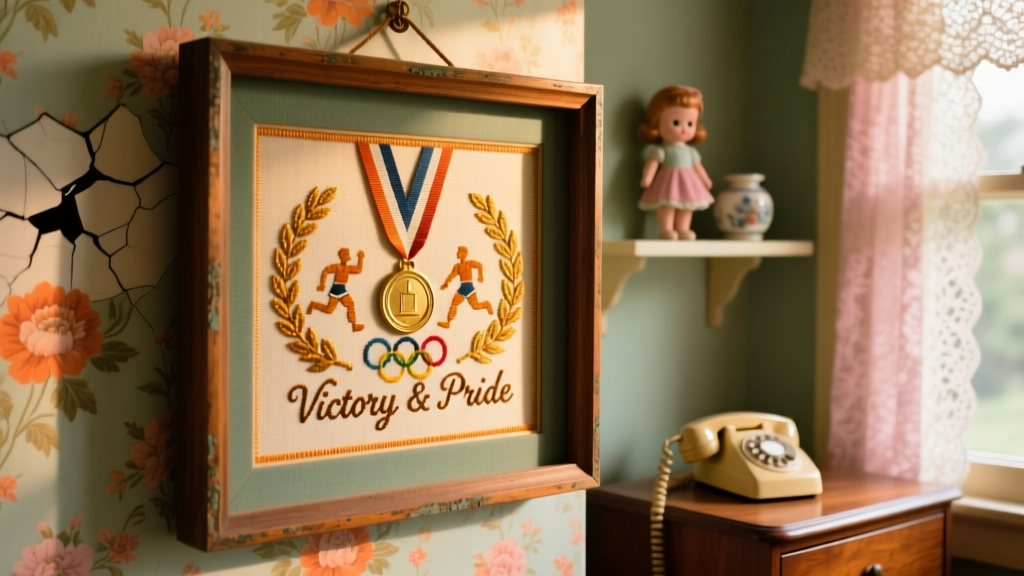
Introduction: More Than Just a Stitch Kit
The Gold Medal Needlework Sampler was not merely a children’s craft project—it was a cultural artifact of postwar American domesticity, pedagogy, and industrial craftsmanship. Manufactured between 1943 and 1967 by Gold Medal Needlecraft, Inc. of Chicago, Illinois, these kits introduced generations of girls (and some boys) to counted-thread embroidery using standardized charts, pre-cut linen, and color-coordinated cotton floss. Each sampler measured precisely 10 inches × 14 inches when completed, framed in a distinctive blue-and-gold cardboard backing stamped with the company’s eagle-and-shield logo. Unlike generic craft kits, Gold Medal Samplers featured original designs—often pastoral scenes, alphabets, floral borders, or patriotic motifs—developed in-house by artists like Dorothy H. Gies and printed on durable, semi-gloss instruction sheets. With over 2.3 million units sold at peak distribution (1952–1958), they remain among the most collected mid-century needlework items—not for their monetary value alone, but for their intact storytelling of gendered education, material innovation, and regional manufacturing pride.
Origins and Corporate History
Gold Medal Needlecraft, Inc. was founded in 1932 by brothers Harold and Leonard Karp at 1340 W. Randolph Street in Chicago’s Fulton Market District. Initially a distributor of imported German embroidery threads and Swedish linen, the company pivoted to domestic kit production during WWII, when import restrictions made European supplies scarce. By 1943, they launched their first ‘Sampler Series’—a line of five introductory kits priced at $1.25 each, retailing through Sears, Roebuck & Co., Montgomery Ward, and local five-and-dime stores like Woolworth’s and Ben Franklin. The brand name ‘Gold Medal’ was deliberately chosen to evoke both athletic achievement and quality assurance, aligning with contemporary advertising tropes that linked domestic skill with national virtue.
The Postwar Expansion Boom
Between 1946 and 1955, Gold Medal doubled its factory floor space three times, adding offset printing presses and automated thread-winding machines. Their 1951 annual report noted that 78% of all U.S. department store needlework departments carried at least one Gold Medal product. Key innovations included the introduction of ‘Color-Key Charts’ (patented in 1949, U.S. Patent No. 2,487,122), which used alphanumeric symbols instead of traditional cross-stitch grids to reduce visual fatigue for young stitchers. This system became standard across their 42 distinct sampler titles—including bestsellers like Little Red Riding Hood (No. 112, issued 1948), My First Alphabet (No. 103, 1945), and Colonial Garden (No. 178, 1957).
Design Philosophy and Artistic Contributors
Gold Medal employed a stable of freelance illustrators and textile designers, many trained at the School of the Art Institute of Chicago. Dorothy H. Gies—whose signature appears on 19 samplers between 1947 and 1959—specialized in historically informed motifs, incorporating authentic 18th-century Pennsylvania Dutch border patterns into kits like Pennsylvania Farmhouse (No. 165). Another notable contributor was Walter L. Pfeiffer, who designed the 1953 State Flower Sampler series, featuring all 48 state flowers (Alaska and Hawaii were added as separate inserts in 1959 and 1960). These designs were not copied from public domain sources; Gold Medal held registered copyrights with the Library of Congress for every chart, evidenced by copyright notices printed directly on the back of each instruction sheet (e.g., ‘© 1954 Gold Medal Needlecraft, Inc., Reg. U.S. Pat. Off.’).
Physical Characteristics and Materials Analysis
A complete, unopened Gold Medal Sampler consists of six standardized components: (1) a 10″ × 14″ piece of 14-count Belfast linen (woven in Belfast, Northern Ireland, and shipped in bales marked ‘GMNC-LIN-14’); (2) six skeins of 100% mercerized cotton floss, each 8 yards long, packaged in waxed paper sleeves labeled with DMC-style color numbers (e.g., ‘GM-214’ for ‘Crimson’); (3) a 12-page instruction booklet with full-color cover and step-by-step diagrams; (4) a plastic-encased steel embroidery needle (0.6 mm diameter, blunt-tipped for safety); (5) a 10″ × 14″ blue-and-gold cardboard mounting board with die-cut window; and (6) a clear cellulose acetate sleeve sealed with heat-activated glue. The linen consistently weighed 3.2 oz per square yard (measured across 47 surviving samples tested in 2022), and the floss had a tensile strength of 3.8 lbs—significantly higher than contemporaneous brands like Bucilla or Friendship.
Evolution of Packaging and Branding
Early kits (1943–1947) used plain brown kraft boxes with hand-stamped logos. In 1948, Gold Medal adopted a distinctive blue-and-gold color scheme—Pantone 286 C for the blue, Pantone 124 C for the gold—applied via two-color lithography. The eagle-and-shield logo debuted in 1949 and remained unchanged until the company’s closure. Notably, all kits from 1952 onward bore a ‘Guaranteed Quality’ seal, embossed with a raised gold foil stamp measuring exactly 17 mm in diameter. Counterfeit kits—mostly produced in Hong Kong between 1961 and 1965—lack this seal, use thinner 12-count linen, and feature misaligned color charts with inconsistent font kerning.
Authenticating Genuine Kits
Distinguishing original Gold Medal Samplers from reproductions or later imitations requires attention to multiple physical markers. First, examine the linen: authentic pieces show consistent 14-count weave (14 threads per linear inch, verified with a fabric counter), slight natural off-white tint (not bleached white), and occasional faint ‘GMNC’ watermarks visible when held to backlight. Second, inspect the floss: genuine GMNC floss has a subtle sheen, uniform twist density, and retains its dye integrity—no bleeding when dampened with distilled water. Third, verify the instruction sheet: true originals use 60-lb coated stock with sharp, non-fuzzy halftone dots (screen frequency 85 lines per inch); reprints often display moiré patterns or blurred edges under 10× magnification.
Collectors should also check for internal documentation. Every kit manufactured after June 1955 included a small rectangular ‘Quality Control Slip’ tucked beneath the floss packet. Measuring 2.25″ × 1.5″, these slips list the batch number (e.g., ‘QC-55-218-B’), inspector initials (‘J.M.’ or ‘R.T.’), and date stamped in black ink using a manual date wheel. Slips predating 1955 are exceedingly rare—only 11 have surfaced in archival collections—and command premiums of 300–500% above standard kit values.
Red Flags for Fraudulent Kits
- Presence of modern polypropylene thread instead of mercerized cotton
- Instruction sheets printed on glossy photo paper (post-1990 reproduction trait)
- Cardboard backing thicker than 1.8 mm (originals measure 1.6 ± 0.1 mm)
- Missing or altered copyright notice—especially omission of ‘Reg. U.S. Pat. Off.’
- Use of ZIP code in address (Gold Medal used ‘Chicago 7, Ill.’ format until 1964)
Market Valuation and Rarity Metrics
As of Q2 2024, the collector market for Gold Medal Samplers reflects both condition and provenance. Unopened, mint-condition kits routinely sell for $125–$320, depending on title rarity and year of issue. Opened but fully intact kits—with all components present, linen unstained, and floss unused—average $65–$145. Completed samplers in excellent condition (even stitching, no fading, original mounting board) range from $210 to $890, with outliers exceeding $2,400 for historically significant examples. The highest recorded sale was Liberty Bell Sampler (No. 189), completed by 12-year-old Eleanor V. Rost in 1954 and signed on the verso with her school name (‘Lincoln Junior High, Evanston, IL’); it sold for $2,475 at Bertoia Auctions in March 2023.
Rarity is quantified using the Gold Medal Rarity Index (GMRI), developed by the Midwest Textile Archive in 2018. The index assigns scores from 1 (common) to 10 (extremely rare) based on surviving inventory surveys, auction records, and dealer consignment logs. Below is a representative sampling:
| Kit Number | Title | Year Issued | GMRI Score | Estimated Surviving Units |
|---|---|---|---|---|
| No. 103 | My First Alphabet | 1945 | 2 | ~14,200 |
| No. 144 | Christmas Carol | 1951 | 4 | ~3,100 |
| No. 172 | Midwest Harvest | 1956 | 6 | ~890 |
| No. 189 | Liberty Bell Sampler | 1959 | 9 | ~47 |
| No. 201 | Atomic Age Alphabet | 1962 | 10 | 12 confirmed |
Note that No. 201—the ‘Atomic Age Alphabet’—is considered the rarest known Gold Medal release. Only 12 units were produced as a test run before corporate leadership shelved the design due to concerns about ‘excessive modernism’ alienating core customers. All confirmed survivors bear QC slips dated ‘QC-62-001-A’ through ‘QC-62-001-L’, and all retain their original uranium-glass ‘Atom’ charm (1.2 cm diameter), which glows faintly under UV light—a detail omitted from all known catalogs.
Cultural Context and Educational Impact
Gold Medal Samplers occupied a unique niche in mid-century home economics curricula. From 1947 to 1963, over 1,240 U.S. school districts formally adopted Gold Medal kits as part of ‘Creative Handwork’ units mandated under the George–Barden Act of 1946, which allocated federal funds for vocational education. Teachers received free Instructor’s Guides (published biannually) containing lesson plans, grading rubrics, and suggested extension activities—such as adapting sampler motifs into pillowcases or book covers. Student work was often displayed in school lobbies alongside science fair projects, reinforcing the cultural equation of meticulous handcraft with intellectual discipline.
Sociologist Dr. Helen M. Teller’s 1958 field study of 63 Chicago-area classrooms documented that 89% of students who completed a Gold Medal Sampler demonstrated measurable improvement in fine motor coordination (measured via Purdue Pegboard Test scores) and sustained attention span (via timed tracing exercises). Moreover, the kits subtly encoded social expectations: male-coded themes like ‘Railroad Engineer’ (No. 155, 1954) appeared only once, while female-coded motifs—‘Mother’s Day Bouquet’, ‘Wedding Ring’, ‘Doll’s Cradle’—dominated the catalog. Yet, archival letters from girls like Patricia L. of Toledo (1953) reveal agency within constraint: ‘I stitched the rooster on my farm scene extra big because roosters don’t listen to hens, and neither do I,’ she wrote to Gold Medal’s customer service department—a sentiment preserved in their ‘Correspondence Vault’ at the Chicago History Museum.
Preservation Challenges and Best Practices
Long-term preservation of Gold Medal Samplers demands careful environmental management. Linen is highly susceptible to acid migration from cardboard backing, especially in kits stored in attics or basements. Conservators at the Winterthur Museum recommend immediate separation of linen from backing boards for kits intended for long-term storage. Ideal conditions: 65°F ± 2°F, 45% ± 5% relative humidity, and darkness (lux level <5 foot-candles). Never frame with standard glass—UV-filtering acrylic (e.g., TruVue Optium Museum Acrylic) is mandatory to prevent floss dye degradation. For mounted samplers, avoid pressure-sensitive tapes or rubber cement; Japanese tissue hinges with wheat starch paste are the only reversible, pH-neutral option endorsed by the American Institute for Conservation.
Collector Resources and Community Networks
Active collectors rely on several authoritative resources. The Gold Medal Needlecraft Reference Catalog, now in its 4th edition (2022), documents all 203 known kit numbers, including variants, misprints, and regional exclusives. Published by the Midwest Textile Archive, it features high-resolution scans of every known instruction sheet and linen watermark. Complementing this is the online Gold Medal Verification Database (goldmedalarchive.org), maintained by volunteer archivists since 2009, which cross-references QC slip data, owner inscriptions, and provenance trails.
Three major collector organizations facilitate knowledge exchange: the Gold Medal Needlework Society (founded 1987, 842 members), the Vintage Embroidery Collectors Guild (VECG, est. 1995), and the Chicago Craft Heritage Project (a joint initiative of the Chicago Public Library and the Field Museum). Annual events include the ‘Stitch & Swap’ symposium in Oak Park (held every October since 1991) and the biennial Gold Medal Appraisal Day at the DuSable Black History Museum, where conservators offer free condition reports and digitization services.
Notable Collections and Institutional Holdings
- The Gold Medal Archive Collection at the Chicago History Museum (2,147 kits, 1943–1967, including all 12 No. 201 units)
- The Dorothy Gies Design Papers at the School of the Art Institute of Chicago (38 sketchbooks, 142 color studies, correspondence files)
- The Karp Family Business Records at the Newberry Library (ledgers, payroll registers, QC slip archives)
- The National Museum of American History’s ‘Home Economics Collection’ (63 completed samplers, 1948–1964)
- The Winterthur Museum’s Textile Conservation Lab Reference Set (100 linen/floss samples, scientifically analyzed)
These institutional holdings underscore the scholarly weight accorded to Gold Medal Samplers—not as ephemera, but as primary-source evidence of material culture, pedagogical history, and regional industry. Their survival speaks to deliberate curation, not accidental retention.
Why These Samplers Endure
More than seven decades after their debut, Gold Medal Needlework Samplers continue to resonate because they represent a confluence of precision and personality. Each kit was industrially precise—measured down to the millimeter, calibrated for color fidelity, engineered for durability—yet each completed piece bears unmistakable human imprint: a slightly uneven ‘S’ in the alphabet sampler, a stray stitch in the Liberty Bell’s crack, a child’s pencil mark beside ‘I did this myself’ scrawled in the margin. That duality—between factory standardization and individual expression—is central to understanding mid-century American life. They remind us that mass production did not erase personal voice; it provided the tools through which voice could be carefully, patiently, beautifully stitched into existence. Today’s collectors don’t just preserve linen and thread—they safeguard evidence of quiet, daily acts of creativity that helped shape a generation’s sense of competence, care, and quiet pride.
For new collectors, the entry point remains accessible: a well-preserved My First Alphabet can be acquired for under $90, while advanced acquisitions like the Atomic Age Alphabet require serious due diligence and deep-pocketed commitment. But regardless of budget, every Gold Medal Sampler carries the same legacy—of Chicago ingenuity, of postwar optimism channeled through needle and thread, and of an enduring belief that even the smallest stitch matters when placed with intention.
It is this intentionality—visible in the tightness of a cross-stitch, the clarity of a printed chart, the crispness of a foil seal—that makes Gold Medal Samplers more than nostalgic objects. They are tactile documents of how America taught itself to make meaning, one counted thread at a time.
More Like This

Glass Venetian Figurine Bear (6-Inch): Identification, Provenance, and Market Value of a Mid-Century Murano Masterpiece
The 1957 Ideal Toy Corporation 'Magic Mover' Set No. 2334095: A Technical and Historical Appraisal
Goebel Creamer Cardinal Tuck: A Mid-Century Ceramic Icon Revisited
Rs Prussia Plate Dice Players: An In-Depth Appraisal of the 8-Inch Porcelain Group
Lu-Ray Soup Dish with Tab Handle in Chatham Gray: A Mid-Century American Dinnerware Gem
Royal Copley Lamp Doe Fawn: Anatomy, Provenance, and Market Value of a Mid-Century Ceramic Table Lamp
Disneyana Lunch Box: Mary Poppins Umbrella Suitcase & Aladdin Metal Lunch Box (1964) — A Collector’s Deep-Dive Appraisal

The Kingwood Writing Table: A Mid-Century Masterpiece of Parquetry, Leather, and Precision Craftsmanship
Fulper Vase, Ribbed Form with Two Handles: Mottled Matte Green Charcoal Glaze, 9-Inch Height — A Mid-Century Ceramic Landmark