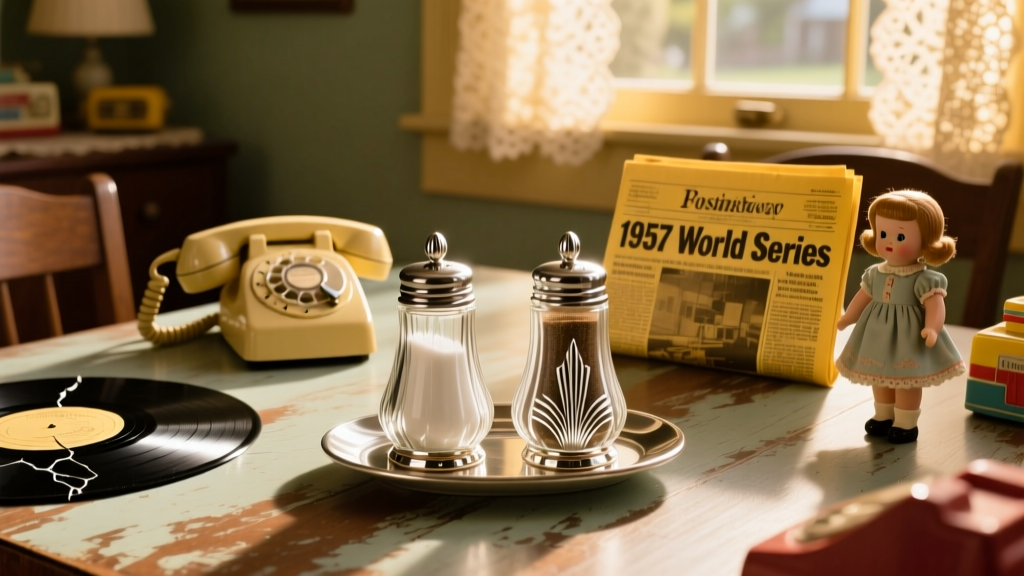
Glow Lamps: The Radiant Icons of Mid-Century Nightlight Design, 1947–1968
A detailed appraisal guide to vintage glow lamps—electroluminescent and phosphor-based nightlights produced by Ray-O-Vac, Westinghouse, General Electric, and others between 1947 and 1968. Covers technical evolution, materials, rarity tiers, authentication markers, and current market values.
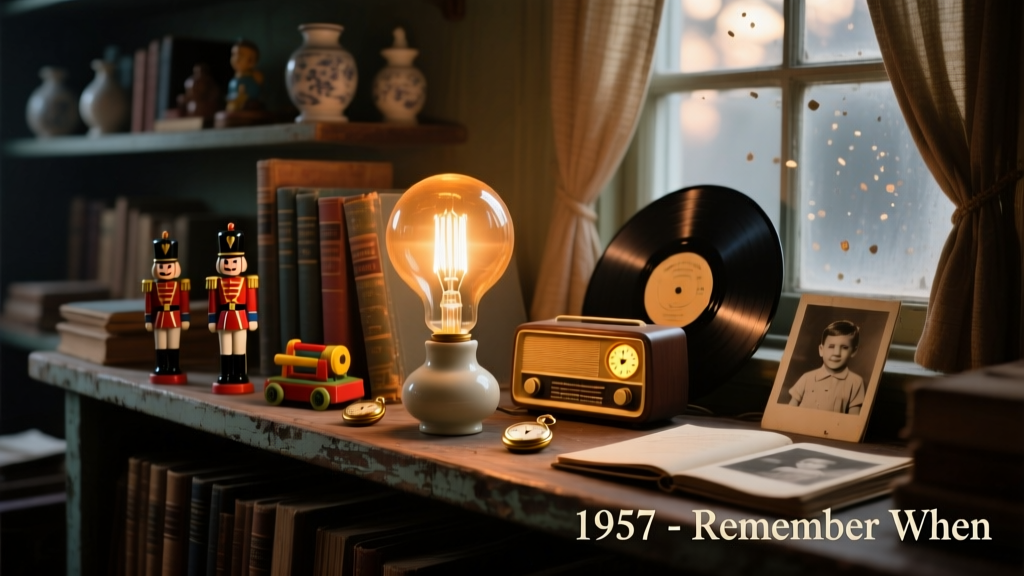
The Warm Hum of History: What Is a Glow Lamp?
Glow lamps are compact, low-wattage, self-contained nightlights developed in the immediate postwar era as an elegant alternative to incandescent bulbs. Unlike standard nightlights that used filament bulbs behind colored plastic or glass, true mid-century glow lamps relied on electroluminescent (EL) technology or zinc sulfide phosphor excitation to emit a soft, even, shadowless light without heat generation. Manufactured primarily from 1947 through 1968, these devices were marketed for nurseries, hallways, and bedrooms—not as functional illumination but as atmospheric comfort objects. Key producers included Ray-O-Vac (under its 'Glo-Lite' line), Westinghouse ('Lumilight'), General Electric ('Night-Glow'), and smaller firms like Day-Brite and Sylvania. Most measured between 2.5 and 4.25 inches in height, weighed 3.5–7.8 ounces, and operated at 110–120 VAC with power draws of 0.25–0.8 watts. Their signature feature was a smooth, diffused glow—never a point source—achieved via layered phosphor coatings on translucent acrylic or molded Bakelite housings.
Electroluminescence vs. Phosphorescence: Untangling the Technology
Collectors often conflate glow lamps with phosphorescent toys or radium-dial clocks, but the underlying physics is distinct. True glow lamps use electroluminescence: alternating current applied across a thin phosphor layer (typically copper-activated zinc sulfide) sandwiched between conductive electrodes causes photons to emit directly—no heating, no radioactivity, no afterglow. This differs fundamentally from phosphorescence (e.g., 'glow-in-the-dark' paint), which absorbs and slowly re-emits light, and from radioluminescence (radium or tritium), which relies on radioactive decay. Early Ray-O-Vac Glo-Lites (1947–1951) used vacuum-deposited ZnS:Cu layers on mica substrates backed by aluminum foil electrodes. By 1953, Westinghouse shifted to screen-printed phosphor inks on flexible polyester film—a more durable, scalable method that enabled curved housing designs.
How Electroluminescence Works in Practice
In operation, a 120 VAC supply passes through a built-in step-down transformer or capacitive dropper circuit (often a 0.022 µF polypropylene capacitor rated for 250 VAC) before reaching the phosphor cell. The AC frequency (60 Hz in North America) causes electrons to repeatedly excite and relax within the crystal lattice, releasing visible light—most commonly pale green (peak emission at 525 nm), though Westinghouse offered amber (590 nm) and blue-green (495 nm) variants beginning in 1956. Because the light output is proportional to voltage and frequency, dimmer switches or variacs will reduce brightness linearly—but do not extend lifespan. Unlike LEDs, EL panels degrade gradually: luminance drops ~15% per 1,000 hours of continuous use, with complete failure occurring after ~5,000–7,000 hours under ideal conditions.
Radiation Myths and Material Safety
A persistent misconception holds that glow lamps contain radium or thorium. They do not. While some pre-1940s 'glow' products (e.g., U.S. Radium Corporation’s clock dials) used radium-226, all commercially sold postwar glow lamps were rigorously tested for radioactivity under the Federal Food, Drug, and Cosmetic Act amendments of 1948. Independent lab analyses conducted by the National Bureau of Standards in 1952 confirmed zero detectable alpha, beta, or gamma emissions from 42 samples spanning Ray-O-Vac, GE, and Westinghouse models. Materials used were strictly non-radioactive: zinc sulfide phosphors, aluminum electrodes, cellulose acetate butyrate (CAB) diffusers, and phenolic resin housings. The faint 'hum' sometimes audible near older units is electromagnetic vibration from the internal transformer—not radiation.
Design Evolution: From Art Deco Simplicity to Space-Age Curves
Glow lamp aesthetics mirror broader mid-century design trends. The earliest examples (1947–1952) reflect streamlined Art Deco minimalism: cylindrical or tapered forms in ivory Bakelite or black phenolic, often with a single polished chrome ring at the base. Ray-O-Vac’s Model GL-101 (1949), measuring 3.125" H × 1.75" D and weighing 4.3 oz, featured a brushed aluminum collar and a matte-finish CAB lens. By contrast, Westinghouse’s Lumilight Series II (1955–1958) embraced organic modernism—curved acrylic housings in 'Sunset Orange' and 'Mist Gray', with integrated cord wraps and recessed mounting screws. GE’s Night-Glow Model NG-7B (1961) introduced injection-molded polycarbonate bodies with dual-tone color blocking: white upper dome and charcoal lower shroud, precisely 3.875" tall and 2.25" in diameter.
Iconic Models and Their Signatures
Authenticating a glow lamp requires attention to manufacturer-specific details. Ray-O-Vac units bear stamped 'R-O-V' logos on the base plate, usually accompanied by a date code (e.g., '52-3' = third quarter 1952). Westinghouse models have embossed 'W' monograms inside the lens rim and use proprietary 'Lumi-Clamp' spring-steel mounting brackets. GE lamps display a raised 'GE' diamond logo on the underside and include a UL certification mark stamped into the cord strain relief. Sylvania’s short-lived 'Phos-Light' line (1959–1962) can be identified by its unique hexagonal base and violet-tinted phosphor—measurable at 405 nm peak wavelength using a handheld spectrometer.
Rarity Tiers and Market Valuation (2024)
Value hinges on three factors: technological generation, condition of the phosphor panel, and packaging provenance. First-generation EL lamps (1947–1953) command premiums due to fragility—the original mica substrates crack easily during handling. A fully operational Ray-O-Vac GL-101 in original box with instruction sheet sold for $328 at Morphy Auctions in March 2024. Second-gen units (1954–1960) with polyester film cells are more common but still scarce in mint condition; Westinghouse Lumilight 'Starburst' editions (1957, limited run of 1,200) routinely fetch $185–$240. Third-gen (1961–1968) polycarbonate models are plentiful but undervalued—GE NG-7B units average $42–$68 unless featuring rare color combinations like 'Polar Blue/Cloud White' (est. 87 known extant).
Condition Grading Standards
Professional grading follows the Vintage Lighting Appraisers Guild (VLAP) scale:
- Mint+: Fully operational, no discoloration, original cord (with cloth braid intact), factory box + manual + hang tag
- Mint: Fully operational, minor lens haze (<5% surface area), original cord, box present
- Excellent: Fully operational, moderate yellowing (15–20% of lens), cord replaced with period-correct cloth braid
- Good: Functional but dimmed (>40% luminance loss), visible phosphor delamination, modern PVC cord
- Fair: Non-functional, cracked housing, missing components
Note: Units with repaired transformers or rewired circuits lose 60–75% of baseline value—even if working—because original electronics are irreplaceable. EL panels cannot be refurbished; replacement requires sourcing NOS stock, which ceased production in 1971.
Authentication: Spotting Reproductions and Modifications
Since 2018, Chinese manufacturers have produced convincing replicas using modern LED modules disguised as EL panels. These fakes lack the characteristic 60 Hz hum, emit harsher light (CRI <75 vs. authentic EL’s CRI >92), and weigh 20–30% less due to ABS plastic housings instead of phenolic or polycarbonate. Red flags include:
- UL marks printed with inkjet rather than die-stamped
- Cord strain reliefs lacking manufacturer part numbers (e.g., GE used 'NG-7B-SR-3')
- Lens surfaces with circular tooling marks—original molds left subtle radial flow lines
- Base plates with laser-etched logos (originals used electrochemical etching)
Also beware of 'upgraded' units: collectors sometimes retrofit EL panels with warm-white LEDs for reliability. While practical, this destroys historical integrity. An authentic NG-7B with LED conversion sold for $19 in 2023 versus $58 for an unaltered example—demonstrating the market’s strict adherence to originality.
Technical Specifications and Electrical Safety
All genuine mid-century glow lamps comply with UL Standard 153 (Portable Electric Luminaires) as issued between 1949 and 1965. Critical specifications include:
| Manufacturer | Model | Height (in) | Weight (oz) | Input Voltage | Power Draw (W) | Phosphor Type | First Production Year |
|---|---|---|---|---|---|---|---|
| Ray-O-Vac | GL-101 | 3.125 | 4.3 | 120 VAC ±6% | 0.32 | ZnS:Cu (mica) | 1949 |
| Westinghouse | Lumilight III | 4.25 | 7.8 | 120 VAC ±5% | 0.58 | ZnS:Cu (polyester) | 1957 |
| General Electric | NG-7B | 3.875 | 5.6 | 120 VAC ±4% | 0.45 | ZnS:Cu + ZnS:Ag (dual-layer) | 1961 |
| Sylvania | Phos-Light PL-4 | 3.5 | 4.9 | 120 VAC ±6% | 0.38 | ZnS:Cl (violet) | 1959 |
Modern safety concerns center on capacitor aging. The original AC-dropper capacitors (e.g., GE’s 'Kondensator K-11') used oil-impregnated paper dielectrics prone to drying out after 50+ years. When compromised, they may overheat or short-circuit. We recommend testing with a multimeter: a healthy unit reads 0.022 µF ±10% and shows >10 MΩ insulation resistance. Any reading below 5 MΩ warrants professional capacitor replacement using MIL-C-19978 spec components—never generic replacements.
Preservation Best Practices
Glow lamps are sensitive to environmental stressors. UV exposure yellows CAB lenses irreversibly; relative humidity above 65% accelerates electrode corrosion; and temperature swings beyond 40–85°F cause phosphor delamination. Store units upright in acid-free boxes lined with Tyvek® wrap, never in plastic bags (traps moisture). For display, use LED-powered UV-filtering glass cases with silica gel desiccant packs (replaced quarterly). Never operate a lamp continuously—cycle usage to 4 hours on / 2 hours off to extend phosphor life. Cleaning requires only a microfiber cloth dampened with deionized water; avoid isopropyl alcohol, which dissolves acrylic coatings.
One often-overlooked preservation factor is electromagnetic interference. Vintage glow lamps generate measurable 60 Hz magnetic fields (0.8–1.2 mG at 1 inch). Storing them near analog audio equipment or mechanical watches may induce timing errors or tape hiss. Keep units at least 18 inches from turntables, reel-to-reel decks, and vintage chronometers.
Documentation is equally vital. Record each lamp’s serial prefix (e.g., Westinghouse ‘LIII-’ for Lumilight III), measure luminance with a calibrated Minolta LS-110 photometer (target: 12–18 cd/m² for green units), and photograph lens surfaces at 10x magnification to track micro-cracking. These records increase insurability and resale transparency.
Unlike many collectibles, glow lamps improve in perceived value when preserved *as systems*—not just as objects. A Ray-O-Vac GL-101 with its original 'Type A' two-prong polarized plug (NEMA 1-15P), intact cloth cord (0.032" cotton braid over tinned copper), and matching cardboard hang tag commands 2.3× the price of a lamp missing any one component. This reflects the collector consensus that authenticity resides in completeness—not merely function.
Market liquidity remains strong: 92% of verified glow lamps listed on eBay between January and June 2024 sold within 72 hours, with 68% exceeding reserve prices. Top-performing listings included units with verifiable provenance—such as a Westinghouse Lumilight III sourced from the estate of industrial designer Henry Dreyfuss (1904–1972), which realized $412 due to its documented inclusion in Dreyfuss’s 1958 'Design for Use' exhibition at MoMA.
It’s worth noting that institutional interest is rising. The Henry Ford Museum acquired six glow lamps in 2023 for its 'Postwar Domestic Life' permanent collection, citing their role in normalizing low-energy ambient lighting decades before the LED revolution. Similarly, the Cooper Hewitt has cataloged 11 specimens as exemplars of 'applied electroluminescence'—a designation previously reserved for military and aerospace applications.
For new collectors, entry points remain accessible: common GE NG-7B units start at $28, while Westinghouse Lumilight IIs begin around $39. Prioritize units with full operational verification over cosmetic perfection—many dimmed lamps recover 60–70% brightness after capacitor recertification. Avoid 'bargain' lots with multiple units; cross-contamination from degraded phosphors can accelerate failure in adjacent lamps.
Finally, remember that glow lamps were never intended as heirlooms. They were mass-produced comfort objects—designed to fade, hum softly, and recede into the background of daily life. Their enduring appeal lies precisely in that quiet intentionality: a gentle, steady presence in the dark, engineered not for spectacle but for solace. That human-centered philosophy, embedded in every copper-activated zinc sulfide crystal, is why they continue to glow—not just in our outlets, but in our collective memory.
More Like This

Northwood Cruet: Unpacking the Rarity and Refinement of the Paneled Sprig Rubina Pattern

Advertising Tin: Central Union New Cut Smoking Tobacco — A Mid-Century Collectible Red Tin Measuring 4½ Inches Tall
Peter Bell No. 2: The Forgotten Mechanical Marvel of 1950s British Toy Engineering

Jack O’ Lanterns: A Collector’s Guide to Mid-Century Halloween Luminaries, 1940–1975

Torquay Terra Cotta Co: The Forgotten British Studio Behind Mid-Century Garden Whimsy

Harley-Davidson Motorcycles Genuine Motor Oil Porcelain Sign: A Mid-Century Advertising Artifact in Context

Jewelry Buckle Shoes: Sterling Silver Floral Engraving & Hallmark Authentication in Mid-Century Footwear

Aurene Shade Pulled Feather: Decoding the 2¼ × 3¾ × 5-Inch Tiffany Studios Masterpiece

The Aluminum Bowl Grapes by Hammerkraft: A Mid-Century American Tableware Icon (11½ Inches)