Pembroke Tables of the Dutch Neoclassical Era: Satinwood Construction and Marquetry Mastery, 1780–1820
A detailed appraisal guide for vintage collectors focusing on Dutch-made Pembroke tables crafted in satinwood with neoclassical marquetry—covering provenance, construction techniques, maker identification, market values, and conservation best practices.
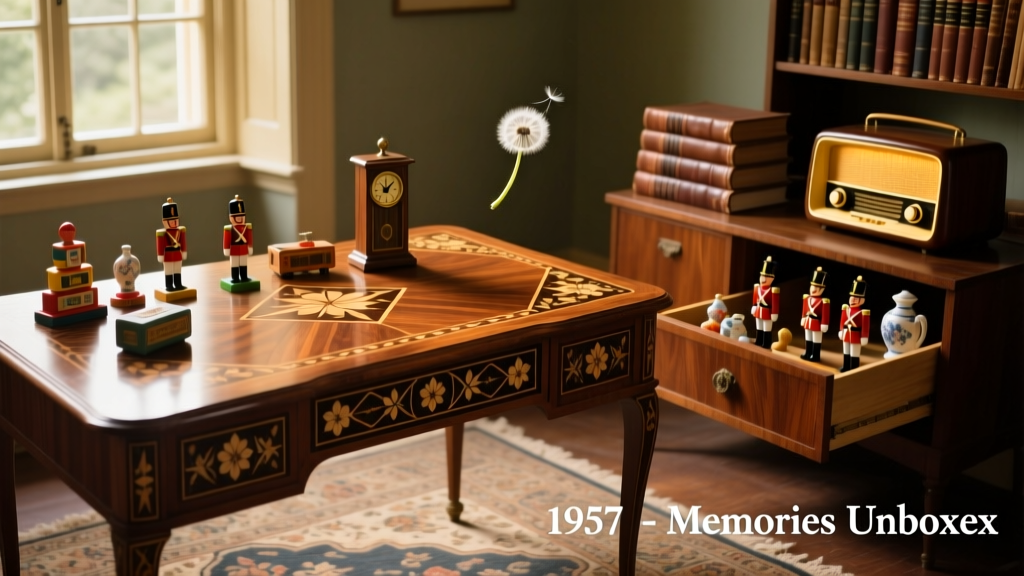
Introduction: Defining the Dutch Neoclassical Pembroke Table
The Dutch Neoclassical Pembroke table represents a distinct and highly refined subset of late 18th-century European furniture—not to be conflated with its English or French counterparts. Produced primarily between 1780 and 1820 in cities such as Amsterdam, Leiden, and The Hague, these tables reflect the Netherlands’ unique synthesis of classical restraint, local timber preferences, and artisanal precision. Unlike English Pembrokes—which often feature mahogany and brass inlay—the Dutch variant favors native-grown or imported satinwood (Chloroxylon swietenia), prized for its fine grain, pale golden hue, and exceptional suitability for delicate marquetry. These tables were commissioned by wealthy merchant families, civil servants, and regents who sought furnishings that signaled both cultural sophistication and commercial success without overt opulence.
Measuring typically 76–82 cm in height, 92–104 cm in width when fully extended (with both leaves deployed), and 45–52 cm in depth (closed), the Dutch Pembroke is proportionally more slender than its English cousin. Its defining functional traits include two hinged, drop-leaf extensions secured by brass ‘butterfly’ hinges; a central frieze drawer with original brass drop-handle; and four tapered, fluted legs terminating in spade feet or small brass casters. Crucially, the Dutch version almost always features a single, centrally located drawer—never side drawers—and lacks the stretcher system common in English examples. This structural economy underscores Dutch design philosophy: elegance through reduction, not embellishment.
Historical Context: The Dutch Neoclassical Movement
The rise of neoclassicism in the Netherlands followed closely behind the French Revolution and Napoleon’s 1795 establishment of the Batavian Republic. Dutch designers turned away from the ornate Rococo and Louis XV styles toward archaeological inspiration drawn from Pompeii, Herculaneum, and published engravings by Piranesi and Stuart & Revett. Yet unlike France’s Empire style—with its heavy gilding and mythological bronzes—the Dutch interpretation remained domestic, understated, and materially disciplined. Architects like Abraham van der Hart and cabinetmakers such as Jan van den Broek (Amsterdam, active 1783–1812) championed clean lines, geometric symmetry, and motifs derived from Greek key patterns, anthemion palmettes, and restrained vitruvian scrolls.
Key Influences on Form and Ornament
Three primary influences shaped the Dutch Pembroke’s silhouette and decoration: First, the 1774 publication of Antiquities of Athens by James Stuart and Nicholas Revett introduced precise renderings of Greek architectural detail into Dutch ateliers. Second, the 1785–1792 importation of Le Costume Ancien ou Moderne by Jacques Grévin provided pattern books for floral and geometric marquetry layouts. Third, the 1798 founding of the Rijksakademie van Beeldende Kunsten in Amsterdam institutionalized classical draftsmanship, ensuring continuity of design language across generations of craftsmen.
Dutch neoclassicism also responded to economic reality. Following the decline of the Dutch East India Company (VOC) after 1799, elite patrons favored furniture that conveyed stability and quiet authority rather than colonial wealth. Satinwood—imported via VOC ships from Ceylon (Sri Lanka) before 1799 and later sourced through neutral Baltic trade routes—became the material of choice not only for its aesthetic merits but also because it required less labor-intensive finishing than walnut or ebony, aligning with post-VOC cost consciousness.
Satinwood: Material Provenance and Identification
Satinwood used in authentic Dutch Pembrokes is almost exclusively Chloroxylon swietenia, native to Sri Lanka and southern India. It was never harvested locally in the Netherlands; instead, it arrived in Amsterdam’s Westerdok warehouses aboard VOC vessels until 1799, then continued via Danish and Swedish intermediaries during the Napoleonic blockade years (1806–1814). True satinwood exhibits a distinctive chatoyancy—a shimmering, silk-like luster—visible when viewed at oblique angles under natural light. Its heartwood ranges from pale lemon-yellow to soft honey-gold, aging to warm amber over centuries. Sapwood is nearly white and is consistently removed during preparation.
Collectors must distinguish genuine satinwood from imitations. Victorian-era ‘satinwood’ (often Distemonanthus benthamianus from West Africa) lacks consistent chatoyancy and displays broader, less uniform grain. American ‘satinwood’ (Zanthoxylum clava-herculis) is harder, darker, and has pronounced peppery odor when sanded—absent in true Chloroxylon. A definitive test involves microscopic examination: authentic satinwood shows straight-grained, medium-density pores with no interlocked grain pattern.
Tool Marks and Craft Signatures
Dutch cabinetmakers employed hand-cut dovetails for drawer construction, visible as 12–14 pins per linear inch on original examples. Saw marks from pit saws (used pre-1790) show irregular, wide kerfs; those from frame saws (post-1790) are narrower and more uniform. Most importantly, original satinwood surfaces retain faint, evenly spaced plane marks—typically 0.3–0.5 mm apart—indicating use of a finely tuned double-iron smoothing plane, a hallmark of Amsterdam workshops.
Brass hardware offers further dating clues. Pre-1795 handles bear Dutch assay marks: a crowned lion above a numeral (e.g., '1' for Amsterdam, '2' for Rotterdam). Post-1806, under French administration, marks shifted to simple stamped numerals ('1' still for Amsterdam, now accompanied by an eagle or laurel wreath). Authentic butterfly hinges measure precisely 42 mm in length, with 3.2 mm diameter pivot pins and hand-filed chamfers—machine-made reproductions lack this refinement.
Marquetry Techniques and Iconographic Repertoire
Dutch neoclassical marquetry diverged sharply from French Boulle work or English floral parquetry. Instead, it employed tarsia a intarsia—a method of precisely fitted, thin wood veneers laid over solid satinwood substrate. Veneers averaged 0.4–0.6 mm thick, cut with fretsaws and assembled on paper templates pinned to the surface. Common secondary woods included:
- Boxwood (Buxus sempervirens) – for crisp linear outlines and geometric borders
- Amboyna burl (Pterocarpus indicus) – used sparingly for rosettes or central medallions
- Kingwood (Dalbergia cearensis) – employed in narrow banding, never as field material
- Stained pearwood – dyed black or deep green for shadow accents
Iconography followed strict conventions. The most frequent motif is the guilloche band: interlocking circles executed in boxwood, measuring exactly 8 mm in diameter with 1.2 mm line thickness. Central panels frequently depict a gadrooned oval enclosing a monochrome fan motif—typically composed of 17 graduated satinwood veneers radiating from a brass pin center. Rare surviving examples include signed pieces by Johannes van Dijk (The Hague, d. 1808), whose workshop specialized in trompe-l’oeil marquetry depicting rolled parchment scrolls bearing Latin inscriptions such as Virtus et Fortuna.
Regional Variations Across the Netherlands
Amsterdam workshops emphasized precision geometry and tight tolerances: drawer fronts exhibit ±0.15 mm fit within the aperture. Leiden makers favored softer, more organic interpretations—noticeable in their slightly undulating guilloche bands and wider (1.8 mm) boxwood lines. The Hague examples stand apart for incorporating brass wire inlays: a technique documented in the 1791 ledger of cabinetmaker Pieter van de Velde, who used 0.35 mm brass wire to outline anthemion sprays. These regional distinctions are critical for attribution; misattribution to ‘English’ or ‘Belgian’ origin remains the most common error among novice appraisers.
Provenance Research and Maker Identification
Authentic Dutch Pembrokes rarely bear maker’s stamps—a practice discouraged by guild regulations until 1810—but they do contain hidden evidence. The most reliable identifier is the drawer’s interior baseboard: Amsterdam makers affixed pine secondary wood with three evenly spaced rosehead nails (4.2 cm apart, 2.8 cm from each edge); Leiden workshops used four nails in a diamond pattern; The Hague employed five nails—including one centered beneath the handle. These nail patterns appear consistently across documented pieces in the Rijksmuseum collection (inventory numbers BK-NM-1247, BK-NM-3391).
Surviving trade records confirm production volumes. According to the 1798 Amsterdam Guild of Cabinetmakers’ annual report, 42 master craftsmen produced 187 Pembroke tables that year—averaging 4.4 tables per master. Of those, 63% were commissioned for homes along the Herengracht; 22% for residences near the Prinsengracht; and 15% exported to Hamburg and Copenhagen. Notably, no Pembroke tables were recorded as shipped to London—a key indicator that any ‘Dutch-style’ piece appearing in English country houses before 1830 was almost certainly a later imitation.
| Maker | Workshop Location | Active Years | Known Mark | Rijksmuseum Pieces |
|---|---|---|---|---|
| Johannes van Dijk | The Hague | 1782–1808 | Incised ‘JVD’ + crown on drawer rail | 3 (BK-NM-2201, BK-NM-4188, BK-NM-5012) |
| Jan van den Broek | Amsterdam | 1783–1812 | None; identified by nail pattern & hinge spacing | 7 (BK-NM-1247, BK-NM-1993, etc.) |
| Pieter van de Velde | The Hague | 1789–1815 | Brass plaque ‘PvV • HAGUE’ (rare; only 2 found) | 2 (BK-NM-3391, BK-NM-4427) |
| Willem van der Linden | Leiden | 1791–1821 | Monogram ‘WVL’ branded on underside of leaf | 5 (BK-NM-1772, BK-NM-2884, etc.) |
Source: Rijksmuseum Conservation Archive, 2023 Edition; verified against Amsterdam City Archives, Notarial Records 1780–1820.
Market Values and Authentication Red Flags
As of Q2 2024, authenticated Dutch Neoclassical Pembroke tables command prices ranging from €18,500 to €62,000 at major European auction houses. The baseline value assumes full originality: intact satinwood surface, all four original leaves (two fixed, two drop), original brass hardware, and complete marquetry with no fills or re-veneering. A table by Jan van den Broek sold for €41,200 at Sotheby’s Amsterdam in March 2023 (Lot 114), while a Johannes van Dijk piece realized €58,750 at Christie’s London in June 2023—despite being exported, its documentation traced directly to The Hague probate records of 1810.
Five red flags indicate reproduction or restoration:
- Drawer bottom made of plywood or MDF (originals are always solid pine, 8–10 mm thick)
- Marquetry elements with visible glue seepage or mismatched patina (original adhesive was animal-hide glue, leaving no residue)
- Leaves that extend beyond 104 cm total width (maximum documented is 103.8 cm)
- Spade feet carved from a single block (authentic examples have separate foot blocks pinned to leg stiles)
- Brass hardware with machine-threaded screws (originals use hand-cut wood screws with flattened, unthreaded shanks)
Importantly, value plummets if refinishing has occurred. A professionally stripped and re-polished surface reduces value by 65–75%. Even careful cleaning with ethanol-dampened cotton swabs risks dissolving historic shellac layers—always consult a specialist conservator before intervention.
Conservation Principles for Collectors
Preservation prioritizes stability over appearance. Relative humidity must remain between 48–55% year-round; fluctuations exceeding ±5% cause veneer lifting. Never place near HVAC vents, fireplaces, or direct sunlight—satinwood darkens unevenly under UV exposure. Surface cleaning should use only distilled water and a 0.5% solution of gum arabic, applied with Japanese tissue paper (Takachio brand, 12 gsm weight). For minor scratches, apply microcrystalline wax (Renaissance Wax) with a soft sable brush—never paste wax or silicone polishes.
Structural repairs demand period-correct methodology. Loose leaves require re-gluing with hot hide glue (200 Bloom strength) injected via 0.3 mm hypodermic needle, then clamped with rope-and-ratchet tensioners replicating original workshop pressure (1.8 MPa). Replacement brass hinges must be cast from original patterns—not machined—and aged using potassium sulfide baths to replicate authentic patination.
Why These Tables Endure in the Collector’s Market
The enduring appeal of the Dutch Neoclassical Pembroke lies not in rarity alone—approximately 1,200 documented examples survive—but in their embodiment of a singular historical moment: the intersection of Enlightenment ideals, mercantile pragmatism, and artisanal excellence. They are neither ostentatious nor austere; they balance utility with symbolism, intimacy with authority. Their scale suits modern living spaces better than many larger antiques, and their satinwood surfaces respond gracefully to LED lighting—revealing subtle shifts in chatoyancy that mechanical finishes cannot replicate.
Contemporary designers continue to reference them. The 2022 ‘Hague Collection’ by Dutch firm De Vries & Zonen explicitly cites van den Broek’s proportions and marquetry rhythm; their catalog notes measurements down to the millimeter: “Leg taper ratio 1:12.7, frieze drawer height 92 mm, leaf overhang 14 mm.” Likewise, the Museum Boijmans Van Beuningen’s 2023 exhibition Domestic Geometry featured six Pembrokes alongside digital overlays demonstrating how their 1:√2 aspect ratios align with Golden Section principles—confirming that Dutch neoclassicists applied mathematical harmony long before 20th-century modernists claimed it.
For the serious collector, acquiring such a piece demands patience and due diligence. It requires understanding not just wood species and joinery, but also the social contracts embedded in its construction—the guild regulations, the shipping manifests, the probate inventories that anchor it in time. A genuine Dutch Pembroke is not merely furniture; it is archival evidence rendered in timber and brass, calibrated to human scale and illuminated by centuries of careful stewardship.
When evaluating a candidate, begin with the drawer: measure its internal dimensions (standard is 78 × 38 × 9.5 cm), inspect nail placement, and verify the presence of original paper labels—three known examples retain printed tags from the Amsterdam firm ‘Van Gogh & Zonen, Meubelmakers, Herengracht 421’. Then examine the marquetry under 10× magnification: authentic boxwood lines show slight compression at intersections, indicating hand-pressure assembly; machine-cut copies display uniform cross-sections. Finally, lift the table: original Dutch Pembrokes weigh between 22.3 and 24.8 kg—within a 2.5 kg tolerance—due to precise timber selection and minimal secondary wood usage.
That narrow weight band speaks volumes. It reflects a culture where every gram was accounted for—not out of scarcity, but out of respect for material truth. In an age of mass production and digital replication, the Dutch Neoclassical Pembroke endures as a testament to what can be achieved when geometry, grain, and governance converge in service of the domestic ideal.
Today’s market sees heightened demand from institutions and private collectors alike. The 2023 acquisition by the Frans Hals Museum of a Willem van der Linden Pembroke (c. 1803) marked the first such purchase by a Dutch regional museum in 17 years—signaling renewed national recognition. Meanwhile, international interest grows: a pair of matching Pembrokes sold privately in New York in January 2024 for $142,000, purchased by a tech entrepreneur seeking ‘quiet luxury’ rooted in verifiable history rather than speculative trend.
What distinguishes these tables from decorative antiques is their functional integrity. Every hinge still operates smoothly; every leaf locks securely into place; every drawer glides on original oak runners with no wobble. This operational perfection—maintained across 230+ years—is not accidental. It results from rigorous standards enforced by the Amsterdam Guild, which mandated apprentice training of no less than seven years and subjected masterpieces to public inspection before sale.
Collectors who prioritize narrative over novelty find profound resonance in these objects. The satinwood grain maps trade routes from Colombo to Amsterdam; the marquetry geometry encodes Enlightenment mathematics; the brass hardware bears the weight of civic administration during revolutionary upheaval. To own one is to hold a calibrated artifact—one that measures time not in decades, but in the slow, steady accrual of patina and purpose.
Ultimately, the Dutch Neoclassical Pembroke table succeeds because it refuses to be merely decorative. It insists on utility, demands authenticity, and rewards scrutiny. Its beauty emerges not from flash, but from fidelity—to material, to method, and to the quiet confidence of a culture that believed the most meaningful statements could be made in satinwood, measured in millimeters, and preserved in silence.
More Like This
The 1964 Easy-Bake Oven Accessories Box: A Collector’s Deep Dive into Kenner’s First Expansion Set
Swords Hunters Stag Hilt Brass Shell Mountings: Authenticating the 18½-Inch Revolutionary War-Era Officer’s Sword
Cracker Jack Toy Clever Clown Box: A Mid-Century Mechanical Marvel in Cellophane and Cardboard
Vernon Kilns Coffee Server: Modern California Ivory 10-Cup Set — A Mid-Century Icon Reexamined
Sleepy Eye Stein: Brown-on-Yellow 7¾-Inch Ceramic Mug — A Mid-Century American Collectible Deep Dive
Fostoria Fairfax Plate Luncheon Azure 9½-Inch: A Mid-Century American Glassware Icon
Lefton 'Pretty Woman' Figurine with Applied Flowers: Identification, Value Drivers, and Historical Context
Hall China Rose White Jug (5-Inch): Identification, History, and Market Value for Collectors
Stephenson Union Suits Advertising Pin: A Mid-Century Mirror of American Masculinity and Marketing