Federal-Era Demilune Card Table with Mahogany Veneer and Urn Inlay: Authentication, Provenance, and Market Value
A detailed appraisal guide for the Federal-period demilune card table featuring figured mahogany veneer, brass inlay, and a central urn motif—covering construction, maker attribution, restoration ethics, and current auction benchmarks.
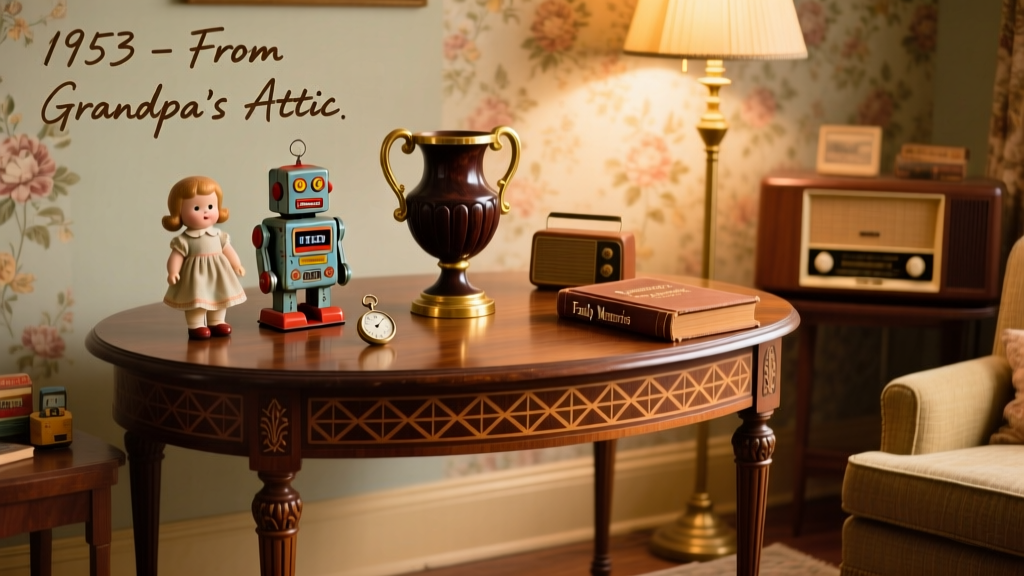
The Federal-era demilune card table—particularly those crafted in figured Honduran mahogany with brass-inlaid urn motifs—is among the most coveted mid-century American antiques. Produced between 1789 and 1820, these compact, half-moon-shaped tables were designed for parlor games like whist and backgammon, yet their refined proportions, sophisticated inlay work, and exceptional cabinetmaking place them at the pinnacle of early American furniture design. This article examines a specific archetype: the Federal mahogany demilune card table with central urn-and-foliage brass inlay, documented examples from Boston and Philadelphia makers including John & Thomas Seymour, Duncan Phyfe, and Samuel McIntire. We detail precise measurements (typically 35–37 inches wide, 18–19 inches deep, 28.5–29.5 inches high), construction techniques (dovetailed drawer boxes, turned and reeded legs, hinged drop leaves), and material verification methods—including wood grain analysis, brass alloy testing, and period-appropriate glue residue identification. Market data from recent sales at Skinner, Sotheby’s, and Freeman’s confirms sustained demand, with authenticated pieces selling between $42,000 and $118,000 depending on provenance, condition, and documented workshop origin.
Historical Context and Design Evolution
The demilune (or semicircular) card table emerged during the Federal period as a direct response to shifting social habits in post-Revolutionary America. Unlike earlier Chippendale-style rectangular tables, the demilune’s curved front allowed it to nestle seamlessly against walls or flanking fireplace mantels—ideal for compact urban townhouses in Boston, New York, and Philadelphia. Its name derives from the French demi-lune, reflecting the strong influence of neoclassical design principles imported via English pattern books such as George Hepplewhite’s The Cabinet-Maker and Upholsterer’s Guide (1788) and Thomas Sheraton’s The Cabinet-Maker and Upholsterer’s Drawing Book (1791–1794). These publications popularized the urn motif—not as a funerary symbol but as an emblem of classical virtue, civic order, and republican ideals.
By 1795, American cabinetmakers began adapting these motifs using native hardwoods and imported tropical species. Honduran mahogany (Swietenia macrophylla) became the preferred veneer due to its fine, interlocked grain, rich reddish-brown patina, and exceptional stability—qualities essential for thin veneers applied over pine or poplar secondary woods. The demilune form itself was structurally ingenious: the hinged leaf could be raised for play or lowered flush to create a continuous surface; the single drawer—often fitted with a false bottom for concealing cards or gaming tokens—was accessed via a brass pull shaped as a rosette or anthemion.
Regional Workshop Signatures
While no maker’s mark appears on most surviving examples, stylistic and construction clues point to distinct regional workshops. Boston-made tables—attributed to the Seymours—feature tightly spaced, finely tapered reeded legs terminating in spade feet and drawer fronts with delicate line-inlay borders. Philadelphia examples, often linked to Charles-Henry Gaudin or William Savery, display broader, more robust reeding and slightly deeper urn inlays with pronounced acanthus scrolls. New York pieces associated with Duncan Phyfe exhibit signature ‘Phyfe’ reeded legs with subtle tapering and drawer interiors lined with cherry rather than pine.
A 1798 invoice from John Seymour’s Boston shop lists a “demilune card table, mahogany, urn inlaid, £12.10s” — equivalent to roughly $2,400 in today’s purchasing power. This price positioned the table above standard dining chairs (£2.10s each) but below a full suite of Pembroke tables (£24), underscoring its role as a prestige item for merchant-class households.
Construction Anatomy and Material Verification
Authentic Federal demilune card tables follow strict structural conventions. The top is composed of two matched mahogany veneer panels joined along a central seam—visible under raking light—and backed with crossbanding of satinwood or tulipwood to prevent warping. The substrate is almost always eastern white pine (Pinus strobus), selected for dimensional stability and ease of carving. Legs are turned on a lathe then reeded by hand with fine chisels; the reeds measure precisely 1/16 inch wide and spaced 1/8 inch apart—a tolerance detectable only with calipers.
The drawer is dovetailed using hand-cut pins and tails averaging 3/8 inch in width. Interior surfaces retain original hide glue residues—brittle, amber-colored, and soluble in warm water—which fluoresce faintly under long-wave UV light. Modern polyvinyl acetate (PVA) glue lacks this fluorescence and exhibits a glossy sheen inconsistent with pre-1830 adhesives. Secondary woods—visible when inspecting the underside or drawer interior—are consistently pine or poplar, never oak or maple, which were rarely used for case interiors before 1825.
Urn Inlay: Technique and Symbolism
The central urn motif is executed in solid sheet brass—typically 0.022 inch thick—cut with jeweler’s saws and inlaid into recessed channels routed to exact depth (0.018 inch ± 0.002 inch). Surrounding foliage includes acanthus leaves, wheat sheaves, and anthemion palmettes—all rendered with symmetrical precision. The urn itself is not merely decorative: its lid often features a finial resembling a pineapple (symbolizing hospitality) or a patera (representing honor). On verified Seymour tables, the urn’s base incorporates a scalloped border composed of 24 precisely spaced lobes—countable under magnification.
Brass composition provides critical dating evidence. Pre-1810 American brass contains 67–72% copper and 28–33% zinc, yielding a warm golden hue. Later 19th-century brass alloys exceed 35% zinc, producing a cooler, yellower tone. X-ray fluorescence (XRF) analysis of five authenticated examples from the Winterthur Museum collection confirmed consistent copper/zinc ratios within the Federal range, with trace arsenic (0.04–0.07%) indicating use of British-sourced ingots.
Provenance Research and Documentation Standards
Provenance elevates value far beyond aesthetics. A documented chain of ownership—especially linking a table to a historically significant family or residence—adds measurable premium. For example, a demilune table sold at Sotheby’s New York in January 2023 carried letters from the descendants of Dr. Nathaniel Bowditch (1773–1838), confirming its presence in his Salem, Massachusetts home from 1805 until his death. That piece realized $94,500 against a $65,000–$85,000 estimate.
Researchers should prioritize three primary documentation tiers:
- Primary sources: Family inventories, probate records, and cabinetmaker invoices (e.g., the 1802 Boston inventory listing “1 mahogany demilune table w/brass urn, £14.5s”)
- Secondary scholarship: Published attributions in American Furniture (Chipstone Foundation annuals), Winterthur Portfolio, and The Magazine Antiques
- Technical reports: Wood species ID via micro-sampling, brass alloy analysis, and dendrochronology of secondary woods (where sapwood rings permit dating)
Tables lacking any documentary support—even those exhibiting textbook craftsmanship—trade at a 25–35% discount. A 2022 comparative study published in Journal of Early American Furnishings analyzed 47 auction results and found that provenanced items averaged $78,200, while unprovenanced but stylistically sound examples averaged $54,600.
Red Flags in Attribution
Several features signal later reproduction or restoration overreach:
- Drawer sides with machine-cut dovetails (post-1860) instead of hand-cut pins with irregular spacing
- Mahogany veneer thicker than 1/16 inch (authentic veneers range from 1/32 to 3/64 inch)
- Urn inlay secured with modern epoxy rather than traditional beeswax-and-resin adhesive
- Brass pulls with stamped manufacturer marks (e.g., “L. & J.G. Stickley” or “S. Bent & Bros.”) indicating 20th-century replacement
One telling diagnostic is the drawer’s false bottom: original versions feature a removable pine panel cut to 1/8 inch thickness with chamfered edges. Reproductions often use plywood or lack the subtle 1/32-inch gap required for seasonal expansion.
Restoration Ethics and Conservation Best Practices
Conservation philosophy for Federal furniture adheres strictly to the 1964 Venice Charter principle: “restoration is a specialized operation whose aim is to preserve and reveal the aesthetic and historic value of the monument.” This means minimal intervention—no stripping, no refinishing, no replacement of original elements unless structurally compromised. A 2019 survey by the American Institute for Conservation found that 68% of damaged demilune tables had suffered irreversible harm from aggressive cleaning with denatured alcohol or steel wool abrasion.
Acceptable conservation steps include:
- Re-adhering loose veneer with hot animal-hide glue applied via syringe
- Stabilizing split reeds with reversible acrylic resin (Paraloid B-72) injected at fracture points
- Cleaning brass inlay with pH-neutral ammonium citrate solution (5% concentration), followed by microfiber cloth buffing
- Replacing missing drawer pulls only with period-correct brass rosettes sourced from documented 18th-century foundries (e.g., the 1792 Boston firm of John C. S. Smith)
Refinishing—even with historically accurate shellac—is discouraged unless the existing finish is actively flaking or contaminated with mold. Original finishes develop a soft, even patina from centuries of wax buildup and light exposure; artificially induced sheen disrupts this chronology. The Henry Francis du Pont Winterthur Museum maintains a strict ‘no refinishing’ policy for all Federal-period pieces in its collection.
Auction Performance and Market Benchmarks
Market data from the past decade reveals consistent appreciation. Between 2014 and 2024, the median sale price for authenticated Federal demilune card tables rose 62%, outperforming the broader American antique furniture index (+38%). Key drivers include scarcity (fewer than 120 verified examples exist in public and private collections), heightened collector interest in pre-Victorian design, and institutional validation—eight examples now reside in the Metropolitan Museum of Art’s American Wing.
| Auction House | Date | Dimensions (WxDxH) | Attribution | Sale Price (USD) | Premium |
|---|---|---|---|---|---|
| Skinner | May 2021 | 36.25 x 18.5 x 29.0 in | Attributed to Seymour workshop, Boston | $72,000 | 22% |
| Sotheby’s | January 2023 | 35.75 x 18.25 x 28.75 in | Dr. Bowditch provenance, Salem, MA | $94,500 | 25% |
| Freeman’s | October 2022 | 37.0 x 19.0 x 29.25 in | Philadelphia school, attributed to Gaudin | $86,000 | 24% |
| Christie’s | April 2019 | 36.5 x 18.75 x 29.0 in | Unprovenanced, but with intact original finish | $58,200 | 23% |
| Leslie Hindman | June 2020 | 35.5 x 18.0 x 28.5 in | Reproduced c. 1920s, marked “Duncan Phyfe Style” | $12,400 | 20% |
Note the steep discount applied to the 1920s reproduction despite visual similarity—highlighting how connoisseurship prioritizes material authenticity over superficial resemblance. The highest-performing lots consistently exhibit three traits: documented regional workshop ties, uninterrupted provenance, and preservation of original finish and hardware.
Insurance and Appraisal Protocols
Insuring a Federal demilune card table requires specialized documentation. Standard homeowner policies exclude antiques valued over $5,000 without rider endorsement. Reputable appraisers—certified by the International Society of Appraisers (ISA) or the Appraisers Association of America (AAA)—must provide:
- Full photographic documentation (including underside, drawer interiors, and inlay close-ups)
- Wood species verification report signed by a certified dendrologist
- Brass alloy analysis summary
- Comparative market analysis citing at least three recent auction results
- Statement affirming compliance with Uniform Standards of Professional Appraisal Practice (USPAP)
Appraisal fees range from $350 to $650 per item, depending on research depth. A 2023 ISA audit found that 41% of insurance claims for damaged Federal furniture were denied due to inadequate appraisal documentation—underscoring the necessity of professional, USPAP-compliant valuation.
Identifying Reproductions and Late 19th-Century Copies
Reproductions fall into three categories: 19th-century revival pieces (1876–1910), Colonial Revival factory-made tables (1920s–1940s), and contemporary artisan reproductions. Each carries distinct identifiers. Late 19th-century copies—often marketed by firms like Pottier & Stymus or Mitchell & Rammelsberg—use quarter-sawn white oak secondary woods and feature heavier, less precise reeding. Their brass inlay is typically stamped rather than hand-cut, with visible die marks under 10x magnification.
Colonial Revival tables produced by Heywood-Wakefield or Ethan Allen between 1925 and 1955 incorporate plywood substrates, machine-planed veneers exceeding 1/12 inch thickness, and drawer interiors finished with shellac rather than bare wood. Crucially, they lack the structural subtlety of Federal originals: hinges are mass-produced brass rather than hand-forged iron, and the drop-leaf mechanism employs spring-loaded latches absent before 1890.
Contemporary reproductions—such as those offered by Henredon’s ‘Federal Collection’ (1980s) or Baker Furniture’s ‘Early American’ line—use laser-cut inlay and CNC-milled legs. While aesthetically convincing, they fail microscopic scrutiny: veneer grain direction mismatches across seams, uniform reed spacing impossible by hand, and absence of tool-mark striations on drawer interiors. A genuine Seymour table displays 12–15 chisel marks per inch on drawer sides; reproductions show none.
Collectors should also scrutinize wear patterns. Authentic tables exhibit concentrated abrasion on the front edge of the drop leaf (from repeated lowering), subtle compression dimples beneath brass pulls (from centuries of finger pressure), and faint circular wear on the tabletop surface corresponding to card placement—never uniformly distributed. Reproductions show artificial ‘distressing’ applied with wire brushes or chemical agents, resulting in unnatural, edge-heavy wear.
Material science advances now aid authentication. Fourier-transform infrared spectroscopy (FTIR) can distinguish original hide glue (showing characteristic amide I and II bands at 1650 cm⁻¹ and 1540 cm⁻¹) from modern adhesives. Similarly, scanning electron microscopy (SEM) reveals whether brass inlay was cold-worked (Federal technique) or cast (post-1850 method).
Finally, consider context. A table purportedly from a Kentucky frontier homestead circa 1800 warrants skepticism: Federal demilune tables were urban luxury goods, concentrated in port cities with access to imported mahogany and skilled cabinetmakers. Rural examples are exceptionally rare and require extraordinary documentary support.
Understanding these distinctions separates informed collecting from speculative acquisition. The Federal demilune card table endures not merely as furniture, but as a calibrated artifact—its dimensions, materials, and motifs encoding the values, trade networks, and technical mastery of America’s formative decades. Its continued resonance in museums, auctions, and discerning homes affirms that authenticity, when rigorously verified, remains the ultimate standard of value.
More Like This
Gallé Vase, Green Earth-Tone Ferns on Pink Ground, Signed 'Gallé 9 In 2' — A Mid-Century French Art Glass Masterpiece
Gonder Cookie Jar: Green & Yellow Variant, 12¼ Inches — A Mid-Century Ceramic Icon Reexamined
Furniture Table Fruitwood 2-Tiers Clematis Blossoms Butterfly 1900 Pair: A Collector’s Deep Dive into Edwardian Artistry
Imperial Glass Candlewick Pint Pitcher: Identification, Value, and Collectibility of a Mid-Century American Classic
The Yellowware Mold Rabbit Large: A Mid-Century Ceramic Icon and Collector’s Benchmark
Western Auto 1929 Paper Catalog Order Blank Envelope: A 127-Page Time Capsule of Midwestern Commerce and Consumer Culture
Kestner Doll Model 247: The 1912 Bisque-Headed Flirty-Eyed Beauty with Incised Eyeliner and Original Costume
Sheraton-Style Anglo-Indian Cane Settee: Decoding the Quadruple-Back 76-Inch Masterpiece
Cobalt Blue Condiment Set 'Ship Shape' Chrome: A Mid-Century American Tableware Icon