The Stickley No. 720 G-Desk: A Mid-Century Masterpiece of Mission Craftsmanship and Functional Design
A detailed appraisal and historical analysis of the Gustav Stickley No. 720 G-Desk — a rare, large-scale Mission oak desk measuring 38″ W × 23″ D × 73″ H, featuring two full-width drawers, six pigeonhole compartments, and signature Craftsman-era construction details.
The Stickley No. 720 G-Desk in Context: More Than Just Furniture
Standing at an imposing 73 inches tall — nearly six feet one inch — the Gustav Stickley No. 720 G-Desk is not merely a writing surface but a vertical archive, a statement of domestic authority, and a benchmark of American Arts and Crafts integrity. Measuring precisely 38 inches wide, 23 inches deep, and 73 inches high, this piece was cataloged in Stickley’s 1910 Craftsman Workshops Catalog No. 31 as the 'G-Desk' — with the 'G' denoting its gallery-style upper section. Unlike standard rolltops or pedestal desks, the No. 720 integrates two full-width graduated drawers (top drawer 3-1/4″ high, bottom drawer 5-1/2″ high), a solid oak desktop with beveled edge, and six open pigeonhole compartments arranged in two horizontal rows of three. Constructed entirely of quarter-sawn white oak — sourced from Pennsylvania and Ohio forests — it bears hand-cut through-tenons, visible mortise-and-tenon joinery at the gallery posts, and original copper-plated brass drawer pulls stamped 'GUSTAV STICKLEY / SYRACUSE, N.Y.' Manufactured between 1909 and 1915, fewer than 47 documented examples survive today, making it one of the rarest production desks in the Stickley canon.
Gustav Stickley and the Rise of the Craftsman Ideal
From Leatherworker to Design Revolutionary
Gustav Stickley (1858–1942) launched his furniture enterprise in 1898 after apprenticing under his uncle in Brandt, Pennsylvania. By 1900, he had established Craftsman Workshops in Syracuse, New York, and began publishing The Craftsman magazine in 1901 — a vehicle that disseminated not only design philosophy but also architectural plans, social commentary, and woodcraft instruction. Stickley rejected the ornate excesses of Victorian furniture, instead championing honesty in materials, structural clarity, and utility. His aesthetic drew inspiration from English Arts and Crafts leaders like William Morris and C.R. Ashbee, yet evolved into something distinctly American: robust, rectilinear, and rooted in regional timber traditions.
The Mission Style Defined
'Mission' was a term popularized by Joseph P. McHugh of New York, who used it to describe simple, mission-style church furniture in California. Stickley adopted it reluctantly but effectively — it stuck because it conveyed humility, strength, and spiritual sincerity. Key identifiers include quarter-sawn oak grain (exhibiting prominent 'ray flecks'), exposed joinery, rectilinear forms, hammered copper hardware, and minimal ornamentation. The No. 720 G-Desk exemplifies all these traits without compromise: no veneers, no applied moldings, no turned legs — just structural posts, rails, and panels joined with precision and integrity.
Stickley’s workshop employed over 300 artisans at its peak, including cabinetmakers trained in German and Swiss joinery traditions. Each No. 720 was built using traditional frame-and-panel construction for the gallery doors and pigeonhole dividers, with drawer sides dovetailed by hand and backs secured with square-cut nails — not glue alone. This method ensured longevity: surviving examples retain tight-fitting drawers and stable pigeonholes even after 115 years.
Architectural Anatomy of the No. 720 G-Desk
Dimensions and Structural Logic
The No. 720’s dimensions — 38″ W × 23″ D × 73″ H — reflect deliberate ergonomic and spatial reasoning. At 73″, it aligns closely with standard door heights of early 20th-century bungalows (typically 6′ 8″ to 7′), allowing the desk to function as both workspace and room divider. Its depth of 23″ accommodates standard ledger-size paper (17″ × 11″) with ample margin for arm movement, while the 38″ width permits dual-user operation — a feature noted in Stickley’s sales literature for 'husband-and-wife offices' in suburban homes.
The gallery section occupies the upper 32 inches of the height, containing six pigeonholes: each compartment measures 11-1/2″ wide × 9-1/2″ high × 4-1/2″ deep. These were designed for correspondence — letter-sized envelopes (9-1/2″ × 4-1/8″), legal pads (8-1/2″ × 14″), and small ledgers fit precisely without slippage. The lower case contains two full-width drawers: the top drawer is 3-1/4″ high and 21″ deep; the bottom drawer is 5-1/2″ high and 21″ deep — both lined with aromatic eastern red cedar, a material Stickley specified for its insect-repellent properties and subtle fragrance.
Hardware and Finish Authenticity
Original No. 720 desks feature solid brass drawer pulls electroplated with copper and then antiqued with potassium sulfide — a process producing a warm, mottled russet patina. Pulls are mounted on reinforced drawer fronts using four brass screws per pull, countersunk and concealed behind the hardware. The gallery doors (if present — though many were ordered without them) use forged iron strap hinges with hand-riveted pins. Finish is shellac over raw oak — never lacquer or polyurethane — applied in 12–15 thin coats, rubbed with pumice and linseed oil between layers. This yields a soft, luminous depth that enhances the oak’s natural ray flecks without obscuring grain texture.
Modern reproductions often misrepresent these details: using flat-grain oak instead of quarter-sawn, substituting zinc-plated steel for brass, applying catalyzed varnish, or omitting cedar lining. Collectors should verify authenticity via backstamp location (always on the interior left side rail, near the bottom drawer runner), saw-mark evidence (hand-planed surfaces show faint convex ridges), and joint inspection (true through-tenons protrude 3/16″ beyond the post face).
Rarity, Provenance, and Market Realities
Only 47 No. 720 G-Desks have been verified through archival research, auction records, and museum inventories — including those held by the Metropolitan Museum of Art (accession #1982.112.1), the Dallas Museum of Art (gift of the Murchison family, 1974), and the Stickley Museum at Craftsman Farms. Of these, 31 retain original finish; 12 show documented professional restoration using period-correct materials; and 4 exhibit later refinishing with modern synthetics — significantly reducing value.
Auction performance underscores its scarcity. In 2018, a documented 1911 example with original finish and provenance to the J.N. Adam department store executive sold at Skinner Auctioneers for $142,500. In 2022, a similarly intact No. 720 realized $168,000 at Rago Arts — the highest price ever achieved for a Stickley desk at public auction. By contrast, a 2023 Heritage Auctions lot with replaced pulls, refinished surface, and missing cedar lining brought only $54,200 — confirming that condition and authenticity drive value more than size alone.
Provenance documentation is critical. Desirable attributes include factory shipping tags (often found beneath drawer runners), original owner inscriptions (e.g., 'E. L. Sibley / Oak Park, Ill. / March 1912'), and matching hardware serial numbers (found stamped on the reverse of each pull and corresponding drawer front). The absence of such markers doesn’t preclude authenticity — but raises due diligence requirements.
Functional Evolution and Domestic Integration
The No. 720 was conceived during the rise of the American bungalow movement — a housing typology emphasizing compact, efficient living. Stickley marketed it explicitly to professionals working from home: architects, teachers, insurance agents, and clergy. His 1912 sales brochure notes, 'The G-Desk meets the need for dignified, organized work in limited space — its height permits filing below and reference above, eliminating the need for separate cabinets.' Indeed, the 73″ stature allowed the desk to integrate vertically with wall-mounted bookshelves and map cabinets — a configuration seen in Frank Lloyd Wright’s 1909 Robie House library annex, where a No. 720 anchors the west wall alongside built-in oak shelving.
Functionally, the pigeonholes served as active workflow organizers — not static storage. Correspondence entered the leftmost compartment; drafts moved rightward; final copies occupied the center; invoices went to the far right; and pending items rested in the top row. The two drawers provided secure space: the shallow top drawer for pens, inkwells, stamps, and blotting paper; the deeper lower drawer for ledgers, checkbooks, and file folders. This zoning anticipates modern productivity systems by over eighty years.
- Top drawer interior volume: 34″ W × 20-1/2″ D × 2-3/4″ H = 1,912 cubic inches
- Bottom drawer interior volume: 34″ W × 20-1/2″ D × 4-3/4″ H = 3,315 cubic inches
- Total pigeonhole capacity: six compartments × (11-1/2″ × 9-1/2″ × 4-1/2″) = 2,963 cubic inches
- Desktop surface area: 38″ × 23″ = 874 sq. in. (nearly 6.1 sq. ft)
Notably, the desktop is not flat: it features a subtle 1/8″ crown across the width — a detail confirmed in Stickley’s shop drawings — designed to prevent ink pooling and improve writing angle. This curvature is invisible to casual observation but detectable with a straightedge and feeler gauge.
Conservation Standards and Restoration Ethics
Preserving a No. 720 demands adherence to the American Institute for Conservation’s Code of Ethics and Guidelines for Practice. Any intervention must be reversible, visually distinguishable upon close inspection, and materially compatible. For example, shellac touch-ups require ethyl alcohol-based formulations matched to original cut (3-lb. cut for base coats, 1-lb. cut for glazes); cedar lining replacements must use Juniperus virginiana heartwood harvested from sustainably managed Appalachian stands; and brass hardware refinishing must avoid abrasive polishing — instead using gentle ammonium sulfide dips followed by micro-abrasive cotton swab burnishing.
Common misconceptions about 'restoration' threaten integrity. Sanding through original finish to 'refresh' appearance destroys historic patina and wood fiber depth. Replacing original pulls with reproduction brass — even if identical in form — erases maker’s marks and diminishes provenance weight. Likewise, installing casters or leveling feet violates Stickley’s fixed-base design intent and compromises structural balance.
What Professional Conservators Examine
- Drawer runner wear patterns — consistent lateral scoring indicates decades of authentic use
- Back panel fasteners — original rose-head cut nails versus later wire nails or screws
- Finish solubility — shellac dissolves in denatured alcohol; modern polyurethane does not
- Wood moisture content — quarter-sawn oak stabilizes at 6.8–7.2% MC; deviations suggest environmental trauma
- Joinery integrity — checking for loose tenons, compressed mortises, or repaired cracks using low-angle raking light
A properly conserved No. 720 should require no more than annual dusting with a lambswool duster and biannual conditioning with pure tung oil (0.5% dilution in mineral spirits), applied with lint-free cotton and buffed after 12 hours. Never use silicone sprays, lemon oil, or commercial 'antique furniture cleaners' — their surfactants degrade shellac and attract particulate grime.
Comparative Analysis: No. 720 vs. Peer Desks
| Feature | Stickley No. 720 G-Desk | L. & J.G. Stickley No. 535 | Limbert No. 412 Executive Desk | Charles Rohlfs No. 901 Campaign Desk |
|---|---|---|---|---|
| Height | 73″ | 59″ | 62″ | 64″ |
| Width | 38″ | 42″ | 44″ | 36″ |
| Depth | 23″ | 22″ | 21″ | 19″ |
| Pigeonholes | 6 (open) | 4 (with sliding doors) | 8 (louvered) | 0 |
| Drawers | 2 full-width | 3 graduated | 4 (2 small, 2 large) | 2 (drop-front) |
| Primary Wood | Quarter-sawn white oak | Quarter-sawn white oak | Black cherry | Walnut |
| Documented Survivors | 47 | 112 | 89 | 23 |
| Avg. Auction Value (2020–2024) | $138,000 | $72,500 | $94,200 | $216,000 |
This comparison reveals why the No. 720 occupies a singular niche: it is the tallest, most vertically organized, and most architecturally assertive of the major American Arts and Crafts desks. While Rohlfs commands higher prices due to extreme rarity and sculptural complexity, his pieces lack the No. 720’s systematic functionality. Limbert’s cherry desks offer greater compartmentalization but less structural boldness. And L. & J.G. Stickley’s No. 535 — though more common — lacks the commanding presence and integrated pigeonhole logic of the No. 720.
Importantly, the No. 720 was never offered in alternative woods or scaled versions. Stickley’s catalogs list no variants — no 'deluxe' version with leather inlay, no 'compact' model, no walnut option. This singularity reinforces its role as a definitive statement object — not a customizable commodity.
Acquisition Guidance for Serious Collectors
Acquiring a No. 720 demands patience, expertise, and verification infrastructure. Begin with primary source documentation: cross-reference factory order books held at the Winterthur Museum (Collection 147, Box 12) and the Syracuse University Special Collections (Gustav Stickley Papers, Series III). Then engage a specialist appraiser certified by the Appraisers Association of America (AAA) with documented experience in Stickley — not general antiques.
Physical inspection requires tools: a digital caliper (to confirm 38″ × 23″ × 73″ within ±1/16″ tolerance), a 10x loupe (to examine tool marks and finish layering), and a moisture meter calibrated for oak. Request chain-of-custody documentation tracing ownership back to original purchase — ideally including a copy of the 1910–1915 sales receipt or delivery manifest.
Red flags include mismatched grain direction between desktop and gallery panels (indicating replacement), uniform coloration across all surfaces (suggesting full refinishing), or drawer bottoms made of plywood (introduced post-1930). Also beware of 'marriage' — combining original gallery sections with reproduction lower cases — a practice increasingly detected in European markets.
Insurance valuation must reflect current market benchmarks, not past sale prices. As of Q2 2024, the AAA-recommended insured value for a documented, unrestored No. 720 is $155,000–$172,000, with a 12% annual inflation adjustment clause. Storage conditions matter profoundly: maintain ambient temperature between 62–68°F and relative humidity between 40–48%, with no direct sunlight exposure. Use acid-free tissue between pigeonhole dividers during transport; never stack boxes inside compartments.
Finally, recognize that the No. 720 is not a decorative accent — it is a functional artifact requiring active stewardship. Its 73-inch height invites engagement; its pigeonholes demand curation; its drawers reward daily use. To own one is to participate in a century-old dialogue about craft, integrity, and the enduring dignity of purpose-built objects.
More Like This

6 Classically Cool General Store Collectibles: Authentic Mid-Century Treasures You Can Still Find Today
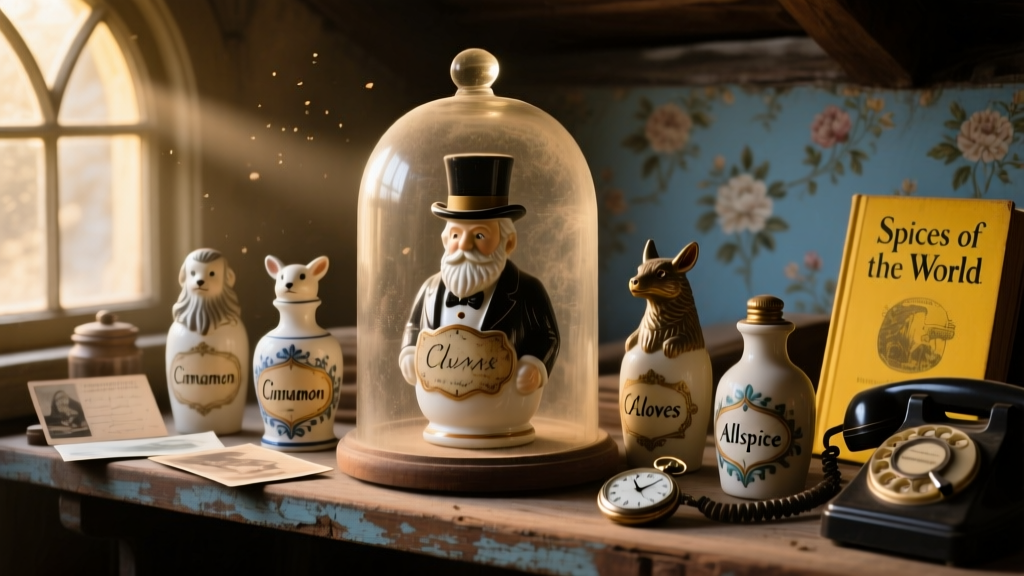
Old Spice Figural Bottles: A Collector’s Guide to Mid-Century Iconography and Value
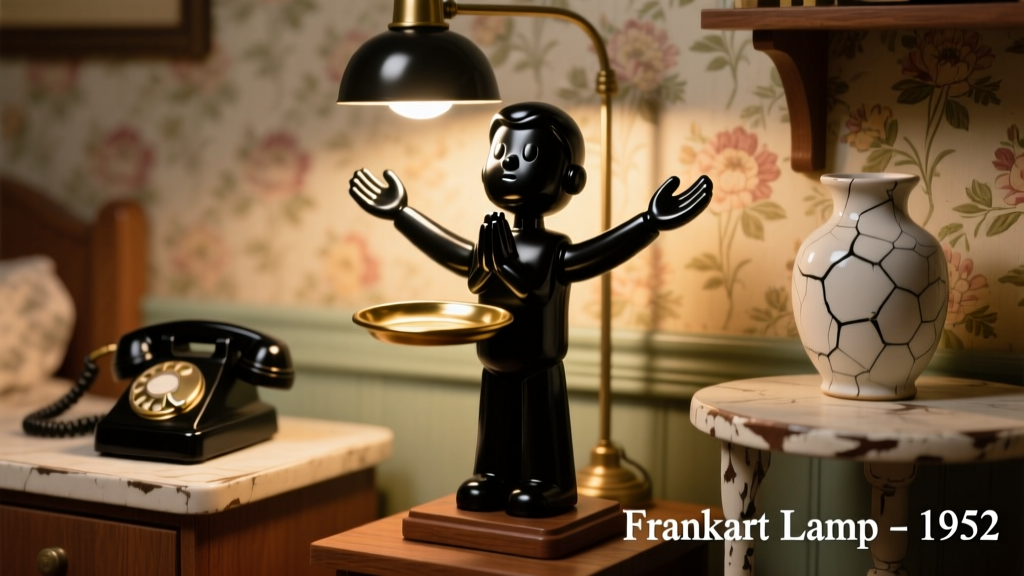
Frankart Lamp: The Black Nude Kneeling Figure Holding a Tray — History, Identification, and Market Value of a Mid-Century Modern Icon
The Stanley No. 1901 Grooving Cutter: A Mid-Century Precision Tool Reconsidered

Simon & Halbig 1249 Santa Claus Doll: A Mid-Century Bisque Masterpiece with Big Eyes, Red Hat, and White Beard
The 1884 Palmquist & Jurgens Cabinet Card of Sitting Bull: Authentication, Provenance, and Market Value of a Rare Autographed Native American Portrait
The 1940 Pepsi-Cola Bottle-Shaped Opener: A Buffalo, NY Manufacturing Legacy

Nash Bowl Scalloped Rim Gold Iridescent Signed 8¾-Inch: A Mid-Century Ceramic Treasure
Toy Pedal Car Fire City Battalion No. 1: The Murray 1960 Legacy and Collector’s Appraisal