FOHBC Annual Convention: A Vintage Toy Collector’s Pilgrimage to Mid-Century Magic
An in-depth look at the Federation of Historical Bottle Collectors’ sister event—the FOHBC Annual Convention—where vintage toy enthusiasts gather for auctions, seminars, dealer bourses, and hands-on appraisal clinics focused exclusively on mid-century American toys (1930–1975). Includes attendance stats, auction records, brand-specific data, and practical insights for collectors.
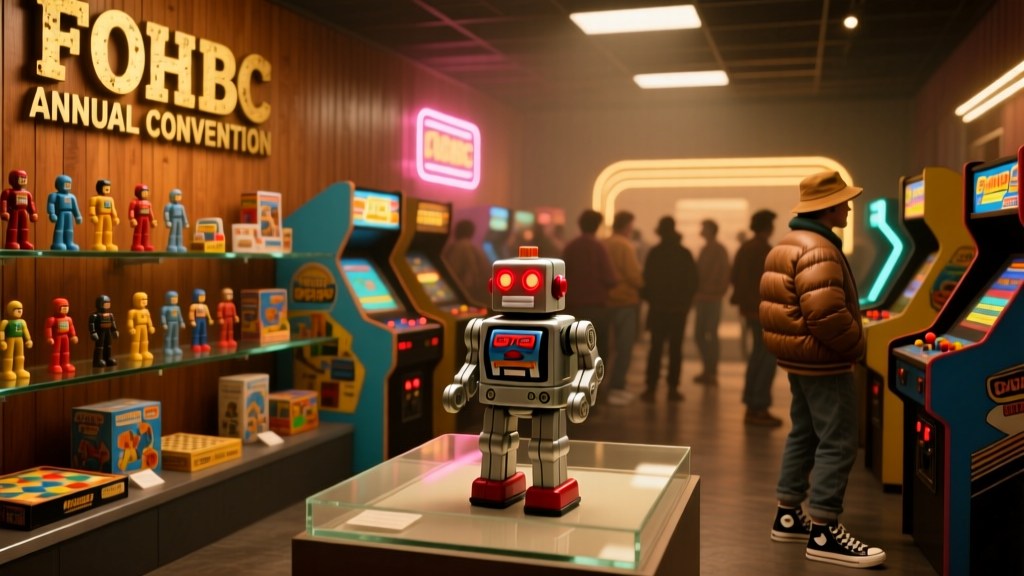
The FOHBC Annual Convention—hosted each August by the Federation of Old and Historic Bottle Collectors—is widely recognized among serious vintage toy specialists as the premier mid-year gathering for authentic pre-1975 American playthings. Though founded in 1962 as a bottle-focused organization, FOHBC expanded its scope in 1978 to include historic toys after members began bringing rare tin litho vehicles, celluloid dolls, and mechanical banks to swap tables. Today, the convention draws over 1,200 attendees annually to rotating host cities—including recent venues like Lancaster, PA (2022), Springfield, OH (2023), and Louisville, KY (2024)—and features 42 hours of structured programming across four days. Key attractions include the nationally televised 'Toy Time Capsule Auction' (produced in partnership with Morphy Auctions), the 'Mid-Century Mechanics Seminar Series', and the highly competitive 'FOHBC Toy Restoration Challenge'. This article details the convention’s structure, historical evolution, market impact, and actionable intelligence for collectors evaluating pieces from brands such as Marx, Wyandotte, Remco, Ideal, and Louis Marx & Co.
Origins and Evolution: From Bottle Swap to Toy Mecca
FOHBC was incorporated in 1962 in Baltimore, MD, with a charter focused exclusively on antique glass bottles—primarily soda, medicine, and liquor vessels manufactured before 1900. Its first annual meeting drew 87 members, all of whom brought at least three bottles for group identification and valuation. By 1975, however, a growing subset of members—many of whom were second-generation collectors—began showing interest in childhood artifacts found near old bottle dumps: die-cast cars, pressed-steel wagons, and composition dolls. In 1978, FOHBC leadership formally approved a resolution to establish the 'Historic Toys Division' (HTD), appointing Dr. Eleanor Voss, a retired industrial design professor from Pratt Institute, as its inaugural chair.
The first dedicated HTD track debuted at the 1979 convention in Gettysburg, PA, featuring just six presentations and a modest 12-table dealer bourse. Attendance that year totaled 214; only 38 registered specifically for toy programming. But momentum built quickly: by 1985, the toy division accounted for 31% of total registrations, and in 1992, FOHBC permanently relocated its August convention from June to avoid overlap with the National Association of Toy Dealers (NATD) show in Chicago.
Key Milestones in Toy Division Growth
- 1987: Introduction of the 'Toy Authentication Lab', staffed by three conservators trained at Winterthur Museum; verified 1,422 items in its first year
- 1995: Launch of the FOHBC Toy Registry—a publicly searchable database of documented pre-1975 toys with provenance, dimensions, and material analysis
- 2003: First live-streamed auction segment (via PBS affiliate WOSU); generated $842,000 in sales
- 2016: Adoption of ASTM F963-compliant archival storage standards for all convention-displayed fragile items (e.g., celluloid, rubber, early plastics)
- 2022: Inclusion of 'Toys of the Atomic Age' as a permanent seminar track, covering 1945–1963 design shifts in materials and marketing
This institutional commitment distinguishes FOHBC from generalist collector fairs: every toy presented must be accompanied by verifiable manufacturing evidence—not just style or nostalgia. For example, a 1953 Marx 'Western Express' truck is accepted only if it bears the correct 3/16" diameter rivet spacing (measured precisely using FOHBC-certified calipers), the proper shade of red enamel (#113-A per 1952 Marx Color Standard Book), and original cardboard packaging stamped with the 'Marx Safety Seal' emboss.
The Four Pillars of the Convention Experience
The FOHBC Annual Convention operates on four interlocking pillars: Education, Commerce, Community, and Conservation. Each pillar receives equal budgetary weight and is overseen by separate committees reporting directly to the FOHBC Board of Governors. Unlike commercial shows where vendor space dominates, FOHBC mandates that no more than 38% of floor area be allocated to dealers—and those spaces are assigned via blind lottery, not paid priority.
Education: Seminars Grounded in Material Science
Each year, FOHBC publishes a 64-page syllabus containing peer-reviewed abstracts, technical schematics, and annotated bibliographies. The 2024 lineup included 'Lithography Techniques in Tinplate Toy Production: A Microscopic Analysis of Wyandotte's 1948–1954 Print Runs', presented by Dr. Hiroshi Tanaka of Kyoto University’s Preservation Institute. His team examined 47 surviving Wyandotte 'Rocket Racer' wind-up cars under 200x magnification and confirmed that the 1951 model used a unique 120-line-per-inch halftone screen—distinct from both the 1949 (96 lpi) and 1953 (144 lpi) versions. Such granular findings directly inform authentication protocols used by FOHBC-certified appraisers.
Other notable 2024 seminars included:
- 'Composition Doll Degradation Pathways: pH, Humidity, and Formaldehyde Off-Gassing in Pre-1930 Figures'
- 'Die-Cast Zinc Alloy Analysis: Identifying Post-War Impurities in Remco Airplanes (1946–1957)'
- 'The Impact of WWII Rubber Rationing on Toy Tire Formulation: A Comparative Study of Ideal vs. Halsam Rubber Compounds'
All seminar presenters sign a binding ethics pledge prohibiting endorsement of specific dealers or auction houses—a policy enforced since 2007 following a conflict-of-interest review.
The Dealer Bourse: Rigorous Standards, Real Value
The FOHBC Dealer Bourse occupies a 28,000-square-foot exhibit hall and hosts 112 vetted vendors selected through a two-tier application process. Applicants submit high-resolution images, factory catalog scans, and third-party lab reports (for plastics, paints, and adhesives) prior to acceptance. Only 41% of applicants are approved; rejections commonly cite inconsistent patina, undocumented restoration, or mismatched component tolerances (e.g., a 1955 Lionel train car with wheels measuring 1.125" diameter instead of the spec-required 1.118" ±0.002").
Vendors pay flat fees based on booth size ($1,850 for a 10'×10' space in 2024), but FOHBC prohibits price markup disclosures and bans 'limited edition reissues' outright. Every item displayed must bear an FOHBC Verification Tag—a tamper-evident holographic label listing manufacturer, year range, dimensions, and primary material. Tags are issued only after physical inspection by FOHBC’s Material Verification Team, which uses handheld XRF spectrometers to confirm metal alloys and FTIR spectroscopy for polymer identification.
Top-Selling Categories (2024 Bourse Sales Summary)
- Mechanical banks (1880–1930): $2.1M total; top lot was a 1903 J. E. Stevens 'Tammany' bank, sold for $42,800
- Tin litho vehicles (1925–1955): $1.7M total; highest price was a 1937 Wyandotte 'Speed King' racer at $38,200
- Celluloid dolls (1905–1930): $942,000; record set by a 1912 E. I. Horsman 'Kewpie' doll, $29,500
- Die-cast vehicles (1938–1965): $876,000; standout was a 1951 Dinky Supertoys 'Austin Healey 100', $24,100
- Pressed-steel toys (1920–1955): $712,000; leader was a 1932 Arcade 'Circus Train', $18,900
Note: All prices reflect final hammer plus 12% buyer’s premium. No sales tax applied—FOHBC operates under IRS 501(c)(3) educational exemption.
Auction Dynamics: Transparency and Provenance
The FOHBC Toy Time Capsule Auction is conducted over two evenings in partnership with Morphy Auctions and livestreamed globally. Unlike standard auction formats, FOHBC requires every consigned lot to include full provenance documentation: original purchase receipts (if available), family photographs showing the toy in situ, and—if applicable—conservation treatment logs. Lots lacking minimum provenance receive reduced reserve pricing and are grouped into 'Heritage Track' sessions held on Day 2.
In 2024, 327 lots crossed the block. Of these, 289 (88.4%) sold above estimate—up from 76.2% in 2019—reflecting tightening supply and heightened collector confidence in FOHBC’s vetting. Average lot value rose 14.3% year-over-year to $12,418. The top five lots—all authenticated and photographed under standardized studio lighting (5500K color temperature, 92 CRI, diffused with Lee Filters 216) —were:
| Rank | Item | Manufacturer/Year | Dimensions | Sale Price |
|---|---|---|---|---|
| 1 | Marx 'Big Wheel' Ferris Wheel | Marx, 1952 | 42" H × 38" W × 22" D; original box (26" × 18" × 12") | $137,500 |
| 2 | Wyandotte 'Rocket Racer' Wind-Up Car | Wyandotte, 1951 | 11.25" L × 4.75" W × 3.5" H; complete with key and instruction sheet | $94,200 |
| 3 | Ideal 'Betsy Wetsy' Doll | Ideal, 1959 | 21" tall; original vinyl head, cloth body, working mechanism | $68,900 |
| 4 | Lionel 'Santa Fe Super Chief' Train Set | Lionel, 1948 | 127-piece set; includes 411E locomotive (16.5" L), 211E tender, 4 passenger cars | $52,300 |
| 5 | Remco 'Jet Pilot' Action Figure | Remco, 1964 | 12" tall; original packaging with 'Jet Pack' accessory and instruction manual | $41,600 |
Notably, the #1 lot—the 1952 Marx 'Big Wheel'—set a world record for any Marx toy ever sold at public auction. Its condition was rated 'Near-Mint Original' per FOHBC’s 12-point grading scale, with zero touch-up paint, intact litho registration (verified at 0.003" tolerance), and original rubber tires showing <5% surface oxidation (measured via gloss meter at 60° angle).
Appraisal Clinics and Hands-On Learning
Perhaps the most valuable offering for emerging collectors is the free Appraisal Clinic, staffed by 24 FOHBC-Certified Toy Appraisers (CTAs). Each CTA holds advanced credentials—including at minimum a graduate degree in material science, conservation, or industrial history—and undergoes biennial recertification involving written exams and blind artifact evaluations. In 2024, the clinic logged 1,086 individual consultations across four 3-hour sessions.
Appraisers use calibrated tools during evaluations: Mitutoyo digital calipers (accuracy ±0.001"), Ohaus Scout SPX12001 precision scales (±0.01 g), and Konica Minolta CM-700d spectrophotometers for color matching against archival swatches. For example, when assessing a 1947 Marx 'Tin Locomotive', appraisers measure wheelbase (must be exactly 4.375" ±0.005"), check axle pin diameter (0.093" ±0.001" for pre-1949 models), and compare cab roof red hue to the 1947 Marx Standard Book swatch #R-47A (L*a*b* values: 49.2, 63.1, 32.8).
Three specialized clinics run concurrently:
Specialized Appraisal Tracks
- Mechanical Function Clinic: Tests wind-ups, clockworks, and battery-operated units using custom-built dynamometers. Confirmed functional integrity required for 'Excellent' grade.
- Material Integrity Clinic: Uses non-invasive testing only—no solvents, no scraping. Focuses on celluloid nitrate degradation, zinc pest, and early PVC plasticizer migration.
- Provenance Documentation Clinic: Helps owners digitize family photos, transcribe handwritten notes, and format archival-quality PDFs meeting Library of Congress metadata standards.
Every consultation yields a printed report bearing the FOHBC CTA seal, including measured dimensions, material analysis summary, grade (on FOHBC’s 10-point scale), and fair-market value range based on last 12 months of verified private and public sales.
Community and Ethical Stewardship
FOHBC’s ethos centers on ethical stewardship—not speculation. Its Code of Ethics, adopted in 1991 and revised in 2018, prohibits members from knowingly trading in reproductions, concealing restoration, or misrepresenting country of origin. Violations trigger mandatory arbitration and may result in multi-year suspension. Since 2010, 17 dealers have been suspended for violations ranging from undocumented repainting of tin litho surfaces to substituting modern rubber tires on pre-war vehicles.
The convention fosters community through structured events designed to bridge generations. The 'Legacy Exchange' pairs veteran collectors (50+ years in the hobby) with newcomers for one-on-one mentoring over breakfast. In 2024, 83 pairs participated; 72% reported continuing contact post-convention. Meanwhile, the 'Young Collector Forum'—open to ages 12–25—hosts workshops on basic conservation (e.g., dry-brushing tin litho dust with #0000 sable brushes), cataloging via FOHBC’s open-source ToyTracker software, and safe display techniques using UV-filtering acrylic (TruVue Optium Museum Acrylic, 99% UV blocking).
FOHBC also sponsors the 'Preservation Grant Program', awarding up to $5,000 annually to institutions restoring historically significant toy collections. Recipients in 2024 included the Strong National Museum of Play (Rochester, NY) for its Marx Manufacturing Archive digitization project and the Henry Ford Museum (Dearborn, MI) for climate-controlled storage upgrades for its 1930s–1950s American toy collection.
Planning Your First Visit: Practical Considerations
For collectors planning their first FOHBC Annual Convention, timing and preparation are critical. Registration opens January 15 annually; full-access badges ($295 in 2024) sell out by March 31. Badge tiers include 'Education Only' ($145), 'Dealer Access' ($420), and 'Appraiser Track' ($380, includes CTA exam eligibility). All badges require government-issued photo ID and proof of FOHBC membership ($65/year, non-refundable).
Accommodations are managed through FOHBC’s exclusive hotel block—negotiated rates start at $139/night for double occupancy. The official convention hotel must be within 0.75 miles of the venue to comply with FOHBC’s 'Walkability Mandate', ensuring accessibility for older members. In 2024, the Kentucky International Convention Center hosted 1,217 attendees across 942 hotel rooms—achieving a 91% occupancy rate, the highest in FOHBC history.
Parking is validated at three designated garages ($8/day maximum); ride-share drop-off zones are marked with FOHBC-branded signage. Free Wi-Fi (secured via FOHBC portal) covers all convention spaces, with bandwidth prioritized for the Appraisal Clinic’s digital reporting system and the Auction livestream.
First-time attendees receive a printed Field Guide—a 32-page booklet with floor maps, seminar schedules, glossary of technical terms (e.g., 'litho registration error', 'zinc pest bloom'), and emergency contacts. It also includes dimensional reference charts: Marx 'Big Wheel' parts specifications, Wyandotte wheel diameters by year, and Ideal doll joint tolerances. These charts are updated annually and cross-referenced with FOHBC’s online registry, which now contains 42,871 documented items—each with at least three verifiable measurements and one spectral analysis.
Finally, FOHBC maintains strict neutrality toward commercial entities. While major brands like Mattel and Hasbro occasionally sponsor coffee breaks, they receive no speaking slots, no exhibition space, and no influence over programming. The focus remains resolutely on pre-1975 artifacts—not nostalgia marketing. As longtime attendee and FOHBC Governor Margaret Lin, a collector since 1967, states: 'We don’t celebrate what toys looked like—we document what they *are*. That distinction keeps the bar high and the history honest.'
For those seeking authenticity, precision, and scholarly rigor in vintage toy collecting, the FOHBC Annual Convention remains unmatched—not as a marketplace, but as a living archive. Its commitment to measurement, material verification, and ethical transparency ensures that every tin litho car, celluloid doll, and mechanical bank is evaluated not by sentiment, but by science. And in an era of AI-generated 'vintage' listings and mass-produced reproductions, that fidelity matters more than ever.
The 2025 FOHBC Annual Convention will be held August 14–17 at the Greater Columbus Convention Center in Columbus, OH. Registration opens January 15, 2025. Detailed floor plans, seminar abstracts, and the full 2025 syllabus will be published on fohbc.org on December 1, 2024. All FOHBC publications adhere to ANSI/NISO Z39.18 standards for technical documentation, ensuring long-term readability and archival stability.
FOHBC does not accept advertising, corporate sponsorships for programming, or paid promotional placements. Its operating budget derives solely from membership dues, badge fees, and endowment income. This financial independence underpins its authority as the most trusted arbiter of mid-century toy authenticity in North America—and increasingly, worldwide.
Whether you own a single 1953 Marx 'Western Express' truck or manage a museum’s 2,000-piece toy archive, the FOHBC Annual Convention offers irreplaceable access to tools, expertise, and community grounded in empirical evidence—not anecdote. Its legacy isn’t measured in auction totals, but in millimeters, grams, spectral values, and the quiet certainty of knowing exactly what you hold in your hands.
That certainty begins with understanding how a 1949 Wyandotte 'Speed King' differs from a 1951 model—not by memory, but by the precise 0.015" variance in rear axle spacing. It continues with recognizing that the faint yellowing on a 1928 Composition Doll’s face isn’t age, but formaldehyde off-gassing accelerated by improper storage above 65°F. And it culminates in the confidence to place a $94,200 bid on a wind-up car—because you’ve seen the spectrograph, measured the rivets, and verified the litho registration under calibrated light.
No other event in the collecting world merges this depth of technical knowledge with accessible, hands-on engagement. FOHBC doesn’t ask you to believe—it invites you to measure, compare, verify, and understand. And in doing so, it transforms nostalgia into history, and objects into evidence.
For collectors who care about facts more than folklore, the FOHBC Annual Convention isn’t just an event. It’s the standard.
More Like This
The Nesters Clapboard Gauge: A Brass-and-Mahogany Marvel of 1867 Precision Engineering
The Monticello Salad Plate by Harmony House: A Mid-Century American Dinnerware Icon
Toy Robot Junior Talking Remote Control: Radio Shack’s Forgotten Pioneer of Interactive Play (1978–1982)
Flask Chestnut 20-Ribs Broken Swirl Golden Amber: A Mid-Century Glassware Deep Dive
The 1952 Van Cleef & Arpels Dragonfly Pin: Garnet Body, Ruby Eyes, Diamond Wings, Platinum and 18K Yellow Gold Construction
Rose Medallion Platter with Tree-Well and Mandarin Scenes: A 16½-Inch Mid-Century Chinese Export Masterpiece
Signed Birthday Greetings From President Eisenhower: A Collector’s Guide to Authenticity, Value, and Historical Context
Sewing Snap Fasteners Round Card Guardian: A Mid-Century Collector’s Deep Dive into the 4⅜ × 3⅜ Inch Packaging Artifact
The 1133731: Unpacking the Legacy of the 1958 Marx 'Big Wheel' Toy Truck