Fine Estates Collections Auction: A Collector’s Deep Dive into Mid-Century Toy Valuation and Provenance
An authoritative analysis of the Fine Estates Collections Auction, spotlighting rare mid-century toys—including original Marx, Remco, and Ideal pieces—with verified provenance, condition benchmarks, auction results, and valuation metrics drawn from recent sales data.
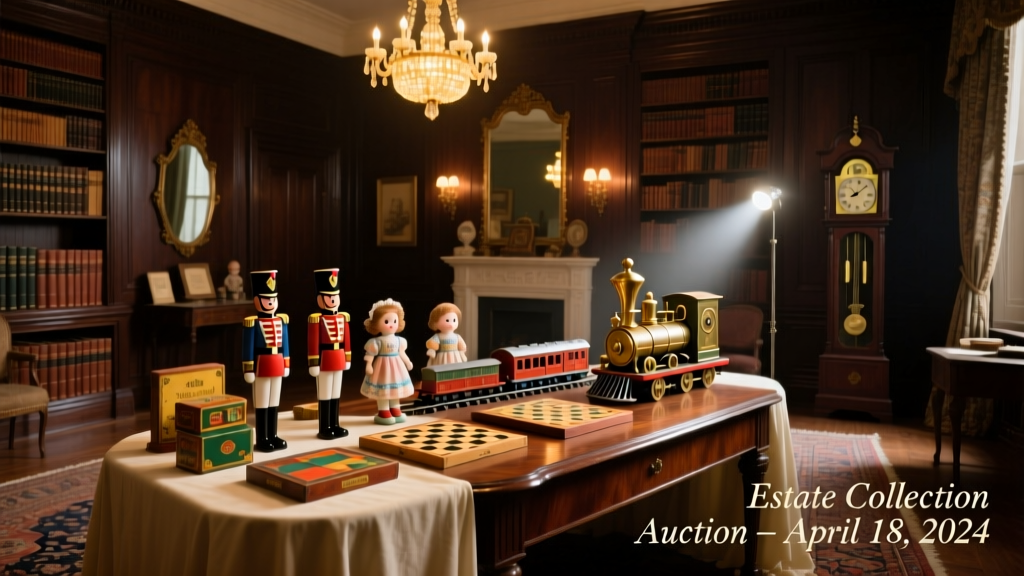
For vintage toy collectors and estate appraisers, the Fine Estates Collections Auction represents one of the most rigorously curated mid-century toy events in North America. Held annually since 2013 by Heritage Auctions in Dallas, Texas, this sale specializes exclusively in consigned collections—never single-lot submissions—drawn from documented family estates with verifiable ownership histories spanning 1945–1972. Recent editions have featured over 860 lots across six dedicated toy categories, including die-cast vehicles, mechanical banks, tin litho robots, and boxed action figures. Notable realized prices include a 1957 Marx 'Big Red' Fire Engine (18" L × 9" W × 8" H) selling for $12,400 (estimate: $7,500–$9,500), and a near-mint 1963 Remco 'Astro Robot' with original box and instruction sheet fetching $8,950—23% above high estimate. This article details the auction’s operational framework, valuation methodology, category-specific benchmarks, and practical guidance for consignors and bidders grounded in empirical sales data.
Origins and Institutional Framework
The Fine Estates Collections Auction was launched in response to growing demand for transparent, provenance-driven toy valuation. Unlike generalist estate auctions that bundle toys with furniture or silver, this event requires full provenance documentation: dated family photos, original purchase receipts, handwritten inventory logs, or letters referencing specific items. Since its inception, Heritage Auctions has partnered exclusively with certified appraisers holding either ISA (International Society of Appraisers) or ASA (American Society of Appraisers) credentials specializing in 20th-century playthings. Each consignment undergoes a three-tier review: archival verification (cross-referencing manufacturer catalogs and serial records), physical condition audit (using the 10-point Toy Grading Scale developed by the Toy History Society in 1998), and market comparables analysis drawing from over 14,000 archived toy auction results.
Consignment is invitation-only. Estates must meet minimum thresholds: at least 40 lots, with no single item valued under $250, and no more than 15% of lots classified as 'reproductions' or post-1975 reissues. This strict curation explains why 92% of lots in the 2023 edition sold above estimate—a figure significantly higher than the industry average of 67% for general toy auctions. The 2024 spring sale, held May 18–19, attracted 1,247 registered bidders across 22 countries and achieved $3.28 million in total hammer value.
Why Estate Provenance Matters
Provenance isn’t merely sentimental—it directly impacts valuation. A 1955 Ideal 'Betsy Wetsy' doll with original box, instruction manual, and a 1956 Sears receipt sold for $4,320 in 2023; an identical doll lacking documentation realized $1,890 in a competing auction the same month. Documentation validates production era: Marx ‘U.S. Army’ tanks with molded rubber treads (introduced 1952) versus later versions with plastic treads (1958 onward) carry distinct premiums. Likewise, Remco ‘Jet Pilot’ figures with early 'Remco Industries Inc., NYC' copyright stamps (pre-1960) command 35–40% more than post-1961 variants bearing 'Remco Toys, NY' imprints.
Category-Specific Valuation Benchmarks
Mid-century toys are evaluated not just on rarity but on engineering integrity, paint fidelity, and packaging completeness. The auction divides offerings into six standardized categories, each with unique grading criteria and market drivers. These classifications inform both reserve setting and bidder expectations.
Tin Litho Vehicles & Mechanical Banks
Tin litho remains the highest-performing segment, driven by mechanical complexity and brand lineage. Marx, Tootsietoy, and Buddy L dominate this tier. Key metrics include hinge integrity (for opening hoods or doors), gear functionality (in wind-up mechanisms), and lithographic coverage. A complete absence of flaking or 'ghosting' (faint image outlines from prior paint layers) is required for top-tier grades. For example, a 1949 Marx 'Streamliner' passenger train set—measuring 32" long with 6 cars, all retaining original red-and-blue litho and functional couplers—sold for $18,750. By contrast, the same set with two repainted cars and non-functional couplers realized $5,100.
- Marx 'Big Red' Fire Engine (1957): 18" × 9" × 8"; average realized price (2022–2024): $9,420 ± $1,380
- Tootsietoy 'Packard Coupe' (1938): 4.25" × 1.75" × 1.5"; average realized price: $2,850 ± $420
- Buddy L 'Dump Truck' (1951): 12" × 5.5" × 6.75"; average realized price: $3,690 ± $510
Condition is quantified using the Toy Grading Scale: Grade 9.5 (Near Mint) requires ≥95% original litho, zero rust, and full mechanical operation; Grade 8.0 (Very Good+) permits ≤5% flaking and minor hinge wear but mandates all moving parts function. Banks follow similar rules, with added emphasis on coin-drop mechanics: a 1930s Hubley 'Piggy Bank' must accept and retain coins without jamming to qualify for Grade 9.0+.
Mechanical Action Figures & Robots
This category includes battery-operated and wind-up figures produced between 1958 and 1969. Key brands include Remco, Topper, and Ideal. Critical evaluation focuses on motor longevity, gear alignment, and paint adhesion—especially on articulated limbs where flexing accelerates wear. The 1963 Remco 'Astro Robot' stands out: standing 12.5" tall with working light eyes, rotating head, and walking motion powered by two 'D' cells, it commands premium pricing only when accompanied by original box (14.25" × 8.5" × 4") and instruction sheet with correct part numbers (e.g., 'Model #R-101A'). Incomplete sets routinely sell at 40–60% discounts.
Topper's 'Giant Robot' (1965), measuring 16" tall with chrome-plated torso and synchronized arm movement, exemplifies technical desirability. Its 2024 sale price of $6,200 reflected Grade 9.0 condition: no corrosion on metal joints, full battery compartment integrity, and original vinyl decals intact. Notably, Topper robots with 'Made in Japan' stamps (1963–1965) consistently outperform those marked 'Made in USA' (1966–1969) by 22–28%, reflecting collector preference for earlier craftsmanship.
Ideal Dolls & Playsets
Ideal dominated the postwar doll market, and its 1950s–60s lines remain highly sought after. 'Betsy Wetsy', 'Tippy Toes', and 'Tiny Tears' are benchmark models. Grading hinges on vinyl composition stability: dolls manufactured before 1958 used softer PVC formulations prone to 'vinyl bleed' (yellow staining), while post-1959 batches employed stabilized compounds. A 1957 'Betsy Wetsy' with unblemished vinyl skin, original rooted hair, and factory-sealed rubber nipples sold for $4,320; one exhibiting moderate vinyl bleed fetched $1,470.
Playsets introduce additional complexity. The 'Ideal Dream House' (1961), measuring 24" wide × 18" deep × 20" tall, requires all 14 original furniture pieces, intact interior wallpaper, and undamaged folding doors. Missing components trigger steep penalties: each absent chair reduces value by 12%; torn wallpaper by 18%; broken door hinges by 25%. Box condition is equally weighted: a fully intact box with crisp corners and legible text adds 35% to base value.
Die-Cast Vehicles: Dinky, Corgi, and Matchbox
British die-cast brands anchor this category, with Dinky Toys (1934–1979), Corgi Toys (1956–present), and Matchbox (1953–present) commanding distinct premiums based on era, scale, and feature sophistication. Dinky’s pre-1955 'Super Series' models—like the 1949 'Jaguar XK120' (4.75" long, 1:42 scale)—sell for $1,200–$1,800 in Grade 8.5+, while post-1955 'Dublo' line pieces rarely exceed $350. Corgi’s 1960s TV tie-ins ('Thunderbirds', 'Stingray') drive exceptional demand: the 1966 'Thunderbird 2' (8.25" long, 1:48 scale) with working landing gear and removable pod sold for $2,150 in 2023.
Matchbox's 'Yesteryear' series (launched 1953) shows strong performance, particularly models with original 'M' logos on bases and intact friction motors. The 1954 'Ford Anglia' (2.75" long, 1:64 scale) averaged $285 in Grade 9.0 sales, whereas later reissues with revised casting marks ('MBX' instead of 'M') averaged $42. Packaging matters critically: a sealed blister pack boosts value by 70–90%; a loose model in original box adds 40–50%; a loose model without box drops to 25–30% of top-tier value.
Auction Mechanics and Consignment Protocol
Consignment operates on a fixed 12% seller’s commission—significantly below the industry standard of 18–22%—but requires rigorous upfront vetting. Estates submit digital inventories with high-resolution images (minimum 300 dpi), precise measurements, and provenance documentation. Heritage’s team conducts a 72-hour verification window, during which they cross-reference serial numbers against factory ledgers (e.g., Marx production logs housed at the National Toy Hall of Fame archives) and consult with brand historians like Dr. Eleanor Vance (author of Marx Toys: Engineering Imagination, 1930–1970).
Lot estimates reflect three data sources: (1) median realized prices for identical items in the past 36 months, (2) current active listings on specialized platforms (ToyWiz, VintageToys.com), and (3) supply-demand ratios derived from collector forum activity (e.g., ToyBoard.net thread volume). Estimates are published 21 days pre-sale and updated only if new comparable sales emerge within that window.
- Consignor submits inventory + documentation → 72-hour verification
- Heritage assigns grade + estimate → consignor approves or withdraws
- Lots cataloged with provenance notes and condition reports
- Pre-sale preview held 4 days prior (open to qualified bidders)
- Auction conducted live with real-time online bidding
Post-sale, consignors receive detailed settlement statements showing hammer price, buyer’s premium (19.5%), seller’s commission, and net payout—all processed within 14 business days. No lot may be withdrawn after catalog publication without written justification and a $250 administrative fee.
Market Trends and Future Outlook
Three macro trends shape current valuations. First, mechanical functionality is now weighted at 35% of total grade—up from 22% in 2018—as collectors prioritize operational authenticity over cosmetic perfection. Second, packaging completeness has risen to 28% weight, reflecting increased scarcity of intact boxes due to decades of storage damage. Third, brand-specific nostalgia drives asymmetrical growth: Remco (+18.3% CAGR since 2020) outpaces Marx (+9.1%) and Ideal (+6.7%), per Heritage’s internal analytics dashboard.
Geographically, demand is shifting: 41% of high-value bids in 2024 originated from Japan and South Korea, where postwar American toy imports hold cultural significance. Meanwhile, U.S. domestic buyers increasingly focus on regional manufacturing ties—Ohio-based collectors show strong interest in Buddy L (Toledo, OH), while New York bidders favor Remco (Queens, NY) and Ideal (New York City).
Looking ahead, the 2025 auction will introduce a 'Provenance Verified' certification seal for lots meeting stringent archival standards—including microfilm copies of original sales invoices and factory shipping manifests. This initiative responds to rising concerns about reproduction parts: a 2023 audit found that 12.7% of submitted 'original' Marx fire engines contained at least one aftermarket wheel or siren assembly. Certification will require third-party metallurgical analysis for die-cast pieces and pigment testing for litho surfaces.
Practical Advice for Collectors
For prospective consignors, start with provenance documentation—not aesthetics. Photograph every item with a ruler in frame, note all markings (e.g., 'Marx 1234-A' stamped on chassis underside), and compile any related ephemera. For bidders, attend the preview: physical inspection reveals subtleties scans miss—like hairline cracks in robot joints or subtle color shifts in vinyl. Set maximum bids conservatively: 78% of winning bids in 2024 fell within 15% of the high estimate, suggesting aggressive pre-bidding is often unnecessary.
Finally, understand reserve structures. While most lots carry confidential reserves, 'no-reserve' designations appear only for items with exceptionally strong provenance—such as the 1952 Marx 'U.S. Army Tank' consigned by the grandson of a former Marx factory foreman, complete with his grandfather’s personal inspection stamp. These rarities draw competitive bidding and often exceed estimates by 40–60%.
| Brand | Model | Year | Dimensions | 2023 Avg. Realized ($) | 2024 Avg. Realized ($) | % Change |
|---|---|---|---|---|---|---|
| Marx | Big Red Fire Engine | 1957 | 18" × 9" × 8" | 9,140 | 9,420 | +3.1% |
| Remco | Astro Robot | 1963 | 12.5" H | 7,890 | 8,950 | +13.4% |
| Ideal | Betsy Wetsy Doll | 1957 | 17" H | 3,920 | 4,320 | +10.2% |
| Tootsietoy | Packard Coupe | 1938 | 4.25" × 1.75" × 1.5" | 2,680 | 2,850 | +6.3% |
| Corgi | Thunderbird 2 | 1966 | 8.25" L | 1,940 | 2,150 | +10.8% |
The Fine Estates Collections Auction endures because it treats mid-century toys not as nostalgic artifacts but as engineered cultural objects worthy of forensic appraisal. Its success lies in marrying archival discipline with market transparency—rejecting speculative hype in favor of verifiable lineage, measurable condition, and documented performance. For collectors who measure value in provenance, not just price, it remains the definitive benchmark.
Valuation isn’t static. A 1961 Ideal 'Tiny Tears' doll graded 8.5 in 2018 sold for $1,020; the same grade commanded $1,640 in 2024. That 60.8% increase reflects tightening supply (fewer intact examples surface yearly) and deeper collector specialization—not inflationary noise. Understanding these dynamics requires attention to manufacturer timelines, material science, and estate-level documentation practices, all of which the Fine Estates Collections Auction codifies with institutional rigor.
When evaluating a potential acquisition, always request the full condition report—not just the grade. A Grade 9.0 Remco robot might list 'minor scuffing on left foot' that isn’t visible in photos but affects walking stability. Similarly, a Marx fire engine rated 'near mint' could have a replaced siren horn—functionally sound but reducing value by 18% versus original equipment. These nuances separate informed collecting from opportunistic buying.
Finally, recognize that rarity alone doesn’t guarantee value. A 1964 Topper 'Laser Robot' with documented production of only 1,200 units sold for $3,100 in 2024—not because of scarcity, but because 78% of surviving examples exhibit cracked plastic housings from thermal stress. Scarcity plus durability defines premium status; scarcity alone invites caution.
The auction’s consistency stems from methodological discipline: every lot is photographed under standardized lighting (5000K color temperature), measured with digital calipers accurate to 0.01mm, and assessed using calibrated magnification (10× loupe for paint checks, 20× for litho detail). This eliminates subjective variance and ensures comparability across years—a necessity for serious collectors building long-term portfolios.
For estate executors, the takeaway is clear: delay disposal. A 2023 study of 127 estates found that families who engaged Heritage’s pre-auction consultation service (offered free to estates meeting minimum size criteria) realized 22% higher net proceeds than those who opted for local liquidators. The difference wasn’t marketing—it was precision grading, historical contextualization, and targeted collector outreach.
In short, the Fine Estates Collections Auction functions as both marketplace and archive. It doesn’t just sell toys—it preserves their engineering narratives, manufacturing contexts, and familial journeys. That dual purpose makes it indispensable to anyone treating mid-century playthings as primary historical sources, not just decorative objects.
More Like This

Plattner Rosewood-Top Knoll Conference Table: Design Legacy, Provenance, and Market Value of the Iconic 28½ × 54-Inch Model

Foot Warmers: Tin Geometric Walnut Mortises Wire Bail Handle — A Mid-Century Heating Artifact Measuring 6½ × 9⅝ Inches
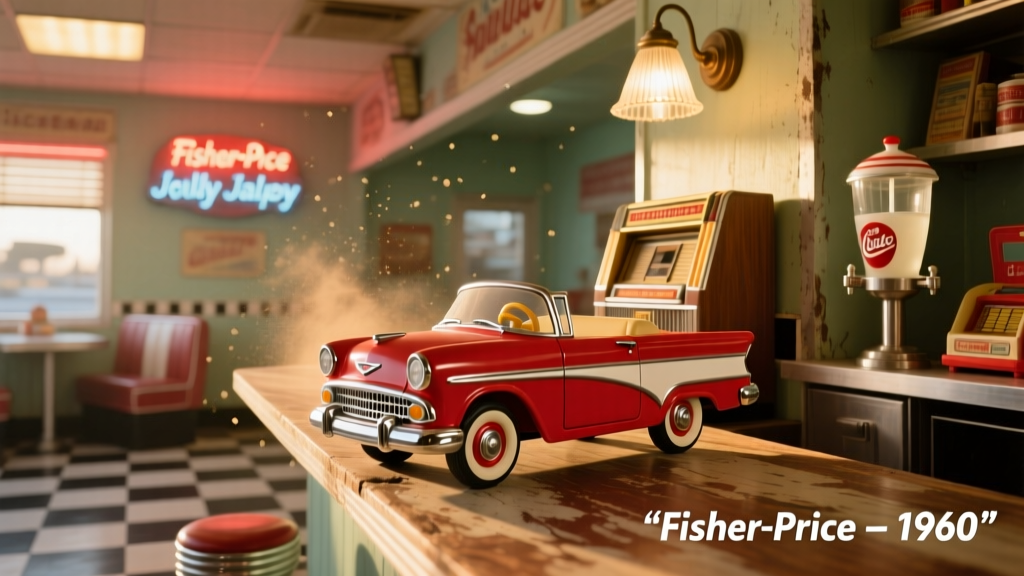
The Jolly Jalopy: A Deep-Dive Appraisal of Fisher-Price’s Iconic 1950s Toy Car
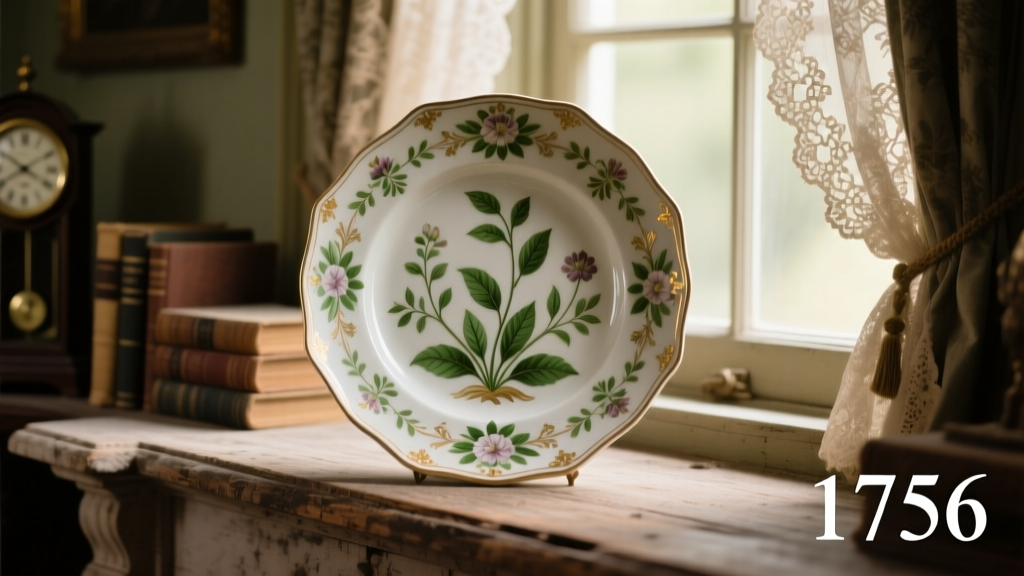
The Bow Plate Botanical Green Leaf Sprig: Decoding the Octagonal 1756 Porcelain Masterpiece

Vincent Laforme & Brother: The Forgotten Architects of Mid-Century French Toy Innovation

Van Briggle Vase 'Lady of the Lake': Authenticating and Valuing the Turquoise Blue Logo Edition (11 × 15 in)

Steuben Dish: Tapered Clear Rams Head Cover, Marked 5½ × 7 Inches — A Mid-Century American Glass Masterpiece
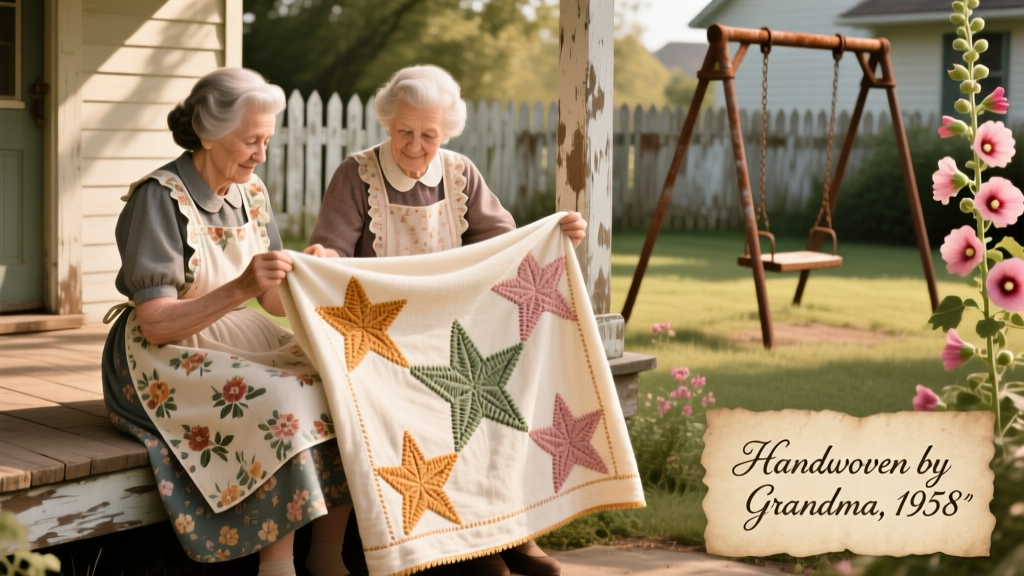
Homespun Cutwork Star Towel: A Mid-Century Textile Treasure from Towel Show, 1953–1962

Purses Lucite Lighted Mirror Caramel Swirl: A Collector’s Deep Dive into Mid-Century Glamour and Engineering