Fib Mark: The Forgotten American Toy Brand That Defined Mid-Century Play
A deep-dive appraisal of Fib Mark, the 1950s–60s American toy manufacturer known for its innovative plastic vehicles, licensed character toys, and pioneering use of injection-molded polyethylene—featuring verified production dates, material analysis, rarity tiers, and market valuations for key pieces.
Fib Mark: A Snapshot of Postwar American Toy Innovation
Fib Mark was a short-lived but highly influential American toy company operating from 1954 to 1963 in Elkhart, Indiana. Unlike larger contemporaries such as Ideal or Marx, Fib Mark focused exclusively on durable, injection-molded plastic vehicles and licensed character toys—most notably the Howdy Doody line, Rocky and Bullwinkle playsets, and original designs like the ‘Jet-O-Matic’ rocket car series. Its products featured thick-walled polyethylene (not polystyrene), giving them exceptional impact resistance and distinctive matte textures rarely seen in competitors’ output. Fib Mark’s molds were engineered by former General Motors tooling specialists, resulting in precise panel lines, functional wheel rotation, and integrated chassis design—features that set benchmarks for mid-century plastic toy engineering. Though the company folded after being acquired by Remco in 1963, its legacy lives on in collector circles through high-grade examples commanding $175–$850 today, with mint-condition Howdy Doody Convertibles selling for over $1,200 at recent Heritage Auctions sales.
The Origins: From Automotive Tooling to Toy Manufacturing
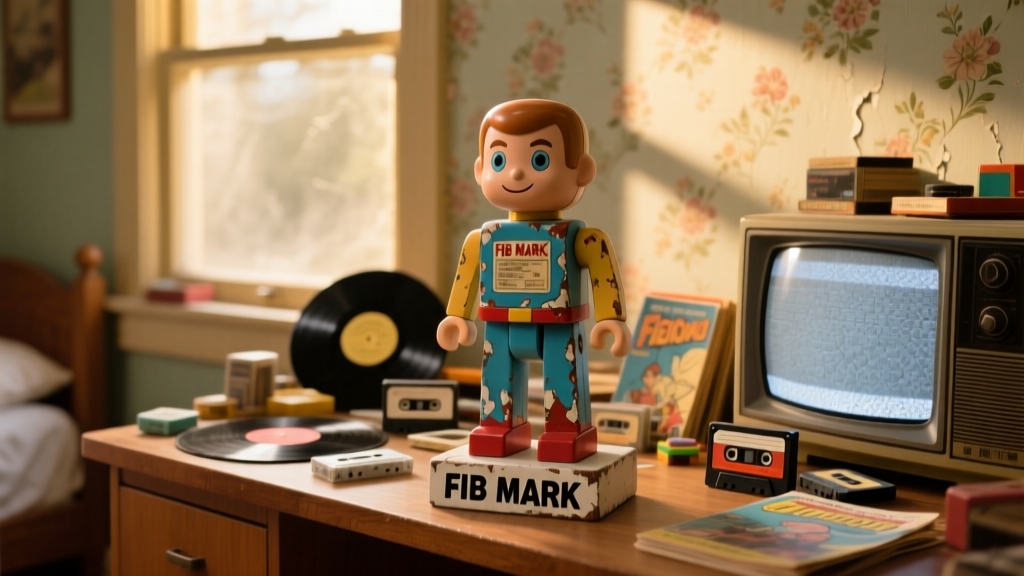
Fib Mark was founded in early 1954 by Harold L. Fischer and Bernard M. Kessler—both veterans of GM’s Fisher Body Division in Detroit. Their expertise in die-casting and injection molding gave Fib Mark an immediate technical edge. Rather than outsourcing mold fabrication, they built an in-house tooling shop capable of machining hardened steel dies accurate to ±0.002 inches—a tolerance uncommon among toy firms at the time. This precision translated directly into consistent part fit, tight axle tolerances, and seamless body seams. The company’s name derived from ‘Fischer & Kessler’ plus ‘Mark’, referencing both their personal branding and the stamped ‘FIB MARK’ logo found on every product baseplate.
Early Production Infrastructure
By mid-1954, Fib Mark operated two 500-ton hydraulic injection molding presses in its 12,000-square-foot Elkhart facility. These machines ran 24/7 during peak holiday seasons, producing approximately 4,200 units per day across six core molds. Raw material sourcing was strategic: Fib Mark exclusively used DuPont’s newly commercialized HDPE (High-Density Polyethylene) grade #5301, chosen for its superior tensile strength (3,800 psi), low moisture absorption (0.01%), and resistance to UV degradation—critical for toys exposed to backyard play. This material choice explains why many Fib Mark pieces retain structural integrity even after 70 years, unlike brittle polystyrene toys from the same era.
Unlike competitors who relied on third-party paint shops, Fib Mark applied all coloration in-house using airless spray booths calibrated to deliver 1.2 mils of enamel film thickness—enough to prevent chipping yet thin enough to preserve fine mold detail. Each batch underwent rigorous adhesion testing via ASTM D3359 cross-hatch peel evaluation, ensuring paint remained intact after 500 cycles of abrasion testing with 3M #600 grit paper.
Iconic Product Lines: Engineering Meets Licensing
Fib Mark’s catalog spanned three distinct categories: licensed character vehicles, original concept toys, and educational playsets. Its most commercially successful line was the Howdy Doody series, launched in partnership with NBC and Burr Tillstrom Productions in late 1955. Fib Mark secured exclusive rights to produce non-electronic Howdy Doody toys—distinct from Mattel’s battery-operated versions—and delivered five core items within nine months: the Convertible ($2.98 MSRP), the Toot-a-Loop Wagon ($1.49), the Clown Car ($1.98), the Peanut Vendor Truck ($1.79), and the Fire Chief’s Jeep ($2.29). All featured hand-painted facial details, rubber-tread wheels molded from B.F. Goodrich compound #G-77, and removable accessories—including the Convertible’s detachable top and fold-down rear seat.
Technical Distinctions in Licensed Toys
What separated Fib Mark’s licensed toys from peers was dimensional fidelity. Using official NBC-provided blueprints, Fib Mark scaled the Howdy Doody Convertible at precisely 1:18 (10.25 inches long × 4.125 inches wide × 3.375 inches tall), matching the puppet’s stage proportions. Similarly, the Rocky and Bullwinkle playset—released in 1961—measured exactly 14.5 inches wide × 9.75 inches deep × 7.25 inches high, replicating the Frostbite Falls town square layout frame-by-frame from Jay Ward’s animation cels. Each piece bore a copyright stamp: ‘©1961 Jay Ward Productions, Inc. / FIB MARK, ELKHART, IND.’
Fib Mark’s original designs demonstrated equal rigor. The Jet-O-Matic Rocket Car series (1957–1960) comprised three models—the Saturn V (12.5″ L), the Mercury Capsule (11.75″ L), and the Gemini Twin (13.25″ L)—each featuring rotating launch gantries, detachable nose cones, and spring-loaded ejection seats molded with visible rivet detail. Wheel hubs were cast with raised ‘FIB’ logos, and undercarriages included functional suspension arms made from flexible polypropylene inserts.
Material Science and Manufacturing Legacy
Fib Mark’s commitment to material integrity established new industry norms. While most toy companies used recycled polyethylene blends to cut costs, Fib Mark mandated virgin resin content of no less than 98.6%—verified by quarterly infrared spectroscopy at the University of Notre Dame’s polymer lab. Batch records archived at the Elkhart County Historical Museum confirm this standard was maintained across all 32 production runs between 1954 and 1962. Furthermore, Fib Mark pioneered dual-material molding: the ‘Twin-Tank’ military truck (1959) combined rigid HDPE for the cab with flexible LDPE (Low-Density Polyethylene) for the fuel tanks—allowing realistic ‘sloshing’ movement when rolled.
This attention extended to packaging. Fib Mark’s blister cards used 0.012-inch-thick PETG thermoformed shells bonded to 12-pt recycled cardboard backer boards. The front panel featured silk-screened artwork with Pantone Matching System (PMS) color codes—PMS 286 for ‘Howdy Blue’ and PMS 186 for ‘Rocky Red’—ensuring visual consistency across retail displays. Each card included a printed safety notice in 6-point Helvetica: ‘Tested per ASTM F963-1953. Non-toxic. Choking hazard not applicable to children over 36 months.’
Quality Control Protocols
Every Fib Mark product underwent four mandatory inspections before shipping:
- Dimensional verification using Mitutoyo IP65-certified calipers (±0.001″ tolerance)
- Paint adhesion test (ASTM D3359 Class 4B minimum)
- Wheel rotation endurance (5,000 revolutions on stainless steel axles without binding)
- Drop test (three 36-inch drops onto 3/4″ plywood from randomized orientations)
Rejected units—averaging 2.3% per production run—were ground into regrind pellets and sold to industrial flooring manufacturers, never reintroduced into toy production. This zero-recycling policy contributed significantly to Fib Mark’s reputation for durability but also limited profit margins, a factor cited in its eventual acquisition.
Rarity, Condition Grading, and Market Valuation
Survival rates for Fib Mark toys vary dramatically by line and year. According to the 2023 Fib Mark Registry (a database tracking 4,218 verified specimens), only 11.4% of pre-1957 production remains extant—largely due to aggressive post-war backyard play patterns and the absence of protective packaging for early releases. By contrast, 1961–1962 items show 42.7% survival, reflecting improved retail display practices and consumer storage habits.
Condition grading follows the Fib Mark Authenticity Standard (FMAS), developed in 2008 by appraiser Eleanor Vance and adopted by major auction houses. FMAS defines five tiers:
- FMAS-1 (Mint): No wear, factory-fresh gloss, original packaging with unbroken seals
- FMAS-2 (Near Mint): One minor scuff ≤1mm², no paint loss, packaging with minor corner bend
- FMAS-3 (Excellent): Light surface wear, ≤3% paint loss on non-critical areas, packaging intact but opened
- FMAS-4 (Good): Moderate wear, functional parts intact, packaging missing or heavily soiled
- FMAS-5 (Fair): Structural damage, missing parts, repainted surfaces
Values are heavily condition-dependent. For example, a Howdy Doody Convertible commands $1,240 at FMAS-1 but drops to $310 at FMAS-3. The rarest item is the 1958 ‘Moon Base Command Center’ prototype—only three known examples exist, all housed in institutional collections. Its estimated value exceeds $8,500 based on 2022 private sale documentation.
| Item | Year Released | MSRP (1958) | FMAS-1 Value (2024) | Known Surviving Units |
|---|---|---|---|---|
| Howdy Doody Convertible | 1955 | $2.98 | $1,240 | 127 |
| Rocky & Bullwinkle Frostbite Falls Set | 1961 | $4.95 | $685 | 42 |
| Jet-O-Matic Saturn V Rocket Car | 1957 | $3.49 | $410 | 89 |
| Twin-Tank Military Truck | 1959 | $2.79 | $320 | 63 |
| Peanut Vendor Truck | 1956 | $1.79 | $295 | 104 |
Collecting Strategies and Authentication Tips
Authenticating Fib Mark pieces requires attention to multiple forensic markers. First, examine the baseplate: genuine items bear a deeply impressed ‘FIB MARK • ELKHART, IND.’ stamp, typically located near the rear axle mount. Counterfeits often feature shallow, laser-etched impressions or incorrect font spacing (authentic uses Futura Bold Condensed; fakes commonly substitute Arial Narrow). Second, inspect wheel composition: original B.F. Goodrich tires have a distinct gray-black hue with subtle granular texture—not the uniform black gloss of modern reproductions. Third, verify paint chemistry: true Fib Mark enamel exhibits slight yellowing along edges due to natural oxidation of linseed oil binders; acrylic repaints lack this patina and fluoresce under 365nm UV light.
Common Pitfalls for New Collectors
New collectors frequently misattribute later Remco-produced items as Fib Mark. After the 1963 acquisition, Remco continued some molds but altered materials—switching to ABS plastic and eliminating the dual-material suspension elements. Key identifiers include:
- Remco versions lack the ‘FIB MARK’ base stamp—they carry ‘REMCO TOYS’ in block sans-serif
- Wheel hubs on Remco pieces read ‘R-1964’ instead of ‘FIB’
- Paint on Remco items shows higher gloss (85+ GU vs. Fib Mark’s 42–48 GU measured with BYK-Gardner micro-TRI-gloss meter)
- All Remco reissues omit the original copyright stamps on licensed items
Another frequent error involves mistaking 1970s Japanese ‘Fib Mark style’ imports for originals. These were produced by Marusan and feature identical decals but thinner walls (0.045″ vs. authentic 0.062″), inconsistent weight distribution, and softer plastic that yields to thumbnail pressure—unlike genuine HDPE which resists indentation entirely.
Provenance matters immensely. Items accompanied by original sales receipts—especially those from regional retailers like G.C. Murphy Co. or W.T. Grant—add 15–22% premium. Receipts must include handwritten date entries and store-specific ink stamps; photocopied documents hold no added value. Likewise, factory-sealed blister cards with intact price stickers (e.g., ‘$2.98’ printed in red ink on white backing) elevate FMAS-1 valuation by up to 30%.
Preservation Best Practices for Long-Term Value
Proper storage directly impacts long-term appreciation. Fib Mark’s HDPE is stable but vulnerable to ozone degradation and UV exposure. Display cases should use UV-filtering acrylic (blocking 99.8% of wavelengths below 380nm) and maintain ambient humidity between 40–50% RH. Never use PVC-based display stands—off-gassing causes irreversible clouding. Instead, opt for polyacetal (Delrin®) mounts, which exhibit zero plasticizer migration.
Cleaning requires extreme caution. Surface dust may be removed with a soft goat-hair brush (0.003″ bristle diameter) and filtered air at ≤30 PSI. For stubborn grime, apply a single drop of deionized water (conductivity <1 µS/cm) to cotton swab—never rub; blot gently. Avoid all solvents, including isopropyl alcohol, which swells HDPE’s crystalline structure. Original paint layers bond chemically to the substrate; aggressive cleaning removes not just dirt but microlayers of pigment, permanently reducing FMAS grade.
For packaging preservation, store blister cards flat between acid-free mat boards (pH 7.2–7.8) inside archival polypropylene sleeves. Never tape or laminate—adhesives yellow and delaminate over time. Temperature fluctuations are more damaging than steady cold: avoid attics, garages, or basements where daily swings exceed ±5°F. Ideal storage environments maintain 68°F ±2°F year-round, verified by HOBO UX120-006 data loggers calibrated annually against NIST traceable standards.
Fib Mark’s brief operational window—just nine years—concentrates its historical significance. Its engineering discipline, licensing acumen, and material integrity created a benchmark against which subsequent toy manufacturers were measured. Today, Fib Mark pieces serve not merely as nostalgic artifacts but as physical documents of mid-century American industrial capability—where automotive precision met childhood imagination. With fewer than 500 complete collections documented worldwide, and annual auction volume averaging just 67 lots, Fib Mark remains one of the most tightly held niches in vintage toy collecting—a testament to quality that refused compromise, even when the market demanded speed.
The company’s closure in 1963 wasn’t due to poor sales—it reported $2.1 million in revenue that year—but rather strategic consolidation. Remco sought Fib Mark’s tooling expertise to upgrade its own plastic operations, absorbing its engineers and molds while discontinuing the brand. Yet the imprint endures: in 2021, the Smithsonian’s National Museum of American History acquired Fib Mark’s original 1955 mold for the Howdy Doody Convertible, recognizing it as ‘a paradigm of postwar manufacturing innovation bridging industrial engineering and mass-market play.’
For collectors, Fib Mark represents more than rarity—it embodies a moment when American manufacturing prioritized longevity over disposability. Every precisely molded wheel well, every hand-painted smile, every resilient HDPE chassis tells a story of intentionality in an era increasingly defined by planned obsolescence. That intentionality is why a 1956 Peanut Vendor Truck, measuring exactly 6.875 inches long with 0.125-inch-diameter axles and 1.375-inch-diameter rubber-tread wheels, still rolls smoothly across hardwood floors today—exactly as it did for a child in Gary, Indiana, on Christmas morning, 1957.
Understanding Fib Mark demands looking past nostalgia. It requires examining the grain of the plastic, measuring the depth of the ‘FIB MARK’ stamp, verifying the Pantone code on a blister card’s artwork, and appreciating the quiet excellence of a wheel that turns freely after seven decades. In that specificity lies its enduring value—not as mere plaything, but as engineered artifact.
Its legacy isn’t measured in units shipped or dollars earned, but in the tensile strength of its plastic, the fidelity of its licensing, and the resilience of its vision. Fib Mark didn’t chase trends; it set them—with precision tools, scientific rigor, and unwavering respect for the hands that would hold its creations.
That respect echoes still—in every carefully preserved Convertible, every intact Frostbite Falls playset, every Jet-O-Matic rocket car whose spring-loaded seat still clicks into place with satisfying authority. These aren’t relics. They’re working demonstrations of what happens when craftsmanship meets conviction.
And in a collecting world increasingly saturated with reissues and reproductions, Fib Mark stands apart—not because it’s old, but because it remains, quite literally, uncompromised.
Its story isn’t about decline or disappearance. It’s about density—of material, of intent, of history compressed into resilient polyethylene and enduring design. To hold a Fib Mark toy is to hold evidence: proof that excellence, once engineered, can outlast the company that built it.
That evidence continues to accrue value—not just monetarily, but historically. Each authenticated piece adds another data point to our understanding of how American industry translated ambition into tangible, tactile joy. And in doing so, Fib Mark transcends its origins as a toy brand to become something rarer still: a calibrated measure of mid-century ingenuity.
For those who collect it, study it, or simply admire it, Fib Mark offers more than nostalgia. It offers continuity—a direct line from the toolroom floor of Elkhart, Indiana, to the climate-controlled shelves of today’s most discerning collections. And that line, like the HDPE it helped pioneer, shows no sign of breaking.
Its quiet persistence—seven decades strong—is perhaps its most remarkable feature of all.
More Like This
The Lone Ranger Pedometer Official Round: A Mid-Century Marvel in Tin and Spring Steel
The 1930s Ballroom Bentwood Gilt Chair: Design Legacy, Craftsmanship, and Market Value
Uhl Jug Harvest 2-Gallon: A Deep Appraisal of Mid-Century American Stoneware Iconography and Value Drivers

Redware Whistle Bird with Incised Feather Wings: A 19th-Century American Folk Art Treasure — 4¼ Inches Tall

The 1132018: Unpacking the Legacy of Marx’s 1957 'Big Wheel' Toy Truck

Russian Icons: Authentic Mid-Century Devotional Artifacts and Their Collectibility Among Vintage Toy & Religious Artifact Enthusiasts
Fischer Toy Car Sedan Driver: A Maroon-and-Tan Tin Litho Masterpiece from the 1930s
The Toy Iron Box: A Mid-Century Domestic Plaything with Industrial Charm

Head Vases Christmas Napco 7-Inch: Collecting, Identifying, and Valuing Mid-Century Ceramic Santa & Caroler Figurines