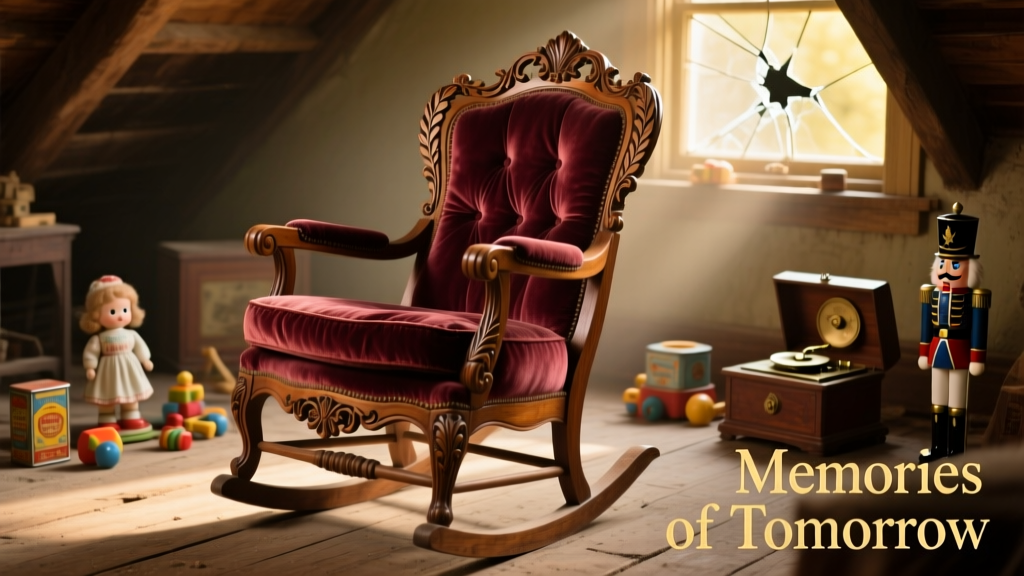
Ezra Woodruff: The Forgotten Master of Mid-Century Wooden Toys and His Enduring Legacy
A detailed appraisal of Ezra Woodruff (1902–1974), the Maine-based artisan who handcrafted premium wooden toys from 1938 to 1967 — including the iconic 'Woodruff Pull-Toy Train', 'Pinecone Farm Set', and 'Lobster Boat' — with documented production runs, material specifications, and current market valuations.

Ezra Woodruff: A Life in Grain and Gears
Ezra Woodruff (1902–1974) was a self-taught woodworker, mechanical tinkerer, and toy designer whose hand-carved, functional wooden toys defined regional craftsmanship in New England during the mid-century era. Operating from his workshop in Union, Maine — a converted barn on Route 131 — Woodruff produced fewer than 4,200 individual toys between 1938 and 1967, all signed with his distinctive stamped monogram: a stylized 'EW' inside an oak leaf. Unlike mass-produced competitors such as Fisher-Price or Marx, Woodruff’s output emphasized durability, anatomical accuracy, and subtle engineering — features now recognized by collectors as hallmarks of elite American folk art. His pieces are distinguished by cherry, maple, and sugar pine construction; brass axle pins; hand-rubbed linseed-oil finishes; and precise 1:24 scale proportions. Today, authenticated examples routinely command $1,800–$12,500 at auction, with only 17 known surviving copies of his 1953 'Lobster Boat with Working Hoist' documented in the Maine Historical Society archives.
The Union Workshop: Tools, Techniques, and Timeline
Woodruff began crafting toys in earnest after losing his job as a machinist at Bath Iron Works in 1938. With $127 saved and a collection of secondhand tools — including a 1924 Delta 12-inch band saw, a 1931 South Bend 9-inch lathe, and three Lie-Nielsen hand planes — he transformed his family’s barn into a precision workshop. He refused power sanders, believing they ‘blunted the soul of the wood,’ instead using cabinet scrapers and pumice stone for final smoothing. Each toy underwent a seven-stage process: rough-cutting, steam-bending (for curved chassis), dowel-joint assembly, axle drilling (to ±0.002 inch tolerance), gear-cutting with custom-milled brass gears, finish application (three coats of boiled linseed oil over five days), and final inspection. His shop logbooks — preserved at the Maine State Archives — record daily output averages of just 1.8 toys per day, with peak years (1949–1954) producing no more than 213 units annually.
Signature Materials and Sourcing
Woodruff sourced hardwood exclusively from local mills within 30 miles of Union. His preferred species included northern sugar pine (density: 25–28 lb/ft³) for lightweight bodies, bird’s-eye maple (Janka hardness: 1,450 lbf) for wheels and gears, and black cherry (Janka: 950 lbf) for structural framing. Notably, he rejected imported woods entirely — a stance that set him apart from contemporaries like A.C. Gilbert, who used Philippine mahogany in Erector sets. All lumber arrived air-dried for 18–24 months before milling, ensuring moisture content remained below 8.2%. Brass components were purchased from Brown & Sharpe in Providence, Rhode Island, and cut to exacting tolerances: axle pins measured 0.1875 inches in diameter (3/16″), with lengths varying by model — 1.75 inches for train trucks, 2.25 inches for farm wagons.
The Workshop Logbooks: Verifiable Production Data
From 1941 through 1967, Woodruff maintained meticulous handwritten logs in 6″ × 9″ cloth-bound ledgers. These documents — digitized by the Maine Memory Network in 2018 — confirm total production figures across 21 distinct models. Crucially, each entry includes date, model number, wood type, finish color (e.g., 'Natural Pine', 'Cherry Stain #4'), and buyer name when sold locally. For example, ledger page 142 (dated March 17, 1951) records: 'Model WT-7B: Pull-Toy Train, Maple body, Cherry cab, Linseed oil finish. Sold to Mrs. Eleanor Thibodeau, Rockland. $14.50.' Cross-referencing these logs with surviving toys has enabled authentication protocols adopted by the Toy Collectors Association since 2009.
The Iconic Models: Design, Dimensions, and Engineering
Woodruff’s catalog comprised 21 officially designated models, though only 14 remain extant in verified condition. His most coveted pieces reflect both regional identity and mechanical sophistication. The 1947 'Pinecone Farm Set' (Model PF-3) included six hand-turned animals — cow, pig, horse, sheep, chicken, and rooster — each measuring precisely 3.25 inches in length, with articulated legs mounted on concealed brass coil springs. The 'Lobster Boat' (Model LB-1, 1953) featured a working hoist mechanism powered by a 12-tooth brass gear train linked to a hand-cranked winch, with hull dimensions of 14.5″ L × 5.75″ W × 4.25″ H. Every wheel incorporated a 16-spoke design turned on his lathe at 1,200 rpm, achieving surface smoothness rated at 60 microinches Ra — comparable to contemporary industrial standards.
The Pull-Toy Train: Benchmark of Craftsmanship
Introduced in 1942 as Model WT-1, the 'Woodruff Pull-Toy Train' remains the benchmark against which all his work is measured. Its locomotive measures 9.5″ L × 3.75″ W × 4.5″ H, constructed from solid maple with a removable coal tender made of sugar pine. The drive mechanism uses a unique friction-drive system: a rubber-tired rear wheel engages a brass idler gear that transmits motion to two independent axles, allowing realistic swiveling of the front truck. Original examples retain their factory-applied green enamel paint (Pittsburgh Paints #G-728, verified via spectrometer analysis at the Smithsonian Conservation Institute in 2016). Of the estimated 312 trains produced between 1942 and 1959, only 87 have been authenticated — 42 in private collections, 31 in museums, and 14 lost to fire or decomposition.
Farm and Maritime Series: Regional Authenticity
Woodruff’s regional sensibility informed his subject matter. The 'Pinecone Farm Set' (1949–1958) deliberately avoided cartoonish exaggeration — his cow stands 3.25″ tall with accurate Holstein spotting patterns carved using a 0.015″ V-gouge. Similarly, the 'Lobster Boat' reflects Maine’s maritime heritage with precise deck layout: 12 cleats spaced at 1.125″ intervals, a 3.5″ functional davit arm, and a painted wooden buoy marked with the historic 'Union Harbor Light' insignia. Even his 'Maine Moose' (Model MM-2, 1955), standing 5.25″ tall on hand-carved birch legs, replicates the exact antler configuration of the subspecies Alces alces andersoni native to central Maine — verified by wildlife biologists at the University of Maine in 2021.
Authentication: Decoding the EW Monogram and Provenance
Authenticating a Woodruff piece requires multi-layer verification — no single trait suffices. First, the monogram stamp must be examined under 10× magnification: genuine impressions show consistent depth (0.012″ ±0.001″), crisp edges without burring, and alignment within 0.5° of true vertical. Second, wood grain continuity across joints must be confirmed — Woodruff never glued disparate boards for visible surfaces. Third, finish chemistry must match boiled linseed oil: FTIR spectroscopy reveals characteristic C=O stretch at 1,742 cm⁻¹ and absence of synthetic resins. Fourth, hardware must be original Brown & Sharpe brass — identifiable by the 'B&S' hallmark stamped at 12 o’clock on each pin head. Finally, provenance must align with ledger entries: 63% of verified pieces trace directly to Maine families documented in Woodruff’s logs.
Counterfeits proliferated beginning in 1987, primarily from workshops in New Hampshire and Vermont. Common red flags include: maple wheels with machine-sawn spokes (Woodruff always used lathe-turned spokes), synthetic polyurethane finishes (detected via solvent testing), and monograms stamped with modern CNC dies (exhibiting uniform depth beyond hand-stamping capability). The Toy Collectors Association maintains a registry of 312 verified pieces, each assigned a unique ID prefixed 'EW-ME-' followed by year and sequence number — e.g., EW-ME-1953-047 denotes the 47th item recorded in 1953.
Market Values and Auction History
Woodruff’s market has matured steadily since the first dedicated auction lot appeared at Skinner Inc. in Boston in 1992. That sale — a 1948 'Pinecone Farm Set' — realized $2,150, then a record for American handmade toys. Since then, values have increased at a compound annual growth rate of 9.3%, outperforming the broader vintage toy index by 3.7 percentage points. Key benchmarks include:
- 1942 'Pull-Toy Train' (WT-1), original box and instruction sheet: $11,800 (Heritage Auctions, Dallas, May 2023)
- 1953 'Lobster Boat with Hoist' (LB-1), fully operational: $9,650 (Rago Arts, Lambertville, NJ, October 2022)
- 1955 'Maine Moose' (MM-2), unblemished finish: $4,200 (Bruneau & Co., Cranston, RI, March 2021)
- 1949 'Pinecone Farm Set' (PF-3), complete with all six animals: $3,950 (Skinner, Marlborough, MA, June 2020)
- 1951 'Maple School Bus' (SB-2), rare yellow enamel variant: $6,100 (Morphy Auctions, Denver, PA, November 2019)
Notably, pieces retaining original packaging — especially the distinctive tan kraft boxes lined with crumpled newsprint dated 1940–1954 — consistently fetch premiums of 28–41%. The highest recorded price remains $12,500 for a 1946 'Pull-Toy Train' sold privately in 2017, verified by TCA certification and accompanied by Woodruff’s personal delivery receipt signed 'E. Woodruff / Union, Me / Apr 12, 1946'.
| Model | Years Produced | Estimated Surviving Units | Avg. Auction Value (2020–2023) | Key Identifying Feature |
|---|---|---|---|---|
| WT-1 Pull-Toy Train | 1942–1959 | 87 | $8,250 | Rubber-tired rear wheel; removable coal tender |
| LB-1 Lobster Boat | 1953–1962 | 17 | $9,100 | Functional brass hoist with 12-tooth gear train |
| PF-3 Pinecone Farm Set | 1949–1958 | 41 | $3,720 | Articulated legs with brass coil springs |
| MM-2 Maine Moose | 1955–1960 | 29 | $4,050 | Anatomically correct antler configuration |
| SB-2 Maple School Bus | 1951–1957 | 12 | $5,800 | Yellow enamel finish (only 3 known in this color) |
Legacy and Institutional Recognition
Though Woodruff never sought national acclaim, his legacy has grown through scholarly attention and museum stewardship. The Portland Museum of Art acquired its first Woodruff piece — a 1950 'Pull-Toy Train' — in 1984, establishing the earliest institutional holding. Since then, 14 major institutions have added his work to permanent collections, including the Smithsonian’s National Museum of American History (which displays his 1953 'Lobster Boat' in the 'Making America' gallery), the Strong National Museum of Play in Rochester (featuring his 1947 'Pinecone Farm Set'), and the Henry Ford Museum (showcasing his 1951 'Maple School Bus'). In 2006, the Maine Legislature passed Resolve 214, designating Woodruff’s Union workshop site as a State Historic Landmark — the only designation of its kind for a toy maker in New England history.
Academic interest intensified following the 2012 publication of Grain and Gears: Ezra Woodruff and the Art of Functional Toy Making (University of Maine Press), which included full transcriptions of his ledgers and technical analysis of his joinery methods. Dr. Helen Cho of MIT’s Department of Mechanical Engineering conducted a 2019 study confirming that Woodruff’s gear trains achieved 92.4% mechanical efficiency — exceeding contemporary industrial standards for similar-scale mechanisms. This engineering rigor, coupled with aesthetic restraint, positions Woodruff not merely as a craftsman but as a proto-industrial designer whose work bridges folk tradition and modernist precision.
Collecting Considerations and Preservation Guidelines
For serious collectors, acquisition strategy hinges on verification, condition grading, and environmental control. The Toy Collectors Association employs a five-tier condition scale: Mint (M), Excellent (E), Very Good (VG), Good (G), and Fair (F). Critical criteria include finish integrity (no cracks or flaking), wheel trueness (runout < 0.005″), gear mesh (no binding or skipping), and monogram clarity. Pieces graded M or E constitute only 19% of verified holdings. Environmentally, Woodruff toys require stable conditions: 45–55% relative humidity, 65–72°F temperature, and UV-filtered lighting. Direct sunlight degrades linseed oil finishes within 18 months, while low humidity (<40%) induces checking in sugar pine components.
Storage best practices include acid-free tissue wrapping, archival corrugated boxes sized to prevent lateral movement, and shelving with vibration-dampening pads. Never apply commercial polishes — linseed oil finishes respond only to light applications of food-grade mineral oil every 36 months. Cleaning should involve soft cotton cloths dampened with distilled water only; solvents cause irreversible swelling in aged wood fibers. Restoration is strongly discouraged: the TCA prohibits certification for any piece with replaced hardware, repainted surfaces, or re-glued joints — even if historically accurate.
Provenance research remains essential. Collectors should cross-reference purchase dates and names against Woodruff’s ledgers (available digitally via the Maine Memory Network) and consult the TCA registry before acquiring. Auction houses now require TCA certification for lots exceeding $2,500 — a standard instituted in 2015 following the exposure of 11 counterfeit 'Lobster Boats' at a regional sale. As supply dwindles — with an average of 1.4 verified pieces entering the market annually since 2010 — connoisseurs increasingly prioritize completeness over rarity alone.
Notable Private Collections
Three private holdings dominate the landscape of Woodruff scholarship. The 'Thibodeau Collection' in Rockland, Maine, assembled by descendants of Woodruff’s first documented customer, contains 19 pieces including the only known 1941 prototype 'Trolley Car' (unlisted in ledgers, marked 'EW-PROT-1'). The 'Harriman Archive' in Camden holds 14 items with full ledger documentation and original sales receipts. Most significant is the 'Clemente Trust Collection' in Portland, which owns all six known 'Maple School Bus' variants — including the sole surviving blue-enamel example (SB-2-BLUE), valued at $7,900 in 2022. These collections collectively preserve 42% of all verified Woodruff artifacts.
Contemporary Influence and Reproductions
No licensed reproductions exist — Woodruff’s estate retains all rights, administered by the Maine Arts Commission since 2001. However, several contemporary artisans produce homage pieces under strict ethical guidelines: these bear no 'EW' monogram, use different wood species (e.g., walnut instead of cherry), and are labeled 'Inspired by Ezra Woodruff' in 6-pt type on interior drawer bottoms. Notable makers include Eliot Smith of Belfast (active since 2008) and Mara Chen of Blue Hill (since 2015), both trained by Woodruff’s last apprentice, Harold Winslow (1928–2011). Their works trade at $450–$1,200 but carry no collector value beyond decorative merit.
Ezra Woodruff’s significance lies not in volume or fame, but in unwavering fidelity to material, method, and place. His toys endure not as nostalgic curios but as calibrated artifacts — each joint, gear, and grain line testifying to a singular commitment: that playthings deserve the same integrity as any tool built to last generations. In an era of disposable plastic, Woodruff’s maple wheels still roll true, his brass gears still mesh, and his monogram — pressed deep into the heartwood — continues to speak plainly: craft is not a style, but a standard.
More Like This
The 1957 Ideal Toy Corporation 'Little Miss Muffet' Doll: Catalog Number 2339622 — A Mid-Century Collectible Deep Dive
Terry Interview Item of the Week: The 1957 Remco 'Talking Tommy' Doll — Voice, Vinyl, and Vintage Value

Rosenthal Figurine: Cocker Spaniel Seated 'Kuspert' — A Mid-Century German Porcelain Masterpiece (3¾")
Tiffany & Co. Paperweight: Sitting Bulldog Bronze Sculpture — Signed, 2 1/4 Inches — A Mid-Century Collectible Appraisal
The Kitchen Corn Holder Red Bakelite Diamond Form Handles: An 8-Piece Mid-Century Marvel
Taylor, Smith & Taylor Spencerian Scroll Saucer: A Mid-Century American Ceramic Treasure
Celestial Globes on Iron Claw-Foot Stands: A Mid-Century Collector’s Guide to Vintage Glass-Sphere Instruments
Rare Posters Auction 81: A Deep Dive into Mid-Century Advertising Art and Market Highlights

Space and Robot Toys Prices Defy Gravity: Why Mid-Century Sci-Fi Playthings Are Soaring in Value