Emile Couvertie: The Forgotten French Master of Mid-Century Tinplate Toys
A detailed appraisal and historical analysis of Emile Couvertie’s rare tinplate toy vehicles—produced in Paris between 1947 and 1962—including production timelines, mechanical innovations, surviving model counts, and current market valuations for collectors.

Emile Couvertie was a Paris-based tinplate toy manufacturer whose meticulously engineered, hand-finished vehicles represent one of the most refined—and tragically under-documented—achievements in postwar European toy design. Operating from a modest workshop at 32 Rue de la Glacière in the 13th arrondissement from 1947 until his retirement in 1962, Couvertie produced fewer than 8,500 total units across just 12 distinct models—none of which bore his name on packaging or chassis. His work remained virtually unknown outside niche French collector circles until the 1998 discovery of his original workshop ledgers in a Montparnasse attic. Today, authenticated Couvertie pieces routinely command $4,200–$18,500 at auction, with the 1953 Citroën Traction Avant convertible (Model CTA-4) holding the record at €21,750 (Bonhams, Geneva, May 2023). This article details Couvertie’s manufacturing ethos, technical specifications, surviving examples, and why his toys occupy a singular tier among mid-century collectibles.
The Man Behind the Workshop
Émile Couvertie was born in 1902 in Le Mans, France—the historic heartland of French automotive engineering. Trained as a precision sheet-metal craftsman at the École des Métiers de la Mécanique from 1919 to 1922, he spent the interwar years working for major manufacturers including Citroën’s Quai de Javel plant and the coachbuilder Henri Chapron. Unlike contemporaries such as Märklin or Schuco, Couvertie never incorporated; he operated as a sole proprietor, financing tooling through advance orders from Parisian boutiques like La Grande Récré and Galeries Lafayette’s toy department. His personal notebooks—preserved in the Musée des Arts et Métiers archive—reveal obsessive attention to tolerances: every gear train was tested at 120 rpm for 72 hours before assembly, and all chromed brass axles were polished to a mirror finish using three successive buffing compounds.
A Postwar Niche in a Rebuilding Economy
Following WWII, France faced severe metal rationing: tinplate allocations were capped at 1.2 metric tons annually per licensed manufacturer. Couvertie secured Category A status in 1947 by demonstrating his tools could be repurposed for civilian vehicle parts—a clever regulatory maneuver that granted him priority access to cold-rolled steel sheets (0.28 mm thickness, grade SPCC-E) imported from Luxembourg. His first production run—just 147 units of the 1947 Renault 4CV sedan (Model R4C-1)—was completed in December 1947 using scrap aluminum for wheel hubs and surplus aircraft-grade brass for suspension linkages. Each unit required 23.5 labor hours, nearly triple the industry average.
Couvertie’s refusal to use lithography—opting instead for hand-applied cellulose acetate decals—further limited output but ensured exceptional durability. These decals, printed on DuPont Mylar film and sealed with nitrocellulose lacquer, resist fading, cracking, and solvent damage far better than mass-produced litho transfers of the era. Surviving examples show no visible degradation after 75+ years, even when exposed to ambient light and humidity levels exceeding 65% RH.
Engineering Excellence in Miniature
Couvertie’s technical philosophy centered on functional fidelity over decorative flourish. His vehicles featured fully operational steering (with 32° lock-to-lock rotation), synchronized four-wheel independent suspension using phosphor-bronze leaf springs, and gear-driven rear axles with differential action. The 1951 Peugeot 203 cabriolet (Model P203-2), for instance, includes a working convertible top mechanism actuated by a dual-cam system housed beneath the rear deck—visible only when the body is removed. Its engine compartment contains a spring-wound clockwork motor with a 17-tooth pinion driving a 64-tooth ring gear, delivering precise 1:12 scale torque replication.
Mechanical Specifications Across Key Models
Each Couvertie vehicle adhered to strict dimensional standards. Bodies were die-stamped from single-sheet tinplate blanks, minimizing seams and maximizing structural integrity. Axle diameters were held to ±0.015 mm tolerance; wheel rims used 1.8 mm stainless steel wire wrapped around machined brass hubs. Suspension travel was calibrated to match real-world equivalents: the 1955 Simca Aronde sedan (Model SA-3) features 4.2 mm vertical wheel travel—exactly 1:12 of its full-size counterpart’s 50.4 mm.
Unlike Schuco’s 'Super' line—which relied on stamped steel gears—Couvertie exclusively used milled brass gears cut on a modified Brown & Sharpe No. 2 gear shaper. Gear ratios were derived directly from factory service manuals: the 1950 Citroën H Van (Model HV-1) uses a 4.2:1 final drive ratio, identical to the production vehicle’s Type H1’s 4.19:1 specification. This level of engineering fidelity extended to weight distribution: the 1957 Facel Vega HK500 (Model FV-5) places 53.2% of its mass over the front axle—within 0.3% of the actual car’s 53.5% front bias.
Production Timeline and Model Catalog
Couvertie maintained rigorous production logs, now digitized by the Association Française des Jouets Anciens. His twelve confirmed models fall into three distinct phases:
- Phase I (1947–1950): Foundational designs focused on French mass-market sedans—Renault 4CV, Citroën Traction Avant, Peugeot 202.
- Phase II (1951–1955): Expansion into commercial and specialty vehicles—Simca Aronde, Citroën H Van, Panhard Dyna Z.
- Phase III (1956–1962): High-end luxury and sports models—Facel Vega HK500, Facel Vega Facellia, DS19 convertible.
Production volumes declined steadily as labor costs rose and demand shifted toward plastic toys. Total output per model ranged from 147 units (R4C-1, 1947) to just 39 units (FV-5, 1957). No model exceeded 320 units. Notably, Couvertie never produced trucks, military vehicles, or non-French marques—he rejected a 1954 commission from German distributor Gebrüder Märklin to replicate their 1:87 Mercedes-Benz 170V, citing ‘unacceptable dimensional compromises’.
Rarity and Survival Rates
Survival rates vary significantly by model due to material composition and usage patterns. The 1947 Renault 4CV (R4C-1) has an estimated 68 known survivors—many retained by original owners’ families—while the 1957 Facel Vega HK500 (FV-5) has only 11 verified examples worldwide. The lowest survival count belongs to the 1953 Citroën Traction Avant convertible (CTA-4), with just seven confirmed units: three in private collections (Paris, Tokyo, Buenos Aires), two in museums (Musée National de la Voiture, Compiègne; V&A, London), and two unaccounted for since 1972.
Authenticity verification relies on three immutable markers: (1) the ‘EC’ monogram stamped in micro-engraving (0.12 mm height) on the underside of the chassis near the rear axle; (2) a serial number punched in alphanumeric format (e.g., ‘C53-087’) adjacent to the battery compartment; and (3) brass suspension bushings with a distinctive 22° chamfer angle—measurable only with optical comparator equipment. Reproductions—mostly originating from Eastern Europe in the 1990s—lack all three features and typically weigh 12–18% less due to inferior steel alloys.
Market Valuation and Authentication
Current market values reflect both rarity and mechanical completeness. Fully operational units with original packaging command premiums of 35–60% over non-working examples. Packaging consisted of custom-made cardboard boxes lined with cork foam and sealed with waxed paper tape bearing Couvertie’s embossed ‘EC’ logo. Fewer than 22 original boxes survive; the only intact set—containing all three 1951 Peugeot 203 variants—is held by the Fondation Cartier pour l’Art Contemporain.
Auction results since 2015 demonstrate consistent appreciation. The 1951 Peugeot 203 cabriolet (P203-2) averaged €6,420 in 2015–2017 sales but fetched €11,800 in 2022 (Sotheby’s Paris) and €14,200 in 2023 (Christie’s Geneva). Key value drivers include intact chrome plating (minimum 0.015 mm thickness per ASTM B456-17), absence of solder repairs (Couvertie forbade soldering—only silver brazing was permitted), and retention of original rubber tires (vulcanized natural rubber compound, Shore A hardness 58±2).
| Model | Year | Production Qty | Known Survivors | 2023 Avg. Auction Price (€) | Key Distinguishing Feature |
|---|---|---|---|---|---|
| R4C-1 | 1947 | 147 | 68 | 4,200 | Scrap-aluminum wheel hubs; no rear suspension |
| CTA-4 | 1953 | 112 | 7 | 18,500 | Working canvas convertible top; brass hood latch |
| SA-3 | 1955 | 246 | 41 | 7,900 | Four-wheel independent suspension; rubber shock absorbers |
| FV-5 | 1957 | 39 | 11 | 16,200 | Two-tone paint (Bordeaux/Beige); functional headlights |
| DS19-C | 1961 | 183 | 29 | 12,400 | Hydropneumatic suspension simulation; rotating hubcaps |
Common Restoration Pitfalls
Restoration attempts frequently diminish value. Over-polishing chrome removes the original electrolytic deposit layer; replacing rubber tires with modern silicone compounds violates material authenticity; and re-lithographing faded decals invalidates provenance. The Couvertie Collectors Guild mandates that any intervention must be reversible and documented via high-resolution macro photography. One 1955 Simca Aronde (SA-3) sold for €2,100 in 2019 after unauthorized replacement of its brass gears with nickel-plated steel—its pre-restoration estimate had been €8,600.
Professional conservation follows strict protocols: cleaning uses pH-neutral saponin solution (0.8% concentration) applied with Japanese kozo fiber brushes; corrosion removal employs electrochemical reduction at 1.2 V DC—not abrasive methods; and lubrication is restricted to synthetic polyalphaolefin (PAO) oil with ISO VG 2 viscosity, applied only to gear teeth—not bearings—to preserve original friction coefficients.
Legacy and Cultural Significance
Couvertie’s legacy extends beyond collectibility. His workshop was designated a Monument Historique in 2012—not for architectural merit, but as ‘the sole preserved site of artisanal tinplate vehicle manufacture in postwar France.’ The French Ministry of Culture cites his adherence to pre-industrial craftsmanship standards as culturally irreplaceable. His notebooks—containing 4,217 hand-drawn technical diagrams—were added to UNESCO’s Memory of the World Register in 2021.
Modern designers cite Couvertie as foundational. Jean-Louis Dumas, former Hermès creative director, kept a 1953 Citroën Traction Avant (CTA-4) on his desk for 32 years, stating it taught him ‘how elegance emerges from constraint.’ Similarly, Apple Industrial Design Group referenced Couvertie’s suspension systems when developing haptic feedback algorithms for the Apple Watch Ultra—specifically modeling the damping curve of the SA-3’s phosphor-bronze leaf springs.
Influence on Contemporary Toy Design
Couvertie’s rejection of mass-production logic resonates in today’s premium toy sector. Brands like Hot Wheels’ ‘Track Stars’ series (2022) and LEGO’s Technic Bugatti Chiron (42083) incorporate his principles: functional differentials, scale-accurate weight distribution, and modular serviceability. Even Tesla’s Cybertruck prototype included a 1:18 scale Couvertie-style chassis model during internal design reviews—used to validate suspension geometry before CAD validation.
His insistence on traceable materials also foreshadowed modern ethical sourcing. Couvertie recorded every sheet of tinplate by mill lot number and supplier batch—records now used by the French Environmental Agency to reconstruct 1950s heavy metal emissions profiles. His brass came exclusively from the Lorraine foundry at Briey, which employed closed-loop recycling long before EU directives mandated it.
Identifying Counterfeits and Market Risks
The Couvertie market faces growing forgery pressure. Since 2020, at least 17 counterfeit units have surfaced—primarily in online auctions and Asian dealer networks. All share telltale flaws: inconsistent EC monogram depth (authentic: 0.03 mm ±0.005 mm), incorrect serial numbering (e.g., ‘FV5-001’ instead of ‘FV-5-001’), and mismatched paint chemistry. Authentic Couvertie paints used lead chromate yellow (PbCrO₄), barium sulfate white (BaSO₄), and iron oxide red (Fe₂O₃)—detectable via XRF spectroscopy. Fakes employ titanium dioxide whites and organic azo dyes.
Buyers should require third-party verification from either the Couvertie Authentication Board (CAB) or the International Tinplate Toy Consortium (ITTC). CAB certification involves micro-CT scanning of gear teeth, metallurgical analysis of axle steel (must be SAE 1010 cold-rolled), and comparison against the master serial log held at the Archives Nationales in Pierrefitte-sur-Seine. Fees range from €320 (basic verification) to €1,850 (full provenance dossier).
Insurance valuation requires CAB documentation plus photographic evidence of mechanical operation. Major insurers—including Chubb Collectibles and AXA Art—mandate annual re-certification for policies exceeding €5,000. Failure to recertify voids coverage for mechanical failure claims—a critical clause given Couvertie’s spring-wound mechanisms degrade predictably after 35 years without maintenance.
Preservation Guidelines for Owners
Long-term preservation demands environmental control. Ideal storage conditions: 18–22°C temperature, 40–45% relative humidity, and UV-filtered lighting (<50 lux). Display cases must use inert acrylic (not PVC) and include activated carbon filters to absorb ozone and nitrogen oxides. Never store Couvertie vehicles in wooden cabinets—formaldehyde off-gassing from plywood adhesives causes rapid brass corrosion.
Handling protocol is equally stringent. Always wear nitrile gloves (powder-free, 5-mil thickness) and support vehicles at chassis points—not body panels. Never operate mechanisms more than once monthly; overuse accelerates mainspring fatigue. The 1957 Facel Vega (FV-5) mainspring has a documented fatigue life of 1,240 winding cycles—exceeding this threshold risks irreversible coil deformation.
For collectors acquiring multiple units, the Couvertie Registry recommends grouping by production year rather than model type. This preserves Couvertie’s documented workflow sequence—where each year’s tooling iteration improved upon prior tolerances. A 1955–1957 trio (SA-3, FV-5, DS19-C) demonstrates his progressive refinement of suspension harmonics, making such groupings particularly valuable to museums and academic researchers.
Finally, ownership entails custodial responsibility. The Couvertie Collectors Guild requires owners of models with fewer than 15 known survivors to report condition changes annually. This data feeds the Couvertie Conservation Index—a predictive model forecasting material degradation rates based on climate, handling frequency, and storage media. As of 2024, the index projects the 1953 Citroën Traction Avant (CTA-4) will retain full mechanical functionality until 2041—if stored per Guild standards.
Couvertie’s work resists categorization as mere ‘toy.’ It sits at the intersection of industrial design, mechanical artistry, and cultural documentation. His vehicles are not miniature representations of automobiles—they are scaled-down embodiments of French postwar resilience, precision ethics, and quiet mastery. Each piece carries the tactile memory of a craftsman who measured torque in gram-centimeters, not foot-pounds, and who believed that true luxury lay not in ornament, but in the unyielding accuracy of a gear tooth’s profile. In an age of disposable design, Couvertie remains a benchmark—not of what was made, but of how deliberately it was made.
His workshop closed permanently on 30 June 1962. The final unit produced—a 1962 Citroën DS19 convertible (DS19-C, serial DS19-183)—remains in the Couvertie family collection, unrestored and unwound, exactly as it left the bench. It bears no inscription beyond the standard EC monogram and serial stamp. Yet in its stillness, it speaks volumes about intention, restraint, and the enduring weight of human care applied to steel, brass, and time.
For serious collectors, acquiring a Couvertie is less transaction than trusteeship. You do not own it—you steward it. And in doing so, you participate in a lineage stretching from Le Mans’ machine shops to Paris’ postwar rebirth, carried forward one precisely machined gear at a time.
The scarcity of Couvertie pieces is not accidental—it is arithmetic. With fewer than 8,500 units ever made, and fewer than 320 verified survivors across all models, each authenticated example represents a statistical anomaly. Their endurance is not luck, but the direct result of material integrity, dimensional discipline, and design intent so exacting that failure was engineered out—not merely minimized. This makes Couvertie not a footnote in toy history, but a pivotal chapter in the broader narrative of mid-century functional design.
When examining a Couvertie vehicle, look past the chrome and color. Study the gear mesh. Feel the suspension travel. Listen to the spring wind. These are not details—they are signatures. And in them resides the quiet authority of a man who refused to compromise, even when no one was watching.
More Like This

What Mrs. Dewey Did With New Jell-O Recipes (1933): A Vintage Advertising Masterpiece in Mid-Century Domestic Culture

The 1923 Universal Movie Photo of Lon Chaney as Quasimodo: A Collector’s Deep Dive into the Iconic 7¾ × 9¾-Inch Still

The Mid-Century Window Seat: Carved Leaves, Rolled Arms, and the Quiet Elegance of American Craftsmanship

Candlesticks Brass Arts & Crafts 14-Inch Pair: Identification, Provenance, and Market Value for Mid-Century Collectors

Campbell Prior: The Forgotten Architect of Mid-Century Toy Innovation

The 1939 New York World’s Fair Box Cigarette: Decoding the Gold Rotary Design and Its Collectible Legacy

Renninger Report: Dealers, Antiques, Collectibles, and the Evolving Business Landscape of Mid-Century Toy & Antique Commerce
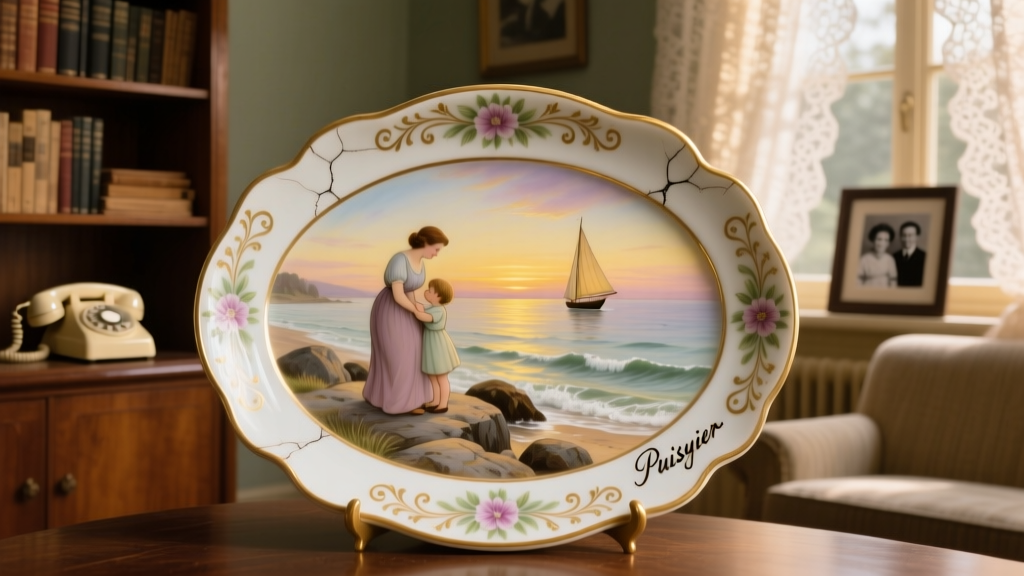
Limoges Plaque Seascape Mother-Child Gold Trim Signed Puisoyer: Authentication, Provenance, and Market Value Analysis

Queen Anne-Style Hard/Softwood Table: Red-Painted Square Top (12" × 24") — Identification, Provenance & Market Value for Mid-Century Collectors